


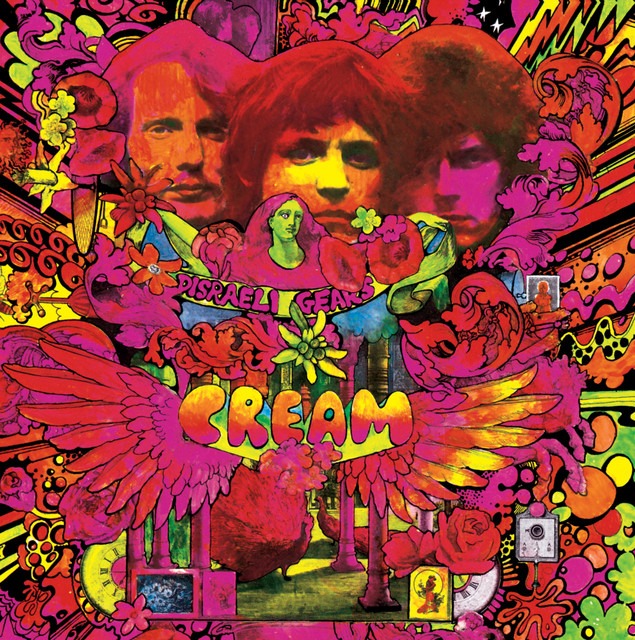
Cream ignited the psychedelic revolution with the 1967 release of their second studio album Disraeli Gears, a masterpiece that saw the trio pivot from their blues roots toward a warm fluorescent sound. Recorded in a whirlwind three-and-a-half days at Atlantic Studios in New York, the album was a high-stakes race against time as the band’s visas were set to expire on the final day of tracking. Under the guidance of producer Felix Pappalardi and legendary engineer Tom Dowd, the group utilized innovative tools like the wah-wah pedal and woman tone to craft defining hits like “Sunshine of Your Love” and “Strange Brew.” The record was a massive global success, reaching the top five in both the UK and US and proving that experimental psychedelic hogwash could dominate the charts. Every track on this project reflects a daring spirit of instrumental prowess and a factual commitment to sonic evolution. Witnessing the transition from their raw debut to this colorful, kaleidoscopic landmark remains a defining highlight for any fan of rock history.
The Visa-Expirations Sprin
The recording of Disraeli Gears was a factual race against the clock. The bulk of the album was tracked at Atlantic Studios in New York City between May 11 and 15, 1967. Because the band’s visas were set to expire on the very last day of the sessions, they had only three and a half days to complete the record. This immense pressure led to a highly efficient workflow where most backing tracks were captured in only one or two takes, concluding just hours before the trio had to rush to the airport to fly back to the UK.
The Indian Beat Breakthrough
During the sessions, the band initially struggled to find the right pocket for their signature riff-heavy track, “Sunshine of Your Love.” It wasn’t until engineer Tom Dowd suggested a rhythmic shift that the song truly came together. He advised Ginger Baker to play an Indian beat—similar to patterns found in American Western films—where the emphasis is on the downbeats (one and three) rather than the standard rock backbeat (two and four). This unconventional drumming style, played primarily on the tom-toms, instantly unified the track and created its hypnotic, driving atmosphere.
Otis Redding Saved the Hogwash
When label owner Ahmet Ertegun first heard the demos for “Sunshine of Your Love” and “Tales of Brave Ulysses,” he was deeply unhappy, famously dismissing the new direction as psychedelic hogwash. He expected the band to stick to the traditional blues of their debut. However, Ertegun eventually relented after soul legends Booker T. Jones and Otis Redding visited the studio and expressed their absolute adoration for the “Sunshine” riff. Their endorsement served as a factual turning point, convincing the label to support the band’s experimental vision.
The Disraeli Gears Malapropism
The album’s title was born from a humorous misunderstanding between Ginger Baker and a roadie named Mick Turner. While driving in an Austin Westminster, Eric Clapton was discussing his interest in getting a racing bicycle with derailleur gears. Turner, mishearing the technical term, chimed in with Disraeli gears, inadvertently referencing the 19th-century British Prime Minister. The band found the malapropism so hilarious that they immediately decided it had to be the name of their next record.
A Fluorescent Fool Masterpiece
The vibrant cover art was created by Australian artist Martin Sharp, who lived in the same building as Clapton in Chelsea. Sharp used fluorescent inks and a collage of publicity shots to capture what he called the warm electric sound of the music. To match this visual intensity, Clapton utilized his famous 1964 Gibson SG, known as The Fool, to achieve his signature woman tone. For the solo on “Sunshine of Your Love,” Clapton even quoted the melody of the pop standard “Blue Moon,” creating a factual contrast between the heavy blues riff and a classic major scale.