


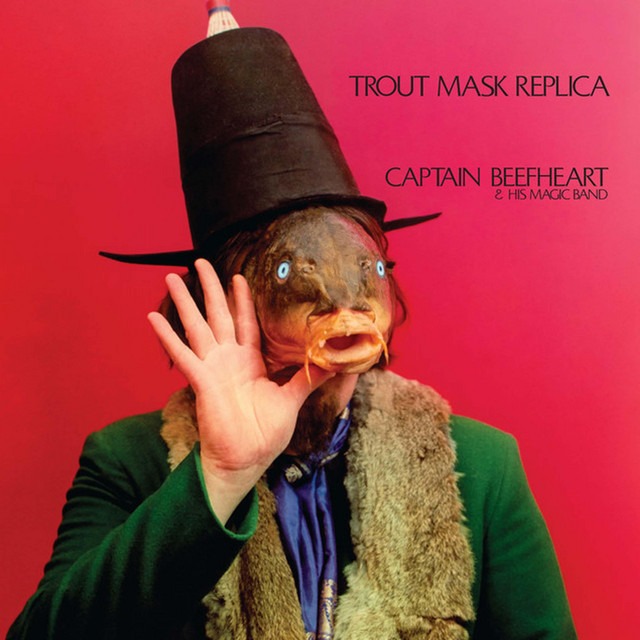
Captain Beefheart and His Magic Band shattered the boundaries of conventional music with the 1969 release of their avant-garde masterpiece Trout Mask Replica. Produced by Frank Zappa, this double album is a dense, polyrhythmic collision of Delta blues, free jazz, and experimental rock that has earned a reputation as one of the most challenging recordings in history. To achieve this singular sound, the band underwent eight months of grueling, communal rehearsals in a small Los Angeles house, practicing for up to 14 hours a day under Van Vliet’s intense and often cult-like direction. Despite failing to chart in the United States upon release, the album became a foundational influence for the punk and new wave movements, eventually being preserved in the National Recording Registry for its immense cultural significance. Every fractured guitar lick and growled vocal on this project reflects a daring spirit of artistic totalism. Witnessing the transition from their blues-rock beginnings to this complex, “monolithic” sonic architecture remains a defining highlight for any student of the avant-garde.
The Eight-Month Soybean Diet
The creation of the album was a factual exercise in extreme endurance. Living communally in a small house in Woodland Hills, the Magic Band had no steady income and survived largely on welfare and family contributions. Drummer John French recalled a period where the band lived on nothing but a small cup of soybeans a day for an entire month. This dire financial state was so severe that band members were once arrested for shoplifting food, only to be bailed out by Frank Zappa. Visitors described the musicians as looking “cadaverous” and in poor health due to the 14-hour daily practice sessions.
A Single Six-Hour Session
Despite the eight months of intense preparation, the instrumental tracks for the 20-song double album were recorded with incredible speed. Once they finally entered Whitney Studios, the well-rehearsed Magic Band laid down all the instrumental foundations in a single six-hour recording session. Beefheart himself did not participate in this instrumental blitz; instead, he spent the following days overdubbing his vocals and horn parts. This efficiency was only possible because the band had been drilled to play every complex, non-improvisational note exactly the same way every time.
The “Blind” Vocal Overdubs
In a technical move that contributed to the album’s disorienting sound, Captain Beefheart recorded his vocals without wearing headphones. He refused to monitor the instrumental tracks, instead relying only on the faint sound leakage coming through the studio’s glass window. This factual lack of direct synchronization meant his singing was only vaguely in sync with the band, creating a jarring, detached effect. When later questioned about how he managed the timing, Beefheart famously compared the process to a “commando raid” where precision is secondary to the surprise of the attack.
Piano Composition for the Non-Pianist
Van Vliet composed roughly three-quarters of the album using a piano, an instrument he had never played before and for which he had no formal training. By approaching the keys with no preconceived ideas of Western musical theory, he was able to create rhythmic patterns that were entirely unconventional. He would sit at the piano until he found a measure or two that he liked, which John French would then meticulously transcribe into musical notation. French then faced the monumental task of “splicing” these fragments together into full songs and teaching the parts to the rest of the band.
The “Manson-esque” House Rules
The environment during the rehearsal period was described by participants and visitors as “positively Manson-esque” and “cultlike.” Van Vliet asserted complete emotional and physical domination over the band, often putting members “in the barrel” for verbal berating sessions that could last for days. These psychological tactics were designed to break the musicians’ individual wills so they would become perfect vessels for his musical vision. Factual accounts from the band members detail an atmosphere of paranoia and nonexistent conspiracies that kept them isolated from the outside world during the entire development of the record.