


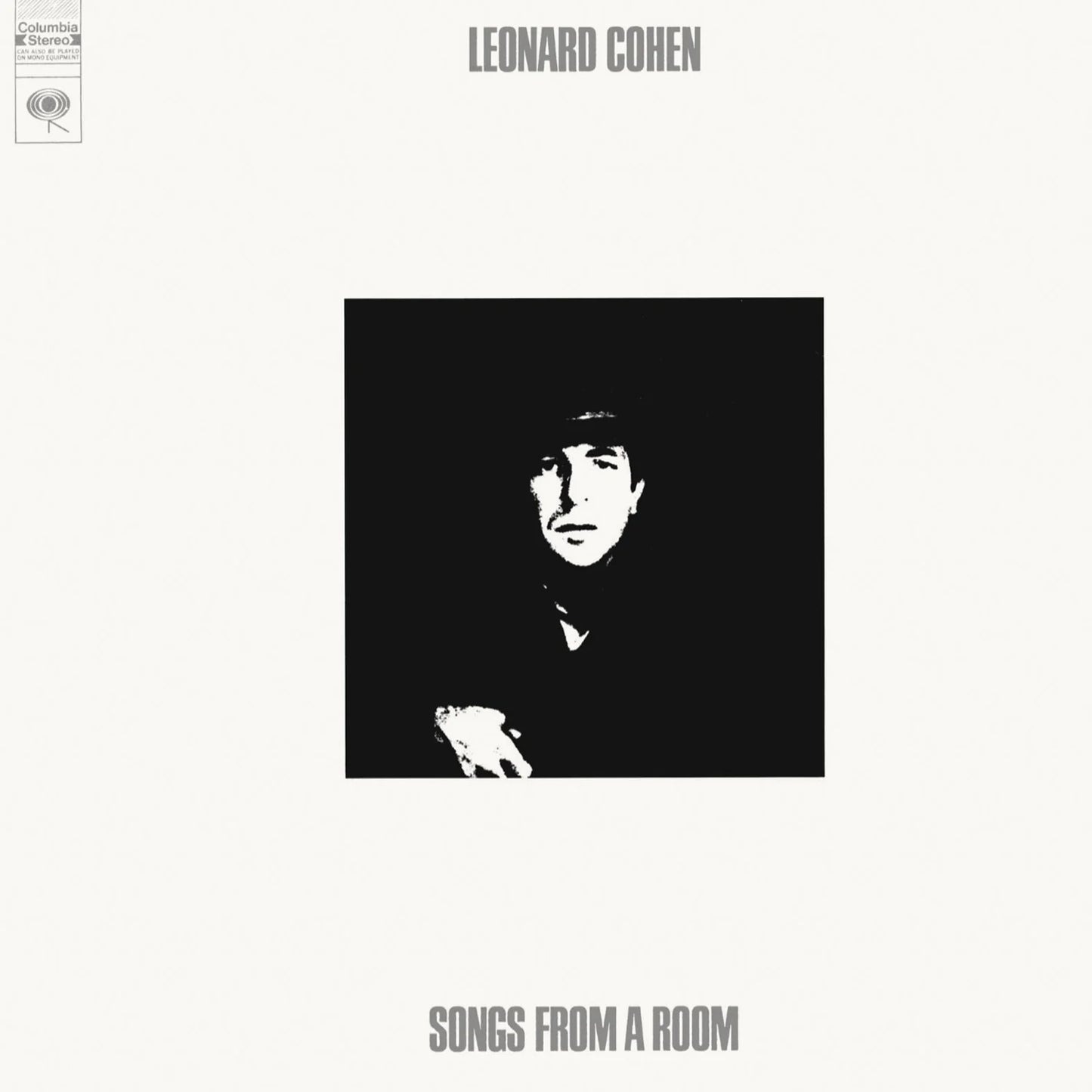
By 1969, Leonard Cohen was ready to strip everything back to the bone. Disillusioned with the “lushness” of his debut, he retreated to a farm in Tennessee to find a sound as honest and unadorned as his poetry. Produced by Bob Johnston—the legendary ears behind Dylan and Cash—this album is a masterclass in musical austerity. It’s a record where the silence between the notes is just as vital as the words, capturing a towering songwriter in his most skeletal and vulnerable form.
A Failed Collaboration with David Crosby
The road to this album actually began in Hollywood with David Crosby in the producer’s chair. However, the partnership quickly soured, and Cohen nearly abandoned the project entirely out of frustration. It wasn’t until he met Bob Johnston that he found a musical bodyguard willing to protect the spartan, stripped-down sound he craved. While the Crosby sessions were scrapped for the original release, a few tracks from those early dates eventually surfaced decades later as bonus material.
A Masterpiece Inspired by Telephone Wires
One of the most famous songs in the Cohen canon, “Bird on the Wire,” was born from a moment of technological dread on the Greek island of Hydra. Cohen had moved there to live an 11th-century life without electricity, but he was devastated when civilization finally caught up and telephone poles were installed. His girlfriend, Marianne, helped him out of a depression by handing him his guitar, and he began writing as he watched birds landing on those new, unwanted wires.
The Producer Fled to France for Overdubs
Bob Johnston was obsessive about getting the atmosphere right for the track “The Partisan,” a cover of a French Resistance anthem from WWII. Feeling that authentic French voices were the only way to enhance the song’s gravity, Johnston and Cohen actually flew to France during the production. They overdubbed three female French singers to provide the haunting background vocals that gave the track its unmistakable, somber survivalist energy.
A Future Country Legend on the Fiddle
To achieve the painting of a sound Cohen wanted, Johnston enlisted a small, tight-knit group of Nashville’s finest. Among them was a young Charlie Daniels, years before he became a country superstar in his own right. Daniels contributed bass, fiddle, and acoustic guitar to the sessions, following Johnston’s strict instructions to “become one of the colors” in the song rather than just playing a part.
The Mystery of the Missing Song “Priests”
When the sheet music for the album was originally released, it included a song titled “Priests” that was reportedly recorded during the Nashville sessions. Curiously, the track never appeared on the final LP or any subsequent Cohen studio record, making it a lost holy grail for fans. While Cohen’s own version stayed in the vault, the song found life through other artists, most notably being recorded by Judy Collins and Richie Havens.