


Five Unknown Facts About Cat Stevens’ ‘Tea for the Tillerman’ That Will Change How You Hear This Classic
‘Tea for the Tillerman’ stands as one of the defining singer-songwriter albums of the early 1970s. Released in November 1970, the record became a cornerstone of the folk-rock movement and launched Cat Stevens into international stardom. Songs like “Wild World,” “Father and Son,” and “Where Do the Children Play?” became fixtures on FM radio and helped establish Stevens as a voice of his generation. The album’s intimate production, profound lyrics, and beautiful melodies connected with millions of listeners worldwide, and its influence continues to resonate more than five decades later.
The Album Was Born From A Near-Death Experience
‘Tea for the Tillerman’ emerged directly from Stevens’ battle with tuberculosis in 1969, when he was close to death at the King Edward VII Hospital in Midhurst, West Sussex. After a year-long period of convalescence and a collapsed lung, Stevens dove deep into Buddhist philosophy through a book given to him by his friend Paul Ryan. This brush with mortality and spiritual awakening transformed his songwriting, leading to the profound introspection that defines the album. As Stevens later recalled, being on the doorstep of death was enough to get him thinking, and that moment was when he really blossomed musically.
“Father and Son” Was Originally Written For A Russian Revolution Musical
Stevens originally wrote “Father and Son” as part of a proposed musical project called Revolussia, set during the Russian Revolution and starring Nigel Hawthorne, which could also have become a film. The song depicted a boy who wanted to join the revolution against the wishes of his conservative farmer father. When Stevens contracted tuberculosis, the musical project was shelved, but “Father and Son” remained, now in a broader context that reflected societal conflict and captured the impulses of older and younger generations in general.
Stevens Created The Original Album Artwork Himself
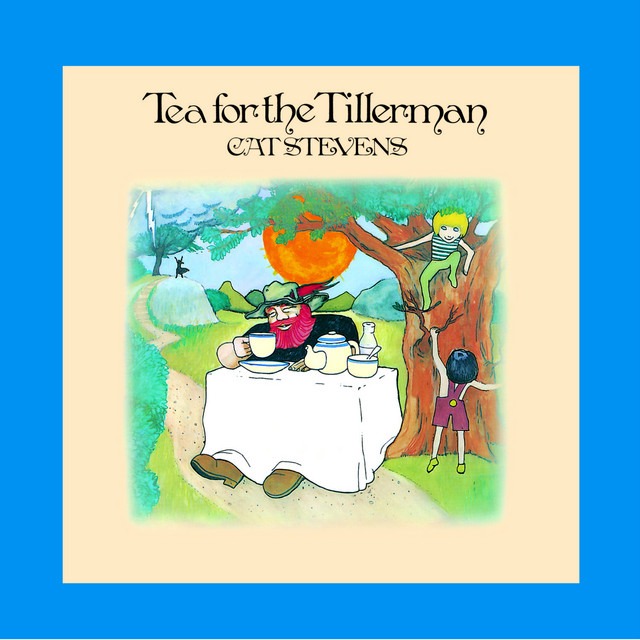
As a former art student, Stevens created the artwork featured on the record’s cover, painting the daytime scene with the sun creating a hot, hazy day. Fifty years later, for ‘Tea for the Tillerman2’, he painted a new cover showing the coolness of night with a pristine white moon, depicting children playing separately on their phones while the Tillerman wears a spacesuit. Stevens explained this darker version reflects environmental concerns and how things are getting worse, suggesting we may all be walking around in spacesuits very soon.
“Wild World” Used A Spanish Music Chord Sequence
Stevens turned a chord sequence common in Spanish music around and came up with the theme for “Wild World,” which became a recurring motif in his work about leaving, the sadness of leaving, and the anticipation of what lies beyond. The song was written about actress Patti D’Arbanville during their roughly two-year relationship. Island Records’ Chris Blackwell called ‘Tea for the Tillerman’ “the best album we’ve ever released,” and “Wild World” has been credited as the song that gave the album enough kick to get played on FM radio.
Stevens Sang Both Parts Of “Father and Son” In Different Registers
Stevens sings in a deeper register for the father’s lines in “Father and Son,” while using a higher one for those of the son, with backing vocals provided by his guitarist and friend Alun Davies beginning mid-song. In 2020, Stevens released a re-recorded version featuring the original recording of his 22-year-old vocals alongside his 72-year-old present-day voice, lifted from a 1970 Troubadour recording.