


Social media was built on permanence. Post something, and it lives forever, searchable, screenshot-able, and ready to be resurfaced years later. That model is starting to crack, and the latest evidence comes from Meta, which has introduced a new feature on Threads called ghost posts.
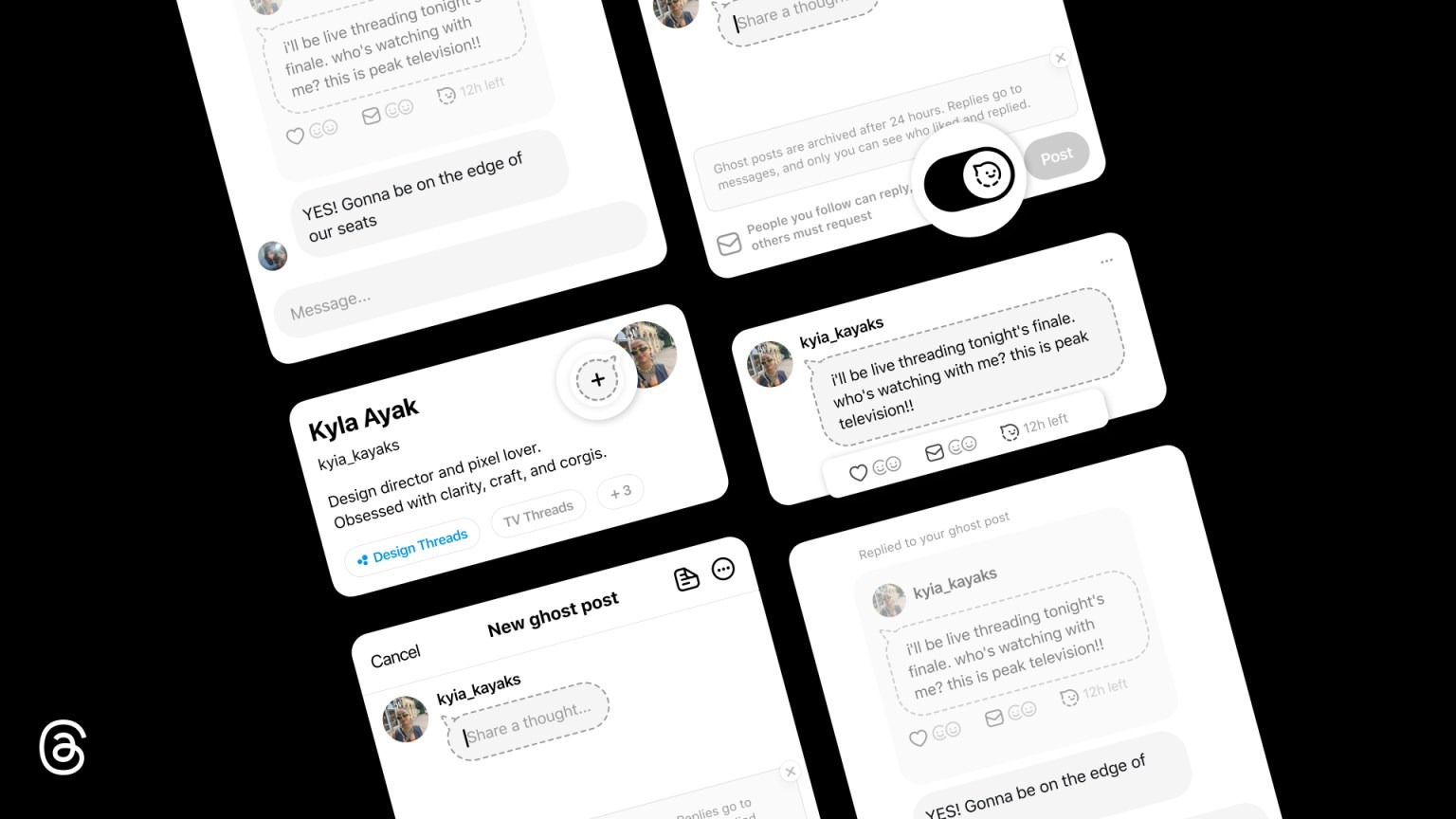
Ghost posts are simple by design. You write a post, toggle on a ghost icon, and that post automatically archives after 24 hours. No deletion required, no cleanup necessary. It is there for the moment, then quietly gone. The idea is to lower the psychological cost of posting by removing the fear that every thought has to be polished, strategic, or permanent.
What makes ghost posts different from stories or temporary posts elsewhere is the way engagement works. Replies do not appear publicly in a thread. Instead, they are delivered directly to your messaging inbox. Likes and replies are visible only to the person who posted. In other words, the conversation still happens, but without the public scoreboard.
This is not an accident. Platforms have learned that public metrics shape behavior, often in ways that discourage experimentation. When everything is visible, users self-censor. They rewrite. They hesitate. Ghost posts are an attempt to create a quieter lane inside an otherwise loud social network, one where posting feels closer to talking than broadcasting.
The feature also fits into a broader pattern at Threads. Over the past year, the platform has added long-form text attachments, spoiler-hiding tools, and now disappearing posts. These are all mechanisms designed to make Threads feel less like a highlight reel and more like a place for thinking out loud, reacting in real time, and sharing work-in-progress ideas.
There is also a strategic reason this matters. Threads has positioned itself as a conversation-first platform, especially for people burned out by the performative nature of other networks. Ghost posts push that philosophy further by acknowledging something users have been saying for years: not everything needs to last forever, and not every reaction needs an audience.
Of course, disappearing content is not new. Snapchat built an empire on it, and Instagram normalized it with Stories. What is different here is the emphasis on text and ideas rather than visuals. This is less about sharing moments and more about sharing thoughts, even messy ones, without long-term consequences.
Whether ghost posts become a core feature or remain a niche option will depend on how people actually use them. But their existence tells us something important. Social platforms are finally admitting that permanence can be a barrier, not a benefit, and that sometimes the healthiest conversations are the ones that fade away.