


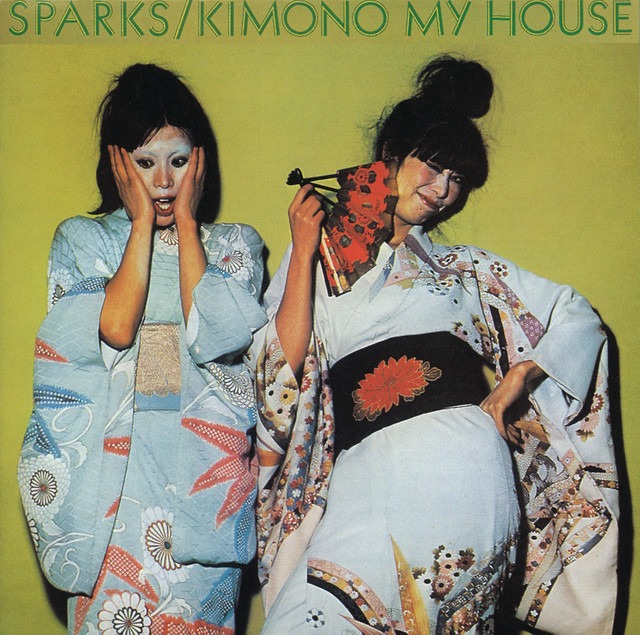
Sparks were already cult heroes by the early 1970s, but ‘Kimono My House’ turned them into glam rock icons. Released in 1974, the album fused theatrical pop songwriting, sharp wit, and dramatic falsetto vocals into something completely unique. Ron Mael’s precise compositions and Russell Mael’s soaring voice gave Sparks a sound that stood apart from the glam rock explosion around them. With inventive production, unusual instrumentation, and unforgettable imagery, ‘Kimono My House’ quickly became their commercial breakthrough and remains one of the defining glam rock albums of the decade.
Here are five fascinating facts about ‘Kimono My House’ and its standout songs that many listeners might not know.
- The Famous Gunshots Came From A BBC Sound Library
Producer Muff Winwood helped shape the dramatic feel of “This Town Ain’t Big Enough for Both of Us” by adding Western-style gunshots. Ron and Russell Mael searched through a BBC sound effects library until they found the exact gunshot they wanted for the recording.
2. The Song Originally Had A Completely Different Concept
When Ron Mael first wrote “This Town Ain’t Big Enough for Both of Us,” the idea was for Russell Mael to sing a different movie dialogue cliché after each verse. One of those lines was “This town ain’t big enough for both of us,” taken from the 1932 Western film The Western Code. Eventually they dropped the rotating phrases and kept that single line as the title.
3. Russell Mael Had To Adapt To Ron’s Uncompromising Key
Ron Mael wrote the song in the key of A and insisted it remain that way. Instead of adjusting the music to fit the singer, Russell Mael adapted his vocals to match Ron’s composition. Russell has said his voice is not traditionally rock, but the songs dictated the unusually high vocal style that became one of Sparks’ trademarks.
4. The Breakthrough Hit Never Reached The Billboard Hot 100
Despite becoming Sparks’ signature song, “This Town Ain’t Big Enough for Both of Us” never charted on the Billboard Hot 100 in the United States. In Europe, however, it became a major hit and reached #2 on the U.K. singles chart, where it remained for two consecutive weeks.
5. One Bass Part On The Album Was Later Replaced
For the song “Amateur Hour,” bassist Martin Gordon originally recorded his part using a Rickenbacker 4001 bass. He was later asked to replace it with a Fender Precision Bass that belonged to the musician who eventually replaced him in the band.