


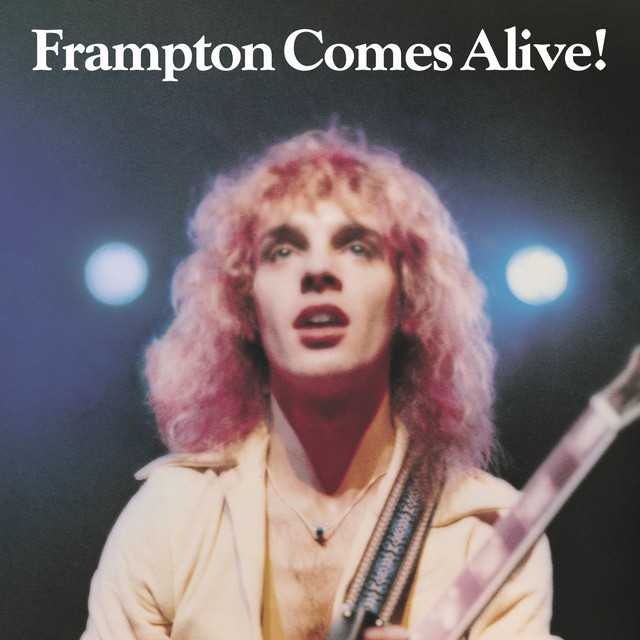
Imagine an artist with four studio albums under his belt, decent respect from his peers, but zero traction on the charts. By 1975, Peter Frampton was a “musician’s musician” staring at a plateau. Then came the Winterland Ballroom in San Francisco. Peter captured a series of performances that crackled with an energy his studio recordings never quite pinned down. Originally planned as a modest single disc, A&M Records saw the potential for something much larger and pushed for a double-record set.
‘Frampton Comes Alive!’ didn’t just sell; it became a cultural phenomenon. Released in January 1976, it vaulted from the bottom of the charts to the number one spot, staying there for ten weeks and becoming the best-selling album of the year. It turned a black 1954 Gibson Les Paul and a plastic tube called a talk box into the most recognizable sounds in rock. This was the moment the live album stopped being a stop-gap release and became the ultimate career-making tool.
1. The “Automatic Sequence” Layout
When fans bought the original vinyl, they noticed something odd: Side 1 was backed with Side 4, and Side 2 was backed with Side 3. This wasn’t a printing error. It was designed for automatic record changers—the popular turntables of the era that let you stack two records. After Side 1 and 2 finished, you’d simply flip the whole stack to hear Side 3 and 4 in perfect order.
2. The Bargain of the Century
In a brilliant marketing move, A&M Records released this double-live masterpiece for just $7.98. At the time, a standard single-disc album cost $6.98. For only one dollar more, fans got twice the music and a massive gatefold photo. This loss leader pricing helped the album explode out of record crates and into eight million American homes.
3. The Talk Box “Technical Difficulty”
While the album is famously authentic, Frampton admits a few studio fixes were necessary. On “Show Me the Way,” the engineer forgot to move the microphone when Peter brought out the talk box, meaning the original live guitar track was unusable. He had to overdub the electric rhythm guitar in the studio to save the song that would become his signature hit.
4. The 90-Degree Kick Drum
During the high-stakes recording at the Winterland, a roadie or band member accidentally snagged a cable and pulled the kick drum microphone away from the drumhead. It ended up facing 90 degrees in the wrong direction. The mixing engineers had a nightmare trying to salvage the low-end punch, but the mistake contributed to the unique, airy drum sound that defines the record.
5. Breaking the “Hey Jude” Record
When “Do You Feel Like We Do” was released as a single, it had to be hacked down from its sprawling 14-minute album length. Even after the edit, the song clocked in at 7 minutes and 19 seconds. This officially made it one of the longest singles to ever hit the Top 40, narrowly beating out the 7-minute and 11-second runtime of The Beatles’ “Hey Jude.”