


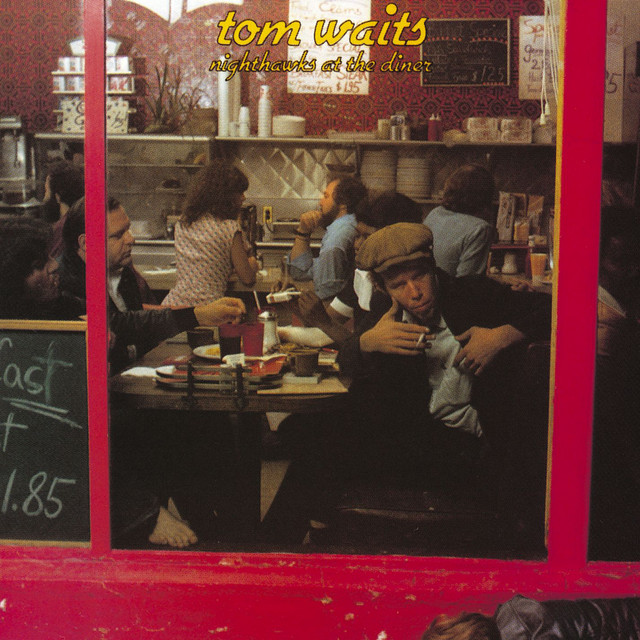
Picture the sun-drenched streets of 1975 Los Angeles melting away as you step into a smoke-filled, late-night dive bar where the coffee is bitter and the characters are straight out of a noir novel. This was the precise alchemy Tom Waits sought for his third studio outing. Rather than recording in a traditional, sterile booth, Waits and producer Bones Howe transformed the Record Plant into “Raphael’s Silver Cloud Lounge.” They moved in tables, chairs, and potato chips, invited a small audience of friends, and set up a full bar to manufacture the perfect, booze-soaked atmosphere of a jazz-club residency.
‘Nighthawks at the Diner’ stands as a masterpiece of mood-setting and characterization. It was a bold move for a relatively new artist—recording a “live” album in a studio setting—but it worked. The record peaked at 164 on the Billboard 200, marking the highest chart position of Waits’ early career. It solidified his persona as the poet laureate of the Hollywood underworld, blending the beatnik spirit of Allen Ginsberg with a world-class jazz rhythm section.
1. The Burlesque Opening Act
To get the “patrons” and the band into the proper headspace, the recording sessions featured a real opening act: an old-time burlesque queen named Dewana. Waits had met her during his late-night jaunts through the Hollywood underground. The band played classic bump-and-grind music for her performance, which successfully established the gritty, theatrical vibe before Waits even stepped to the mic.
2. The Edward Hopper Inspiration
The album is a sonic tribute to Edward Hopper’s iconic 1942 painting, Nighthawks. The original working title was the much wordier ‘Nighthawk Postcards from Easy Street’, but Waits eventually shortened it to the punchier ‘Nighthawks at the Diner’. This new title doubles as the opening line to the track “Eggs and Sausage (In a Cadillac with Susan Michelson)”.
3. No Sheet Music Allowed
Despite hiring some of the most elite jazz session players in the world—including Mike Melvoin and Pete Christlieb—the band had to rehearse for five days of drudgery because Waits had absolutely nothing written on paper. The musicians had to memorize every complex cue and arrangement by ear before the two-day recording sprint began.
4. The Classified Section Jam
During the sessions, Waits took his beat-poet influence to a literal level. After performing “Emotional Weather Report,” he famously turned his back to the audience and began reading the classified section of the newspaper aloud while the band improvised behind him. It was a spontaneous moment that captured the high-art-meets-low-life aesthetic he was perfecting.
5. Ad-Libbing Sinatra
Waits was deeply immersed in the Great American Songbook, even while subverting it. During the track “Nighthawk Postcards (From Easy Street),” he began ad-libbing lines from “That’s Life,” the 1966 hit made famous by Frank Sinatra. It was a subtle nod to the easy street fantasies that his characters were always chasing but never quite catching.