


There was a time when “going on the computer” was an event. You waited for the dial-up to connect. You listened to that sound. And then the whole world opened up — a world made up of these ten websites that absolutely everyone was on. Every single one of them mattered. Every single one of them changed how people used the internet. And most of them are gone now, or close enough to gone that it doesn’t really matter.
Here’s a love letter to the sites that built the early web.
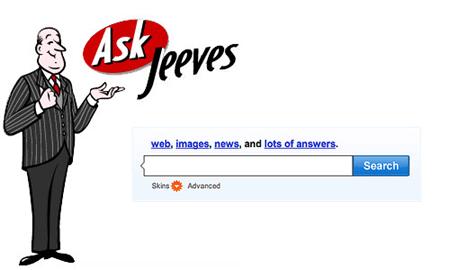
AskJeeves was the search engine that made the internet feel friendly. You didn’t type keywords — you asked a question, like a human being, to a cartoon butler who seemed genuinely delighted to help. Before Google became a verb, Jeeves was the guy. He eventually retired (reportedly to the south of France, according to one very good joke on Reddit), and Ask.com was never quite the same without him.
MySpace was the first time the internet felt truly personal. Everyone had a page. Everyone had a top eight. Everyone had an autoplay song that immediately annoyed every single visitor — and nobody cared because it was their song. It was raw, chaotic, ugly in the best possible way, and it launched more music careers than most record labels. It also proved that people desperately want to express themselves online. Every social media platform that came after owes MySpace a debt it will never fully repay.
Napster didn’t just change music. It broke the entire industry and forced it to rebuild from the ground up. Before streaming, before iTunes, before playlists — there was Napster, where every song ever recorded felt like it was suddenly free and available at 3am on a Tuesday. The record labels hated it. The fans loved it. And the argument it started about how musicians should be paid is still happening today.
StumbleUpon was the internet at its most magical. Click a button. Land somewhere completely unexpected. Click again. Fall down a rabbit hole of weird, wonderful, brilliant corners of the web that no algorithm would ever think to show. It was discovery for the sake of discovery — surfing in the truest sense of the word. Nothing has ever replicated it, and the internet is genuinely poorer for its absence.
Newgrounds was YouTube before YouTube, a creative explosion of Flash animation, games, and irreverent humour that gave early platforms to artists, animators, and developers who went on to shape pop culture. The earliest work of some genuinely talented creators lives in Newgrounds’ archives. It still exists, quietly, and it deserves far more credit than it gets.
GeoCities was where everyone built their first website. Tiled backgrounds. Comic Sans. Animated GIFs of flames and construction workers. Visitor counters. A MIDI file playing whether you wanted it to or not. It sounds like a disaster and it absolutely was — but it was also the first time ordinary people realized they could have a presence on the internet. That idea changed everything.
Yahoo Answers was chaotic, unreliable, frequently bizarre, and genuinely irreplaceable. Where else could someone ask “how is babby formed” and receive thirty competing answers, all stated with complete confidence? It was crowdsourced human knowledge at its most gloriously unfiltered. When it shut down in 2021, it took an enormous archive of accidental comedy and surprisingly useful information with it. Quora tried to fill the gap. It did not.
eBaum’s World was many people’s first encounter with internet humour — video clips, Flash games, and content that existed in a completely lawless corner of the web. It shaped the sense of humour of an entire generation of middle schoolers, for better or worse, mostly worse, but in the most entertaining possible way.
Digg was Reddit before Reddit — a social news site where users voted stories up or down and the best content rose to the top. For a few years it was indispensable. Then came Version 4, a redesign so catastrophically misjudged that it drove its entire user base to Reddit almost overnight. It is now studied in business schools as one of the fastest self-destructions of a successful brand in internet history. A cautionary tale wrapped in a news feed.
Neopets was an entire universe — pets to raise, games to play, an economy to navigate, a community to belong to. For millions of kids in the early 2000s it was a genuine second life, long before Second Life. It taught an entire generation basic economics, graphic design, and the specific heartbreak of a pet going hungry because someone forgot to log in for a week.
The internet of today is faster, smarter, and more powerful than any of these sites could have imagined. But it has also gotten smaller in a strange way — most people spend most of their time in just a handful of giant platforms. The scrappy, anarchic, endlessly surprising web of the early 2000s feels like a different place entirely. These ten sites are proof that it was.