


The best album a Beach Boy ever made might not be a Beach Boys album at all. Dennis Wilson — the one they called the “real” Beach Boy, the surfer, the hellraiser, the guy who accidentally introduced the band to Charles Manson — walked into Brother Studios in Santa Monica in the fall of 1976 and started building something that none of his bandmates saw coming. Al Jardine would later listen back to it and say, simply, “That’s better than anything we’ve ever done.”
Dennis had always been the one who got overlooked. Brian was the genius. Carl was the golden voice. Dennis was the one on the drum riser — the one with the motorcycles and the chaos. What nobody had fully clocked was that somewhere in the years of late nights at Brother Studios, between the turbulent marriage to Karen Lamm and the long hours alone at the piano, he had quietly become a serious musician. Not a technically trained one, but something perhaps more interesting: an intuitive one, a fearless one, a man who would work until he found what he called “the truth.”
Pacific Ocean Blue was the result. Here are five things about it that might surprise you.
The Other Beach Boys Weren’t Supposed to Be on It — But They Showed Up Anyway
Dennis was signed to Caribou Records as a solo act, and the terms of his existing deal technically prohibited his bandmates from appearing on the record — which is why Carl Wilson goes uncredited on the inner sleeve despite clearly being there. Carl came in one night unannounced, in serious pain from a back injury, and arrived in a wheelchair. Someone helped him up onto a step stool, handed him a microphone, and he sang anyway. Co-producer Gregg Jakobson later conceded that if you listen carefully, “you might hear some of them in the background.”
Dennis Played Almost Everything Himself — Including Instruments He Had No Business Playing
Across the album’s twelve tracks, Dennis is credited on piano, Hammond organ, Moog bass, Minimoog, ARP synthesizer, Fender Rhodes, Clavinet, drums, bass harmonica, tuba, violin, lap steel guitar, viola, cello, zither, marimba, and more. One of his signature moves was recording the ARP String Ensemble at double speed, then slowing playback down to produce what engineer Earle Mankey described as a slow, somber string texture that perfectly matched Dennis’s voice. Executive producer James Guercio compared what Dennis was getting out of a piano to Beethoven and Chopin. Dennis’s own response: “I’m really not a piano player.”
“Farewell My Friend” Was Written the Night a Man Died in Dennis’s Arms
Otto Hinsche — father of Beach Boys sideman Billy Hinsche and Carl Wilson’s father-in-law — died in May 1976 after a long illness, with Dennis by his side. That same night, Dennis drove directly to the studio and wrote the song from scratch. He played virtually every instrument on the track himself, and Billy Hinsche later said it was something Dennis kept close, recorded quietly and privately in the dark. The song was eventually played at Dennis Wilson’s own funeral in 1983.
The Album Outsold the Beach Boys — and Almost Got Dennis Kicked Out of the Band
Despite a modest chart peak of number 96 on the Billboard 200, Pacific Ocean Blue outperformed the Beach Boys’ own concurrent releases, which rattled some of his bandmates. Dennis had planned a proper solo tour to support the record, rehearsing a full band for weeks with confirmed dates across the US. But he received an ultimatum from the group’s management: tour solo and you’re out of the band. Faced with financial pressure and loyalty to his brothers, Dennis cancelled the tour entirely, and the album’s momentum died with it.
The Cover Photo Was Chosen by Karen — and Dennis Went Along With It to Keep the Peace
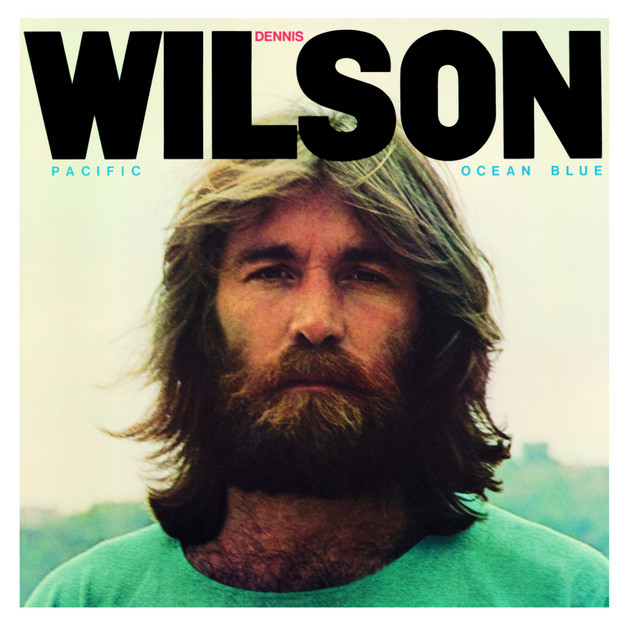
The album’s striking cover image — Dennis looking brooding and slightly glum against a hillside in the Hollywood Hills — was taken by Karen Lamm, his wife at the time. According to Jan and Dean’s Dean Torrence, who handled much of the album’s artwork, Dennis didn’t love the shot but went along with it anyway. “Dennis wanted to keep her happy,” Torrence recalled. The photo captures something true about the record itself: a man in the middle of a turbulent love affair, trying to hold it together long enough to make something lasting.