


There are albums you put on in the background. And then there are albums that demand your full attention — the kind that reveal something new every single time, provided you’re actually listening. These are the latter. Find a quiet room, close your eyes, and press play.
Pink Floyd — The Dark Side of the Moon (1973) The gold standard. The benchmark against which every immersive album experience is measured. The stereo panning alone justifies the headphones, but it’s the way the whole thing breathes — the heartbeat, the cash registers, Clare Torry’s vocal on “The Great Gig in the Sky” — that makes it genuinely transformative. Forty-plus years later, it still sounds like the future.
Radiohead — OK Computer (1997) Thom Yorke and Jonny Greenwood built an album that sounds like anxiety given musical form, and it rewards close listening more than almost anything recorded in the nineties. The production choices buried in the mix — the tiny details hiding behind the guitars on “Paranoid Android,” the atmospheric decay on “Exit Music” — only reveal themselves through headphones.
Massive Attack — Mezzanine (1998) Trip-hop at its most cinematic and menacing. “Teardrop,” “Angel,” “Inertia Creeps” — this is an album built for late nights and total darkness. The low-end rumble on this record is extraordinary, and the way textures layer over each other is something speakers in a room simply cannot do justice to.
Joni Mitchell — Blue (1971) Pure intimacy. Mitchell recorded this album so nakedly and vulnerably that listening to it on headphones feels almost intrusive — like reading someone’s private journal. The acoustic guitar sounds like it’s being played three feet away. One of the greatest singer-songwriter albums ever made, and headphones make that case completely.
Kendrick Lamar — To Pimp a Butterfly (2015) A jazz-funk-spoken word masterwork that operates on multiple levels simultaneously. There are horn arrangements, live bass lines, and layered vocal performances happening in every corner of this record. It’s dense, deliberate, and endlessly rewarding. This is the album that proved hip-hop production had become one of the most sophisticated art forms in popular music.
Brian Eno — Ambient 1: Music for Airports (1978) The album that essentially invented a genre. Eno designed this record to dissolve into environment, which sounds counterintuitive as a headphone recommendation — but heard up close, the way these simple looping phrases drift in and out of phase with each other is genuinely mesmerizing. It’s less music and more a state of mind.
Dire Straits — Brothers in Arms (1985) One of the first major albums recorded entirely in digital, and Mark Knopfler’s guitar tone on this record remains one of the most discussed sounds in the history of audio engineering. “Money for Nothing,” “So Far Away,” the title track — this album was practically designed as a demonstration of what recorded music could sound like when given the space and fidelity it deserved. Headphone listeners have been using it as a benchmark for forty years, and it still holds up completely.
Portishead — Dummy (1994) Beth Gibbons has one of the most haunting voices in recorded music, and this album frames it perfectly. The scratchy vinyl samples, the live strings, the film noir atmosphere — it all coheres into something genuinely unlike anything else. A headphone listen reveals just how meticulously every sound was chosen and placed.
Miles Davis — Kind of Blue (1959) The best-selling jazz album of all time, and for good reason. The interplay between Davis, John Coltrane, Bill Evans, and Cannonball Adderley is intimate and conversational — musicians listening to each other in real time, responding, making space. That conversation is something headphones allow the listener to step inside of completely.
Björk — Homogenic (1997) Orchestral strings colliding with electronic beats, and Björk’s voice soaring over all of it. This is a record that sounds slightly wrong on speakers and absolutely correct on headphones. “Jóga,” “Bachelorette,” “All Is Full of Love” — the sonic architecture here is extraordinary, and it deserves to be heard the way it was clearly designed to be experienced.
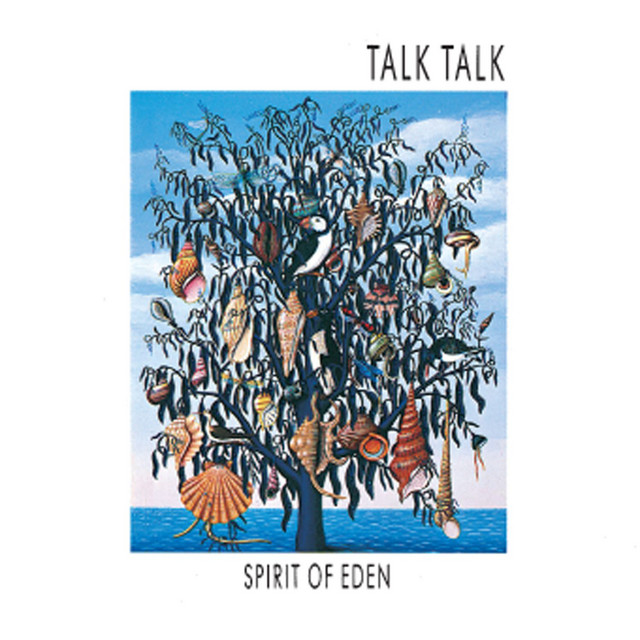
Talk Talk — Spirit of Eden (1988) Perhaps the most quietly radical album on this list. Mark Hollis and producer Tim Friese-Greene recorded this in near-total darkness, with musicians performing live in a converted church, instructed to play as little as possible. The result is an album of extraordinary space and silence — jazz, classical, and art rock dissolving into each other. It sounds like nothing else ever recorded, and headphones are the only way to fully understand what Hollis was reaching for.