


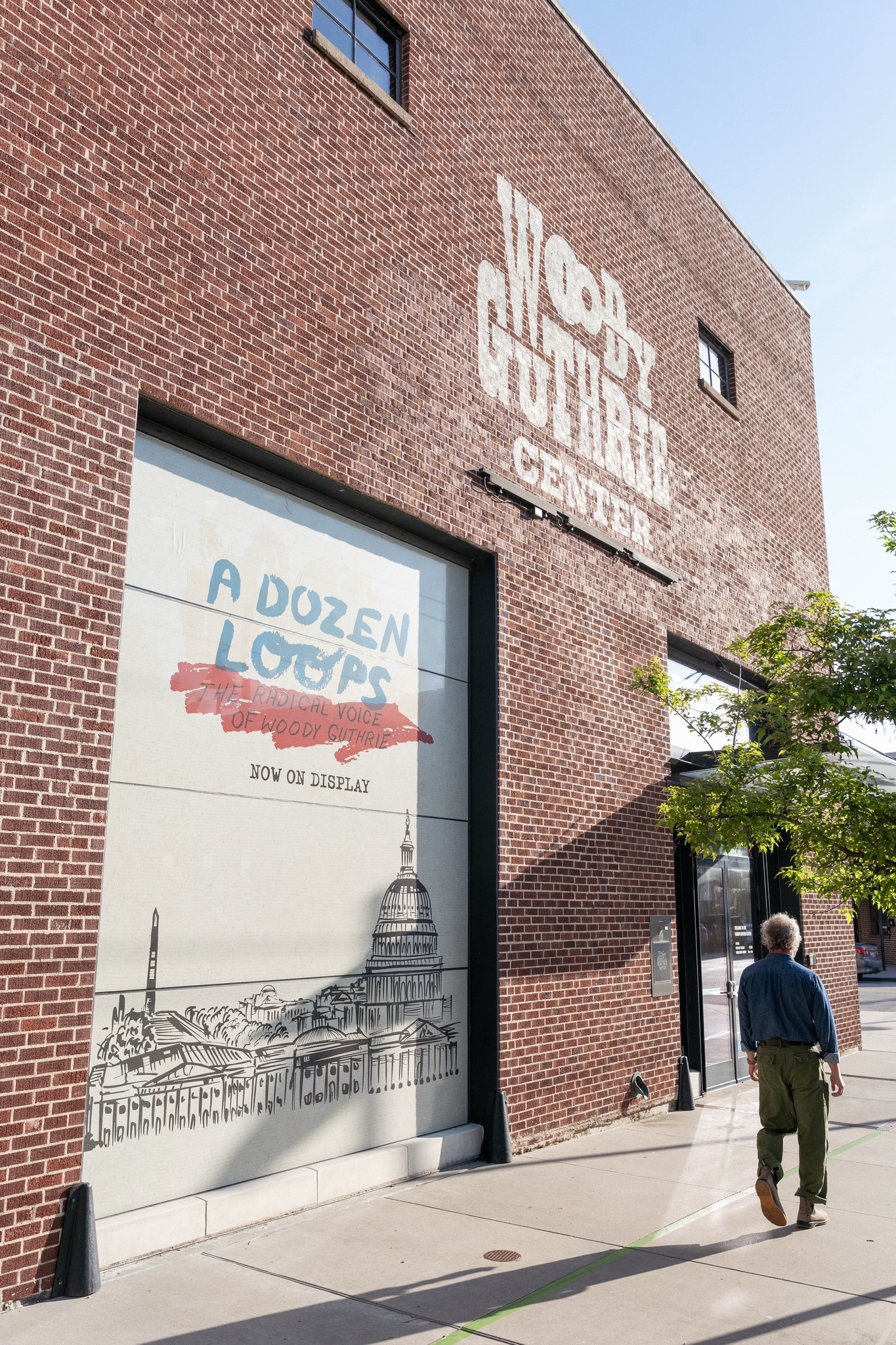
The Woody Guthrie Center in Tulsa has opened its newest exhibition, and ‘A Dozen Loops: The Radical Voice of Woody Guthrie’ arrives at exactly the right moment. Built around twelve songs that confronted some of the most pressing social issues of Guthrie’s time, the exhibit uses archival materials, audio, text, and video interactives to show how one songwriter transformed folk music into a sustained call for awareness and resistance. It’s an exhibition with genuine urgency behind it.
The title comes directly from Guthrie himself: “I am out to sing songs that will prove to you that this is your world and that if it has hit you pretty hard and knocked you for a dozen loops, no matter what color, what size you are, how you are built, I am out to sing the songs that make you take pride in yourself and in your work.” Each of the twelve loops focuses on one song, one topic, one fight, covering racism, labor unions, environmental rights, voting rights, anti-fascism, and immigration. The breadth is as remarkable as the depth.
Cady Shaw, senior director of the Woody Guthrie Center, frames the exhibition’s timeliness plainly. “Woody Guthrie spoke boldly because he knew that silence only protects the status quo,” she says. “People are seeking out Woody’s voice because it reminds us that change begins when we confront uncomfortable truths within ourselves.” Songs written seventy or more years ago are finding new audiences because the questions they ask haven’t been answered yet.
The exhibition concludes with a call to action, inviting visitors to consider how Guthrie’s message resonates today and how they can carry it forward. Special programming continues throughout the run, with an educational workshop scheduled for May 1 among the upcoming events. ‘A Dozen Loops’ is open now at the Woody Guthrie Center in Tulsa.