


Nobody expected fast food to be this entertaining in 2026. But McDonald’s, the golden arches institution that has been selling Big Macs since 1968, is doing two things this year that are so perfectly timed and so smartly conceived that the industry is paying close attention. A secret menu that actually becomes official. A Stranger Things Happy Meal designed just as much for the adults who grew up watching the show as for their kids. This is not your grandfather’s McDonald’s, and that is kind of thrilling.
The secret menu is where things get genuinely clever. For years, McDonald’s fans have been creating unofficial ordering hacks, the Surf N’ Turf burger, Big Mac sauce applied to everything, and sharing them relentlessly on TikTok and Reddit. McDonald’s spent years either ignoring this or quietly tolerating it. In 2026, they decided to do the smart thing and own it entirely, formally launching an official secret menu inspired by those viral customer creations and debuting it internationally. It is a masterclass in letting your audience tell you what they want and then giving it to them with a bow on top.
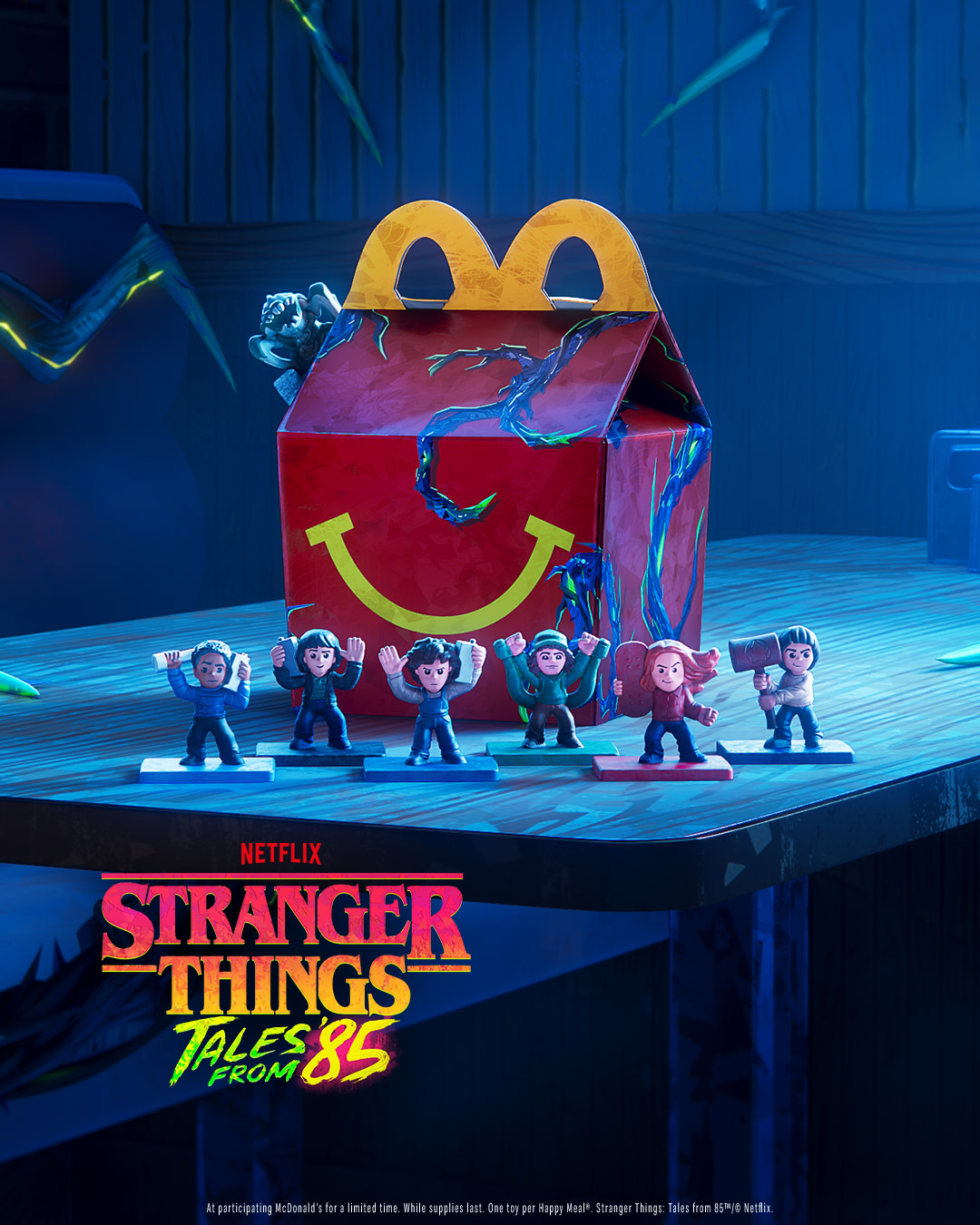
Then there is the Stranger Things tie-in, which launches in the US on May 5 and is already rolling out across Latin America and Europe. Each Happy Meal comes with a custom-designed box featuring artwork inspired by the Upside Down, one of 12 collectible character toys, a Stranger Things activity book, and a QR code that unlocks an interactive digital game where fans can join the Hawkins Investigators Club and battle monsters threatening the town. Two new characters are revealed every week, which means McDonald’s has quietly engineered a reason for people to come back repeatedly throughout the entire campaign. That is not a Happy Meal. That is a loyalty program disguised as a toy collection.
What makes all of this more impressive is the context in which it is happening. McDonald’s is navigating a more challenging operating environment, with rising food costs, slowing customer traffic, and increasingly cautious consumer spending weighing on the fast-food sector. Competitors are closing locations. Consumers are watching every dollar. And McDonald’s response is to lean into pop culture, nostalgia, digital engagement, and the very online communities that have been talking about their food for free for years. Digital platforms now reach nearly 210 million 90-day active users across 70 markets, and loyalty customers generated about $37 billion in systemwide sales in 2025, up 20 percent year over year. These are not vanity metrics. They are the whole strategy.
The bigger picture here is that McDonald’s is quietly repositioning the Happy Meal itself as something more than a kids’ lunch. It is an entry point into a digital ecosystem, a collectible series, a conversation starter, and a piece of pop culture all at once. The Stranger Things generation grew up. They have disposable income, nostalgia for Hawkins, Indiana, and apparently a genuine willingness to go through a drive-thru to pick up a toy of Eleven or Dustin. McDonald’s figured that out before most of their competitors did, and in a year when the fast food industry is under real pressure, that kind of creative thinking might be exactly what the doctor ordered. Or in this case, what the Demogorgon ordered.