


Gerry Conway changed comic books before he was old enough to rent a car. The Brooklyn-born writer, who died April 27, 2026, at the age of 73, left behind a body of work that shaped not just the characters on the page but the entire emotional vocabulary of superhero storytelling. He was 19 years old when Stan Lee handed him the keys to The Amazing Spider-Man. What he did with them is still being felt today.
Conway published his first professional comics work at 16, selling a horror story to DC’s House of Secrets. By the time he was writing Spider-Man full-time, starting with issue #111 in 1972, he had already contributed to Daredevil, Iron Man, The Incredible Hulk, Tomb of Dracula, and co-created Man-Thing and Werewolf by Night. He was prolific in the way that only someone with genuine fluency in a form can be. If you read a Marvel or DC comic in the 1970s, there was a very reasonable chance Conway wrote it.
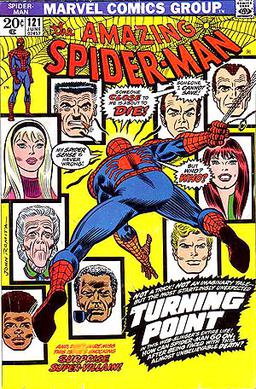
His run on The Amazing Spider-Man remains the defining chapter of his Marvel legacy. In issue #121, published in June 1973, Conway wrote the death of Gwen Stacy, Peter Parker’s girlfriend, at the hands of the Green Goblin. It is widely considered one of the most important single stories in Marvel’s history, the moment that proved superhero comics could deliver real, irreversible consequences. Conway was 20 years old when he wrote it. “I wrote instinctively and from the gut,” he reflected in a 2009 interview. “When those instincts were appropriate to the material, the results were something I was quite proud of, then and now.”
A few months after Gwen Stacy’s death, Conway introduced Frank Castle, the vigilante anti-hero who would become The Punisher, in issue #129. Co-created with John Romita Sr. and Ross Andru, The Punisher started as a conflicted antagonist for Spider-Man and grew into one of Marvel’s most enduring and culturally complex characters, headlining his own comics, three films, and a television series. Conway later voiced strong objections to the character being adopted by police, soldiers, and far-right groups, and spent years publicly trying to reclaim the skull symbol for more constructive purposes. He cared about what his creations meant in the world.
His work at DC was equally formative. After a brief and unsatisfying stint as Marvel’s editor-in-chief in 1976, Conway settled into an eight-year run on Justice League of America and became the architect of some of DC’s most durable characters. He co-created Firestorm with artist Al Milgrom, introduced Power Girl, co-created Vixen, and wrote the story that brought Jason Todd into existence as the second Robin. In his Batman work, he introduced Killer Croc and Killer Frost, characters that remain central to DC storytelling today. Jason Todd, famously killed off by fan telephone poll in 1988, was resurrected in the early 2000s and remains a significant part of the Batman mythology.
Conway’s Ms. Marvel #1 in 1977 launched Carol Danvers as her own cosmic hero, establishing the foundation that eventually led to her becoming Captain Marvel, one of Marvel’s most prominent characters across comics and film. The reach of his character creation is almost without parallel in the medium. Kevin Feige, Marvel Studios president, said it directly: “His writing has been hugely impactful across our comics, but it has also inspired so much of what we’ve done onscreen, from Werewolf by Night to Daredevil to Spider-Man and Punisher.”
He also wrote the first major intercompany crossover in comics history, Superman vs. The Amazing Spider-Man in 1976, a tabloid-sized one-shot that brought Marvel and DC’s flagship characters together for the first time. It was Conway who understood the assignment, balancing the tones of both universes without losing either. It remains a landmark.
Beyond comics, Conway built a second career in television that was genuinely successful. He wrote and produced Father Dowling Mysteries, Diagnosis: Murder, Matlock, Law & Order, Law & Order: Criminal Intent, Hercules: The Legendary Journeys, and two episodes of Batman: The Animated Series, the latter keeping him directly connected to the characters he had helped define. He also co-wrote the animated film Fire and Ice and Conan the Destroyer with Roy Thomas.
Conway was diagnosed with pancreatic cancer in October 2022, underwent successful surgery, and declared himself cancer free in September 2023. He made his last convention appearance at CCXP in Brazil in December 2025 and did a signing near his home in Thousand Oaks in February 2026. Earlier this year, he was confirmed for induction into the Will Eisner Comic Awards Hall of Fame.
C.B. Cebulski, Marvel’s editor-in-chief, said Conway “broke our hearts in emotional tales like ‘The Night Gwen Stacy Died,’ a story that affects Spider-Man to this day.” That’s the measure of the man. He wrote stories that still matter fifty years later. He is survived by his wife, Laura, and two daughters.