


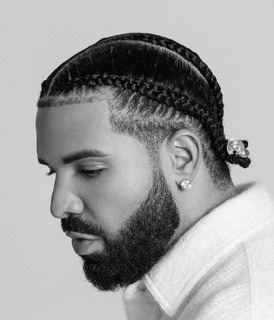
He started as a kid on a Canadian teen drama. He ended up with more charted songs than anyone in Billboard history. Here’s how Aubrey Drake Graham changed everything.
There are artists who dominate their era. And then there are artists who rewrite the rules entirely. Drake is the second kind.
Born Aubrey Drake Graham on October 24, 1986, in Toronto, Drake is credited with popularizing R&B sensibilities in hip-hop through rap-singing, and journalists have long referred to him as one of the greatest rappers of all time. That reputation wasn’t handed to him. It was built, methodically and relentlessly, over two decades of work that refused to stay inside any one lane.
Here’s how he did it.
He Came From Nowhere — And Then Came From Everywhere
Drake’s big break came in 2009 when he dropped So Far Gone, a mixtape that included the hit single “Best I Ever Had.” The track quickly gained mainstream attention, catching the ear of Lil Wayne, who invited Drake to join his Young Money label. That moment changed everything. He became the first unsigned act from Canada to have his music video played on BET, a small milestone that pointed to something much larger coming.
In 2010, Drake released his debut studio album, Thank Me Later. It debuted at No. 1 on the Billboard 200 and featured hits like “Over” and “Find Your Love.” His introspective lyrics, emotional vulnerability, and melodic flow set him apart from other rappers, establishing him as a unique voice in the industry from day one.
He Made Vulnerability a Superpower
This is perhaps Drake’s most lasting contribution to hip-hop. Before him, emotional openness in rap was a liability. After him, it was a blueprint.
Drake brought an emotional and vulnerable style of rapping that was a departure from the genre’s traditional toughness. His music paved the way for artists such as Lil Uzi Vert, Juice WRLD, and Post Malone. Think about how different the sonic landscape of the past decade would look without those three names alone. Every rapper who sings hooks today owes something to what Drake normalized.
He Turned Toronto Into a Global Music Capital
Before Drake, Toronto was not a city that defined global pop culture. After Drake, it was impossible to ignore. He popularized the term “The 6” for his hometown and helped bring entirely new musical styles to a global audience. His success opened doors for other Canadian artists, solidifying Toronto as a major player in the global music scene. The Weeknd, PartyNextDoor, NAV, a whole pipeline of talent followed Drake out of that city. He built the runway.
He Made Genres Irrelevant
Drake didn’t just work within hip-hop. He absorbed everything around it and fed it back to the world. He blends rap, R&B, dancehall, Afrobeat, and UK drill, creating music that crosses borders and defies easy categorization. His collaborations with Wizkid and Kyla on “One Dance” introduced Afrobeat rhythms to mainstream listeners worldwide. His embrace of UK drill and dancehall demonstrated an ongoing drive to innovate and celebrate sounds that mainstream American hip-hop had largely ignored. In 2022, he dropped an entire dance music album with Honestly, Nevermind. Critics scratched their heads. Fans streamed it anyway. That’s the Drake effect.
The Numbers Don’t Lie — They Stagger
No conversation about Drake’s legacy is complete without the statistics, and the statistics are almost absurd. He holds Billboard Hot 100 records for the most top 10 singles, the most top 40 singles, the most charted songs overall, and the most consecutive weeks on the chart. He has 14 Billboard 200 number-one albums, a joint record among male soloists. Billboard named him the Artist of the Decade for the 2010s, the highest-grossing hip-hop touring artist, and the fourth greatest pop star of the 21st century. By 2025, he had surpassed 115 billion total streams on Spotify, a milestone no other artist had reached. He is the only musician in history with more than 300 songs on the Billboard Hot 100.
What It All Means
Drake didn’t just have a great career. He shifted the entire center of gravity of popular music. He proved that a kid from Toronto who had never been through the traditional hip-hop origin story could not only compete with the genre’s giants but outlast them on nearly every measurable level. He made rap more emotional, more global, more genre-fluid, and more commercially dominant than it had ever been before. Whether you love him or not, the music industry of 2026 is shaped in his image. That’s not a small thing. That’s a legacy.