


Belfast is hosting Fleadh Cheoil na hÉireann for the very first time this August, from August 2 to 9, 2026, and the city is going to be full of music in every corner, pub, street, and competition hall for an entire week. If you’ve never been to a traditional Irish music session before, or if you’ve been to plenty but haven’t quite known what you were listening to, here’s your guide to the instruments that make the whole thing sing.
The Uilleann Pipes
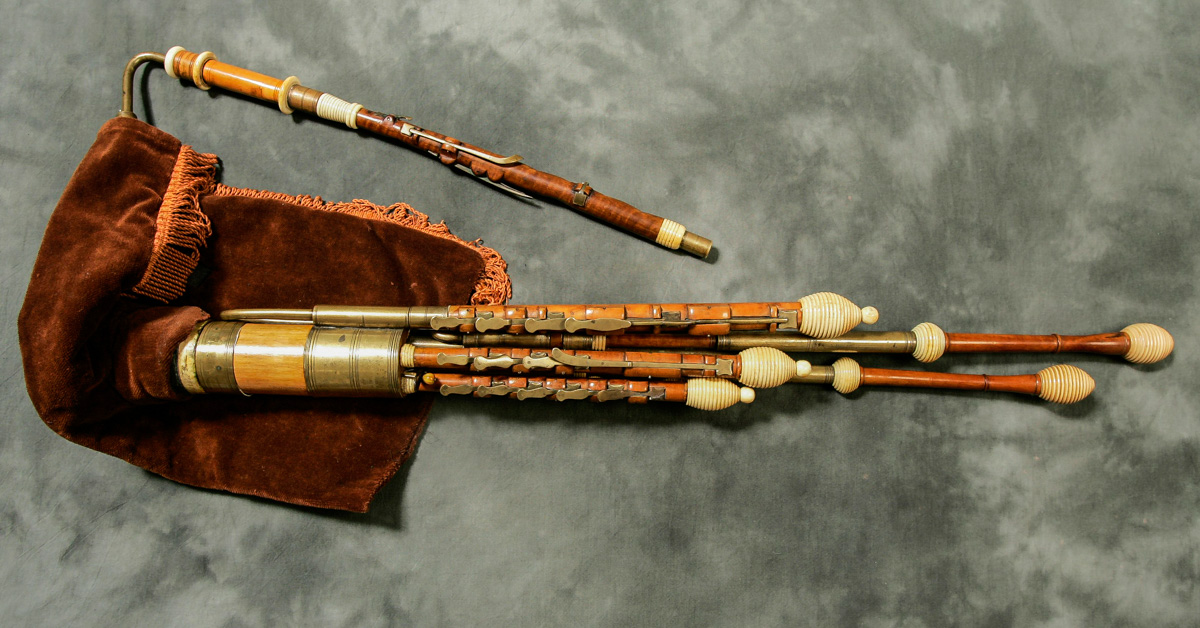
The uilleann pipes are a distinctively Irish form of bagpipes with a complex design, unique sound, and major cultural significance within Irish traditional music. The name comes from the Irish word meaning elbow, which highlights the use of the elbow to operate the bellows. Unlike Scottish bagpipes, the uilleann pipes are powered by bellows strapped around the waist and operated by moving the elbow in and out, which is how they got their name. A full set possesses a chanter with a double reed, three single-reed drones, and three regulators that provide harmony. According to the tradition of this instrument, it takes seven years studying it, seven years practising it, and seven years performing it before one becomes a master. Renowned musicians like Liam O’Flynn and Paddy Keenan have showcased the pipes’ incredible versatility. When you hear them played well in a Belfast pub during Fleadh week, you’ll understand immediately why they’re considered Ireland’s national instrument.
The Fiddle
The fiddle, also called the violin, has strong historical roots in Ireland with some references dating as far back as the 7th century. It’s the instrument you’ll hear most often and most immediately in any traditional session, the melody instrument that defines the sound of Irish music in most people’s imagination. What separates Irish fiddle playing from classical violin playing isn’t the instrument itself but everything done with it, the ornamentation, the bowing patterns, the regional styles that vary from Donegal to Clare to Sligo, each with its own distinct character. During the All-Ireland competitions at Fleadh, the standard of fiddle playing on display will be extraordinary.
The Tin Whistle
The tin whistle is the simplest and most popular instrument in Irish music, a small six-holed flute in D, like a simplified version of the classical recorder. Its history dates back to the early 19th century, and it’s often overlooked as a serious instrument. It becomes magical though in the hands of a skilled player, demonstrating an intricate and fun melodic range. Many traditional tunes can be played on the whistle with a relatively short learning curve, which is why it’s the instrument most people pick up first. Don’t mistake accessibility for simplicity. The whistle players you’ll hear at Fleadh Cheoil have spent years making something deceptively easy sound effortless.
The Bodhrán
The bodhrán (pronounced bow-rawn) is a smallish frame drum, held upright on the thigh and played with either the hand or a tipper (stick). It’s considered the heartbeat of traditional Irish music, with a history that goes back to ancient times. Made from a wooden frame and, traditionally, a goatskin membrane, the bodhrán produces a distinctive, earthy rhythm that underpins many traditional Irish tunes. The style of playing, while the instrument itself is ancient, is largely contemporary, with musicians like Johnny “Ringo” McDonagh among the first to popularise the modern style of bodhrán playing and develop advanced playing techniques. At a session, the bodhrán player is the engine room. Everything else moves around them.
The Irish Bouzouki
Here’s one that surprises people. The bouzouki was first made popular in Irish traditional music by Johnny Moynihan in the 1960s and was also played by famous musicians such as Andy Irvine and Alec Finn. The Irish bouzouki usually has four-course strings tuned to GDAD, accompanying the guitar in the rhythmic section of the band. Fiddles, harps, uilleann pipes, whistles, and flutes have been in the tradition the longest, while free reed instruments such as accordions and concertinas are a more recent addition, as are banjos, bouzoukis, and other string instruments. The bouzouki’s rich, resonant tone gives a session a depth and warmth that you feel as much as hear, and its adoption into the tradition is a reminder that Irish music has always been a living thing, absorbing and transforming influences from wherever it finds them. Groups like Lankum, The Gloaming, and Téada are pushing the boundaries of what these instruments can do, demonstrating that Irish music isn’t confined to history but is a vibrant voice in the present musical landscape.
Fleadh Cheoil na hÉireann takes place in Belfast, August 2–9, 2026. For more information visit fleadhcheoil.ie, visitbelfast.com, and discovernorthernireland.com