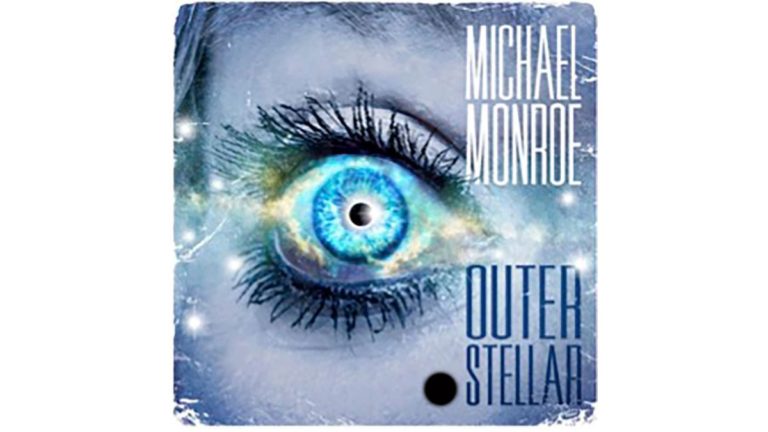
Michael Monroe just unleashed his second irresistibly anthemic single, “Disconnected,” and it is a total blast of pure rock and roll energy. This track is a fiery preview of his forthcoming new studio album, ‘Outerstellar’, which is set to drop on February 20th via Silver Lining Music. Monroe clearly feels passionate about the song’s subject, focusing on the crucial, life giving space that live music provides for people to truly connect in the moment. He sees the live show as a vital place where the real magic happens, something that no digital device can ever replace.
Monroe comments, “Technology was supposed to bring people closer together, when, in fact, people are more disconnected than ever. They’re looking at their phones and their computers and downloading stuff. And, you know, the Internet can’t take away the experience of being at a live show. You’re on stage, and you communicate with the audience who are there, in that moment. That’s where the magic really happens, and absolutely no program or device or computer can reproduce that!”
Monroe’s upcoming album, ‘Outerstellar’, promises to be a spectacular experience that goes far beyond just a collection of great songs. It is described as a sweet smelling, leathery, glitter shimmered, sweat soaked mix of raunch and punch, delivered through one of the best voices in rock and roll. The harmonies and vibes roll effortlessly, bringing to mind lounging in leather pants and silk scarves with a confident, carefree attitude that embodies the pure joy of playing real rock and roll. You already heard the recently released first single, “Rockin’ Horse,” which serves as a defiant blast against critics and judges and is accompanied by one of the craziest Michael Monroe videos to date. Michael simply says, “I am who I am, and I’m not going to edit myself for your benefit.” This record promises an instant, exhilarating escape from worries and fears, with everything from loud crashing guitars and harmonicas to gorgeous acoustic moments that will make you sing, dance, shiver, and shake.
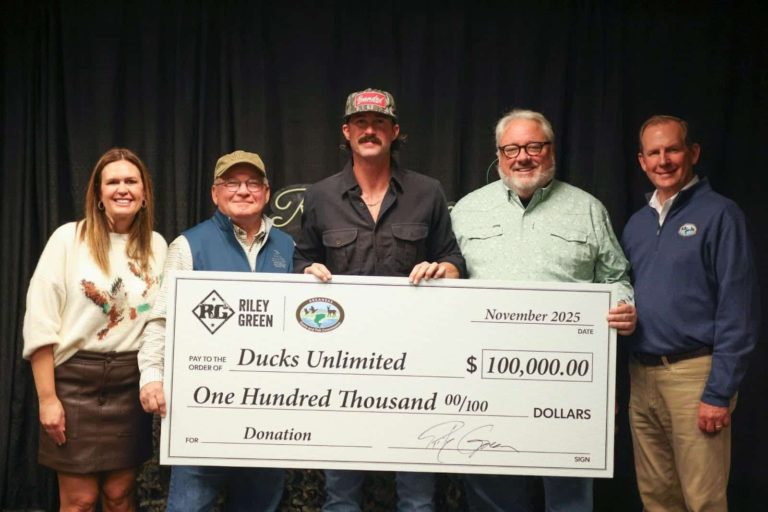
Waterfowl hunter and country music superstar Riley Green put his money where his mouth was Nov. 22, raising $100,000 for waterfowl habitat in The Natural State at the second annual Duckman Jam concert, held at Simmons Bank Arena.
The concert featured Green, who has taken on the mantle of country music’s “duckman,” as well as special guests Jamey Johnson, Drake White and Lauren Watkins.
At the sold-out concert with 9,800 in attendance, Green presented Ducks Unlimited a $100,000 donation through a percentage of ticket sales, combined with contributions from the Arkansas Game and Fish Foundation and Green’s foundation, the Buford Bonde Charitable Fund.
“Riley Green is an absolute rocket ship in country music right now, and it’s incredible to see his passion for waterfowling and his commitment to conservation,” said Tom Jernigan Jr., DU senior vice president of corporate relations. “Duckman Jam was an amazing success, and we’re grateful that Riley chose DU to help deliver his conservation goals alongside our partners at the Arkansas Game and Fish Commission.”
Green, the Academy of Country Music’s New Male Artist of the Year in 2019 and an avid hunter and outdoorsman, hosted the concert to celebrate duck season and contribute to the conservation of waterfowl habitat in Arkansas.
“Ducks Unlimited and AGFC are great partners who do so much work for waterfowl, not just in Arkansas, but around the world,” Green said. “I’m always happy to support wetland conservation whenever I can.”
The AGFC assisted with organizing the concert and, through the nonprofit Arkansas Game and Fish Foundation, contributed to the financial commitment to DU.
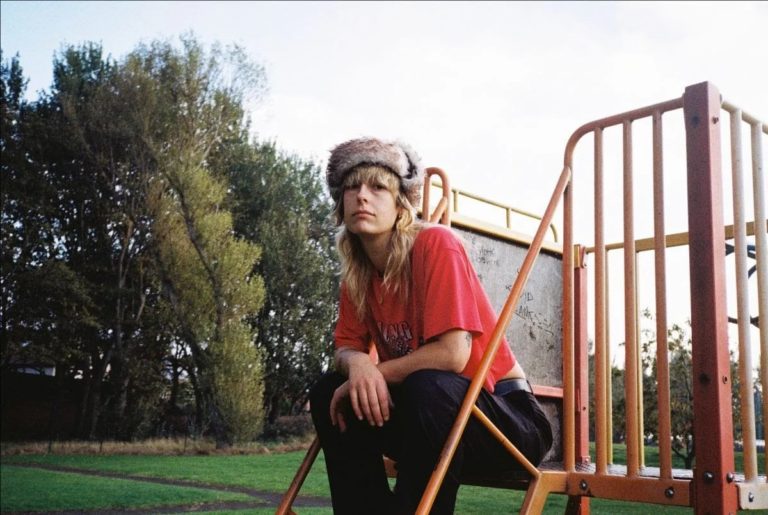
The Newcastle based indie specialist Melanie Baker has officially signed to Tambourhinoceros and is celebrating the news by sharing her brand new single, ‘Sad Clown’, which is out today. This track marks her first release since her acclaimed debut EP, ‘Burnout Baby’, and provides the first exciting reveal from the newcomer’s debut album set to land in 2026. Baker’s credentials as a raw, evocative lyricist and a crafter of catchy earworm choruses are candidly showcased through her emotional work throughs of love, depression, and exhaustion. In ‘Sad Clown’, the musician serves up an early dramedy manifesto for her forthcoming new material, constructing engaging pop out of melancholy and offering a much more optimistic tone.
Baker’s phenomenal live prowess is certainly developing at an impressive rate, fresh from supporting groups like The Wytches and Maximo Park in recent times, as well as playing a Mercury Prize Fringe showcase gig in Newcastle. She is primed to build on early praise from influential outlets like The Line Of Best Fit, Dork Magazine, Rough Trade, and La Blogotheque. Additionally, she has received extensive radio support from BBC Introducing on BBC Radio 1 and from Shakk in the North East, alongside airplay on BBC Radio 6 Music, where she participated in an in studio interview with Steve Lamacq.
Speaking ahead of the release, Baker provided deep insight into the track and her creative process: “I wrote this song because I felt like I was becoming a caricature of myself. I was constantly trying to be a better version of myself and ironically lost myself in the process. I don’t want to hide behind complicated metaphors and flowery words. I want to say exactly how I feel. It’s the only way I know how to work through my shit, it’s the only way I can understand myself and keep moving forward. I am a sad clown. I write songs about being depressed and make bad dad jokes in between. I like making people laugh AND cry. I like being an emotional rollercoaster. It makes me feel human, and whole. I used to think I had to choose what kind of person I should be and then I realised I can show up exactly as I am.”
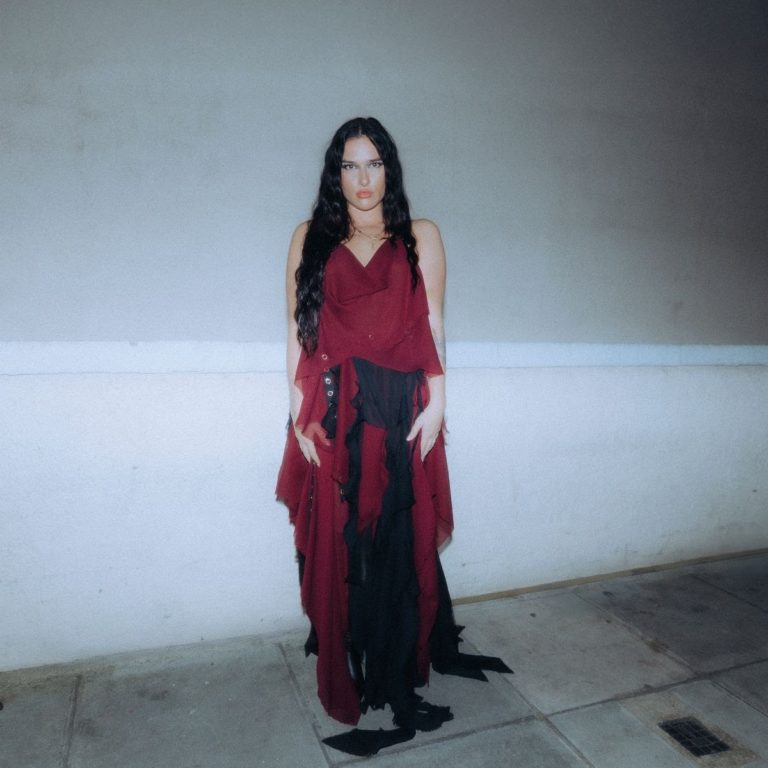
The vibrant singer Sabrina Kennedy has released her new single ‘Witch Of The West’ on all streaming platforms today, November 26. The powerful track, which is also available to purchase on 7” vinyl, is a rock anthem reminiscent of the likes of Hole and Garbage. The song reflects on her Boston roots while charting her move to London’s Portobello Road and the reputation of a witch she gained for reading tarot at Chiltern Firehouse parties. The song was cowritten and produced by the Grammy winning producer and Killing Joke bassist Youth, who connected with Kennedy after he championed her 2023 single ‘Magic & Mayhem’ on the producer panel radio show Jukebox Judgement and discovered their shared interest in the mystic and supernatural.
Regarding ‘Witch Of The West,’ Sabrina Kennedy shared the specific inspiration, saying, “‘Witch Of The West’ is a satirical and mystical fantasy around people’s perceptions of me. I lived on Portobello Road and read tarot at parties and got a reputation for having ‘powers’. A footballer I’d met broke his leg and asked if I hexed him. Then a certain singer didn’t like her boyfriend talking to me. She messaged him: “stay away from that witch of the West” (West London) – so I had my title. But really it’s about being misunderstood, other people’s misconceptions, and staying true to yourself.” The 7” vinyl also features an exclusive B Side, which is an acoustic version of her 2019 debut single ‘Hold Tight,’ a tumultuous song about dealing with the trauma of her father’s death, now delivered as a powerful emotive performance.
The new single follows her first UK tour in 2025, which included intimate headline shows and instores at locations like London’s Rough Trade West, Manchester’s Vinyl Resting Place, and RPM Music in Newcastle. Kennedy, who recently relocated from London to Newcastle, grew up on the US East Coast with adoptive Irish Italian parents, embracing the role of outsider after many visits to nearby Salem during her childhood. Her unique sound, which blends dark R&B laced pop with punchy punk rock, has been featured on the soundtracks of Love Island and Made In Chelsea, and she has been championed by publications like Kerrang and Wonderland. Her life as a modern day witch has also been captured in the multi award winning short film Sabrina Kennedy Witch, Reborn, directed by Maria Shevtsova.
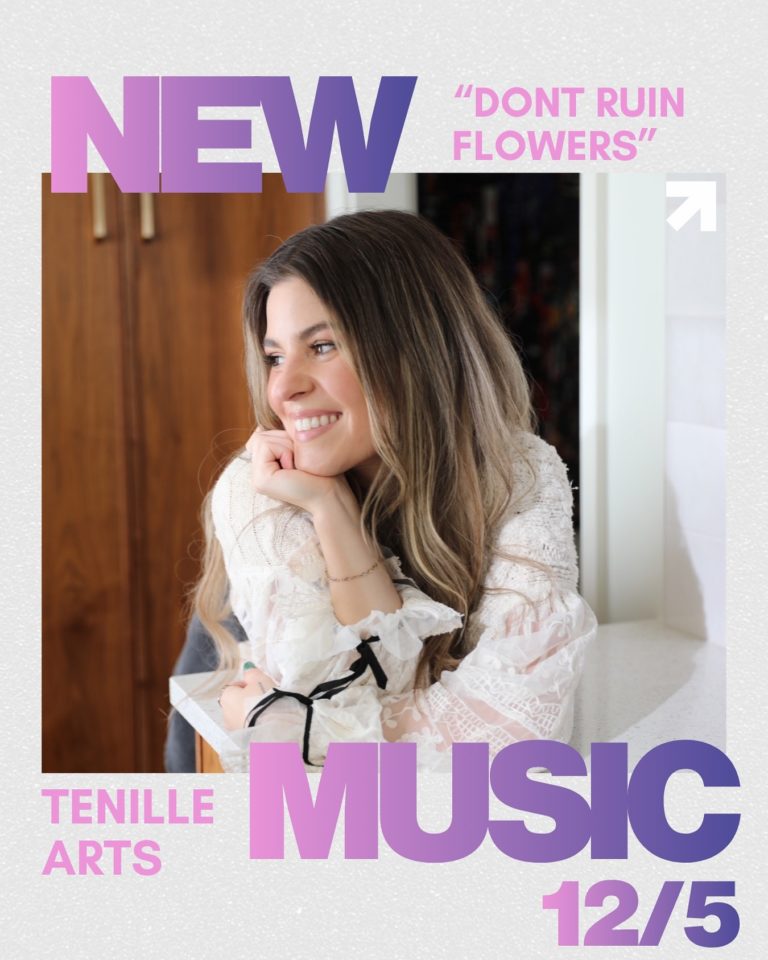
The highly successful country artist Tenille Arts has officially inked an album deal with ONErpm via her management company, Dreamcatcher Artists. The first single from this new partnership, “Don’t Ruin Flowers,” is slated as a major priority for the collaboration. Arts, who recently completed a world tour opening for Luke Bryan and Walker Hayes and her own headline tour backed by AEG in the UK, has been consistently writing new material for this exciting next project. The full length album announcement is planned for summer 2026.
Dreamcatcher CEO Powell Hedley expressed his enthusiasm for the collaboration, stating, “Emmanuel Zunz and his Team at ONErpm have been passionate about Tenille for several years. They stepped up in a profound manner—clearly showing that they understand what it takes to make a meaningful impact for Tenille on a global scale. We are committed to ensuring we have the tools and team necessary so that our artists’ dreams are met. We are grateful to our investors, our team and ONErpm for making this exciting moment possible. Onward and Upward!”
Arts wrote the moving single “Don’t Ruin Flowers” with Ryan Kohn and Lydia Sutherland, with Kohn also handling the track’s production. The official music video for the single is set for release early in December. Arts holds a significant place in history as her single “Somebody Like That” is still the only No. 1 country song written, produced, and performed by all females. She brings forward a double platinum record, two gold records, and has amassed nearly one billion global streams, positioning her strongly for this next chapter.
The award winning bluegrass group The Po’ Ramblin’ Boys have released their latest single, “Let ’em Know I’m From Virginia,” featuring Tommy Brown, available today on all major streaming platforms via Sound Biscuit Records. This powerful track, written by Glenn Alford and Jerry Newberry, is a heartfelt tribute to the life and enduring legacy of James Frederick Quesenberry—known simply as “Fred” to those who loved him. Fred was a longtime supporter, travel companion, and chosen family to the band’s frontman, C J Lewandowski.
For C.J. Lewandowski, this song hits particularly close to home. Fred entered C.J.’s life after the loss of Fred’s wife and quickly became a constant presence: a mentor, confidant, and father figure. A longtime bluegrass fan, Fred traveled often with the band, ran their merch table, and became part of their family in every sense. By 2013, Fred and C.J. were living together in Sevierville, Tennessee, side by side in work and in life. When Fred’s health began to decline, C.J. was there to care for him, encouraging him to rest, stay close to home with his beloved dogs, and find peace surrounded by the music and people he loved most. Fred passed away in 2024, just a day before his 82nd birthday, leaving behind a legacy of kindness, faith, and quiet strength that continues to inspire the band. The song’s emotional weight and authenticity are heightened by the vocals of Tommy Brown, father of the band’s banjo player Jereme Brown, and founder of the group Tommy Brown and the County Line Grass in 1991. For The Po’ Ramblin’ Boys, “Let ’em Know I’m From Virginia” is much more than a song; it is a profound tribute to the people who shape us, the places that define us, and the love that never truly fades.
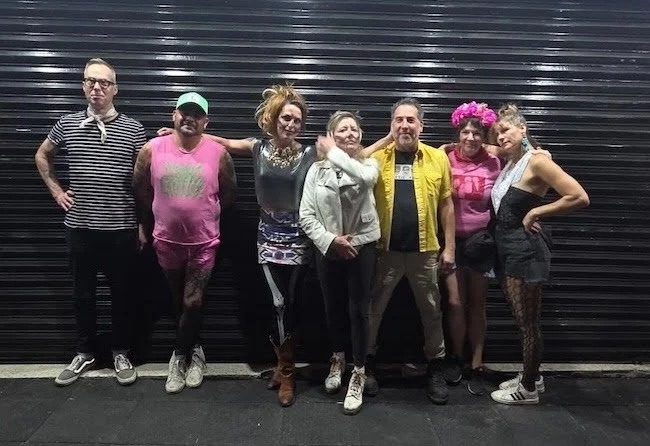
Astoria, Oregon’s Beta Voids are currently busy making noise that truly does not care what you think, locating themselves somewhere between the flailing limbs of early LA hardcore and the sax stabbed chaos of no wave. Their debut EP, ‘Scrape It Off’, sounds like a busted tape deck loaded with Redd Kross riffs, Contortions paranoia, and enough caffeine to keep a circle pit going until dawn. It is the kind of record that smells faintly of beer, hairspray, and old xerox ink, creating a perfect relic of a scene that never really died, it just relocated to a damp coastal basement. The album is full of chaotic, adrenaline soaked punk that nods to Redd Kross, Black Flag, and James Chance, while spinning out into its own dangerous orbit.
Across ‘Scrape It Off’, Mandy Grant and Carrie Beveridge front the storm with twin voiced intensity, a volley of shrieks, sneers, and sly melodic hooks that recall Poly Styrene and Penelope Houston with the voltage cranked dangerously high. Every track is its own small riot, a sweaty mix of jagged guitars, sax chaos, and drums that sound like they were recorded in the back of a van doing eighty down a hill. ‘Baby’s In Detox’ is a wild, two minute collision of screeching sax and tangled guitar, presenting a panic attack with rhythm and a smirk, where the dual vocals trade off like a fight breaking out in stereo. ‘M O T H E R’ swings harder into straight ahead rock, with a grimy Iggy and the Stooges pulse and a bassline that sounds like it is trying to escape the mix. It sits somewhere between Vancouver’s Subhumans and The Sonics, a nasty middle ground of sneer and stomp, while ‘Brain Malfunction’ packs the furious chops of Angry Samoans and the twitchy swing of The Minutemen, like a gear shifting punk car chase scored by caffeine and bad decisions.
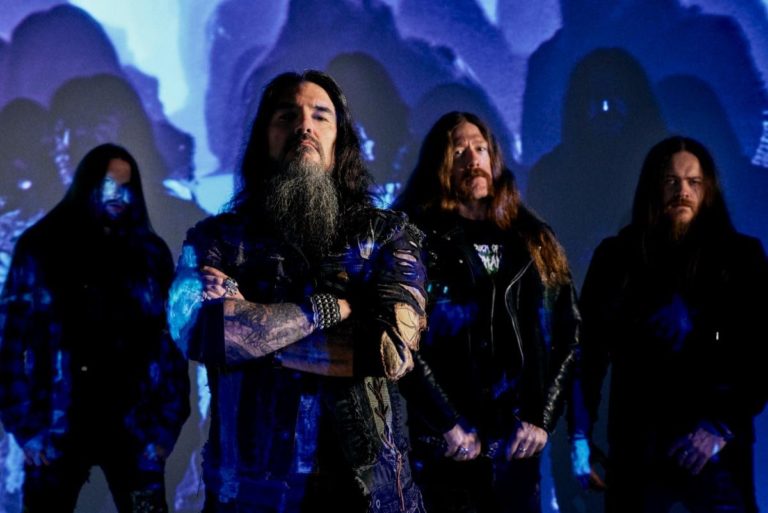
Bay Area icons MACHINE HEAD return to Europe in April/May 2026 with a blistering run of An Evening With headline shows, unleashing three unrelenting hours of molten metal, raging pits, and life-affirming sing-alongs. Fresh from levelling Bloodstock Open Air in August 2025 and continuing to support the release of their colossal new album UNATØNED, the band will storm across the continent with no support, just pure, undiluted MACHINE HEAD all evening.
The UK leg takes in Glasgow, Manchester, Wolverhampton and London. Tickets go on sale Thursday 27th November at 9am local time from Live Nation and the band’s official website.
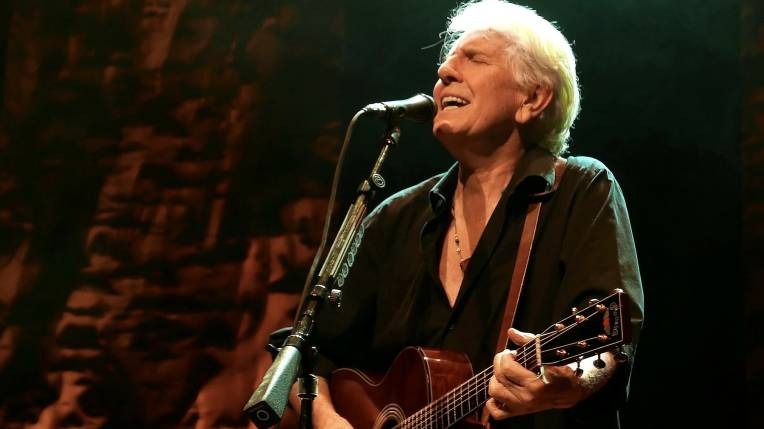
Legendary singer songwriter Graham Nash is set to return to the stage next year for more live dates, accompanied by his talented band featuring Todd Caldwell on keyboards and vocals, Adam Minkoff on bass, drums, guitars and vocals, and Zach Djanikian on guitars, mandolin, drums and vocals. These gigs will find Nash tackling material from throughout his iconic and lasting career, which has earned him two Rock & Roll Hall of Fame inductions. The live dates come on the heels of the release of Nash’s latest studio album, Now, which came out in 2023 as his first record in seven years. The tour begins in April and spans across the East Coast and down into Florida.
In addition to his 2026 tour schedule, Nash will participate in the 45th annual John Lennon Tribute Concert coming up on December 12 at Town Hall in New York City. He will be joined by a fantastic lineup of musicians, including Judy Collins, Suzanne Vega, Shawn Colvin, and Jimmy Webb, among others. At the Lennon event, Judy Collins will also be recognized as the recipient of the 2025 John Lennon Real Love Award. Collins commented on the honor, saying, “John Lennon has been both a personal hero and a beacon of light whose influence transcends time. His legacy lives on, illuminating our path forward and reminding us of the power music hold to create change. It is truly an honor to be celebrating his enduring impact in support of Theatre Within.” A previously unheard archival collection, Live At Fillmore East, 1969 from CSNY, is also out now.
Graham Nash 2026 Tour Dates
December 12—New York, NY—Town Hall
April 4—Lansdowne, PA—Lansdowne Theatre
April 6—Ridgefield, CT—Ridgefield Playhouse
April 8—Tarrytown, NY—Tarrytown Music Hall
April 10—New London, CT—Garde Arts Center
April 11—New Brunswick, NJ—State Theatre
April 14—Annapolis, MD—Maryland Hall
April 15—Charlottesville, VA—Paramount Theater
April 17—Myrtle Beach, SC—The Carolina Opry Theater
MUSCLE SHOALS, ALA. — Following in a famous father’s footsteps isn’t easy at the best of times. It’s even harder when the shoes you have to fill belong to someone whose life, legend and legacy loom as large as those of Rick Hall.
For the bulk of his 85 years, Hall was the fearless, fearsome founder and president of the iconic FAME Studios in Muscle Shoals, Alabama. A multi-talented visionary, he rose from humble, hardscrabble beginnings to become one of the most innovative and influential figures in 1960s music. As the father of the swampy Muscle Shoals sound, Hall produced and/or published career-making hits for everyone from Aretha Franklin and Wilson Pickett to Shenandoah and The Osmonds, garnering a wealth of well-deserved awards along they way. It’s fair to say he put the tiny town of Muscle Shoals on the map, kickstarting the music-centric economy that fuels its tourism engines to this day.
But there was also a dark side to Hall. Hardened and fuelled by a lifetime of tragedy, trauma and betrayal, he was an uncompromising, headstrong maverick with a massive chip on his shoulder. His fiery temper, coupled with a burning need to prove everyone else wrong, destroyed relationships with business partners, musicians, friends and employees. In the 2013 documentary Muscle Shoals: The River That Sings, none other than Keith Richards refers to Hall as a “tough guy” and “a type of maniac.” Long story short: He was complicated. And when he died in 2018, he couldn’t be replaced by just anybody.
Good thing Rodney Hall isn’t just anybody. He’s Rick’s youngest son. He’s been part of the FAME family since birth. He officially joined the business in 1991, assisting in publishing and engineering. Now he’s the president and co-owner. And under his tenure, FAME has maintained his father’s legacy and built upon it, continuing to host influential artists like Drive-By Truckers, Jason Isbell, Tim McGraw, Steven Tyler, Demi Lovato, The Raconteurs, St. Paul And The Broken Bones and, most recently, Marcus King.
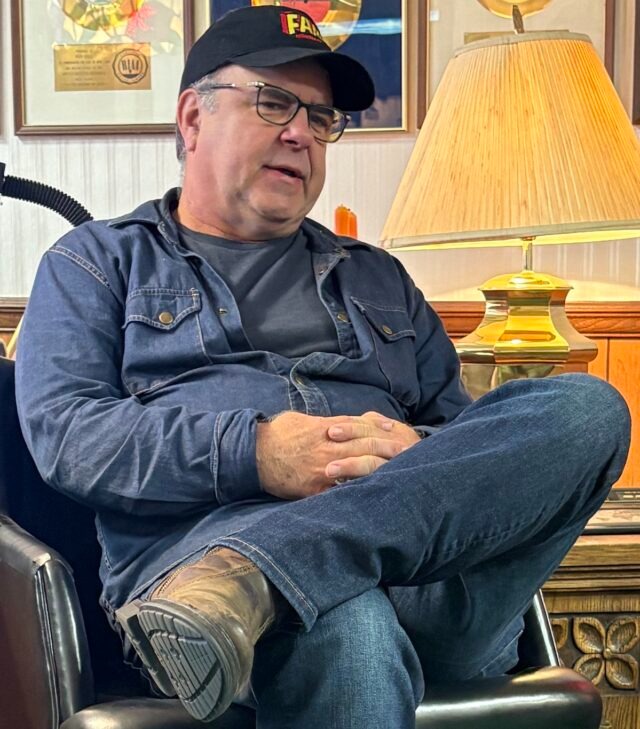
Just before the Muscle Shoals: Low Rhythm Rising exhibit opened a couple of hours up the road in Nashville’s Country Music Hall Of Fame And Museum, Hall sat down in his father’s second-floor corner office with me and a few other reporters to discuss the display, his unique upbringing, the challenges of running a music company in the age of AI, why the hell his dad isn’t in the Rock And Roll Hall Of Fame and much more. He didn’t pussyfoot around any tough questions or walk on eggshells when it came to speaking frankly about his father. Guess he’s the right guy to fill those boots after all.
You must have some amazing memories of growing up in this environment.
Yeah, absolutely. You know, at that time back in the ’70s, there weren’t all the hotels there are now. This was a dry county. So the artists would usually stay at our house. On our land, we had some mobile homes where they would stay — we called them hospitality trailers. And they were nice trailers, but they were trailers nevertheless. So yeah, the artists were always around and it was very interesting to see. At one point we lived really close to the studio and right by the park. So the artists would come to our baseball games and our football games.
At what point did you realize that yours was not a typical family?
Really, I was about four. My dad at that point, he had done Aretha Franklin, Wilson Pickett. The day I was born, he was in the studio doing Wilson Pickett. That week he did Mustang Sally and Land Of 1000 Dances and Funky Broadway. That music didn’t resonate with a four year old. But when he did The Osmonds… Well, all the girls at my school were going crazy. The Osmonds were at my house and the girls were all coming climbing up the fence and peeking through the holes and we had to hire security guards. That’s when it really kicked in.
And also, Mac Davis spent a lot of time at the house. So did Wilson Pickett and a lot of them. But Mac especially; he did 13 albums here. So he was here a lot. I would see him at our house and a couple of weeks later, he’d be on Johnny Carson’s show. And my other friend’s parents and their friends worked at the junk yard. So those two things were when it really kicked in.
But really, FAME was a secret inside the music business for decades because we were a production publishing house for the major record labels. So we were making all this music, but we weren’t the one with our name on the records most of the time. We did have some — we have a record deal with Capitol Records for a while. But for the most part, we were doing records for other people. So it was kind of kept hush-hush — and even here, when artists were in town, we didn’t never let anybody know until they were gone. We still don’t. But it’s hard to keep it under wraps these days with social media. Steven Tyler came here in 2018 or 2019, and we had it all set up for him to come into the hotel through the back door and nobody would ever see him. Well, he didn’t want to go in the back door. He wanted to go in the front door. And within 15 minutes, he was all over social media and there was 400 people standing out in the parking lot. And we had security and the whole thing. But that’s the only two times that’s ever happened — that time and The Osmonds.
What’s your reaction to the Muscle Shoals: Low Rhythm Rising exhibit?
Oh, it’s a complete honour to be in the Country Music Hall Of Fame. You know, we’ve got a few things in the Rock And Roll Hall Of Fame. That’s an honour as well. But this is special because it’s highlighting Muscle Shoals and what we’ve done in the world. And my dad is included in this.
When the museum people came to you asking for things, what were the logistics? Was there a lot of back and forth and negotiation over some things that maybe you didn’t want to part with because they were still in use?
Absolutely. Yeah. The biggest one of those was the piano that Aretha played on her first hit records. Everybody calls it ‘the Aretha piano,’ which drives me crazy because it’s not just the Aretha piano. That’s the Patches piano, that’s the Wilson Pickett piano, that’s the Etta James piano. But everybody has to call something something. They also call our Wurlitzer ‘Spooner’s Wurlitzer.’ A lot of people played that Wurlitzer, but obviously Spooner (Oldham) played some of the most recognizable records. So yeah, the piano was a big thing. But we have so much stuff after 65 years that we don’t have room for it. Probably a decade ago, we donated most of our paper stuff — royalties paperwork, contracts, letters, all that kind of stuff — to the Rock And Roll Hall Of Fame.
What do you want people who see the exhibit to take away from the experience?
You know, I think the biggest thing is just to educate them on what happened here and what’s still happening here. What’s still happening here is just as important or more important to me. I mean, what happened here was amazing, incredible, and I tell people all the time we’re standing on the shoulders of giants. For us to be able to do what we do wouldn’t be possible without these guys. So, for the younger demographic, the exhibit is to educate them. The fans, I think, can just revel in what happened and enjoy it.
Your dad wrote in his autobiography that it was a dangerous time, but the studio was a safe haven where blacks and whites could work together in musical harmony.
You know, It’s funny; you talk to these guys, like (Swampers’ bassist) David Hood or some of the guys that were here during that time, and they get really frustrated ’cause they’ll go, ‘You know, it wasn’t about race. It wasn’t a thing.’ And I go, ‘David, that’s the whole point. It wasn’t about race. And that wasn’t going on everywhere else. But in the studios it was. And that’s why it’s important. That’s why people talk about it.’
LIttle Richard with Rick Hall (right).
Do you think your father has been given all the credit and respect that he deserve? You talked about FAME being kind of a secret. And I think to some degree, Rick remains that. For instance, why isn’t he in the Rock And Roll Hall Of Fame?
Good question. I’d like to know that too. I’m obviously biased, but in my mind, he’s definitely not been given the respect that he deserves in a lot of areas, because you’re looking at a man that started out with nothing. You know, less than nothing. His mother left him at three, became a prostitute. He was raised by his father, who was a sawmiller and a sharecropper and just lived really, really poorly. And he brought himself up and became a musician, a songwriter. He had, you know, dozens of hit records as a songwriter, a producer, a studio owner, a record label owner, and all these things, and did it in the middle of a cotton field. You know, I mean show me a story that’s more powerful than that.
You’ve obviously followed in your father’s footsteps and have had wonderful success in your own right. But your upbringing, obviously, was much different than his.
Absolutely. And, you know, while I was brought up a lot differently than him, I was brought up in a lot of the same ways as him. He wanted us to work. He didn’t want to give us anything. We never were given a car. We earned everything we ever had. This is kind of a funny story: When I was about 12, he gave us five cows apiece. And we were going to raise those cows, that’s how we were going to put ourselves through college. We had to raise those calves and sell them. So I had a chequebook at 12 and became a businessman. But yeah, he wanted us to work on the farm. He wanted us to be ready like he was — as bad as we didn’t want to be. But we were building barb-wire fences. We were working cows. We were raising all kinds of animals. It was a totally different level than what he was, obviously, because we were also living in a 10,000-square-foot house. So there’s a lot different, but at the same time, he wanted us to learn that same work ethic. And I think that we all did that.
What advice do you think your father would give this next generation of artists and musicians?
Well, that’s a good question, because I’m not sure what advice I would give them. I don’t know what he would think about AI. Well, I do know what he would think — he would hate it. He would. He hated computers. He used to say computers are a fad. They’re going to go away. I think he would tell them the same thing he would have told them a long time ago, which is to learn as much as you can. If you want to be in the music business, learn as many disciplines as you can — learn to engineer, learn to play an instrument, learn to write songs, learn to do it all. Then you can find the one that works best for you, but you’ll know how to do all of it. And he knew how to do everything. I mean, he was great at promoting records to radio stations. He had a knack for doing all that kind of stuff. He was a used car salesman. He could sell ice to an Eskimo.
Rick Hall’s office.
Do you hear his voice in your head when you’re thinking of what to do?
Yeah, I mean, can’t escape him here. (Gestures around the room)
You mentioned AI. As you know, we’ve gone from an era when musicians needed places like this to record, to now, when you don’t even need to play an instrument; you can hit a couple of buttons on your phone, upload something and be done. How do you deal with that? What kind of changes have you had to make to keep this studio as a viable ongoing operation in this era?
Obviously, you have to keep up. The onslaught that’s about to happen, I believe it’s going to make Napster look pretty silly in terms of how it’s gonna affect the music business. Now, I do believe that the music industry has gotten a little more ahead of it than they did with Napster, where they just said, ‘We’ll sue them.’ And just lost their way. Now at least they’re trying to think a little bit differently.
But I believe that here in Muscle Shoals, great musicianship and great songs and great singers will always win the day. That’s always been what we were striving for. And that’s still what we do to this day. You’re not going to hear a lot of sampling coming out of here. You’re not even going to hear a lot of synthesizers. You know, you hear some, but we’re more about organic, real instruments. Ultimately, and unfortunately, I think humans are going to become a niche. I believe that’s where we’re headed. But that’s the niche we want to be in. And I think that that is a niche that will always be around.
You also have the publishing aspect of the business along with the recording aspect. Are you more focused on one or the other right now? What’s your vision and what are your goals?
That’s a good question. One thing that kind of bugs me about the whole Muscle Shoals thing is we’ve been here for 65 years, 365 days a year, 24 hours a day, and no other entity’s been here more than 15 years at a time. The reason, I believe, is because we’ve been diversified. My dad had a publishing company, had record labels, and a recording studio. He had his productions and songwriting. So, back in the ’80s and ’90s, when the studio business was — pardon my French — shit, we were killing it in the publishing world. When one thing was down, another was up. And I want to get them all up. That’s the goal. The thing we have now that we have not had in the past that is a great asset is now we have the income stream of tourism and merchandise. After the (2013 Muscle Shoals: The River That Sings) documentary, that became a thing. Before the documentary, people would show up time to time and wanted to see the studio. But after the documentary, they just started lining up.
Why was recording down in those decades?
Well, lots of things happened. In the late ’70s, disco came along. Soul music became disco, basically. My dad and the musicians here in town weren’t that sold on disco and weren’t that into it. And my dad had gotten sick. He had some pancreas issues in the mid-’70s and kind of dropped out. He stopped producing for a couple of years. And then when he came back, he was having trouble getting in because disco had come along and it wasn’t his thing.
Also, there was some people that came to town who were international publishing people, and they stole a bunch of money from Muscle Shoals Sound. So that hurt them, and they sold their business in ’85. And a lot of people started leaving. From about ’78 to 2001, if somebody had success here as a songwriter or an artist or musician, they immediately moved to Nashville. So we were losing people. All that happened. So the studio business kind of just flattened.
This studio is bricks and wood and wires, and you could take it apart and you could rebuild it somewhere else, but I don’t think it would have the same sound. So what are the factors that make this place special? Is it the weather, the landscape, the people?
It’s mostly the panelling. Yeah. That wood. (laughs) Really, I think it’s several things. The number-one thing is the people. The musicians are one thing that is very important to keeping the legacy going. Spooner is still around, David Hood is still around, Clayton Ivey is still around. A lot of the guys that were the key players back in the day are still around, and we make special efforts to book them on sessions with younger guys that can learn from them and carry the legacy on to the next group, ’cause we work differently than other places. We’re a lot more laid back. So yeah, I think people is a lot of it.
Going back to the Muscle Shoals documentary: Did you like it?
For the most part, the documentary was amazing. There were a couple of minor things. I will say this: The Swampers weren’t those four guys until the documentary. The Swampers, up until that time, had just been a big group of studio musicians in Muscle Shoals, and then all of a sudden it became those four guys. But those four guys actually never played on a record without other guys. Anyway, that’s here and there, but that’s one of the things that that did come up. And there were a couple things like that. For example, in the documentary, it seems like my dad produced When A Man Loves A Woman, but he did not. And it seems like he wrote Patches and he did not. He just loved Patches. And he helped When A Man Loves A Woman get the record deal with Atlantic, but he didn’t actually produce it. But those are minor, minor things.
After all the artists who have recorded here, are there still people on your wish list? If we could wave a magic wand and make anyone appear in the studio, who would it be?
You know, Prince would be good, if you could do that. For me, personally, I was just a big Prince fan growing up. Me and my brothers were. I don’t know that my dad was that big of a fan.
Was your dad ever able to be happy? In the documentary, he talks about being motivated by betrayal and tragedy and wanting to show everyone. You can see how that makes someone strive and achieve what he did, but it doesn’t necessarily make for a happy life. At the end of his life, was he able to relax and feel he’d accomplished what he set out to do?
Yeah, he was. He did become much happier as he mellowed. But every once in a while he would still go, ‘I just need one more hit.’ It never went away.
Still, it must have been nice as his son to see him age that way.
It was. Well, sometimes it was. It depends. Sometimes it was frustrating. Somebody would bring him an artist, and he’d say stuff like, ‘Well, all they need is a producer.’ Meaning all they need is HIM as a producer. So if anything came in the door, he felt like he was the one that should do it. And you know, it’s hard to argue. But it wasn’t easy to co-produce with and collaborate with him. He was going to be in charge at the end of the day, so you just had to know that going in.
Do you think that might be part of the reason why he hasn’t necessarily gotten the respect you were talking about? Because he was perceived as being difficult?
Maybe. He definitely was difficult. I mean, I think anybody that worked with him would tell you he was hard to work for. But also anybody that worked with him will now tell you how much they learned from him. But I’ve sat in that chair just miserable, just getting beat up over things. He would tear you down and then bring you back up, tell you how you could do it. But yeah, he was hard on people. That was his way.
Would he be happy about the Muscle Shoals exhibit? Or would he be in there telling them how they should have done it?
Oh, no. He would have loved it. You know, he won a Lifetime Achievement Award at the Grammys and that same night, The Beatles got one, and The Isley Brothers, and that was the highlight of his career. The Americana Awards gave him a Lifetime Achievement Award that he was really proud of, and then the Grammys and, you know, I wish he would have gotten in the Rock And Roll Hall Of Fame before he passed, but he’s in the Country Music Hall Of Fame.