Home Blog Page 1075

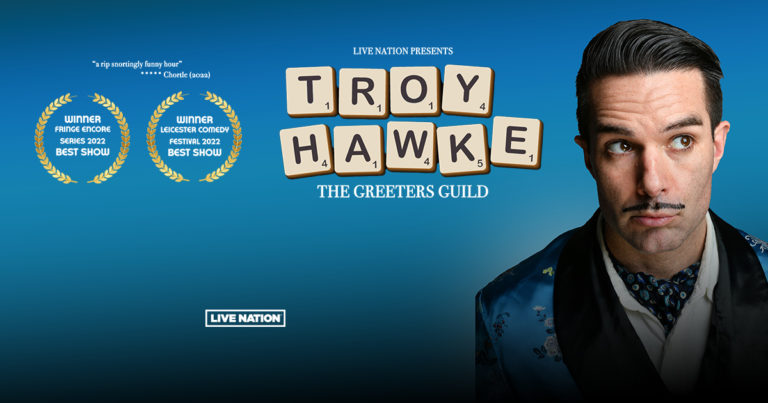
Troy Hawke Announces 2025 ‘The Greeters Guild’ Tour Across North America

0

Today, acclaimed comedian Troy Hawke announces a 2025 North American run of live shows —  “The Greeters Guild” – after an incredibly successful European leg. Produced by Live Nation, the 10-city tour kicks off on March 30 at Thalia Hall in Chicago making stops across North America in New York, Washington, Toronto and more before wrapping up in Houston at Punch Line Comedy Club on April 17.  Full routing is available below.

Tickets will be available starting with the Artist presale beginning on Wednesday, September 4. Additional presales will run throughout the week ahead of the general onsale beginning on Friday, September 6 at 10AM local time at LiveNation.com.

Troy Hawke is an erudite home-schooled 1930s throwback… the Errol Flynn of the high street. Educated, sophisticated, but utterly clueless. He tackles modern issues head on in his uniquely untimely manner. The latest show from Troy, Troy Hawke: Sigmund Troy’d, won Best Show at the Leicester Comedy Festival Awards 2022 and was one of the winners of Soho Playhouse International Fringe Encore Series in 2022. He has twice been nominated for the Amused Moose Best Edinburgh Show award and was listed as GQ’s Top Ten Comedy Shows at the festival.

‘The Greeters Guild’ 2025 TOUR DATES
Sun Mar 30 – Chicago, IL – Thalia Hall
Wed Apr 2 – Philadelphia, PA – Punch Line Comedy Club
Fri Apr 04 – Boston, MA – Arts at the Armory
Sat Apr 05 – New York, NY – The Gramercy Theatre
Tue Apr 08 – Washington, DC – Howard Theatre
Wed Apr 09 – Minneapolis, MN – Varsity Theater
Fri Apr 11 – Toronto, ON – The Royal
Fri Apr 12 – Montreal, QC – Beanfield Theatre
Wed Apr 16 – Austin, TX – Emo’s
Thu Apr 17 – Houston, TX – Punch Line Comedy Club

Inventive and Empowered, The Culture: Hip Hop and Contemporary Art in the 21st Century Opens at the AGO December 4

0

Endlessly inventive, hip hop culture was birthed in the Bronx, New York City among working class Black and Latinx youth and went on to dominate radio, dance floors, the runway and the artist studio. Making it’s only Canadian stop at the Art Gallery of Ontario (AGO), The Culture: Hip Hop and Contemporary Art in the 21st Century tells the story of this multi-disciplinary and expressly creative culture, its philosophies and global impact. Opening December 4, 2024, The Culture features contemporary art by more than 65 artists among them, Stan Douglas, John Edmonds, Deana Lawson and Hank Willis Thomas.

The title of the exhibition stems from a long-standing hip hop phrase “(do it) for the culture” which implies a commitment and service to hip hop’s roots, practices, ethics, viewpoints and values to ensure the culture’s communal achievement and advancement even if that act entails sacrificing personal gain.

Since its inception in 1973, hip hop has given rise to and been adopted by numerous, overlapping creative fields, all the while traversing many locales, institutions, and landscapes. Celebrating Toronto’s unique contributions to contemporary art and hip-hop culture, the exhibition features artists Caitlin Cronenberg’s iconic photograph of the CN Tower for Drake’s Views album cover; Craig Boyko’s portrait of a young Snoop Dogg; and some of Toronto’s hip hop pioneers immortalized through the lens of Patrick Nichols. The exhibition also highlights apparel from legendary Toronto Streetwear brand Too Black Guys.

The Culture was curated by Asma Naeem, the Dorothy Wagner Wallis Director of the Baltimore Museum of Art; Gamynne Guillotte, former Chief Education Officer at the Baltimore Museum of Art; Andréa Purnell, Audience Development Manager at the Saint Louis Art Museum; and Hannah Klemm, former Associate Curator of Modern and Contemporary Art at the Saint Louis Art Museum. The presentation of the exhibition at the AGO is organized by Julie Crooks, Curator, Arts of Global Africa & the Diaspora, AGO.

“No conversation about hip hop would be complete without recognizing the many contributions made by Canadian artists. In bringing this exhibition to Toronto, we have an exciting opportunity to affirm our place in the global conversation about it,” said Julie Crooks, Curator, Arts of Global Africa & the Diaspora, AGO. “The artworks on view here are as multifaceted as hip hop itself and in their conceptual and material innovations, reveal hip hop as a wellspring that has and continues to challenge Eurocentric ideals of beauty and power.”

“RBC is pleased to partner with the AGO to bring this dynamic exhibition on hip hop culture to Toronto – a city with a rich history and influence in the genre itself,” says Shannon Cole, Chief Brand Officer, RBC. “We deeply believe in the importance of amplifying diverse perspectives and thank the AGO for helping to bring people together through the power of art and creative storytelling.”

Emerging 51 years ago, hip hop was both a response to deindustrialization and social dislocation, as well as a desire to use the expressive arts (through hip hop’s elements of emceeing/rapping, deejaying, graffiti-writing, and breaking) to document urban realities and speak truth to power.

On view on Level 5 of the AGO, this expansive exhibition of more than 100 artworks and objects, is set to an original ambient soundscape by producer and scholar Wendel Patrick, and is organized around six chapters: Language, Brand, Adornment, Tribute, Pose, and Ascension. Language, whether in words, music, or graffiti, explores hip hop’s strategies of subversion. Brand highlights the iconic streetwear brands born from hip hop and the seduction of success. Adornment exuberantly challenges white ideals of taste with alternate notions of beauty, while Tribute testifies to hip hop’s development of a visual canon. Pose celebrates how hip hop speaks through the body and its gestures. Ascension explores mortality, spirituality, and the transcendent.

Featured artworks include:

  • Stan Douglas, ISDN (2022) a two-channel video installation, initially conceived for the 59th Venice Biennale
  • Aaron Fowler’s, Live Culture Force 1’s, (2022) a large-scale sculpture of oversized Nike Air sneakers, made of car parts
  • Julie Mehretu’s, Six Bardos: Transmigration (2018) a riotous, graffiti like work on paper
  • Alvaro Barrington’s, They have They Can’t (2021) a tribute to Tupac Shakur, featuring lyrics sewn in yarn on burlap
  • Robert Pruitt’s, For Whom the Bell Curves (2004) a map of trans-Atlantic slave routes traced in gold chains

The Culture is accompanied by a 308-page catalogue, published by Gregory R. Miller & Co, the Baltimore Museum of Art, and Saint Louis Art Museum. Featuring artworks from the exhibition and contributions from more than 50 scholars, artists, curators, and arts leaders, the publication will be available at shopAGO this fall for $79 CAD.

The Culture is free for Ontarians under 25, AGO Members, Annual Passholders, and Indigenous Peoples and is included in General Admission. AGO Members see it first, beginning December 4, 2024. Annual Passholders see it beginning December 7, 2025, and single ticket buyers see it beginning Jan. 7, 2025. The exhibition is on view until April 6, 2025. For more details on how to become a Member or Annual Passholder, visit ago.ca.

Programming highlights:

  • On Friday, December 6 from 6 p.m. to 9 p.m. the AGO celebrates the opening of The Culture: Hip Hop and Contemporary Art in the 21st Century with a night of music and art. Tickets for this event are free but must be booked in advance. Tickets include admission to the exhibition and to the opening party, including a performance by Canadian music legend, the godmother of Canadian hip hop, Michie Mee at 8 p.m. This event is open to all ages. Free tickets will be available in November. For more details, visit ca/events/culture-public-opening.

R.E.M. Continue to Be Hopeful Despite the Times With All-New Lyric Video for “I Believe”

0

On the heels of the recent digital compilation We Are Hope Despite the Times, R.E.M. has today released a timely lyric video for “I Believe.” The track captures the band’s optimistic and introspective spirit, with lyrics that explore themes of personal conviction, resilience and the search for truth.

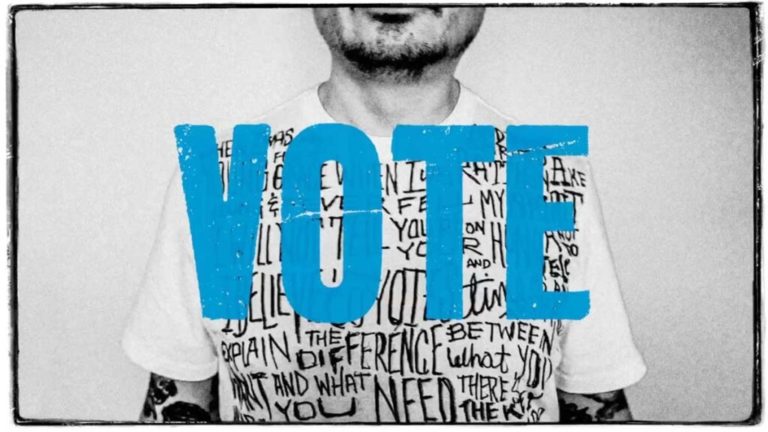
The video, created by longtime famed R.E.M. art director and fellow Athens native Chris Billheimer, draws inspiration from the handmade designs Michael Stipe used to create for himself during the Fables of the Reconstruction tour, as well as the politically themed T-shirts he wore during 1991 MTV VMAs, where the band used their acceptance speech for Best Video (“Losing My Religion”) to draw attention to causes like gun control, reproductive rights, voting rights and alternative energy sources—issues that remain relevant today.

Emphasizes R.E.M.’s Michael Stipe, “I believe the choices in this election could not be more stark or more important.  Please vote and encourage everyone you know to do the same—that is how we win in 2024 and I believe we can do it!!!”

On September 17, R.E.M. released We Are Hope Despite the Times, a digital compilation of songs aimed at encouraging their listeners to stay informed and engaged and to vote during this critical election season. The collection features 18 politically provoking songs, including “Welcome to the Occupation,” “Swan Swan H,” “Fall on Me,” “World Leader Pretend” and “It’s the End of the World As We Know It (And I Feel Fine).”

Throughout their career, R.E.M. has been a vocal advocate for civic engagement, using their platform to promote voter participation and social responsibility. In the early 1990s, they were one of the first bands to partner with Rock the Vote, playing a significant role in increasing youth voter turnout for the 1992 presidential election. Beyond Rock the Vote, R.E.M. has supported voter rights and democracy globally, performing at benefit concerts like the Vote for Change Tour and addressing political causes, from war and environmental justice to human rights, through their music.

With We Are Hope Despite the Times, the band continues to encourage participation in the democratic process, urging fans to register to vote, make their voices heard and play an active role in shaping the future.

Click here to watch “I Believe” and stream/download We Are Hope Despite the Times.

Tracklist:
Turn You Inside-Out
Pop Song ’89
These Days
I Believe
Fall On Me
Welcome To The Occupation
World Leader Pretend
Drive
Begin The Begin
Finest Worksong
Exhuming McCarthy
Just A Touch
Cuyahoga
Disturbance At The Heron House
Swan Swan H
Ignoreland
Stand
It’s The End Of The World As We Know It (And I Feel Fine)

5 Surprising Facts About The Beatles’ Self-Titled Album (or The White Album)

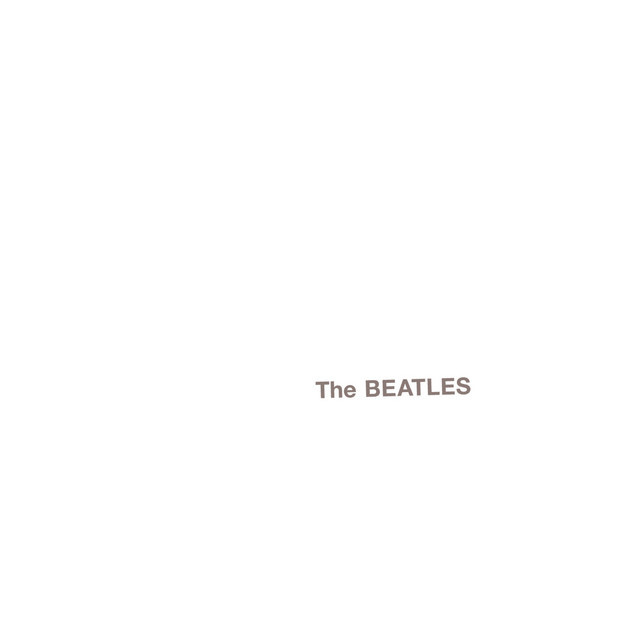
The Beatles’ self-titled ninth studio album, famously dubbed the “White Album,” is as iconic as it is enigmatic. With its simple, all-white cover and sprawling mix of genres, it broke away from the psychedelic vibes of Sgt. Pepper’s and delved into a fragmented, diverse collection of tracks. This double album, released in November 1968, has fascinated fans and critics alike for its eclectic nature and the intense interpersonal dynamics that simmered throughout its creation. Here are five lesser-known facts that reveal even more about this legendary album.

1. The White Album Was Almost Called “A Doll’s House”
During its production, the album bore the working title “A Doll’s House.” The Beatles envisioned a subtle nod to Henrik Ibsen’s famous play, but they scrapped the name when the British band Family released their debut album, Music in a Doll’s House. Ultimately, the understated, stark “White Album” cover — designed by pop artist Richard Hamilton — provided a blank canvas that allowed the music to speak for itself, free from visual associations.

2. Ringo Starr’s Departure Led to a Unique Welcome Back Gift
Tensions ran high throughout the recording sessions, and Ringo Starr briefly left the band in August 1968, frustrated with his role and Paul McCartney’s critical eye on his drumming. He returned a couple of weeks later to find his drum kit adorned with flowers by George Harrison, a warm gesture from his bandmates. This moment of goodwill was one of the few instances of camaraderie amidst an otherwise fraught recording process.

3. Only 16 of the 30 Tracks Feature All Four Beatles
The fractured relationships within the band were mirrored in the recording process itself. Unlike previous albums where the Beatles worked cohesively as a unit, The Beatles saw members recording many tracks solo or in pairs. McCartney even recorded songs like “Blackbird” and “Mother Nature’s Son” alone, while John Lennon’s partner Yoko Ono was a constant presence in the studio, marking a new phase of division within the group.

4. George Harrison’s Songwriting Flourished Here
George Harrison came into his own during the White Album era, contributing some of the album’s most revered tracks, including “While My Guitar Gently Weeps.” His time studying the sitar under Ravi Shankar had broadened his musical scope, and the retreat to India earlier in the year helped him reconnect with the guitar, resulting in some of his most sophisticated compositions to date.

5. The “Numbered Edition” Concept Adds Value
Each original LP pressing of The Beatles was stamped with a unique serial number, adding a personalized touch for millions of fans. This decision, inspired by the limited-edition art world, allowed fans to feel they owned a unique piece of Beatles history. In 2015, Ringo Starr’s personal copy — stamped with the coveted number 0000001 — sold at auction for a record-breaking $790,000.

The White Album isn’t just a collection of songs; it’s a cultural milestone, capturing a period of change and unrest within the Beatles and the world.

Victoria Carr Returns with Stunning New Single “New Year’s Eve” from Forthcoming EP

0

The holidays are often a precious time for people, whether seeing family and friends for the first time in ages or simply waiting for someone’s other half to land at the airport and hurry home. For Toronto-based singer-songwriter Victoria Carr, that feeling is vividly captured in the melodic, roots-based folk effort “New Year’s Eve.” It’s a simple but poignant tale of waiting for that special someone to arrive and doing all the little preparations so their arrival is more welcoming.

“‘New Year’s Eve’ is about waiting for the one you love to get home,” Carr says. And that theme is apparent from its enjoyable start to its almost hypnotic conclusion. From getting the wine chilled to wondering where they’re seated in their flight across the Atlantic to pondering when they’ve flown over Labrador, Carr paints a picture that describes the short-term happiness and elation the visit and reconnection will bring. But also the bigger picture thoughts of whether the relationship will last for years to come.

The single is a gentle, almost criminally melodic affair with Carr’s vocals and acoustic guitar at the forefront. Meanwhile, guitarist Will Whitwham and bassist Tavo Diez de Bonilla (both members of The Wilderness of Manitoba) give “New Year’s Eve” an earthiness that beautifully complements and propels the song forward. Drummer and percussionist Adam Bowman provides subtle percussive patterns while Rachael Cardiello on viola and cellist Michelle Kobakov bring a rich, textured hue to the proceedings. If you were to take singer-songwriters such as Sarah Jarosz, Mary Chapin Carpenter, and the late Nanci Griffith, they would be envious of “New Year’s Eve.”

“New Year’s Eve,” written by Carr and produced by Graham Stairs, and the forthcoming self-titled EP is a victory of sorts for Carr. Recording for it took place during the pandemic in 2020. A music video for the single was recently released and created with Rita Colucci after earlier plans for a video shoot were again nixed by the pandemic. On top of that, Carr battled an autoimmune disease for some time. “Immobility turned me into an observer and a philosopher,” Carr says.

Carr, a member of the Juno Award-nominated group The Wilderness of Manitoba, recorded “New Year’s Eve” at Toronto’s Revolution Recording studios. The musician’s work has been found in audiobook pieces, art installations, and corporate commercials. She also received a 2015 Dora Award nomination for Outstanding Production (Composition and Live Performance) for her work on Hooked.

Now with her five-track self-titled EP on the horizon, fans of Victoria Carr can rejoice that “New Year’s Eve” has come months earlier than expected! Her songwriting depth and caliber are showcased with this incredibly thoughtful tune, one that will be heard far beyond the wilderness of Manitoba.

Quirk-Pop Visionary Hot Mud Celebrates Sobriety with Uplifting New Single “The Best Life I’ve Ever Had”

0

You can call quirk-pop purveyor Hot Mud an optimist if you want; heck, on the right day, he’d probably agree with you. Just don’t dare suggest he’s naïve. On his new single, “The Best Life I’ve Ever Had,” the Ottawa singer/songwriter/visionary takes a hard look at his personal circumstances and decides his glass isn’t just half full—it’s a veritable Holy Grail, simply by dint of it being the only one he’s ever going to own.

“Some days are terribly good,” sings the pensive Mr. Mud (real name: Muddy Matthew Watters), before quickly clarifying that others are “fantastically bad.” Ping-ponging from feeling “miserably happy” to “ecstatically sad” has him wondering for a moment if he might actually be losing his mind. Ultimately, though, he realizes that the perpetually bumpy ride of his existence is well worth it: After all, this is by definition the best life he’s ever had.

That journey of self-realization is perfectly conveyed by the music, which comes clanging out of the gate as an infectious power-pop jangle but gives way to a moody breakdown that’s practically avant-garde as the lyric grows more introspective. And then the pace picks up again, riding the wave of the song’s uplifting conclusion to sunnier days ahead.

Its overall tone of clued-in whimsy makes “The Best Life I’ve Ever Had” the perfect closer to Hot Mud’s sophomore album, Pink Cloud Pop—a nine-song opus the very title of which denotes hopeful self-examination. The “pink cloud,” see, is a clinical term for the state of unbridled optimism recovering addicts typically feel at an early stage of their sobriety. That phenomenon is usually wholly transitory, so naming his second album after it is Hot Mud’s way of challenging destiny; of winkingly daring euphoria to beat the odds and hang around indefinitely.

Because recovery is indeed an integral part of this artist’s story. After years of battling with crippling addictions—he says it felt like an entire lifetime—he made the brave move of checking himself in for a transformative stay in rehab. Once he had his day-to-day situation under control, he moved to a secondary treatment facility, where he set about developing some brand-new skills as part of his nascent personal renewal. He learned the ins and outs of recording technology, so he could get his thoughts about the sobriety process down in musical form. And he learned to produce and host radio shows—which he started doing while he was still admitted, and which has proved invaluable in networking and promoting his music. (Check out Canada’s Cool Culture on Ottawa’s CKCU 93.1 FM.)

The most tangible and immediate result of all this activity was his first album, Rehab Rock, which offered a raw and unvarnished look at his days as an addict and his then-embryonic recovery. Indie O’clock called it “One of the best indie rock works we’ve heard in recent years,” and Turn & Work said “It’s the best thing to come out of Ottawa in a while.” The album was followed by a May 2024 EP, Electric Gutter Club, that acted as a palate cleanser for Pink Cloud Pop to introduce a whole new flavor in September.

Reflecting the immense progress its creator has made on the personal front, the new album sets itself apart with a positive perspective and a more cheerful sound than anything Hot Mud has released before. And in a true sign of artistic maturation, he’s widened his lyrical and thematic focus to the rest of us.

Through personal ruminations like “The Best Life I’ve Ever Had” and “Stranger in the Mirror,” he’s learned to embrace his eccentricities in a way that’s paradoxically made him feel more connected to society’s endless legion of outcasts. The winning “Long Live the Weird” and “Castaway Parade” are the proof, raising a glass to the misfits Hot Mud recognizes as kin on his never-ending journey to self-acceptance and renewal.

And of course, that glass is half-full. What else would you expect at this point? Learning to be a better him while deepening his appreciation of others means Hot Mud is living his best life indeed. And not just by default.

Boosting Memory Through Music: Study Techniques for Students Using Melodic Recall

0

By Mitch Rice

Many students turn to music as a tool for managing stress, enhancing focus, and even improving memory. Melodic recall, or using melodies to help memorize information, is a study technique that harnesses the power of music to aid in the retention of complex material. This method has proven beneficial for students facing intensive memorization requirements, especially in fields like science, law, and history.

For those feeling overwhelmed by coursework or wondering if a professional paper writer might be necessary to keep up, exploring melodic recall as a study aid can be a powerful, enjoyable alternative. This article delves into how music can be a valuable tool for students and practical techniques for incorporating it into study routines.

Understanding Melodic Recall

A melodic recall is a technique in which information is linked to a melody, making it easier to remember through the rhythm and musical structure. The approach works because melodies activate multiple areas of the brain, specifically those tied to memory and emotional processing. By setting information to music, students can tap into both short-term and long-term memory pathways.

This technique is often compared to the way we remember song lyrics even years after first hearing them. It’s a natural process that makes information “stick” more effectively than simple memorization.

For students, melodic recall offers a unique advantage. Instead of spending hours memorizing complex terms or facts in isolation, they can integrate information into tunes, which makes studying more enjoyable and efficient.

Techniques for Using Melodic Recall in Study Sessions

Here are a few effective ways students can start applying melodic recall to their study habits.

1.   Creating Simple Melodies for Vocabulary and Facts

  • Choose a melody that’s easy to remember, like a nursery rhyme or a simple tune. Replace the lyrics with vocabulary words, historical dates, or scientific facts that need to be memorized.
  • For example, medical students could set anatomy terms to the tune of “Twinkle, Twinkle, Little Star,” turning a list of muscles or bones into a catchy song that aids them during exams.

2.   Using Popular Songs to Encode Complex Information

  • For more complex material, students can adapt sections of their notes to the melody of a familiar pop song. This approach leverages the rhythm and structure of popular music to break down larger concepts.
  • For instance, a history student might use a favorite song’s melody to summarize key events of a historical period, with each verse covering a different year or event.

3.   Recording and Replaying Musical Notes

  • Recording a personalized “study playlist” allows students to play their study songs repeatedly, reinforcing recall. By listening to these recordings before bed, students can even take advantage of the “sleep effect,” where the brain consolidates information during sleep.

Choosing the Right Study Music

If creating custom melodies feels challenging, students can still use music in their study routines by selecting background tunes that enhance concentration. Certain types of music are particularly beneficial for studying.

  • Classical Music: Often instrumental, classical pieces provide a calm, focused atmosphere without lyrics that may be distracting.
  • Lo-Fi Beats: This genre has become popular among students for its steady rhythms and lack of lyrical content, providing an ideal environment for focused study sessions.
  • Nature Sounds and Ambient Music: These sounds mimic calming natural environments, promoting a relaxed mindset conducive to memory formation.

Students should experiment and find which type of music best supports their focus and concentration. For some, instrumental music without lyrics works best, while others may find that a familiar genre with lyrics aids their creative or memorization processes.

Balancing Music with Other Study Techniques

While melodic recall is an effective tool, it works best as part of a broader set of study techniques. To maximize its impact, students should combine it with strategies like note-taking, practice tests, and spaced repetition. By varying study techniques, students can strengthen multiple memory pathways, leading to a deeper understanding and retention of material.

Additionally, melodic recall may not suit every subject. Complex problem-solving tasks, for instance, might benefit more from visualization techniques or hands-on practice. Still, melodic recall remains an invaluable tool for subjects that require extensive memorization, making it ideal for vocabulary, historical dates, formulas, and anatomical terms.

Using Music to Unlock Academic Potential

Music has a unique power to unlock memory and boost focus, making it an excellent resource for students. By incorporating melodic recall into study routines, students can transform the memorization process from a tedious task into an engaging, enjoyable experience.

Through melody, rhythm, and repetition, they can tackle challenging materials with greater ease and confidence. Besides, beyond improving memory, using music in studies can help students develop a more positive outlook toward academic tasks, creating a more holistic approach to learning.

Data and information are provided for informational purposes only, and are not intended for investment or other purposes.

What is the Role of Music and Sound Effects in Gaming?

0

By Mitch Rice

Game music and sound effects are the true wings behind the game, tremendously enhancing the gaming experience of players to their satisfaction. From the realistic sounds of the fight to the sweet tones of music, auditory features remarkably improve the game. Even the best graphically designed games could not be nearly as enjoyable if there is no addition of sound.  

Key Roles of Audio in Gaming

  • Intensifies Immersion: Sound and noise hook players into a game
  • Gives Feedback: They exercise influence on the player’s actions or some randomly occurring events in a game.
  • Draws out emotions: Whether it is a fun or somewhat concerning scene, audio kicks off sentiments to align with the same.
  • Boosts Focus: Appropriate sound design lets players focus on the specific mission.

Role of Music and Sound Effects Play in Games

Sound in gaming is not just an additional add-on used to enhance background sound; it is used as a tool in building the environment as well as plotting the story. Music works as an introductory and unifying element for different types of games—for an adventure or a riveting puzzle.

While music changes the gameplay and is set in intervals, the sound effects are extracts of a game and act according to what is happening on the screen, similar to footsteps, explosions, or a spell.

Distinguished gaming platforms such as 66lotteryy.club understand that sound is crucial in gaming. Players can come in and bet on numerous and exciting 66 Lottery games at just ₹10. Interestingly, the platform utilizes different entertaining soundtracks, which make all the moments of the use of the platform as interesting and unforgettable as possible.

In general, whether it is just the winning phase or the build-up to the results, sound intensifies the whole gaming experience.

How Audio Creates a Unique Identity for Games

Among the most salient factors of music and sound effects is that they provide games with a certain level of individuality. Like films get their theme songs, games keep themselves distinctive through special gaming sound effects.

Consider toying with traditional games with tunes that are immediately recognizable to anyone. The custom sound design also helps make each game unique to help players feel the variety and thrill, which is always good.

Why Sound is Important for Players

Sound is not only good for increasing interest but also determines the experience players have through the game. Original soundtracks, which change over time, help create tension during a tough level or a break during a less intense level. These audio cues do help players maintain focus on the objects on the screen, enhancing their playtime.

Final Thoughts

Sounds are very important in every video game, as they sense emotions, maintain concentration, and make you feel like you’re being transported into the game world between the music and effects. Many illustrious gaming platforms, like 66 Lottery, with quality sound platforms, enhance the games in general gameplay. Audio remarkably turns around games from enjoyable to memorable.

Data and information are provided for informational purposes only, and are not intended for investment or other purposes.


Top 5 Reasons Why Lightning Storm Is the Best Action-Packed Game of the Year

0

By Mitch Rice

In the world of gaming, Lightning Storm has quickly risen to become the most talked-about action game of the year. With its stunning visuals, engaging storyline, and dynamic multiplayer mode, this game has set a new standard for action-packed entertainment. Let’s dive into the top 5 reasons why Lightning Storm is the best game of the year.

An Action-Packed Game That Redefines Excitement

Lightning Storm brings a new level of excitement to the gaming world. Its blend of intense gameplay, cutting-edge graphics, and immersive audio make it an experience like no other. Players are drawn in by its captivating missions, diverse gameplay options, and the ability to connect with friends in real-time.

Here’s a quick rundown of what makes Lightning Storm the game to beat this year:

  • Stunning graphics and realistic environments.
  • A deep, engaging storyline with multiple endings.
  • Dynamic multiplayer modes that cater to all skill levels.
  • Exceptional sound design that heightens the experience.
  • Thrilling gameplay that keeps players on the edge of their seats.

Looking to experience all these features yourself? Visit the official Lightning Storm live casino site to get started.

Intense Graphics and Immersive Gameplay

One of the standout features of Lightning Storm is its high-quality graphics. The game’s visual design is second to none, pulling players into a world that feels almost lifelike. From meticulously crafted environments to realistic character models, the game offers a visual feast that enhances the overall gaming experience.

The dynamic weather systems, which include lightning, storms, and realistic day-night cycles, add depth to the game. Every detail has been fine-tuned to create an atmosphere that keeps players fully engaged. The fluid animations and high frame rates contribute to smooth gameplay.

Cutting-Edge Visual Effects for a Cinematic Experience

Lightning Storm leverages state-of-the-art visual effects, including dazzling lightning strikes, explosive blasts, and detailed shadow effects, to create a truly cinematic experience. These elements bring a sense of realism that makes each mission feel like a high-stakes blockbuster.

Game Graphics Rating Visual Effects
Lightning Storm 9.8/10 Dynamic lighting, shadows
Rival Action Game 1 8.5/10 Moderate effects
Rival Action Game 2 8.0/10 Basic visuals

Engaging Storyline That Keeps Players Hooked

At its core, Lightning Storm isn’t just about action; it’s about storytelling. The game’s plot unfolds through a series of intense missions that strategically and emotionally challenge players. As players progress, they become invested in the characters and their fates

The narrative is rich with unexpected twists. The depth of character development and the evolving story arc are what make Lightning Storm more than just another action game. It’s an experience that keeps players coming back for more.

Branching Storylines and Multiple Endings

The game’s storyline branches out based on players’ decisions. This adds replayability, as players are encouraged to explore different paths to see alternate outcomes.

  • Key choices include:
    • Deciding alliances in critical missions.
    • Choosing to save or sacrifice secondary characters.
    • Unlocking hidden storylines based on player performance.

Dynamic Multiplayer Mode with Unique Features

For those who enjoy social gaming, Lightning Storm’s multiplayer mode is second to none. Whether you prefer cooperative missions or competitive battles, this game has something for everyone. Players can team up with friends or go head-to-head in real-time battles that test their skills and strategies.

The multiplayer features include customizable characters, team-based missions, and unique power-ups that keep the game fresh. What sets it apart is its flexibility — both casual players and hardcore gamers can find something to enjoy.

Cooperative and Competitive Modes for All Skill Levels

The game offers both cooperative missions and intense PvP (Player vs. Player) modes, ensuring there’s something for every type of player. Here’s a quick look:

  • Cooperative Missions: Complete objectives as a team.
  • Battle Royale: Last player standing wins.
  • Capture the Flag: Test your strategy and reflexes.

Exceptional Audio and Sound Design

Sound design is often overlooked, but in Lightning Storm, it plays a crucial role in creating an immersive experience. Every sound has been meticulously crafted to pull players deeper into the game world, from the roar of thunder to the subtle whispers of the wind. The soundtrack enhances the suspense, making players feel like they’re part of a high-octane movie.

The attention to detail in audio ensures that players are constantly on edge, especially during high-stakes missions. Whether it’s the sound of bullets whizzing by or the echo of footsteps in a deserted hallway, the audio design is nothing short of spectacular.

Surround Sound Compatibility for a Realistic Feel

For players with surround sound systems, Lightning Storm offers full compatibility, making the experience even more immersive. The 3D audio allows players to hear enemies approaching from all directions, giving them a tactical advantage.

Game Audio Quality Surround Sound
Lightning Storm 9.9/10 Fully supported
Rival Action Game 1 8.7/10 Partial support
Rival Action Game 2 7.5/10 Limited

Why Lightning Storm Deserves Game of the Year

To wrap up, Lightning Storm excels in graphics, storyline, multiplayer features, and sound design. Its attention to detail and commitment to providing players with an unmatched experience have made it a standout game this year. Here’s a quick recap of why it deserves to be crowned the best:

  1. Cutting-edge graphics and immersive gameplay.
  2. A deep, engaging storyline with replay value.
  3. Dynamic multiplayer modes for all skill levels.
  4. Exceptional sound design that brings the game to life.
  5. Non-stop action that keeps players hooked from start to finish.

If you’re ready to experience it yourself, don’t miss out on Lightning Storm’s action-packed world.

Data and information are provided for informational purposes only, and are not intended for investment or other purposes.

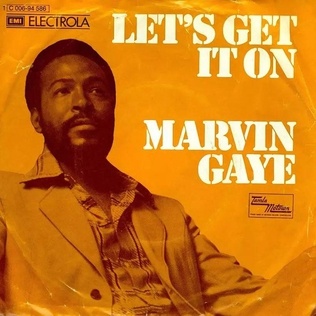
Marvin Gaye’s Isolated Vocals For “Let’s Get It On”

Marvin Gaye’s Let’s Get It On, released in 1973, was an instant classic, blending soulful vocals and sensual lyrics that cemented his status as a sex symbol. Co-written with Ed Townsend, the song topped the Billboard charts, staying #1 for two weeks on the Pop Singles chart and eight weeks on the Soul chart. With over 10 million copies sold in the U.S. and a diamond certification, it remains one of Motown’s biggest hits and a milestone in Gaye’s legendary career.