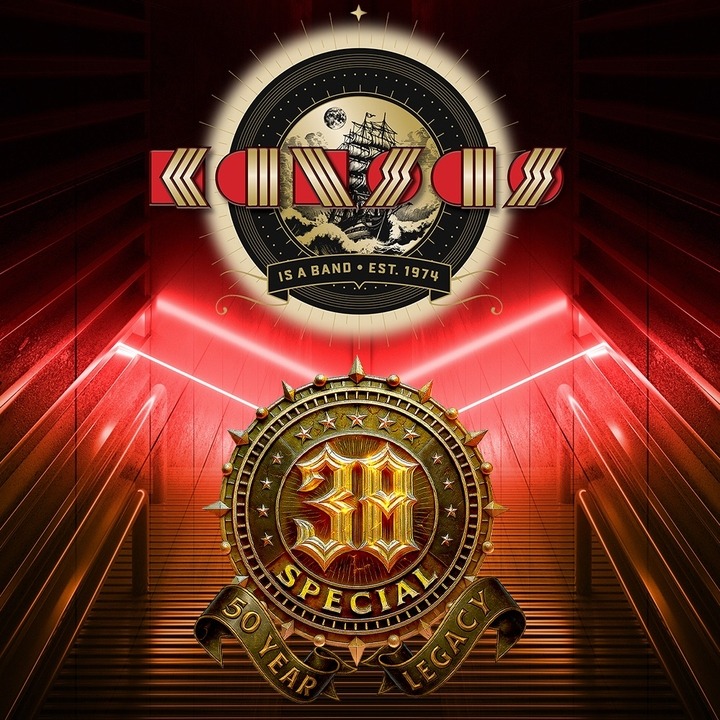
Kansas have announced a new round of 2026 tour dates, joining forces with 38 Special for an eight-city run that kicks off June 5 in Little Rock and wraps July 17 in Beaver Dam, Kentucky. The two classic rock heavyweights will swap closing slots on most nights, with Kansas going solo at the June 19 Heartland Credit Union Arena date in Park City, Kansas. Tickets are on sale now at the band’s website.
The tour adds to an already busy 2026 for Kansas, and the timing feels earned. Singer Ronnie Platt took time away from the road in early 2025 after a thyroid cancer diagnosis, but treatment went smoothly and he returned quickly. “It really feels like it was just a bump in the road,” Platt said. “Mother Nature sent me up a flag. The things that happened, the people that helped me along the way were just amazing.”
Platt sounds like a man with renewed energy, and that comes through in how Kansas has approached this year. Pairing them with 38 Special makes for a bill that delivers full value on both ends, two bands with deep catalogs and crowds that know every word.
Kansas and 38 Special 2026 Tour Dates:
June 5 | Little Rock, AR @ Simmons Bank Arena
June 6 | Lampe, MO @ Black Oak Mountain Amphitheater
June 12 | Macon, GA @ Atrium Health Amphitheater
June 13 | Tuscaloosa, AL @ Mercedes-Benz Amphitheater
June 19 | Park City, KS @ Heartland Credit Union Arena
June 20 | Lincoln, NE @ Pinewood Bowl
July 10 | Fort Wayne, IN @ Foellinger Theatre
July 17 | Beaver Dam, KY @ Beaver Dam Amphitheater
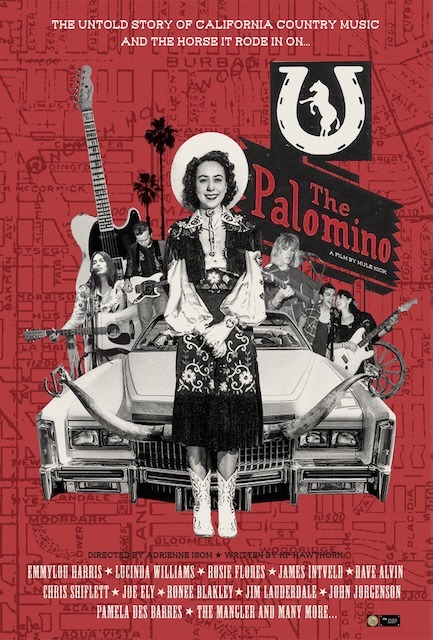
The Palomino, a documentary about the most influential country music venue most people have never heard of, premieres at the Country Music Hall of Fame and Museum’s Ford Theater in Nashville on April 25, 2026 at 2:30 PM. A panel discussion with cast members and filmmakers follows the screening. Tickets are available now at countrymusichalloffame.org.
Directed by Adrienne Isom and written by KP Hawthorn, the film tells the full story of The Palomino Club, a neon-lit honkytonk on Lankershim Boulevard in North Hollywood that operated from 1949 to 1995. Willie Nelson, Waylon Jennings, Johnny Cash, Emmylou Harris, Dwight Yoakam, Lucinda Williams, Merle Haggard, Elvis Costello, The Pretenders, and George Jones all passed through its doors. The West Coast proving ground for country’s rebels and outlaws, The Palomino helped shape what American roots music became.
“We didn’t go looking to make this film,” said Isom. “This is our first film and the story found us. Creating this movie has been the journey of a lifetime.” The project took seven and a half years to complete, drawing on unseen archival footage, raw personal memories, and interviews with artists, historians, and family members who lived the story firsthand.
The film features Emmylou Harris, Lucinda Williams, Dave Alvin, John Jorgenson, Chris Shiflett, and many more. The editorial team includes Emmy Award and ACE Award-winning editor Damian Rodriguez. Produced by L.A. and Nashville-based Mule Kick Productions, a female-owned company that has championed The Palomino’s legacy since reopening the venue for one night in 2018.
This is a piece of American music history that deserves to be seen.
Prime Video has released the official trailer for Bait, a new six-episode comedy series created by and starring Academy Award and Emmy Award winner Riz Ahmed. All six episodes drop March 25, exclusively on Prime Video in more than 240 countries and territories worldwide.
Ahmed plays Shah Latif, a struggling actor whose last shot at breaking through comes in the form of the audition of a lifetime. The series unfolds over four chaotic days as his life spirals, his family weighs in, his ex-lover resurfaces, and the entire world forms an opinion on whether he is the right man for the job. It is a premise built for both comedy and genuine tension, and Ahmed is exactly the right person to carry it.
The supporting cast is stacked. Guz Khan, Sheeba Chaddha, Sajid Hasan, Aasiya Shah, Weruche Opia, and Ritu Arya all appear alongside Ahmed. Ben Karlin serves as showrunner alongside Ahmed, who also executive produces and writes. The series is produced by Jax Media and Amazon MGM Studios.
Ahmed has been one of the most compelling performers working today, and Bait puts him front and center in a vehicle entirely his own. The trailer delivers on the premise with sharp writing, a kinetic pace, and Ahmed doing what he does best.
All six episodes of Bait stream March 25 on Prime Video.
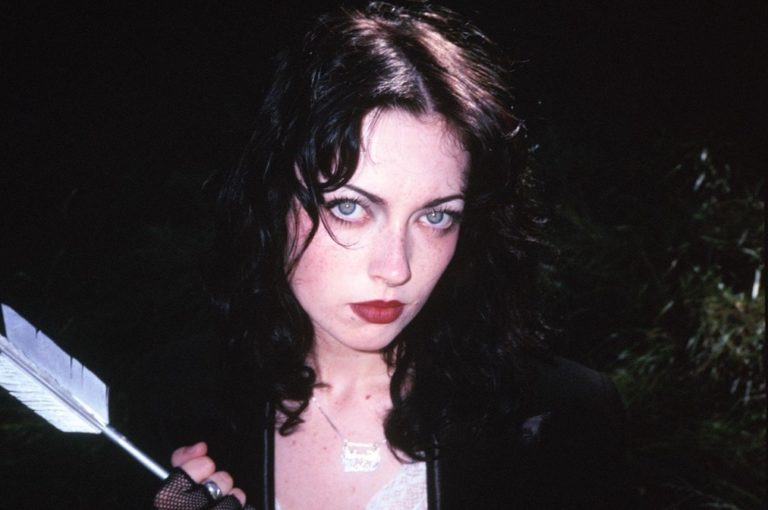
Violet Grohl announces her debut album, Be Sweet To Me, set for global release on May 29th via Auroura Records / Republic Records. Following the 2025 release of “THUM” and “Applefish,” today Violet also unleashes a new album track “595,” accompanied by a Nikki Milan Houston-directed video.
Inspired by a vintage t-shirt advertising a phone sex line, new song “595” is a sly and sexy slasher filled with jolts of noise and a killer chorus: “I’ll be your 1-900-G spot, baby / 595 I’m on the line / You won’t last.”
Be Sweet To Me was recorded from late 2024 into early 2025 at producer Justin Raisen’s (Kim Gordon, Charli XCX) Los Angeles home studio alongside musicians assembled in the spirit of the Wrecking Crew session players in the ’60s and ’70s. The first song Violet wrote with her collaborators, a fuzzy ripper called “THUM,” was influenced by the old-school packaging of anti-nail-biting polish that Grohl brought into the studio. “Self help me/Self help myself/Chew my bitter fingers,” she snarls in a honeyed voice over ecstatic squall.
Alternative music from the late ‘80s and early ‘90s is a perpetual influence. “There’s something so powerful about that period of music, from the messaging to the visuals, it’s authentic and raw.” Pixies, Soundgarden, Cocteau Twins, The Breeders, PJ Harvey, The Muffs, Björk, Alice in Chains, L7, Juliana Hatfield: “I’ve listened to that stuff since I was a kid,” Grohl says.
The songs on Be Sweet To Me were conjured from the immediate present and tend to be impressionistic, colored by Grohl’s love of film, particularly the work of David Lynch. The slippery and melodic “Bug In A Cake” recalls the paranormal activities surrounding Grohl’s recent move into the home of her late paternal grandma, a beloved “guiding force” in her life. “Turn the TV off so it turns back on/Come on, grandma, play me your favorite song,” Grohl roars.
In addition to CD, Be Sweet To Me is available to preorder in black, blueberry jam (exclusive to indie retailers) and ivory vinyl (exclusive to the official artist store). Pre-Save + Pre-Order HERE.
1. THUM 2. 595 3. Bug In The Cake 4. Last Day I Loved You 5. Big Memory 6. Mobile Stars 7. Often Others 8. Applefish 9. Cool Buzz 10. Pool Of My Dream 11. Plastic Couch
In January, Violet released “What’s Heaven Without You,” a haunting track written in the aftermath of the Altadena fires in Los Angeles, inspired by David Lynch. The track will be available along b-side “Swallowtail” as an exclusive 7” Record Store Day release on April 18th. FLOOD Magazine said it “features an atmospheric instrumental bolstered by a marching snare drum and ethereal synths,” whileAlternative Press said it “shows Grohl’s voice drifting over an enigmatic instrumental as she grapples with an internal monologue, feeling trapped between devotion and self-protection.
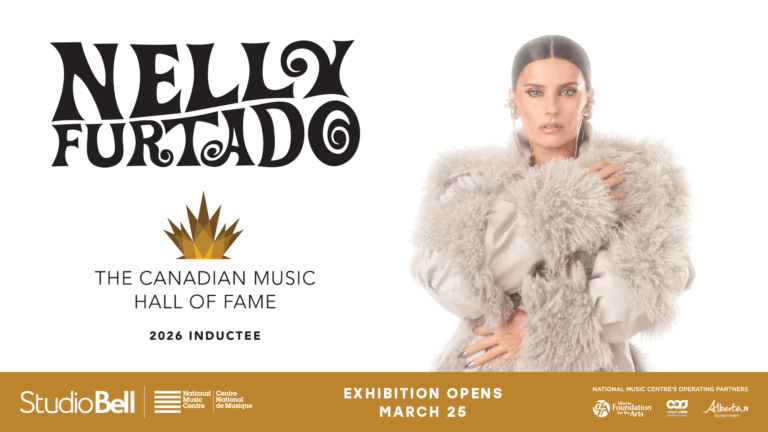
The National Music Centre in Calgary opens a new feature exhibit dedicated to Nelly Furtado on March 25, just days before her induction into the Canadian Music Hall of Fame at the 55th Annual JUNO Awards in Hamilton on March 29. Developed in partnership with CARAS, the exhibit lives at Studio Bell and runs through February 2027.
The exhibit spans Furtado’s full career arc, more than two decades of genre-defying pop that has moved over 35 million albums worldwide and earned her JUNO, GRAMMY, and Latin GRAMMY Awards. Highlights include a 20-foot illuminated catwalk displaying iconic stage outfits, among them the black sweater vest from the 2006 “Maneater” video and a custom silver ensemble worn during her 2024 JUNO Awards performance. Original lyric sheets, notebooks, and archival materials offer an intimate window into her songwriting process.
“Music has always been about exploration for me, and this exhibit captures so many chapters of my journey,” said Furtado. “To have these moments and memories showcased at the National Music Centre is such an honour.” The exhibit is the first of two Canadian Music Hall of Fame displays opening at NMC in 2026, with a second celebrating the remaining class of 2026 inductees arriving this fall.
The timing could not be better. Furtado’s Hall of Fame induction airs nationally on March 29, placing her alongside Canada’s most celebrated musical icons. Allan Reid, President and CEO of CARAS, called her “one of the artists who has redefined contemporary pop music most boldly,” and the exhibit makes that case with force.
The Nelly Furtado exhibit is accessible with paid admission to Studio Bell in Calgary. It opens March 25.
Kacey Musgraves has announced her seventh album, ‘Middle of Nowhere’, due May 1 via Lost Highway. Leading the record is “Dry Spell,” a new single accompanied by a cheeky music video co-directed by Musgraves and Hannah Lux Davis. The clip follows Musgraves through a grocery store, daydreaming about one of the employees. It is exactly as fun as it sounds.
The album finds Musgraves processing a long stretch of creative solitude, writing across time spent in Texas, Tennessee, and Mexico. “For the first time, it actually felt incredible being alone and existing in a space not defined by anyone else,” she said. That openness to liminal space, geographical and emotional, shapes the entire record. The result sounds like an artist fully at ease with uncertainty.
The guest list is formidable. Willie Nelson, Miranda Lambert, Billy Strings, and Gregory Alan Isakov all appear on ‘Middle of Nowhere’, each lending their voice to a project that already feels like one of the more anticipated country-adjacent releases of 2026. Musgraves has always known how to build a room, and this one has serious company.
The announcement follows Musgraves taking home Best Country Song at last year’s Grammy Awards for “The Architect,” bringing her career total to eight wins. She praised 2026 Album of the Year winner Bad Bunny last month after his Super Bowl Halftime Show performance. ‘Middle of Nowhere’ arrives May 1.
‘Middle of Nowhere’ Tracklist:
1 Middle of Nowhere
2 Dry Spell
3 Back on the Wagon
4 I Believe in Ghosts
5 Abilene
6 Coyote (ft. Gregory Alan Isakov)
7 Loneliest Girl
8 Everybody Wants To Be a Cowboy (ft. Billy Strings)
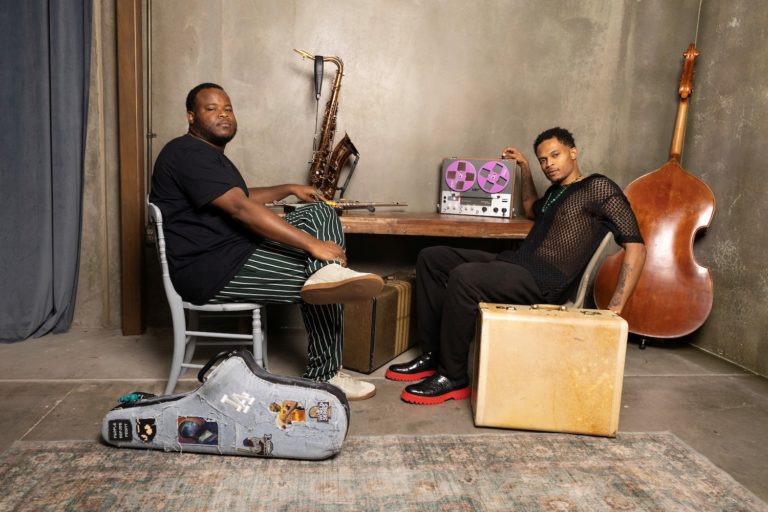
Black Nile are back with a new single, and it is a quietly stunning one. Brothers Aaron and Lawrence Shaw released “Danielle” on March 11, a slow-rolling jazz number written by Aaron during one of the most difficult periods of his life. The track arrives ahead of the duo’s forthcoming album, ‘Indigo Garden’, due April 10 on MASS MoCA Records. Listen here.
“Danielle” carries real weight. Aaron wrote it while going through chemotherapy, returning again and again to a melody he’d captured in a voice memo. “Every time I thought about this melody, I thought about her,” he said of his partner. The song is a love letter, and it sounds like one, warm and unhurried, built around feeling rather than flash.
Black Nile come out of the L.A. jazz scene that produced Kamasi Washington, Thundercat, and Terrace Martin. Both GRAMMY-nominated, Aaron’s saxophone work has landed him collaborations with Tyler, The Creator, Herbie Hancock, Saul Williams, and Carlos Niño. He gave André 3000 flute lessons. Lawrence has played bass for John Legend, Booker T. and the M.G.’s, Nubya Garcia, and Raphael Saadiq, and currently tours with Andy Grammer.
‘Indigo Garden’ was recorded at Studio 9 in North Adams, MA and Hen House Studios in Venice Beach, produced by Harlan Steinberger, who has been with the band since their earliest sessions. The album features cover art from conceptual artist Charles Gaines and contributions from keyboardists Luca Mendoza and Brian Hargrove, and drummer Myles Martin. It is both a deep bow to their Inglewood roots and a bold push into new jazz territory.
TIDAL called Black Nile’s sound “funky ideas, traditional thoughts, even a nod to dub music,” and ‘Indigo Garden’ delivers exactly that and more. “Danielle” is out now on all platforms.
Live Nation announced today that it is exploring plans for a new music venue in the heart of downtown Bentonville. In collaboration with the Momentary, the Bentonville Ballroom would be located adjacent to the beloved arts institution and would attract national touring acts, community events, and local performances. With a capacity of 2,500, it would add a much-needed midsize performance space to the city and complement the venue landscape in Northwest Arkansas. It would open in 2028.
Bentonville Ballroom would represent a meaningful investment in the local community and the city’s long-term future. It would provide a significant boost to nearby small and local businesses, particularly restaurants and hotels, by driving increased tourist and economic activity. It is estimated to generate $46.3 million in economic impact every year. The venue would support approximately 280 jobs, including venue employees earning starting wages of $20 per hour. In addition, the project is expected to generate approximately $4.9 million annually in state and local tax revenue.
The proposed concept by Blueprint Studio, Live Nation’s in-house design and development group, and BIG-Bjarke Ingels Group and Polk Stanley Wilcox, reflects Bentonville’s deep connection to nature. Early concepts feature natural materials, warm wood tones, and a layout that brings the Ozarks’ textures and light into the performance space. The vision is a venue that feels both modern and rooted, where art, architecture, and landscape work together to create an unforgettable setting for live music.
“Bentonville is a destination for arts and culture, and food, and the Momentary ignited the city’s music scene,” said Tom Walton, chair of the Momentary Council. “The Bentonville Ballroom will be a beautiful new cultural landmark. We’re happy to invite Live Nation to our campus. Their experience connecting artists and fans will accelerate our city’s momentum with year-round, quality music experiences for residents and visitors.”
“We’re honored to work with the Momentary to bring more music to Northwest Arkansas,” said Anthony Nicolaidis, Live Nation’s Arkansas Market President. “This is going to be a special room that brings major artists to Bentonville, and creates a permanent cultural asset for the city – a place where local fans can see their favorite acts without having to travel.”
Every detail will be crafted with both artists and fans in mind, from state-of-the-art acoustics and clear sightlines to comfortable gathering spaces and thoughtful amenities and premium hospitality. Premium options will be available for those seeking an elevated experience. The space will also be available for private and corporate events. The venue, including ticketing and programming, will be operated by Live Nation.
Live Nation will work with neighbors and city officials to review the proposal and share input. Priorities include a parking plan that utilizes the Momentary’s garage spaces and connects the venue to Bentonville’s strong cycling infrastructure.
“We’re excited to see this investment in Bentonville’s live music infrastructure and enthusiastically support the Bentonville Ballroom project,” said Kalene Griffith, president and CEO of Visit Bentonville. “Live music delivers real economic value for Bentonville and attracts audiences from our community, the region, and beyond. In addition to music, the Bentonville Ballroom will also strengthen our unconventional convention offerings and expand our capacity to host high-impact cultural and business events.”
The earliest stage of a creative project is often the most fragile. A campaign may already have its visual language, a short film may already have its pacing, and a personal project may already have its emotional center, yet the sound still feels undefined. That missing layer creates a strange kind of delay. People can describe what they want, but they cannot hear it yet. That is exactly why an AI Music Generator matters in practice. Its value is not only that it can produce music quickly. Its deeper value is that it gives shape to musical intent before a team has fully committed to a costly or time-consuming production path.
What interested me about ToMusic is that it does not present music generation as a one-click gimmick. The platform is organized more like a workspace for turning prompts or user-written lyrics into complete songs, then storing those outputs in a library with metadata for later retrieval. It also presents multiple model versions rather than asking users to trust one single engine for every job. In my reading of the product, that combination changes the role of AI music. It becomes less about replacing a final studio process and more about accelerating the phase where teams need to test direction, compare emotional options, and decide what a project should sound like before moving further.
Why Sound Direction Often Slows Down Creative Work
Many teams know when something visual is almost right. Fewer teams can say the same thing about sound early in the process. Music decisions are often postponed because they feel expensive, subjective, or technically intimidating. Yet delaying those choices can create problems elsewhere. An edit may feel too slow because the soundtrack is wrong. A product trailer may feel less persuasive because the emotional energy never lands. A personal video may look polished but still feel unfinished because the audio does not support the story.
What makes this issue difficult is that music is not just decorative. It affects timing, perception, and meaning. The same footage can feel reflective, urgent, intimate, or triumphant depending on the soundtrack beneath it. That means sound choices are rarely minor. They shape how the rest of the project is understood.
Why Teams Need Faster Emotional Prototypes
In my experience, creative teams often do not need a final song first. They need a fast emotional prototype. They need to hear whether the project wants warmth, tension, softness, momentum, or contrast. Once they can hear one possible direction, they become much better at making decisions around it.
That is where ToMusic seems useful. Instead of treating music as the last expensive layer added near the end, it allows teams to generate a version early enough to influence the rest of the process. A rough but directionally accurate song can tell an editor whether the pacing works. It can tell a founder whether a launch video feels too serious. It can tell a small brand whether its tone sounds generic or distinct.
Why Delay Often Comes From Translation Problems
A lot of creative delay is really a translation issue. Non-musicians are often able to describe what they want in plain language, but not in production language. They might say a track should feel spacious, nocturnal, restrained, hopeful, or cinematic without knowing which chord choices, instrumentation, or arrangement techniques would achieve that result.
Traditional music workflows are not always built for those users. They assume someone in the room can translate emotional language into technical instructions. ToMusic appears designed around a different assumption: that natural language itself can be the starting point. That is a subtle but important shift because it makes the first step much more accessible to people who think in story, mood, and timing rather than software or theory.
How ToMusic Turns Briefs Into Usable Drafts
The core logic of the platform is surprisingly clear. A user enters either descriptive text or lyrics, chooses from available generation options and models, and then receives a full musical output that can be saved, reviewed, and exported. That sounds simple, but the practical consequences are larger than they first appear.
How Prompt Input Works Like A Creative Brief
When a user types a prompt, they are effectively creating a miniature creative brief. They can signal genre, emotional tone, tempo preferences, arrangement density, and vocal style through natural language and visible tags. The generator page shows fields such as title, styles, genre, moods, voices, tempos, and lyrics, which suggests the system is built to interpret descriptive direction rather than just one vague sentence.
That structure matters because it helps users think more clearly about what they want. A prompt is not only a command. It is a way of organizing intent. A creator who writes “warm indie pop with female vocals and gentle momentum for a travel montage” is already clarifying the job the music needs to do.
Why Multiple Models Change The Workflow
Another meaningful detail is that ToMusic does not rely on one single model. The official pages describe V1 through V4, with different positioning across the range. V1 is presented as more balanced and lightweight, while V3 emphasizes richer harmonies and rhythmic sophistication, and V4 is framed as the flagship option with the strongest vocal expression.
For me, this suggests the platform is trying to match different use cases rather than flatten them into one generic generation path. That matters because no creative project asks for exactly the same thing. A quick social clip and a more emotional lyric-driven song are not the same task. By offering multiple model options, ToMusic allows the user to think more strategically about which kind of output they need.
How Full Songs Change Decision Quality
The platform’s emphasis on complete songs rather than just small snippets is also important. A full output gives the user more than a surface impression. It reveals pacing, development, energy changes, and how the emotional idea evolves over time. In practical terms, that makes the result more useful for actual decision-making.
A team can ask better questions once the whole form exists. Does the chorus arrive too late for the video edit. Does the vocal delivery feel too polished for a raw personal piece. Does the arrangement leave enough room for narration. These are not questions a short fragment answers very well. A complete song gives much stronger feedback.
Why Music Libraries Matter More Than People Expect
People often focus on generation itself because it feels like the headline feature. But repeated creative work depends just as much on retrieval and organization. If every output disappears into a cluttered history, the workflow becomes less valuable over time.
Why Stored Metadata Supports Real Iteration
ToMusic’s Music Library is described as a personal hub that automatically stores generated tracks along with titles, tags, descriptions, lyrics, and generation parameters. I think that is more important than it first sounds. When a project involves multiple attempts, knowing what was generated and why becomes part of the creative process.
A creator may remember that one version felt closer, but not remember which model, lyric structure, or style combination produced it. Metadata solves that problem. It turns experimentation into a learnable process rather than a series of disconnected lucky guesses.
How Libraries Turn Drafts Into Assets
There is another layer to this. A generated song that does not fit one project might fit another one later. If outputs are saved in an organized way, they stop being disposable. They become assets. A team can revisit past drafts when a new project needs something similar in tone or pacing.
That shifts the platform from a novelty generator to a reusable creative archive. For people working on multiple campaigns, videos, or experiments each month, that kind of continuity matters.
How Lyrics To Music AI Changes Team Communication
One of the more interesting parts of ToMusic is its lyric-based workflow. Many creative projects begin not with melody but with words. That could be a chorus, a jingle line, a hook for a campaign, or a more personal lyric written before any musical structure exists. This is where Lyrics to Music AI becomes more than a convenience feature. It functions as a communication bridge between verbal intention and audible form.
A lyric on the page contains emotional information, but it does not yet tell the whole story. The same line can sound confessional, theatrical, understated, dreamy, or emphatic depending on how it is sung and arranged. In that sense, lyric-to-song generation is not just completion. It is interpretation. It asks the system to infer how words should live inside music.
Why Lyrics Help Teams Align Faster
For teams, this is useful because words are often easier to discuss than musical detail. A founder may know the message a launch song should carry. A writer may already have lines that match a video’s theme. A marketer may want to test whether a phrase works better as spoken copy or as a musical hook.
Once those words can be heard in song form, the conversation becomes much more concrete. People are no longer debating abstractions. They are reacting to timing, delivery, atmosphere, and fit.
Why Interpretation Matters More Than Automation
The strongest lyric-based systems are not only the ones that produce clean audio. They are the ones that make the words feel musically placed. In my view, that interpretive quality is the real challenge. A weak result sounds like text attached to a backing track. A stronger result sounds like the musical form understands where emphasis belongs.
ToMusic positions its upper models around stronger vocal quality and more advanced musical expression, which makes sense in this context. Better lyrical interpretation is exactly where a lot of practical value shows up for users who begin from text rather than instrumental composition.
What The Official Workflow Looks Like In Practice
One reason tools like this are easier to adopt is that the visible workflow remains short. The complexity sits behind the scenes, while the user path stays manageable.
Step One Begins With Prompt Or Lyrics
The user starts by entering a descriptive prompt or custom lyrics into the generator. This establishes the song’s intended direction, from mood and style to lyrical content and vocal character.
Step Two Selects The Model And Settings
The next stage is choosing the generation setup visible on the page, including the model and available controls such as style-related tags and other prompt-shaping inputs. This is where the user decides how much direction to give the system.
Step Three Generates The Complete Song
After that, the platform produces the full musical result. At this point the user can listen not just for sound quality, but for fit. Does the song match the project’s timing, tone, and purpose.
Step Four Saves Or Exports The Result
The final step is keeping the result inside the Music Library or exporting it through supported download options. The official pages also mention WAV and MP3 downloads, along with more advanced options such as stem extraction and vocal removal on supported plans.
How ToMusic Differs From Simpler Music Tools
A lot of AI music products sound similar when described in broad terms. Nearly all of them promise speed, originality, and ease. The more useful comparison is not whether they generate music, but whether they support repeated, structured use.
Category
Basic Generator
ToMusic Workflow
Starting input
Usually one short prompt
Prompt plus custom lyrics
Model structure
Single default engine
Four models with different strengths
Song scope
Often quick fragments
Full-song oriented generation
Draft storage
Minimal history
Organized library with metadata
Export options
Limited handling
WAV, MP3, stems, vocal tools
Team usefulness
Casual testing
Ongoing iteration and reuse
That difference matters because creative teams rarely need a one-time novelty. They need a process they can return to. They need to compare drafts, revisit near-misses, and build continuity from project to project.
Where This Platform Fits Best
The product becomes easier to understand when mapped to real use cases rather than abstract claims.
For Content Teams Building Repeated Formats
Teams that publish regularly need more than good music once. They need repeatable musical direction. An AI-based system helps them test multiple approaches without restarting the entire music conversation every time.
For Founders Testing Brand Tone Early
A startup or indie product often has visuals and copy before it has a sound identity. Generated music drafts can help define what the brand should feel like emotionally before larger production choices are locked in.
For Editors Matching Audio To Pace
Editors often discover that the “problem” in a scene is not visual but rhythmic. A different soundtrack can solve pacing issues much earlier than expected. Having a fast way to test full songs can therefore improve editing decisions directly.
For Writers Who Need To Hear Their Ideas
A lyric, slogan, or campaign phrase often changes character once it becomes audible. Generation helps teams judge whether language works better as text alone or as musical material.
Why Early Sound Decisions Create Better Later Work
The earlier a team can hear the emotional direction of a project, the better its later decisions tend to become. Visual edits, script timing, and tone all benefit from not having to wait until the very end for music to arrive.
What The Limits Still Are
A grounded view makes the tool more believable, not less.
Prompt Clarity Still Affects Results
A vague request tends to create a vague outcome. Users still need to describe what they want with reasonable specificity if they expect a strong match.
Iteration Remains Part Of The Workflow
In my observation, one generation is rarely the final answer. Better results often come from refining the brief, switching models, or slightly rethinking the role the song is supposed to play.
Taste Still Matters More Than Speed
The platform can reduce friction, but it cannot choose what feels honest, memorable, or emotionally right for the project. Human judgment remains the final filter.
Why The Shift Still Feels Meaningful
Even with those limits, ToMusic points to an important change in creative work. It turns music generation into a language-led testing process that can happen early, quickly, and repeatedly. For teams that need to hear direction before they can fully commit, that is not a minor convenience. It is a structural advantage. It means more ideas become audible soon enough to influence the work while it is still flexible, and that is often where better creative decisions begin.
Data and information are provided for informational purposes only, and are not intended for investment or other purposes.
Spotify Canada has named Cat Clyde and MICO as the latest ambassadors for its EQUAL and RADAR programs, a timely spotlight on two of the country’s most compelling independent voices ahead of the JUNO Awards. Both artists will be featured on Toronto’s iconic Sankofa Square billboard and each curates a playlist celebrating the genre-blending artists driving the Canadian sound forward right now.
Cat Clyde takes the EQUAL Canada ambassador role. The rural Ontario singer-songwriter has built a devoted following through soulful folk, blues, and vintage country rooted in evocative storytelling and rich, warm soundscapes. Her EQUAL playlist spotlights trailblazing women artists shaping the future of Canadian music, landing at the intersection of International Women’s Day and JUNO season.
MICO holds the RADAR Canada spot. The Toronto-born artist (Miguel Velso) makes emotionally charged alternative pop that pulls from pop-punk energy, nostalgic influences, and internet-era storytelling. His songs are deeply personal and built to resonate, earning him a devoted fanbase known as the Amicos. He represents exactly the kind of global-minded Canadian artist the RADAR program was designed to amplify.
Together, the two ambassadors reflect the range and depth of what Canadian music looks like in 2026. Folk and alternative pop, vintage roots and contemporary edge, both rooted in authentic songwriting and both connecting with audiences well beyond Canadian borders.