Home Blog Page 112

One Time Mountain Unleash Hard Hitting Rock Single “Understand”

0

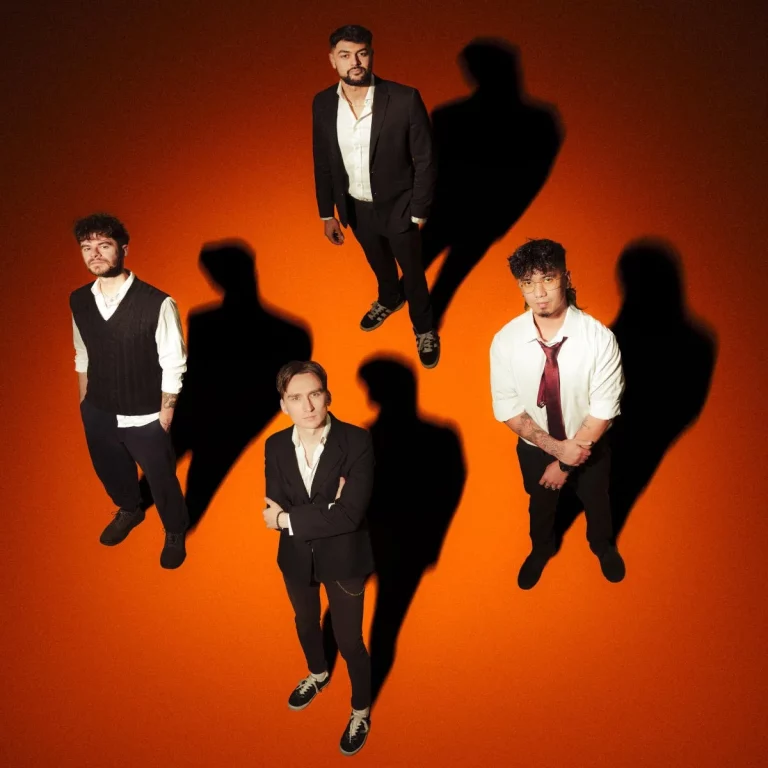
Boston rockers One Time Mountain kick off the year with the release of their high octane single “Understand” to satisfy fans of classic and modern heavy sounds. Brian Murphy, Ethan Garman, Zach Rizzo, and Alec Smith channel the raw power of 1970s legends while injecting a youthful surge into the current rock scene. The track features loud guitars and commanding vocals that capture the specific grit of a packed venue performance. This release serves as the fresh blood pumping through the veins of the genre to keep the spirit of rock alive and well.

The band accompanied the song with a new music video filmed during a chaotic and celebratory weekend in New Hampshire. Despite the hurdles of travel delays and late nights, the group captured the authentic energy that defines their identity as a live powerhouse. Lyrically, the song explores the balance of seeking connection while maintaining personal independence. This single acts as a massive precursor to a busy 2026 schedule involving an upcoming EP, a first ever vinyl release, and a full length album. The relentless drive of the instrumentation on this track proves that the band is hitting a brand new peak in their career.

The Molotovs Ignite Punk Fury With New Single “Get A Life” From ‘Wasted On Youth’

0

The Molotovs officially unleashed their latest single “Get A Life” today to signal the final countdown toward the arrival of their debut album ‘Wasted On Youth’. Teenage siblings Matt and Issey Cartlidge deliver a frenetic ball of punk fury that clocks in at under two minutes. This track serves as the high energy opener for the upcoming record and establishes a blistering pace defined by sharp riffs and pointed lyrics. Following the success of top ten hits “More More More”, “Today’s Gonna Be Our Day”, and “Rhythm Of Yourself”, this new release reinforces the band as a dominant force in the modern indie scene.

The duo brings a wealth of experience to this recording after performing more than 600 shows across London and international stages. Their resume includes notable support slots for icons like Blondie and Iggy Pop along with a special fundraising appearance at Bush Hall alongside Paul Cook of the Sex Pistols. This dedication to the grassroots circuit shines through in the raw and authentic sound of the new material. The sheer velocity of the instrumentation combined with the biting vocal delivery creates a sonic landscape that keeps listeners gripped from the first chord. This record is a definitive statement of intent from a band that lives and breathes the stage.

Universal Music Group And NVIDIA Partner For Responsible AI Using ‘Music Flamingo’ Model

0

Universal Music Group and NVIDIA officially launched a massive collaboration to pioneer responsible AI through the advanced ‘Music Flamingo’ model. This partnership utilizes NVIDIA AI infrastructure and the world leading UMG music catalog to transform how fans find and listen to their favorite tracks. The ‘Music Flamingo’ technology moves past simple tags to understand the harmony, timbre, and cultural context of full length songs. It uses chain of thought reasoning to interpret emotional arcs and complex chord progressions with human like precision.

This new technology allows the exploration of a music catalog like an intelligent and interactive universe. Artists and fans gain access to tools that surface music based on emotional narrative and deep resonance rather than just genre. Emerging artists benefit from increased visibility as the system connects them with listeners most likely to become dedicated followers. UMG remains committed to protecting the work of creators by ensuring proper attribution and copyright respect across all new platforms.

The establishment of a dedicated artist incubator brings songwriters and producers directly into the development process. These creative laboratories operate out of iconic locations including Abbey Road Studios and Capitol Studios to test tools in real world workflows. This hands on approach ensures that AI serves as a boost to authenticity and human originality. The partnership prioritizes the interests of the creative community by focusing on high quality outcomes over generic outputs.

The industry now has a clear path forward for integrating sophisticated machine learning with legendary musical legacies. This initiative sets a firm standard for innovation that places the artist at the center of every technological leap. Every track in the UMG library becomes a doorway to a deeper understanding of musical history and future trends. Modern music discovery is officially smarter and more respectful of the people who create the sounds we love.

The sheer depth of this technical integration provides a massive win for everyone who values musical integrity.

Live Nation Acquires Europe’s Largest Indoor Venue Paris La Défense Arena From Ovalto

0

Live Nation has signed an agreement to acquire Paris La Défense Arena – Europe’s largest indoor venue – from Ovalto. This landmark deal will bring more shows, upgraded facilities and major benefits to Paris, Île-de-France and the wider French live entertainment industry.

Live Nation will launch a major upgrade programme, once the deal completes, that will enable the Arena to host significantly more productions year-round; attracting leading French and international artists and reinforcing Paris’ position as a global live entertainment destination.

Since opening in 2017, Paris La Défense Arena has hosted some of the world’s biggest events – from the Olympic Games and the Tour de France to the Rolex Paris Masters – as well as performances by global superstars including Bruce Springsteen, The Rolling Stones, Kendrick Lamar, Taylor Swift, Hans Zimmer and Dua Lipa.

With Paris La Défense Arena, Live Nation joins the existing network of major French venue operators alongside LDLC Arena, Accor Arena and Stade de France. Live Nation will continue to promote shows across all venues and welcome all promoters to Paris La Défense Arena. The increased capacity will create more opportunities for event producers, artists and fans, enriching the region’s cultural landscape. Completion of the transaction is subject to approval by the French Competition Authority.

Protected: Top Corporate Gift Suppliers in Dubai for Premium Business Gifts in 2026

0

This content is password protected. To view it please enter your password below:

Deepfakes, Fake Accounts, and “AI Collabs”: A Practical Trust Playbook for Artists

0

By Mitch Rice

A few years ago, impersonation at scale took real effort. Today, a fake account, a cloned voice, or a convincing “new song leak” can show up overnight.

That doesn’t mean every artist needs to become a cybersecurity expert. It does mean trust is now part of the job, the same way merch logistics and ticketing are part of the job. If fans can’t tell what’s real, they hesitate. If they hesitate, they do not buy, stream, share, or show up.

Here’s the practical version of what to do, built for real teams with limited time.

The three impersonation problems to plan for

Most artist impersonation falls into three buckets.

First: fake accounts that look real enough to trick fans into clicking links, buying fake tickets, or sending money in DMs.

Second: synthetic media like voice clones and deepfaked video clips that get passed around as “proof” of a statement, a collaboration, or a scandal.

Third: confusion by volume, where dozens of “fan pages,” “label pages,” and “promo pages” all post different links. Even when nobody is malicious, the mess makes it easier for a scammer to blend in.

You do not need a perfect solution for all three. You need a baseline that makes your real channels obvious.

Your trust baseline (quick wins that matter)

Start with simple, repeatable steps.

Lock down naming consistency. Your handle, display name, and profile image should match across platforms as closely as possible. If you have to vary a handle, keep the changes predictable.

Own one canonical link. Pick one link you control (your website or a single link hub) and treat it as the source of truth. Every bio, every story, every press mention points back to that.

Add a “real accounts” page. One page that lists your official profiles. Keep it boring and up to date. This page becomes your calm response when a fake pops up.

Keep your DMs clean. If your team runs promotions or giveaways, write down the rules publicly and link to them. Scammers live in ambiguity.

None of this is fancy, but it reduces confusion, and confusion is what scammers need.

Verification signals fans actually notice

Verification badges help, but they are not a full strategy, and not every platform treats every artist the same.

Fans notice these signals more consistently:

The “same link everywhere” pattern. If your link is consistent across platforms, fans learn it. Scammers usually break the pattern.

Pinned posts that explain where to go. A pinned post that says “These are my only accounts” sounds obvious. It works because it gives fans a reference point.

Repeated language cues. A simple phrase you reuse in real announcements can act like a low-tech watermark. It does not stop fraud, but it helps fans recognize your voice.

A stable email address for business. One email that appears on your website and in your bios (when appropriate). Scammers avoid stable points of contact.

Think of this as brand hygiene. You’re making the real version easy to recognize.

What to do when a fake appears (a 48-hour response plan)

The worst response is silence. The second worst response is a chaotic, emotional thread that unintentionally spreads the fake.

A clean 48-hour plan looks like this:

1) Document first. Screenshot the account, the posts, the links, and any payment asks. Save URLs. Platforms move slowly and posts get deleted.

2) Report through the right channel. Use impersonation reporting tools where available. If you have label or platform contacts, route it through them, but still file the official report.

3) Post one calm notice. One story or post that points fans to your official accounts page and says, plainly, “This is not me.” Avoid quoting the scam link.

4) Update your canonical link page. Add a short banner: “Impersonation warning: only these accounts are real.” This helps fans who arrive late.

5) Watch for paid ads. A lot of scams use ads to scale. If you see an ad, report it as fraud and impersonation.

6) Follow up once. When the account is removed, a short update restores trust: “It’s down. Thanks for flagging it.” Then move on.

This is boring on purpose. Boring is how you keep control of the narrative.

Build an official home base fans can trust

Social platforms are rented land. They’re great for reach, but they’re not where you control identity.

Your home base can be a website, a newsletter, or a lightweight fan app. The point is not to build a giant platform. The point is to give fans one place where they can verify what’s real.

If you go the app route, the “trust features” are often more important than the flashy features. Practical examples:

A simple account system that supports passkeys or modern login, so fans are not stuck with weak passwords.

A verified announcements feed inside the app that mirrors your official updates. If it’s not in the feed, it’s not real.

A ticket and merch link vault that only points to approved sellers.

A report button that lets fans flag suspicious links or accounts to your team.

If you need help building that kind of foundation, this is the point where working with an experienced app development company makes sense. Trust lives across the app, the backend, and how authentication is handled, not just the screens.

AI collaborations: how to be transparent without killing the vibe

AI is also being used in legitimate ways: assisting with visuals, experimenting with sound design, or generating concepts.

The trust problem is when fans cannot tell whether something is an official experiment or a fake trying to borrow your identity.

A practical approach:

Be clear about what you did, in one sentence. “We used AI for the video treatment” is enough. You do not need a manifesto.

Keep official releases traceable. Post them from your canonical channels, and mirror them to your home base.

If you license your voice or likeness, treat it like a product launch. Put the rules somewhere public.

Transparency is not about oversharing. It’s about preventing confusion.

Build a trust system your fans can recognize

Impersonation is cheaper now, so trust has to be built on purpose. Make your official channels easy to recognize, respond fast without amplifying the scam, and give fans one home base where “real” is obvious. You do not need paranoia, just a simple system you actually maintain.

20 Famous Songs That Radio Programmers Banned From The Airwaves

The Sound Of Silence: 20 Famous Tracks That Radio Programmers Cut From The Airwaves

Music has always been a powerful tool for expression, but that power often scares the people in charge of the dial. From political statements to simple misunderstandings, the history of radio is littered with songs that were deemed too hot, too honest, or just too loud for public consumption. It is a fascinating look at how shifting social standards and corporate fear dictate what we get to hear in our cars and kitchens.

Body Count: “Cop Killer”

This track sparked a massive national firestorm due to its aggressive stance against police brutality. Law enforcement agencies and government officials put so much pressure on the label that Ice-T eventually pulled the song from the album entirely.

The Beatles: “Lucy In The Sky With Diamonds”

While the band claimed the title came from a child’s drawing, the BBC was convinced the initials stood for LSD. Because of the perceived drug references, this psychedelic masterpiece was kept off the British airwaves for years.

Madonna: “Like A Prayer”

The blend of religious imagery and sexual tension in the song and video caused an absolute uproar with the Vatican. The controversy became so heated that major corporate sponsors bailed on her, and the song faced bans in several countries.

The Rolling Stones: “(I Can’t Get No) Satisfaction”

In the mid-sixties, radio sensors were working overtime to catch any hint of sexual innuendo. They found it here in the line “trying to make some girl,” leading to heavy editing during television and radio broadcasts.

U2: “Walk On”

This track was not banned for a curse word, but for its political support of pro-democracy activist Aung San Suu Kyi. The government in Burma made the song and the album illegal, proving that a positive message can be just as “dangerous” as a negative one.

Eminem: “The Real Slim Shady”

Even the “clean” version of this song got a radio station in hot water with the FCC. The government issued a fine because they felt the suggestive themes and innuendo were still too graphic for the public, regardless of the lack of profanity.

The Sex Pistols: “God Save The Queen”

Released during the Queen’s Silver Jubilee, this punk anthem was seen as a direct attack on the British monarchy. The BBC refused to play it even when it hit the number two spot on their own official charts.

John Lennon: “Imagine”

This anthem for peace has faced repeated bans during times of war, specifically during the Gulf War and after 9/11. Some programmers felt the line “imagine there’s no heaven” was a slight against religion that listeners could not handle during a crisis.

Sarah Jones: “Your Revolution”

In a bizarre twist, the FCC labeled this song obscene even though it was actually a critique of the way women are treated in music. It took a long legal battle to prove that social commentary is not the same thing as indecency.

Frankie Goes To Hollywood: “Relax”

A BBC disc jockey famously became so offended by the suggestive nature of this track that he broke the record on the air. The resulting ban backfired completely, sending the song straight to the top of the charts for over a month.

Rage Against The Machine: “Take The Power Back”

Decades after its release, this song was actually banned from a school district’s curriculum in Arizona. Officials claimed the lyrics promoted “ethnic solidarity” rather than individualism, leading to a legal fight over educational freedom.

Neil Young: “This Note’s For You”

Neil Young took a swing at corporate sponsorship and MTV originally refused to show the video. They did not like him naming brands or mocking other pop stars, though they changed their tune once the song became a hit elsewhere.

The Doors: “Light My Fire”

Jim Morrison famously refused to change the word “higher” during a live TV performance, leading to a lifetime ban from the show. Years later, the BBC also pulled the song during the Gulf War simply because it contained the word “fire.”

Olivia Newton-John: “Physical”

While it sounds like a harmless workout track, many stations in the eighties found the lyrics far too suggestive for daytime play. The music video also faced censorship because it featured a gay couple, which was considered too controversial for the time.

Nine Inch Nails: “The Hand That Feeds”

Trent Reznor walked away from a major performance after he was told he could not use a projection of the President as a backdrop. The song’s sharp political edge made network executives nervous about offending the administration.

Jadakiss: “Why”

This hip-hop track faced heavy censorship because of a specific line questioning the government’s role in the 9/11 attacks. Radio stations and even his own label felt the political accusations were a bridge too far for the airwaves.

The Bangles: “Walk Like An Egyptian”

This is a classic case of “better safe than sorry” censorship following 9/11 and the Gulf War. Programmers pulled the song from rotation because they did not want any references to the Middle East to upset or distract the public during a conflict.

The Kingsmen: “Louie, Louie”

The lyrics to this song are so slurred that the FBI actually spent nearly three years investigating whether they were obscene. They could not figure out what was being said, but many stations banned it anyway just in case it was dirty.

Britney Spears: “If U Seek Amy”

The title of this song is a clever phonetic double-entendre that sounds like an expletive when spoken quickly. Under pressure from parent groups, radio stations were forced to edit the title or the lyrics to keep it on the air.

The Kinks: “Lola”

This hit did not get banned for sex or politics, but for “product placement.” Because the original lyrics mentioned “Coca-Cola,” the BBC labeled it an advertisement, forcing Ray Davies to fly 6,000 miles to re-record the line as “cherry cola.”

Pat McAfee Tackles New Musical Chapter With Debut Single ‘Dookie’

0

 Known for his electric career as a 3x NFL Hall of Fame nominee, 2x NFL Pro Bowl punter, the host of The Pat McAfee Show, a staple of ESPN’s College GameDay now in his fourth season and even making his WWE debut, Pat McAfee is adding a brand-new chapter to his ever-expanding resume with the release of “Dookie.” The song marks a new partnership between McAfee and DeVille Records / Big Loud Records.

“For the last 20 years I’ve been writing random verses, choruses and even full songs to get through different situations that life has thrown my way,” shares McAfee. “It’s been my therapy and my life journal. After talking about making some of these writings come to life with Jelly Roll, he intro’d me to hitmaker and legend ERNEST, and supergenius founder of Big Loud Seth England. My music fan-hood has gotten me through this life and now getting a chance to create my own songs, with my own stories and messages has been an indescribable emotional and fulfilling dream.”

“I’ve always been a big fan of Pat,” adds DeVille Records’ founder and GRAMMY nominated artist ERNEST. “It’s been fun getting to know him over the last year or so. When he told me he wanted to make music, I was automatically on board to help facilitate in any way possible. My role in this was just helping pull together the pieces to help his notes come to life. And I was able to do so with the help of Mark Holman, and my partners at Big Loud. Seth was immediately on board and excited about it and helped bring this thing to the finish line. But I don’t believe it’s really a finish line at all; we’re just getting started.”

“ERNEST first called to say he’d been writing with Pat McAfee, someone who’d been journaling lyrics for years but had never turned them into finished songs, and encouraged me to meet him,” Big Loud CEO / Partner Seth England shares. “I traveled to Indianapolis not knowing what I’d find and left inspired by Pat’s creativity, humility and the genuine love he has for music. He’s one of the most down-to-earth and generous humans I’ve met, and his vision, platform and heart make him a natural fit for what we do. We’re thrilled to welcome him to Big Loud and DeVille, and we believe this is only the start of something special.”

While establishing himself as one of the most dynamic personalities in sports and entertainment, McAfee was quietly compiling lyrics on his phone for over a decade. His unmistakable energy and authenticity paved the way for ERNEST and Big Loud creators to help McAfee turn his journal of lyrics into fully formed songs. Recently visiting Eugene, Ore. with College GameDay the time felt right for him to release his first recording as a sync on his popular vlog. 

This is just the beginning of McAfee’s musical journey. Spending time in the studio, fans can expect more crowd sing-alongs to come, and won’t have to wait very long for his next song, “Oops.”

Glixen Enters A Fever Dream With New Single ‘Medicine Bow’

0

Following a breakout year defined by the success of their sophomore EP ‘Quiet Pleasures’, Phoenix shoegaze quartet Glixen returns with their most immersive work to date, “Medicine Bow.” Released via Wichita Recordings and AWAL, the track serves as a sonic bridge between the band’s signature melodic sweetness and a newfound sense of slow-burning decay. Frontwoman Aislinn Ritchie describes the single as a reflection of the “internal ache to hold on while letting go,” where walls of heavy distortion bloom around her wraithlike vocals. Recorded during a prolific stretch of growth for the band, “Medicine Bow” leans into the “hard-hitting sound” the group has been honing since their early DIY days in the Arizona scene. With hypnotic guitars that melt and unmeld in a blurred fever dream, the release cements Glixen’s position at the forefront of the modern shoegaze renaissance, following high-profile appearances at Coachella and Reading & Leeds.

The new single marks the beginning of a relentless 2026 schedule for the band, which includes a co-headlining North American tour with Glare and upcoming slots at major international events like the Outbreak Festival in Manchester. Consisting of Ritchie, guitarist Esteban Santana, bassist Sonia Garcia, and drummer Keire Johnson, Glixen has evolved from local roommates to a touring force capable of supporting industry titans like Interpol and DIIV. By enlisting heavy-hitting producers like Sonny DiPerri—known for his work with My Bloody Valentine—the band continues to refine a sound that is as much an “it-girl stoicness” as it is a high-decibel wall of fuzzed-out mud. As they navigate the “emotional push and pull” of their rising stardom, “Medicine Bow” stands as a raw and immediate testament to an artist community that refuses to be put in a box.

Becky G Reflects On A Pivotal Year With ‘REBBECA’ Documentary And New Music

0

Global superstar Becky G is closing out 2025 by pulling back the curtain on the woman behind the “MAMIII” hits. Her highly anticipated documentary, ‘REBBECA’, transitioned from a successful two-night theatrical run in mid-December to a worldwide streaming debut on Netflix on December 31. Directed by Jennifer Tiexiera and Gabriela Cavanagh, the film offers an intimate, 98-minute dive into Rebbeca Marie Gomez’s personal evolution during the creation of her landmark Música Mexicana album, ‘Esquinas’. The documentary doesn’t shy away from the raw truths of her journey—exploring themes of family lineage, personal reckoning, and the pressures of the industry—while capturing the artist at her most vulnerable “200%” Mexican-American self.

In a move to support her community beyond the screen, Becky G has partnered with the mental health tech non-profit Project Healthy Minds. This collaboration features a custom digital marketplace designed to help fans easily navigate and access mental health services, mirroring the themes of healing and resilience present in the film. The year-end milestone is further celebrated by the official release of the fan-favorite track “Hablamos Mañana.” Long requested by her devoted “Beaster” community since the ‘ESQUEMAS’ era, the song arrived with a nostalgic visualizer filled with behind-the-scenes footage from a year that saw her walk the Paris Fashion Week runway for Willy Chavarria and earn a spot on the TIME100 Next list.