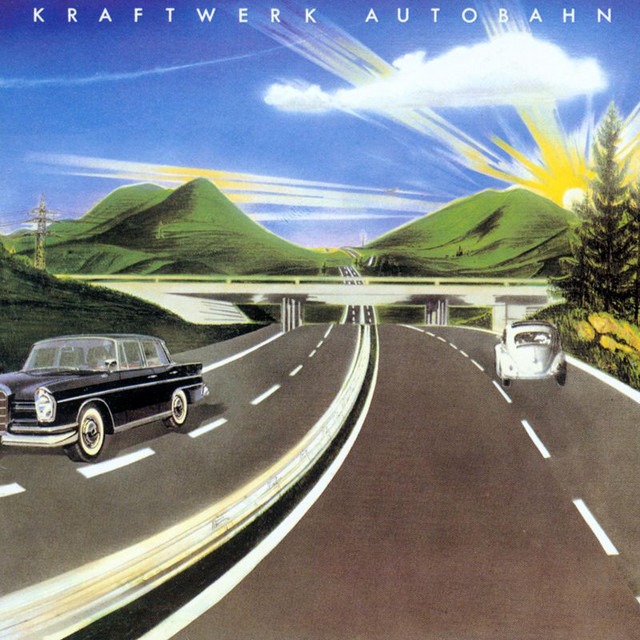
In November 1974, the musical landscape shifted forever as Kraftwerk unveiled Autobahn. Transitioning from their experimental “krautrock” origins to a revolutionary electronic pop sound, the group—now expanded to include Wolfgang Flür and Klaus Röder—created a sonic blueprint for the future. By moving their operations to Conny Plank’s farmhouse studio and embracing the Minimoog synthesizer, Ralf Hütter and Florian Schneider crafted a sound painting of the modern world that eventually captured the imagination of the United States and the United Kingdom alike.
This album stands as a monument to innovation, blending classical precision with the industrial folk music of the Rhine Valley. Here are five remarkable facts about the record that put electronic music on the map:
1. The 22-Minute Journey to the Top
The centerpiece of the album is the sprawling, 22-minute title track, designed to emulate the sensory experience of a long-distance drive. From the gliding sound of tires hitting painted road stripes to the rhythmic pulsing of the motor, the song captures the joy of the German highway. While the original version takes up nearly an entire side of the LP, a three-minute edit became a massive international hit, reaching number 25 on the Billboard Hot 100 and number 11 in the UK.
2. The “Fun Fun Fun” Linguistic Fluke
A famous bit of rock lore surrounds the song’s main refrain, “Fahren fahren fahren” (German for “driving, driving, driving”). English-speaking listeners frequently mistaken the lyric for “Fun fun fun,” leading many to believe it was a tribute to The Beach Boys. While the band members admit that driving on a highway with no speed limit is indeed fun, they clarify that the phrase is purely German, though they enjoy the coincidence of the sounds.
3. A Visual Revolution by Emil Schult
The iconic “look” of Kraftwerk—the carefully staged promotional images and the minimalist aesthetic—began with this album. Associate Emil Schult suggested the new lyrics and the group’s distinct visual branding. His influence helped the band move away from the “Gothic romanticism” of their contemporaries, opting instead for a clean, modern image that David Bowie later cited as a major influence.
4. Custom Tech and Homemade Violins
The innovative sounds on Autobahn required more than just off-the-shelf instruments. Along with the newly purchased Minimoog, the band used customized versions of Farfisa and Vox drum machines. Most notably, member Klaus Röder contributed to the sessions with an electronic violin he built himself—a unique creation that initially piqued Florian Schneider’s interest and helped bridge the gap between classical and electronic music.
5. From Chicago Airwaves to the USSR
Despite a quiet launch in West Germany, the album found its wings thanks to a radio station in Chicago that began playing an imported copy of the single. This grassroots support led to a massive US tour and helped the album spend 22 weeks on the Billboard charts, peaking at number 5.
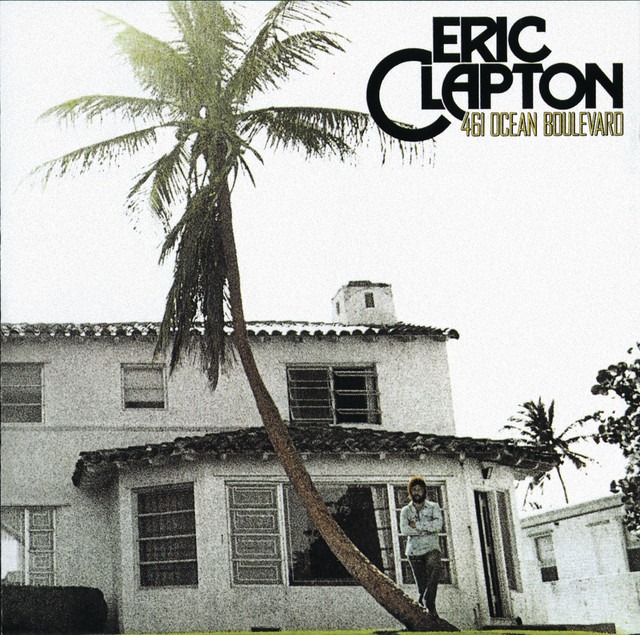
In July 1974, Eric Clapton embraced a vibrant new chapter of his career. He chose the warmth of Florida to craft a sound defined by bright blues-rock and “postjunk funk.” This era marked his triumphant return to the studio, resulting in an international chart-topper that sold millions of copies. By moving into a rental house in Golden Beach, Clapton found the perfect environment to transform simple ideas into a masterpiece that redefined his artistic legacy.
The sessions at Criteria Studios produced a relaxed, sun-drenched atmosphere that remains a high point of 1970s music. Here are five remarkable facts about this legendary recording:
1. The Architectural Inspiration
The album title honors the specific residence on Ocean Boulevard where Clapton stayed during the recording process. This house became a beacon of creativity, leading Clapton and manager Robert Stigwood to suggest the location to the Bee Gees. The brothers followed this advice, moving into the same house to write and record their own classic, Main Course. The residence eventually became so iconic that the local municipality changed the street address.
2. A Convincing Reggae Success
The inclusion of “I Shot the Sheriff” happened because of the persistence of guitarist George Terry. He shared the Bob Marley and the Wailers album Burnin’ with the band and encouraged a new interpretation of the track. While the group added soft rock elements to the reggae rhythm, the song eventually reached number one on the Billboard Hot 100 and earned a place in the Grammy Hall of Fame.
3. The Power of “Blackie” and Vintage Gear
Clapton achieved the album’s signature tone using his famous Fender Stratocaster, nicknamed “Blackie.” For the intricate slide guitar parts, he utilized various Gibson ES-335 models, and he performed the acoustic sections on vintage Martin guitars. This combination of instruments helped create the “smooth bluesy” texture that critics praised upon the album’s release.
4. A Spirit of Musical Collaboration
During the preparation for the album, Clapton intentionally kept his new songs in a skeletal state. He wanted his fellow musicians—including bassist Carl Radle and guest vocalist Yvonne Elliman—to have the freedom to contribute their own signatures to the tracks. This approach ensured a deep chemistry within the group, allowing every member to help shape the final arrangements.
5. Reaching Across the Iron Curtain
The success of 461 Ocean Boulevard spanned the entire globe, reaching the Top 10 in eight different countries. It holds the rare distinction of being a Western pop album that saw legal distribution within the USSR. From Japan to Uruguay and Norway, the record found an audience in nearly every corner of the world, cementing its status as a truly universal hit.
In 1974, a new force in rock ‘n’ roll emerged from Westminster, London. Bad Company, a supergroup composed of seasoned veterans from Free, Mott the Hoople, and King Crimson, didn’t just debut—they conquered. Their self-titled debut album was the second release on Led Zeppelin’s prestigious Swan Song Records and quickly became a permanent fixture on the charts, peaking at number one on the Billboard 200 and becoming the 46th best-selling album of the 1970s.
Recorded at the legendary Headley Grange using Ronnie Lane’s Mobile Studio, the album captured a raw, lawless energy that defined the decade’s hard rock sound. While tracks like “Can’t Get Enough” are now classic rock staples, the story behind the record is filled with recycled riffs and Victorian warnings.
1. The Victorian Moral Warning
Despite long-standing rumors that the band took their name from the 1972 Jeff Bridges Western film, Paul Rodgers clarified the true origin in an interview. The inspiration actually came from a book of Victorian morals. It featured a picture of an innocent child looking up at an unsavory character leaning against a lamp post, with a caption that warned: beware of bad company.
2. A “Biblical” Western Vibe
The title track “Bad Company,” co-written by Rodgers and drummer Simon Kirke, was designed to evoke a specific atmosphere. Rodgers described the song as having a biblical, promise-land kind of lawless feel. This western vibe became a signature element of the band’s identity, blending English hard rock with the grit of the American frontier.
3. The Secret to the “Ring” in the Riff
The band’s biggest hit, “Can’t Get Enough,” owes its unique sound to a specific technical tweak by guitarist Mick Ralphs. He tuned his guitar to an unusual open-C tuning ($C-C-G-C-E-C$) to get the perfect resonance. Ralphs insisted that the song never really sounds right in standard tuning, as it needs that specific open-C “ring” to carry the melody.
4. Recycled Mott the Hoople Magic
Mick Ralphs didn’t just bring his guitar to the new supergroup; he brought some of his best ideas from his time with Mott the Hoople. The iconic riff for “Can’t Get Enough” was actually borrowed from a riff he used for the 1972 song “One of the Boys.” Additionally, the album features a cover of Mott’s “Ready for Love,” which Ralphs had originally recorded for the All the Young Dudes album.
5. The Lost “Free” Track
The debut sessions at Headley Grange were a family affair for former members of the band Free. Along with the hits, Paul Rodgers and Simon Kirke recorded “Easy on My Soul,” a track they had originally released with Free on the 1973 album Heartbreaker. While it didn’t make the final cut for the Bad Company LP, it found a second life as the B-side to their hit single “Movin’ On.”
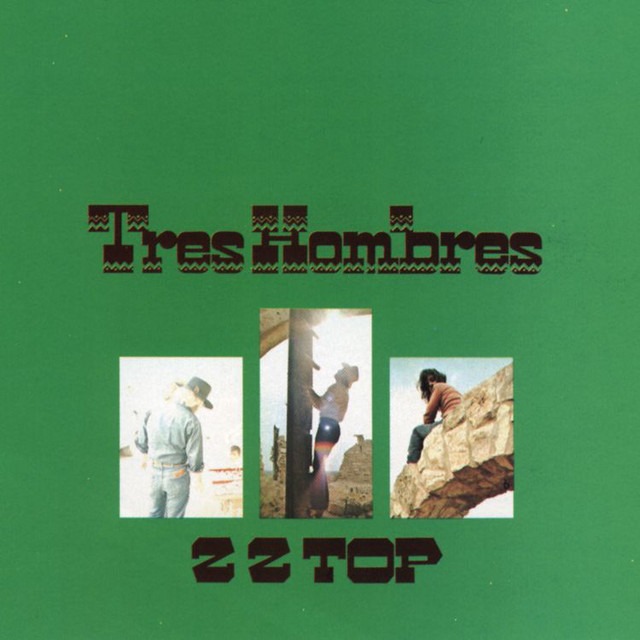
In July 1973, ZZ Top officially put Texas boogie on the global map with the release of Tres Hombres. Their third studio album wasn’t just a collection of songs; it was a commercial explosion that peaked at number 8 on the Billboard 200 and turned Billy Gibbons, Dusty Hill, and Frank Beard into “honorary citizens of Memphis.”
Marrying gritty blues with a polished studio edge, the album introduced the world to the band’s signature “Spanish terminology” branding and a groove that Nashville and Detroit alike couldn’t ignore. But behind the heavy riffs of “La Grange” lie stories of happy accidents, dangerous stunts, and a 20-year digital mystery.
1. The Famous “Accidental” Segue
The seamless transition between “Waitin’ for the Bus” and “Jesus Just Left Chicago” is one of the most iconic moments in rock radio. While Billy Gibbons once called it a fortunate miscalculation where the engineer accidentally cut out the blank tape, engineer Terry Manning claims it was a calculated piece of genius. Manning spent hours feeling out the time signatures and keys until he realized they could exist as one continuous work.
2. The 20-Year Remix Controversy
For over two decades, if you bought Tres Hombres on CD, you weren’t hearing the original 1973 vibe. In the mid-80s, the album was digitally remixed with heavy, synthesized drum sounds to match the band’s Eliminator-era success. This version horrified purists and remained the only version available until 2006, when the original Manning mix was finally restored for the remastered edition.
3. The True Story of the “Master of Sparks”
The song “Master of Sparks” isn’t just a tall tale—it’s a report from a terrifying real-life experiment. Billy Gibbons and a friend welded a steel ball cage with a seatbelt, put it in the back of a truck, and rolled it out onto Highway 6 near Houston at 60 mph. The cage generated a massive trail of sparks before crashing into a fence, earning the survivors the “Master” title.
4. Inspired by “R&B Jr”
The title for “Jesus Just Left Chicago” came from a teenage Billy Gibbons’ phone conversation. He was chatting with a friend known as “R&B Jr,” a local character with a unique lexicon. When the friend blurted out “Jesus just left Chicago!” during their call, Gibbons knew he had the hook for what would become their third most-played concert song.
5. The Brothel That Became a Legend
“La Grange” is a tribute to the “Chicken Ranch,” a notorious brothel on the outskirts of La Grange, Texas. While the song became a massive hit in 1974, it took the band over 40 years to actually perform it in the town it was named after. They finally played the song in La Grange on September 5, 2015, at the Fayette County Fair.
In April 1972, Stephen Stills pulled off one of the greatest critical and commercial comebacks in rock history with the release of the debut double album, Manassas. Following the acrimonious breakup of Crosby, Stills, Nash & Young, Stills shifted gears entirely after a chance meeting with Chris Hillman of the Flying Burrito Brothers.
The resulting supergroup became a pioneer of genre-blending, widening the musical tent by marrying Rolling Stones-style rock ‘n’ roll with country, bluegrass, Latin rhythms, and blues. Stills himself noted that Nashville would spend the next decade trying to replicate the genius mixture found on these four thematic sides.
Here are 5 unknown facts about the making of this legendary double LP:
1. The “Benevolent Dictator” and His 106-Hour Session
Stephen Stills was so driven by insomnia and a manic creative spark that he kept Criteria Studio B and engineers Ron and Howard Albert available around the clock. At one point, Stills clocked an unbroken 106-hour stint in the studio. Engineer Ron Albert recalled just getting to sleep after an 84-hour marathon when Stills called him back to the studio to capture an idea before he forgot it.
2. Recording at “A Million in the Morning”
Because the band lived together in a rented house in Coconut Grove, Stills would often wake up musicians in the early hours of the morning whenever an idea struck. He famously claimed he did his best work at “a million in the morning”. This lasted until Chris Hillman, who preferred regular hours, reportedly grabbed Stills by the collar and insisted they start recording like normal human beings.
3. A Rolling Stone Almost Joined the Band
While the band was finishing the album in London, Bill Wyman of the Rolling Stones became such an admirer of the group that he played bass on and co-authored the funk tune “The Love Gangster”. Wyman was such a fan of the gelling musicians that he reportedly said he would have left the Stones to join Manassas permanently.
4. Named After a Civil War Train Station
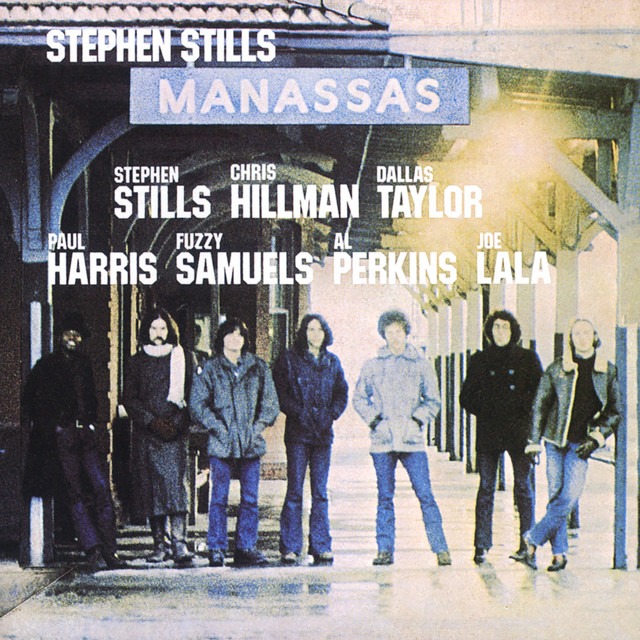
The band’s name wasn’t the result of a focus group; it was a what the hell moment. Stills, a Civil War buff, flew the band to Manassas station in Virginia, the site of the Battle of Bull Run, for a photo shoot. They liked the picture of the seven members standing under the Manassas station sign so much that they simply adopted the name for the group.
5. Hidden Heartbreak and CSNY Feuds
Much of the album serves as a musical diary of Stills’ personal life. Several songs were inspired by his relationship with Rita Coolidge, who had recently left him for his CSNY bandmate Graham Nash. The track “Raven” was actually Stills’ nickname for Coolidge, while the songs “What to Do” and “Right Now” were written specifically about the CSNY breakup and his strained relationship with Nash.
Molly Tuttle sits down with American Songwriter Editor-in-Chief Lisa Konicki on the latest episode of Off the Record, discussing her twice Grammy-nominated album ‘So Long Little Miss Sunshine’, recorded in Nashville with producer Jay Joyce. The conversation covers Tuttle’s boldest sonic move yet, a hybrid of pop, country, rock, and flat-picking that puts her virtuoso guitar work front and center more than any previous release.
The eleven-original, one-cover album, which includes a take on Icona Pop and Charli XCX’s “I Love It” alongside a murder ballad, earned Grammy nominations for Best Americana Album and Best Americana Performance for “That’s Gonna Leave a Mark.” It also marks the first time Tuttle has brought her banjo playing into her recordings, appearing on two tracks.
Tuttle has been on the road behind the album, including a tour with Marty Stuart and a run of European dates joining Tyler Childers.
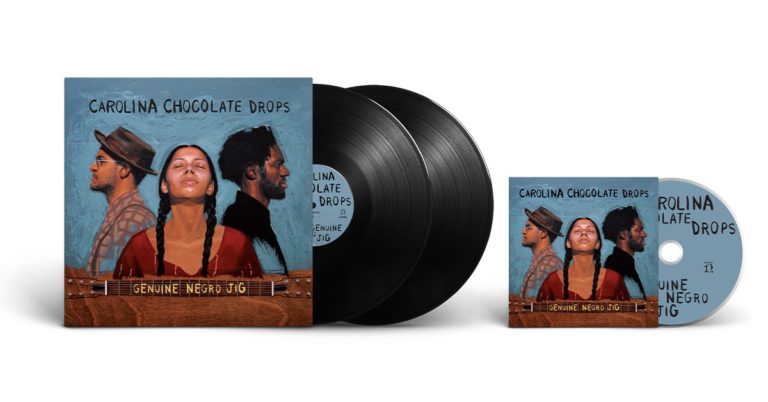
The fifteenth anniversary edition of Carolina Chocolate Drops‘ 2010 Grammy Award-winning album Genuine Negro Jig is out now on Nonesuch Records. You can get the two-LP vinyl, CD, and digital editions and hear it here.The reissue, featuring founding band members Dom Flemons, Rhiannon Giddens, and Justin Robinson, includes the original album and nine bonus tracks: seven previously unreleased tracks plus a 2025 remaster of “City of Refuge” and a 2025 mix of “Memphis Shakedown.” This release marks the album’s first time on vinyl since its original pressing in 2010. The bonus track “Avalon,” an early example of Giddens and Robinson songwriting together, can be heard below; it features Giddens on vocals and fiddle, with Robinson on background vocals and frame drum.
Genuine Negro Jig was released on February 16, 2010, reaching the top ten on the Billboard Folk chart and the top of the Bluegrass chart. It won the 2011 Grammy Award for Best Traditional Folk Album. Produced by Joe Henry, it was the first of three releases on Nonesuch followed by the Carolina Chocolate Drops / Luminescent Orchestrii EP (2011) and the Grammy nominated album Leaving Eden (2012), produced by Buddy Miller. Widely acclaimed as one of 2010’s best, Genuine Negro Jig appeared in year-end lists of NPR, Paste, and more, and was featured in Rolling Stone’s 25 Best Country-Soul Albums in 2024.
“A moment of reclamation and revelation,” says Uncut, naming the new edition of Genuine Negro Jig its Archive Album of the Month. “Marvelous … exuberant,” Rolling Stone said of the album. “This striking North Carolina trio brings a modern sizzle to the legacy of classic African American string bands,” said SPIN. The Washington Post called it “a smart and snappy collision of traditional and contemporary.” No Depression declared: “Genuine Negro Jig is easily one of the best albums I have heard in thirty some odd years … I literally cannot stop listening to this record.”
“Genuine Negro Jig remains fresh fifteen years later not only because of the Carolina Chocolate Drops’ influence on American popular culture but also because it’s an excellent record in itself,” says Dr. Dwandalyn Reece and Dr. Steven Lewis of the Smithsonian National Museum of African American History and Culture in the album’s liner notes.
Carolina Chocolate Drops formed after band members Dom Flemons, Rhiannon Giddens, and Justin Robinson met at the Black Banjo Gathering in Boone, NC in 2005. All three trained in the Piedmont banjo and fiddle musical tradition under the tutelage of Joe Thompson, who was one of the last musicians of his era and his community to carry on the southern Black string band tradition. While old-time Southern string music is often associated with Caucasian musicians from Appalachia, Giddens pointed out in an NPR interview that “it seems that two things get left out of the history books. One, that there was string band music in the Piedmont, period. [And that] Black folk was such a huge part of string tradition.” Carolina Chocolate Drops sought to not only correct this misunderstanding but also to keep the centuries-old string music tradition alive and developing.
The members of Carolina Chocolate Drops, who came from diverse musical backgrounds, shared singing duties and swapped instruments throughout their sets. The band recently reunited for a single show at Rhiannon Giddens’ Biscuits and Banjos festival in Durham, North Carolina in April 2025. In celebration of the 20th Anniversary of the Black Banjo Gathering, the documentary Don’t Get Trouble In Your Mind: The Carolina Chocolate Drops’ Story by filmmaker John Whitehead was released on Amazon Prime, Apple TV, and YouTube Free4all streaming platforms.
In addition to his Grammy Award with the Chocolate Drops, Flemons has been nominated for Best Folk Album for his Smithsonian Folkways releases Black Cowboys (2018) and Traveling Wildfire (2023). Flemons was nominated for two Emmy Awards; he is an International Acoustic Music Award Grand Prize Winner, and a 2020 United States Artists Fellow. Flemons received an Honorary Doctorate from Northern Arizona University and was inducted into the American Banjo Museum Hall of Fame in 2025. He is a songwriter, multi-instrumentalist, music scholar, historian, actor, narrator, host, slam poet, record collector, podcaster, and the creator, host, and producer of The American Songster Radio Show on WSM in Nashville. He has immersed himself in the music of the past, with a prodigious record collection and an immense knowledge of the different playing styles of the blues, country, old-time, bluegrass, and string band traditions that is showcased on his social media accounts @domflemons. His solo albums include Prospect Hill: The American Songster Omnibus (2020) and Ever Popular Favourites (2016) with Martin Simpson, Buffalo Junction (2012) with Boo Hanks, and American Songster (2009).
Giddens—a Piedmont native—is a two-time Grammy Award–winning singer and instrumentalist, 2023 Pulitzer Prize winner, MacArthur “Genius” Fellow, and composer of opera, ballet, and film. Giddens has centered her work around the mission of lifting up people whose contributions to American musical history have previously been overlooked or erased, and advocating for a more accurate understanding of the country’s musical origins through art. She is also the Artistic Director of Silkroad Ensemble, and a fellow of the American Academy of Arts and Sciences. Her post-Chocolate Drops solo albums with Nonesuch include Tomorrow Is my Turn (2015), Freedom Highway (2017), there is no Other (2019), They’re Calling Me Home (2021), You’re the One (2023), American Railroad (2024) with Silkroad Ensemble, and What Did the Blackbird Say to the Crow (2025) with Justin Robinson. As Pitchfork once said, “few artists are so fearless and so ravenous in their exploration”—a journey that has led to NPR naming her one of its 25 Most Influential Women Musicians of the 21st Century and to American Songwriter calling her “one of the most important musical minds currently walking the planet.” Her most recent album, What Did the Blackbird Say to the Crow, is currently nominated for a GRAMMY.
Robinson, the group’s main fiddler, also plays banjo; he grew up in a house full of musicians—his mother is a classically trained opera singer and cellist, his sister a classical pianist and his grandfather a harmonica player. He has used his wide range of interests and talents to preserve North Carolina’s African American history and culture, connecting people to the past and to the world around them. Robinson continued to write music after leaving the group in 2011, releasing the album Bones for Tinder as Justin Robinson and the Mary Annettes in 2012. In addition to preserving African American musical traditions, Robinson is known for his work as a culinary historian. He is an eighth generation Afro-Carolinian and is the descendant of sharecroppers and large landowners. He is constantly exploring the complex relationship that people have with our plant relatives, including through his social media account, @CountryGentlemanCooks, and through the formation of the Earthseed Land Cooperative. Robinson has a Master of Science degree in Forestry from North Carolina State University and carries on the ethnobotany work of his grandfather, J.G. Johnson.
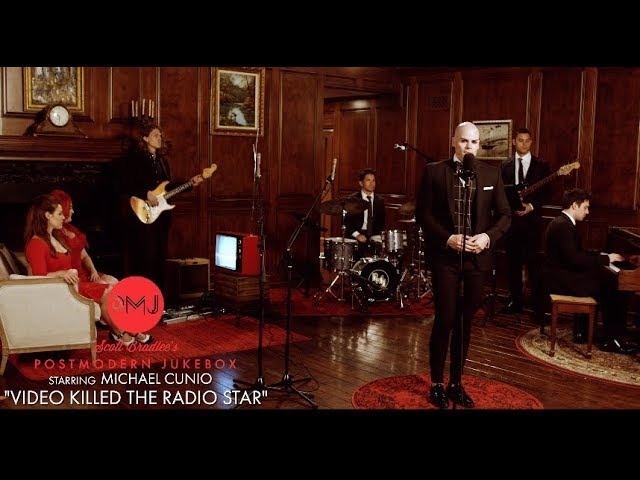
With MTV’s music channels recently going dark, Postmodern Jukebox’s 2018 cover of “Video Killed the Radio Star” has resurfaced at exactly the right moment. The Buggles’ iconic track, the first video MTV ever aired, gets reimagined here in the style of Queen and Freddie Mercury, with vocalist Michael Cunio delivering a performance that transforms a new wave classic into something genuinely moving and unexpected.
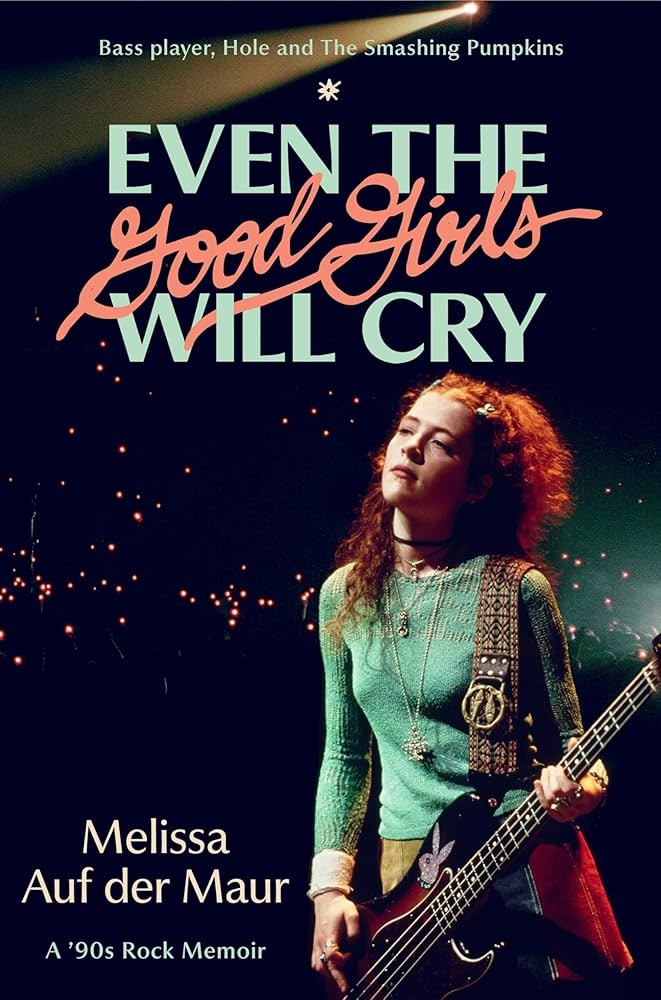
Melissa Auf der Maur has a book, and she’s taking it on the road. The legendary Hole bassist and Smashing Pumpkins touring musician releases her memoir ‘Even the Good Girls Will Cry’ on March 17 via Da Capo, described as part coming-of-age autobiography, part travel diary, part psychedelic scrapbook. A North American tour begins the same day in New York City.
The book chronicles Auf der Maur’s upbringing in Montreal, tracing how her early connection to art and music opened doors into the city’s thriving creative scene. The tour brings her into conversation with writers and cultural figures at each stop, including Naomi Fry in New York and Catherine Pogonat at the penultimate date at Montreal’s Society for Arts and Technology on March 30. Canadian dates include Wavelength’s winter festival at St. Anne’s in Toronto on March 20 and the Art Gallery of Ontario on March 21, before a UK run in early April.
2026 Tour Dates:
March 17: Strand Bookstore, New York City, NY (in conversation with Naomi Fry)
March 19: Basilica Hudson, Hudson, NY (with Golden Notebook)
March 20: Wavelength Music, Toronto, ON
March 21: Art Gallery of Ontario, Toronto, ON
March 24: The Three Top Lounge, Chicago, IL (Chicago Humanities event with Seminary Co-op)
March 28: Dynasty Typewriter, Los Angeles, CA (with Skylight Books)
March 30: Society for Arts and Technology, Montreal, QC (in conversation with Catherine Pogonat)
Twenty years of music, generosity, and community, and Festival Napa Valley is marking the milestone with one of jazz’s greatest living figures. Wynton Marsalis headlines the Arts for All Gala on July 12, 2026, at the Oakville estate of Nickel & Nickel, part of Far Niente Wine Estates, crowning the opening weekend of the Festival’s 20th Anniversary Summer Season.
The Gala is one of the nation’s premier fundraisers for education and the arts, having raised over $33 million since its founding for programs serving youth, seniors, and families across the region. Marsalis brings four decades of defining influence to the evening: 130 recordings, hundreds of original compositions, performances in 858 cities across 65 countries, and roles as Managing and Artistic Director of Jazz at Lincoln Center, Director of Jazz Studies at The Juilliard School, and President of the Louis Armstrong Educational Foundation.
The evening includes a multi-course dinner by acclaimed chef Dustin Valette, chef-owner of Michelin-recognized Valette and The Matheson in Healdsburg, with each course paired with wines from Far Niente Wine Estates. Celebrity auctioneer Lydia Fenet returns to lead the signature live auction. Reservations are open now to Festival Passport and Opening Weekend Patron Pass holders, with individual passes releasing in spring 2026. Festival Napa Valley’s 20th Anniversary Summer Season runs July 4-19, 2026.