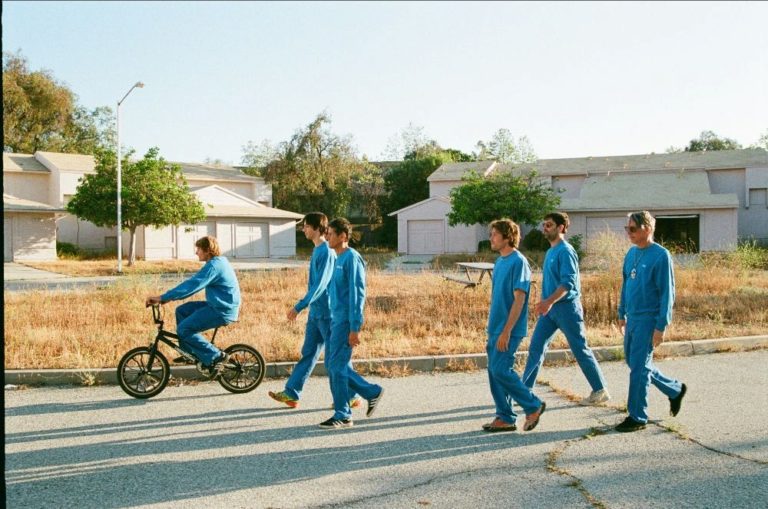
Ray Barretto’s ‘Acid’ is one of those records that captures a scene mid-transformation, and on May 22 it returns as a wide mono vinyl reissue pressed on 180-gram vinyl, cut all-analog from the original master tapes by Dave Polster and Clint Holley, and housed in a tip-on jacket reproducing the album’s original psychedelic cover art. First released in 1968 as Barretto’s debut for Fania Records, the album arrived at a moment when New York’s Latin music scene was absorbing soul, funk, and jazz into its Afro-Cuban foundation, and The Ray Barretto Orchestra was built to carry all of it.
The album’s individual tracks each pull in a different direction while staying anchored to Barretto’s direction. “El Nuevo Barretto” opens with a propulsive son montuno whose opening figure would later surface in Carlos Santana’s version of Tito Puente’s “Oye Como Va.” “A Deeper Shade of Soul” features Adalberto Santiago and was later sampled by Urban Dance Squad in 1990. The closing “EspÃritu Libre” runs eight and a half minutes, beginning with a percussive dialogue between Barretto and Orestes Vilató before moving through shifting time signatures and extended solos.
‘Acid’ became one of Barretto’s best-selling albums and remains a defining document of Latin soul. This reissue gives it the format it deserves.
Soul Asylum have released “Misery” as the first taste of ‘MPLS Unplugged,’ a live album recorded at the State Theatre in Minneapolis on April 20, 2023, celebrating the 30th anniversary of the band’s landmark MTV Unplugged performance. Frontman Dave Pirner is joined by guitarist Ryan Smith, bassist Jeremy Tapparo, drummer Michael Bland, and Ivan Neville on keys, reconstructing the spirit of the original 1993 lineup alongside STRINGenius string quartet and the Robert Robinson gospel singers. Listen here.
This new version of “Misery” opens the song up, looser and more reflective than the original, and it sounds exactly right. Originally from ‘Let Your Dim Light Shine,’ the track hit No. 20 on the Billboard Hot 100, topped the Mainstream Rock chart, and reached No. 3 on the Canadian singles chart. ‘MPLS Unplugged’ also features “Farmer John” and “What Will Become of Me,” two long-running live staples never previously recorded or released until now.
Neville’s return is significant. His connection to the band stretches back to the original 1993 session, and Pirner has been clear about what that reunion means: “He was the obvious choice, pretty magical, it just felt right.” The 1993 MTV Unplugged appearance, which featured stripped-down versions of “Runaway Train,” “Black Gold,” and “Somebody to Shove,” remains one of the defining moments in the band’s history.
Pirner, Smith, and Tapparo are also on the road for a run of intimate acoustic shows, blending fan favorites with stories from across the band’s four-decade catalog.
Yorkshire alternative/electronic quartet Flesh Planet have released “Computer Games & Rude Things,” the opening track from their debut EP ‘first flesh,’ and it hits with a mechanical, dystopian weight that feels entirely intentional. Recorded at Chairworks studio in Castleford, the EP blends grunge, shoegaze, industrial, and electronic into a sound that’s genuinely hard to pin down, and that’s exactly the point. Vocalist Damo Hughes wrote the track as a direct confrontation with neurodivergent depression, specifically the paralysing push-pull between fear of the outside world and fear of wasting your own potential. It’s a reality check dressed in Commodore Amiga-era sci-fi textures, and it works. The video, shot at Williams Amusements arcade warehouse in Castleford, locks in perfectly with the song’s retro-digital atmosphere.
The Gregory Brothers have found their perfect subject: the Maspeth neighborhood of Queens, New York, where urban planning apparently lost its mind. The area is home to 60th Street, 60th Avenue, 60th Lane, 60th Road, 60th Place, 60th Court, and 60th Drive, all converging into what the video cheerfully dubs the American Bermuda Triangle. The result is a clever, funny song that turns navigational chaos into comedy gold, and it works because the absurdity is completely real. Only in Queens.
Music theorist Cory Arnold of 12Tone takes a deep dive into why emo music connects so viscerally with its audience, and the answer lives in the rhythm. Arnold breaks down how emo songs deliberately shift between half-time and double-time feels, using that tension to mirror the emotional whiplash of adolescence. When lyrics lock in with those tempo shifts, the result is a build-and-release cycle that feels less like a musical device and more like a lived experience. The video is sharp, insightful, and makes a convincing case that emo’s emotional power was never accidental.
I first met Daniel Wherrett in a venue hallway before many of the raves he was the main attraction in the 2000s, and within about four minutes he had me laughing so hard I forgot why I was there. That was Dan. He had this extraordinary gift of making every room feel like the after-party everyone had been waiting for, and then he would walk into the booth and remind you that underneath all of that warmth and humor was one of the most serious and gifted musical minds in the game.
I had the privilege of working with Dan across several releases on Moonshine Music, and those years left a mark on me that I am still carrying. Representing his work was never a hard sell. You just played the music, invited the media out, and let it do the talking.
Daniel Wherrett, known to the world as DJ Dan, passed away on March 29, 2026. He was 57 years old. A cause of death has not been publicly confirmed. The dance music community he spent four decades building is devastated.
Dan came up through Seattle’s underground club scene in the late 1980s, discovered electronic dance music at its rawest and most electric, and never looked back. He moved to Los Angeles in the early 1990s, then relocated to San Francisco in 1993, where he co-founded the Funky Tekno Tribe collective and helped define what West Coast house music actually meant. It was a sound that blended funky house with electro and tech house, deeply rooted in the disco tradition but always pushing somewhere new. Carl Cox heard it. Sasha heard it. John Digweed heard it. The world caught up eventually.
His 1999 single “That Zipper Track” became one of the defining house anthems of that era, selling over 100,000 copies on vinyl alone. Pete Tong championed his Essential Mix on BBC Radio 1. DJ Mag named him the number one house DJ in 2006. URB Magazine called him both “America’s Favorite DJ” and “America’s Hardest Working DJ,” and anyone who ever watched him work knew both titles were completely earned.
He founded InStereo Recordings, his own independent label, in 2001, and used it to release his own music and champion emerging talent on his own terms. His remix credits read like a who’s who: Depeche Mode, New Order, Lady Gaga, Janet Jackson. He headlined EDC and Ultra. He performed across five continents. He never stopped working.
Dan leaves behind not just a catalog but a culture, a generation of DJs and dancers and music lovers who found something essential in his sets and carried it with them. The dancefloor will feel different without him. So will the hallways.
Alex Duong, the Dallas-born comedian and actor who built a devoted following through his sharp stand-up and a string of memorable television appearances, died on March 28, 2026, at Saint John’s Health Center in Santa Monica, California. He was 42. The cause of death was septic shock, following a yearlong battle with alveolar rhabdomyosarcoma, a rare and aggressive soft-tissue cancer. He is survived by his wife, Christina, and their five-year-old daughter, Everest.
Born on March 20, 1984, in Dallas, Texas, Duong spent two decades carving out a reputation as one of the hardest working performers in Los Angeles comedy and television. He began his career in 2006 and never really stopped, accumulating credits across some of television’s most recognizable titles, including Everybody Hates Chris, The Young and the Restless, 90210, Mad TV, Dexter, and Pretty Little Liars. He was perhaps best known to mainstream audiences as Sonny Le, a recurring criminal and gang leader on the long-running CBS police procedural Blue Bloods, a role he played from 2021 to 2024. He also played the recurring role of Genghis Khan in the YouTube comedy series The Cost of Living, and appeared on Jeff Ross Presents Roast Battle, where his comedic instincts and fearless stage presence earned him new fans.
His final chapter was one of extraordinary courage. In early 2025, after experiencing persistent headaches behind his eye, Duong was diagnosed after his manager noticed the alarming swelling and discoloration around his left eye. The tumor was blocking blood flow to his optic nerve and was labeled extremely aggressive almost immediately. He lost vision in his left eye entirely, endured chemotherapy and radiation, and continued to face the financial pressures of navigating serious illness as a working performer, struggling at times to meet SAG-AFTRA guild minimums for health insurance coverage. As his condition progressed, tumors spread to his spine and pushed on his brain, causing seizures. Through all of it, friends and family described him as someone who held on fiercely, motivated above all else by the little girl waiting for him at home.
Alex Duong was 42 years old. He made people laugh, he made people feel seen, and he fought until the very end. That is worth remembering.
Hamilton, Ontario just had its moment. The 55th Annual Juno Awards broadcast, live from TD Coliseum on CBC, was one for the history books, packed wall to wall with landmark performances, emotional tributes, and winners who genuinely earned every second of their spotlight. Host Mae Martin guided the night with warmth and wit, and from the very first note to the final award, this year’s Junos felt like a genuine celebration of how extraordinary Canadian music is right now.
Nobody was ready. The 2026 Juno Awards broadcast opened with Rush taking the Juno stage for the very first time in the band’s history, more than five decades after being named Most Promising Group of the Year back in 1975. Geddy Lee and Alex Lifeson, joined by new drummer Anika Nilles and keyboardist Loren Gold, tore through “Finding My Way” from their 1974 self-titled debut, and the TD Coliseum absolutely erupted. It was the band’s first public performance in over 11 years, their first since the passing of Neil Peart in 2020, and a jaw-dropping preview of their upcoming Fifty Something world tour. Nilles was phenomenal under enormous pressure, and Lee and Lifeson looked like they were exactly where they belonged. A full-circle moment that set the tone for the entire night.
If Rush opening the show was the electric jolt, the Joni Mitchell tribute was the emotional heart of the evening. Mitchell received the Lifetime Achievement Award, presented by Prime Minister Mark Carney himself, making it one of the most star-studded award moments in Juno history. Sarah McLachlan and Allison Russell led the tribute performance in Mitchell’s honour, and it was nothing short of stunning. Mitchell is only the third artist ever to receive this award at the Junos, following last year’s recipient Anne Murray, and the inaugural winner Pierre Juneau back in 1989. Canada finally gave one of its greatest artists the send-up she deserves.
The induction of Nelly Furtado into the Canadian Music Hall of Fame was another defining moment. Drake delivered the presentation celebrating her influence on Canadian and global music, and the tribute medley featuring Alessia Cara, Jully Black, Tanya Tagaq, and Shawn Desman covering her songs was a spectacular reminder of just how deep her catalogue runs. Furtado’s place in the Hall of Fame has been a long time coming and the night did it justice.
If there was a name on everyone’s lips by the end of the weekend, it was Cameron Whitcomb. The Nanaimo, BC singer took home Country Album of the Year for “The Hard Way” and Breakthrough Artist of the Year, making him one of the biggest winners across both nights. He performed his hit “Options” during the broadcast, starting seated in a house set before moving to the catwalk with an acoustic guitar, and the crowd was completely won over. His acceptance speech was genuine and emotional, and he earned every bit of the spotlight.
Tate McRae had an absolutely dominant Juno weekend. She took home Artist of the Year, Single of the Year for “Sports Car,” Pop Album of the Year, and Album of the Year for “So Close To What.” Four major awards is a statement, and McRae continues to prove she is one of the most compelling artists Canada has produced in years.
Daniel Caesar picked up the International Achievement Award and added wins for Contemporary R&B Recording of the Year for “Son of Spergy” and Songwriter of the Year, bringing his weekend total to three awards. The Beaches made history as the first all-women band to win Group of the Year three consecutive years in a row, a remarkable achievement. bbno$ took home the TD Juno Fan Choice Award for the second year running. William Prince delivered a gorgeous performance of “For the First Time,” and the broadcast stage also came alive with sets from Arkells with special guests Grouplove, MICO, Sofia Camara, and more.
This year’s Junos also marked a milestone for Canada’s diverse musical landscape with the introduction of the Latin Music Recording of the Year category, won by Cuban-Canadian artist Alex Cuba for “Indole.” The award reflects how much Canadian music has grown and evolved, and it was a genuinely exciting new chapter for the Junos.
The 55th Annual Juno Awards were a reminder that Canadian music does not take a back seat to anyone. From a legendary rock reunion to icons receiving their due recognition to a new generation of artists claiming their moment, Hamilton delivered a night that fans will be talking about for years. You can rewatch every performance on CBC Gem and at CBCMusic.ca/junos. Do not miss a second of it.
It was the moment Canadian rock fans had been waiting over a decade for — and it hit like a freight train.
Rush surprised the crowd at the 2026 Juno Awards on Sunday night, March 29th, by taking the stage and playing “Finding My Way” — the band’s first performance in nearly 11 years. The venue? TD Coliseum in Hamilton, Ontario — practically Rush’s backyard, just down the road from Toronto where the band grew up. It felt right.
Nobody saw it coming. The reunion of Geddy Lee and Alex Lifeson was not announced in advance, but was teased in the band’s newsletter earlier this week, with fans told to tune in for a “special moment.” Special moment indeed.
A New Era, With a Nod to the Past
The newly reconfigured band features founding bassist and singer Geddy Lee, guitarist Alex Lifeson, and newly recruited drummer Anika Nilles and keyboardist Loren Gold. Nilles replaces the late Neil Peart, who died in 2020, while Loren Gold — who has worked with The Who and Chicago — made his live Rush debut alongside her.
Nilles, in what was likely the most pressure-filled moment of her career, simply excelled, playing a huge kit with the Rush logo on the bass drum, bashing her way through virtuosic fills. Lee and Lifeson, meanwhile, seemed energized after their long break, with Lee hitting notes at the top of his youthful range.
And through it all, the past was never far away. As the band played, clips of the late Neil Peart performing with Rush played on screens behind them — a simple yet powerful tribute.
The song choice was deeply deliberate — and, as Geddy admitted afterward, a little bit practical. “You really can’t ask us what song to play,” Lee told reporters afterward. “If we have to choose one song, it’s almost impossible. We have so many. So we just asked management, and they said first song, first album.”
“Also,” Lifeson added, “it’s the only song we know how to play.”
Classic Alex.
“Finding My Way” is the lead track on Rush’s 1974 self-titled debut, and according to Setlist.fm, this was the first time the group performed the track in full in over 45 years. The choice was also symbolically clean: that debut album featured John Rutsey on drums in the studio, rather than Neil Peart, who didn’t join the band until afterward. In a sense, Rush went back to before Peart to imagine what comes after him.
Peart died on January 7th, 2020, after a private battle with brain cancer. The wound has been deep and very public — and Sunday night marked the first time Lee and Lifeson have formally stepped back into the Rush identity since that loss.
Rush won the inaugural Juno Award for best hard rock/metal album in 1991 for their 13th album, Presto. They belong to this stage. And after an 11-year absence, they looked like they never left it.
What’s Next: The Fifty Something Tour
Sunday’s performance was more than a one-off nostalgia trip. It serves as a preview for Rush’s Fifty Something world tour, celebrating five decades of the band, which begins June 7, 2026, at the Forum in Los Angeles — the same venue where they played their final show with Peart in 2015.
The tour will include multiple-night residencies in several major cities. The return also coincides with the release of a newly expanded edition of Grace Under Pressure, featuring a brand-new mix of the album by original producer Terry Brown, a complete concert film from their Maple Leaf Gardens show from September 21, 1984, and Geddy Lee’s first liner notes for a Rush reissue.
Last night in Hamilton, Rush answered a question millions of fans have been sitting with since Neil Peart passed: can Rush go on? The answer, delivered in thundering riffs and a classic bass growl and the crackling fills of a fearless new drummer, was a resounding yes.
Bloodworm have arrived. The Nottingham trio share “Bloodlust,” their first single of 2026 and one of the most confident debut statements to emerge from the UK post-punk underground in recent memory. Propulsive, atmospheric, and immediately familiar in the best possible way, the track draws from the classic post-punk lineage of The Cure, The Sound, and Echo and The Bunnymen, built around an immediate bassline, shimmering guitars, and a shadowy energy that feels both urgent and fully formed.
Frontman George Curtis is direct about where the song comes from. “‘Bloodlust’ was written about the duality of relationships and the angst of being stuck in a small town,” he says. “We had the raw excitement of starting something new and just not really caring about anything else aside from the music itself.” That unguarded energy is exactly what makes the recording land. Paired with a video directed by Seth Lloyd, “Bloodlust” sounds like a band who have already figured out who they are.
The story behind Bloodworm’s breakthrough moment is one of those genuinely rare industry tales. At one of their earliest London shows, Suede’s Richard Oakes happened to be in the audience. He was so impressed that the band were offered a support slot on Suede’s 17-date sold-out UK tour. They had already sold out Nottingham’s The Bodega as headliners at Halloween. The momentum behind this trio is real and it’s building fast.
Further new music from Bloodworm is coming in 2026. “Bloodlust” is out now.