

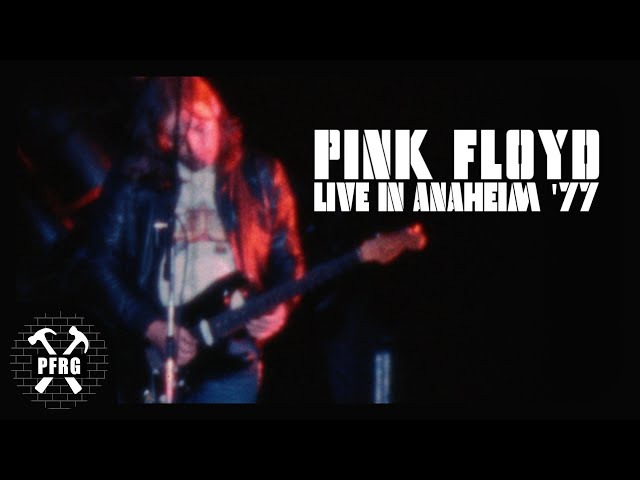
A newly surfaced Super 8mm film brings Pink Floyd’s May 7, 1977 performance at Anaheim Stadium back into view. The footage captures the progressive rock giants during the Animals era, one of the most ambitious touring periods of their career. This newly revealed Source 2 film includes glimpses of “Wish You Were Here,” “Shine On You Crazy Diamond,” and “Money.” The material has been restored and synchronized with remastered audio by Davide Capolongo, with additional work by Nuff. Even in grainy Super 8 form, the scale of Pink Floyd’s live production and musical precision comes through loud and clear.
Inuit Duo PIQSIQ Earns 2026 JUNO Nomination for Global Album of the Year for ‘Legends’, Shares New Single “Mahaha: Tickling Demon”

The acclaimed Inuit throat singing duo PIQSIQ (pronounced “Pilk-Silk”) invites listeners into a vivid corner of Inuit mythology with their latest single, “Mahaha: Tickling Demon”. Accompanied by a groundbreaking motion-capture music video, the track serves as a centerpiece of their newest studio album, Legends. Sisters Tiffany Ayalik and Inuksuk Mackay continue to push the boundaries of contemporary soundscapes, weaving their ancient traditional form with modern technology to create haunting compositions that change with every show.
This release arrives at a career-defining moment as PIQSIQ celebrates a 2026 JUNO Award nomination for Global Music Album of the Year. The winners will be revealed on stage in Hamilton, Ontario at The JUNO Awards Gala Presented by Music Canada on Saturday, March 28th, and The JUNO Awards Broadcast at TD Coliseum on Sunday, March 29th, live nationwide on CBC and CBC Gem and globally on CBC Music’s YouTube channel.
“Mahaha: Tickling Demon” is a masterclass in atmospheric storytelling, capturing the essence of a being that haunts the land and tickles people to death. The track pulses with the rhythmic drive of traditional Inuit drums and intricate vocal layers crafted through a Boss RC-505 Loop Station. Through their improvisational prowess, PIQSIQ translates ancestral narratives into a modern context, as seen in the album’s dedication: “To the storytellers from across Inuit Nunangat who shared these legends with us when we were kids—your voices have shaped us”.
The single represents a profound artistic evolution for the sisters, who grew up in Yellowknife, Northwest Territories, with roots in Nunavut’s Kitikmeot and Kivalliq regions. After years of forging hard-won skill, they realized throat singing was not only a musical expression, but a radical, political act of cultural revitalization. By integrating contemporary technology with their deep-rooted musicality, PIQSIQ has created a “living” recording that honours their traditional stories as fundamental to Inuit identity.
A compelling media angle for the release is the innovative use of technology in storytelling. The accompanying video features high-tech motion capture, casting Inuksuk’s sons, Desmond and Maccheus, as young heroes. By using traditional Inuit games to outsmart Mahaha, the visual highlights how ancestral knowledge prepares youth for survival and resilience. This blend of ancient teachings and a virtual reality format offer a fresh perspective on how the duo brings the virtual world to life through their music.
Furthermore, the immersive production process of the album, Legends, provides a fascinating look at the duo’s creative synergy. Recorded at Monarch Studios in Vancouver with producer Alex Penney, the sisters projected images of Inuit artworks in the studio and sang to what they saw and felt. This visual-to-sonic translation ensured that the “planned chaos” of their improvisation remained deeply rooted in authentic Inuit imagery.
Beyond the music, PIQSIQ is sparking an inter-regional cultural conversation. By posting about these characters on social media, they have inspired an exchange of stories reaching from Alaska to Greenland (Kalaallit Nunaat). This “ripple effect” highlights the universal power of their craft and its ability to promote storytelling cross-regionally throughout the Arctic.
As PIQSIQ prepares to take the stages across British Columbia in March and April, “Mahaha: Tickling Demon” stands as a definitive statement of their visionary path. They continue to blend magic with sound, creating a dynamic audience experience that celebrates a culture that has not just survived, but thrived.
Tour Dates:
March 3, 2026 – Performing Arts Centre, Revelstoke, BC
March 4, 2026 – Civic Centre, Golden, BC
March 5, 2026 – Key City Theatre, Cranbrook, BC
March 6, 2026 – Capitol Theatre, Nelson, BC
March 7, 2026 – Charles Bailey Theatre, Trail, BC
March 11, 2026 – Frank Venables Theatre, Oliver, BC
April 12, 2026 – Chan Centre, Vancouver, BC (with Susan Aglukark)
Best YouTube Music Downloaders of 2026
By Mitch Rice
In 2026 music streaming platforms are at the forefront of global entertainment. YouTube, Spotify, and Apple Music are among the leaders that give instant access to large sets of songs. Also, many users are into downloading music for offline listening, which also includes better management of their media collection and the freedom of enjoying music without the need for an internet connection.
YouTube is still the largest music platform in the world, which hosts official songs, remixes, live performances, podcasts, and independent music uploads. For this extensive library of content, what can be seen is that users are always in search of better tools that will allow them to save and play audio tracks offline. Also, as a result, which can be noted, YouTube music downloaders have become more advanced in what they do; they are offering faster download speeds, better audio quality, and also support for many different formats.
In 2026 the best downloaders of media will have speed, convenience, and security and will also have the ability to work with many different devices. Some tools will be web-based, which do not require installations, while others will be desktop applications, which present advanced features like batch download and format conversion. Also, here is a rundown of what will be some of the top YouTube music downloaders at that time.
1. VidsSave
VidsSave is an in-your-face yet very easy-to-use online video and music downloader that is presented to the users that are looking for a quick and simple solution. There are many tools out there that play around only with YouTube, which is great, but what VidsSave did was to include a variety of popular sites for media download, which in turn is considered to make it a very flexible choice for music and video fans.
VidsSave has a great feature of working right in your browser. All you do is paste in the video URL, pick what format or quality you want, and hit download, which is almost instant. Also, you don’t have to install any software, which is very convenient for users that want a quick and safe download.
The platform is a go-to place for youtube music download, which can be seen to be true because it does in fact pull out high-quality audio from videos and put them into common formats like MP3. Also, the interface is very clean and user-friendly, which in turn makes it easy for users with little technical background to use.
Another of VidsSave downloader strengths is cross-device compatibility. You can use the tool on your desktop, tablet, or smartphone via a standard web browser.
Key features: Features of:.
- Online tool with no installation required
- Supports multiple popular video platforms
- Quick conversion to formats such as MP3.
- Simple and beginner-friendly interface
- Works on desktop and mobile browsers
- YouTube for 4K to MP3.
2. 4K YouTube to MP3
4K YouTube to MP3 is a very popular desktop tool for downloading audio from YouTube. As part of the 4K Download software family, it is recognized for its quality and reliable service.
Software that has the feature of downloading full playlists and channels, which in turn is very useful for music enthusiasts that wish to build up their offline libraries fast. Also, it supports many audio formats and will preserve the original sound quality when possible.
Another of its strong points is the clean interface and quick processing speeds. It is seen that when a user copies a YouTube link and pastes it into the app, the software automatically turns the video into audio.
Key features: Main features:.
- Software for Windows, Mac, and Linux.
- Playlist and channel downloads
- High-quality MP3 extraction
- Simple drag-and-paste functionality
3. YTMP3
YTMP3 is a very popular web-based YouTube converter. It is mainly for converting YouTube videos into MP3 or MP4 formats.
YTMP3’s main benefit is that it’s very simple. You put in a link, pick the format, and out comes the downloaded converted file almost instantly. Also, it runs right in your web browser, so you can use it on almost any device without having to do any installation.
While in the past people may have favored it for its lack of advanced features that other software had, it still is a very popular choice for quick downloads.
Key features: Features of:.
- Browser-based tool
- Quick MP3 or MP4 conversion
- No installation required
- Fast processing for short videos
4. SnapDownloader
SnapDownloader, which is a premium desktop tool for users that are into in-depth download options. Although the primary focus is on video download, it also does very well with audio files.
The software is an interface for downloading from a large number of sites and also does audio conversion of video to formats like MP3 and AAC. A great feature is batch download, which at once processes many videos at the same time.
SnapDownloader also has a schedule feature and a built-in search, which is great for users that download music often.
Key features: Main features:.
- Desktop application with advanced controls
- Supports hundreds of websites
- Batch downloading capability
- Built-in search and scheduling features
5. MediaHuman YouTube to MP3 Converter
MediaHuman’s YouTube to MP3 Converter is also a very popular desktop tool that is in it for the long term. It has been a mainstay for years and continues to do well thanks to its stable performance and feature-rich interface.
Software that allows for the download of many videos at the same time and that also features playlist download. Also, it works with music libraries like iTunes, which in turn makes it easy to organize your downloaded tracks.
Media Human also features in many formats, such as MP3, AAC, and OGG, which gives the user flexibility.
Key features: Features:.
- Batch downloads and playlist support
- Multiple audio format options
- Automatic track tagging
- Integration with music libraries
6. Any Video Converter Free
Any Video Converter Free is a full-featured tool for media conversion that also includes audio extraction from online sources such as YouTube.
Software that allows users to download YouTube videos to audio format also includes editing features like trimming and merging clips. This is a great choice for users that prefer to have full control of their audio files.
Although it has a lot of advanced options, the interface is still easy for new users.
Key features: Main features:.
- Free multimedia converter
- Audio extraction from YouTube videos
- Editing features like trimming and merging
- Multiple output formats supported
Conclusion
With the rise of online streaming, which has no signs of dying down, YouTube has maintained its position as a primary player in the worldwide music space. Also, as a result of this fact, reliable YouTube music downloaders are still very much in demand from users that want to enjoy their favorite songs offline.
In 2026 it is seen that users will have a choice between browser based tools and feature rich desktop applications which will be based on what each user requires. For online solutions like VidsSave there is a focus on convenience and ease of access which does not require installation, and for desktop tools there are the likes of 4K YouTube to MP3 and SnapDownloader which are put forth for their in depth features like play list download and batch processing.
In the end what you choose depends on your download volume and which features you value. For quick and easy downloads which also support many platforms VidsSave is seen as a great option, for heavy users which are amassing large collections of music dedicated desktop software is recommended.
Data and information are provided for informational purposes only, and are not intended for investment or other purposes.
Mario Puglia Earns Juno Nomination for Latin Music Recording of the Year for Debut Album ‘He Sanado Varias Cosas’

Bilingual indie-pop and Latin Urban artist Mario Puglia has received a JUNO Award nomination for Latin Music Recording of the Year for his debut album ‘He Sanado Varias Cosas’, released via ABC Music. The recognition marks a landmark moment for the Toronto-raised multi-instrumentalist, whose warm, genre-defying sound – built at the intersection of Indie-Pop, R&B, and Latin Urban – has quietly been winning hearts across both English and Spanish-speaking audiences. The JUNO Awards Gala Presented by Music Canada takes place on Saturday, March 28th in Hamilton, Ontario, with The JUNO Awards Broadcast airing live nationwide on CBC and CBC Gem, and globally on CBC Music’s YouTube channel, on Sunday, March 29th at TD Coliseum.
Self-taught on guitar, keys, and drums, Puglia brings a rare totality to his artistry: he writes, produces, and performs with the same fluid ease with which he navigates between Spanish and English. Born in Caracas and raised in Toronto, he carries both worlds in his music without choosing between them, building what he describes as a “refuge” for anyone who has ever felt like a citizen of nowhere and everywhere at once. His sound is warm and golden, impossible to pin to a single shelf – and ‘He Sanado Varias Cosas’ is its fullest expression yet.
The title of the album translates to “I’ve Healed Several Things” – and the deliberate incompleteness of that phrase is the point. ‘He Sanado Varias Cosas’ does not claim total healing. It acknowledges progress. Written across different cities and emotional seasons, the record documents a process rather than a conclusion, moving through anxiety, self-worth, presence, nostalgia, forgiveness, identity, and joy with the kind of honesty that requires both courage and humour. Sonically, the album blends organic textures with contemporary pop production, grounded yet expansive – reflective of a life lived between coastal calm and global cities. It is, as Puglia frames it, not a destination but a checkpoint: music for people who are growing in real time.
Two singles from the album offer a vivid window into the album’s emotional world. “Paz y Felicidad” was born at a writing retreat on a farm just outside Medellín – in a space owned by a manager who also worked with J Balvin – where Puglia gathered with producers Juan Cerro, Geogy Mills, and Pablo Melov. The song’s spark came from two Golden Retrievers on the property named Paz and Felicidad, who spent their days cheerfully chasing everyone with a tennis ball. “Peace and happiness are always chasing us, inviting us to play,” Puglia reflects. “Yet we often push them away, distracted or overwhelmed.” The song – and its video, filmed at Centro Ítalo, the Caracas soccer club where Puglia spent his childhood – became a joyful reminder to turn around and say yes.
The album’s second single, “vision board,” charts a quieter but equally resonant territory. Written in Ciudad de México during a period of relentless travel and emotional expansion, it captures what Puglia calls the duality of growth: “Nostalgia for where you come from and gratitude for where you are becoming.” Its lyrics carry that feeling with characteristic lightness: “Olvidar lo que me preocupa / me da chance para respirar / aunque esté lejos de casa / ¡qué bien se siente estar acá!” The video was shot in La Guaira, Venezuela – the oceanside neighbourhood where Puglia grew up – featuring archival footage of his parents and his younger self, surfing, yoga, and the intimate details of a life fully inhabited. It is, like the album itself, a love letter to presence.
With his JUNO nomination, Mario Puglia steps into a wider national spotlight as one of Canada’s most compelling emerging bilingual voices – an artist whose music speaks fluently to the complexity of the diaspora experience, and whose debut album stands as one of the year’s most emotionally generous records. ‘He Sanado Varias Cosas’ is available now on all streaming platforms. The winners will be revealed on stage in Hamilton, Ontario at The JUNO Awards Gala Presented by Music Canada on Saturday, March 28th, and The JUNO Awards Broadcast at TD Coliseum on Sunday, March 29th, live nationwide on CBC and CBC Gem and globally on CBC Music’s YouTube channel.
Reid Jamieson & CVM Share New Single “Blue Jeans” Co-Written With Johnny Irion

Vancouver’s Reid Jamieson – a vocal powerhouse hailed by the Globe & Mail as “gorgeously sun- struck acoustic soul” – releases his new single “Blue Jeans” today via Reid Jamieson Music. Self produced and written by Reid Jamieson and his longtime songwriting partner and wife Carolyn Victoria Mill, ‘Blue Jeans’ represents a rare co-write for the duo, joining forces with American folk artist Johnny Irion (US Elevator, Sarah Lee Guthrie).
The track is a lush, groove- driven slow- build that arrives as an anthem of solidarity for anyone who has carried a long and wearying load. The duo describes “Blue Jeans” as a musical prescription for post- pandemic depression – and a song that speaks to the broader collective weight many have been carrying since the world shifted beneath everyone’s feet. From the lockdown to divisive politics, from war to more personal struggles, many have been down so long, must have cried the blues right out of our collective jeans. “Sometimes you don’t need solutions,” they reflect. “You just need to know that you are not alone.”
Known as Reid Jamieson & CVM – this creative couple have spent two decades building one of Canada’s most distinctive independent catalogues. Winners of the John Lennon Songwriting Contest and first- place finishers in the Vancouver Folk Festival’s Pickin’ a Folk Star competition, the pair are celebrated for their uncanny vocal harmonies, swapping lead vocals with ease, and an ability to render big human themes in deceptively intimate arrangements. A former CBC Vinyl Café regular – Stuart McLean once said of Reid “He stole the show” and “blew me away” – Reid has also recorded alongside Cowboy Junkies and performed and recorded with Mary Margaret O’Hara and members of Blue Rodeo and Be Good Tanyas.
It all started with a chance meeting of US Elevator’s Johnny Irion (with his then wife Sarah Lee Guthrie) at the Vancouver Folk Festival in 2013, and a shared love of 60s folk rock and the rich harmonic traditions of that era. A remarkable songwriter in his own right, Johnny has worked alongside Pete Seeger, Jeff Bridges, and Wilco, as well as appearing in Twin Peaks – this cat gets around! Some time ago now, Johnny sent the duo a small melody fragment and a single, irresistible line – the image that would become the song’s emotional spine: “Must have cried the blues right out of my jeans.” Reid fleshed out the tune, CVM shaped the lyrics, and together they built something that aches with recognition. “The pain I’m in – my oldest friend / Like a second skin – so worn in,” Jamieson sings, in a verse that captures the strange, bittersweet familiarity of long- carried grief. And yet the song tilts always toward the light, toward the comfort of knowing one is not alone in our long-term suffering. A long time in the making, now felt the right time to address their mental health in song. The result is a recording that feels timeless: lush vocals riding a driving groove, deceptively upbeat considering the lyrical content. The production self- contained and wholly the work of Jamieson and CVM, built in their home studio with the same intimacy and rigour that has defined their catalogue across more than two decades.
The single arrives as the duo enter one of their most creatively fertile periods. Their acclaimed original album Me Daza – recorded in Ireland with producer Kieran Kennedy and featuring the posthumous vocals of Corkonian legend Fergus O’Farrell – drew praise from Folk Roots Radio as “brilliant” and “the best thing Reid has done in his career so far.” Following up on the 2023 launch of their folk opera The Pigeon & The Dove, a genre- defying piece about pigeons and the causes of housing insecurity, winning the prestigious Social Impact Award at the Vancouver Fringe Festival, they are currently deep into recording an album of the original songs from The Pigeon & The Dove, inspired by the many roads one can take to end up on the street (slated for release in late 2026). Having had ‘just about enough of being Canada’s Best Kept Secret’ – they say with characteristic wit – the dynamic duo remains cautiously optimistic about everything that comes next.
Music, as Reid Jamieson & CVM have long understood, is medicine for the mind – safe, affordable, no side effects. This is what it sounds like when two of Canada’s finest songbirds decide to sing the blues back out of their collective jeans – and invite the world to sing along.
Oshawa Punk-Rock Band PLZ Respond Release Fierce New Single “Budgets & Bootstraps”
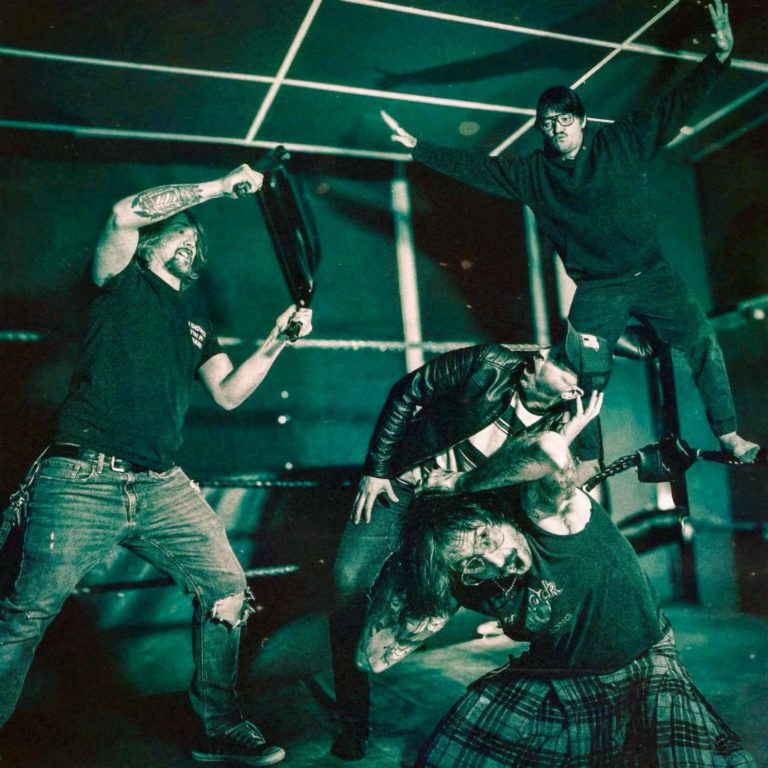
– Punk-rock four-piece Plz Respond release their new single ‘Budgets & Bootstraps’ – a loud, fast, and furious gut-punch of a track aimed squarely at the billionaire class and the politicians who carry their water. Written by frontman and drummer Galen Crampsey, produced by Logan Treaty, and mastered by Johnny Ross, the song arrives as one of the most direct and unambiguous political rock tracks to come out of the Ontario punk scene in recent memory. It is, in the best tradition of the genre, exactly what it sounds like: a band that has had enough.
‘Budgets & Bootstraps’ opens with a snarl and doesn’t let up. The target is the tired, condescending advice handed down to working people whenever they dare point out that rent is too high, groceries cost too much, and a 60-hour work week doesn’t pay the bills anymore: just learn to budget. Just pull yourself up by your bootstraps. The chorus lands like a fist: “Budgets and bootstraps, budgets and bootstraps / I am so sick of your budgets and bootstraps.” By the bridge – “Billionaires are not your friends / billionaires are not your friends” – the song has become something closer to a chant, the kind of thing you scream along to at the back of a sweaty room and mean every word.
The band are characteristically direct about where the song comes from. “There are people with yachts that have yachts to house the people who work on the yachts,” they write. “Here in Canada, we are seeing corporations make record profits, collect subsidies and handouts from our governments, and then shut down and jump ship. Those of us who work 40, 50, 60 hours a week have our taxes taken to bail corporations out and our social securities get cut.” From housing being bought up by corporations to unions being shut down by government back-to-work legislation, the grievances in ‘Budgets & Bootstraps’ are specific, real, and shared by a lot of people who aren’t going to hear them named this plainly anywhere else on the radio. “You can’t budget your way out of fixed bread prices,” they say. And this song doesn’t pretend otherwise.
Plz Respond – Galen Crampsey (drums, piano/keys, lead vocals), Bryan Crouch (rhythm guitar, backing vocals), Brandon Smith (lead guitar, backing vocals), and David Bunn (bass, backing vocals) – emerged from Oshawa’s growing rock scene with loud guitars, politically driven lyrics, and a live show that earns its reputation the hard way. Drawing on the raw energy of The Orwells, the anthemic working-class urgency of Sam Fender, and the grit of ’90s grunge, they play like a band with something to prove and something to say. They have shared stages at The Biltmore and the Bovine Sex Club, opening for Ill Scarlett, Lear Haven, and Excuses Excuses, and have put their music where their politics are – raising funds for the Durham Rape Crisis Centre and the AIDS Committee of Durham through benefit shows.
‘Budgets & Bootstraps’ is Plz Respond’s most focused and urgent statement yet – the fourth in a run of singles building toward something bigger, with several more on the way. For a band that believes rock music exists to say things the working class can relate to, this is the song that makes the case loudest.
Portugal’s P.S. Lucas Announces 2026 Canadian Tour Including Wavelength Festival, Montreal, Ottawa, and Toronto Shows

Portuguese songwriter and multi-instrumentalist P.S. Lucas announces a 2026 Canadian tour, his first visit to the country, bringing the warmly received album ‘Villains & Chieftains’ to Montreal, Ottawa, and Toronto this March before returning to Portugal for summer festival dates. The Canadian run opens March 14 in Montreal at Festival Portugal, continues March 16 at Casa del Popolo and March 17 in Ottawa at Avant-Garde Bar, and culminates March 19 in Toronto at Lula Lounge (1585 Dundas St. W.) as part of the inaugural Wavelength Music Festival + Conference 2026. The Toronto show begins at 7:00 pm; tickets are $34.75 and available at wavelengthmusic.ca. The evening is 19+ (families excepted).
P.S. Lucas arrives in Toronto on the strength of ‘Villains & Chieftains’ (Marca Pistola, 2023) – a record that has been quietly stirring hearts since its release and marked a significant step forward from his acclaimed solo debut ‘In Between’ (2021). Where that first album drew comparisons to the modern masters – from Cohen to Callahan, from Nick Drake to Brassens – ‘Villains & Chieftains’ pushes deeper into Lucas’s own singular territory: part blue, part sepia, part sea, part land, part present, part memory. It is music that emanates a light not easily found elsewhere.
The album emerged from an unexpectedly extended stay on Pico Island in the Azores during the summer of 2020 – Lucas had planned a short visit and found himself staying far longer than anticipated. The world felt strange and suspended, and the songs carry that atmosphere. What was initially imagined as a quick one-breath follow-up to ‘In Between’ became a three-year collaboration with Portuguese indie producer Mariana Ricardo, who co-produced the record with Lucas. Together they moved away from an early vision closer to King Krule’s electronic edge toward something more haunting, more familiar, and more subtle.
The album was recorded at Bela-Flor Recording Studios and Estudio Estrela and features a constellation of some of Portugal’s finest jazz musicians under 40: Pedro Branco on lead guitar, Joao Hasselberg on bass, Joao Sousa on drums, and Augusto Macedo on Fender Rhodes and synths, with choir contributions from Anastacia Carvalho, Manuela Oliveira, and Selma Uamusse.
The album is rich with specific, vivid storytelling. The title track, ‘Villain,’ is a quiet tribute to Bill Withers – whose influence runs throughout the record – written shortly after Withers’ passing. ‘Black Sand’ reaches back to a childhood memory: kids escaping Bible school to roam their hometown of Horta, on Faial Island, built on a 5/8 pulse that pulls from Balkan and Middle Eastern music while carrying traces of North American gospel and traditional Irish songwriting. ‘Little Lizard’ collides the landscape of Pico Island with the fallout of Portugal’s Banco Espirito Santo financial scandal, island imagery dissolving into corruption headlines in what Lucas describes as an attempt at poetic writing about offshore banking. And closing the album is his tender rendition of Molly Drake’s ‘Happiness’ – discovered through his drummer, it became a favourite lullaby for Lucas’s first daughter and found its natural home here.
Born in the Azores – those mid-Atlantic islands poised midway between the old and new continents – P.S. Lucas spent years in Copenhagen before returning to Lisbon, the city he calls his heart. He was the creative force behind a celebrated electro-folklore project in 2010, and the younger half of a duo whose critically acclaimed trilogy spanned 2015 to 2018. In his solo shows, he moves across the full span of his career, weaving Portuguese and English songs with finger-picked guitar improvisations and live electronic sound processing – a performer as hard to categorise as the music itself.
The March 19 show at Lula Lounge is part of a landmark evening of programming for Wavelength Music Festival + Conference 2026, which runs March 19 to 21 across multiple west-end Toronto venues including Wavelength @ St. Anne’s, The Baby G, The Garrison, and the Art Gallery of Ontario. The full festival features 30+ local and international acts. For more information on the full festival, visit wavelengthmusic.ca.
TOUR DATES:
March 14 – Montreal, QC – Festival Portugal (Inauguration)*
March 16 – Montreal, QC – Casa del Popolo
March 17 – Ottawa, ON – Avant-Garde Bar
March 19 – Toronto, ON – Lula Lounge / Wavelength Music Festival + Conference 2026 – $34.75 – 19+ (families excepted) – 7:00 pm
May 22 – Setubal, Portugal – Soam Guitarras
July 5 – Ericeira, Portugal – Guitarras ao Alto
July 10 – Montreal, QC – Festival Portugal
Queer Pop Artist Aman Dhesi Releases Debut Album ‘The Restless Night’
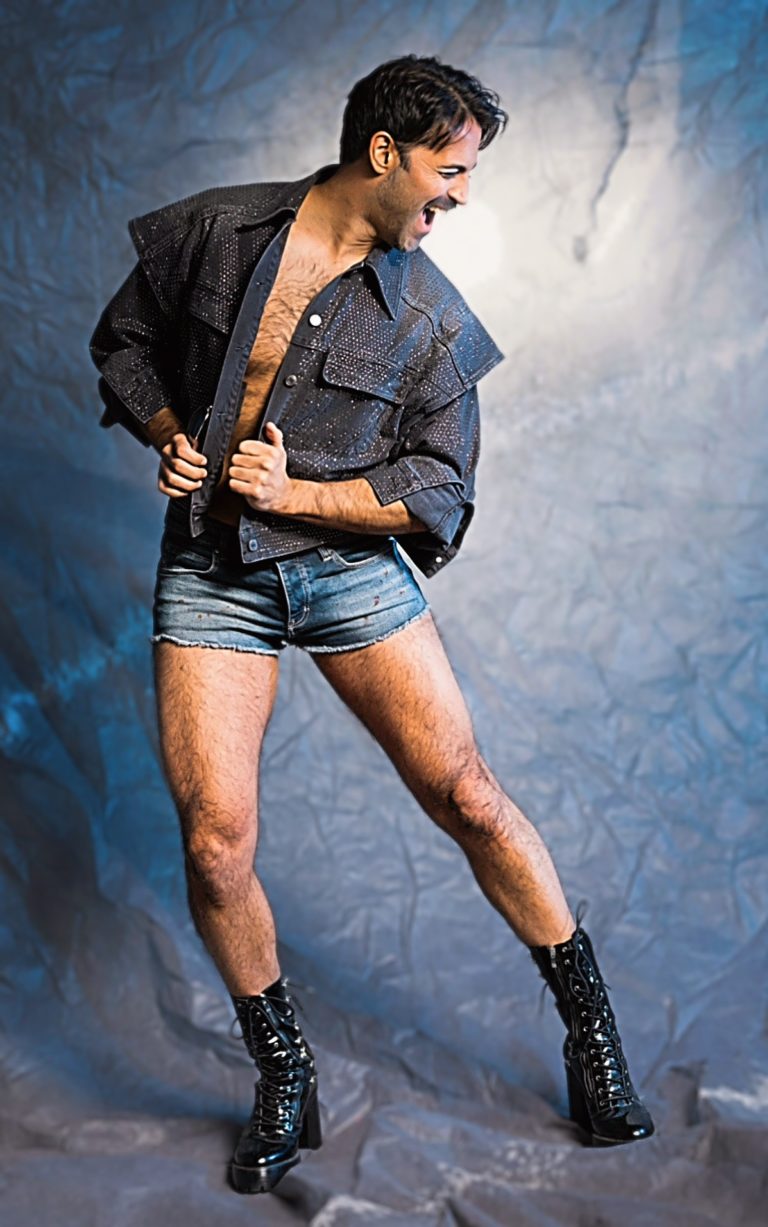
Toronto-based indie pop artist Aman Dhesi announces the release of his debut album The Restless Night, out today via Zedd Records, alongside the album’s opening statement, the lead single “Dancefloor Shoes.” Produced by Mark Zubek and Dhesi himself, the track arrives as a shimmering, propulsive declaration of self-liberation — a dance-floor ready anthem designed to move bodies and spirits in equal measure. With its pulsing synth architecture and irresistible Saturday-night energy, “Dancefloor Shoes” signals the full arrival of one of independent pop’s most compelling new voices.
Originally from North Delta, B.C. — a suburb nestled in the Lower Mainland outside Vancouver — Dhesi has built a distinctive sonic identity across years of dedicated craft and community. His 2019 debut EP Day One introduced defining tracks “Another Never Ever” and “Rise Up,” establishing a sound rooted in club intensity and confessional honesty. Since then, he has earned multiple #1 placements on independent queer music charts while cementing his reputation as a dynamic live performer across Toronto’s vibrant music landscape. The Restless Night is his boldest and most fully realised vision yet.
“Dancefloor Shoes” opens with an invitation and accelerates into pure communion. The song’s narrator slips on those shiny black leather soles and steps into a world of possibility, arriving fully present to claim the night. As Dhesi writes in the chorus: “I got my dancefloor shoes / Feelin’ in the mood / Jeans huggin’ tight / C’mon grab that mic.” The lyric is deceptively simple — joyful, stylish, and completely alive — yet it carries the weight of someone choosing to show up wholly and openly for the first time. By the time Dhesi sings “I just wanna’ be free tonight,” the desire has transcended the dancefloor entirely.
The album from which the single is drawn was born during a period of profound personal transformation for Dhesi. Writing and producing through the clarity of newfound sobriety, he channelled a heightened awareness of self into every track. “There’s a strange clarity that comes with sobriety,” Dhesi reflects. “You’re no longer numbing the chaos — you’re standing inside it, fully awake.” That lucidity courses through “Dancefloor Shoes,” elevating what could be a conventional club track into something far more intentional: a portrait of radical presence, of seeking freedom on your own terms, with nothing dulling the senses or softening the feeling.
Crafted alongside producer Mark Zubek, the sonic palette of “Dancefloor Shoes” draws from the glistening synth textures of 80s-inspired production while surging forward with the kineticism of contemporary dance-pop. The result is a cinematic, after-dark sound that feels both nostalgic and immediately of the moment — strobe lights and slow dancing rendered in shimmering electronic detail. As an openly gay South-Asian and Sikh man and proud member of the BIPOC and LGBTQIA+ community, Dhesi brings a perspective that is urgently needed within the Canadian indie pop landscape: one where queer nightlife, desire, and emotional release are rendered with full artistic seriousness and celebratory beauty.
The Restless Night, as a full body of work, expands Dhesi’s vision into a shimmering, nocturnal journey through longing, eroticism, resilience, and the restless pulse of queer nightlife. The album’s 13 tracks — including the Belinda Carlisle-honouring cover of “Mad About You” — trace a conversation between Dhesi’s past and emerging selves, mapping the terrain of big feelings, big nights, and the extraordinary courage it takes to inhabit one’s own life without armour. “This isn’t an album about escaping the night,” Dhesi says. “It’s about learning how to exist inside it — lucid, open, unarmoured.”
“Dancefloor Shoes” and The Restless Night are available now on all streaming platforms. Follow Aman Dhesi on Instagram, TikTok, and Facebook for updates on forthcoming live performances and releases. With this album, Dhesi steps fully into his power as a songwriter, performer, and artistic voice — and invites everyone, heels onto the dance floor.
Canadian Folk Legend Ken Whiteley Releases His 37th Album ‘Keep Going’
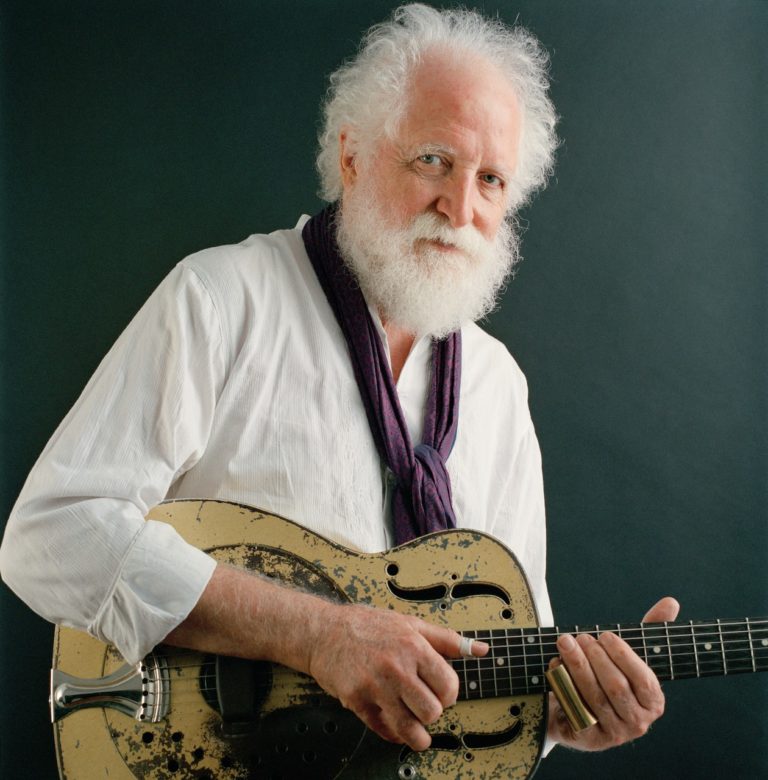
Canadian folk legend Ken Whiteley releases his 37th album, ‘Keep Going,’ today via Pyramid Records, distributed worldwide by Distrokid. A multi-instrumentalist, producer, and composer who has been at the heart of Canadian roots music for more than six decades, Whiteley is a Mariposa Festival Hall of Fame inductee, a Genie Award winner for Best Original Song in a Canadian feature film, and the recipient of Lifetime Achievement Awards from the Maple Blues Awards and Folk Music Ontario. With ‘Keep Going,’ he delivers his most thematically unified and deeply felt work in years – a record that draws from the oldest wells of blues and gospel to speak directly to the moment we are all living through.
The album’s origin is characteristically Whiteley: in February 2025, he slipped on ice and fractured a bone in his ankle. Unable to walk for a month, he sat down, picked up his guitar, and began writing. “Keeping going in these troubled times is an expression of powerful determination and survival, tempered by the recognition of earthly transience,” he reflects. “I immersed myself in old blues and gospel tunes and that message kept coming up. May listeners also find the inspiration to keep going.” The result is 12 tracks – seven originals, four classics that speak urgently to today, and one co-write with Eve Goldberg – recorded at Casa Wroxton Studio in Toronto with engineer Nik Tjelios and mastered by Harris Newman at Grey Market Mastering in Montreal.
The breadth of Whiteley’s musicianship across ‘Keep Going’ is remarkable even by his own extraordinary standards. He sings and plays acoustic guitar, resophonic guitar, mandolin, Hammond organ, piano, mandola, mandocello, harmonica, string bass, electric bass, and washboard across the 12 tracks – joined by a cast of trusted collaborators including vocalist Ciceal Levy, drummer Bucky Berger, his brother Chris Whiteley on harmonica and cornet, and bassist Gord Mowat. One of the album’s most moving moments is ‘Reaching Higher,’ featuring the late vocalist Betty Richardson – Jackie Richardson’s younger sister, who passed away in 2018 – on a demo track Whiteley returned to and knew was worth sending into the world. Guest vocalists Eve Goldberg and Pat Patrick appear on the closing co-write ‘At The End Of The Day,’ a twilight meditation on transition and the voices we hear at the edge of night.
The closing track’s lyrics carry the album’s spirit with quiet grace: “I hear something calling me / taking me far away / I hear something calling me / at the end of the day.” That sense of listening for something beyond the noise of the present moment runs throughout ‘Keep Going.’ From the lead track ‘Everybody’s Got to Be Tried’ – built from a phrase remembered from Appalachian banjo legend Frank Proffitt and performed on a 1928 National guitar – to the mandolin-quartet arrangement of Noah Lewis’s 1929 jug stomper ‘Going to German,’ Whiteley draws unbroken lines between the music of the past and the challenges of the present. “It’s heartbreaking that the systemic imprisonment of young people of colour is still with us,” he writes in his notes. “What I embrace in this song is the affirmation that ‘I’ll be back some old day.’ Keep going.”
The stature Whiteley brings to this record has been earned across one of the richest careers in Canadian music. Beginning his public performances at the age of 14, he has shared stages and recordings with Pete Seeger, John Hammond Jr., Blind John Davis, Stan Rogers, and Tom Paxton. He changed the course of Canadian children’s music through his work with Raffi, Fred Penner, and dozens of others, and has frequently collaborated with his brother Chris Whiteley and niece and nephew Jenny and Daniel Whiteley. He has written more than 400 songs, which have been covered by more than a dozen artists, and has released four albums since 2020 alone – including CFMA award nominees ‘Long Time Travelling’ and ‘So Glad I’m Here.’ These days, as he notes with characteristic wit, he is as likely to be performing at a yoga ashram as a bar, drawing on the full storehouse of blues, folk, and gospel to make music that brings people together.
TOUR DATES:
March 28 – Guelph, ON – Guelph House Concerts
April 4-5 – Val Morin, QC – Concerts & Workshop, Sivananda Yoga Ashram (Easter Weekend)
May 1 – Ottawa, ON – Gil’s Hootenanny ‘Songs of Protest, Songs of Hope,’ First Unitarian Church, 30 Cleary Ave., 7:00 p.m.
May 2 – Toronto, ON – Hugh’s Room Live – 75th Birthday Bash and Album Celebration with Bucky Berger, Ben Whiteley, Jesse Whiteley, David Wall, Ciceal Levy, Pat Patrick
May 16 – North York, ON – Afro Metis Anthem Peace Concert, Don Heights Auditorium, 18 Wynford Dr., Suite 103, 2:00 p.m.
May 23 – Caledon, ON – Whole Village Eco Village Concert
May 28 – Burlington, ON – Retired Teachers’ Luncheon Concert
June 7 – Orangeville, ON – Orangeville Blues & Jazz Festival, Orangeville Opera House with Ben Whiteley, Bucky Berger, Ciceal Levy
June 23 – Roseville, ON – Detweiler Meeting House Concert, 3445 Roseville Rd., Ayr
Canada’s Blues Community Launches New National Awards, Gala Set for The Phoenix Concert Theatre in Toronto March 30

The inaugural Canadian Blues Music Awards (CBMA) gala takes place Monday, March 30, 2026 at The Phoenix Concert Theatre in Toronto, bringing together the finest performers in Canadian blues for a landmark national celebration. The evening will feature live performances from nominees and honourees spanning the full breadth of the country’s blues landscape — from roots-drenched acoustic traditions to electrifying contemporary interpretations — with Lifetime Achievement and Industry Person tributes woven throughout the programme. Gala tickets are on sale now at canadianbluesmusicawards.com. Watch the official launch video here.
The Canadian Blues Music Awards is a fully independent, incorporated national not-for-profit organization with an exclusive mandate to govern, develop, and operate Canada’s premier blues recognition programme. The CBMAs are a wholly new creation — not a rebranding or restructuring of any previous programme. The CBMAs operate as a separate entity: the Toronto Blues Society has no role whatsoever in governance, nominations, judging, voting, or any other element of the awards process. The TBS will proudly host the gala ceremony, and that is the full extent of the relationship.
The new programme was built from the ground up. Initially formed in spring 2024 by Brant Zwicker and Cindy McLeod, the CBMA Governing Committee spent more than a year in extensive research, national consultation, and programme development before incorporating as an independent organization. In December 2024, Julie Hill joined the committee, and the completed plan was finalized in May 2025. The result is a programme grounded in transparency, expertise, and coast-to-coast representation: all artist category awards are decided exclusively by a jury panel of industry professionals drawn from a national pool spanning radio, print, labels, engineering, production, promotion, academia, associations, festivals, and venues. Nominees are determined by submission – not nomination – based on qualifying recordings released between September 1, 2023 and September 30, 2025. The sole exception is the Fan Favourite Award, which is open to the public as a write-in vote.
Quisha Wint, Chair of the Toronto Blues Society, has offered her full endorsement of the new programme. “The Canadian Blues Music Awards represents a complete overhaul,” Wint writes. “A whole new programme created to serve the Canadian blues community with greater transparency, fairness, and unity from coast to coast to coast.” With 16 competitive categories recognizing artists, instrumentalists, producers, and industry figures, alongside Lifetime Achievement honours for five foundational contributors to Canadian blues, the CBMAs are positioned to become the gold standard of blues recognition in this country – one that reflects the true depth, diversity, and resilience of the music and the people who make it.
There are many people asking what will the Canadian Blues Music Awards Gala look like this year? Here’s the breakdown: The Gala will be held at The Phoenix Concert Theatre on Monday March 30.2026 7pm start. All 17 Awards will be presented along with six performances sprinkled through the night with an intermission.
This year’s host will be Danny Marks who will also perform a song. Steve Marriner, Crystal Shawanda, Kenny ‘Blues Boss’ Wayne, Brandon Isaak and Dana Wylie (Secondhand Dreamcar) will be the feature performers who will all perform a song each.
The gala backing band ‘Pass the Envelope’ will be run by Manny DeGrandis (MD & Bass) with Quincy Bullen (keyboards), Dave Patel (drums) and new additions Cecile Doo-Kingue (guitar) and Dan Jancar (Sax) Blazing Kitchen will also be in the house serving up tacos during the show There will be an After party but not our typical open jam. We will have Emerging artist nominees Glenn Marais & The Mojo Train, Ollie Owens, JP LeBlanc, plus Secondhand Dreamcar and more to be announced perform a few songs in the main room on the big stage starting immediately after the awards.
“We will be wrapping up at 11pm so everyone can venture off to other Toronto bars and catch more live music or get to bed for work the next day.” Says event producer and TBS Operations Manager, Manny DeGrandis.
Join the celebration on March 30 at The Phoenix and help honour the extraordinary talent that defines Canadian blues. Tickets at https://torontobluessociety.com/canadian-blues-music-awards-2/
###
2026 CANADIAN BLUES MUSIC AWARDS — NOMINEES
Electric Blues Recording of the Year
Angelique Francis: Not Defeated
Brandon Isaak: Walkin’ With The Blues
Crystal Shawanda: Sing Pretty Blues
David Gogo: YEAH!
Steve Marriner: Hear My Heart
Acoustic Blues Recording of the Year
Al Lerman: Country-Fried Blues
Big Dave McLean: This Old Life
Blue Moon Marquee: New Orleans Sessions
David Vest & Terry Robb: CrissCross
Sue Foley: One Guitar Woman, A Tribute to the Female Pioneers of Guitar
Blues Song of the Year
Angelique Francis: “Train Coming” (Not Defeated)
Blue Moon Marquee: “What I Wouldn’t Do” (New Orleans Sessions)
Brandon Isaak: “Walkin’ With The Blues” (Walkin’ With The Blues)
Crystal Shawanda: “Sing Pretty Blues” (Sing Pretty Blues)
Ndidi O: “Working Girl” (Simple Songs For Complicated Times)
Blues Producer of the Year
Blue Moon Marquee (Blue Moon Marquee: New Orleans Sessions)
Brandon Isaak (Brandon Isaak: Walkin’ With The Blues)
Renan Yildizdogan & Ross Hayes Citrullo (Marcus Trummer: From The Start)
Steve Dawson (Ndidi O: Simple Songs For Complicated Times)
Steve Marriner (Steve Marriner: Hear My Heart; Big Dave McLean: This Old Life; David Gogo: YEAH!)
Emerging Blues Artist or Group of the Year
Glenn Marais & the Mojo Train (Glenn Marais & the Mojo Train: Red Hot and Blue)
Jeff Rogers (Jeff Rogers: Dream Job)
JP LeBlanc (JP LeBlanc: All In My Blood/Je l’ai dans l’sang)
Ollee Owens (Ollee Owens: Nowhere to Hide)
Paul Black (Paul Black: Beautiful Sin)
Blues Video of the Year
Blue Moon Marquee: “Come On Down” (New Orleans Sessions)
Angelique Francis: “Train Coming” (Not Defeated)
The Harpoonist: “Show Me The Green” (Did We Come Here To Dance)
Bywater Call: “Colours” (Shepherd)
André Bisson: “Latchford” (Latchford)
Ray Lemelin & Steve Hill: “Walk On”/“Ain’t No Use In Worryin’” (Brother Ray Lemelin & The Matinee Kings: Stirring the Pot)
JP LeBlanc: “All On Your Own” (All In My Blood/Je l’ai dans l’sang)
Female Blues Vocalist of the Year
Angelique Francis (Angelique Francis: Not Defeated)
Crystal Shawanda (Crystal Shawanda: Sing Pretty Blues)
Dana Wylie (Secondhand Dreamcar: Answer the Call)
Ndidi O (Ndidi O: Simple Songs For Complicated Times)
Samantha King (Samantha King and the Midnight Outfit)
Male Blues Vocalist of the Year
Big Dave McLean (This Old Life)
Brandon Isaak (Walkin’ With The Blues)
Jeff Rogers (Dream Job)
Marcus Trummer (From The Start)
Wayne Nicholson (Gin House)
Blues Guitarist of the Year
Brandon Isaak (Brandon Isaak: Walkin’ With The Blues)
David Gogo (David Gogo: YEAH!)
Paul DesLauriers (Chambers DesLauriers: Our Time To Ride)
Sue Foley (Sue Foley: One Guitar Woman, A Tribute to the Female Pioneers of Guitar)
Tony D (Tony D: Electric Delta)
Blues Keyboard Player of the Year
David Vest (David Vest & Terry Robb: CrissCross)
Jeff Rogers (Jeff Rogers: Dream Job)
Kenny “Blues Boss” Wayne (Kenny “Blues Boss” Wayne: Ooh, Yeah!)
Miles Evans-Branagh (Marcus Trummer: From The Start; Sandra Bouza: A Sound In The Dark)
Rooster Davis (Secondhand Dreamcar: Answer the Call)
Blues Harmonica Player of the Year
Al Lerman (Al Lerman: Country-Fried Blues)
Guy Bélanger (Guy Bélanger: Postcards from London)
Shawn Hall (The Harpoonist: Did We Come Here To Dance)
Steve Grant “Cabbagetown Steve” (Little Magic Sam: Live At The Rivoli)
Steve Marriner (Steve Marriner: Hear My Heart; Big Dave McLean: This Old Life; David Gogo: YEAH!)
Blues Horn Player of the Year
Jerry Cook (Wailin’ Walker: All Fired Up)
Julian Nalli (Bywater Call: Shepherd)
Kharincia Francis (Angelique Francis: Not Defeated)
Kira Francis (Angelique Francis: Not Defeated)
Loretta Hale (André Bisson: Latchford)
Blues Bassist of the Year
Angelique Francis (Angelique Francis: Not Defeated)
Harry Gregg (Secondhand Dreamcar: Answer the Call)
Jack Lavin (Wailin’ Walker: All Fired Up)
Jasmine Colette (Blue Moon Marquee: New Orleans Sessions)
Mike Meusel (Bywater Call: Shepherd)
Blues Drummer of the Year
Bruce McCarthy (Bywater Call: Shepherd)
Jim Casson (Davis Hall & The Green Lanterns: Canboro Canborough)
Kiran Francis (Angelique Francis: Not Defeated)
Sandro Dominelli (Samantha King and the Midnight Outfit)
Sylvain “Sly” Coulombe (Chambers DesLauriers: Our Time To Ride)
Blues Industry Person of the Year
Bruce Morel (Morel Music International)
Ken Simms (Think Tank Music Network)
Ken Wallis (Blues Source Entertainment)
Lori & Paul Murray (Music By The Bay Live)
Ron Simmonds (Blues In The Dark)
Lifetime Achievement Award
Amos Garrett
Bobby Dean Blackburn
Kenny “Blues Boss” Wayne
Russell Jackson
Tim Williams