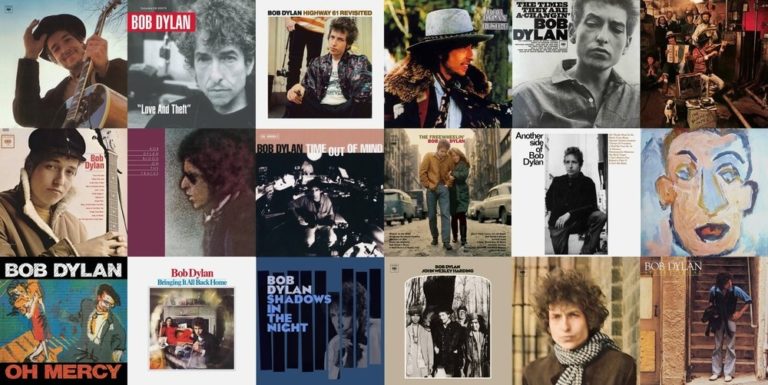
Bob Dylan has always blurred the line between myth and reality, but some of his most memorable songs anchor themselves in history by naming real people. Whether referencing fellow musicians, historical figures, or political players, Dylan uses these names not just as props, but as poetic anchors in a world he’s constantly reimagining. Here are Dylan songs that name real people—each adding a layer of meaning, mischief, or myth to the master songwriter’s catalogue.
“Hurricane”
Perhaps Dylan’s most famous protest song, “Hurricane” recounts the story of boxer Rubin “Hurricane” Carter, who was wrongly convicted of murder. The song reads like a courtroom drama set to music, naming everyone from the judge to the witnesses. Dylan’s fiery lyrics helped reignite public interest in Carter’s case.
“Only a Pawn in Their Game”
This haunting civil rights anthem references civil rights activist Medgar Evers, whose assassination in 1963 stunned the world. Dylan names Evers to illustrate how systemic racism empowers otherwise invisible men to commit violent acts. The song remains one of his starkest commentaries on racial injustice.
“Desolation Row”
A kaleidoscope of characters—some mythical, some real—populate this epic track, including historical names like T.S. Eliot and Albert Einstein. Dylan tosses them into a surreal carnival of images, creating a strange, poetic dreamscape that satirizes modern life. It’s absurdist literature in musical form.
“I Shall Be Free No. 10”
Dylan name-checks the Beatles, Cassius Clay (Muhammad Ali), and Charles de Gaulle in this humorous and chaotic stream-of-consciousness piece. The song plays like a parody of pop culture and political absurdity. It’s classic Dylan: playful, pointed, and unpredictable.
“Talkin’ John Birch Paranoid Blues”
This biting satire skewers the far-right John Birch Society and name-drops figures like Eisenhower, Lincoln, Jefferson, Roosevelt and George Lincoln Rockwell. Dylan uses exaggerated paranoia to mock Cold War-era conspiracies. It was so controversial it got him booted from “The Ed Sullivan Show.”
“Who Killed Davey Moore?”
This stark and repetitive song explores the death of boxer Davey Moore in the ring, examining who bears responsibility. Dylan sings from multiple perspectives—referee, crowd, manager—without letting anyone off the hook. The real-life tragedy becomes a moral inquiry.
“Roll on John”
A tender and elegiac tribute to John Lennon, “Roll on John” honors the slain Beatle through lyrical nods and historical references. Dylan weaves Lennon’s lyrics and legacy into a song full of sorrow and admiration. It’s Dylan at his most vulnerable and direct.
“Lenny Bruce”
This haunting ballad is a tribute to the groundbreaking comedian who died young. Dylan reflects on Bruce’s life and his tendency to challenge social norms. The tone is mournful, as if Dylan recognizes a fellow provocateur gone too soon.
“With God on Our Side”
Dylan invokes a parade of historical figures and events, including Adolf Hitler, World War II, and the Spanish-American War. The song critiques how nations justify violence by invoking divine approval. The names help ground the critique in specific, chilling realities.
“Blind Willie McTell”
Named for the legendary bluesman, this unreleased masterpiece paints a dark and ghostly portrait of American history. Though McTell is only mentioned in the final line, his name anchors the song’s meditation on slavery, suffering, and song. It’s a whispered tribute to blues lineage.
“Joey”
Co-written with Jacques Levy, “Joey” is a controversial ballad romanticizing mobster Joey Gallo. Dylan paints Gallo as a misunderstood antihero, much to the dismay of critics. It’s a reminder that Dylan’s empathy and mythmaking don’t always conform to public opinion.
“George Jackson”
Dylan released this protest single shortly after the killing of Black Panther George Jackson in prison. The song is raw, emotional, and politically charged. It shows Dylan’s continued engagement with Black activism and systemic injustice in America.
“I Shall Be Free”
This early Dylan number references everyone from Brigitte Bardot to President Kennedy, mixing celebrity gossip with social satire. The song’s absurd name-dropping is both hilarious and revealing. It’s one of Dylan’s earliest takes on pop culture’s absurdities.
“Tempest”
The title track from his 2012 album references the Titanic disaster and names Leonardo DiCaprio, tying in the film’s influence. Dylan uses historical and fictional elements to explore fate, hubris, and loss. It’s long, cinematic, and uniquely Dylan.
“Bob Dylan’s 115th Dream”
A surrealist romp through American history and myth, this song tosses in Captain Ahab, Columbus, and even the Mayflower. The absurd historical mash-up becomes a satire of American exceptionalism. It’s Monty Python meets Beat poetry.
“Murder Most Foul”
Clocking in at over 16 minutes, this epic reflection on the JFK assassination references everyone from Marilyn Monroe to Thelonious Monk. It’s Dylan’s cultural elegy, a collage of American grief and musical touchstones. Name after name, it’s a requiem for a nation.
“Highlands”
This sprawling track from Time Out of Mind includes a random but unforgettable reference to Neil Young. Dylan’s nod to his fellow songwriting legend is fleeting but affectionate. The song is meditative, wandering, and quintessentially Dylan.
“Brownsville Girl”
Co-written with Sam Shepard, this cinematic song name-drops Gregory Peck as it spirals through tales of lost love and old westerns. The reference anchors the song’s dreamlike drift through memory and myth. It’s one of Dylan’s most ambitious and theatrical tracks.
“I Contain Multitudes”
On this introspective track from Rough and Rowdy Ways, Dylan mentions Anne Frank, Indiana Jones, and the Rolling Stones. The references seem disparate, but that’s the point: Dylan is embracing his contradictions. The song is a winking statement of vast, unapologetic identity.
Whether invoking titans of justice or icons of entertainment, Dylan’s namedrops are always part of a larger poetic mission. His songs tell their stories and reshape the cultural memory of those who helped write them.