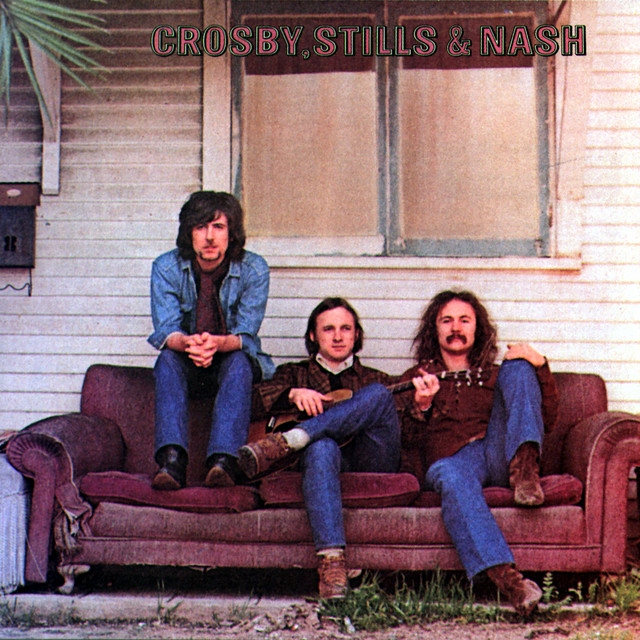
Few albums in rock history have had the seismic impact of Crosby, Stills & Nash. Released in 1969, the debut from the folk-rock supergroup redefined harmonies, songwriting, and the very essence of what a band could be. From the haunting beauty of “Helplessly Hoping” to the anthemic grandeur of “Suite: Judy Blue Eyes,” this record set the tone for the singer-songwriter movement of the ‘70s and cemented CSN’s place in rock’s pantheon. But beyond the hits and accolades, this album holds fascinating stories that even longtime fans may not know.
1. The Cover Photo Was a Race Against Time—And Lost
The iconic cover of Crosby, Stills & Nash was taken by photographer Henry Diltz before the band had settled on a name. The trio sat on an abandoned house’s porch in West Hollywood—left to right, Nash, Stills, and Crosby—opposite of the album’s title order. Once they had officially named the band, they returned to the house to reshoot the cover in the correct order, only to find it had been demolished. That’s why the album cover remains out of sync with the group’s name.
2. Stephen Stills Played Nearly Everything
While Crosby, Stills & Nash is remembered for its intricate vocal harmonies, much of the instrumentation was the work of just one man—Stephen Stills. Dubbed “Captain Many Hands” by his bandmates, Stills played nearly every instrument on the album, including bass, organ, and lead guitar, layering everything meticulously. The only exceptions? David Crosby and Graham Nash played guitar on their own songs, and Dallas Taylor handled the drums (except on “Marrakesh Express,” where Jim Gordon stepped in).
3. “Suite: Judy Blue Eyes” Was a Public Breakup Letter
One of the album’s most beloved tracks, “Suite: Judy Blue Eyes,” was written by Stills about his then-girlfriend, singer-songwriter Judy Collins. The song chronicles their impending breakup, with poetic verses referencing Collins’ time in therapy and their emotional distance. Collins herself has recounted the moment Stills first played it for her, admitting, “We both cried… but I still left him.” Despite the heartbreak, the song became a defining anthem for the band and a staple of their live performances.
4. “Wooden Ships” Was Too Dangerous to Credit Fully
The apocalyptic “Wooden Ships” was co-written by David Crosby, Stephen Stills, and Paul Kantner of Jefferson Airplane. However, when the album was released in 1969, Kantner’s name was conspicuously missing from the credits. The reason? Kantner was embroiled in a bitter legal battle with Jefferson Airplane’s manager, who had the power to block releases involving his name. To avoid potential lawsuits, Crosby and Stills left Kantner off the official writing credits at first, though he was later properly credited—and compensated—once the album took off.
5. A Song That the Hollies Rejected Helped Form the Band
Graham Nash originally wrote “Marrakesh Express” while still in The Hollies, but his bandmates dismissed it as not commercial enough. Frustrated, Nash left the group and soon teamed up with Crosby and Stills, bringing “Marrakesh Express” with him. The track became the band’s first single and a Top 40 hit, proving Nash’s instincts right. Without The Hollies’ rejection, Crosby, Stills & Nash might never have come together.