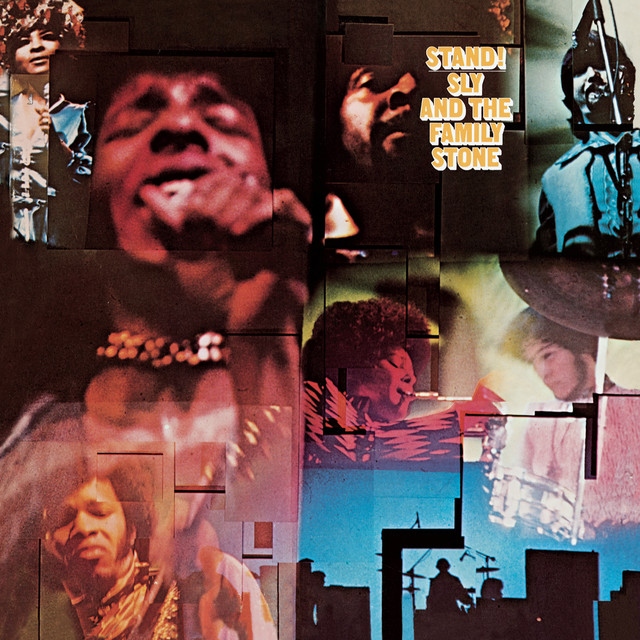
Released in 1969, just months before their legendary Woodstock performance, Sly and the Family Stone’s Stand! fused funk, soul, and rock in a way that had never been done before. It was socially conscious, musically innovative, and packed with songs that became instant classics.
From “Everyday People” to “I Want to Take You Higher,” Stand! isn’t just an album—it’s a revolution set to music. But even with its Grammy Hall of Fame status and Library of Congress recognition, there are still some untold stories about this legendary record.
1. The Album Almost Didn’t Happen
Before Stand! became a smash hit, Sly and the Family Stone were struggling. Their previous album, Life, failed to break the Billboard 200’s Top 100, and the band was on shaky ground commercially. Epic Records wasn’t sure if they should keep investing in a group that had yet to prove themselves beyond their hit “Dance to the Music.”
But Stand! changed everything. It catapulted the band into the mainstream, selling 500,000 copies in its first year and eventually going triple Platinum. If this album hadn’t taken off, we might never have gotten the full brilliance of Sly and the Family Stone.
2. “Everyday People” Popularized a Famous Catchphrase
Before Stand!, people weren’t using the phrase “different strokes for different folks” in everyday conversation. But after the release of “Everyday People,” the phrase became a pop culture staple, capturing the song’s message of unity and acceptance.
The song was a massive hit, spending four weeks at No. 1 on the Billboard Hot 100. Decades later, it even inspired the title of the classic 1978 sitcom Diff’rent Strokes. The song’s legacy didn’t stop there—hip-hop group Arrested Development reimagined it in 1992 with their hit “People Everyday,” proving that Sly’s message of inclusivity is truly timeless.
3. “I Want to Take You Higher” Was Originally a Different Song
Before becoming one of Sly and the Family Stone’s most electrifying anthems, “I Want to Take You Higher” existed in an early form called “Higher.” It was originally recorded for the band’s 1968 Dance to the Music album, but the song didn’t have the same energy that it would later take on.
When the band revamped it for Stand!, they added a heavy dose of funk, more layered vocals, and a driving groove that turned it into a must-play at every party and festival. Their live performance of the song at Woodstock—where Sly had the crowd chanting “higher!” at 3 a.m.—is now the stuff of legend.
4. The Band Laughed Their Way Through “Sex Machine”
“Sex Machine” isn’t just a 13-minute funk jam—it’s a snapshot of the band’s raw energy and creative spontaneity. The song was recorded in one long take, with each band member getting a solo. The highlight? Drummer Gregg Errico’s explosive solo at the end.
If you listen closely, you’ll hear something unexpected: laughter. As the track wraps up, the band can be heard cracking up in the background. It’s proof that even in the midst of their rise to stardom, Sly and the Family Stone never lost their sense of joy and playfulness in the studio.
5. “Stand!” Had to Be Reworked After a Lukewarm Club Reaction 🎵📢
When Sly first played an early acetate of “Stand!” at a San Francisco nightclub, the response was… underwhelming. The song was missing something. Instead of scrapping it, Sly went back to the studio and added the now-famous gospel-inspired outro.
That last-minute decision turned the track into a classic. The extended outro, recorded with session musicians because most of the band wasn’t available, became one of the most beloved parts of the song. Even Gregg Errico later admitted that people often asked why the entire song wasn’t built around that gospel section!
With its powerful social messages, boundary-pushing musicianship, and undeniable grooves, it helped redefine what funk and soul could be. From the anthemic call to action in “Stand!” to the joyous unity of “Everyday People,” every song on the album still hits hard today.