Christine Savard’s first single in three years proves that motherhood hasn’t slowed down her rocking style. The Victoria-based singer/songwriter/producer’s “Wicked Woman” adds to the classic tradition of love-at-your-own-risk songs with her smoky-smooth vocals, flowing melody line, pulsating bass, and no-nonsense lyrics:
‘Cause she’s a wicked, wicked woman
She’ll take your heart out without warning
Then she’ll make you carry the burden.
The track’s multilayered instrumentation features strings, synths, sax, lap steel guitar, a flute solo, and a siren introduction—for the lady is a siren, after all—to cinematic effect.
In addition, the multitalented Savard co-produced and co-directed the song’s video, a stunning mix of vintage and modern atmosphere. The action takes place at a lavish 1930s mansion (once owned by a grifting business mogul who went on the lam). A pair of female dancers add a frisson of dark sensuality as they interact with Savard, the Wicked Woman herself, and the hapless lover who doesn’t take the singer’s advice until it’s almost too late. As the contrasts between the luxe and shady elements play against the song’s complex arrangement, the results demand multiple listens and multiple viewings.
Christine Savard grew up in Thunder Bay, Ontario, and currently calls Victoria, British Columbia, home. Her music reflects a wide range of influences from Fiona Apple to Led Zeppelin, and her sonic journeys have taken her from producing electronic dance tracks to opening for live bands on acoustic piano and vocals.
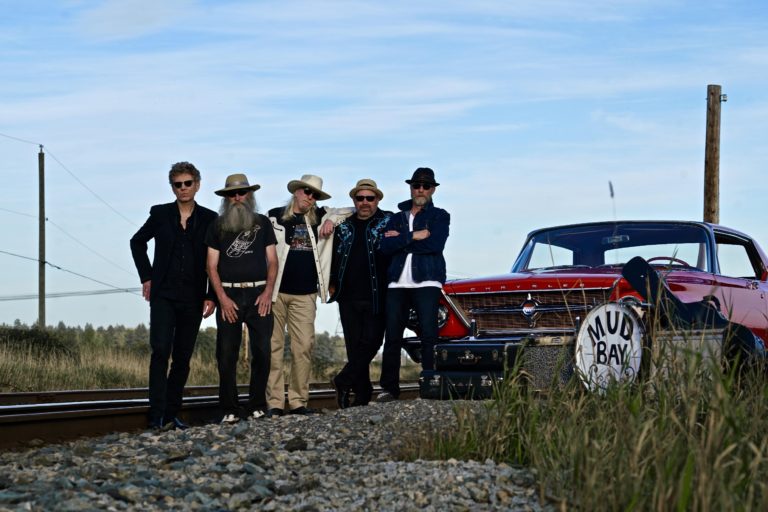
Eclectic rock and rollers, Mud Bay, land back on the scene with a new laid-back number called “Love and Forgiveness,” the second single from their latest album Best Laid Plans. Their take on a good time brings a wide range of influences to the party—blues, country, Cajun, rock, and soul, they’re all there. Reaching musical parts that other bands cannot reach.
Born in 1978, Mud Bay has been entertaining audiences with their spectacular shows—made up of their version of blues and roots music mixed with just about anything. Hailing as “Saturday night entertainment, any day of the week”. The talented five-piece features three main vocalists along with four songwriters which open the scope up for a plethora of musical range, diversity, and creativity. The band consists of Mud Bay Slim (Harold Arnold) on harmonica and vocals, Mark Branscombe on guitar and vocals, Randall T Carpenter playing guitar, steel, and vocals, Dennis Ingvaldson pumping the Bass, and Murphy Farrell taking on the rhythm section with Drums and Percussion.
“Love and Forgiveness” has a blues swing and rhythm that wouldn’t be far removed from that Van Morrison sound. With Randall T Carpenter taking lead on this track, “Love and Forgiveness” delivers on storytelling with a rhythmic beat offering the listener a heads up on love and lies in life. Randall T Carpenter delivers a plea to past mistakes in love with the hope of getting absolution as he reflects on chaotic relationships.
“People tell me talk is cheap and I found out that it’s true
For every promise that we keep, we break more than just a few”
Thanks to musical guests Jerry Cook and Norm Quinn, Mud Bay brings horns into their original version of blues and bop, adding a classic Blues Brothers sound. With the additional dulcet tones of Pete Sweetzir’s Hammond underlining the foundation of Mud Bay’s new single.
The stand-out chorus of “Love and Forgiveness” delivers on that prominent Dennis Ingvaldson walking bass line with Randall T Carpenter following on vocals every step of the way.
“Love and forgiveness, true ties that bind
Are so very hard to find, seem to be in short supply
So we see time after time how the heart deceives the mind”
“Love and Forgiveness” is just one of fourteen original tracks off their new album Best Laid Plans recorded at Afterlife Studios, Vancouver, Canada, produced by the band themselves and Erik Nielsen.
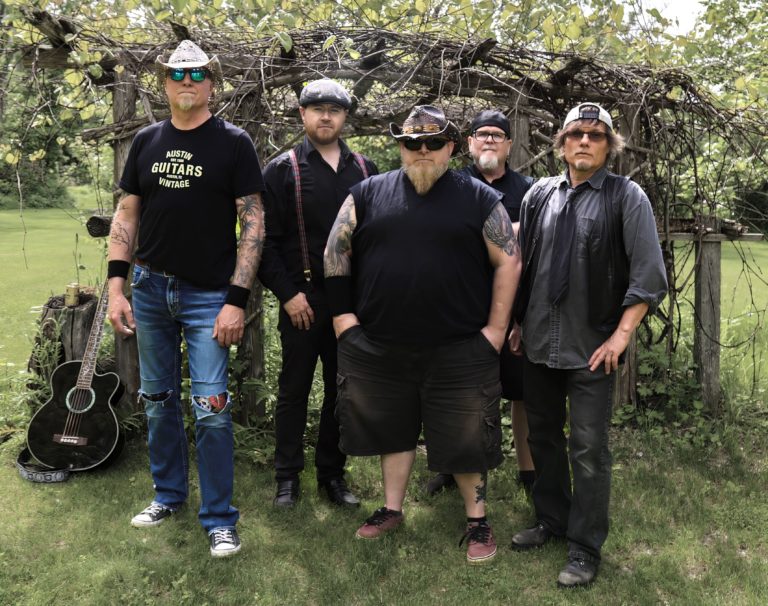
Evil Creek, winner of Music Group of the Year Award at this year’s Ottawa Awards, have blasted onto your rock radar with their new EP, Away from the Sun, with the indignant single, “Lovely,” characterizing the wistful longing, plaguing doubts, profound loneliness, and tender reminiscence we all experienced during the pandemic.
“As we all got a little older, more experienced, and perhaps a little, but not much, wiser, and as the music scene in Ottawa had less and less opportunities available for heavier music, we each found ourselves gravitating towards additional musical tastes that were accessible to more people – never losing our personal tastes for the harder-edged music but exploring other avenues as well. It’s pretty fun working in heavy rock riffs together with very different things; a little bit of country, maybe some bluegrass, some humor, and just good old hard-driving rock music. We don’t take it too seriously,” Evil Creek said.
Evil Creek’s “Lovely” chapter erupts with a twangy, acoustic guitar lick is “a fast-paced breath exhaling and inhaling, before a heartbeat of drums draws you in and pounds in your chest,” Evil Creek said about the opening of the song.
Turning the page, vocalist Mark Garrod launches into vexed lyrics.
Wake up with the shakes
Until I take another drink
Drop another pill to calm me
A shattered reflection and
I can relate
This is who I am
Annoyed with his life and reality, Garrod directs his anger toward a yearning to have a different life. To be a different person.
Because you’re so lovely
Because you’re so lovely
Garrod sustains each refrain like Dave Grohl’s unwavering rock euphonies.
“Drawing inspiration from a society struggling with self-loathing and addiction, ‘Lovely’ captures a dire need to want to be somebody else in a toxic and plastic world,” Evil Creek explained.
This desire to become someone else parallels the reality of social media presence. Looking at someone’s edited pictures evokes a sense of jealousy and hostility, but when you strip back the photoshop, you find the real person probably isn’t on vacation with a smile plastered on their face 100% of the time.
The heavy driver concludes with the forty-second build-up of an exasperated drum and piqued guitar pulse before culminating into Garrod’s final reflexive statement.
You’re like an angel flying
Through a wall of fire
Wake up crying, crying
I still hear your laughter
Don’t miss Evil Creek’s new EP, Away from the Sun, and accompanying single and music video, “Lovely,” are both out now.
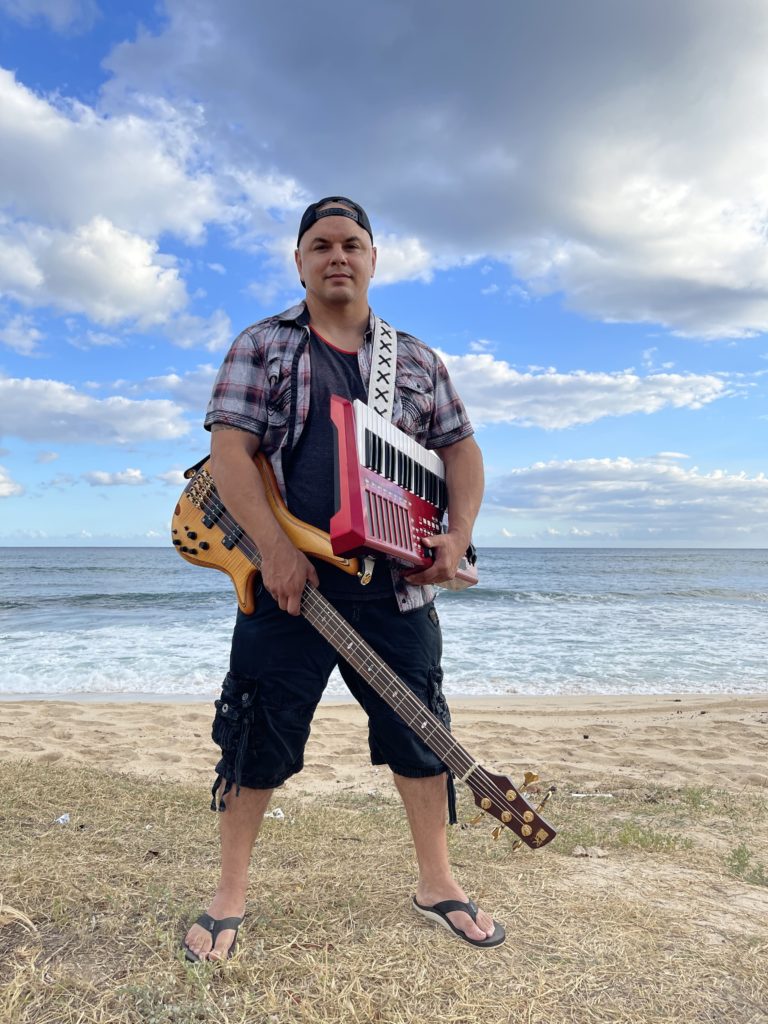
Nanakuli, Hawaii-based MDMP’s, new single, “I Can’t Hold You Closer,” fuses hyper pop, dark pop, alternative rock and pop punk in a three-and-a-half-minute commentary on a relationship with unclear status. This single release comes a year after MDMP’s explorative 27-track LP “Day One” and his collaboration with Dayshell “Strength.”
MDMP’s name attributes no meaning to the singer or the fans, but he abides by one concept. To collaborate on a global level with other musicians. Part of this desire stems from his proximity to other musicians in Oahu, and the other half ensues from a drive to create a new method of making music.
“I Can’t Hold You Closer” opens with rainfall and a female vocalist imploring, “Baby, you know I love you. I just was wondering if you dream this way?”
A couple licks of confident rock drumming and hard guitar strumming later, Meyer launches into grungy vocals asking his counterpart, “Do you really know what it’s like to hold on to something? Grip it oh so tight, the fear of unfolding?” Noting his fear but committing to his belief in the pair.
MDMP grapples with the idea of wanting something he can’t (or shouldn’t have) and convincing himself to stay away from his true desires.
“I can’t sing for you in this room made of blue. I can’t feel for you. Can we pull this through? I am sick from your sense and presence. But I love these poison intentions,” he sings.
“Having the song ‘Strength’ featuring Dayshell already under MDMP’s belt, the desire to try something more daring by fusing an island vibe with metalcore was born. The demo was sent, and he was down for round two. This song was written off the western shores of Oahu, Hawaii with collaboration from all over the planet,” Meyer mentioned collaborations for this single also sprung from the UK and Kazakhstan.
As his album traversed new and familiar territories, MDMP promises his new releases, including “I Can’t Hold You Closer”, travel the same path.
“Some artists are determined to be the same and never change, and they’re going to go down with that ship,” he says. “I don’t want to do that. But I also don’t want to be like bands that have a style and then abandon it. Right now, it’s rock with synths. That’s where it’s at. But that doesn’t mean it can’t evolve and change as I collaborate more. And I’m definitely going to keep doing that. The more people I have invested in it, the better it is for me.”
Montreal-based queer, non-binary Indigenous artist Angel Baribeau, known through their music as Siibii, has released their newest release, “YOY.”
“YOY” is a gut-pulling anthem professing the woes of watershed moments highlighting youth – some good, some bad, and some downright traumatizing.
Production-wise, “YOY” is an infectious melody that resonates within listeners’ ears long after the song is playing. When you couple proficient musicianship with the lyrical prowess of someone learning to love themselves, you get the inspiring ballad that “YOY,” and Siibii, truly represent.
Siibiii is hailed as a champion of mental health awareness among their listeners, and their newest release double’s down on their empathetic abilities. Preaching kindness and self-acceptance, “YOY” holds the listener accountable for daily assaults on their mental health without being condescending. The entire production comes from a place of love, regardless of how confusing our actions my be sometimes.
Lyrics such as “My inner child needs a little help / to show some kindness to my future self. I’m gonna need it / if I’m gonna get there,” represent this idea perfectly.
At 300,000+ streams across all platforms, Siibii’s messages within their debut EP For Those I Love(d) (released under their former performance name, Angel Baribeau) continues to ring loud and clear. Siibii is stepping into their new name with a total artist rebrand and an upcoming music catalog.
With stunning vocals to amplify vulnerable and honest lyrics, Siibii’s debut EP For Those I Love(d) included “Wish We Were Older,” hitting #1 on the Indigenous Music Countdown and won “Best Music Video” award at the Toronto Indie Shorts Film Festival and garnered them the Young Canadian Songwriters Award presented by the SOCAN Foundation. Siibii is currently working on their second music project, a self-titled album set to release in 2023.
Like it did for so many others, the pandemic allowed for a time of deep reflection, and Toronto-based veteran pop-fusion artist Leslie Taylor combines memories of a brutal past with the sweetness of being 16 and awakening to one’s sexuality in her new single “Look But Don’t Touch” – available now.
“Look But Don’t Touch” combines easy, island-infused beats, deft guitar, and Taylor’s crystalline, soulful vocals to tell the story of someone walking into her first gay bar in Toronto called The Studio that used to be at Carlton And Church and meeting someone that would change my life for the better. At first, the narrator is nervous, but then she settles into the uncomplicated fun she wills herself to have:
Oh honey
Doncha be so coy
Let’s have a giggle and a drink
It looks like
You might overthink
The lackadaisical flirtation of the song has more earnestness to it, however, when you know the backstory. “This first release of ‘Look But Don’t Touch’ is my voice as a 16-year-old teenager without a home discovering and awakening to my different sexuality and having no idea what was going to happen,” Taylor divulges. “Well, the worst had already happened, but at least I wasn’t having water boiled to be thrown on me anymore by a violent parent.”
As a young teen, Taylor was living at Eglinton and Kingston Road in the heart of the ‘hood in a sole support home with a parent who didn’t know how to parent. Taylor was a child born at the end of a horrific marriage and is a surviving child because of her brother Pierre’s death in 1959 in Barbados. “The trauma of his death never left me. I was suddenly taken from my home in Toronto at 5 years old in the year of our complicated centennial and flung into a Caribbean home with Grandparents I didn’t know – all hell broke loose, surprise, surprise – and without my mother. I met my brother Pierrre when I was 5 years old at his graveside one Easter Morning in that Moravian Church Graveyard. My Grandfather, the Lay Minister of Sharon Moravian Church, insisted on having Easter Sunday Service at the grave of the dearly departed namely my brother Pierre.I was terrified of these people. Imagine meeting your sibling at his grave. My Brother went on vacation in 1958 to visit his Grandparents and was dead and buried a week before his second birthday in 1959 without either of his parents in attendance. No investigation, no empathy, just silence. They literally got away with burying their Grandchild, and never having to explain what happened.”
Taylor had been raised in residential services from the age of six months until 3 years old, and came home only on the weekends, spending Christmases and birthdays in residential care. “My baby book of memories is rife with the neglect, written by a parent that could not cope, would not get help, and was a trained RN, whose Machiavellian style of parenting created a non-stop environment of trauma. When she did finally go to live with her mother, it was a deeply unhappy home. “That was my life living on the margins within the margins, and my Sears special jumbo guitar with seagulls on the flange was my only friend. Yes, I had acquaintances but as soon as they discovered who I was, I became a pariah, to be expected – it was 1977, after all.”
Taylor came out as a Lesbian in her teens, and she eventually found her way to the Lesbian Organization of Toronto (LOOT), which was a cultural, social, and political hub of mostly white, middle-class women. Taylor is Black, the daughter of a Barbadian mother and Jamaican father, and even though this was a place where she was finally supposed to experience belonging, she didn’t.
“It was women, who were all white, spewing Marxist-Leninist doctrine as they argued with the Trotskyites, and told everyone how to think, act, they believed all men were bad. I don’t believe that, and as a Black woman my feminism includes my men,” Taylor said. “We work together to eliminate misogyny. I have no intention of migrating to an island with only angry, scary women, where my status as a Black woman would have been relegated to that of the ‘help.’”
But there were little glimmers of hope and belonging. She met a woman named Pat, who was Guyanese and lived with her partner Charlene. “For me, these women embodied the Lesbians of the time. Not only did they live on site but they were an interracial couple that lived their principles, they weren’t doing this for a college credit, they were not problematic volunteers, with problematic substance abuse issues ( the drinking women scared me I didn’t drink, remember I’m 16) they were human beings that I could envision as mentors. And then there were more Black women who came into her life at just the right time. Including, through her music, Joan Armatrading, whose album Show Some Emotion was hot off the presses. Joan spoke in whispers of the love ‘that cannot speak its name,’” Taylor recalls. “I’d finally found someone I could relate to musically, and Ms. Armatrading was from the Caribbean like me.”
And so, Taylor’s “Look But Don’t Touch” has all of this woven throughout, and when she begins the song with “I walked into an old space,” it hits differently now that you know.
What else you should know is that Taylor isn’t new to any of this. In the mid-‘90s, she released a self-titled, all-original, nine-track album as an independent artist and led a five-piece band under her own name. Despite the lack of infrastructure at the time, ‘First Born’ charted on college radio in Toronto. Parenthood became her priority, because it was crucial to her that her daughters be raised in a financially stable home. So, despite her love of music, Leslie deferred her dreams (with pleasure) to co-parent her now-adult daughters who are out in the community thriving. In five years, Leslie returned to university, completed undergraduate and graduate degrees in Social Work, and was invited onto the faculty of Community and Social Services at Humber College as a partial-load Professor, where her skills of engagement with large classrooms were honed. Leslie studied jazz guitar with a well-known instructor in Toronto and continued to write her music.
Remember through access to healing, it’s not where you start it’s where you end, and that 16-year-old that did not become street involved and went to school and studied is so deeply grateful for the family of Jamaican musicians and artists that took her into their lovely homes, nurtured her, insisted that she go to school and study, and kept me safe. It’s cool to heal, and as I make peace with the past, through continued access to the available healing resources, that I’ve always used. Here’s what I’ve learned: you can have compassion for your bloodline from a distance, I have a wonderful chosen family, you do not have to be their scapegoat and or their punching bag. Wish them well on their journey, it’s not your responsibility to heal them, and it’s fine to not have contact if the only thing that has healed and grown is you, and there’s nothing to miss except trauma. This is the best part of my life, FREEDOM!!,” she exalts.
The past is over and done, there ain’t a damn thing you can change, the best you can do is buckle up honey and hold on as tight as you can, knowing ‘love’s for real.
When trying to navigate this crazy life, it’s common to want to (innocently) bend the rules rather than walk a straight path, to make our existence our own powerful expression. Ottawa folk artist Christine Graves captures the forlorn frustration and laughing acceptance of living an unconventional existence with her new single “Bend The Rules” from her forthcoming album Everyday Life.
An introspective acoustic-guitar ballad that features understated electric bass and mellow drums, “Bend The Rules” is confessional, prayerful, and self-aware, as Graves examines how hard, but beautiful, life and love can be:
And if I could I surely would grow wings for arms and fly far away
Why do birds stop their song at night but sing all day?
God, let me bend the rules
Isn’t this why you made them? We abide and then we break them then we stop
God let me bend the rules
The ballad’s melancholy-yet-wise resonance comes from the repetition of the lyrics, the hypnotic rhythm of Christine’s guitar playing, its creative starts and stops, and the sad but knowing expressiveness of her voice. “Bend The Rules” is a song that’s much more than the sum of its parts, conveying meaning through almost sixth sense feeling.
Part of the song’s vividness derives from the fact that for Everyday Life, all of the songs were recorded live off the floor over the period of a year during the pandemic. Christine was working as a part-time frontline mental-health worker in a local hospital, and making music helped her manage her emotions and refuel her tank before, during, and “after” COVID. But she clarifies: “It’s not an isolation album. That might come next.”
Christine especially enjoyed recording the album in a live manner. “These are my ‘scratch’ vocal takes, and I almost titled the album Scratch,” she explains. “Working from the energy of live takes is a process I cherish, and it adds to the quality of the recording by creating a strong connection to the listener from a holistic presentation of the key musical elements.” In other words, she is not recorded over, produced to the nth degree, or presented as something she is not. The record represents closely what a live show is when you venture out to hear Christine perform.
Christine Graves is a Canadian singer-songwriter who has made music independently since 1995, with a release of her debut piece by piece. She became a CBC radio darling and received critical acclaim, recording three more independent albums released on her label Brave Music between 1998 and 2006. Christine’s music can be described as spacious and introspective contemporary folk. She writes poetry and puts it into song, performing on guitar and ukulele and often improvising vocal solos. Occasionally her east coast roots come to the fore, and she plays on her grandfather’s 100-year-old banjo ukulele from Nova Scotia.
Little Animal! is a group of Montreal musicians that transcends the boundaries of jazz and electro. Their eponymous digital album is now available via Justin Time Records.
https://www.youtube.com/@littleanimal9478
Little Animal! is led by bassist Morgan Moore (The Barr Brothers, Martha Wainwright, Yannick Rieu, Ranee Lee), who is also co-founder of Blood & Glass and Black Legary. For the past two decades, Morgan has been travelling the world playing bass. More recently, he has been composing and producing cutting-edge electronic music.
In 2021 he was approached by Jim West of Justin Time Records to create an album uniting electronic music with the intensity of jazz. Morgan called on some well-known musicians to collaborate on the project and the chemistry and beauty of their work is undeniable. Besides Morgan Moore on bass, Little Animal! consists of Joe Grass (Patrick Watson, Elisapie) on pedal steel, Tommy Crane (Aaron Parks, Melissa Aldana) on drums and Lex French (Christine Jensen, CODE Quartet, Diana Krall) on trumpet. Together they create lush improvisations and mind-blowing grooves. When integrated into the lush landscape of Morgan’s electronic creations, the result is unique and inspiring sound.
The music of Little Animal! pushes the listener to explore the relationship between humans and technology: both our addiction and our aversion to it. Jazz is an art form that embodies human expression in its most spontaneous creation.
Listening to Little Animal! you can almost feel the musicians fighting the electronic sounds at times while other sections coexist in perfect harmony. The constant tug of war between man and machine begs the question: is technology controlling us or are we controlling it?
The band followed up a spring residency at Montreal music venue Ursa with their first appearance in July 2022 at the Festival International de Jazz de Montreal with more Canadian dates to follow in 2023. Little Animal! is gearing up to make waves in the jazz and avant-garde music scenes around the world.
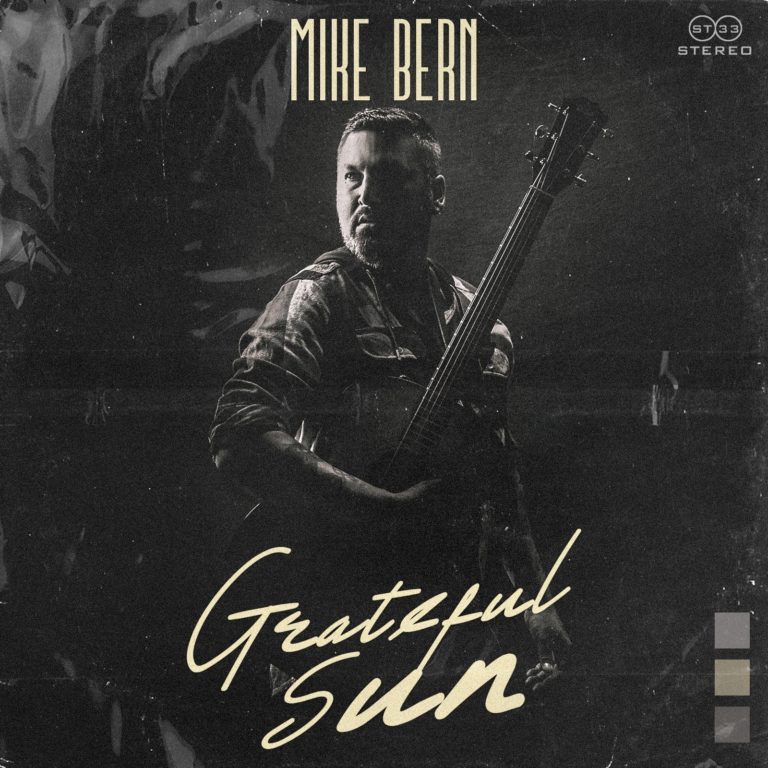
Through good times and bad, hot and cold, dazzling and dim, there is one constant on this giant rock we call earth – the sun. In Mike Bern’s newest single, “Grateful Sun,” the award-winning artist pays homage to that which always ignites.
The Tobique First Nation, New Brunswick-based singer/songwriter decided to do something a little different with this one.
“The world can be a dark place at times,” Bern explained. “I wanted to write a song that gave thanks to life itself.”
Underneath ethereal instrumentals with an indie twist, Bern serenades the sun from our universal human perspective, encapsulating our relationship with life’s shining necessity. Bern touches on the hardships we all face, and how the sun acts as a foil to the darkness, infinitely illuminating for brighter days.
“You take the fall
Under the sunlight
Time is precious
Oh no no
Don’t go home
Don’t go home.”
While we never want the sun to disappear, it does every night. But without fail, it is back in the morning, and we can put the pieces back together again when it returns. We’re always “trying to escape the dark,” as Bern eloquently explains, and there isn’t anything that does it quite like the sun, and for that we are grateful. Bern gives thanks to the sun for all it does – nothing matches the consistency of our galaxy’s shining star.
“Grateful Sun” is Bern’s follow up to his previous dual singles, “Ancestors” and “Shrine of Shirl,” which both hit the top five of the Indigenous Music Countdown.
Bern has sung in award-winning bands Kickin Krotch and District Avenue, and he’s opened for Seaway, The Trews, One Bad Son, The Motorleague, and more. In 2018, District Avenue’s song “Revival” was featured at the Winter Olympics in PyeongChang, South Korea, and his signature raspy rock vocals harmonizing with traditional folk acoustical melodies have earned him several notable musical awards and nominations through the years. Most recently, Bern was nominated for three Native American Music Awards.
Drawing his influence from the likes of Chris Otepka, Frankie Miller, and Ben Schneider, Bern’s music oozes a combination of purity and pain, appealing to listeners with its unwavering root.
There is no greater root to reality than the sun, and Bern explores that deeply in his latest work.
“While it can be overbearing at times, the sun is always there to pick us up and keep us warm when we feel lost and alone,” he said.
There is darkness all around us, literally and figuratively. But the sun forces light through, every day, and breathes life into the void.
On the precipice of the pandemic, Cliff Cardinal was in a toxic relationship with cocaine. While stuck at home with nothing much to do, his contemporary life became the subject of the latest release from Cliff Cardinal & The Sky-Larks, “Suicidal Valentine.”
Cardinal wrote the song while attempting to manage his fraught situation, creating the song of his addiction as a toxic relationship. “I spent a lot of nights sleeping at the studio and resenting the world,” Cardinal explained. “Then COVID happened and offered freedom. The pandemic created an artificial cessation of drug abuse.”
In “Suicidal Valentine,” Clifford pours out his heart over guitar and drum beat that offer a fuzzy sound that matches the chaos of his mind at that stage of his life. The artist declares himself his lover’s sacrificial lamb through distorted vocals that display desperation.
“Oh touch me please
Only you can put me on my knees
Take me apart
Hurt me hurt me hurt me from the heart
Make it nice
Romance is fire and truth is ice ice ice
Say you’re mine and I’ll be your suicidal valentine”
This song serves as the title track of the Toronto-based band’s newest album, establishing a clear theme for the project, the work for which was started during the height of lockdowns.
“I wrote the songs ‘Suicidal Valentine,’ ‘Yellowknife,’ and ‘Your Dress’ at home and started sending the parts to the Sky-Larks,” Cardinal said. “The Sky-Larks were, I guess, pretty bored. But we were getting in the habit of ‘jamming’ from home from some online concert events, so we started sending tracks to our bandmate and producer, Justin McWilliams.”
While this was happening, the band grew tighter even if distances weren’t always as close. All of that emotion and then some are expressed on this record, and “Suicidal Valentine” is a bellwether for the project’s tone.
Cliff Cardinal & The Sky-Larks, which also includes drummer Patrick Ferrigan, consider themselves to be genre-free, unwilling to let the bounds of one musical lane contain them. Honed by a hilarious and nefarious style, the band produces protest songs, love ballads, and existential raps through an Indigenous lens. Substance abuse, self-loathing, dark themes, and plenty of catchy hooks are rife within their music. “Suicidal Valentine” is no exception.
Cardinal is doing better now than he was when “Suicidal Valentine” outlined his regular mental state. Thankfully, his reliance on drugs is well past the stage of toxicity. But for those who have experienced or are experiencing a similar struggle, his story will resonate.