


Due to the massive popularity of Nickelodeon’s Blue’s Clues in the U.S., South Korea produced its own adaptation in 2000, titled 수수께끼 블루 (Riddle Blue), also sometimes translated as Mystery Blue. Airing on KBS2, the Korean version replaced Steve with an “Uncle” character, played by comedian HyunShup Shin, bringing the interactive learning format to a whole new audience.
Rachel Chinouriri Announces Little House EP and Drops Lead Single “Can We Talk About Isaac”
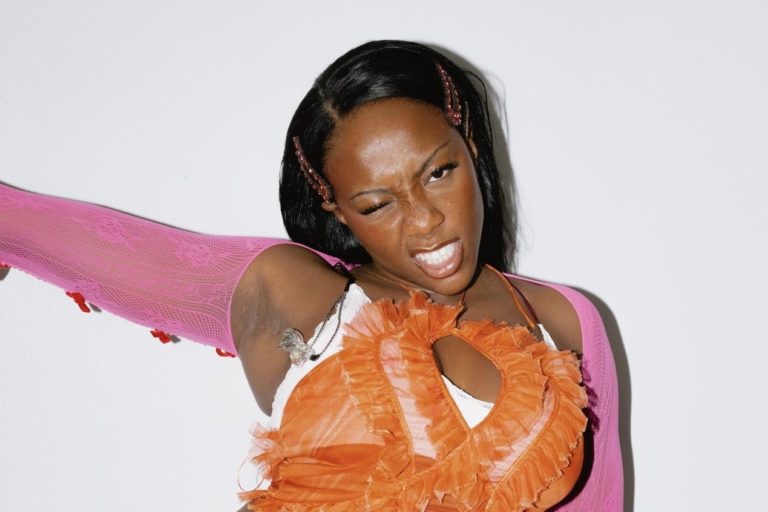
Rachel Chinouriri today announces her forthcoming new EP Little House, due for release on Friday 4th April via Parlophone Records / Atlas Artists and available for digital pre-order now. She also shares the project’s lead single ‘Can We Talk About Isaac’, an ode to finding healthy and fulfilling love with her boyfriend, Isaac.
Premiering last night as Hottest Record In The World on BBC Radio 1, the track arrives in a period of optimism and freedom for Rachel in her songwriting. Following the challenging and personal topics covered on her acclaimed debut album What A Devastating Turn Of Events, the new single leans into the lighthearted giddiness of a blossoming new relationship.
Rachel shares: “I write songs from a place of trauma but since releasing my album, I’ve consistently been in therapy and fell in love. Isaac makes me feel so protected and I’ve never felt protected really in my life, especially from men. I just felt so much of a new emotion I decided to let myself write about how much I love him, no matter what happens the fact that Isaac is the first and only guy to make me feel like this is special. It’s a shame that it took that to love myself but Isaac is my hero and I hope this fairytale never ends.”
Rachel this week set off on the road across the UK and Europe as main support for Sabrina Carpenter’s Short N’ Sweet arena tour, arriving this weekend at London’s O2 Arena.
Following this, she will embark on her debut US headline tour, taking place across May and June, and includes her biggest shows to date in LA (Fonda Theatre), New York (Webster Hall) and culminates with an appearance at Bonnaroo Music + Arts Festival. The tour is largely sold out following a number of venue upgrades and additions due to demand, see below for full list of dates.
The release follows Rachel’s first BRIT Awards as a nominated artist for Artist of the Year and Best New Artist, and a performance on The Graham Norton Show last weekend. The nominations stand as a testament to Rachel’s incredible breakout year in 2024, the year which saw the long-awaited release of her debut album What A Devastating Turn Of Events. She went on to sell out her UK headline tour, including in her hometown at London’s Kentish Town Forum. To celebrate the first anniversary of What A Devastating Turn Of Events Rachel will release any exclusive white LP vinyl version of the album, available to pre-order now, out on 2nd May 2025.
Rachel Chinouriri is 2024’s most exciting British breakout star. With the release of her debut album What A Devastating Turn Of Events she cemented her reputation as one of the UK’s most accomplished young songwriters. Making the album was a cathartic experience for Chinouriri: by putting the challenges and joys of her life so far under a microscope she traverses themes of life, death, home and belonging, mental health, love and letting go with unflinching honesty, resulting in a one of the most unique indie pop records in years.
What A Devastating Turn Of Events landed in the Top 20 of the UK Official Charts and led to Rachel securing her first two BRIT Award nominations (Artist Of The Year, Best New Artist), following previous nominations for an Ivor Novello award, multiple Rolling Stone UK awards and being tipped on the BBC’s coveted Sound Of poll. Following the album’s release she played a triumphant and emotional set on Glastonbury’s The Other Stage, sold out her UK headline tour and starts 2025 by supporting Sabrina Carpenter on all dates of her Spring UK and Europe arena tour.
With her fiercely loyal fanbase, the ‘Darlings’ behind her, and over 2.4 million monthly Spotify listeners, Chinouriri has clocked up over 233 million global streams to date. Over years of experimenting with musical stylings, highlighted in her exploratory 2021 Four° in Winter project, Rachel began to hone a style totally her own with her 2022 EP Better Off Without, blending her signature delicate vocals with pure indie instrumentation. She has been praised by the likes of The Observer (“brimming with fresh ideas”), NME (“consistently charming”), GQ (“Chinouriri is set to dominate”), BBC Radio 1, Later… With Jools Holland and more. Elsewhere, she’s received recognition and support from the likes of Adele, Lewis Capaldi, Sam Fender and Hollywood darling Florence Pugh, who starred in the video for Rachel’s single ‘Never Need Me’.
Rachel Chinouriri 2025 live dates
Thursday 20th February – OMEARA – London, UK – SOLD OUT
Monday 3rd March – 3Arena – Dublin, IE* – SOLD OUT
Tuesday 4th March – 3Arena – Dublin, IE* – SOLD OUT
Thursday 6th March – Utilita Arena – Birmingham, UK* – SOLD OUT
Saturday 8th March – The O2 Arena – London, UK* – SOLD OUT
Sunday 9th March – The O2 Arena – London, UK* – SOLD OUT
Tuesday 11th March – OVO Hydro – Glasgow, UK* – SOLD OUT
Thursday 13th March – Co-op Live – Manchester, UK* – SOLD OUT
Friday 14th March – Co-op Live – Manchester, UK* – SOLD OUT
Sunday 16th March – Accor Arena – Paris, FR* – SOLD OUT
Monday 17th March – Accor Arena – Paris, FR* – SOLD OUT
Wednesday 19th March – Uber Arena – Berlin, DE* – SOLD OUT
Saturday 22nd March – ING Arena – Brussels, BE* – SOLD OUT
Sunday 23rd March – Ziggo Dome – Amsterdam, NL* – SOLD OUT
Wednesday 26th March – Unipol Forum – Milan, IT* – SOLD OUT
Thursday 27th March – Hallenstadion – Zurich, CH * – SOLD OUT
Sunday 30th March – Unity Arena – Oslo, NO * – SOLD OUT
Monday 31st March – Royal Arena – Copenhagen, DK * – SOLD OUT
Tuesday 1st April – Royal Arena – Copenhagen, DK * – SOLD OUT
Thursday 3rd April – Avicii Arena – Stockholm, SE * – SOLD OUT
Friday 4th April – Avicii Arena – Stockholm, SE * – SOLD OUT
Friday 9th May – 9:30 Club – Washington, DC – NEW DATE / SOLD OUT
Saturday 10th May – 9:30 Club – Washington, DC – SOLD OUT
Monday 12th May – Webster Hall – New York, NY – SOLD OUT
Wednesday 14th May – The Axis Club – Ontario, ON
Friday 16th May – Theatre Fairmount – Montreal, QC – ONLY VIP TICKETS REMAIN
Sunday 18th May – The Sinclair – Boston, MA – SOLD OUT
Tuesday 20th May – Lincoln Hall – Chicago, IL – SOLD OUT
Wednesday 21st May – Fine Line – Minneapolis, MN – ONLY VIP TICKETS REMAIN
Saturday 24th May – Bluebird Theatre – Denver, CO
Sunday 25th May – Soundwell – Salt Lake City, UT – ONLY VIP TICKETS REMAIN
Tuesday 27th May – Neumos – Seattle, WA – NEW DATE / ONLY VIP TICKETS REMAIN
Wednesday 28th May – Neumos – Seattle, WA – ONLY VIP TICKETS REMAIN
Thursday 29th May – Wonder Ballroom – Portland, OR – ONLY VIP TICKETS REMAIN
Saturday 31st May – The Independent – San Franciso, CA – SOLD OUT
Monday 2nd June – The Fonda Theatre – Los Angeles, CA – ONLY VIP TICKETS REMAIN
Tuesday 3rd June – The Fonda Theatre – Los Angeles, CA – NEW DATE / ONLY VIP TICKETS REMAIN
Friday 6th June – House Of Blues Cambridge Room – Dallas, TX – SOLD OUT
Saturday 7th June – The Parish – Austin, TX
Sunday 8th June – House Of Blues Bronze Peacock – Houston, TX
Tuesday 10th June – Terminal West – Atlanta, GA – ONLY VIP TICKETS REMAIN
Friday 13th June – Bonnaroo Music + Arts Festival – Manchester, TN
Saturday 21st June – Bludfest – Milton Keynes Bowl, UK
*supporting Sabrina Carpenter
Scott Hutchison’s Owl John Returns with a Special Vinyl Edition
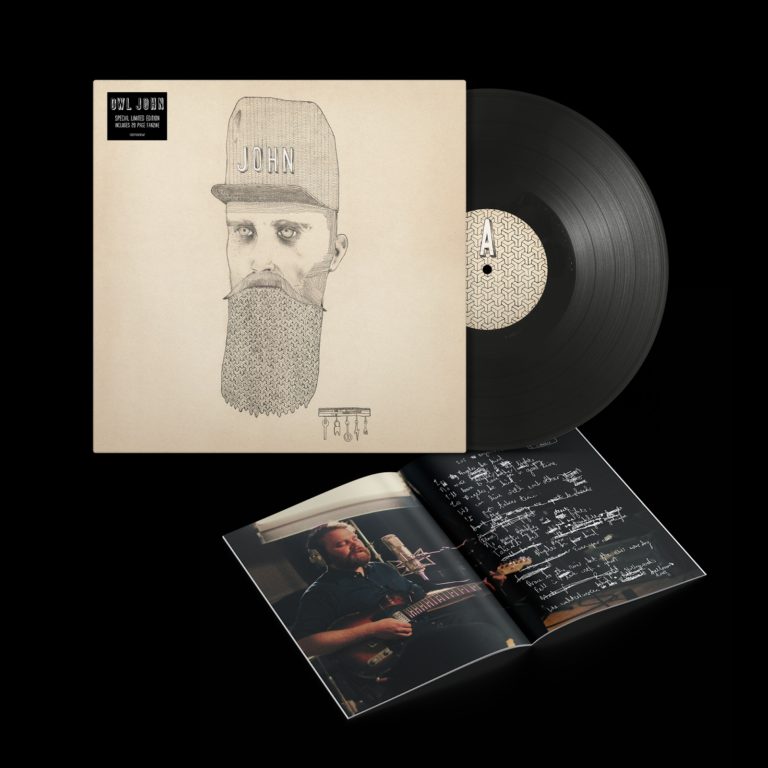
Owl John, came to life between Frightened Rabbit records – originally released 6 August 2014 – the project was a chance for singer Scott Hutchison to shift gear, recuperate after a lengthy touring campaign, to connect with the love of it, explore landscapes without expectation, experiment for the crack, all in a new place with a loose deadline. Hunkered down in an old school on the Isle of Mull with bandmates Andy Monaghan and Simon Liddell in tow, then taken to Scott’s new home Los Angeles, the plan to make something free from pressure or preconception.
Originally released with minimal press and promotion, the album was met fondly by fans of Scotts work; since has gained a cult following and been a seed of inspiration to many. The new vinyl pa includes a zine with recollections from the time and unseen photos from the making of the album.
As noted in the original press release –
“with the band on a break following the release of their 4th album Pedestrian Verse (their first with Atlantic Records) reaching the Top 10 in February 2013. Scott headed to the Isle Of Mull with the mission to write and record an album in two weeks. For a fortnight they made music by day and drank whisky by night; at the end an album was made and ‘Owl John’ was born.
The Owl John album, which showcases Scott’s trademark brutal honesty, sees a different direction from the music of Frightened Rabbit. Raw, powerful and often heart-breaking, ‘Owl John’ will see Scott step out of Frightened Rabbit’s shadow.”
Scott – “It’s been about ten years since I had the notion to add the word ‘Owl’ as a middle name. Scott Owl John Hutchison. I thought it had a really splendid flow to it. I suppose I enjoy owls as much as most people, admiring their weird neck thing and having read ‘Plop’ countless times as a wee one. I don’t buy the wisdom bit, but they are incredibly good at being owls and it would be nice to be as effective at being a human. Sadly, I’m not and it is from this croaking foible that songs come. The desperate crunch of failure sat right next to the fizzing, spumante spark of joy. They cackle and point at each other because they don’t understand their opponent. You will find me sitting between them, eating a bag of nuts (not Brazils, they make my mouth itch) and documenting the whole sorry episode.
John is a homeless.
John is a priest.
John is a witness.
John is a beast.
It was also approximately 10 years ago that I started a band called Frightened Rabbit. In that time I’ve dedicated so much of my life to that good wee band with a stupid name, I felt it was time to indulge John. Sing it with me…
John is a weirdo.
John is a thief.
John is a wino.
Listen, bleed, weep.”
Prince’s ‘Purple Rain’ Gets 2024 Dolby Atmos Blu-ray Release in a Historic Reissue
NPG Records and Paisley Park Enterprises, in partnership with Warner Records, are pleased to announce the release of a brand-new audiophile Blu-ray featuring 2024’s Dolby Atmos mix of Prince and the Revolution’s iconic 1984 album, Purple Rain, as well as Prince’s original 1984 stereo mix, in high-definition 24bit / 96kHz audio. The Blu-ray will be available on sale on April 25th.
Prince shattered all expectations and made music history when he released the album Purple Rain, followed by the hit movie of the same name weeks later. The 9-track LP went on to win two Grammy awards (“Best Rock Performance by a Group” & “Best Album of Original Score Written For A Motion Picture”), two American Music Awards, a Brit Award, and an Academy Award for Best Original Song Score. In 2012 the Library of Congress added the album to the National Recording Registry, which only accepts sound recordings that “are culturally, historically, or aesthetically important, and/or inform or reflect life in the United States.” Purple Rain spent 24 weeks at #1 on the Billboard album charts, sold over 25 million copies worldwide, and appears on countless ‘Best Of’ polls, most recently achieving the #4 spot on Apple Music’s Top 100 Albums Of All Time.
The 2024 Atmos presentation of Purple Rain was meticulously mixed from the original multi-track master tapes by Prince’s protege and Best Engineered Grammy nominee Chris James. It was released via all participating Digital Service Providers on June 21, 2024.
“In 2024 we started our year-long celebration of the 40th anniversary of Purple Rain, we are thrilled to present Prince’s masterpiece in ATMOS, providing an immersive, surround auditory experience of Prince’s legendary album. This highly crafted release will present Prince’s iconic work with more space and depth while preserving the beautiful songs that have shaped music and popular culture, and touched the lives of countless fans around the world.” – Paisley Park Enterprises
Warner Bros. Discovery also reissued a newly restored 4K version of the Purple Rain motion picture on June 25, 2024 with a limited theatrical run.
In addition to these Purple Rain reissues, Prince’s catalog is also now available in full on Snapchat and other social media for the next generation of Prince fans to engage, discover and enjoy.
Prince was an iconic American musician, singer, songwriter, bandleader, performer, multi-instrumentalist, record producer, actor, and a pioneer in artists’ rights and freedoms. Born Prince Rogers Nelson in Minneapolis, Minnesota, he released his debut LP, For You, in 1978 and went on to become one of the most successful recording artists of all time, eventually selling more than 150 million albums. Over his 40-year career, his work received unprecedented critical praise as well as official recognition of his achievements including seven Grammy Awards, seven Brit Awards, six American Music Awards, four MTV Video Music Awards, NAACP Awards, a Grammy President’s Merit Award, a Billboard Icon Award, a Golden Globe, and an Academy Award (for Best Original Song Score for the film Purple Rain). His albums, 1999 (1982), Purple Rain (1984), and Sign O’ The Times (1987) frequently appear in rankings of the greatest albums of all time. He was inducted into the Grammy Hall Of Fame, the Rock & Roll Hall Of Fame, the U.K. Music Hall Of Fame, and the Rhythm And Blues Music Hall Of Fame, and more.
Tone Loc’s 1989 MTV Commercial for His 1-900 Number Was a Cool Marketing Move

In 1989, Tone Loc embraced a bold marketing idea with a 1-900 number, advertised in a commercial aired on MTV. Fans could call in to hear messages from the Wild Thing and Funky Cold Medina rapper, a unique way to connect with audiences before social media. This creative promo tapped into the hotline craze of the late ‘80s, giving fans exclusive content straight from the source.
Spring Rocks ‘Where It’s At’ with Rare 1969 CBC Performance Featuring Donovan
In 1969, Canadian pop rock band Spring delivered a dynamic live performance on CBC’s Where It’s At, hosted by Fred Latremouille. The broadcast featured the band playing hits like Look Into Tomorrow and No Opportunity Necessary, No Experience Needed, alongside an interview with folk legend Donovan Leitch. Though originally aired in color, this surviving footage exists only in black and white, offering a rare glimpse into a pivotal era of Canadian music television.
Charlie’s Angels Dolls Took Over Toy Aisles in 1977 with Hasbro’s Commercials
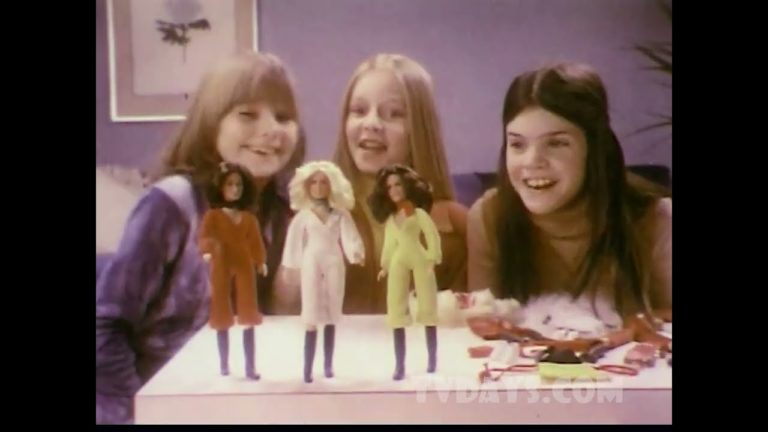
In 1977, Hasbro brought the action-packed world of Charlie’s Angels to life with a line of dolls based on the hit TV show. Commercials showcased the stylish and crime-fighting trio, capturing the imagination of young fans. With their signature looks and fearless attitude, the dolls became a must-have, cementing their place in pop culture history.
The Commodores Brought Disco Magic to WIS-TV Dance Show in 1978
In 1978, WIS-TV’s DANCE brought disco fever to Columbia, SC, with a Soul Train-style showcase of the era’s hottest moves. On November 18, the Commodores, featuring Lionel Richie, made a special guest appearance, lighting up the studio with their signature sound. Though DANCE was canceled in 1979, its legacy lives on as a cherished piece of local music history.
Farren Timoteo’s Made in Italy Brings Its Award-Winning, Disco-Fueled One-Man Show to Toronto
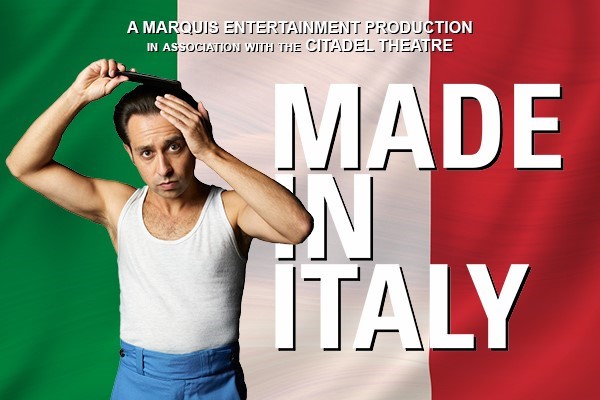
Farren Timoteo’s Made in Italy, the high-energy solo show packed with disco, music, and comedy, has entertained over 100,000 audience members across Canada. Now, after winning multiple awards and touring from coast to coast, the production is finally making its Toronto debut at the CAA Theatre from May 24 to June 8, 2025.
Playwright and performer Farren Timoteo takes audiences to 1970s Jasper, Alberta, where an Italian teenager dreams of making his mark, caught between two cultures and driven by the heart of Rocky Balboa and the swagger of John Travolta. The show has been celebrated for its vibrant storytelling, heartfelt humor, and unforgettable performances, earning the Sterling Award (Edmonton), Jessie Award (Vancouver), and Betty Mitchell Award (Calgary) for Outstanding Lead Performance in a Comedy, along with the Calgary Theatre Critics’ Award for Outstanding Performance in a One-Person Show.
Made in Italy stars Farren Timoteo as Francesco Mantini, with Daniel Curalli serving as the understudy. The production is directed by Daryl Cloran, with original choreography by Laura Krewski, set design by Cory Sincennes, costume design by Cindy Wiebe, lighting design by Celeste English and original lighting design by Conor Moore, sound design by Mishelle Cuttler, and audio consultation by Bex Tralli. The stage management team includes Christine Leroux (Stage Manager), Emilie Aubin (Assistant Stage Manager), and Hazel Moore (Apprentice Stage Manager), while Andrei Mazuruc serves as the Technical Director. The production is brought to life by producers Colin Rivers and Robert Richardson of Marquis Entertainment.
Made in Italy was originally developed by Western Canada Theatre in Kamloops, BC, and premiered there in 2016. In January 2024, The Citadel Theatre in Edmonton produced a new version of the show based on the original production. The play is presented with permission from the playwright and Marquis Literary.
Performance Details
📅 May 24 – June 8, 2025
📍 CAA Theatre, 651 Yonge St, Toronto, ON
🎟 Tickets available at Mirvish.com or by calling 1.800.461.3333
Performance Schedule:
- Tuesday – Saturday: 7:30 PM
- Wednesday, Saturday & Sunday: 1:30 PM
Spotify’s First Global Impact List Proves Canadian Artists Are Taking Over the World

Spotify has announced its first-ever Global Impact List for Canada, recognizing artists whose songs have made waves outside their home country over the last six months. This inaugural list highlights how Canadian music continues to dominate worldwide, with both established superstars and rising names making their mark in unexpected places.
Playboi Carti, The Weeknd, Drake, Chris Grey, Tate McRae, Shubh, 4batz, Future, Metro Boomin, Asees Kaur, Raghav, and Tanishk Bagchi all feature on the list, proving that Canadian music continues to evolve and influence the global landscape.
For 2025, Canada’s Global Impact List showcases both veteran icons and fresh talent reaching new international heights. Chris Grey makes a surprise entry at No. 3 with “LET THE WORLD BURN,” a viral hit that took off as a social media background track before finding an audience in Indonesia, Brazil, and Malaysia. Tate McRae, ranking at No. 4 with “It’s ok I’m ok,” continues to solidify her status as one of Canada’s top global pop stars. The Weeknd and Drake dominate the rankings with three songs each, reaffirming their reign as worldwide chart powerhouses.
Punjabi-Canadian artists Shubh and Raghav also make the cut, redefining Canadian hip-hop’s place on the international stage. Shubh lands at No. 6 with “King Shit,” while Raghav secures No. 9 with “Teri Baaton Mein Aisa Uljha Jiya.” Their success signals a growing global audience for South Asian artists based in Canada.
Here’s the full top 10:
- Playboi Carti, The Weeknd – Timeless (with Playboi Carti)
- Drake – Push Ups
- Chris Grey – LET THE WORLD BURN
- Tate McRae – It’s ok I’m ok
- The Weeknd – Dancing In The Flames
- Shubh – King Shit
- 4batz, Drake – act ii: date @ 8 (feat. Drake) – remix
- Future, Metro Boomin, The Weeknd – We Still Don’t Trust You
- Asees Kaur, Raghav, Tanishk Bagchi – Teri Baaton Mein Aisa Uljha Jiya Title Song (From “Teri Baaton Mein Aisa Uljha Jiya”)
- Drake – Family Matters
Chris Grey, reflecting on his placement, shared, “Watching online communities from all over the world unite around my music and evolve into a fanbase that sells out shows has been surreal. Viral media has redefined the music industry, and I’m proud to be at the forefront of that shift. Being recognized by Spotify for this impact is an honour.”
Elizabeth Phipps, Artist and Label Partnerships Lead at Spotify Canada, highlighted the significance of the list, saying “These artists are shining a light on Canada’s status as a global exporting powerhouse in some exciting and surprising ways. Each of them should be proud of the impact they continue to make as global sensations but also for their contribution to redefining what Canadian music means. Music is global and we are proud of our role in helping Canadian artists working with a global mindset to bring their culture to the world.”
With a mix of established names and emerging stars breaking boundaries, Canada’s influence on the global music scene has never been stronger.