


Ever wondered what stars like David Bowie, Elvis Presley and Freddie Mercury liked to tuck into at home? Here you go.
Watch Sacha Baron Cohen As Borat Roast And Toast U2 At Kennedy Center Honors
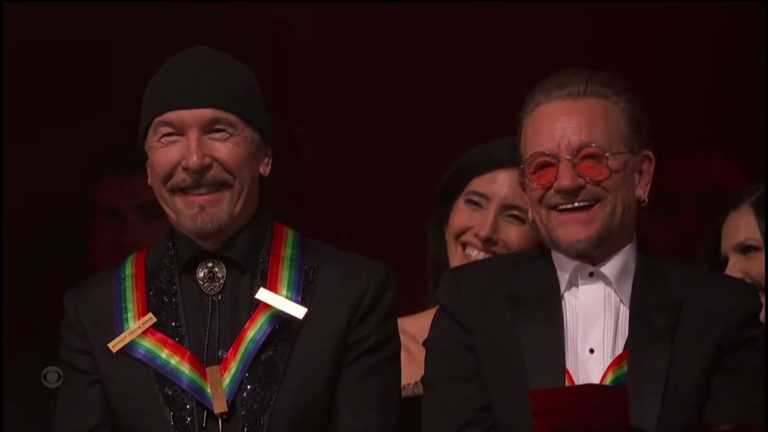
Sacha Baron Cohen appeared as his character Borat at the Kennedy Center Honors, where he roasted and toasted U2.
Video: Paul McCartney Explains How He Wrote “Blackbird”

Paul McCartney explains how he wrote his classic song “Blackbird” on The Parkinson Show in 2005.
“Weird Al” Yankovic Breaks Down His Most Iconic Tracks
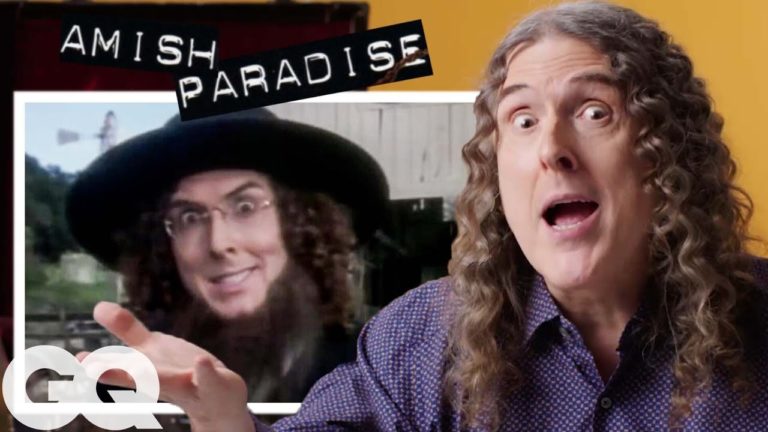
“Weird Al” Yankovic breaks down his most iconic tracks including ‘My Bologna,’ ‘White And Nerdy,’ ‘Another One Rides The Bus,’ ‘Eat It,’ ‘Amish Paraside,’ ‘I Love Rocky Road,’ ‘Smells Like Nirvana,’ ‘Dare To Be Stupid,’ ‘Albuquerque,’ ‘Fat,’ ‘Polka Face,’ ‘Like A Surgeon,’ and ’Hardware Store.’
A Fun Collection of Obsolete Sounds and Disappearing Sounds

Obsolete Sounds is the biggest ever collection of the obsolete and disappearing sounds of the world, covering everything from dusty VHS cassettes, vintage video games and old mobile phones to melting glacier ice and endangered traditional songcraft.
The interactive online exhibition features more than 150 obsolete and endangered sounds and can be explored in full here.
The project documents not just the much-missed sounds that evoke memories from the past, but also highlights some that we’re in danger of losing. It aims to draw attention to the world’s disappearing soundscapes, and what we can do to preserve and save socially and culturally important sounds for future generations.
The collection includes:
– Obsolete home entertainment such as VHS tapes, Walkman cassette players, video games consoles and film projectors
– Vintage military equipment like World War II codebreaking machines, warplanes and air raid sirens
– The evocative sounds of old typewriters, Teletype machines and printing presses
– The world of transport – steam trains, vintage racing cars, 100-year-old farm equipment and London Underground C-stock
– Domestic appliances from the past including hand mixers, Bakelite switches, fans, shavers and coffee grinders
– Reflections on the disappearing sounds of the natural world, industrial processes and cultural traditions
.
Stuart Fowkes, founder of Cities and Memory, said:
“The sounds of the world are changing faster now than at any stage in human history and the lifespan of sounds is shorter in 2022 than it’s ever been before – we’re seeing sounds that only came into existence a few years ago already disappearing.
“Obsolete Sounds is designed to draw attention to the world’s disappearing soundscapes, to highlight those sounds that are worth preserving because they form part of our collective cultural heritage – and to help us think about how to save those sounds before it’s too late.”
Taking the world of disappearing sounds to an entirely different place, each recording has also been reshaped and reimagined as a creative composition by more than 150 musicians and sound artists from all over the world, in turn reflecting on the memories and feelings those sounds evoke as they think back to hearing them throughout their lives.
Obsolete Sounds is the latest project from Cities and Memory, one of the world’s biggest sound projects, which has more than 5,000 sounds covering more than 100 countries and territories, and more than 1,000 worldwide contributing artists, with the aim of remixing the world, one sound at a time. Previous global Cities and Memory projects have included #StayHomeSounds (a global mapping of the sounds of the Covid-19 lockdowns), Protest and Politics (the biggest ever collection of the sounds of protest) and Sacred Spaces, the first global survey of the sounds of churches, temples, prayer and worship.
My Next Read: “Leon Russell: The Master of Space and Time’s Journey Through Rock & Roll History” by Bill Janovitz
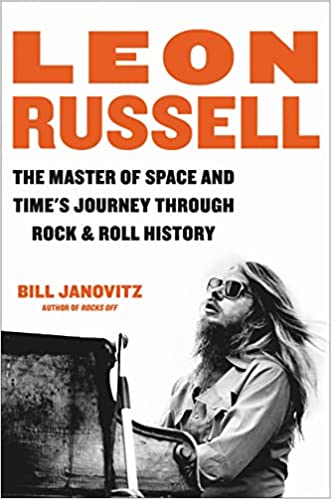
The definitive biography of legendary musician, composer, and performer Leon Russell, a profound influence on countless artists, including George Harrison, the Rolling Stones, Eric Clapton, Elton John, Willie Nelson, Tom Petty, and the world of music as a whole.
Leon Russell is an icon, but somehow is still an underappreciated artist. He is spoken of in tones reserved not just for the most talented musicians, but also for the most complex and fascinating. His career is like a roadmap of music history, often intersecting with rock royalty like Bob Dylan, the Stones, and the Beatles. He started in the Fifties as a teenager touring with Jerry Lee Lewis, going on to play piano on records by such giants as Frank Sinatra, The Beach Boys, and Phil Spector, and on hundreds of classic songs with major recording artists. Leon was Elton John’s idol, and Elton inducted him into the Rock and Roll Hall of Fame in 2011. Leon also gets credit for altering Willie Nelson’s career, giving us the long-haired, pot-friendly Willie we all know and love today.
In his prime, Leon filled stadiums on solo tours, and was an organizer/performer on both Joe Cocker’s revolutionary Mad Dogs and Englishmen tour and George Harrison’s Concert for Bangladesh. Leon also founded Shelter Records in 1969 with producer Denny Cordell, discovering and releasing the debut albums of Tom Petty, the Gap Band, Phoebe Snow, and J.J. Cale. Leon always assembled wildly diverse bands and performances, fostering creative and free atmospheres for musicians to live and work together. He brazenly challenged musical and social barriers. However, Russell also struggled with his demons, including substance abuse, severe depression, and a crippling stage fright that wreaked havoc on his psyche over the long haul and at times seemed to will himself into obscurity. Now, acclaimed author and founding member of Buffalo Tom, Bill Janovitz shines the spotlight on one of the most important music makers of the twentieth century.
When Simon & Garfunkel Quieted The MSG Crowd With ‘The Sound Of Silence’
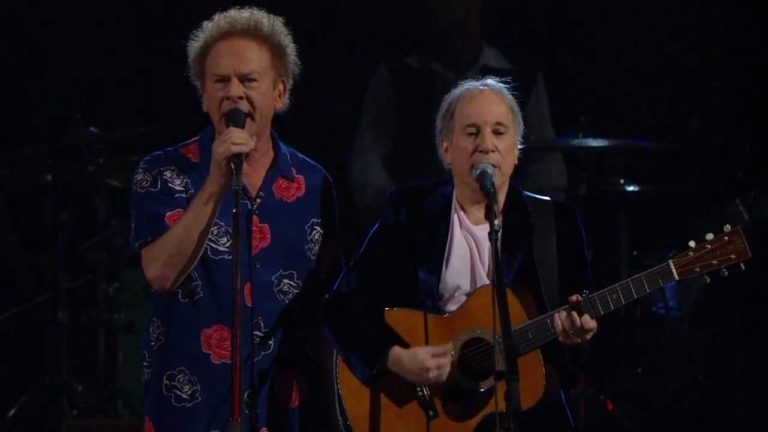
Watch Simon & Garfunkel 25th anniversary Rock and Roll Hall of Fame Concert from 2009 absolutely devastate the crowd.
U2’s Bono and the Edge give surprise concert in Kyiv metro
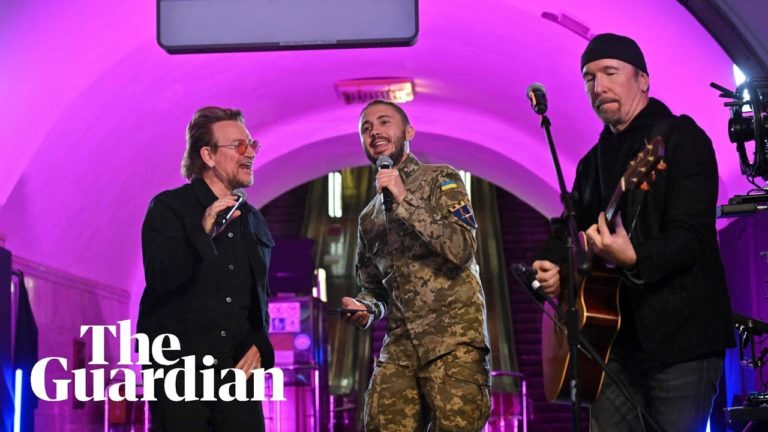
The two U2 members performed a surprise concert in a metro station that is doubling as a bomb shelter in Kyiv.
International Indigenous Music Summit Showcase Applications Are Now Open

Showcase applications are officially open for the 2023 International Indigenous Music Summit (IIMS) – their first ever, standalone, in-person event from May 31-June 4, 2023 in Toronto, Ontario (venue to be announced soon).
The showcases will shine a spotlight on artistic excellence in the Indigenous music community. IIMS facilitates building meaningful and mutually beneficial bridges and partnerships between artists, professionals, and key players in both Indigenous and mainstream music industries. Let’s move the needle forward in terms of sustainable, long-term change in the music community!
Submissions are open to Indigenous artists from anywhere in the world and you can go here to apply!
Canadian Music Legend Ian Tyson, CM AOE, Has Died at 89

The family of the late Canadian country legend Ian Tyson, CM AOE, has confirmed the singer-songwriter died from on-going health complications on December 29th, 2022 at his ranch in southern Alberta, Canada at age 89.
Tyson was inducted into the Canadian Country Music Hall of Fame in 1989, and was inducted into the Canadian Music Hall of Fame, with his former wife and singing partner, Sylvia, in 1992. Tyson became a Member of the Order of Canada in 1994 and in 2003, he received a Governor General’s Performing Arts Award, and inducted into the Alberta Order of Excellence in 2006.
Tyson was born to British immigrants in Victoria, and grew up in Duncan B.C. A rough stock rider in his late teens and early twenties, he took up the guitar while recovering from an injury he sustained in a bad fall in the rodeo.
Ian Tyson’s story from there is familiar to most. He upped stakes from Vancouver Island and hitchhiked to Toronto, where he met a young singer from small-town Ontario called Sylvia Fricker. As Ian & Sylvia, they were the Canadian stars of the early ’60s folk boom that gave the world Bob Dylan, Phil Ochs, Joan Baez, the Clancy Brothers, and the Kingston Trio.
Married in 1964, the pair made almost a dozen albums — and wrote some of Canada’s best-loved songs, including Ian’s “Four Strong Winds” and “Someday Soon,” and Sylvia’s “You Were on My Mind” — songs that have all been covered countless times by some of the most famous artists of our time, including Dylan, Neil Young, Judy Collins, and a young Canadian singer the couple mentored in his early days, Gordon Lightfoot.
During the British Invasion, Ian and Sylvia evolved into pioneers of country-rock. Their band, Great Speckled Bird, rivaled the Byrds and other groups which helped create modern country, a decade before the Urban Cowboy phase of contemporary “new traditionalists.”
After hosting a national Canadian television music show from 1970 to 1975, Tyson realized his dream of returning to the Canadian West. The music and marriage of Ian and Sylvia had ended. It was now or never. Disillusioned with the Canadian country music scene, Tyson decided the time had come to return to his first love – training horses in the ranch country of southern Alberta.
After three idyllic years cowboying in the Rockies at Pincher Creek, Tyson recorded the album Old Corrals & Sagebrush, consisting of cowboy songs, both traditional and new. “It was a kind of a musical Christmas card for my friends” he recalls. “We weren’t looking for a ‘hit’ or radio play or anything like that.” Unbeknownst to Tyson and his friends, the cowboy renaissance was about to find expression at the inaugural Elko Cowboy Poetry Gathering in 1983; a small coterie of saddle makers, rawhide braiders, cowboy poets and pickers discovered one another in a small cow town in northern Nevada. Tyson was invited to perform his “new western music”— and he’s missed only one or two gatherings in the 30-plus years since.
Bob Dylan and the Band recorded his song “One Single River” in Woodstock, New York, in 1967. The recording can be found on the unreleased Genuine Basement Tapes, vol. 1. Judy Collins recorded a version of his song “Someday Soon” in 1968. In 1989, Tyson was inducted into the Canadian Country Music Hall of Fame. In 2005, CBC Radio One listeners chose his song “Four Strong Winds” as the greatest Canadian song of all time on the series 50 Tracks: The Canadian Version. He has been a strong influence on many Canadian artists, including Neil Young, who recorded “Four Strong Winds” for Comes a Time (1978). Johnny Cash would also record the same song for American V: A Hundred Highways (2006).
Life has not been without its difficulties, however. In 2006, he seriously damaged his voice after a particularly tough performance at an outdoor country music festival.
“I fought the sound system and I lost,” he said afterwards. With a virus that took months to pass, his smooth voice was now hoarse, grainy, and had lost much of its resonant bottom end. After briefly entertaining thoughts that he would never sing again, he began relearning and reworking his songs to accommodate his “new voice.” To his surprise, audiences now paid rapt attention as he half-spoke, half-sung familiar words, which seemed to reveal new depths for his listeners.
Tyson released his most recent single “You Should Have Known” in September 2017 on Stony Plain Records, the label that Tyson’s released fifteen albums with since the ‘80s. The song unapologetically celebrated the hard living, hard drinking, hard loving cowboy life and joins his favorites such as hits like “Four Strong Winds,” “Someday Soon,” “Summer Wages” and more.
The family will hold a closed service and have requested privacy at this time.
Donations in Ian’s memory can be made to The Ian Tyson Legacy Fund – https://www.westernfolklife.org/donate