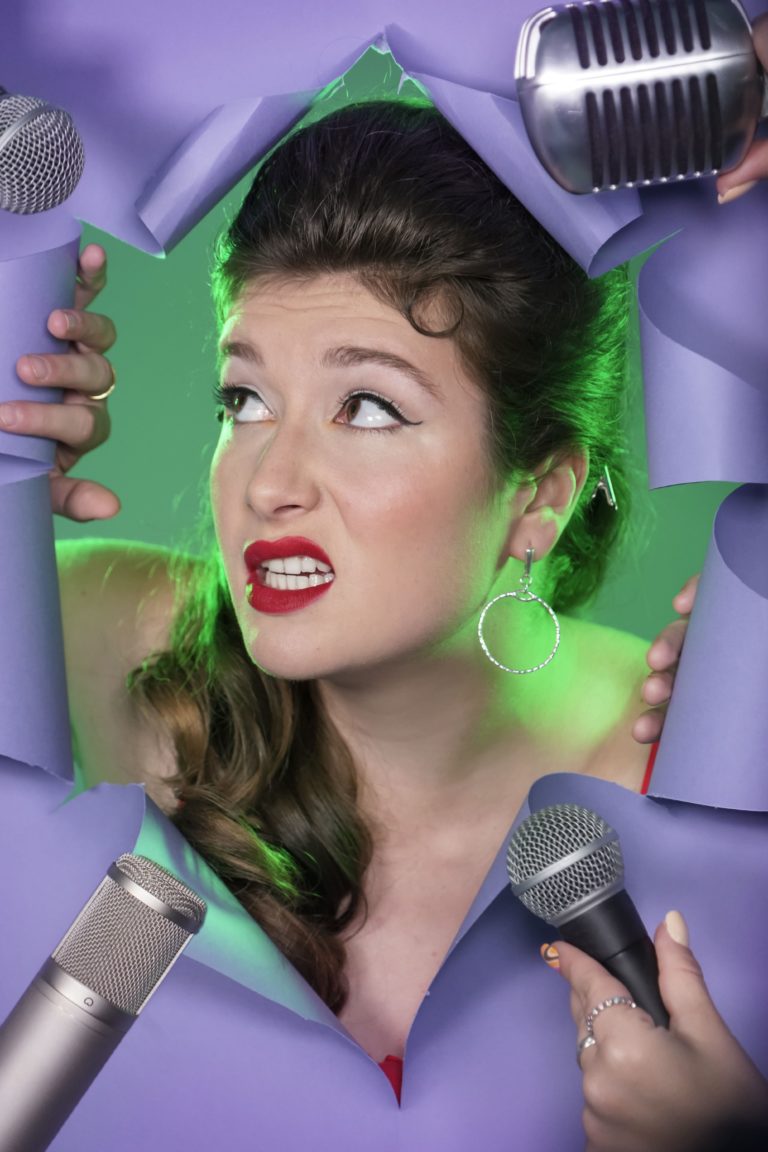
Sam Casey’s newest single, “Good Fight,” expertly braids two separate, yet overlapping themes together over a poppy beat and a contagious chorus. The powerhouse anthem tackles the idea of maintaining your mental health and navigating an, at times, brutal and demanding music industry.
Casey’s newest single hightails the release of her August single, “New Company,” an exploration into a relationship, errrrr…. situationship where one party hoped to take the fling to the next level. “Good Fight” dives into the same honest space of self-reflection.
“My role as an artist, which is to say the difficult things and be honest about the unattractive qualities in oneself, and, in turn, this may slowly minimize the fears of my listener’s self-perceived flaws. If we can be honest about our identity and even allow ourselves to feel shame about certain aspects of our own beings, then we can accept that shame for what it is and move on. We can be more accepting of ourselves and others,” Casey shared.
Casey mentioned one near-paralyzing fear present in her life is the metaphor of folding into a piece of paper whilst under immense pressure. Internal pressure and pressure from both the music industry and the uncertainty of her music’s reception. This metaphor resonates with Casey so much so that she admitted the original title of the single was “Fold.”
“And I fold like I might be made of paper,
I’ve been tearing myself into pieces lately.
I’m blank when I’m on my own
cause I don’t know how to stand up.
When I’m sipping on a downside,
I put up a good fight.”
Yet, while the title may have changed, the metaphor remains intact. Casey’s calls to her inner strength overlay the muted, melodious guitar. Her lyrics evoke the trying times when she must trudge through that negativity and come out stronger, ready to tackle difficult situations when life throws them.
“Most of all, this song helped me realize that I will fall, lose, be rejected, or have a crazy episode from time to time regardless of how hard I fight the feelings and, if I do fall, then accept it, move on, sweep it under the rug and don’t look back.”
Accompanied by a scintillating music video, “Good Fight” is a powerhouse, pop, feminist manifesto toward self-acceptance and against harsh standards perpetuated by the male-dominated industry.
“The hair and makeup for this video were supposed to mirror the ‘ideal beauty standard’ of the current people in power in the entertainment industry, which is mainly older men who would have grown up with the classic Hollywood bombshells such as Marilyn Monroe being their idea of beauty,” Casey said.
Sometimes we can feel the inspiration of an artist through their music. Singer-songwriter Heather Hill takes listeners on a journey through her inspirations of the naturally beautiful Blue Mountains in her latest single “I Rise.”
Hill’s new single is a stirring piano melody mixed with her soaring vocals. It is an example of her inspiration of the Georgian Bay coming to life to spread love and peace in the world.
For anyone familiar with the gothic inspiration of rural Ontario, “I Rise” contributes some of the most haunting representation of the beauty that can be seen throughout much of the province. Hill’s piano, mixed with acoustic guitar, adds depth to the lyrics that explore a humanity that is keenly observant, compassionate, and rooted in nature.
“I Rise” is the latest single from Hill’s third studio album We Are The Same, that was self-released on May 12, 2022. The album is a collection of 12 inspirational acoustic, piano-based songs that explore everyone’s impact on the world.
“This album was recorded in two parts,” explains Hill. “The first set of songs were recorded live off the floor with Julian Decorte. I collaborated with Harrison Fine on “I Rise” and Alec Steinwall and Orville Hyne on “We Are The Same.” The second set of songs were recorded in remote Singhampton with Adam Fair. I like to record live off the floor as I can deliver the song and story in its most raw and simple form.”
Hill recorded the album over the last five years while she moved from Toronto to the Blue Mountains. She sings about being gentle on yourself, calling for help, star gazing, acceptance, and being the flow of the river. The album was recorded and mixed at Canterbury Sound Company in Toronto. According to Hill, the album is like a warm hug on a stormy day.
After achieving a classical piano performance degree from the Royal Conservatory of Toronto and a Master of Arts degree from the University of Waterloo, Hill and her partner moved to New York City where she performed in some of the city’s most legendary clubs such as The Cutting Room and the Makor Room. She also recorded her first album Listen with platinum-selling producer Steve Addabbo.
When Hill moved back to Toronto, she recorded her second album Leuty Station that saw success after a variety of radio and television plays on stations such as CFRB, CBC Radio 1, Rogers Daytime Toronto, and several local college stations.
Hill’s soul-stirring and life affirming music transcends, uplifts, and remains steadfast in its joyful celebration proclaiming no matter who we are and where we are, we all belong together because we are the same.
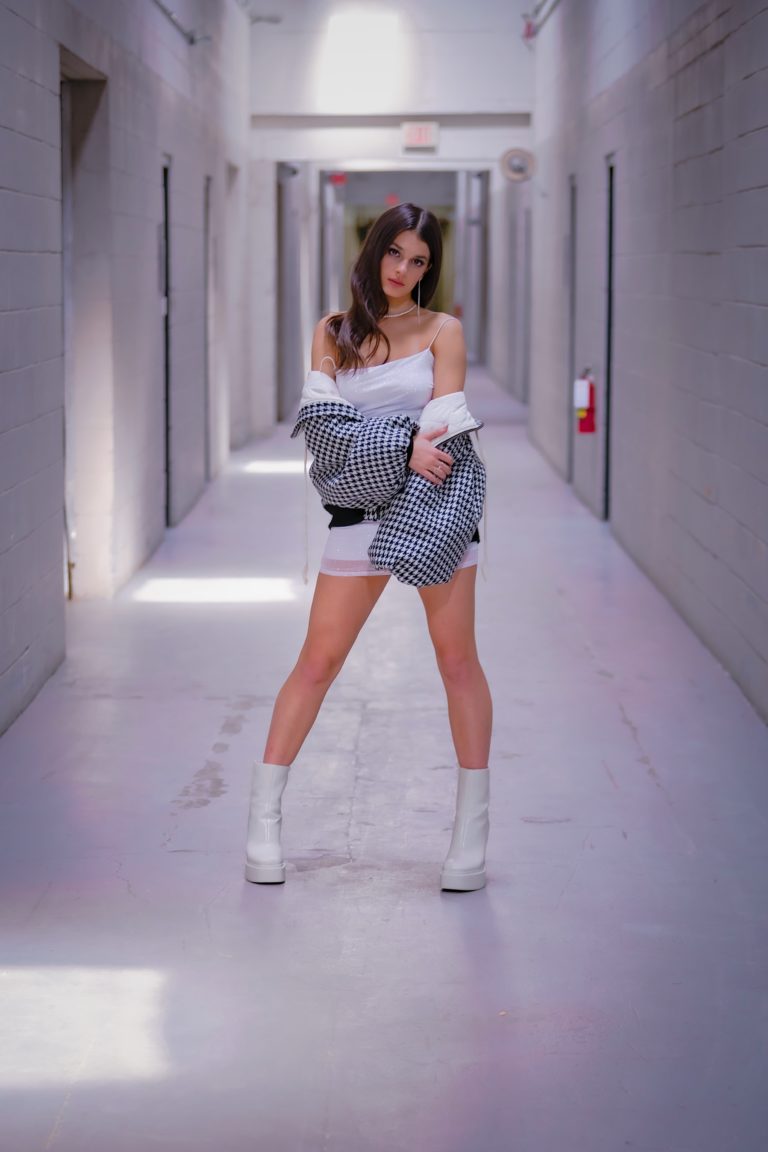
The absolute worst in matters of the heart is when you tell someone about relationship pain you’ve experienced, and they end up doing the exact same thing to you. That’s what Jaylen Bradley’s new single “Games” – available now – is all about, and it’s bound to resonate deeply with anyone who’s been burned twice.
Bradley’s gorgeous, crystalline soprano cascades through melancholy piano and mellow beats, as she takes us on a journey of a collapsing romance.
I’ll tell you what I’ve been through, tell me what’s your move
That point in time when it felt so right and
I was addicted to the old you, hate the guy that came through
Sometimes the hardest part in a situation like this is the cognitive dissonance – the hearts and mind’s desire to not believe that this is actually happening … again. The song is based on real situation in Bradley’s life, which is why it rings so true.
“I wanted to capture the idea of missing the version of him that made me happy, and that’s where the lyric ‘Addicted to the old you, hate the guy that came through’ comes from,” Bradley said. “It became hard because of how badly I wanted to be with him, yet how incredibly sick I was of the games he was playing.”
Overall, “Games” is a song about finding your inner compass and reconnecting with your self-respect, even when someone else is actively trying to tear it down.
“The song should help people understand that what can happen between two people isn’t always your fault,” Bradley advises. “It’s a song about self-worth, realizing that that person was never right for you. Realizing exactly what happened.”
Jaylen Bradley is a 18-year-old pop sensation based out of Brantford, Canada. For the last six years, Jaylen has been singing and making music through several outlets, most notably K-Tel’s Mini Pop Kids as a star soloist on the Mini Pop Kids 15 album. She was also a performer on their 2018 Make It Pop tour, consisting of 15 sold-out dates in concert theatres across Canada. Since branching out to start her solo career, Jaylen has played many shows such as the VCR Virtual Concert series in 2021 in addition to releasing original music.
Jaylen’s influences range from ballad artists like Adele, James Arthur, and Lewis Capaldi, all while maintaining energetic pop production like Olivia Rodrigo and Loud Luxury. Jaylen’s first single “Last Summer” was released in August 2020, and she has more singles to be looking out for leading up to the launch of her debut EP.
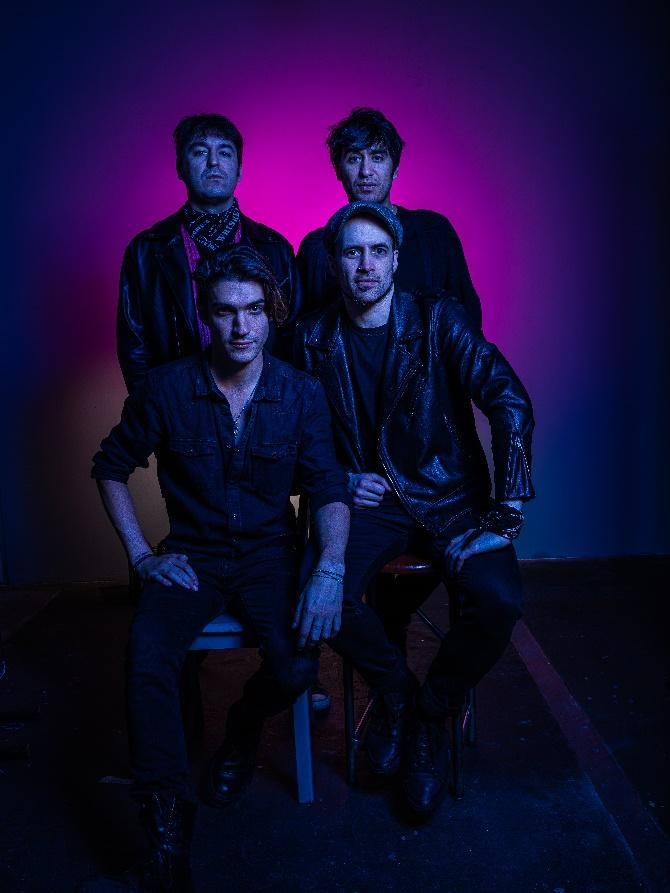
The Otherness, a 4-piece Argentine band now based in Berlin, provides the listener with a cool, catchy mix of joy and provocation. The group, which has a new video out for their single “We Can Be One,” consists of Martin Cativa (guitar, vocals), Gonzalo Cativa (bass, vocals) Pablo Gaggioni (drums) and Nico Kleihn (guitar).
The band’s 4-track EP, A NEW RESISTANCE, features easy-feel pop tunes that also encourage one to think about what’s going on in the world beyond their own ego. “We notice a society fighting for sex equality while young rebel women in Iran are being persecuted and killed—just because they are standing up in the name of freedom against a dictatorial regime of primitive machismo,” said the band in a collective statement. “Domestic violence, abuse, pedophilia, faulty prison systems, gun violence, bullying, discrimination, hatred, climate change challenges, pollution, greed, and apathy are referenced all over the lyrics of the song.”
Musically, the atmosphere of “We Can Be One” is dreamy and the guitar arrangements and textures evoke feelings of human connection, while the drums and bass interact in such a beautiful and playful way that it is hard to associate this landscape of harmony with the raw pieces of truth that the vocals deliver.
“We Can Be One” boasts an elaborate Berlin-shot music video helmed by cinematographer-turned-director Matías Quinzio. With The Otherness as active producers as well as the stars of the video, we see various characters surrounded by soap bubbles. While the bubbles evoke a feeling of childhood fun and a sense of wonder, they also symbolize us distancing ourselves from the real world—both metaphorically and in reality.
The band feels that this type of isolation can lead to hostility toward the rest of the world and that’s why they chose to shoot the “We Can Be One” video as they did. They want to demonstrate how it’s hard to see beyond our own bubbles but when we harmonize together—various people “sing” the song throughout the film while The Otherness delivers the heartfelt choruses below Bösebrücke. This is significant as it was there at Bösebrücke that the first crack in the Berlin Wall appeared in 1989. Putting the band in that historic location gives a sense of togetherness that arises from the dark while the barrels of fire provide light.
“The bubble is a symptom, not a cause; and we can be part of it or not,” said the band. “It is our call how we deal with it to bring people together and to be nicer to each other.”
“We Can Be One” is available now on the 4-song EP, A NEW RESISTANCE.
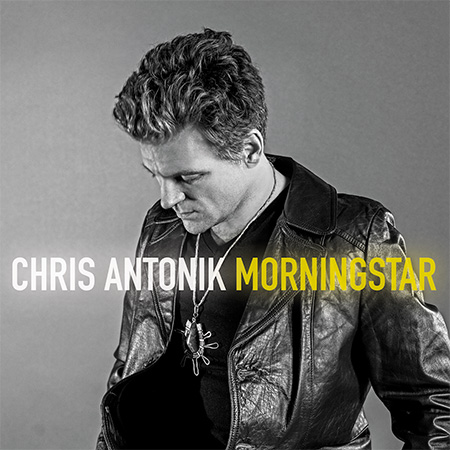
Over this past Summer, Chris Antonik released Morningstar, an expansive collection of musical experiences reminiscent of the legendary albums of the 1970s that feature guest appearances by award-winning guitarists Jarekus Singleton and Paul Deslauriers. His most personal album to date, Morning Star tells a cohesive story of his experiences as he enters mid-life. The last few years’ worth of life, love, loss, and growth are synthesized into an epic collection of songs about new beginnings, building community, mindfulness, self-compassion, and the power of home.
Co-produced by JUNO Award-winning producer Derek Downham, the album’s 14 songs take you on a sonic journey rooted in blues rock, soul, future-funk, and psychedelia and take experimental turns into modern rock and hip-hop territories. After the blistering lead single, “Waves of Stone,” Clapton influenced blues-rock of “Pilgrim,” and “Back to Good” featuring Tedeschi-Trucks Band vocalist Mike Mattison, “Learning to Love” is a worthy addition to the heavy hitting singles from the new album. Morning Star is an album built on nuanced songwriting, an amazing assemblage of guest musicians, and Chris’s mesmerizing guitar work complimented by stellar vocals.
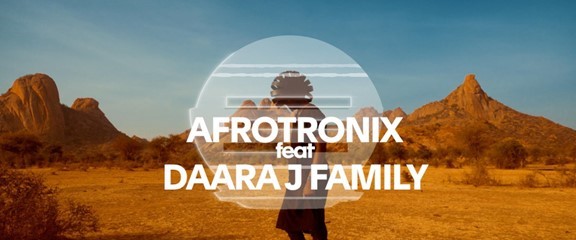
Montreal’s Afro-futuristic concept group Afrotronix has released their “Run Away Ta” single and video, available now.
After the remarkable release of the album Nomadix, Afrotronix are back with this exhilarating first track from the new two-volume album Future Tribe. For this electro track tinged with Saharan blues, the artist Afrotronix has invited the renowned Senegalese group, Daara J Family to feature.
“Run Away is a song that evokes the magical places close to our roots that we like to reach when we feel the need to escape. It is an electrifying song that celebrates the great symbols of Africanity that is embodied in Chad and Senegal,” says Rimtobaye. With Rimtobaye singing in English and in Sara and Faada Fredy and Ndongo D who also interprets words in the Wolof language and Arabic, “Run Away Ta” is a song that crosses continents, combining languages and musical traditions, and which brings together Afro-electro rhythms as well as Caleb’s Saharan blues heritage.
The lyrics of “Run Away Ta” were written by Caleb Rimtobaye, and guest artists Faada Freddy and NDongo D. Caleb Rimtobaye, a Chadian-Canadian singer-songwriter residing in Montreal, signs the composition of the music. He sings about the will to live in the present moment, because we never know how tomorrow is going to end. Playing guitar and singing, he produced, mixed, and arranged the piece. The rhythm bridges cultures by fusing together traditional Chadian and Arab percussion.
The video for “Run Away Ta,” shot by Djérabé Ndignar in Chad and Lickma in Senegal, was edited, colorized by Victorine Sentilhes, presents an Africa vibrant with creativity. In the depths of the mountains of northern Chad dotted with camels straight out of haute couture fashion shows, the artists set off on a frantic race. This electrifying clip shot in Chad and Senegal makes us discover through this crazy crossing, the powerful symbols of Africanity which is embodied in Chad and Senegal in sumptuous landscapes traversed by stylized dromedaries, explosive colors, nomadic silhouettes with disconcerting movements and portraits of strong women. The artists launched in this symbolic quest are escorted by an exalted African youth, they are taken to where identities are revealed, where links are woven and tightened, directly at the heart of the party. Afrotronix represents here a young and extremely creative Chad who brings his musical tradition to fruition in electronic music without borders and brings this magnificent collaboration with the group Daara J Family. The artists Faada Freddy and Ndongo D have joined the force of their flow to the lyricism of Afrotronix for the greatest delight of an audience who wishes to redefine an Africanness carrying a powerful message of peace, inclusion, and unity.
This title, like the rest of the album, is positioned as the celebration of an Africanity that leads to a bright future.
Run Away Ta is an ode to these memories or memories, these roots in which we immerse ourselves to recharge our batteries. Written during the harshest period of confinement linked to Covid, it symbolizes the need for freedom, escape and the desire to reconnect all together in this multiculturalism which leads humanity to another level of greatness.
“Today when I need to recharge my batteries and really get out of my head, my spirit takes me to a big tree in southern Chad, to Sewé the village where my grandfather took me when I was younger. In Run Away Ta I wanted to put that in pictures, and have it filmed in Chad, to show what is beautiful in the country. Representation is key. In my opinion, Chad is not this country whose borders were drawn by the settlers, it is us, it is the people, our neighborhoods, the people, who make this joy of living. We wanted to show that. And this clip shot in Mongo in the region which ends in N’Djamena at the roundabout of the fountain is for us a strong symbol of unity. Through this song, I invite people to see this, to see the beauty in Chad.’’
Afrotronix’s Saharan electro blues is here now and it’s tinged with Chadian sai, Senegalese mbalax, Haitian kompas, West African Mandinka roots and electric Tuareg blues. This sound is transported on a juggernaut loaded with deep house, dubstep and techno grooves driven by Chadian guitarist Caleb Rimtobaye. The Montreal producer formed Afrotronix in 2014 as a concept encompassing an Afro-futuristic approach to electronic music production. In 2016, they headlined the Afropunk festival in Paris. Since then, Afrotronix has toured North and South America, Europe and Africa, releasing a critically acclaimed album and numerous music videos. Rimtobaye’s mission is to use his music as a medium to convey a pan-African message, presenting a different image of Africa to the world and bringing it home as evidenced by recent large-scale performances in Chad. Actively teaching Artificial Intelligence and its digital structures how to speak the language of our African elders, Afrotronix has won several international awards including Best African Electro (2019) and Best African DJ (2018) at the All Africa Music Awards .
Daara J Family’s music is born of a skilful mix between the secular traditions of the griots of Senegal and the musical genres which have influenced their very particular style, from the funk-soul of James Brown to the rock-psyché of Pink Floyd, passing by the American hip-hop heavyweight Public Enemy and Bob Marley’s reggae.
In more than 25 years of career and 1500 concerts around the world, they had the opportunity to perform in the first part of Wyclef Jean, Public Enemy and Mos Def in the USA, alongside Peter Gabriel during the Womad, with Africa Express and Damon Albarn in London and Lagos, at Transmusicales in Rennes, at Solidays etc. Four albums were released between 1997 and 2010, including “Boomerang“, winner of the best album award at the BBC World Award in 2003, followed by “Foundation“(2016) and “Yaamatele” (2020), which illustrate the extent of the register of the group and their incredible ability to bring together continents from Dakar to New York, from Paris to Kingston, from Dubai to Kinshasa.
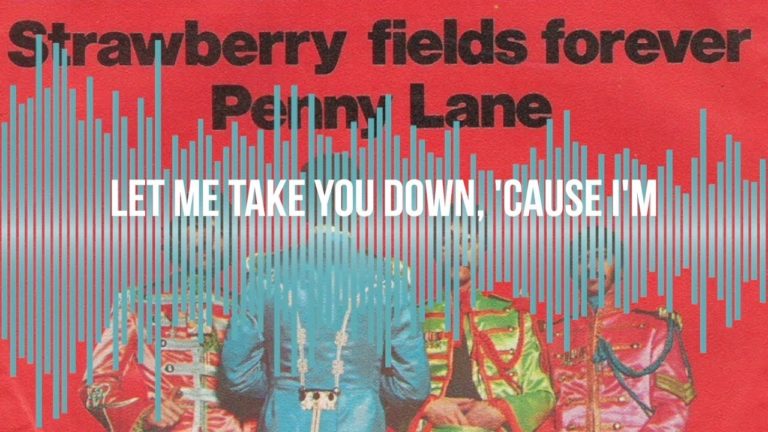
Strawberry Fields Forever is one of the Beatles’ most well-known and beloved songs. But you might not have realized that the final version of the song is actually two completely different takes of the song, stitched together seamlessly by the talented team of engineers at Abbey Road Studios.
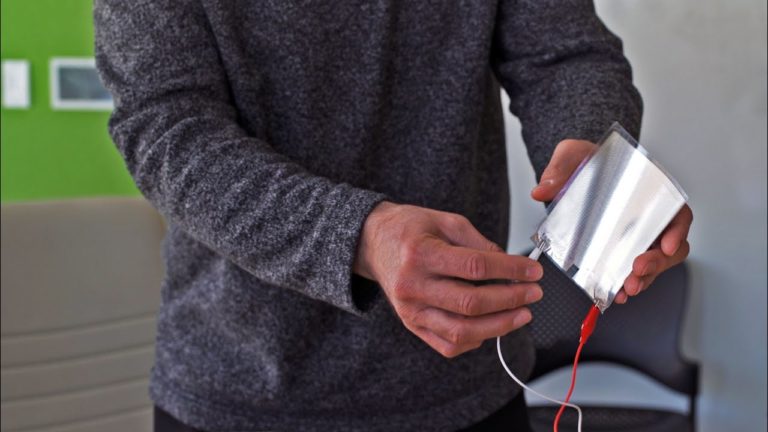
MIT engineers have developed a paper-thin loudspeaker that turn any surface into an audio source. This thin-film loudspeaker produces sound with minimal distortion while using a fraction of the energy required by a traditional loudspeaker.
More toys? More tech? Not so fast, sings a voice of reason.
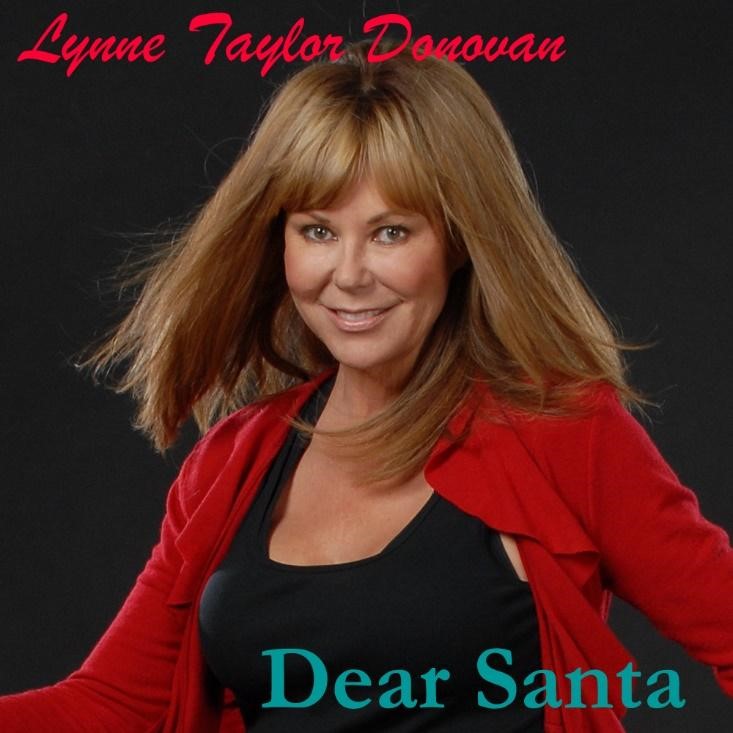
Lynne Taylor Donovan’s stirring old-school alto delivers a potent — and perennial —holiday message in “Dear Santa.” Adult contemporary- as well as country-friendly, the ultra-listenable track lends itself to multiple playlists and diverse formats. The timely lyrics by Tony Koenen offer both an appeal for peace to the universal Father Christmas and a plea for family spirit over excess spending to the Santas on the home front:
It’s not the gift, it’s the thought
And I’ve thought this one through
Giving of a gift is so easy
But giving of yourself makes wishes come true.
Recording this song was a no-brainer for Donovan: “I was conditioned by advertising as a child into believing that Christmas meant gifts and gifts meant love.” “Dear Santa” dispels that seasonal myth with a classic melody and the singer’s trademark warmth and style.
Born in Vancouver and based in Okanagan, British Columbia, Lynne Taylor Donovan hosted her own TV show as a teen. From “Talk to Me” to “Tennessee Whiskey,” her long string of country and crossover hits has made her a recognizable star in Europe, the U.K., and Australia as well as throughout Canada.