Home Blog Page 148

Essential Hoodie: A Simple Streetwear Piece That Stays in Style

0

By Mitch Rice

Streetwear fashion has reshaped modern clothing trends. Casual outfits that once belonged mainly to sportswear now appear in everyday wardrobes across the world. One item that continues to hold strong popularity is the Essential Hoodie.

This hoodie gained recognition through the label Fear of God Essential Hoodie, a brand created by designer Jerry Lorenzo. The Essentials line focuses on relaxed clothing that blends comfort with minimal design. Because of its clean appearance and comfortable fit, the Essential hoodie has become a common choice for streetwear fans.

Many people appreciate clothing that feels comfortable but still looks modern. The Essential hoodie represents this balance between casual wear and contemporary fashion.


What Makes the Essential Hoodie Popular

The Essential hoodie stands out because of its simplicity. Instead of relying on loud graphics or complicated designs, the hoodie focuses on strong fabric quality, relaxed shapes, and subtle branding.

Several elements contribute to its popularity:

  • relaxed oversized fit
  • soft cotton or fleece fabric
  • neutral color tones
  • recognizable ESSENTIALS logo
  • simple streetwear silhouette

These features allow the hoodie to remain fashionable without relying on seasonal trends.

Streetwear enthusiasts often prefer clothing that remains versatile. The Essential hoodie easily fits into that category.


The Streetwear Influence Behind the Hoodie

Streetwear fashion has grown from local subcultures into a global style movement. Designers began blending casual clothing with luxury fashion concepts, creating a new approach to everyday outfits.

The brand Essentials Hoodie played a role in this shift by introducing clothing that combines relaxed silhouettes with modern styling. The Essentials line followed the same design direction but focused on accessible everyday pieces.

As streetwear gained attention through music, sports, and social media, the Essential hoodie became a recognizable part of the movement.

Retailers such as Essentials helped distribute Essentials clothing widely, making it easier for people to purchase these items worldwide.


Comfortable Materials and Construction

One reason people enjoy wearing an Essential hoodie is its comfortable material. Most versions feature cotton-blend fleece fabric designed to provide warmth and softness.

Important fabric features often include:

  • brushed fleece interior
  • durable cotton blend exterior
  • breathable structure for daily wear
  • ribbed cuffs and waistband

These details help the hoodie maintain comfort while also holding its shape after repeated use.

Because of this balance between comfort and durability, the hoodie works well for everyday outfits.


Easy Outfit Combinations

Another advantage of the Essential hoodie is its versatility. The hoodie pairs easily with different clothing styles, making it simple to create casual outfits.

Here are a few common styling options.

Everyday Casual Look

A classic outfit combination includes:

  • Essential hoodie
  • slim jeans
  • white sneakers

This style feels comfortable while still looking clean.

Streetwear Inspired Outfit

Streetwear enthusiasts often combine the hoodie with:

  • cargo pants
  • oversized jackets
  • chunky sneakers

This look reflects modern urban fashion trends.

Layered Cold-Weather Outfit

During colder months, the hoodie works well as a layering piece. Many people wear it under:

  • puffer jackets
  • denim jackets
  • bomber jackets

Layering adds visual depth while providing extra warmth.


Neutral Colors That Match Everything

The Essential hoodie usually appears in neutral shades. These colors help the hoodie blend easily with other clothing items.

Popular color options often include:

  • black
  • gray
  • cream
  • brown
  • taupe

Because these tones remain neutral, they allow the hoodie to match many different outfits.

Neutral color palettes have become common in modern streetwear because they create a clean and balanced appearance.


The Oversized Fit Trend

Modern streetwear often features relaxed silhouettes. The Essential hoodie follows this trend with a slightly oversized design.

This fit provides several advantages:

  • greater comfort
  • improved movement
  • relaxed streetwear aesthetic

Many people enjoy oversized clothing because it creates a casual yet fashionable look.

The hoodie’s structure allows it to maintain shape while still appearing loose and comfortable.


Essential Hoodie in Modern Fashion Culture

Today, the Essential Hoodies appears in many fashion communities around the world. From casual daily outfits to curated streetwear looks, the hoodie has become a recognizable part of contemporary fashion.

Social media platforms and celebrity appearances have also helped spread the popularity of relaxed streetwear clothing. Musicians such as Justin Bieber and Kanye West have frequently worn oversized hoodies and casual streetwear styles.

When public figures adopt similar clothing styles, fashion trends often spread quickly.

As a result, the Essential hoodie continues to appear in both streetwear collections and everyday wardrobes.


Why the Essential Hoodie Remains Relevant

Fashion trends often change quickly, yet some pieces remain consistently popular. The Essential hoodie continues to attract attention because it combines several qualities that people value.

These qualities include:

  • comfort for everyday wear
  • simple design that avoids loud graphics
  • versatile colors that match many outfits
  • relaxed fit that reflects streetwear culture

Together these elements create a hoodie that works well across different settings and styles.


Final Thoughts

The Essential Hoodie remains one of the most recognizable items in modern streetwear. Its minimal design, comfortable fabric, and relaxed silhouette make it suitable for everyday outfits.

Through the influence of Fear of God Essentials Hoodies and designer Jerry Lorenzo, the hoodie represents a shift toward clothing that blends comfort with style.

Whether paired with jeans, cargo pants, or layered under jackets, the Essential hoodie continues to reflect the relaxed direction of contemporary fashion.

Data and information are provided for informational purposes only, and are not intended for investment or other purposes.

How to become a professional in the random and chaotic world of sports betting

0

By Mitch Rice

Most people who bet on sports lose money. That statement is not meant to discourage anyone. It is a fact that separates casual bettors from the small number of people who earn a living from it. The gap between those 2 groups is not luck, personality, or some inherited talent for picking winners. It is method. Professional sports bettors treat their work the way an actuary treats risk or the way a commodities trader treats price movements. They build systems, test them, refine them, and then follow those systems with a level of discipline that most people cannot sustain over months, let alone years. Billy Walters maintained a winning record for over 30 years. Bill Benter earned close to $1 billion applying mathematical models to horse racing. Both of them would tell you the same thing: the process matters far more than the prediction.

What Separates a Professional From a Hobbyist

A hobbyist bets on games they enjoy watching. A professional bets on games where the numbers favor them, and those are often games they have no personal interest in at all. This distinction matters because emotional attachment to a team or outcome introduces bias, and bias is the enemy of profitable wagering.

Professionals also measure their performance differently. Win rate alone tells you very little. The preferred metric among serious bettors is closing line value, which compares the odds at which a bet was placed to the odds at the time the event starts. If you consistently beat the closing line, you are extracting value from the market. That pattern, held over thousands of bets, predicts long-term profitability more reliably than any short-term win streak.

Where the Rules Differ and Why It Matters

Professional bettors study the regulatory frameworks of the markets they operate in because the rules dictate what tools and platforms are available to them. Sportsbooks in the U.K. operate under different restrictions than those in Australia, and betting in Canada follows its own provincial model that contrasts with the state-by-state system across the U.S., where 39 states plus Washington, D.C. and Puerto Rico now permit legal wagering.

Knowing these differences helps a bettor choose where and how to place wagers without running into compliance problems that could freeze funds or limit accounts.

Bankroll Management Is the Foundation

You will hear professional bettors talk about bankroll management more than they talk about picks. Billy Walters has said publicly that he recommends limiting your maximum wager to 3% of your total bankroll. That number sounds conservative, and it is. The reasoning is straightforward: variance in sports betting is high. Even a bettor with a verified edge will hit losing streaks that last weeks. A 3% cap means those streaks reduce your bankroll gradually rather than wiping it out in a few bad days.

There is no fixed starting bankroll that qualifies someone as professional, but you need enough capital to absorb losses without altering your strategy. If a losing week forces you to change your bet sizing or abandon your model, the bankroll was too small to begin with.

Building a Model That Works

The professional betting community has moved heavily toward quantitative analysis. Machine learning tools now process large volumes of historical data alongside real-time inputs like player injury reports, weather, and lineup changes. These models do not guarantee wins. They help identify situations where the sportsbook’s posted odds undervalue one side.

Building a model requires some comfort with statistics. You do not need a PhD, but you do need to understand probability, regression, and sample size. Many professionals started with spreadsheets before moving to programming languages like Python or R. The model itself is less important than the process of testing it against past data and measuring its accuracy over hundreds or thousands of simulated bets.

Bill Benter’s approach to horse racing followed this exact pattern. He built analysis software, fed it decades of race data, and refined his algorithms until they produced consistent returns.

The Sportsbook Relationship

Here is something that surprises most people: sportsbooks will limit or ban winning bettors. Accounts that consistently beat the closing line get flagged, and the book will reduce the maximum bet size allowed or close the account entirely. This is a real operational concern for professionals.

Managing multiple accounts across different operators becomes part of the job. The U.S. market now generates commercial gaming revenue that grew 9.2% in 2025, reaching $78.72 billion, with the online sports betting segment projected to hit $23.80 billion by 2029 and attract 54.7 million users. That growth has produced a large number of licensed operators, which gives professionals more options for spreading their action across books.

Responsible Practices Are Built Into the System

All 38 regulated U.S. jurisdictions require operators to maintain self-exclusion programs. The gaming industry allocates roughly $500 million per year toward responsible gaming efforts. Professionals tend to support these programs because a regulated market with proper safeguards protects their ability to operate legally and without disruption.

So, Can You Actually Do This?

Yes, but the honest answer is that most people who try will not stick with it long enough. The work is repetitive. The emotional control required is constant. The returns, even for successful bettors, are modest relative to the bankroll required. Those who do make it treat betting as a job with long hours, constant study, and zero tolerance for shortcuts.

Data and information are provided for informational purposes only, and are not intended for investment or other purposes.

Broadway Musical Hit “Hadestown” Welcomes New Leads At Walter Kerr Theatre

0

Broadway musical phenomenon “Hadestown” ushers in a new principal cast beginning March 3 at the Walter Kerr Theatre, marking another milestone in its seventh year on Broadway. J. Harrison Ghee steps into the role of Hermes, joined by Joshua Colley as Orpheus and Jordan Tyson as Eurydice. Gary Dourdan and Gaby Moreno make their Broadway debuts as Hades and Persephone, respectively, bringing fresh energy to AnaĆÆs Mitchell’s Tony Award-winning musical.

The incoming leads succeed Morgan Dudley, Kurt Elling, Allison Russell, Paulo Szot and Jack Wolfe, who take their final bows March 1. The ensemble continues with Jessie Shelton, Kay Trinidad and Brit West as the Fates, alongside a full chorus of Workers and swings cast by Whitley Theatrical. The production remains a defining presence on Broadway, with international runs in the West End and beyond reinforcing its global reach.

With a book and score by AnaĆÆs Mitchell and direction by Rachel Chavkin, “Hadestown” reframes the myths of Orpheus and Eurydice, and Hades and Persephone, through a folk and jazz-infused lens. Winner of eight Tony Awards including Best Musical, the show continues to draw audiences into its underworld of longing, fate and defiant love.

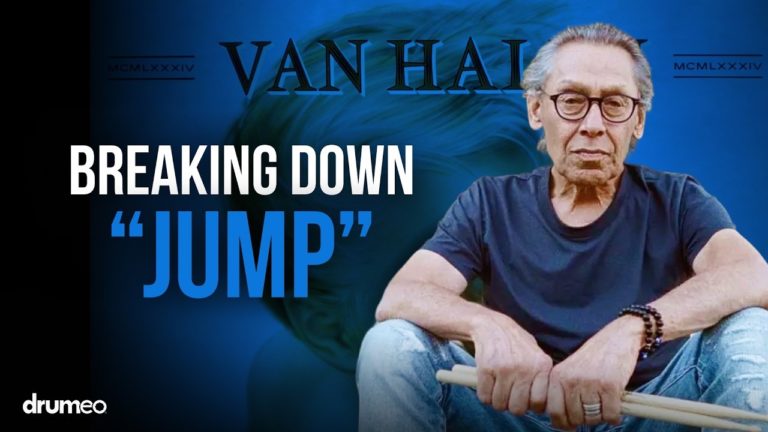
Video: Gregg Bissonette Breaks Down Alex Van Halen’s Drumming On “Jump”

0

Gregg Bissonette dives deep into the groove behind Van Halen’s “Jump” in a new Drumeo session, unpacking the drum work that helped push the track past a billion streams and into rock history. Originally played by Alex Van Halen on the 1984 album ‘1984,’ the part anchors Eddie Van Halen’s towering synth riff with precision and feel. Bissonette, who drummed for David Lee Roth from 1985 to 1992, spotlights the restraint, timing and instinct that made the simplicity so effective, revealing how a focused, locked-in performance turned “Jump” into one of the defining sounds of the 80s.


Video: Leonardo DiCaprio Looks Back From “Growing Pains” To “One Battle After Another”

0

Leonardo DiCaprio revisits the full arc of his career in a new TIME spotlight, tracing the path from his early days on “Growing Pains” to his latest film “One Battle After Another.” Named TIME’s 2025 Entertainer of the Year, DiCaprio reflects on building a career defined by longevity, precision and bold choices. From teenage television roles to commanding performances that shaped modern cinema, the conversation captures an actor still pushing forward while honoring the work that brought him here.


Video: Tedeschi Trucks Band Lead Joe Cocker Tribute With “With A Little Help From My Friends” At Rock Hall 2025

0

The 2025 Rock & Roll Hall of Fame Induction Ceremony closed with a powerful all-star tribute to Joe Cocker, as Tedeschi Trucks Band anchored “With A Little Help From My Friends” alongside Nathaniel Rateliff, Teddy Swims, Bryan Adams, newly inducted Cyndi Lauper and The Black Crowes’ Chris Robinson. Trading verses on the song Cocker transformed into a soul-gospel landmark, the performance honored his singular ability to reshape classics into raw, emotionally charged statements. Born in Sheffield and revered for reimagining songs by The Beatles and others with unmistakable grit, Cocker’s legacy filled the Los Angeles room as voices rose together in celebration.


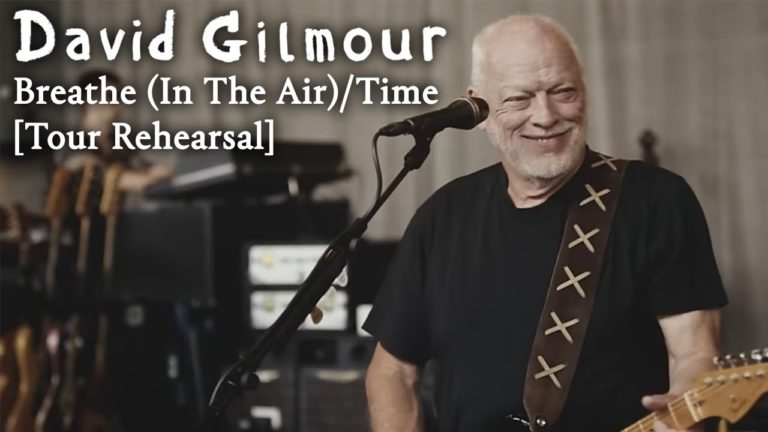
Video: David Gilmour Rehearses “Breathe” And “Time” Ahead Of ‘Luck And Strange’ Tour

0

Rock icon David Gilmour revisits Pink Floyd classics “Breathe (In The Air)” and “Time” in a striking tour rehearsal performance, sharpening the atmosphere ahead of the ‘Luck And Strange’ live era. The session captures Gilmour in fluid command, guitar lines soaring with precision while the band locks into the slow-burn pulse that defined a generation. It is focused, immersive and steeped in legacy without losing forward motion.

‘Luck And Strange,’ out now, marks Gilmour’s first album of new material in nine years, recorded in Brighton and London and produced with Charlie Andrew. Lyrics by longtime collaborator Polly Samson reflect on mortality and the passage of time, while contributions from Guy Pratt, Roger Eno and the late Richard Wright deepen the sonic palette. With artwork by Anton Corbijn and family voices woven throughout, the project stands as a richly layered chapter in Gilmour’s enduring catalogue.

Video: The War On Drugs Ignite Johnny Brenda’s

0

Philadelphia indie rock heroes The War On Drugs turned Johnny Brenda’s into a hometown fever dream on December 20, 2025, as part of Drugcember to Remember. The set roared through staples like “Pain,” “Red Eyes,” “Strangest Thing” and “Harmonia’s Dream,” stretching songs into widescreen, reverb-soaked journeys that filled every corner of the room. The energy was loose, loud and locked in.

Kurt Vile joined the band for a run that included Bill Fay’s “Pictures of Adolf Again,” R.E.M.’s “Country Feedback” and a searing “Arms Like Boulders,” deepening the Philadelphia connection. Later, Joe Walsh stepped in to rip through “Rocky Mountain Way” and “In the City” before closing with a towering “Under the Pressure” featuring both Walsh and Vile. It was a night built on community, covers and catharsis.

Psych-Funk Trio Khruangbin Drift Deep For KCRW Session

0

Texas psych-funk trio Khruangbin settle into a hypnotic groove with their Live From KCRW HQ session, delivering reimagined “ii” versions in the intimate Annenberg Performance Studio. Laura Lee Ochoa’s melodic bass anchors the flow, Mark Speer’s guitar shimmers and bends, and Donald “DJ” Johnson locks into a deep-pocket pulse, joined by Will Van Horn on guitar, keys and percussion. The set glides through “The Man Who Took My Sunglasses ii,” “Dern Kala ii” and a luminous “White Gloves ii,” unfolding as one seamless, transportive performance.

Watch: Acid Jazz Legends Jamiroquai Light Up The O2 With Career-Spanning Set

0

London acid jazz and funk pioneers Jamiroquai bring the groove back in full force with their December 14, 2025 performance at The O2 Arena, now streaming in full. Led by Jay Kay, the band rip through classics including “(Don’t) Give Hate A Chance,” “Little L,” “Space Cowboy,” “Canned Heat,” “Cosmic Girl,” “Love Foolosophy” and a show-closing “Virtual Insanity,” delivering over two hours of tight musicianship and floor-filling rhythm. With Derrick McKenzie, Sola Akingbola, Rob Harris, Matt Johnson and Paul Turner locked in, plus a powerhouse backing ensemble, the set captures a band still moving forward while honoring a catalogue that has defined acid jazz and future funk for more than three decades.