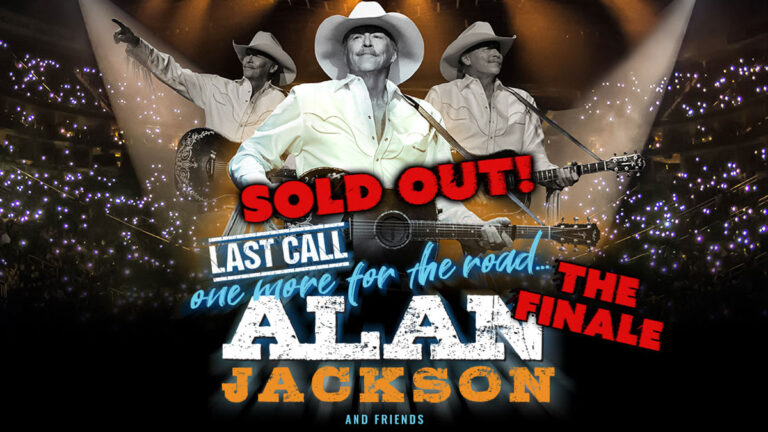
Alan Jackson’s final concert is shaping up to be one of the most significant nights in country music history. Little Big Town, Jake Owen, and Thomas Rhett have joined the lineup for Last Call: One More for the Road, The Finale, the sold-out all-star event on June 27th at Nashville’s Nissan Stadium. The show marks the end of a touring career that has spanned decades and crossed continents.
The lineup already reads like a who’s who of country music. Luke Bryan, Eric Church, Luke Combs, Riley Green, Cody Johnson, Miranda Lambert, Jon Pardi, Carrie Underwood, and Lee Ann Womack were previously announced, with more names still to come. Every addition raises the stakes on what’s already an unmissable evening.
Jackson’s road history is the stuff of legend. His catalog has traveled coast to coast across North America, through Canada, and reached audiences in Australia, Brazil, and Europe. Over the last four years alone, his Last Call tour played to sellout crowds everywhere it landed. June 27th brings that chapter to a close in the city that knows him best.
The concert carries meaning beyond the music. For every ticket sold, one dollar goes to the CMT Research Foundation, funding research toward a cure for Charcot-Marie-Tooth disease, matched by two dollars from a generous donor. Last Call: One More for the Road, The Finale is presented by Edward Jones and Silverbelly Whiskey, and promoted by Doussan Music Group and Peachtree Entertainment.
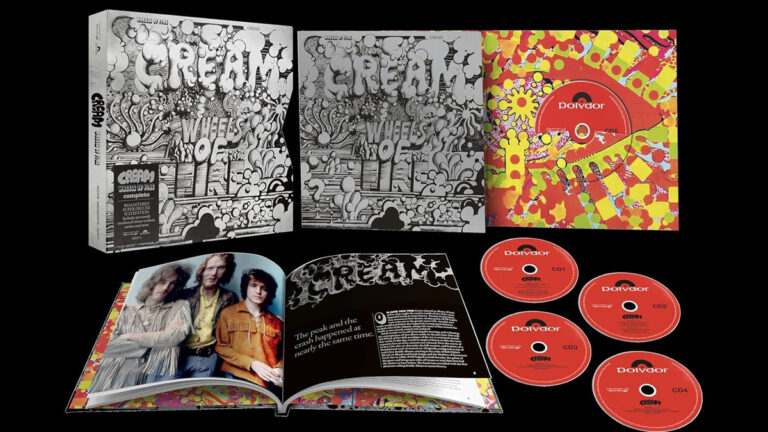
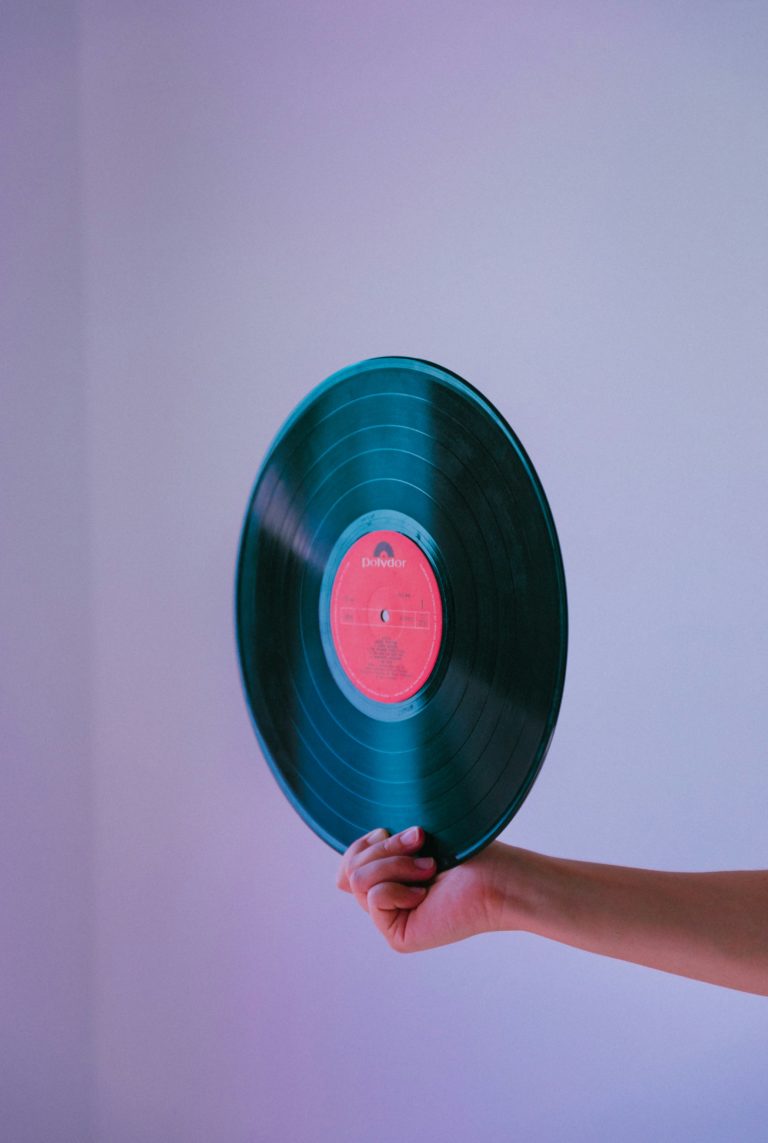
Five CDs. Nine previously unreleased tracks. Source tapes pulled directly from the late producer Felix Pappalardi’s personal reference reels. Polydor is releasing a ‘Wheels Of Fire’ Super Deluxe Edition on June 12th, and it’s the most comprehensive look at Cream’s groundbreaking 1968 third album ever assembled. This is the real thing.
The centerpiece is a newly remastered, phase-corrected version of the studio album, de-CSG’d for the first time, delivering the recordings with greater detail and a crisp soundstage that the original release simply couldn’t achieve. Both stereo and mono versions sourced from Pappalardi’s personal reels are included, and neither has ever been released before. Every mix here tells you something new about how this record was built.
The live material is just as substantial. Remastered versions of the original four live tracks are joined by eight additional performances from the March 1968 concerts, including a previously unreleased live recording of “We’re Going Wrong” captured at Winterland Ballroom on March 10, 1968. Cream live in 1968 needs no further endorsement.
The rarities disc seals it. Fifteen tracks total, nine previously unreleased, including “White Room” (Early Version Mono Mix), “Deserted Cities of the Heart” (Rough Mono Mix / No Strings), and “Crossroads” (Mono Single Version). The whole package comes housed in a gatefold sleeve with a hardcover book featuring sleeve notes by Jim Faber and era photographs, all enclosed in a silver-laminated rigid slipcase.
‘Wheels Of Fire’ Super Deluxe Edition Tracklist:
CD 1: Wheels Of Fire: In The Studio (2026 Remaster)
Ava Max doesn’t do subtle. “Out Of Your Mind” is out now, and it arrives as a full-throttle, defiant pop anthem built on soaring guitar riffs, an addictive beat, and a vocal performance that reminds you exactly why she’s accumulated over 29 billion streams. The track hits hard from the first bar and doesn’t let up.
The song is personal. Max wrote it as a direct response to anyone who’s ever tried to shrink her, and you feel that throughout. She transitions effortlessly into falsetto heading into a chorus that lands like a declaration. “Got uncommon sense and it’s all making sense so just smile and wave” isn’t a lyric you forget quickly.
Max connects the track directly to her biggest moment: “‘Out Of Your Mind’ reminds me of ‘Sweet But Psycho.’ I feel how I felt right before that song blew up.” That’s not nostalgia talking. It’s a songwriter who knows when she’s onto something real, and this track has that same uncontainable energy.
Following the recent “Kill It Queen,” “Out Of Your Mind” continues a new era where Max is holding absolutely nothing back. She sits among a small group of female artists with three songs surpassing three billion streams on Spotify. This is an artist fully reclaiming her lane, on her own terms, with zero apologies.
Jewel’s new single “Upon Meeting the Goddess of Love” is out now, and it’s a direct line back to everything that made her essential. Stripped-down, acoustic, and emotionally immediate, the track previews a forthcoming collection and carries the same intimate weight as ‘Pieces of You,’ her landmark debut and one of the best-selling debut albums of all time. This is Jewel at her most focused and unguarded.
The single connects to something much larger. It was first introduced as part of The Portal: An Art Experience by Jewel, her debut museum exhibition at Crystal Bridges Museum of American Art, an immersive installation weaving together original artwork, sound, technology, and mental health reflection. The song’s artwork features one of Jewel’s own paintings, extending her creative reach well beyond music.
That visual art thread runs deep. Her upcoming exhibition, Matriclysm: An Archeology of Connections Lost, opens May 6th in Venice and runs through November 22nd, presented alongside the 2026 Venice Biennale. It’s the largest presentation of her visual art to date, spanning painting, sculpture, textiles, installation, and original sound design. A centerpiece called Heart of the Ocean, an eight-foot kinetic sculpture built with scientists from NASA, NOAA, Stanford University, and UC Berkeley, translates real-time oceanographic data into sound and light.
Jewel says it plainly: “There’s something powerful about simplicity. This song strips everything back to the raw emotion and storytelling that first made me fall in love with music.” That’s not a talking point. That’s exactly what this song delivers.
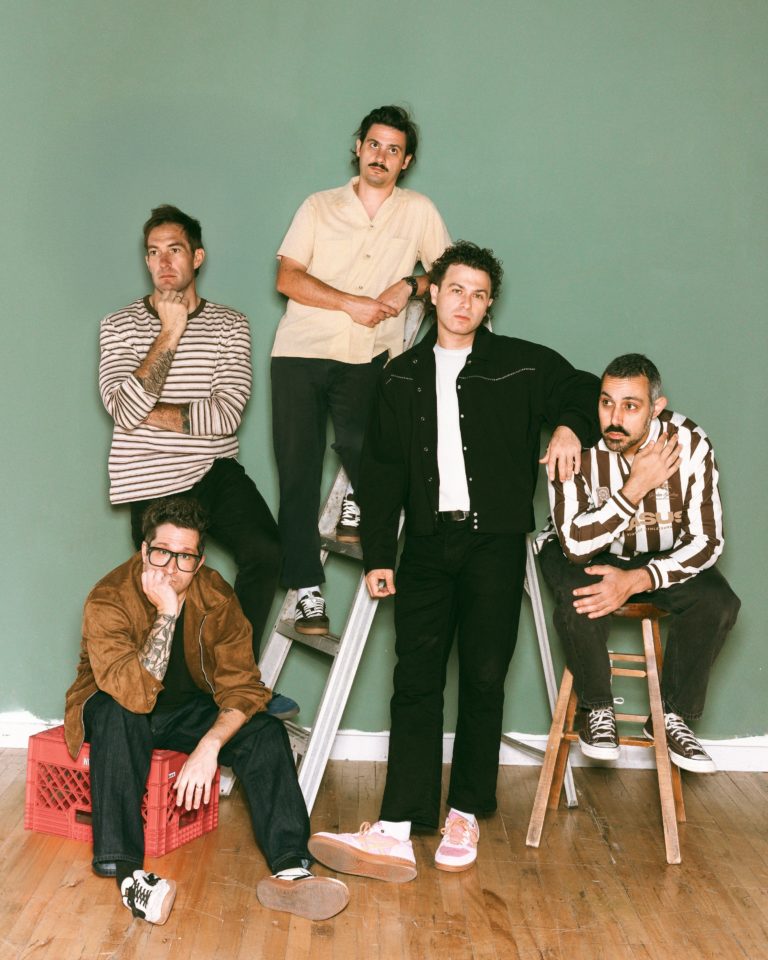
Arkells have a new album and they’re not waiting around. ‘Between Us,’ the 9x JUNO Award winners’ latest studio album, is out now via Universal Music Canada and Virgin Music Group, and the North American tour kicks off tonight with two sold-out album release shows in Buffalo, NY. Eleven tracks, real momentum, and a band operating at full capacity.
Produced by LA-based John Congleton (St. Vincent, Death Cab for Cutie, Wallows), ‘Between Us’ is a genre-spanning record that moves with real range and confidence. From the disco-tinged, synth-heavy “What’s On Your Mind?” featuring San Francisco’s Poolside, to the politically charged radio single “Money” with Portugal. The Man, to the breezy, crowd-ready “Ride” with GROUPLOVE, the collaborations hit. The album sounds like a band with nothing to prove and everything to say.
The deeper cuts are worth your full attention. “Imagine Barcelona” is a dreamy, earnest love song that’s going to wreck people live. “Rumour” brings a mischievous edge. “Escape Door” closes things out with winding chords and real ache. Frontman Max Kerman puts it plainly: “Between Us is about connection, not the hollow online kind we get when we’re scrolling, but about the feeling we get in a shared space.”
‘Between Us’ is available now on vinyl, CD, and a signed edition grass-green vinyl, with cover photography by Boston-based Pelle Cass, shot atop Hamilton’s Jackson Square rooftop. The upcoming Canadian run features multi-night “City Takeovers” at intimate clubs the band hasn’t played in over a decade, and several dates are already sold out.
Between Us Tracklist:
Next Summer
What Good?
Ride (ft. GROUPLOVE)
Money (ft. Portugal. The Man)
Imagine Barcelona
Desire’s Got Some Questions
Universe Talking
Two Hearts
What’s On Your Mind (ft. Poolside)
Rumour
Escape Door
2026 Between Us Tour Dates:
April 17, 2026 – Buffalo, NY – Town Ballroom SOLD OUT
April 18, 2026 – Buffalo, NY – Town Ballroom SOLD OUT
April 26, 2026 – Chicago, IL – Bottom Lounge
April 28, 2026 – Detroit, MI – Shelter SOLD OUT
April 30, 2026 – Washington, DC – Atlantis
May 1, 2026 – Philadelphia, PA – Foundry
May 2, 2026 – New York, NY – Racket
May 7 – Vancouver, BC – The Penthouse SOLD OUT
May 8 – Vancouver, BC – Hollywood Theatre SOLD OUT
May 9 – Vancouver, BC – Commodore Ballroom SOLD OUT
May 14 – Edmonton, AB – The Buckingham SOLD OUT
May 15 – Edmonton, AB – The Starlite Room SOLD OUT
May 16 – Edmonton, AB – Midway Music Hall SOLD OUT
May 19 – Calgary, AB – The Palomino SOLD OUT
May 20 – Calgary, AB – The Royal Canadian Legion SOLD OUT
May 21 – Calgary, AB – The Palace Theatre SOLD OUT
May 30 – Fergus, ON – Meadows Music Festival
June 3 – Sault Ste. Marie, ON – The Machine Shop
June 5 – Montreal, QC – Beanfield Theatre
June 6 – Quebec City, QC – Grizzly Fuzz
June 17, 2026 – Toronto, ON – Lee’s Palace SOLD OUT
June 18, 2026 – Toronto, ON – History SOLD OUT
June 19, 2026 – Toronto, ON – RBC Amphitheatre
July 7 – Vancouver, BC – PNE Amphitheatre (FIFA Fan Fest)
Aug 8 – Moncton, NB – Croix-Bleue Medavie Stadium (supporting Jonas Brothers)
Aug 14 – Sudbury, ON – Grace Hartman Amphitheatre
Aug 28 – Charlottetown, PEI – PEI Brewing Company SOLD OUT
Aug 29 – Hubbards, NS – Shore Club on the Cove SOLD OUT
There are albums you put on in the background. And then there are albums that demand your full attention — the kind that reveal something new every single time, provided you’re actually listening. These are the latter. Find a quiet room, close your eyes, and press play.
Pink Floyd — The Dark Side of the Moon (1973) The gold standard. The benchmark against which every immersive album experience is measured. The stereo panning alone justifies the headphones, but it’s the way the whole thing breathes — the heartbeat, the cash registers, Clare Torry’s vocal on “The Great Gig in the Sky” — that makes it genuinely transformative. Forty-plus years later, it still sounds like the future.
Radiohead — OK Computer (1997) Thom Yorke and Jonny Greenwood built an album that sounds like anxiety given musical form, and it rewards close listening more than almost anything recorded in the nineties. The production choices buried in the mix — the tiny details hiding behind the guitars on “Paranoid Android,” the atmospheric decay on “Exit Music” — only reveal themselves through headphones.
Massive Attack — Mezzanine (1998) Trip-hop at its most cinematic and menacing. “Teardrop,” “Angel,” “Inertia Creeps” — this is an album built for late nights and total darkness. The low-end rumble on this record is extraordinary, and the way textures layer over each other is something speakers in a room simply cannot do justice to.
Joni Mitchell — Blue (1971) Pure intimacy. Mitchell recorded this album so nakedly and vulnerably that listening to it on headphones feels almost intrusive — like reading someone’s private journal. The acoustic guitar sounds like it’s being played three feet away. One of the greatest singer-songwriter albums ever made, and headphones make that case completely.
Kendrick Lamar — To Pimp a Butterfly (2015) A jazz-funk-spoken word masterwork that operates on multiple levels simultaneously. There are horn arrangements, live bass lines, and layered vocal performances happening in every corner of this record. It’s dense, deliberate, and endlessly rewarding. This is the album that proved hip-hop production had become one of the most sophisticated art forms in popular music.
Brian Eno — Ambient 1: Music for Airports (1978) The album that essentially invented a genre. Eno designed this record to dissolve into environment, which sounds counterintuitive as a headphone recommendation — but heard up close, the way these simple looping phrases drift in and out of phase with each other is genuinely mesmerizing. It’s less music and more a state of mind.
Dire Straits — Brothers in Arms (1985) One of the first major albums recorded entirely in digital, and Mark Knopfler’s guitar tone on this record remains one of the most discussed sounds in the history of audio engineering. “Money for Nothing,” “So Far Away,” the title track — this album was practically designed as a demonstration of what recorded music could sound like when given the space and fidelity it deserved. Headphone listeners have been using it as a benchmark for forty years, and it still holds up completely.
Portishead — Dummy (1994) Beth Gibbons has one of the most haunting voices in recorded music, and this album frames it perfectly. The scratchy vinyl samples, the live strings, the film noir atmosphere — it all coheres into something genuinely unlike anything else. A headphone listen reveals just how meticulously every sound was chosen and placed.
Miles Davis — Kind of Blue (1959) The best-selling jazz album of all time, and for good reason. The interplay between Davis, John Coltrane, Bill Evans, and Cannonball Adderley is intimate and conversational — musicians listening to each other in real time, responding, making space. That conversation is something headphones allow the listener to step inside of completely.
Björk — Homogenic (1997) Orchestral strings colliding with electronic beats, and Björk’s voice soaring over all of it. This is a record that sounds slightly wrong on speakers and absolutely correct on headphones. “Jóga,” “Bachelorette,” “All Is Full of Love” — the sonic architecture here is extraordinary, and it deserves to be heard the way it was clearly designed to be experienced.
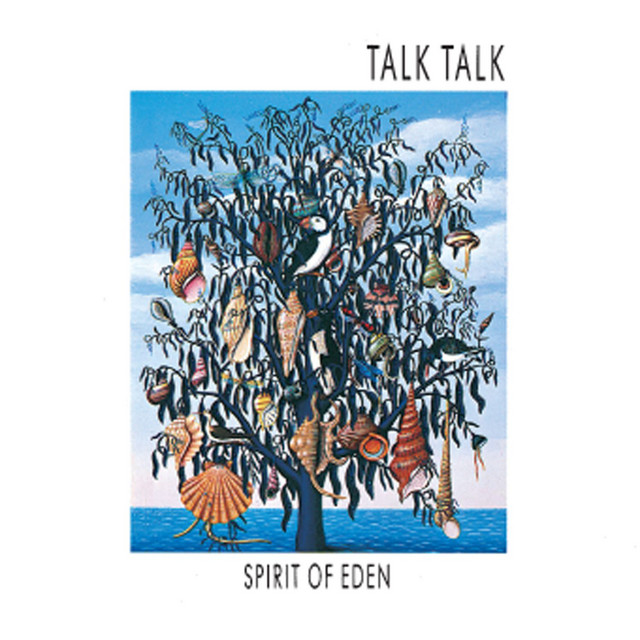
Talk Talk — Spirit of Eden (1988) Perhaps the most quietly radical album on this list. Mark Hollis and producer Tim Friese-Greene recorded this in near-total darkness, with musicians performing live in a converted church, instructed to play as little as possible. The result is an album of extraordinary space and silence — jazz, classical, and art rock dissolving into each other. It sounds like nothing else ever recorded, and headphones are the only way to fully understand what Hollis was reaching for.
Most artists — even successful ones — have only a vague idea of how music publishing actually works. And that vagueness? It costs them real money. Every year. So let’s fix that.
1. Your Song Is Two Things at Once — and Both Have Value
Here’s something that trips people up constantly. Every recorded song that exists is actually two separate copyrights living inside each other. There’s the composition — the melody and the lyrics, which is the publishing side — and then there’s the master recording, which is the actual audio file. When you write a song and record it yourself, you own both. But they generate money in completely different ways, through completely different channels, paid by completely different people.
The composition copyright is where publishing lives. Every time your song is streamed, played on radio, performed live at a venue, used in a TV show, or downloaded, the composition earns money. Publishers exist to collect and administer that money. If you don’t have a publishing deal, you are your own publisher — which means you need to be acting like one, or you’re leaving royalties sitting unclaimed on a table somewhere.
2. If You’re Not Registered with a PRO, Stop Reading This and Go Do That First
Performing Rights Organizations — SOCAN here in Canada, ASCAP or BMI in the States, PRS in the UK — are the infrastructure that makes songwriter royalties function. They collect performance royalties on your behalf from broadcasters, streaming services, venues, and anywhere else your music plays publicly. And here’s the thing: they’re not optional. They’re not a nice-to-have. If your music is being played anywhere and you’re not registered, that money is being collected but not attributed to you.
Registration is free. The process takes maybe twenty minutes. There is genuinely no good reason an artist in 2026 is not signed up with their relevant PRO. Beyond registration, you also need to make sure every song you release is properly logged with the organization — title, co-writers, split percentages, everything. Unregistered songs earn nothing. It’s that blunt.
3. Sync Licensing Is the Opportunity Most Artists Completely Ignore
This one is where I see independent artists leave the most money and exposure on the table. Sync licensing is when your music gets placed in film, television, advertising, video games, or any other visual media. It pays in two ways simultaneously: a sync fee upfront (negotiated, sometimes substantial), and then ongoing performance royalties every time that show airs or that ad runs. One well-placed song in a Netflix series or a car commercial can generate more income than years of streaming.
The barrier to entry is lower than most people think. There are music supervisors actively looking for independent music, sync licensing agencies that represent artists without major label backing, and online platforms built specifically to connect artists with licensing opportunities. What music supervisors need from you is clean clearance — meaning you actually own what you say you own, your splits are documented, and there are no disputed rights. Get your publishing house in order, and sync becomes a real revenue stream instead of a fantasy.
The music industry has never been easy to navigate, but it has never been more transparent about how it works. The information is out there. The organizations exist to help you. The only thing standing between most artists and the money they’re owed is the willingness to treat their catalog like the business it actually is.
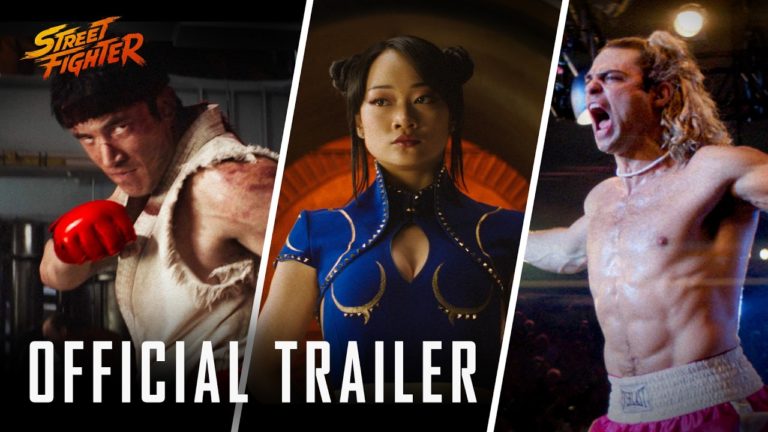
The first official trailer for Street Fighter is here, and Paramount and Legendary are clearly not playing it safe. Director Kitao Sakurai’s adaptation of the iconic Capcom franchise arrives in theaters October 16, and the footage makes one thing immediately clear: this is a full-swing, big-budget, faithful-to-the-source brawler with one of the most genuinely unexpected ensemble casts assembled for a video game adaptation. Noah Centineo plays Ken Masters opposite Andrew Koji’s Ryu, with the two estranged fighters dragged back into combat when Callina Liang’s Chun-Li recruits them for the next World Warrior Tournament.
The supporting lineup reads like someone raided every corner of pop culture simultaneously. Jason Momoa plays Blanka and serves as a producer on the film. Curtis “50 Cent” Jackson is Balrog. Professional wrestlers Joe “Roman Reigns” Anoai and Cody Rhodes step into the roles of Akuma and Guile respectively. David Dastmalchian takes on M. Bison. Musician Orville Peck plays Vega. Comedian Andrew Schulz is Dan Hibiki. Eric André, Vidyut Jammwal, Olivier Richters, and Alexander Volkanovski round out a roster that maps closely to the game’s iconic fighter lineup. The film is set in 1993, one year before the original 1994 adaptation, leaning into period detail and arcade-era energy throughout.
Street Fighter has sold over 55 million units worldwide since its 1987 launch, making it one of the highest-grossing video game franchises of all time. This is the franchise’s third attempt at a feature film, following Jean-Claude Van Damme’s 1994 version and 2009’s Street Fighter: The Legend of Chun-Li. The trailer debuted ahead of Paramount’s CinemaCon presentation in Las Vegas, where the studio showed additional footage to cinema executives.
Meghan Trainor has canceled her Get In Girl Tour, a 30-plus date North American run that was set to kick off June 12. Three months after welcoming daughter Mikey Moon via surrogate, the Grammy-winning pop singer made the call after what she describes as “a lot of reflection and some really tough conversations.” With a new album, a newborn, and two young sons at home, she put it plainly: “Balancing the release of a new album, preparing for a nationwide tour, and welcoming our new baby girl to our growing family of five has just been more than I can take on right now.”
The decision is a personal one, and Trainor has been open about the full picture. In a recent interview, she spoke candidly about prioritizing mental health, noting she’s in weekly therapy, recently diagnosed with ADHD, and firmly committed to asking for help when she needs it. “I can’t do it all. I wish I could, and I can’t.” Fans who purchased tickets through Live Nation will receive automatic refunds. Third-party ticketholders should contact their point of purchase directly.
The tour cancellation doesn’t affect the music. ‘Toy With Me’, Trainor’s seventh studio album, still arrives April 24 as scheduled. “I promise I’ll be back soon, and I can’t wait for you to hear this new record,” she wrote to fans. “I’m so proud of it, and I’m endlessly grateful for your love and support always.”
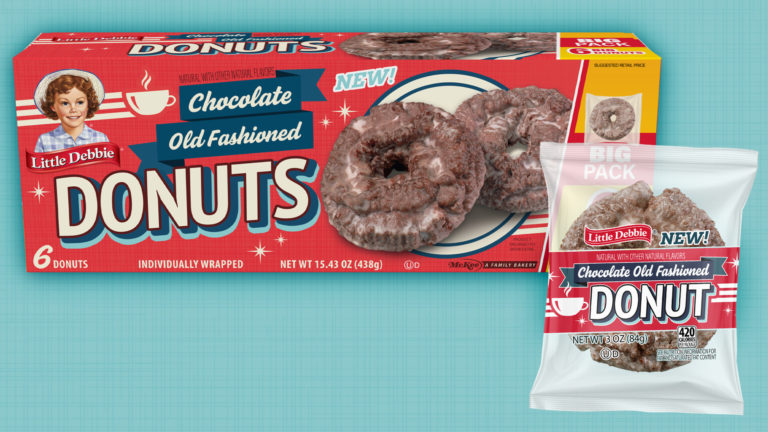
Little Debbie launched its original Big Pack Old Fashioned Donuts in June 2025 and the response was immediate. The bakery-style classic sold out consistently across the country, proving that the combination of nostalgic texture and modern convenience was exactly what snack aisles were missing. America’s No. 1 snack cake brand took note, and now the next move is here: Chocolate Old Fashioned Donuts, rolling out now to major retailers, grocery stores, and convenience stores nationwide.
The new variety brings a rich chocolate flavor to the signature golden-brown ridges and moist, crumbly texture that made the original a hit, finished with a sweet glaze and available in two formats. The Big Pack Carton holds six full-sized donuts in retro-inspired packaging, built for the family pantry. The single-serve 3 oz. individually wrapped version is the one you grab at the convenience store on the way to anywhere, paired with a coffee, eaten standing over a sink, no judgment either way.
Brand manager Scott Brownlow puts it plainly: “We’re doubling down on what works and giving both loyalists and new fans an irresistible reason to head back to the store.” The Chocolate Old Fashioned Donut joins the original as a permanent addition to the Little Debbie lineup. This one isn’t going anywhere.