Home Blog Page 162

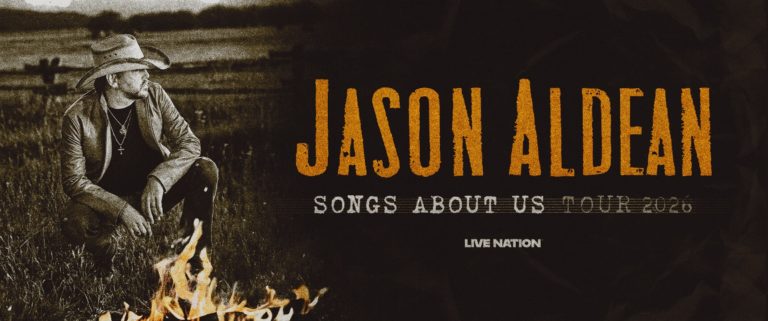
Jason Aldean Announces ā€˜Songs About Us’ 2026 Summer Tour and Releases Three New Tracks From Upcoming ā€˜Songs About Us’ Album

0

On the heels of his milestone 31st career #1 at Country radio, Grammy-nominated entertainer Jason Aldean today announced his upcoming 22-city 2026 Songs About Us Tour, sponsored by Patriot Mobile. After topping the charts with his hit single, ā€œHow Far Does A Goodbye Go,ā€ last week, the award-winning singer/songwriter today released three surprise tracks from his forthcoming album Songs About Us, out April 24th. Produced by Live Nation, the Songs About Us Tour begins Thursday, July 16 at Maine Savings Amphitheater in Bangor, Maine and continues through the end of September with numerous stops across North America including Fresno, Kansas City, Hamilton, Ontario and more. Artist presale tickets are available starting March 3rd, with general on-sale March 6th at LiveNation.com. Chase Matthew, Mackenzie Carpenter and Dee Jay Silver serve as support.

Continuing momentum towards his highly-anticipated Songs About Us album release, Aldean shared ā€œDrinking About You,ā€ ā€œDust on the Bottle,ā€ and his next single, ā€œDon’t Tell On Me,ā€ which is officially set to impact radio March 2nd. Having cemented his status as one of the format’s most consistent hitmakers, the ACM Artist of the Decade’s latest studio album Songs About Us will be released the day before the Georgia native returns to headline University of Georgia’s Sanford Stadium alongside fellow Georgia native Luke Bryan. The concert marks a historic return for Aldean, who 13 years ago became the first-ever, and to date only, artist to headline the venue. Pre-save, pre-add and pre-order the new album, Songs About Us, here.

Songs About Us follow’s Aldean’s career-spanning collection 30 Number One Hits, which debuted last year at No. 4 on the Billboard Top Country Albums chart — marking Aldean’s 13th Top 10 country album in 20 years. His legacy of chart-topping success and record-breaking milestones is currently showcased on the international extension of his 2026 Full Throttle World Tour, where he recently wrapped his first-ever headlining run in New Zealand and made his highly-anticipated return to Australia for the first time in over a decade.

TICKETS: Tickets will be available starting with Aldean Army presale beginning Tuesday, March 3 at 10am local. Additional presales will run throughout the week ahead of the general on sale beginning Friday, March 6 at 10am local time at LiveNation.com.

VIP: The tour will also offer a variety of different VIP packages and experiences for fans to take their concert experience to the next level. Packages vary but include premium seats, invitation to the Jason Aldean VIP Lounge featuring a pre-show acoustic performance and Q&A with Jason, exclusive VIP gift item, early entry & more. For more information, visit vipnation.com!

SONGS ABOUT US 2026 TOUR DATES:

Thu July 16 – Bangor, ME – Maine Savings Amphitheater^

Fri July 17 – Holmdel, NJ – PNC Bank Arts Center^

Sat July 18 – Bethel, NY – Bethel Woods Center for the Arts^

Thu July 23 – Wichita, KS – INTRUST Bank Arena^

Fri July 24 – Oklahoma City, OK – Paycom Center^

Sat July 25 – Kansas City, MO – Morton Amphitheater^

Thu July 30 – Ridgefield, WA – Cascades Amphitheater^

Fri July 31 – Nampa, ID – Ford Idaho Center Amphitheater^

Fri Aug 14 – Wheatland, CA – Toyota Amphitheatre^

Sat Aug 15 – Fresno, CA – Save Mart Center at Fresno State^

Sat Aug 22 – Cincinnati, OH – Riverbend Music Center#%

Thu Aug 27 – Bossier City, LA – Brookshire Grocery Arena^

Fri Aug 28 – Brandon, MS – Brandon Amphitheater^

Sat Aug 29 – Orange Beach, AL – The Wharf Amphitheater^

Thu Sep 10 – Virginia Beach, VA – Veterans United Home Loans Amphitheater at Virginia Beach^

Fri Sep 11 – Wantagh, NY – Northwell at Jones Beach Theater^

Sat Sep 12 – Hartford, CT – The Meadows Music Theatre^

Thu Sep 17 – Hamilton, ON – TD Coliseum^

Fri Sep 18 – Syracuse, NY – Empower Federal Credit Union Amphitheater at Lakeview^

Sat Sep 19 – Camden, NJ – Freedom Mortgage Pavilion^

Fri Sep 25 – Gilford, NH – BankNH Pavilion^

Sat Sep 26 – Gilford, NH – BankNH Pavilion^

^ with Chase Matthew, Mackenzie Carpenter and Dee Jay Silver

# with Chase Matthew and Dee Jay Silver

% with Elizabeth Nichols

Songs About Us (Album Tracklist):

  1. Anytime Soon (Kurt Allison, John Edwards, Tully Kennedy, John Morgan)
  2. Drinking About You (Kurt Allison, John Edwards, Tully Kennedy, John Morgan)
  3. Don’t Tell On Me (Kurt Allison, Tully Kennedy, John Morgan, Lydia Vaughan)
  4. How Far Does A Goodbye Go (Kurt Allison, John Edwards, Tully Kennedy, John Morgan)
  5. Songs About Us [Jason Aldean & Luke Bryan] (Kurt Allison, Tully Kennedy, John Edwards, John Morgan)
  6. Good Thing Going (Kurt Allison, Tully Kennedy, John Morgan, Lydia Vaughan)
  7. She’s Why (Kurt Allison, Tully Kennedy, John Morgan, Lydia Vaughan)
  8. Backroads Of My Memory (Kurt Allison, Tully Kennedy, John Morgan, Lydia Vaughan)
  9. Dust on the Bottle [Jason Aldean & David Lee Murphy] (David Lee Murphy)
  10. The High Road (Jason Aldean, Kurt Allison, Tully Kennedy, Brandon Kinney, Josh Thompson)
  11. Easier Gone [Jason Aldean & Brittany Aldean] (Charles Kelley, Josh Kerr, Dave Haywood, Jimmy Robbins)
  12. Help You Remember (Jason Aldean, Kurt Allison, Tully Kennedy, John Morgan, Lydia Vaughan)
  13. Country Into Rock ā€˜n’ Roll (Kurt Allison, Tully Kennedy, John Morgan, Lydia Vaughan)
  14. What’s A Little Heartache (Kurt Allison, John Edwards, Tully Kennedy, John Morgan)
  15. One Last Look (Kurt Allison, Tully Kennedy, John Morgan, Lydia Vaughan)
  16. Fight A Fire (Kurt Allison, Tully Kennedy, Neil Thrasher, Lydia Vaughan)
  17. Hard To Love You (Kurt Allison, Tully Kennedy, John Morgan, Lydia Vaughan)
  18. Little Hometown Left (Jordan Gray, Ben Hayslip, Danny Majic, Cole Taylor)

Her Favorite Color (Kurt Allison, Tully Kennedy, Lee Thomas Miller
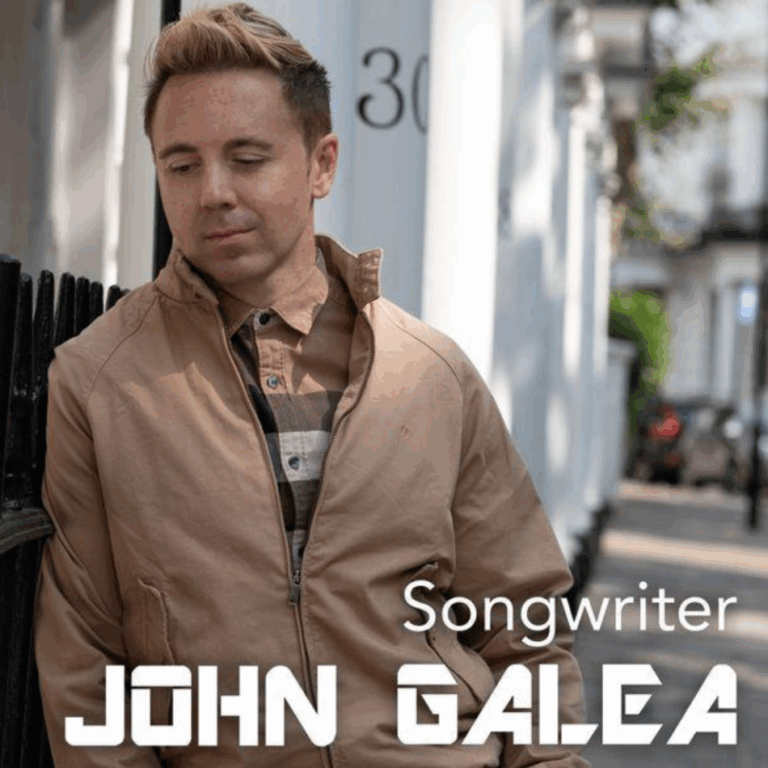
Award-Winning UK Singer-Songwriter John Galea Shares Gospel-Tinged Love Song “Songwriter” Ahead Of Debut Album

0

John Galea, the award-winning singer-songwriter from the UK, releases his new single “Songwriter” on March 27th. The gospel-inspired love song was written by Galea, co-produced by John and Oscar Lo Brutto (who has worked with Wretch32 and Scorcher), and remixed by Matt Pop and OLB. Its official music video was filmed on location in Central London. The track is the first single from his long-awaited debut album, set for release in early 2027.

Galea has been building toward this moment for over a decade. He started songwriting at 13 after winning a UK National Songwriting Contest with “I Am Not An Angel,” went on to write for Lao Ra, Thea Garrett, and Gianluca Bezzina, scored a Top 10 Commercial Chart hit with “When You Truly Love Someone” in 2017, and hit No. 1 on iTunes in 2020 with “Hero Within You,” recorded with Hannah Long. Along the way he has toured the UK supporting McFly and Boyzlife, and performed on the main stages at London Pride, Birmingham Pride, Northern Pride, Norwich Pride, and The Sundown Festival.

“Songwriter” is the product of years of work. “It’s taken literally years,” Galea says. “I have had so many versions that have had different hooks or vibes and they just didn’t feel right, then finally writing my first album, I sat down at my piano and the song just fell into place. The song is all about sharing whatever you have with the most special person in the world.” “Songwriter” arrives March 27th.

Lecx Stacy Explores Anxiety and Idealized Love On New Single “Safe In Your Hands, I Clasp”

0

Lecx Stacy, the first-generation Filipino-American artist from San Diego now based in Los Angeles, releases his new single “Safe In Your Hands, I Clasp,” a track he describes as “a soundtrack to my anxieties. It’s about clinging to idealized versions of life and love for comfort, only to feel that comfort slip further away and swallowed by noise and distortion.” The song opens with plucky acoustic guitar, subtle strings, and breathy ethereal vocals before layered textures build into a swell of distortion and density, then pull back just as quickly into something stripped and bare. That push and pull is the whole point.

The single sits alongside recent releases “Winter, A Wilted Flower” and “With You, I’d Be Closer to God,” continuing Stacy’s exploration of emotional extremes through dynamic shifts in sound and structure. His music draws from emo-folk, folktronica, noise, and ambient textures, rooted in a personal history that runs from beat-making sessions with his older brother to his father’s stories of Filipino folkhouses where men sang John Denver after long nights of drinking. Listeners are responding to the track as one of his most emotionally precise releases yet, intimate and overwhelming in equal measure.

Stacy has toured alongside Eartheater, Jean Dawson, and Sega Bodega, and his live performances carry the same devotional intensity as his recordings. “Safe In Your Hands, I Clasp” is out now.

Best AI Music Video Tool for Musicians: Why Freebeat Stands Out

0

By Mitch Rice

There’s a version of this story every working musician knows. You finish a track you’re proud of, you’re ready to put it out, and then someone asks: what’s the video situation? And the honest answer is that there isn’t one, because making a proper music video when you’re doing everything yourself is a project in its own right — one that can take as long as the song did to record.

The tools available to independent artists have improved dramatically over the last few years, but the visual content side has lagged. Posting a static image to YouTube while your audio plays is still common. A lot of artists make do with a lyric video knocked together in Canva. The gap between what streaming platforms reward visually and what a solo artist can realistically produce has been a persistent reality of independent music.

Freebeat is built directly for that gap. It goes well beyond what most people mean when they say AI audio visualizer — rather than generating abstract waveform animations over your track, it produces structured, cinematic music videos with actual shot planning, character performance, beat-synced editing, and narrative visual logic. For musicians who have been waiting for AI video tools to catch up to the quality their music deserves, Freebeat is the closest thing yet. Here’s what it actually does, and why it works for musicians specifically.

It Listens to Your Music Before It Does Anything Else

The single most important thing about Freebeat from a musician’s perspective is that the visual generation is built around the audio structure — not applied on top of it after the fact. When you bring in a track, the platform analyzes it before a single frame is generated: BPM and tempo set the base visual rhythm, beat and bar markers determine where cuts and transitions fall, and the system maps the full song structure so the intro, verse, chorus, bridge, and outro each get different visual treatment.

What this means in practice is that a chorus feels like a chorus. A beat drop hits the way it should. A slow atmospheric verse doesn’t get cut up like a high-energy section. The video moves with your music the way a good editor would make it move — because the system understands the song structurally, not just as a waveform. For musicians who’ve spent time getting every element of a track right, that responsiveness matters.

Three Modes Depending on the Kind of Track You’ve Made

Freebeat gives you three creation modes, and the choice meaningfully shapes the kind of video you get — not just the look, but the entire visual logic of the piece.

  • Storytelling Mode builds narrative-driven videos with scene-to-scene emotional continuity. The visuals follow the arc of the song — mood shifts, build-up, resolution. Best suited to singer-songwriters, R&B, indie, and folk where the song itself tells a story.
  • Stage Performance Mode goes the other way entirely: concert energy, dramatic lighting, tight singing close-ups, instrument detail shots, high-cut editing timed to the beat. If your track is built to move people, this mode is built for it. Think pop, electronic, hip-hop, rock.
  • Automatic Mode handles every creative decision without input from you. Useful when you’re working fast or want to see what the platform does with a track before you start customising.

The distinction between modes matters more than a style toggle would. A piano ballad and an EDM track need fundamentally different visual languages — different pacing, different shot logic, different emotional register. Having three modes that encode those differences means the platform is actually thinking about what kind of music video your song needs, not just what colour palette to apply.

Your Look, Locked In Across Every Shot

One of the most legitimate complaints about AI video tools is that they can’t maintain a consistent character appearance across different shots. The face that looks right in one scene looks wrong in the next. For artists building a visual identity — and that’s most artists releasing music — that inconsistency is a dealbreaker.

Freebeat’s character system is designed specifically to solve this. You upload a single reference photo, and the platform anchors the avatar to your likeness across every shot in the video — close-ups, wides, performance angles, detail shots — with stable facial identity throughout. It supports up to two characters, which covers duos and featured artist situations. Lip sync accuracy is benchmarked at over 90%, meaning mouth movement stays aligned to your vocals across the whole track without manual correction afterward.

Visual Style That Matches Your Sound

The style system covers genuine range. Eight presets — cinematic, anime, cyberpunk, neon noir, digital art, realistic, fantasy, illustration — each carry their own lighting logic, color treatment, and motion aesthetic, so selecting one changes the visual language of the whole video, not just a surface filter. Beyond the presets, you can define your own aesthetic direction entirely through custom text prompts: specific color palettes, atmosphere, mood, and any visual references you have in mind. Color tone and emotional mood can be set independently of the base style, which means the creative space is considerably wider than eight options suggests.

For musicians who already have a strong visual identity — specific colors associated with a project, a particular aesthetic they’ve developed across artwork and social content — the custom prompt system is where you align the video with the rest of your visual world rather than choosing the closest preset and hoping it fits.

Every Visual You Need for a Release, From One Session

A complete release in 2026 requires more than one video. It requires a main music video, a lyric video, a Spotify Canvas, and platform-specific short-form content for TikTok, Reels, and YouTube Shorts. In a traditional workflow, each of those is a separate production task. In Freebeat, they all come out of the same session.

The lyrics video system is a full creative tool in itself — not just a text overlay. You get control over fonts, sizing, positioning, word-by-word or line-by-line timing, highlight animations, and dynamic text motion effects. Export comes out as MP4 for posting or as a .LRC file for streaming platforms that support synchronized lyrics. Animated album covers for Spotify Canvas and Apple Music motion visuals are generated in the same workspace. Multi-format export in 16:9, 9:16, and 1:1 is built into the generation with correct platform framing from the start, not a crop applied after the fact.

For a solo artist managing their own release, that consolidation is the practical difference between having a complete set of visual assets ready on release day and having a YouTube upload with a static image.

Input From Wherever You Already Work

Freebeat accepts direct links from Suno, Udio, TikTok, YouTube, YouTube Music, and SoundCloud, alongside MP3, WAV, and MP4 file uploads. If you made a track on an AI music platform and you’re ready to turn it into a video, you paste the link and start. No downloading, no file conversion, no extra steps between the end of your audio session and the beginning of your video session.

The platform also includes AI-assisted prompt expansion — useful when you know what you want visually but aren’t practiced at translating that into prompt language. The system can take a vague direction and elaborate it into something more specific, suggest alternatives, and help you refine your visual brief before generation begins. It’s the equivalent of having a conversation with a creative director about what the video should feel like, without needing one.

What Actually Makes the Best AI Music Video Tool for Musicians

The test for any tool aimed at musicians is whether it respects what you’ve made. A music video generator that ignores the structure of the song, drifts on character appearance, or produces generic output regardless of genre fails that test regardless of how technically impressive it is.

Freebeat passes it. The audio-reactive generation, the mode system, the character consistency, the lyrics video integration, and the multi-format export are all built around the specific things musicians need from a visual content tool — not generic creator needs, not enterprise marketing needs, but the particular situation of an artist who has a finished track and needs professional-quality visuals to go with it. For independent musicians working without a production team, that focus is exactly what’s been missing from this category.

FAQ

How does Freebeat sync visuals to music?

Freebeat analyzes the audio track before generating any visuals, extracting BPM, beat and bar markers, song section boundaries (intro, verse, chorus, bridge, outro), and energy peaks. Transitions land on beats, different sections receive distinct visual treatment, and high-energy moments like drops trigger corresponding visual escalation.

What is the storyboard review feature?

Before the final video renders, Freebeat surfaces the complete planned shot sequence — including camera logic and visual direction for each scene. Creators can review and edit any individual scene’s prompt before committing to generation, avoiding wasted renders from misdirected output.

How does character consistency work?

Creators upload a reference photo, and Freebeat anchors the AI avatar to that appearance across all shot types and scenes — close-ups, wides, performance angles, and detail shots. Up to two characters per video are supported, with stable facial identity maintained throughout.

How accurate is Freebeat’s lip sync?

Freebeat benchmarks lip sync accuracy at over 90%, meaning mouth movements stay naturally aligned with the vocal track across the full length of the video, without requiring manual correction after generation.

Data and information are provided for informational purposes only, and are not intended for investment or other purposes.

Electro-Jazz Quartet Photons Brings the Heat To KEXP Session

0

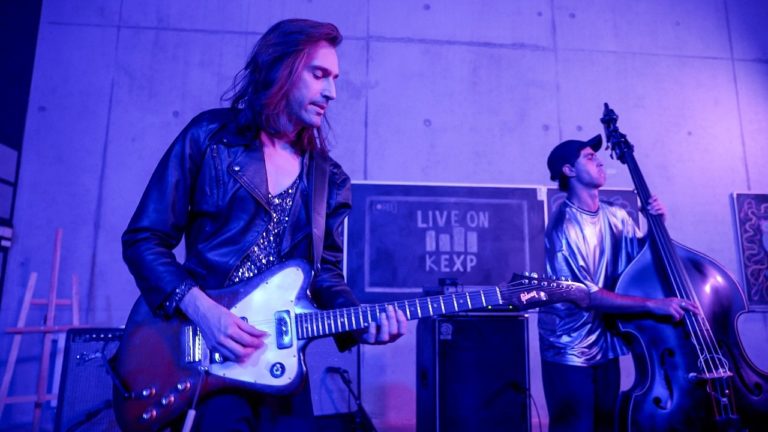
Photons, the Paris-based electro-jazz quartet led by pianist Gauthier Toux, delivered a full live set for KEXP at ESMA in Rennes, France, during Trans Musicales 2025. The performance captures the four-piece, Toux on keyboards, Julien Loutelier on drums, Samuel F’hima on bass, and Giani Caserotto on guitar, doing what they do best: blurring every line between jazz improvisation and electronic club music in real time. Viewers are calling it one of the most hypnotic KEXP sessions in recent memory, a locked-in, floor-leveling forty minutes that earns every second of its runtime.

Gavin Adcock Rounds Up Country Music’s Next Generation For Classic Covers Album ‘Country Never Dies’

0

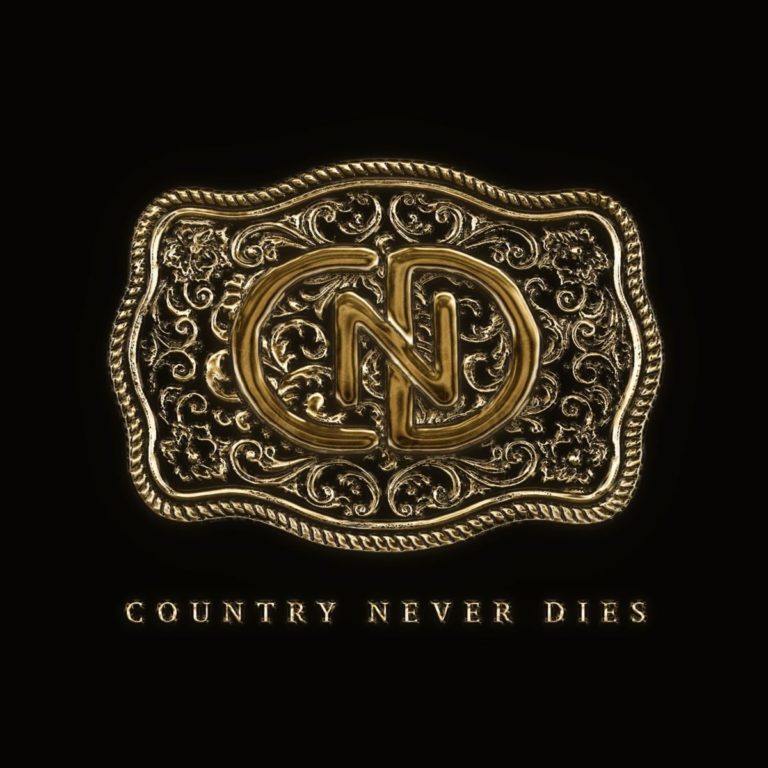
Gavin Adcock is stepping into a new role. The Georgia-born artist, whose ‘Own Worst Enemy’ debuted at No. 4 on the Billboard 200 Country Chart, now adds Executive Producer to his resume with ‘Country Never Dies,’ a ten-artist collaborative covers project releasing March 13th.

The album is Adcock’s tribute to the country legends who shaped him. “I came up with the idea of this album one day when I was listening to some country music and realized that I’m never going to get to hear any new music from some of the artists, because they’re not with us anymore,” he says. “I grew up listening to a bunch of these artists, and some of them are the main reason I’m in Country music.”

The first track is out now. Adcock opens the project with “Only Daddy That’ll Walk The Line,” made famous by Waylon Jennings, and the response has been immediate and electric, with listeners calling it a love letter to everything country music was built on. He is joined across the album by Hudson Westbrook, Jake Worthington, Ashley Cooke, Braxton Keith, Lanie Gardner, Vincent Mason, The Creekers, Austin Snell, and Shelby Stone.

TRACK LISTING: ‘Country Never Dies’:

  1. “Only Daddy That’ll Walk The Line” (Gavin Adcock) — originally performed by Waylon Jennings
  2. “Slow Hand” (Hudson Westbrook) — originally performed by The Pointer Sisters / Conway Twitty
  3. “He Stopped Loving Her Today” (Jake Worthington) — originally performed by George Jones
  4. “Southern Nights” (Ashley Cooke) — originally performed by Glen Campbell
  5. “Slide Off Your Satin Sheets” (Braxton Keith) — originally performed by Johnny Paycheck
  6. “Wayfaring Stranger” (Lanie Gardner) — American folk song, performed by Johnny Cash
  7. “You Win Again” (Vincent Mason) — originally performed by Hank Williams
  8. “Kentucky Bluebird” (The Creekers) — originally performed by Keith Whitley
  9. “Simple Man” (Austin Snell) — originally performed by Lynyrd Skynyrd
  10. “Big City Blues” (Shelby Stone) — originally performed by Keith Gattis
  11. “Mama Tried” (Gavin Adcock) — originally performed by Merle Haggard

The Greatest Album Opening Tracks of All Time

An album opener is a contract. It tells you exactly what kind of relationship you are about to have with the next forty-five minutes of your life. Get it right and the listener is locked in before the first chorus. Get it wrong and you are fighting uphill for the rest of the record. The greatest opening tracks in history do not ease you in. They grab you, orient you, and make you feel like you have arrived somewhere specific. Here are some of the most inarguable examples of that contract being honored in full.

“Gimme Shelter” by The Rolling Stones (‘Let It Bleed’) opens with a guitar figure that sounds like the world ending at half speed, and by the time Keith Richards and Merry Clayton are trading vocals, you are not listening to a rock song anymore. You are inside a document of civilization coming apart at the seams. No album in the Stones’ catalog needed a stronger opening statement, and nothing in rock music has ever quite matched it.

“Plainsong” by The Cure (‘Disintegration’) is one of the great slow reveals in rock history. Wind chimes and icy synths draw you in gently, volume creeping up, and then the guitars arrive like a weather system. Two and a half minutes pass before Robert Smith sings a single word, and by then the album’s entire emotional world has already been built around you. One commenter described it as “hope and despair at the same time.” That is exactly right.

“Black Sabbath” by Black Sabbath (‘Black Sabbath’) is three minutes and forty seconds that changed the course of music. A tritone riff, a rainstorm, and a bell toll later, heavy metal existed as a genre. Everything that followed, from doom to thrash to death metal to sludge, traces a direct line back to this track. It did not just open an album. It opened a door that has never been closed.

“Battery” by Metallica (‘Master of Puppets’) opens with a passage of clean, delicate acoustic guitar that lulls you into a false sense of security before detonating into one of the most ferocious riffs the band ever wrote. The structural contrast is breathtaking even now, forty years on, and it sets up an album that remains the high-water mark of thrash metal without any real competition.

“Cherub Rock” by Smashing Pumpkins (‘Siamese Dream’) announces itself with a feedback swell and then launches into a riff so confident and fully formed it sounds like Billy Corgan had been saving it his entire life. The song is a statement of artistic independence delivered at maximum volume, and it remains one of the most exciting first sixty seconds in alternative rock history.

“Disorder” by Joy Division (‘Unknown Pleasures’) is a first album, first track moment that very few bands have ever replicated. Bernard Sumner’s guitar, Stephen Morris’s drums and Ian Curtis’s voice arrive fully formed on a debut record, as if the band had skipped the developmental phase entirely and gone straight to making something that sounded like no one else on earth.

“Everything in Its Right Place” by Radiohead (‘Kid A’) signaled one of the most dramatic pivots in popular music. After ‘The Bends’ and ‘OK Computer’ had made them the most important guitar band in the world, the opening track of ‘Kid A’ contained almost no guitar at all. Thom Yorke’s voice, processed and looped over shifting keyboards, told you immediately that Radiohead had no interest in repeating themselves.

“Funeral for a Friend/Love Lies Bleeding” by Elton John (‘Goodbye Yellow Brick Road’) is eleven minutes of Elton at his most unrestrained and ambitious, an orchestral rock suite that opens one of the greatest double albums ever made. It demonstrated that Elton John in 1973 was operating on a scale that most of his contemporaries could not even conceptualize.

“Gimme Shelter” by The Rolling Stones (‘Let It Bleed’) opens with a guitar figure that sounds like the world ending at half speed, and by the time Keith Richards and Merry Clayton are trading vocals, you are not listening to a rock song anymore. You are inside a document of civilization coming apart at the seams.

“Hell’s Bells” by AC/DC (‘Back in Black’) carries extra weight that no amount of critical analysis can fully capture. Released less than a year after Bon Scott’s death, the tolling bell that opens the track and the album is both a tribute and a declaration that the band intended to survive. It remains one of the most emotionally loaded album openers in rock history.

“London Calling” by The Clash (‘London Calling’) opens with four beats and a bass line and immediately sounds like an emergency broadcast. Joe Strummer’s voice carries genuine urgency, the kind that most punk bands performed but The Clash actually felt, and the song’s apocalyptic imagery has only grown more resonant with time.

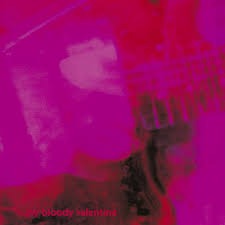
“Only Shallow” by My Bloody Valentine (‘Loveless’) opens with a drum fill that sounds like it was recorded inside a hurricane and then collapses into the most gorgeous wall of noise ever committed to tape. Kevin Shields built an entire sonic universe on that album, and “Only Shallow” drops you into the deep end of it without warning or apology.

“Plainsong” by The Cure aside, few openers match the sheer audacity of “Shine On You Crazy Diamond” by Pink Floyd (‘Wish You Were Here’), a nine-minute instrumental tribute to Syd Barrett that asks the listener to simply surrender to it. Pink Floyd in 1975 had enough confidence to open an album with something that does not resolve for nearly ten minutes, and the gamble paid off completely.

“Smells Like Teen Spirit” by Nirvana (‘Nevermind’) is the most culturally seismic album opener of the 1990s and possibly of any decade since the 1960s. The quiet-loud dynamic, the riff, Kurt Cobain’s voice arriving like a distress signal: within four minutes, the landscape of popular music had shifted in a way nobody in the music industry had fully anticipated.

“Tom Sawyer” by Rush (‘Moving Pictures’) opens with a synthesizer swell that in 1981 sounded like the future arriving ahead of schedule. Neil Peart’s drums, Geddy Lee’s bass and Alex Lifeson’s guitar lock into a groove that is somehow simultaneously technical and completely physical, and the track remains the definitive argument for why Rush belong in any serious conversation about the greatest rock bands of all time.

“Where the Streets Have No Name” by U2 (‘The Joshua Tree’) builds for nearly a minute on organ before the guitar and drums arrive, and when they do the sensation is close to physical. Produced by Brian Eno and Daniel Lanois at the peak of their powers alongside a band operating at the absolute height of their ambition, it is one of the great examples of recorded music being engineered to feel enormous.

Adult Swim’s ‘Smiling Friends’ to End After Season 3 Despite Previous Renewal for Two More Seasons

0

Adult Swim’s animated comedy ‘Smiling Friends’ is ending after Season 3, with creators Michael Cusack and Zach Hadel announcing the decision in a video posted to Adult Swim’s social media. “This is not a bit, this is not a joke,” Hadel said. “Michael and I are here to announce that Smiling Friends will be ending after Season 3 is done.” The show had previously been renewed for Seasons 4 and 5, and ranked among HBO Max’s top 10 series during its Season 2 premiere, but Cusack and Hadel say finishing Season 3 left them feeling both accomplished and burned out. “We wouldn’t want to be doing more seasons half-hearted or burnt out,” Hadel said. “That’s not fair to us, and it’s not fair to the audience.”

‘Smiling Friends’ debuted in 2022 and quickly built a devoted following around its premise of co-workers Charlie (voiced by Hadel) and Pim (Cusack) attempting to bring positivity into the lives of others. The show became one of Adult Swim’s top-performing properties, ranking among HBO Max’s top 10 series during its Season 2 premiere and earning a reputation for bold, boundary-pushing comedy that reflected the singular creative vision of its two co-creators. Adult Swim had already renewed it for Seasons 4 and 5 as recently as August 2025, making the announcement all the more surprising. “Everyone at Adult Swim is incredibly proud of what Michael and Zach built,” the network said in a statement. “Like fans, we are sad to see this series come to an end.”

The decision was entirely Cusack and Hadel’s own, and Adult Swim has been fully supportive. Cusack cited the Beatles ending on ‘Abbey Road’ as the model they aspired to, telling The Hollywood Reporter earlier this season that “leaving the audience wanting more is the best.” Two final Season 3 episodes will air April 12 on Adult Swim, with the door left open for a potential return if the pair feel genuinely inspired to revisit the show. “We could come back in the future and make more episodes if we want,” Cusack said. “But it’s got to be right, and it’s got to be done right.”

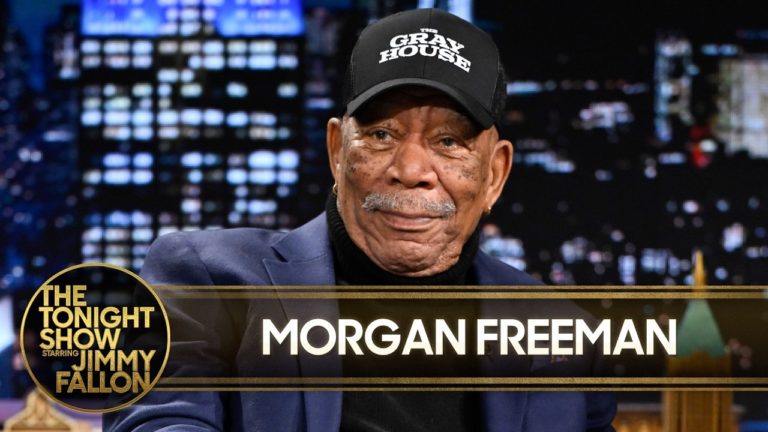
Morgan Freeman Tells Jimmy Fallon Why He Doesn’t Think His Voice Is Special and How Clint Eastwood Taught Him to Stay Young

0

Morgan Freeman stops by The Tonight Show for an extended conversation with Jimmy Fallon that covers more ground than the average late-night visit. Freeman dismisses the near-universal reverence for his voice, shares the secret to aging that Clint Eastwood passed along to him, and opens up about the true story behind his produced series ‘The Gray House’ and his work narrating Steven Spielberg’s docuseries ‘The Dinosaurs.’ It is the kind of relaxed, candid sit-down that Freeman makes look effortless, which is perhaps the whole point.

“The Wire” Actor Bobby J. Brown Dies At 62

0

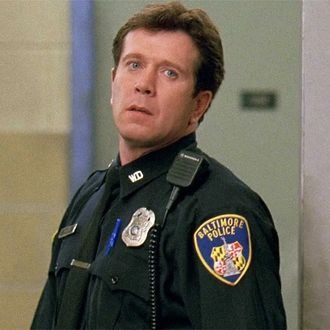
Bobby J. Brown, the character actor who brought lived-in authority to HBO’s landmark crime drama The Wire, has died at 62 following a tragic barn fire in Maryland. His passing closes the chapter on a performer whose presence carried weight the moment he stepped on screen.

Brown appeared in 12 episodes of The Wire as Officer Bobby Brown, a Baltimore city police officer whose grounded performance added texture to one of television’s most revered series. He also appeared in Law and Order: Special Victims Unit and We Own This City, extending his association with hard-edged, procedural storytelling rooted in realism.

Before acting, Brown was a Golden Gloves champion, a background that translated into physical command and composure on camera. That history shaped the stillness he brought to his roles. His performances carried credibility that elevated every scene he entered.

His representative, Albert Bramante, said in a statement, “Bobby J. Brown was a uniquely talented actor and a man of great character. From his deep roots as a Golden Gloves champion to his impactful performances on screen, Bobby brought an unmistakable authenticity to everything he did.” Brown is survived by his wife and two daughters.