


“Ripple” was never built around chart ambition, yet it has become one of the most enduring songs in the Grateful Dead catalog. Written by Robert Hunter and set to a restrained melody by Jerry Garcia, the track emerged as a gentle folk meditation within a psychedelic rock universe. It circulated quietly beyond radio peaks and industry metrics, finding life in gatherings, acoustic sets, and shared moments between listeners. Decades later, “Ripple” stands as a defining piece of American songwriting, carried forward by community memory rather than commercial momentum.
Jazz Pianist Vince Guaraldi Debuts “Linus And Lucy” In Rare 1964 TV Clip

A rare 1964 television performance captures Vince Guaraldi playing “Linus and Lucy” for the first time on TV as part of The Short Stories of Guy de Maupassant Music Fillers Programs. Courtesy of WNET Group, the clip features Guaraldi on piano, joined by Tom Beeson on bass and John Rae on drums. Unseen for more than six decades, this early broadcast presents the trio in a stripped-down studio setting, documenting the television debut of a composition that would soon become inseparable from the Peanuts legacy.
Spanish Noise Rock Trio Triángulo De Amor Bizarro Storm KEXP Bilbao Session

Triángulo de Amor Bizarro deliver a six song set for Live on KEXP in Bilbao at Iglesia de la Encarnación in partnership with BIME. The performance moves through “Robo tu tiempo,” “Barca quemada,” “Mi catedral,” “Canción de la fama,” “De la monarquía a la criptocracia,” and “Vigilantes del espejo.” Isabel Cea Álvarez handles bass and vocals, Rodrigo Camaño Díaz plays guitar, and Rafael Mallo García is on drums, with host Albina Cabrera guiding the session from Bilbao, Spain.
BritBox Launches Weekly TV Podcast “On The Box” Hosted By Edith Bowman And Michelle Collins

BritBox is launching “On The Box,” a new weekly podcast hosted by Edith Bowman and Michelle Collins, premiering March 9, 2026, in partnership with BBC Studios Audio. The series runs weekly through July 20 and dives into BritBox programming and the British television shaping pop culture on both sides of the Atlantic. Executive producers include Alana McGaughey and Diane Robina for BritBox, Pete Strauss for BBC Studios, with Rajiv Karia producing.
Early guests include Matthew Rhys, Sally Wainwright, Rosalie Craig, Mia McKenna-Bruce, and Lauren Lyle. Bowman says, “We share a deep love of great television and a healthy obsession with the outrageous bits,” while Collins calls the opportunity “truly the dream come true.” Available on all major podcast platforms, “On The Box” expands BritBox’s growing slate as global demand for premium British television continues to rise.
Used Cars And Real Protection: How To Avoid A “Lemon” Without Becoming A Lawyer
By Mitch Rice
Buying a used car can feel like a simple win. Lower price, less depreciation, more options. Then reality hits. A warning light appears, the car starts behaving strangely, and the seller suddenly becomes hard to reach. That is the moment people learn the uncomfortable truth: many used car problems are not just mechanical, they are legal.
You do not need to be a lawyer to protect yourself. You do need a plan, and you need to understand how protection works in the real world. A good starting point is to look at clear, neutral buying guidance from sources that focus on everyday drivers, such as Autostoday. The right information helps you prevent most “lemon” situations before they begin.
Step 1: Separate normal wear from serious defects
Every used car has imperfections. Worn tyres, a scratched bumper, a squeaky trim piece. Those are not the problem.
A “lemon” situation is usually about serious defects that affect safety, drivability, or basic function, and that either existed at the time of sale or show up immediately after. Think overheating, transmission failure, persistent electrical faults, or repeated breakdowns.
The key is to train yourself to spot the difference early. If you treat every small flaw as a red flag, you will never buy anything. If you treat major warning signs as “normal for used,” you will get burned.
Step 2: Choose the right seller, not just the right car
Who you buy from often matters as much as what you buy.
In many regions, buying from a dealer gives you stronger rights than buying from a private seller. Dealers may have duties around disclosure, basic roadworthiness, and repair obligations. Private sellers often sell “as seen,” which can make it harder to claim later.
Before you even schedule a viewing, answer:
- Is this a licensed business or a private individual
- Are they easy to verify online, with real contact information
- Do they offer any written warranty or return window
If the seller is vague, evasive, or pushes you to move quickly, that is not a deal. That is a warning.
Step 3: Build your “evidence” as you go
Legal protection is strongest when you have documentation. That starts before you buy.
Ask the seller to confirm in writing:
- Mileage and VIN
- Any known faults
- Accident history
- What repairs or services were recently done
- Whether the car is sold with any guarantee
Keep screenshots, messages, and emails. If the seller tells you something on a call, follow up with a message: “Just confirming what we discussed…” This feels awkward, but it can save you later.
Step 4: Inspect like you are trying to prove yourself wrong
Most lemon stories begin with a rushed inspection. People fall for clean photos or a short test drive.
Your inspection should include:
- Cold start if possible, to reveal starting issues
- A real test drive with braking, turns, and different speeds
- Check for dashboard warning lights that stay on
- Listen for knocks, rattles, or gearbox hesitation
- Look underneath for leaks and heavy rust
If you are not confident, pay for an independent pre-purchase inspection. The cost is small compared to the damage of buying a bad car.
Step 5: Know what “lemon law” can and cannot do
Many buyers hear the term “lemon law” and assume it is a magic refund button. It is not.
Lemon laws vary by location. Some apply only to new cars. Some cover used cars in specific conditions. Many require that the defect is serious, occurs within a certain time, and that the seller or manufacturer has been given a reasonable chance to repair it.
This is why it is important to read how it works before you need it. A simple breakdown like lemon law for used cars explains common rules, time windows, and the type of documentation usually required. It helps you understand what is realistic and what is not, so you do not waste time arguing in the wrong direction.
Even if your local rules are different, the basic pattern is similar: document the defect, notify quickly, and give a repair opportunity, then escalate if the problem repeats.
Step 6: Act fast if something goes wrong
If a serious issue appears soon after purchase, do not wait.
Do this immediately:
- Write down the date and mileage when the issue happened
- Take photos or video if relevant
- Get a written diagnosis from a mechanic
- Contact the seller in writing and describe the issue clearly
The longer you wait, the easier it becomes for the seller to claim the problem is new, caused by you, or unrelated to the sale.
Also, avoid making major repairs yourself before giving the seller a chance to respond, unless it is an emergency safety issue. In some cases, doing repairs without notice can weaken your position.
Step 7: Use calm escalation, not emotional threats
It is normal to be angry when a car fails. But emotional messages rarely help.
A better approach is structured:
- State the defect and the dates it occurred
- Attach proof: invoices, mechanic notes, photos
- Refer to the agreement and your consumer rights
- Request a clear remedy: repair, refund, or replacement
- Set a reasonable deadline for response
If the seller ignores you, then you move to formal steps: consumer protection agencies, legal advice, or a lawyer letter. Most sellers take a professional, documented complaint more seriously than a heated argument.
Step 8: Prevent the problem with smarter buying habits
The best legal fight is the one you avoid.
A simple prevention checklist looks like this:
- Buy from a reputable seller when possible
- Demand written proof and service records
- Do a proper inspection and test drive
- Use an independent mechanic for higher value purchases
- Never rush because “someone else is coming today”
The used market is large. There will always be another car. Urgency is often a tool sellers use to reduce your caution.
Used cars can be great value, but only if you combine the purchase with basic protection habits. You do not need to become a legal expert. You need to stay calm, document everything, understand what lemon law really covers, and never skip inspection steps because the car looks good in photos.
Do that, and your chances of buying a “lemon” drop sharply. More importantly, if something goes wrong anyway, you will have the evidence and structure to handle it properly, instead of being stuck with a bad car and no leverage.
Data and information are provided for informational purposes only, and are not intended for investment or other purposes.















So, Why Are Looney Tunes Cartoons Still Classic? Here You Go.

Turner Classic Movies debuts a new TCM Original celebrating the arrival of Looney Tunes into its programming lineup, placing the iconic cartoons alongside the classic films they originally accompanied. The special features filmmaker Joe Dante, Patton Oswalt, Dana Gould, Bill Hader, and animation historians Jerry Beck and Mark McCray discussing the enduring comic force of Bugs Bunny, Daffy Duck, and the wider animated ensemble. For the first time since their theatrical runs, these shorts return to a curated classic film context, reconnecting slapstick timing and sharp satire to the big screen tradition that launched them.
Japanese Gaming Phenomenon Pokemon Debuts In First Ever 1996 Commercial

In 1996, the first ever Pokemon commercial introduced audiences to a new handheld gaming universe that would expand across generations. The spot is fast, bright, and packed with early era Game Boy energy, presenting pocket monsters as something to collect, battle, and trade.
Roald Dahl Reads ‘James And The Giant Peach’ On Rare 1977 Vinyl
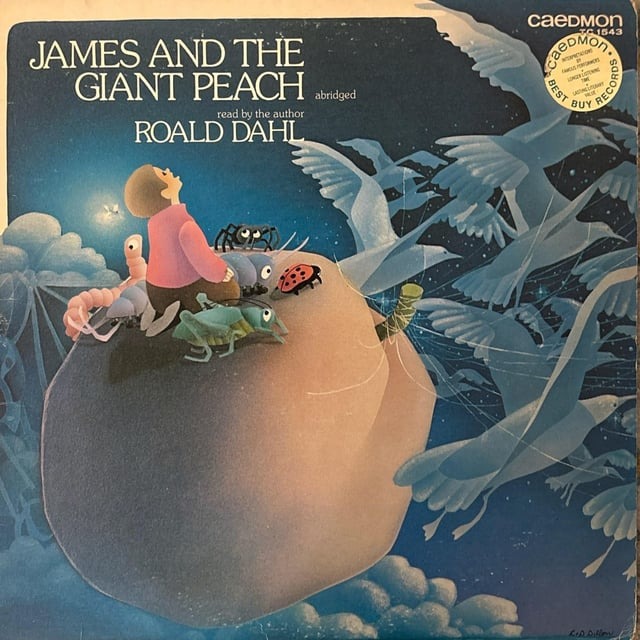
Caedmon TC 1543 presents an abridged ‘James and the Giant Peach’ read by Roald Dahl himself, recorded at CBS Studios in London in 1977 and pressed to vinyl. The author’s voice carries the rhythm, humor, and bite of the story with direct, unfiltered presence. As far as documented, this recording has not circulated digitally until now, making the preserved vinyl transfer a significant archival moment. Hearing Dahl narrate James, the aunts, and the oversized insect crew offers a rare connection to the storyteller behind the page.
Daft Punk Revive “Human After All” With New Video
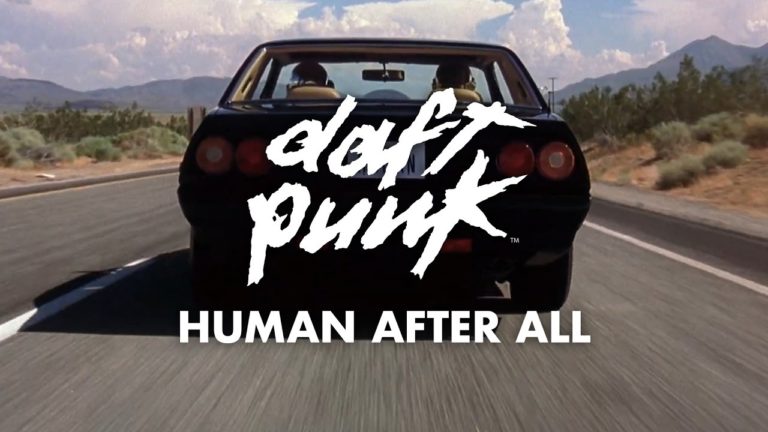
Five years after Daft Punk formally ended the project, a new visual for “Human After All” arrives, built from scenes taken from their 2006 film Electroma and edited by Cedric Hervet. The video reconnects the 2005 single to its stark cinematic universe, where chrome helmets and desert isolation shaped the duo’s mythology. Thomas Bangalter and Guy-Manuel de Homem-Christo remain separate creatively, yet this release places their robotic era back into motion, aligning the track with the imagery that defined its original cycle.