Home Blog Page 19

Why Do Music Fans Love Over-the-Top Performances?

0

By Mitch Rice

If you think about some of the world’s most successful bands, many of them have a penchant for extravagance. Bands like the Rolling Stones and Aerosmith travel on luxury buses and planes, live in sprawling mansions with everything at their fingertips, and wear expensive, designer clothes.

A lot of this isn’t seen by everyday listeners, though, meaning that these acts need to show off their extravagance in other ways. One method of doing this is to have over-the-top shows that include loads of expensive props and features.

Extravagance Is Often a Winning Feature in Entertainment

No matter where you look across the wider entertainment industry, you can see that extravagance sells. One of the reasons why shows like MTV Cribs were so popular is that people want to imagine what life would be like if they had all the money they could wish for.

There are various games that reflect this theme as well. For example, if you try Huff N Even More Puff Grand online, you’ll see that the Three Little Pigs have moved into a luxury mansion. There are other titles that convey opulence as well, such as Diamond Stars and Gold Spinner.

On television, there’s been a recent trend in showing people with highly lavish lifestyles as well. Succession is a great example of this, with the HBO show taking viewers to a wide array of incredible settings. The White Lotus is another one, giving viewers a taster of what a holiday would be like in a high-end hotel.

Rock Can Offer Another Form of Escapism

Just like the extravagant themes of wealth in entertainment, over-the-top rock shows can offer a similar form of escapism. When fans go to watch these bands, they can imagine what they would do if they were in a similar position and fantasise about the cars, houses, and lifestyle. Concerts also give the opportunity to step away from everyday routines and step into a world of noise and excitement.

Queen understood this mentality perfectly, and the theatricality around their performances was a huge selling point. Freddie Mercury’s commanding stage presence and dramatic costumes made him and the band larger than life and elevated them into something more than just a rock band.

U2 are famous for coming up with the most extravagant performances, and the band holds the record for the most expensive concert stage ever built. Their massive 360° Tour featured a sprawling 200-ton spider-like structure dubbed The Claw, which cost between $23 million and $31 million per setup.

The Rolling Stones have also famously spent millions on their tours, with A Bigger Bang costing around $1.6 million per night to set up. These concerts may seem overindulgent, but they are a way for bands to show what they are capable of. They also provide shareable moments that enhance the experience for fans.

Over-the-top performances with huge budgets work well in rock because they help connect fans with a band’s lavish lifestyle. When these high rollers act big on their stage shows, it can also act as a form of escapism that allows fans to dream about what it would be like to be in the same boat.

Why Distracted Driving Leads to Motorcycle Accidents

0

By Mitch Rice

Distracted driving has become one of the biggest safety concerns on modern roads. Smartphones, navigation systems, in-car entertainment technology, and constant digital notifications compete for drivers’ attention in ways that were far less common just a few decades ago. While distracted driving creates risks for everyone on the road, motorcyclists are often especially vulnerable to its consequences.

Motorcycles are smaller, less protected, and more difficult for inattentive drivers to notice quickly. When a driver takes their eyes or attention away from the road, even briefly, the chances of a serious motorcycle accident can increase dramatically.

Motorcycles Are Easier to Overlook

One of the biggest reasons distracted driving is so dangerous for motorcyclists is because motorcycles are already less visually prominent than larger vehicles. Drivers naturally tend to notice large objects like trucks and SUVs more easily. Motorcycles occupy less visual space and can disappear more easily into blind spots or peripheral vision, especially when drivers are not fully attentive.

Even attentive drivers sometimes fail to notice motorcycles quickly enough. When distraction enters the picture, the risk increases substantially. A driver checking a text message, adjusting navigation settings, or looking away from traffic for only a few seconds may completely miss a nearby motorcyclist during a lane change, turn, or intersection maneuver. Because motorcycles offer far less physical protection than passenger vehicles, these collisions often result in severe injuries.

Distracted Driving Slows Reaction Time

Safe driving depends heavily on reaction time. Drivers constantly process information about traffic flow, road conditions, signals, pedestrians, and surrounding vehicles. Distractions interfere with that process by reducing situational awareness and delaying responses to hazards. For example, a distracted driver may fail to notice that a motorcycle has slowed for traffic ahead or may react too late when a rider changes position within a lane to avoid road debris.

Even a delay of a second or two can make a major difference in avoiding a crash. At highway speeds, vehicles travel significant distances in very short periods of time. Because motorcycles are less forgiving during collisions, delayed reactions often have more severe consequences for riders than for occupants of enclosed vehicles.

Intersections Are Especially Dangerous

Many motorcycle accidents involving distracted drivers occur at intersections. Drivers making left turns frequently misjudge or fail to notice approaching motorcycles, particularly when their attention is divided. A brief distraction may prevent the driver from accurately processing the motorcycle’s speed, distance, or presence altogether.

Similarly, distracted drivers may run stop signs, fail to yield, or overlook motorcycles while pulling into traffic. Intersections already require drivers to process large amounts of information quickly. When attention is compromised, the risk of missing smaller vehicles like motorcycles increases substantially. These crashes are often severe because motorcycles may have little opportunity to avoid the impact once another vehicle suddenly enters their path.

Lane Changes Become More Hazardous

Distracted driving also contributes heavily to unsafe lane changes involving motorcycles. Drivers who fail to check mirrors carefully, neglect blind spots, or drift between lanes while distracted may sideswipe nearby riders or force them into dangerous evasive maneuvers. Motorcycles are particularly vulnerable in these situations because riders have limited physical protection and less stability during sudden avoidance actions. A driver who glances down at a phone or becomes mentally distracted may unintentionally drift out of their lane without realizing how close a motorcycle is traveling nearby.

Motorcyclists Often Suffer More Severe Injuries

One reason distracted driving accidents involving motorcycles are so concerning is because riders are far more exposed during collisions. Unlike occupants of passenger vehicles, motorcyclists lack protective frames, airbags, and seat belts. Even relatively moderate crashes can result in catastrophic injuries.

Traumatic brain injuries, spinal damage, fractures, internal injuries, and severe road rash are all common outcomes in motorcycle accidents. Recovery may involve surgeries, rehabilitation, long-term medical care, and extended time away from work. In the most serious cases, accidents may result in permanent disability or death. Because distracted driving crashes are often sudden and involve limited reaction time, the resulting impacts can be especially severe for riders.

Defensive Riding Helps But Cannot Eliminate the Risk

Experienced motorcyclists often practice defensive riding techniques specifically because they understand how easily drivers may overlook them. Riders frequently position themselves strategically within lanes, maintain larger following distances, and remain alert for signs of distracted or aggressive driving behavior. Although these strategies can reduce risk, they cannot eliminate it entirely. A severely distracted driver may still create dangerous situations that riders cannot realistically avoid. This is why broader public awareness and responsible driving habits remain critical for motorcycle safety overall.

Eliminating Distractions

Distracted driving creates serious dangers for everyone on the road, but motorcyclists are often especially vulnerable because of their visibility, exposure, and limited protection during collisions. Even brief lapses in attention can lead to devastating accidents involving lane changes, intersections, or delayed reactions. As distractions continue increasing in modern driving environments, maintaining focus behind the wheel becomes more important than ever.

Data and information are provided for informational purposes only, and are not intended for investment or other purposes.


Why Bedroom Producers Are Ditching DAWs for AI Music Generators in 2026

0

By Mitch Rice

Learning Ableton Live the hard way used to be a rite of passage. Months of YouTube tutorials, figuring out signal routing, downloading free VST plugins that crashed every other session. And honestly? There’s something satisfying about building a track from nothing inside a DAW.

But something has shifted. A lot of producers, especially the ones just getting started, aren’t going through that process anymore. They’re skipping the DAW entirely and going straight to AI music generators.

And before anyone rolls their eyes — this isn’t about AI replacing musicians. It’s about how the tools are changing, and why a growing number of bedroom producers are choosing a completely different workflow than the one previous generations grew up with.

The DAW Learning Curve Is Real

Let’s be honest about something. DAWs are powerful. They’re also complicated.

Ableton Live, FL Studio, Logic Pro — these are incredible pieces of software. But they were designed for audio engineers and professional producers. The average person who just wants to make a beat and put it on Spotify doesn’t need 47 mixer channels and a routing matrix.

According to a 2025 DAW survey by Production Expert, free and low-cost DAWs are increasingly where new producers start — tools like GarageBand, BandLab, and the free versions of Ableton and FL Studio. But how many stick with it past the first month? That’s the part nobody talks about. The dropout rate is massive because the learning curve is steep, and most people give up before they ever finish a track.

It happens all the time. Someone downloads FL Studio, opens it up, stares at the screen for 20 minutes, closes it, and never opens it again.

What Changed in the Last Two Years

AI music generators existed a couple of years ago, but they weren’t good enough to take seriously. The output sounded robotic, the vocals were awful, and the songs had no structure. You could tell instantly that a machine made it.

That’s not the case anymore.

Suno — which now has over 2 million paid subscribers and $300 million in annual revenue — generates full songs with vocals, instruments, and arrangement in about 60 seconds. Type a description, and out comes a complete track. The vocals sound natural. The structure makes sense. Not every generation is perfect, but the hit rate is high enough that producers are using it as a legit starting point.

Udio took a different route. Built by former Google DeepMind researchers, it focuses on precision — select a specific section of a song and regenerate just that part without touching the rest. For anyone who’s ever re-rendered an entire project because the bridge didn’t work, that’s a big deal.

And then there are platforms like MusicWave.ai, an AI music generator that bundles stem splitting, voice swapping, lyric writing, and song creation into one dashboard. Instead of needing a DAW for production, a separate tool for stem separation, another for vocal processing, and another for lyrics — it’s all in one place. That consolidation is a big part of why newer producers are gravitating toward these platforms.

It’s Not Just About Being Lazy

There’s a take that keeps popping up in comment sections — that producers who use AI tools are “lazy” or “not real musicians.” That’s a bad take, and it’s worth pushing back on.

Think about what bedroom production actually looked like 15 years ago. You needed a decent computer, an audio interface, monitors, a MIDI controller, a DAW license (which could run $200-700), and months of learning. The barrier to entry was high.

Today, the music production software market is projected to grow by $432.8 million by 2029, and a huge chunk of that growth is coming from AI-powered tools that lower the barrier. Self-releasing independent artists drove $1.5 billion in revenue in 2023, while the broader independent music sector hit $14.3 billion — capturing nearly 47% of the global market. More people are making music than ever, and AI tools are one of the reasons why.

The producers using AI aren’t replacing their creativity. They’re using these tools to handle the parts they don’t enjoy — mixing, mastering, arrangement — so they can focus on the parts they do. Writing melodies, crafting lyrics, experimenting with genres.

The All-in-One Workflow Is Winning

Here’s what’s really driving this shift, and it’s not just about sound quality.

Traditional music production requires juggling multiple tools. Produce in a DAW, bounce stems in a separate app, process vocals somewhere else, write lyrics in a notes app, and maybe use yet another tool to create a visualizer for social media. That’s five or six apps for one song.

The newer AI platforms are collapsing that entire workflow into a single interface. MusicWave.ai is a good example — generate a track, split the stems right there, swap vocals for a different style, and even create a music video synced to the song’s energy. All without leaving the platform. For someone who just wants to go from idea to finished product quickly, that’s appealing.

Soundraw takes yet another approach — instead of a text prompt, pick a mood, genre, and instruments, then customize the output bar by bar. It’s less “AI magic” and more “guided creation,” which appeals to producers who want control without the complexity of a full DAW.

And AIVA has carved out its own lane for orchestral and cinematic music. Film composers and game developers use it to generate starting arrangements they can then refine in their DAW. It’s AI as a co-pilot, not a replacement.

What This Means for the Industry

The music production landscape isn’t a binary choice between DAWs and AI. What’s actually happening is more nuanced.

Experienced producers are adding AI tools to their existing workflow. They still use Ableton or Logic as their main environment, but they might use an AI generator to spark an idea when they’re stuck, or run a track through a stem splitter to isolate a vocal for sampling.

New producers, though, are increasingly starting with AI tools first and learning traditional DAWs later — if at all. That’s the real shift. The entry point into music production has changed.

As noted in a recent piece about AI’s impact on the music industry, streaming platforms like Spotify and Apple Music are already using AI to recommend songs. The production side was always going to catch up. Now it has.

The AI music generation market is projected to grow from roughly $2 billion in 2026 to over $18 billion by 2035. That’s not a fad. That’s a fundamental change in how music gets made.

Is It Worth Making the Switch?

Honestly, it depends on what someone wants out of music production.

For those who love the craft of production — sound design, mixing, mastering, the whole process — a DAW is still the best tool for the job. Nothing gives more control than a professional DAW, and that’s not changing anytime soon.

But for songwriters who just want to hear their ideas come to life, content creators who need original music for videos, or anyone who’s been curious about making music but never wanted to learn a complicated piece of software — AI music generators are worth trying.

Most of them have free tiers. Suno lets you generate a handful of songs for free. MusicWave.ai gives 10 credits a month on the free plan. Udio has a free tier too. Testing the waters doesn’t cost anything.

The tools aren’t perfect yet. Sometimes the output sounds generic. Sometimes the AI misinterprets a prompt entirely. But they’re improving fast — and for a lot of bedroom producers, “good enough right now” beats “perfect after six months of learning.”

The bedroom studio hasn’t disappeared. It’s just gotten a lot smaller. Sometimes it’s just a laptop and a browser tab.


Interested in how AI is reshaping music production? Check out how AI art generators are also changing the music industry’s visual landscape.

Data and information are provided for informational purposes only, and are not intended for investment or other purposes.
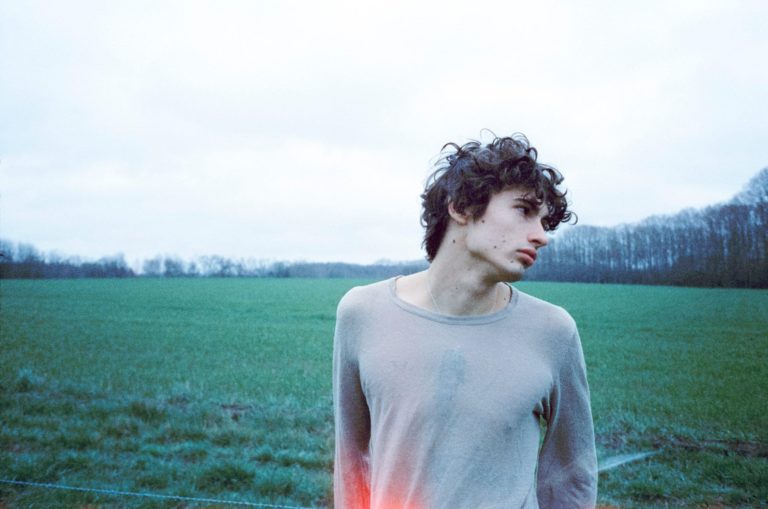
Glaive and Kurtains Take ‘God Save The Three’ on a Massive Global Tour This Fall

0

Glaive and kurtains have announced the God Save The Three Tour, a global run launching September 25 in support of their new collaborative album ‘God Save The Three’, out now to acclaim from The Line of Best Fit, Stereogum, and Clash. Underground producer prodigy kurtains joins all dates, with Tiffany Day supporting select North American stops.

The 2 have history that runs deep. When they were still in school, glaive and kurtains helped fuel an internet-driven sound that pushed the boundaries of electronic pop and captured a genuine cultural moment. ‘God Save The Three’ builds on that shared creative language, while glaive’s previous album ‘Y’ALL’, produced entirely by kurtains, traced the story of a teenager returning home to North Carolina at 20, a radically changed person in an unchanged place.

Glaive arrives at this tour as one of the most critically documented artists of his generation. Works including ‘cypress grove’, ‘all dogs go to heaven’, and ‘then i’ll be happy’ earned him recognition from The New York Times, Vulture, GQ, and The FADER. His second studio album ‘May It Never Falter’, recorded in the remote landscapes of Iceland and Wales and listed among the best albums of 2024 by Vogue, established his independent chapter with force.

The North American leg runs through October, hitting Philadelphia’s Union Transfer, Boston’s Paradise Rock Club, and Houston’s White Oak Music Hall before the European run takes over in November with stops in Cologne, Berlin, Paris, Milan, and more. Tickets go on sale Friday May 15 at 10 am local, with presales running this week.

God Save The Three Tour Dates:

Sep 25 – Raleigh, NC @ Lincoln Theatre

Sep 26 – Charlotte, NC @ The Underground

Sep 27 – Charlottesville, VA @ The Jefferson Theater

Sep 29 – Philadelphia, PA @ Union Transfer

Sep 30 – Boston, MA @ Paradise Rock Club

Oct 2 – Buffalo, NY @ Electric City

Oct 3 – Pittsburgh, PA @ Mr. Smalls Theatre

Oct 4 – Columbus, OH @ The Bluestone

Oct 6 – Detroit, MI @ Saint Andrew’s Hall

Oct 7 – Minneapolis, MN @ Varsity Theater

Oct 9 – Boulder, CO @ The Fox Theatre

Oct 10 – Salt Lake City, UT @ The Grand at The Complex

Oct 11 – Boise, ID @ Treefort Music Hall

Oct 13 – Vancouver, BC @ Vogue Theatre

Oct 14 – Portland, OR @ Wonder Ballroom

Oct 16 – Berkeley, CA @ The UC Theatre Taube Family Music Hall

Oct 17 – Pomona, CA @ The Glass House Concert Hall

Oct 18 – San Diego, CA @ The Observatory North Park

Oct 20 – Mesa, AZ @ The Nile Theater

Oct 21 – Albuquerque, NM @ Sunshine Theater

Oct 23 – Austin, TX @ Emo’s Austin

Oct 24 – Dallas, TX @ The Echo Lounge and Music Hall

Oct 25 – Houston, TX @ White Oak Music Hall

Oct 28 – Nashville, TN @ Brooklyn Bowl Nashville

Nov 17 – Cologne, Germany @ Die Kantine

Nov 18 – Hamburg, Germany @ Bahnhof Pauli

Nov 20 – Copenhagen, Denmark @ Loppen

Nov 21 – Stockholm, Sweden @ Fryshuset Klubben

Nov 22 – Oslo, Norway @ John Dee

Nov 24 – Berlin, Germany @ Lido

Nov 25 – Warsaw, Poland @ OCZKI

Nov 27 – Milan, Italy @ Circolo Magnolia

Nov 28 – Vienna, Austria @ Flex

Nov 30 – Paris, France @ Central Chapelle

Dec 1 – Brussels, Belgium @ Botanique

Souvenirs: 80 Years of John Prine Brings a Community of Artists to Chicago This October

0

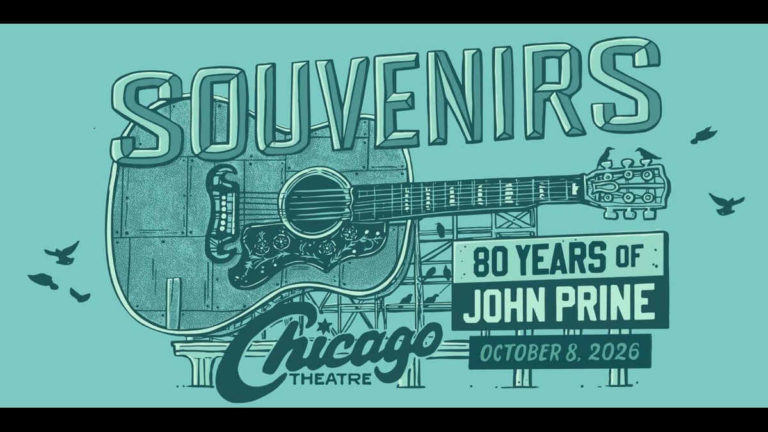
October 8, 2026 would have been John Prine’s 80th birthday. The Prine Family and the Hello in There Foundation are marking the occasion with Souvenirs: 80 Years of John Prine, a tribute concert at The Chicago Theatre bringing together a wide community of artists to perform their favorite Prine songs, backed by his longtime live band.

Host and performer John C. Reilly leads a lineup that already includes Alynda Segarra of Hurray for the Riff Raff, Amos Lee, Andrew Sa, Briscoe, Jon Langford, Josh Ritter, Joy Oladokun, Kathleen Edwards, Margo Price, Noeline Hofmann, Ratboys, Shemekia Copeland, Steve Earle, The Cactus Blossoms, and The Sullivan Sisters, with more names still to be announced.

Additional events are planned across October 8–11, with full details coming in the weeks ahead. Proceeds benefit the Hello in There Foundation’s ongoing grantmaking, which since 2021 has distributed nearly $1.4 million in community grants to more than 100 organizations addressing food insecurity, housing, mental health, immigrant and refugee justice, addiction recovery, and more.

The foundation’s mission mirrors what Prine embodied across 5 decades: the belief that every life is worth singing about, and that music, at its best, is an act of community.

Adrien Nunez Is Headed to the Grand Ole Opry for His Long-Overdue Debut

0

Adrien Nunez makes his Grand Ole Opry debut on Wednesday, June 17, 2026, and the announcement came with the kind of surprise moment that makes country music tick. Russell Dickerson called it from the stage of Nashville’s Ascend Amphitheater on May 8, catching Nunez completely off guard in front of the crowd.

Nunez will perform select songs and fan favorites from his 2026 EP ‘Don’t Wanna Go Home’, out now via Warner Records Nashville. The Opry appearance adds another landmark moment to a year that’s already been moving fast for the rising singer.

Earlier in 2026, Nunez lit up Stagecoach Festival with 4 high-energy sets including a Mane Stage appearance and a surprise late-night slot with Diplo, where the 2 debuted the first-ever live performance of “Two Steppin’,” their new collaboration available now via Atlantic Outpost.

A debut album for Warner Records is currently in the final stages, with a release expected in the months ahead.

Spotify Turns 20 and Hands You the Keys to Your Entire Listening History

0

Spotify is marking 20 years with something genuinely personal. The platform has launched Spotify 20: Your Party of the Year(s), a mobile-only in-app experience that pulls back the curtain on your complete listening history, including data that’s never been shared before.

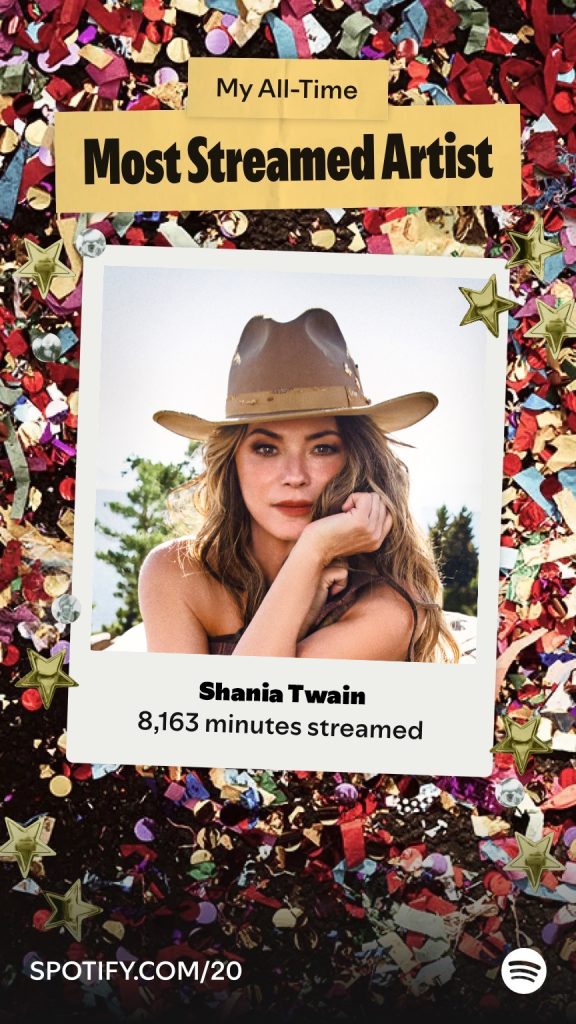
The experience surfaces your first day on Spotify, your first streamed song, your total number of unique songs listened to, and your all-time most-streamed artist. It also generates your All-Time Top Songs Playlist, a collection of your top 120 tracks complete with play counts, ready to save directly to your library.

Each data story comes with a shareable card, making it easy to post results or send them to friends. The experience is available now on mobile across 144 markets and in 16 languages. Open the Spotify app and search “Spotify 20” or “Party of the Year(s),” or go to spotify.com/20 on mobile to get started. A curated hub of global playlists celebrating the defining eras and cultural shifts of the past 2 decades is also available in the app.

The Waterboys Release New Single “Don’t Even Have To Say His Name” Ahead of Arena Tour and New Album

0

The Waterboys have released “Don’t Even Have To Say His Name,” a new single out now on Chrysalis Records, written by Mike Scott as a direct response to the current political climate in the United States. “I hate bullies, and this song reflects my feelings about the political leadership of a country I love,” Scott says. “This song is part of our small contribution to that process. May it serve its purpose.” Produced by Puck Fingers and Famous James, the track features Scott on vocals and guitar alongside Famous James on piano and organ, Aongus Ralston on bass, and Crash Barclay on drums.

The single arrives ahead of ‘Atlantic Rain’, a 3-disc set of previously unheard music from the classic Fisherman’s Blues era, due July 17, and a run of summer arena dates under the banner The Fisherman’s Blues Revue. The ensemble is a serious one. Americana singer-songwriter Steve Earle joins to perform his own songs while contributing vocals, guitar, and mandolin to Waterboys material. Legendary Waterboys fiddler Steve Wickham and Fisherman’s Blues flautist Colin Blakey are also on board, alongside Brother Paul on organ, Famous James on piano, Aongus Ralston on bass, Eamon Ferris on drums, and Norwegian lap steel ace Roar Øien.

The Waterboys 2026 Eire and UK Dates:

Aug 29 – Glasgow, UK @ OVO Hydro

Sep 5 – Dublin, Ireland @ 3Arena

Sep 12 – London, UK @ The O2

Video: Alice Cooper’s Legendary 2013 Wacken Open Air Performance Is Available Now

0

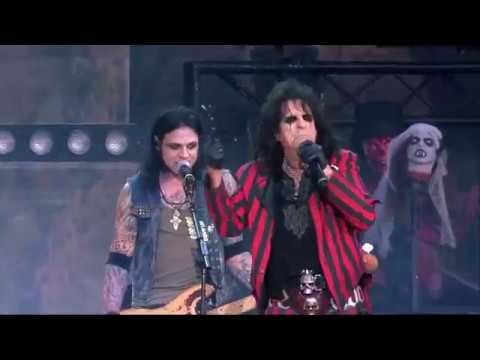
August 2, 2013, Wacken Open Air: Alice Cooper took the main stage of the world’s largest metal festival and delivered exactly the kind of shock-rock spectacle that built his reputation across 5 decades, complete with guillotine, snake, costumes, and a band firing on all cylinders, with Nita Strauss and Ryan Roxie on guitars and Glen Sobel driving the whole thing from behind the kit.

Robin Trower Brings 19-Date US Tour This Fall Behind a Landmark Year of New Releases

0

Robin Trower has packed more into 2026 than most artists manage in several years, and now he’s hitting the road to match it. The former Procol Harum guitarist has announced a 19-date US tour launching September 15 in Fort Lauderdale and wrapping October 14 in St. Charles, Illinois, following a 5-date UK run in late August and early September.

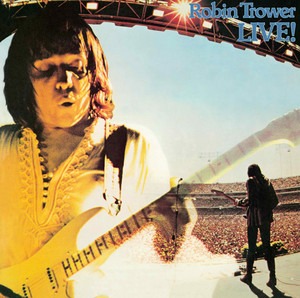
The touring comes on the back of a remarkable run of releases. January brought ‘One Moment in Time: Live in the USA’, recorded across his 42-date 2025 American tour. April delivered an expanded edition of the classic ‘Robin Trower Live!’, including the complete 1975 Stockholm concert in full for the first time. And last month, Trower confirmed he’d just finished an entirely new studio album, the follow-up to last year’s ‘Come and Find Me’.

For a guitarist whose 1974 breakthrough ‘Bridge of Sighs’ remains a touchstone of blues-rock, this level of sustained output and live commitment speaks to an artist still fully engaged with the craft.

Robin Trower 2026 Tour Dates:

Aug 31 – Sunderland, UK @ Sunderland Central Fire Station

Sep 1 – Edinburgh, UK @ The Queen’s Hall

Sep 3 – Manchester, UK @ Manchester Academy

Sep 4 – Cambridge, UK @ Cambridge Junction

Sep 5 – London, UK @ O2 Shepherds Bush Empire

Sep 15 – Fort Lauderdale, FL @ The Parker

Sep 17 – St. Petersburg, FL @ Jannus Live

Sep 18 – Orlando, FL @ The Plaza Live

Sep 20 – Atlanta, GA @ Center Stage

Sep 21 – Nashville, TN @ The Fisher Center

Sep 24 – Alexandria, VA @ Birchmere

Sep 25 – Jim Thorpe, PA @ Penn’s Peak

Sep 26 – Montclair, NJ @ The Wellmont Theater

Sep 29 – Northampton, MA @ Academy of Music Theatre

Sep 30 – Ridgefield, CT @ The Ridgefield Playhouse

Oct 2 – Olmstead Falls, OH @ Palace Theatre

Oct 3 – Columbus, OH @ KEMBA Live!

Oct 4 – Northfield, OH @ Northfield Park Racino

Oct 7 – Cincinnati, OH @ Andrew J. Brady Music Center

Oct 8 – Royal Oak, MI @ Royal Oak Music Theatre

Oct 9 – Fort Wayne, IN @ Clyde Theatre

Oct 11 – St. Louis, MO @ The Factory

Oct 13 – Milwaukee, WI @ Pabst Theater

Oct 14 – St. Charles, IL @ Arcadia Theatre