

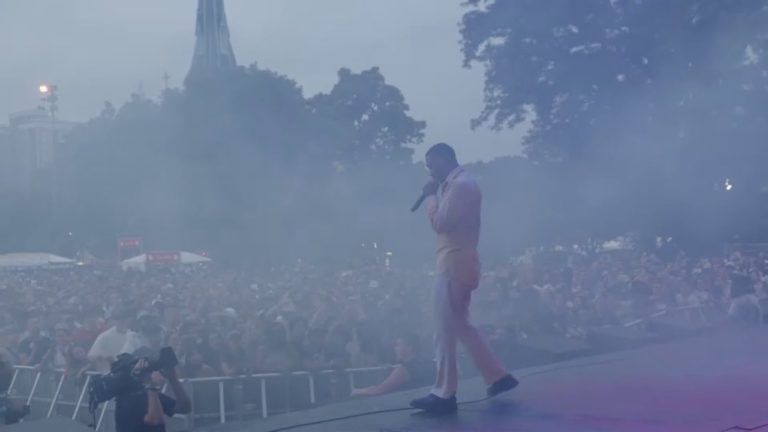
Chaz Bear brought Toro y Moi to Chicago’s Union Park for the 2022 Pitchfork Music Festival, and this livestreamed set captures exactly why he’s one of the most compelling live acts in indie music. Touring behind ‘Mahal,’ Bear and his band move through the album’s psychedelic funk and groove-heavy textures with ease, pulling in catalog cuts like “Ordinary Pleasure” and “Déjà Vu” alongside newer material to keep the set in constant motion.
Russell Dickerson and Fetty Wap Team Up for Country-Trap Anthem “BOOTS”
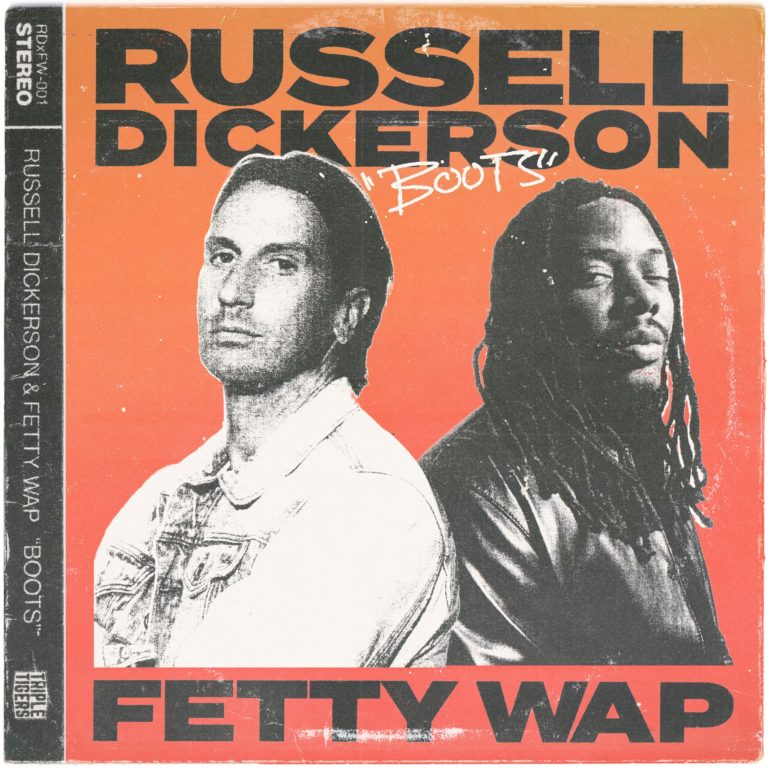
Russell Dickerson has a new collaboration on the way, and it’s one nobody saw coming. “BOOTS,” featuring Fetty Wap, arrives May 8, fusing Dickerson’s country storytelling and signature vocals with Fetty’s melodic R&B flow in what Holler has already called a “country-trap anthem.” Written by Dickerson, Matt Dragstrem and Dylan Marlowe, the track grew out of a viral TikTok that racked up over 34 million views and turned fan excitement into a full studio record. Fans can catch a sneak peek of the track HERE and pre-save “BOOTS” featuring Fetty Wap HERE.
The multi-platinum hitmaker behind “Yours,” “Blue Tacoma” and “Love You Like I Used To” has spent nearly four billion career streams building toward exactly this kind of creative swing. With his fourth studio album ‘FAMOUS BACK HOME’ already out and his RUSSELLMANIA TOUR sold out and extended through 2026, Dickerson is moving at full momentum.
This Friday (May 8), he brings the party home to Nashville’s Ascend Amphitheater for the “Nash-Birthday Bash,” joined by Tyler Hubbard, Adrien Nunez and Kevin Powers. The summer run that follows features his largest venues to date.
Japanese Master Artisan Takao Iwai Handcrafts a Violin and Cello in Two Six-Month Films

Master instrument artisan Takao Iwai has shared two documentary-style videos capturing the full handcrafting process of a violin and a cello, each built over six months from a single block of wood. The footage walks through every stage of cutting, carving and finishing, and the results are as visually compelling as they are technically remarkable. Both videos are worth your full attention.
Oliver Tree Takes ‘Love You Madly, Hate You Badly’ Across All Seven Continents on Massive World Tour
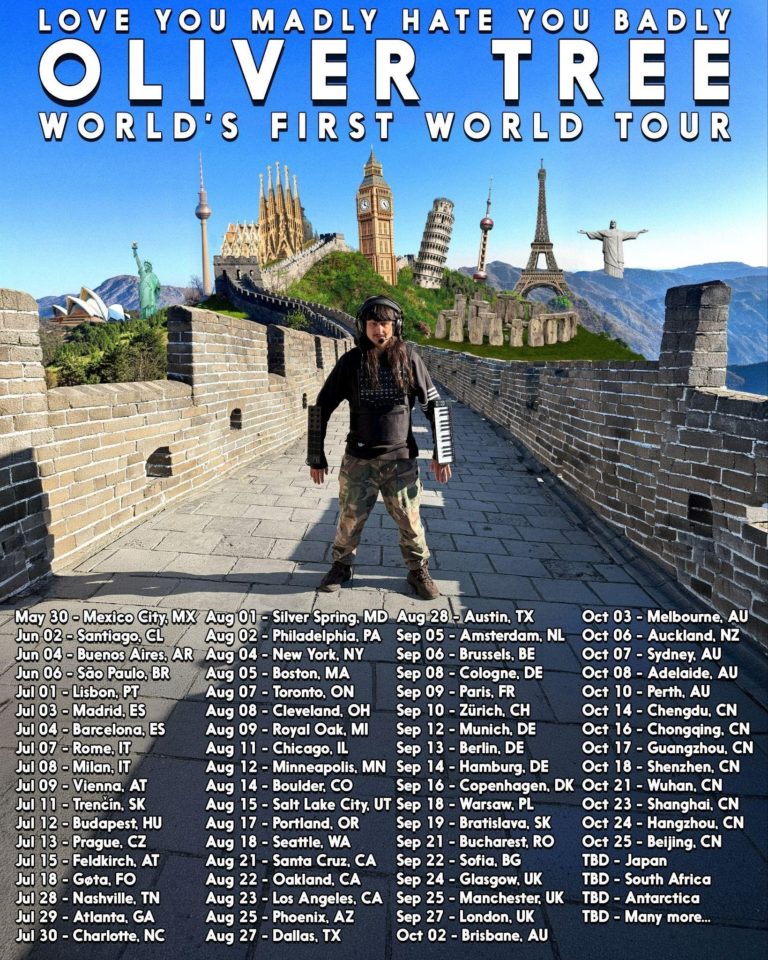
Oliver Tree doesn’t do anything small. Fresh off the release of ‘Love You Madly, Hate You Badly,’ his fourth studio album and most expansive body of work to date, Tree has announced a globe-spanning headline tour hitting all seven continents. It kicks off May 30 in Mexico City and runs through the fall, touching South America, Europe, North America, Australia, Asia and beyond. Tickets go on general sale May 8.
The album behind the tour is a 17-track statement fully written and produced by Tree himself, recorded across 82 countries over two years. From Africa to Afghanistan to China, the sonic fingerprints of that journey are embedded throughout, with diverse instruments and cultural textures shaping something genuinely adventurous. Singles “Superhero,” “Joyride,” “Flowers,” “Deep End” and “All You Ever Wanted” have already laid the groundwork.
The latest focus track, “Fuck The Whole World,” has been turning heads fast. Tree’s viral performance of a remixed version during Subtronics’ Coachella set amplified the track’s reach considerably, and the accompanying performance video doubles down on the raw, irreverent energy that defines his creative identity.
Tree’s live show has always been an extension of his multimedia universe, unpredictable, immersive and entirely his own. This run, his most ambitious yet, will bring the chaotic, cinematic world of ‘Love You Madly, Hate You Badly’ to life across major venues and festivals including the Pohoda Festival and G! Festival. North American dates run through August, with European and Asia-Pacific legs carrying the tour into October.
Pre-registration for early ticket access is open now. The artist presale begins May 6 at 10AM local time, local and Spotify presales (excluding North America and China) launch May 7 at 10AM local time, and general on-sale is May 8 at 10AM local time.
Tour Dates:
May 30 – Mexico City, MX – Pabellón Oeste
June 2 – Santiago, CL – Blondie
June 4 – Buenos Aires, AR – Niceto Club
June 6 – São Paulo, BR – Studio Stage
July 1 – Lisbon, PT – Lisboa ao Vivo (Sala 1)
July 3 – Madrid, ES – Sala MON Live
July 4 – Barcelona, ES – Sala Apolo
July 7 – Rome, IT – EUR Social Park
July 8 – Milan, IT – Circolo Magnolia
July 9 – Vienna, AT – Arena Wien
July 11 – Trenčín, SK – Pohoda Festival
July 12 – Budapest, HU – Dürer Kert
July 13 – Prague, CZ – Lucerna Music Bar
July 15 – Feldkirch, AT – Poolbar
July 18 – Gøta, FO – G! Festival
July 28 – Nashville, TN – Marathon Music Works
July 29 – Atlanta, GA – The Eastern
July 30 – Charlotte, NC – The Fillmore Charlotte
August 1 – Silver Spring, MD – The Fillmore Silver Spring
August 2 – Philadelphia, PA – Franklin Music Hall
August 4 – New York, NY – Terminal 5
August 5 – Boston, MA – Roadrunner
August 7 – Toronto, ON – HISTORY
August 8 – Cleveland, OH – Agora Theatre
August 9 – Royal Oak, MI – Royal Oak Music Theatre
August 11 – Chicago, IL – The Salt Shed
August 12 – Minneapolis, MN – The Fillmore
August 14 – Boulder, CO – Boulder Theater
August 15 – Salt Lake City, UT – The Complex
August 17 – Portland, OR – Roseland Theater
August 18 – Seattle, WA – Showbox SoDo
August 21 – Santa Cruz, CA – The Quarry Amphitheater
August 22 – Oakland, CA – Fox Theater
August 23 – Los Angeles, CA – Hollywood Palladium
August 25 – Phoenix, AZ – The Van Buren
August 27 – Dallas, TX – The Bomb Factory
August 28 – Austin, TX – Stubb’s Waller Creek Amphitheater
September 5 – Amsterdam, NL – Paradiso
September 6 – Brussels, BE – Cirque Royal
September 8 – Cologne, DE – Carlswerk Victoria
September 9 – Paris, FR – Bataclan
September 10 – Zürich, CH – Komplex 457
September 12 – Munich, DE – TonHalle München
September 13 – Berlin, DE – Astra Kulturhaus
September 14 – Hamburg, DE – Docks
September 16 – Copenhagen, DK – Store VEGA
September 18 – Warsaw, PL – Progresja
September 19 – Bratislava, SK – STARS Auditorium
September 21 – Bucharest, RO – Quantic Club
September 22 – Sofia, BG – Pirotska 5 Event Center
September 24 – Glasgow, UK – SWG3 TV Studio
September 25 – Manchester, UK – O2 Ritz Manchester
September 27 – London, UK – O2 Forum Kentish Town
October 2 – Brisbane, AU – Fortitude Music Hall
October 3 – Melbourne, AU – Forum Melbourne
October 6 – Auckland, NZ – Auckland Town Hall
October 7 – Sydney, AU – Enmore Theatre
October 8 – Adelaide, AU – Hindley Street Music Hall
October 10 – Perth, AU – Metro City
October 14 – Chengdu, CN – Venue TBA
October 16 – Chongqing, CN – Venue TBA
October 17 – Guangzhou, CN – Venue TBA
October 18 – Shenzhen, CN – Venue TBA
October 21 – Wuhan, CN – Venue TBA
October 23 – Shanghai, CN – Venue TBA
October 24 – Hangzhou, CN – Venue TBA
October 25 – Beijing, CN – Venue TBA
TBD – Japan – Venue TBA
TBD – South Africa – Venue TBA
TBD – Antarctica – Venue TBA
Spencer Hatcher Delivers a Deeply Personal Heartbreaker with New Single “Any Other Girl”
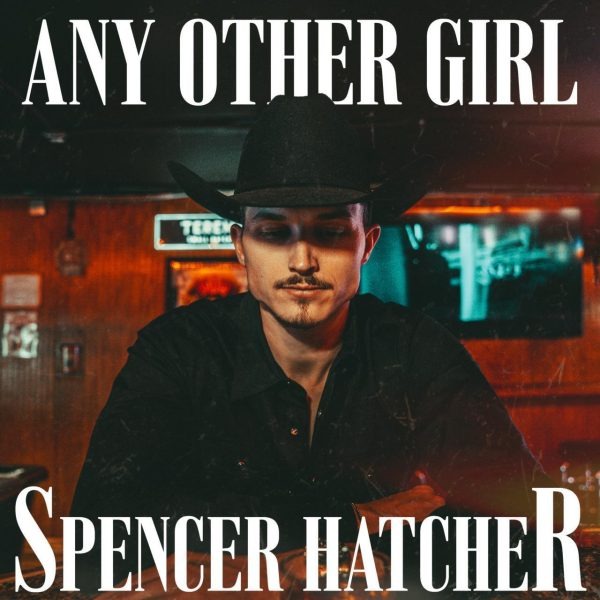
Spencer Hatcher’s new single “Any Other Girl” landed this week, and it hits harder than most. The Virginia-bred traditionalist delivers a laid-back country groove about a heartbreak that won’t let go, wrapped in uplifting vocal harmonies and weeping pedal steel. It’s a song that earns the word classic, and it’s out now.
The track was penned by a sharp team of hit tunesmiths: Jimmy Yeary (Tim McGraw’s “I Called Mama”), Bart Butler (Jon Pardi’s “Heartache on the Dance Floor”) and Will Bundy (Ella Langley’s “Country Boy’s Dream Girl”). That pedigree shows. The song lands with the kind of effortless emotional weight that only the best traditional country delivers.
For Hatcher, “Any Other Girl” carries a meaning that goes well beyond the studio. “‘Any Other Girl’ will forever be one of the most special songs in the world to me because it was the last song that I showed my mom that I was working on before her passing,” he says. “She said it was her all-time favorite song and she would request I play it anytime I was back home. For that reason, it’ll always have a very special place in my heart.”
Hatcher has built serious momentum since his debut EP ‘Honky Tonk Hideaway’ and his Top 10 Most Added debut radio single “When She Calls Me Cowboy.” With nearly one million social media followers and over 71 million organic TikTok views, he’s one of the most exciting emerging voices in traditional country right now. He plays more than 150 shows a year, and the road schedule for 2026 reflects that fully.
On tour, Hatcher shares stages with Hank Williams Jr., Josh Turner, Joe Nichols, Zach Top, Craig Morgan, Neal McCoy, David Lee Murphy and Clay Walker.
Joe Nichols Channels Hank Williams on New Honky-Tonk Dance Floor Burner “High Notes”
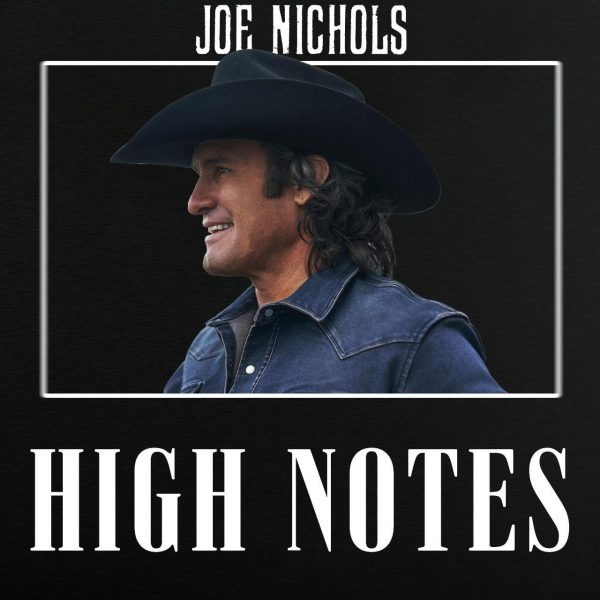
oe Nichols is out with “High Notes,” a pedal steel-driven honky-tonk party tune that wears its Hank Williams influences proudly and doesn’t apologize for a second. Co-written with Jaron Boyer (five No. 1 country hits to his name) and Matt Gorman, and co-produced with Jason Sellers, the track is a flat-out good time, the kind of song that fills a dance floor and reminds you exactly why traditional country still hits so hard. It’s out now.
“I wanted to write a country song, the way country used to sound in the ’90s, that people could go out and two-step or line dance to,” says Nichols. “Playing this song live is a joy because it brings joy to people who remember that style of country, and I love seeing them out there dancing to it.” That energy comes through in every bar of the recording.
“High Notes” is the third teaser track from Nichols’ forthcoming studio project, following “Fighting the Good Fight” and “Goodbyes Are Hard to Listen To.” Notably, “Fighting the Good Fight” and “High Notes” mark Nichols’ first self-penned releases in nearly two decades, a deliberate move as the three-time GRAMMY nominee works to put more of his own story into the music.
The track carries multiple nods to both Hank Williams Sr. and Jr., and even shares its title with Junior’s 1982 album ‘High Notes.’ For a neo-traditional torchbearer ranked by Billboard among the Top Country Artists of the 21st Century, with over 2.3 billion cumulative streams and a half-dozen No. 1 singles, this feels like a natural and very welcome direction.
On the road, Nichols plays Charlotte, North Carolina on May 30 and Tampa, Florida on June 5 with Hank Williams Jr., then heads to Georgiana, Alabama on June 6 for the 47th Annual Hank Williams Festival. More dates are at joenichols.com/tour.
2026 Tour Dates (select):
May 30 – Charlotte, NC (with Hank Williams Jr.)
June 5 – Tampa, FL (with Hank Williams Jr.)
June 6 – Georgiana, AL – 47th Annual Hank Williams Festival
Whitney Brought Their Intimate Sound to the KEXP Studio for a Four-Song Session
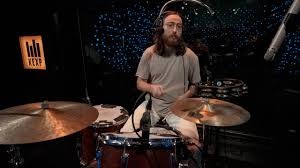
Whitney delivered a four-song live session at the KEXP studio and it’s exactly the kind of performance the Chicago indie favorites were built for. Julien Ehrlich, Max Kakacek and the full band move through “Dandelions,” “The Thread,” “Won’t You Speak Your Mind” and “Back To The Wind” with the kind of warm, unhurried confidence that makes their music so distinctive.
Music Monday 2026 Unites Over 200,000 Canadians in a Coast-to-Coast Sing-Along
Music Monday 2026 is happening right now, and more than 200,000 Canadians are part of it. From classrooms to concert halls, students, educators and artists across the country are coming together in a synchronized sing-along that stretches from British Columbia to Atlantic Canada. It’s one of the largest simultaneous music events in the country, and today’s edition is the biggest yet.
The cities of Toronto, Ottawa and Vancouver have officially proclaimed May 4 as Music Monday. Manitoba went further, designating all of May as Music Month. Ottawa’s recognition as the nation’s capital carries particular weight, a signal that music education isn’t just a local concern; it’s a national one. These proclamations reflect growing momentum behind the Coalition for Music Education in Canada’s mission to protect and expand access to music in schools.
The centrepiece of today’s celebration is a live event at Hugh’s Room in Toronto, drawing approximately 200 guests including 75 student performers. The lineup is stacked. Marc Jordan and Chris Tait of Chalk Circle, both past creators of the Music Monday anthem, take the stage alongside Grammy Award-winning musician, producer and educator Justin Gray, Canadian musician and producer Michael A. Turner (Emtee), former lead guitarist and founding member of Our Lady Peace and current Crash Karma member, and rising star Billianne, who opens for Blue Rodeo this summer.
“Being part of Music Monday is always meaningful,” said Marc Jordan. “It’s an opportunity to connect with young people and to reinforce how important music is in their lives and in our communities.” Chris Tait echoed that sentiment: “Music education gave me my foundation. Seeing students across the country come together like this is incredibly inspiring and a reminder of why this work matters.”
The 2026 anthem is “Hold On” by Triumph, the Canadian rock legends currently on their North American 50th anniversary tour, their first in more than three decades. The song’s anthemic drive makes it a natural fit, and its renewed profile through the tour gives Music Monday an extra charge this year. At 12:30 p.m. ET, participants across the country are singing and playing it together, in person and online.
The regional reach of Music Monday 2026 is remarkable. In Manitoba, more than 600 students are performing at the Legislative Assembly. In Mississauga, 250 students at the Living Arts Centre are delivering a 200-voice finale of “Hold On” directed by Shannon Johnston. Lindsay, Ontario is hosting a regional showcase at the Flato Academy Theatre, and in Pembroke, the Renfrew County District School Board is presenting a mass band performance with more than 150 students.
Stacey Sinclair, Executive Director of the Coalition for Music Education in Canada, put it plainly: “With official recognition from major cities and students participating alongside artists who have helped shape this program over the years, it speaks to the lasting impact of music education in Canada and why we need to put a stop to the cuts taking place across the country.” That urgency is real. Music Monday isn’t just a celebration; it’s a statement.
Since its launch in 2005, Music Monday has grown into a defining moment on the Canadian music calendar, touching millions of students and teachers who carry their programs into their communities every year. Today’s edition, with its national proclamations, all-star lineup and coast-to-coast participation, stands as one of the most significant in the event’s history.
For more information, visit www.musicmonday.ca.
10 Albums That Sound Better After Midnight
There’s a specific kind of listening that only happens late at night. The phone is quiet, the city has settled into its low hum, and somewhere around 12:30 a.m. your relationship with music changes. The same record you played at noon through laptop speakers becomes something else entirely when the room is dark and there’s nothing between you and the sound. Certain albums were built for exactly that moment. Not all of them were made that way on purpose, but they found their way there anyway.
Here are ten records that reward the late hours more than any other time of day.
Portishead – ‘Dummy’ (1994)
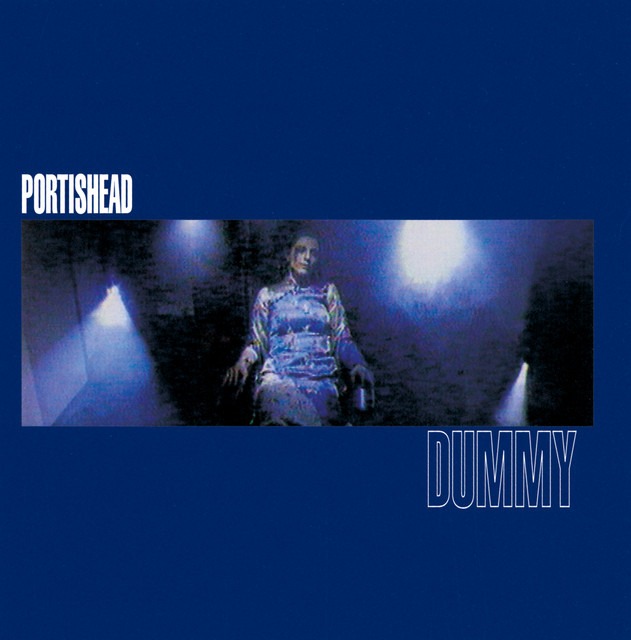
The one that started a thousand late-night listening sessions. Beth Gibbons’ voice carries a grief that doesn’t fully register in daylight, but after midnight it lands somewhere between your chest and your throat and stays there. The record doesn’t ask anything of you except attention. The sample-flipped spy-film aesthetics, the turntable crackle, the weight of “Roads” and “Wandering Star” — these are sounds that exist in a different emotional register after the rest of the world has gone to sleep.
Massive Attack – ‘Mezzanine’ (1998)
If ‘Dummy’ is melancholy, ‘Mezzanine’ is dread. This record is claustrophobic in the best possible way, built from guitar distortion, electronic pressure, and voices that sound like they’re being transmitted from somewhere just out of reach. “Teardrop” is the obvious entry point, but the album earns its darkness across every track. It doesn’t open up as you listen. It closes in. That’s exactly what you want at 1 a.m.
Pink Floyd – ‘Wish You Were Here’ (1975)
Put this on in a dark room and don’t move for 44 minutes. The album’s opening stretch, “Shine On You Crazy Diamond” splitting into the two parts that bookend the record, is among the most generous pieces of music ever committed to vinyl. The title track itself is a song that sounds different every time you age another year, but it sounds best in the quiet hours when there’s enough stillness to actually hear what’s being said about loss and absence and the particular sadness of watching someone disappear.
Miles Davis – ‘Round About Midnight’ (1957)
The title is not a coincidence. This is the album Davis made the year he became himself, and it carries the particular intimacy of jazz performed for a room that’s nearly empty. His muted trumpet on the title track sounds like a conversation held at low volume specifically so the wrong people won’t overhear it. John Coltrane is here too, young and already unsettling. The whole record has the feeling of a city at 2 a.m., moving slowly, not quite asleep.
Cocteau Twins – ‘Heaven or Las Vegas’ (1990)
Elizabeth Fraser’s voice on this record is one of the genuine mysteries of recorded music. She’s not singing words so much as shapes, and the effect at full volume in a dark room is genuinely disorienting in the best sense. Robin Guthrie’s guitars shimmer and dissolve without ever fully landing. The album has no hard edges. Everything bleeds into everything else. It sounds like the moment just before sleep when your thoughts stop making linear sense and start moving in images instead.
Bohren & der Club of Gore – ‘Black Earth’ (2002)
This is the record for the deepest hours. A German quartet playing what they call doom-jazz, ‘Black Earth’ moves at roughly the speed of a very slow tide. Saxophone lines drift through bass and brushed drums like smoke through a room nobody has entered in years. There’s no urgency here, no resolution, no attempt to lift the mood. The album accepts the darkness as a condition and works entirely within it. It demands patience and rewards it completely.
DJ Shadow – ‘Endtroducing…..’ (1996)
The first album constructed entirely from samples, and still the most haunting one. Josh Davis built something genuinely cinematic from other people’s discarded recordings, and the result sounds like a memory you can’t quite locate. “Midnight in a Perfect World” has the most accurate song title in the history of electronic music. The whole record has a hazy, underwater quality, like a dream about a city you’ve never visited but somehow recognize.
Mazzy Star – ‘So Tonight That I Might See’ (1993)
Hope Sandoval sings like she’s telling you something important but doesn’t want anyone else in the room to hear it. Dave Roback’s guitar is warm and unhurried, and the record moves through its ten songs without ever raising its voice. “Fade Into You” is the centerpiece, and it earns that status. But the album’s real quality is its consistency of mood, a kind of wistful, slightly narcotic haze that belongs entirely to the late hours.
Yo La Tengo – ‘And Then Nothing Turned Itself Inside-Out’ (2000)
A record about marriage made to sound like the inside of a long, quiet night together. Ira Kaplan and Georgia Hubley whisper through most of it, and James McNew’s bass sits low in the mix like a slow heartbeat. The album’s most radical quality is its restraint. Nothing arrives too quickly. Nothing overstays. It’s one of the most genuinely intimate records in indie rock, and it sounds best when the circumstances match its mood.
Burial – ‘Untrue’ (2007)
The London producer William Bevan made this record in 2007 and it sounds like 3 a.m. on a night bus through a city that never quite makes eye contact with itself. The vocals are chopped and pitch-shifted into something barely human, the beats crackle like vinyl static, and the atmosphere is one of profound urban loneliness that somehow doesn’t feel bleak. It feels accurate. ‘Untrue’ captures a specific emotional frequency that most music doesn’t acknowledge exists, and it does it with enough beauty that sitting inside it for 50 minutes feels like a reasonable way to spend the deepest part of the night.
5 Surprising Facts About Star Wars For May The 4th
Few cultural phenomena have reshaped an entire industry the way Star Wars did. When George Lucas released the original film on May 25, 1977, 20th Century Fox expected limited returns and gave it a relatively modest budget, moving production to Elstree Studios in England to cut costs. What followed was one of the most seismic moments in cinema history. Within three weeks of release, Fox’s stock price doubled to a record high. The studio’s annual profits jumped from a previous record of $37 million to $79 million in 1977 alone. Along with Jaws, Star Wars invented the summer blockbuster model, created the template for merchandising rights as a primary revenue stream, and fundamentally altered what Hollywood believed movies could be. Roger Ebert placed it alongside ‘The Birth of a Nation’ and ‘Citizen Kane’ as a technical watershed. The franchise has since generated over $10 billion in combined theatrical box office and remains one of the highest-grossing media franchises in history. Here are five facts that go deeper than the mythology.
George Lucas Took a Pay Cut in Exchange for Merchandising Rights, and It Made Him a Billionaire
While filming the original 1977 film, Lucas voluntarily reduced his salary as director by $500,000 in exchange for full ownership of the franchise’s merchandising rights. Fox agreed, expecting the deal to cost them nothing. By 1987, the first three films alone had generated US$2.6 billion in merchandising revenue. By 2012, the first six films had produced approximately US$20 billion in merchandising. The decision is widely considered one of the shrewdest business moves in entertainment history, and it created the model that every major franchise has followed since.
The Title “Episode IV: A New Hope” Wasn’t Added Until 1979
When Star Wars opened on May 25, 1977, it had no episode number and no subtitle. It was simply called Star Wars. The designation “Episode IV: A New Hope” was first made public when it appeared in the screenplay published in the 1979 book ‘The Art of Star Wars.’ It was not added to the film’s opening crawl until 1981, four years after the movie came out, once Lucas had decided to make the broader nine-film structure official.
Lucas Originally Wanted to Adapt Flash Gordon and Couldn’t Get the Rights
The entire Star Wars universe exists because of a licensing rejection. In 1971, Lucas wanted to film an adaptation of the Flash Gordon serial. When he was unable to obtain the rights, he began developing his own space opera from scratch. His research into what inspired Flash Gordon led him to the works of Edgar Rice Burroughs, particularly the John Carter of Mars series, which shaped the direction of his original story treatments. The inability to secure one set of rights produced one of the most valuable franchises in history.
The Star Wars Comics Saved Marvel From Financial Collapse in 1977 and 1978
When Marvel Comics launched its Star Wars comic series in 1977, the books became the industry’s top-selling titles almost immediately. According to Marvel Comics former Editor-In-Chief Jim Shooter, the strong sales of Star Wars comics were a significant factor in Marvel’s survival through two very difficult years. The series was one of the industry’s top-selling titles in 1979 and 1980. Disney, which later acquired both Marvel and Lucasfilm, now owns both companies whose fortunes were once intertwined in this way.
George Lucas Licensed the Star Wars Radio Rights to a University Radio Station for One Dollar
Lucas was a fan of KUSC-FM, the NPR-affiliated campus radio station of his alma mater the University of Southern California. He licensed the Star Wars radio rights to the station for US$1. The resulting production used John Williams’s original film score and Ben Burtt’s sound effects, was written by science-fiction author Brian Daley, and was broadcast on National Public Radio in 1981, adapting the original film into 13 episodes. Mark Hamill and Anthony Daniels reprised their roles. Its success led to adaptations of ‘The Empire Strikes Back’ and ‘Return of the Jedi.’