Home Blog Page 1957

Peter Jackson’s Documentary, The Beatles: Get Back, Confirmed For Theatres September 4

0

The Walt Disney Studios has acquired the worldwide distribution rights to acclaimed filmmaker Peter Jackson’s previously announced Beatles documentary. The film will showcase the warmth, camaraderie and humor of the making of the legendary band’s studio album, “Let It Be,” and their final live concert as a group, the iconic rooftop performance on London’s Savile Row. “The Beatles: Get Back” will be released by The Walt Disney Studios in the United States and Canada on September 4, 2020, with additional details and dates for the film’s global release to follow. The announcement was made earlier today by Robert A. Iger, Executive Chairman, The Walt Disney Company, at Disney’s annual meeting of shareholders.

“No band has had the kind of impact on the world that The Beatles have had, and ‘The Beatles: Get Back’ is a front-row seat to the inner workings of these genius creators at a seminal moment in music history, with spectacularly restored footage that looks like it was shot yesterday,” says Iger of the announcement. “I’m a huge fan myself, so I could not be happier that Disney is able to share Peter Jackson’s stunning documentary with global audiences in September.”

“The Beatles: Get Back,” presented by The Walt Disney Studios in association with Apple Corps Ltd. and WingNut Films Productions Ltd., is an exciting new collaboration between The Beatles, the most influential band of all time, and three-time Oscar®-winning filmmaker Peter Jackson (“The Lord of the Rings” trilogy). Compiled from over 55 hours of unseen footage, filmed by Michael Lindsay-Hogg in 1969, and 140 hours of mostly unheard audio recordings from the “Let It Be” album sessions, “The Beatles: Get Back” is directed by Jackson and produced by Jackson, Clare Olssen (“They Shall Not Grow Old”) and Jonathan Clyde, with Ken Kamins and Apple Corps’ Jeff Jones serving as executive producers.

The footage has been brilliantly restored by Park Road Post Production of Wellington, New Zealand, and is being edited by Jabez Olssen, who collaborated with Jackson on 2018’s “They Shall Not Grow Old,” the groundbreaking film which featured restored and colorized World War I archival footage. The music in the film will be mixed by Giles Martin and Sam Okell at Abbey Road Studios in London. With this pristine restoration behind it, “The Beatles: Get Back” will create a vivid, joyful and immersive experience for audiences.

Peter Jackson says, “Working on this project has been a joyous discovery. I’ve been privileged to be a fly on the wall while the greatest band of all time works, plays and creates masterpieces. I’m thrilled that Disney have stepped up as our distributor. There’s no one better to have our movie seen by the greatest number of people.”

Paul McCartney says, “I am really happy that Peter has delved into our archives to make a film that shows the truth about The Beatles recording together. The friendship and love between us comes over and reminds me of what a crazily beautiful time we had.”

Ringo Starr says, “I’m really looking forward to this film. Peter is great and it was so cool looking at all this footage. There was hours and hours of us just laughing and playing music, not at all like the version that came out. There was a lot of joy and I think Peter will show that. I think this version will be a lot more peace and loving, like we really were.”

“The Beatles: Get Back” is also being made with the enthusiastic support of Yoko Ono Lennon and Olivia Harrison.

Although the original “Let It Be” film, directed by Michael Lindsay-Hogg, and the accompanying album were filmed and recorded in January 1969, they were not released until May 1970, three weeks after The Beatles had officially broken up. The response to the film at the time by audiences and critics alike was strongly associated with that announcement. During the 15-month gap between the filming of “Let It Be” and its launch, The Beatles recorded and released their final studio album, “Abbey Road,” which came out in September 1969.

Shot on 16mm and blown up to 35mm, the 80-minute “Let It Be” movie was built around the three weeks of filming, including an edited version of the rooftop concert. The GRAMMY®-winning “Let It Be” album topped the charts in the U.S. and the U.K.

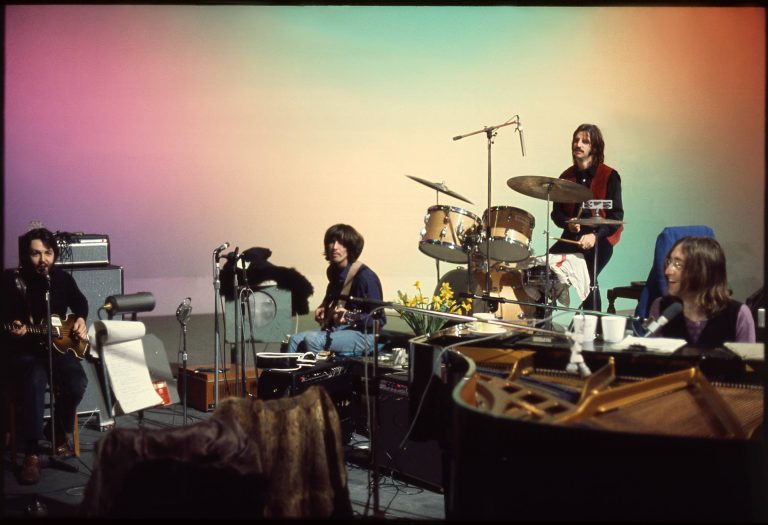
The new documentary brings to light much more of the band’s intimate recording sessions for “Let It Be” and their entire 42-minute performance on the rooftop of Apple’s Savile Row London office. While there is no shortage of material of The Beatles’ extensive touring earlier in their careers, “The Beatles: Get Back” features the only notable footage of the band at work in the studio, capturing John Lennon, Paul McCartney, George Harrison and Ringo Starr as they create their now-classic songs from scratch, laughing, bantering and playing to the camera

Shot on January 30, 1969, The Beatles’ surprise rooftop concert marked the band’s first live performance in over two years and their final live set together. The footage captures interactions between the band members, reactions from fans and employees from nearby businesses, and comical attempts to stop the concert by two young London policemen responding to noise complaints.

A fully restored version of the original “Let It Be” film will be made available at a later date.
The Killers Share “Caution”, First Single Off Forthcoming Album, Imploding The Mirage, Out May 29

0

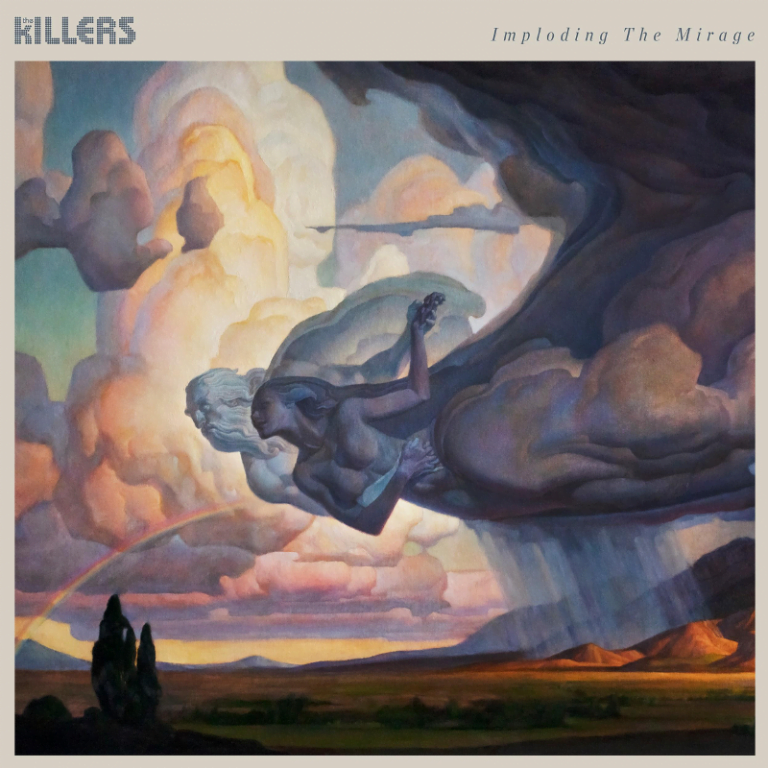
THE KILLERS are thrilled to share the details of their forthcoming, highly-anticipated sixth studio album, Imploding The Mirage, which is set for release on May 29, 2020. The album – produced by the band in conjunction with Shawn Everett and Jonathan Rado of Foxygen – was recorded in Los Angeles, Las Vegas, and Park City, UT. It is the first Killers album to be written and recorded since leaving their hometown of Las Vegas, NV. Imploding The Mirage also features a brilliant array of collaborators, another first for the band who have typically kept guest spots on their albums to a minimum. The list of featured artists includes Lindsey Buckingham, kd lang, Weyes Blood, Adam Granduciel (War On Drugs), Blake Mills, and Lucius.

The album’s first single, “Caution”, is all of Imploding The Mirage’s excellence densely packed into three and a half minutes. Both refreshingly next level and reminiscent of the band’s much-loved albums Sam’s Town and Battle Born, it finds The Killers evoking the spirit of ambitious reinvention matched with the kind of anthemic chorus to which they’ve become synonymous. The track also features an iconic guitar solo courtesy of the legendary Lindsey Buckingham.

Since the release of their 2004 debut, Hot Fuss, The Killers have sold 28 million albums, headlined stadiums and festivals around the world and won dozens of accolades globally. The band continues their reign as America’s heartland heroes as they head into Imploding The Mirage. Following their 2017 Billboard #1 album, Wonderful Wonderful – a love letter of sorts, as Brandon Flowers crafted songs of encouragement to his wife during crippling bouts of depression – Imploding The Mirage is the light after the dark; the overcoming of sadness and moving into celebration. It’s a record about eternal love, perseverance through hard times, and the strength gained from friendships and familial bonds whilst weathering a storm.

Indeed, Imploding The Mirage leaves the grit and glitter of Vegas behind for something more expansive and triumphant. (Literally. Flowers moved his family from the parched flats of Vegas, NV to the lush mountains of Utah before beginning work on the record.) It’s an album that also pushed the band out of their musical comfort zone, exploring new terrain and referencing the albums in their collection that filled them with a sense of romance and camaraderie in their youth. Influences include Kate Bush and Peter Gabriel, as well as Killers’ touchstones like Bruce Springsteen and New Order. Throughout it all, Flowers remains a wholly singular songwriter. A prolific artist with a steadfast understanding in how much solace a song can provide; he’s a pensive craftsman in the studio and an exuberant rock star on the stage. These 2020 shows will give fans a chance to experience The Killers as they deliver the most relentlessly enjoyable rock show of the year.

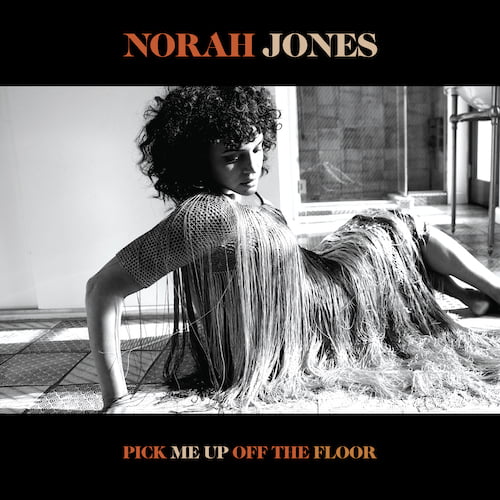
Norah Jones Announces Seventh Studio Album, Pick Me Up Off The Floor, Out May 8

0

On May 8, nine-time GRAMMY winning singer, songwriter, and pianist Norah Jones will release her seventh solo studio album Pick Me Up Off The Floor on Blue Note Records. The lead single “I’m Alive”, a collaboration with Wilco’s Jeff Tweedy, is out today. The song was co-written by Jones and Tweedy, produced by Tweedy, and features Jones on vocals and piano, Tweedy on electric guitar, acoustic guitar, and bass, and Spencer Tweedy on drums.

The track listing for Pick Me Up Off The Floor is as follows:

How I Weep (Norah Jones)
Flame Twin (Norah Jones)
Hurts To Be Alone (Norah Jones)
Heartbroken, Day After (Norah Jones)
Say No More (Norah Jones/Sarah Oda)
This Life (Norah Jones)
To Live (Norah Jones)
I’m Alive (Norah Jones/Jeff Tweedy)
Were You Watching? (Norah Jones/Emily Fiskio)
Stumble On My Way (Norah Jones)
Heaven Above (Norah Jones/Jeff Tweedy)

Produced by Norah Jones (except “I’m Alive” and “Heaven Above” produced by Jeff Tweedy)

Jones didn’t mean to make another album. After she finished touring 2016’s Day Breaks — her beloved return to piano-based jazz — she walked away from the well-worn album cycle grind and into an unfamiliar territory without boundaries: a series of short sessions with an ever-changing array of collaborators resulting in a diverse stream of singles (with Mavis Staples, Rodrigo Amarante, Thomas Bartlett, Tarriona Tank Ball, and more). But then slowly but surely, the session songs Jones hadn’t released congealed into that very thing she’d meant to avoid — an album. But Pick Me Up Off The Floor is not some disjointed collage. It holds together beautifully, connected by the sly groove of her piano trios, lyrics that confront loss and portend hope, and a heavy mood that leans into darkness before ultimately finding the light.

“Every session I’ve done, there’ve been extra songs I didn’t release and they’ve sort of been collecting for the last two years,” says Jones. “I became really enamored with them, having the rough mixes on my phone, listening while I walk the dog. The songs stayed stuck in my head and I realized that they had this surreal thread running through them. It feels like a fever dream taking place somewhere between God, the Devil, the heart, the Country, the planet, and me.”

Sure enough, just as this set of songs blurs sonic colors (blues, soul, Americana, and various shades of jazz) it also swirls the personal and political, specific pain and societal trauma, into one mercurial body. Even the album title’s meaning seems to shift. The words “Pick Me Up Off the Floor” at times play as a plea for outside intervention, but in other moments the phrase feels like a bootstraps-style statement of purpose, as on the rootsy “I’m Alive,” made in Chicago with Jeff and Spencer Tweedy, where Jones slashes her own silver lining into the haze of the modern news cycle: “She’s crushed by thoughts at night of men / Who want her rights and usually win / But she’s alive, oh she’s alive.”

“Living in this country — this world — the last few years, I think there’s an underlying sense of, ‘Lift me up. Let’s get up out of this mess and try to figure some things out,'” says Jones. “If there’s a darkness to this album, it’s not meant to be an impending sense of doom, if feels more like a human longing for connection. Some of the songs that are personal also apply to the larger issues we’re all facing. And some of the songs that are about very specific larger things also feel quite personal.”

The backbone of this album was formed early in an especially fruitful session with her go-to drummer Brian Blade who appears on six of the album’s 11 tracks. Other musicians who contribute throughout include bassists Christopher Thomas, John Patitucci, Jesse Murphy, and Josh Lattanzi, drummers Nate Smith, Dan Rieser, and Josh Adams, keyboardist Pete Remm, pedal steel guitarist Dan Iead, violinist Mazz Swift, violist Ayane Kozasa, cellist Paul Wiancko, percussionist Mauro Refosco, background vocalists Ruby Amanfu and Sam Ashworth, and the horn section of trumpeter Dave Guy and tenor saxophonist Leon Michels.

“I don’t know if I was just in a zone or if this process turned it on, but I’ve felt more creative in the last year than I ever have,” says Jones. By completely rethinking the way she made music, Jones discovered a new wellspring of inspiration, with the fortunate if unexpected result of making an album of tremendous depth and beauty that she was not trying to make.

Unpredictability has been a hallmark of Norah Jones’ career from the start. She first emerged on the world stage with the February 2002 release of Come Away With Me, her self-described “moody little record” that introduced a singular new voice and grew into a global phenomenon, sweeping the 2003 GRAMMY Awards. Since then, Norah has sold 50 million albums globally and become a nine-time GRAMMY-winner. Her songs have been streamed five billion times worldwide. She has released a series of critically acclaimed and commercially successful solo albums—Feels Like Home (2004), Not Too Late (2007), The Fall (2009), Little Broken Hearts (2012), and Day Breaks (2016)—as well as albums with her collective bands The Little Willies, El Madmo, and Puss N Boots featuring Sasha Dobson and Catherine Popper who released their second LP Sister in 2020. The 2010 compilation …Featuring Norah Jones showcased her incredible versatility by collecting her collaborations with artists as diverse as Willie Nelson, Outkast, Herbie Hancock, and Foo Fighters. Since 2018 Jones has been releasing a series of singles including collaborations with artists and friends such as Mavis Staples, Jeff Tweedy, Thomas Bartlett, Tarriona Tank Ball, Rodrigo Amarante, and Brian Blade. The 2019 singles collection Begin Again gathered seven snapshots of creativity from one of the music world’s most consistently intriguing artists.

Toronto Folk Rocker Oliver James Brooks Has “Set Free” His New Single

0

Fresh off last year’s breakout debut release, Toronto-based folk rocker Oliver James Brooks has “Set Free” a new message for the masses with his latest single — available now.

“This song was written in response to the current state of our planet,” he shares of the track and its origins. “The turmoil in which we live has reached an unfathomable level… Some days it becomes unbearable to even exist.

“It was on one of those very days that ‘Set Free’ was written.”

“Set Free” is the second new single for Brooks since his 2019 take-notice debut, A Turn in the Bend. Written and mostly recorded while living in Brooklyn, New York, the eight-track LP quickly cemented the singer, songwriter and multi-instrumentalist’s ability to capture and creatively express nuance in an intuitive, layered and carefully considered way.

“A Turn in the Bend was inspired by the prevalent contrast between two landscapes: Brooklyn and the small town in Ontario where I grew up,” he recalls. “When it comes to the recording process — for that album and for “Set Free” — capturing sounds that are unrehearsed and unexpected is just as important as the words themselves.

“It’s what I feel gives music impulse and emotion.

“A song or album can easily lose its meaning if the sound becomes too clinical or robotic, so everything is recorded with great care in order to maintain its originality and realness.”

He didn’t have to worry about his assembled team missing the memo when it came to laying down “Set Free.”

“I was lucky enough to have my friends Jimmy-Tony (Dilly Dally) play bass and Collin Carnegie (Midnight Vesta) play Wurlitzer, as well as engineer the track,” Brooks shares on the technical aspects of the track; it was mixed by Jack Emblem at Berkeley Sound and mastered by Noah Mintz at Lacquer Channel Mastering. “In terms of the music video, I had the pleasure of working with Edward Pond; not only is he a great director, but he’s also a good friend of mine. The idea for the video came quickly, and we were lucky to get some very talented individuals to help bring the story to life.”

“Set Free” is available now.

1-minute tip for bands and artists: ‬‪Offer yourself up.‬

Letting people know you’re available is half the battle.

Getting Out There

0

No matter what your level of mobility is, taking advantage of green spaces is good for both your mind and body. With mobility aids like lightweight bariatric wheelchairs and knee walkers making public greenways and parks more accessible to more people than ever, it’s a good time to consider making time spent outside part of your daily routine. There is no shortage of research touting the benefits of being outside. There is an argument to be made for breathing fresh air and taking in sights that have nothing to do with technology. Being outside also encourages physical activity, any amount of which is proven to improve both short-term and long-term health.

For people with all levels of mobility, it can be hard to find a few spare minutes in the day to take a break and go outside. Whether you’re stuck in the office throughout your workday or you’re one of the millions of people who work from home, some days it feels impossible to tear yourself away from your computer screen. But while there’s always a task that seems like it needs to be completed right this minute, more often than not the world will keep spinning if you step away for a little while. Though we all know that spending time in the great outdoors is good for us, it may actually be essential.

Spending time in nature not only has physical benefits, it is also an important key to psychological well-being. Whether you are a fan of communing with nature or not, it’s hard to deny the mountain of scientific evidence that supports spending at least a few minutes of your day out in the sun. Exposure to sunlight is a natural mood booster, and Vitamin D is vital to human health. So backing away from your screen and treating yourself to a sojourn through the park is perhaps the best definition of a mental health break.

History of barcodes in the Music Industry

0

The inception of barcodes dates back to the 1940s, when Norman Joseph Woodland invented the barcode symbology. It was only after 3 decades that we started seeing what is now commonplace today – barcodes on products in retail stores. In 1974, a packet of Wrigley’s chewing gum was the first with a bar code ever to be scanned in a retail store. But almost another decade had passed until the music industry gradually implemented the usage of bar codes.

Some record labels were faster than others and started putting barcodes on the LP and CD covers of their artists, whereas other record labels went without it. This may have been due to costs but were especially due to the fact that albums could be sold in cardboard long boxes or plastic blister packs which would have the retail barcode printed on the back. There was even controversy and annoyance amongst some artists who were unhappy about barcode images ruining the design of their album covers – Neil Young and Bruce Springsteen to name a few.

Barcodes on LPs

It was in the US that the first LPs were sold with barcodes. According to some, though it is not certain, Elvis Costello – Armed Forces was the first LP released with a barcode; this was in the year 1979. More and more record label companies joined in on the barcode revolution and barcoded their album releases from that year on. Some labels, CBS for example, went back and added barcodes to most of their albums that were still in print. This is one of the ways you’re able to spot the original releases – they will not have barcodes on the album cover. Wish You Were Here, The Stranger or Journey’s Infinity are prime examples of cover designs which do not have barcodes on the albums that were released before the 1980s.

CBS also introduced the barcode to the 45 rpm (vinyl format) label in early 1983 with Separate Ways (Worlds Apart) by Journey. That at first was an exception, but near the end of 1983 of the CBS 45s had barcodes on the label design. WEA labels added barcodes several years later, as did the PolyGram labels. A&M didn’t have a bar code on the label until 1990. Some record companies such as MCA’s and RCA/BMG didn’t have barcodes on the 45s until well into the 1990s.

Barcodes on CDs

The first CD ever released was ABBA’s The Visitors in 1981 and was one of the first records ever to be recorded and mixed digitally. Again, the release in 1981 did not include a barcode on the album, so it’s easy to spot issues that were remastered and remixed. Barcoded CD production was only really introduced in 1983, and here it was Sony and Polygram record companies who headed up the process. At the time, CDs were still seen as expensive, and record label companies were unsure of whether the public would be willing to make the change from vinyl. Of course, their fears were unnecessary – by the year 2007, over 200 billion CDs had been sold across the world. Now in 2015, it’s possible that CDs, just like LPs and even cassettes, will in time become rare collectables and things of the past.

It’s clear that throughout the years, different technologies emerged in an attempt to make listening to music a simpler and more authentic experience. With each invention, sounds became clearer in tracks, and people were better equipped to recreate the sense of the band or artist being right there in the room with you. Barcodes however, ever since its implementation in retail and various other sectors, have always been just perfect in its purpose. A simple symbology allowing users to scan, and track products has never gone out of trend or become predated by a “better” barcode.


My Next Read: “Channel Kindness: Stories of Kindness and Community” by Lady Gaga

0

For Lady Gaga, kindness is the driving force behind everything she says and does.

The quiet power of kindness can change the way we view one another, our communities, and even ourselves. She embodies this mission, and through her work, brings more kindness into our world every single day.

Lady Gaga has always believed in the importance of being yourself, being kind to yourself, and being kind to others, no matter who they are or where they come from. With that sentiment in mind, she and her mother, Cynthia Germanotta, founded Born This Way Foundation, a nonprofit organization dedicated to making the world a kinder and braver place. Through the years, they’ve collected stories of kindness, bravery and resilience from young people all over the world, proving that kindness truly is the universal language. And now, we invite you to read these stories and follow along as each and every young author finds their voice just as Lady Gaga has found hers.

Lady Gaga and her team are releasing Channel Kindness: Stories of Kindness and Community, out September 22, a book where you’ll meet young changemakers who found their inner strength, who prevailed in the face of bullies, who started their own social movements, who decided to break through the mental health stigma and share how they felt, who created safe spaces for LGBTQ+ youth, and who have embraced kindness with every fiber of their being by helping others without the expectation of anything in return.

In one story, you’ll read about a young person with an autoimmune disease, who after being bullied at school, learned how to practice self-love and started an organization with the mission of educating others about the importance of self-love, too; and in another story, you’ll meet a young person who decided to start a movement to help eliminate the stigma surrounding mental health and encouraged others to talk about their feelings openly and honestly, a reminder that kindness and mental wellness go hand in hand.

Not only were we moved by these individual acts of kindness, but we were also touched by the many stories of organizations, neighborhoods, and entire communities that fully dedicated themselves to helping those in need and found new, innovative ways to make our world a kinder and braver place.

Individually and collectively, these stories prove that kindness not only saves lives but builds community. Kindness is inclusion, it is pride, it is empathy, it is compassion, it is self-respect and it is the guiding light to love. Kindness is always transformational, and its never-ending ripples result in even more kind acts that can change our lives, our communities, and our world.