

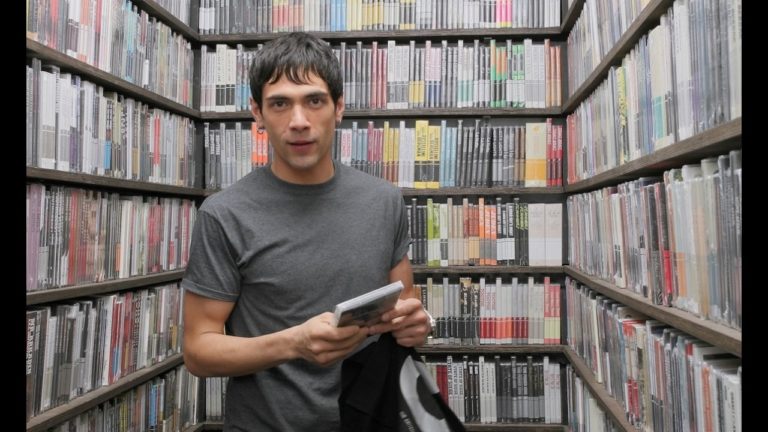
Diego Calva’s Criterion Closet picks reveal an actor who came to film through genuine obsession rather than professional necessity. He talks through studying Charlie Chaplin’s performance in ‘City Lights,’ pulls selections from Harmony Korine and Andrea Arnold’s coming-of-age work, and touches on Mexican cinema and cult classics that shaped his sensibility before Hollywood found him. The most specific detail in the whole video arrives early: Calva has tattoos dedicated to Martin Scorsese’s ‘After Hours’ and Richard Linklater’s ‘Slacker,’ two films that don’t exactly announce themselves as obvious choices for permanent ink, which tells you everything about how seriously he takes this.
Antibalas Take the KEXP Studio and Fill Every Corner of It
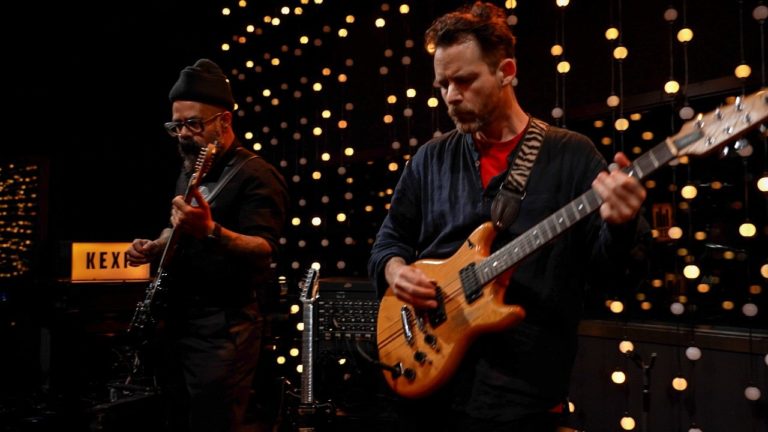
Recorded in the KEXP studio, this full Antibalas session runs four tracks, “Solace,” “La Ceiba,” “Hourglass,” and “Oasis,” and the eleven-piece New York collective fills the room completely. Founded in Brooklyn in 1998 and rooted in the tradition of Fela Kuti, Antibalas has spent more than two decades refining a sound that is simultaneously politically charged and physically irresistible, built on interlocking percussion, layered horns, and vocals that carry real urgency. The KEXP format suits them well, the studio close enough to capture the detail of what each player is doing while the ensemble sound stays intact and powerful. Martin Perna on baritone saxophone, Marcus Farrar on vocals and shekere, and the full horn section of Drew Vandewinckel, Michael Pallas, and Andrew McGovern give the performance its spine, and the rhythm section underneath holds everything with complete authority.
Jill Scott Performs “Beautiful People” on GMA and Talks Her First Album in More Than a Decade
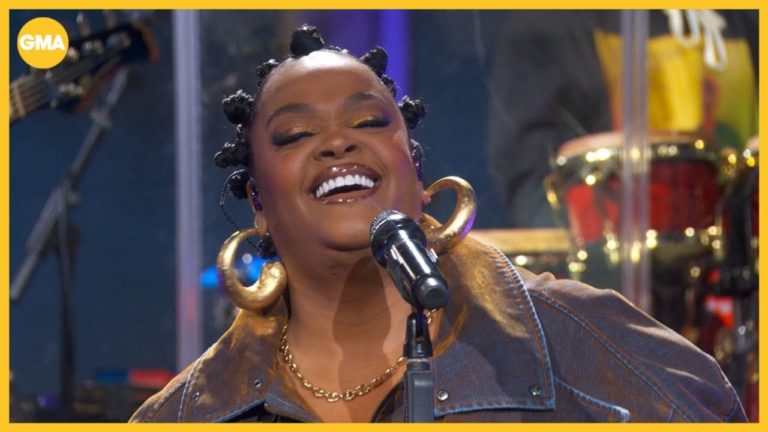
Jill Scott stopped by Good Morning America to perform “Beautiful People” and discuss ‘To Whom This May Concern,’ her first album in more than ten years, and the appearance serves as a reminder of exactly what has been missing from R&B during her absence. The performance is warm, controlled, and completely assured, the kind of television moment that makes you pull up everything she’s ever recorded immediately after. Scott has always been one of the most naturally gifted vocalists in contemporary soul music, and hearing her on new material after this long a gap is a delight.
Video: “Weird Al” Yankovic Takes the Colbert Questionert and It Goes Exactly as Well as You’d Hope
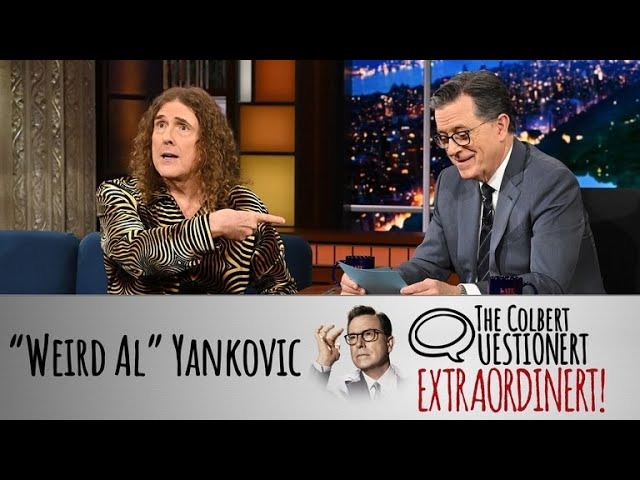
“Weird Al” Yankovic sitting down for Stephen Colbert’s rapid-fire Questionert is one of those pairings that writes itself, and the execution delivers fully. Over several minutes, Yankovic fields questions covering his favorite action movie, the five words he’d use to describe the rest of his life, unconventional sandwich preferences, and nostalgic moments from a career that now spans decades of musical parody at the highest level. Yankovic has always been a more interesting interview subject than people expect, precise and thoughtful underneath the absurdist surface, and the Questionert format is perfectly calibrated to let both qualities show up simultaneously. For anyone who grew up with “Eat It,” “Amish Paradise,” or “White & Nerdy,” this one lands.
Emi Grace and Her Band Flip Red Hot Chili Peppers’ “Scar Tissue” Into a Punk Anthem in Just a Few Hours

Musora brought Emi Grace and her band to EastWest Studios in Los Angeles, the same room where the Red Hot Chili Peppers recorded ‘Californication,’ and handed them one of that album’s most beloved songs to completely reinvent on the spot. What follows over about 22 minutes is a genuinely compelling behind-the-scenes look at the creative process in real time, the band working through tempo debates, riff rewrites, halftime versus double-time questions, and how far they can push “Scar Tissue” before it stops being recognizable. The answer turns out to be pretty far. The final performance threads the needle between honoring the original and flipping it into something punchier, louder, and distinctly their own, and the process of getting there is as interesting as the result.
Timothée Chalamet Rates Unpopular Opinions on BBC Radio One and Ends Up Singing Happy Birthday

Timothée Chalamet stopped by BBC Radio One for a game of Unpopular Opinions with Greg James, and the result is exactly as entertaining as putting one of Hollywood’s most culturally omnivorous young stars in front of a format designed to catch people off guard. Over about 14 minutes the conversation covers table tennis as the next big sport, the merits of sitting exams, whether birthdays are stupid, pineapple-flavored cottage cheese, and the choice between looking after a newborn baby or a puppy. Chalamet also discusses ‘Marty Supreme’ and the EsDeeKid phenomenon, two subjects that reveal just how genuinely plugged in he is to internet culture and niche sports subcultures. The moment where he sings to Greg James is worth the whole video on its own.
Pearl Jam Played “Hail, Hail” on Letterman’s Commercial-Free Show in 1996 and It Still Kicks
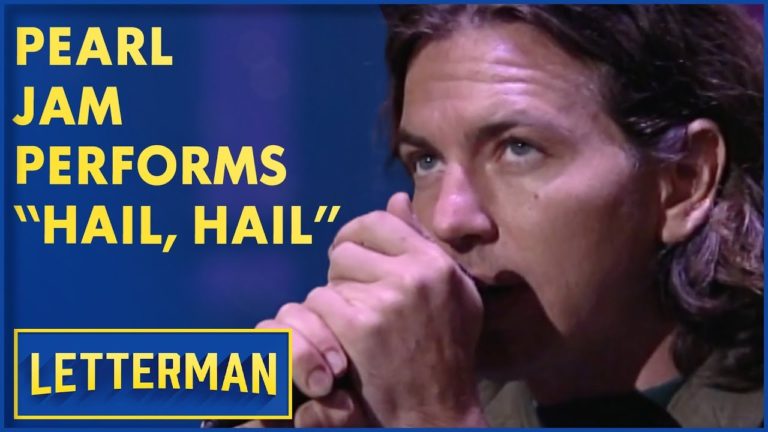
On September 20, 1996, Pearl Jam took the Late Show stage during one of David Letterman’s commercial-free broadcasts and delivered “Hail, Hail,” the opening track from ‘No Code,’ their fourth studio album released just weeks earlier. The performance captures the band at a complicated and fascinating moment in their career, having stepped back from mainstream visibility while simultaneously releasing one of their most sonically adventurous records. “Hail, Hail” is a muscular, riff-driven track that translates immediately to a live setting, and the Letterman performance has the kind of contained intensity that made Pearl Jam one of the great live acts of their era. The commercial-free format gave it room to breathe, and watching it now, the song holds up completely.
GQ Gets Sam Rockwell to Walk Through More Than 50 Films and the Result Is 31 Minutes Well Spent
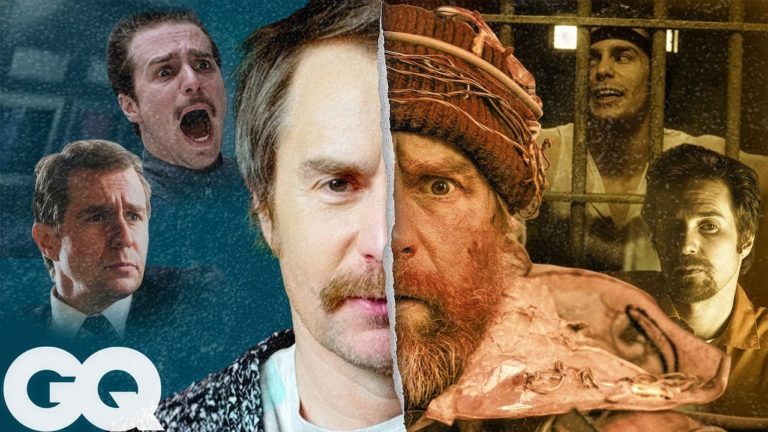
Sam Rockwell has one of the most genuinely interesting filmographies in Hollywood, and GQ’s decision to sit him down and work through more than 50 of them one by one was exactly the right format for an actor this specific about his craft. Meisner trained and consistently drawn to characters who carry both intensity and vulnerability, Rockwell walks through everything from his 1989 horror film debut in Clownhouse all the way through to ‘Good Luck, Have Fun, Don’t Die,’ his current theatrical release. Along the way he covers ‘Three Billboards Outside Ebbing, Missouri,’ ‘Moon,’ ‘Galaxy Quest,’ ‘Confessions of a Dangerous Mind,’ ‘The Green Mile,’ ‘Iron Man 2,’ ‘Jojo Rabbit,’ ‘The Assassination of Jesse James by the Coward Robert Ford,’ and dozens more, sharing behind-the-scenes stories, technical challenges, and what each role actually demanded of him. Over three decades of work, very few actors have moved as fluidly between studio films and independent cinema, between leading roles and supporting ones.
The Beatles’ Historic 1965 Shea Stadium Concert Gets a Stunning 4K Remaster
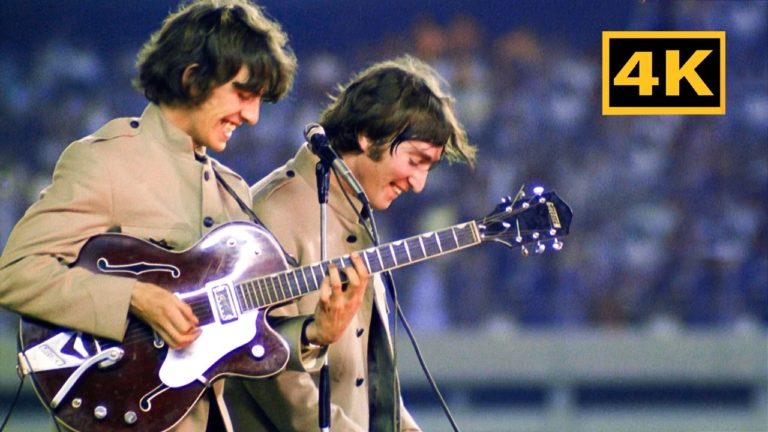
On August 15, 1965, the Beatles played Shea Stadium in New York City for 55,600 fans and changed what a concert could be. It was the first major outdoor stadium rock show, generating a record $304,000 gross, with tickets ranging from $4.50 to $5.75 that sold out in under three weeks. The screaming was so overwhelming the band couldn’t hear themselves play, and none of it mattered because what was happening in that stadium had never happened before. DRMPLX has now given that moment a full 4K remaster, presenting a triple play mix of “Twist & Shout,” “Baby’s In Black,” and “I’m Down” with audio remixed and restored, and the result has already drawn over six million views. Watching it now, the scale of what the Beatles had become by the summer of 1965 is genuinely staggering.
Bobby Cox, Hall of Fame Manager Who Built the Atlanta Braves Dynasty, Dead at 84
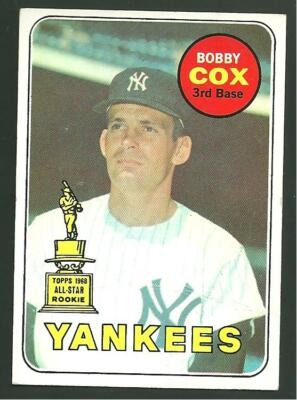
Bobby Cox died on May 9, 2026, in Marietta, Georgia. He was 84. The cause was complications from a stroke he suffered in April 2019 and subsequent heart issues. Baseball lost one of its most consequential managers, and Atlanta lost the man who gave the city its most sustained period of sporting excellence.
Cox managed 4,508 major league games across 29 seasons, finishing with a career record of 2,504 wins and 2,001 losses. Only Connie Mack, John McGraw, and Tony La Russa won more regular season games. He was ejected 158 times, an all-time record, and led his teams to 16 playoff appearances, another record. He won the Manager of the Year Award four times, once with the Toronto Blue Jays in 1985 and three times with the Braves in 1991, 2004, and 2005. He was inducted unanimously into the Baseball Hall of Fame in 2014.
None of those numbers capture what Cox actually meant to the teams he managed or the city he called home for most of his adult life.
He took over the Braves as field manager in June 1990, inheriting a last-place team, and by 1991 had engineered one of baseball’s most stunning reversals, going worst to first and reaching the World Series. That was the beginning of 14 consecutive division titles from 1991 through 2005, excluding the strike-shortened 1994 season. No professional sports franchise in any major North American league had ever accomplished anything like it. Cox won the only World Series of his managerial career in 1995, defeating the Cleveland Indians. The Braves made five World Series appearances under his management.
Before returning to Atlanta as manager, Cox had spent four seasons guiding the Toronto Blue Jays from 1982 to 1985, leading the franchise to its first winning record in 1983 and its first American League East title in 1985. He also served as the Braves’ general manager from 1986 through 1990, during which time he drafted Chipper Jones with the first overall pick in 1990 and assembled the core of the pitching staff, Tom Glavine, John Smoltz, and Steve Avery, that would anchor the dynasty. He handed the GM role to John Schuerholz after the 1990 season and returned to the dugout, where he stayed for two more decades.
Cox’s reputation among his players was singular. Catcher Brian McCann said it plainly: “He is the Atlanta Braves. He’s the best.” His approach to managing was fatherly in its consistency, always in spikes and stirrups, always protecting his players, often getting himself ejected to spare them the penalty. In 158 ejected games, his teams won at a rate of .385, a number that reflects how many of those removals were deliberate sacrifices rather than losses of composure.
His ability to recognize and develop talent extended beyond the obvious. It was Cox who moved power-hitting catcher Dale Murphy to center field in 1980, a repositioning that unlocked one of the great careers of the decade. Murphy went on to win two National League MVP Awards and five Gold Gloves. Cito Gaston came to Toronto as a coach because of Cox, and later became manager of the Blue Jays himself, winning back-to-back World Series titles. The fingerprints of Cox’s baseball judgment are spread across decades of the sport.
The Braves retired his number six jersey in 2011. He attended games when his health allowed, received standing ovations every time he appeared on the field, and remained deeply connected to the organization until the end. His death comes days after that of former Braves owner Ted Turner, May 6, 2026, a loss that Atlanta fans on social media described as the worst week in the franchise’s history.
The Braves’ statement said it cleanly: “His Braves managerial legacy will never be matched.” That is simply a fact.