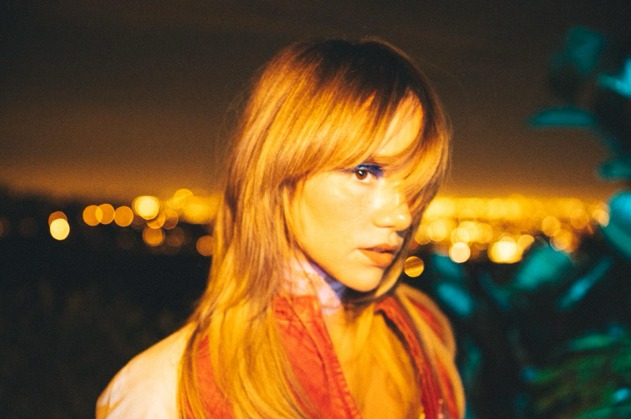
Desire takes center stage on Suki Waterhouse’s latest release. Out today, “When I Get Drunk (I Want You Boy)” arrives as the newest preview of her upcoming album ‘Loveland’, due July 10. Listen here.
Co-written by Waterhouse alongside Raj Jain (noise dept.) and Michael Derenzo, the track explores attraction at its most consuming. Built around longing, chemistry and temptation, the song adds another compelling chapter to the world Waterhouse has been creating around her forthcoming album.
“I’ve been obsessed with this song ever since we made it,” Waterhouse shares. “For me, it’s an ode to an intoxicating kind of love and that feeling of chasing a thrill, and the more you listen to it, the more it pulls you into its spell.”
Released alongside the single is an accompanying music video co-directed by Waterhouse and Tyler Weinberger. Shot inside her home, the visual transforms the song’s themes into a stylized fever dream that mirrors its emotional intensity.
“When I Get Drunk (I Want You Boy)” continues the momentum surrounding ‘Loveland’, a 14-track album arriving July 10 via Island Records. The project has already earned early praise, with Variety recently highlighting the record on its Power of Women UK cover story and describing it as a “sublime new album” that showcases Waterhouse’s artistic range.
Previous singles have offered listeners a glimpse into the album’s many moods. “Back in Love” earned praise from Harper’s Bazaar, while “Tiny Raisin” landed among Billboard’s best new music selections and drew acclaim from Wonderland for its emotionally charged performance.
Waterhouse has also found a creative way to extend the album experience beyond the music itself. The vinyl edition of ‘Loveland’ doubles as the “Game of Loveland,” an interactive board game designed around the album’s themes of romance, heartbreak, connection and self-discovery.
Reflecting on the project, Waterhouse shared, “Writing Loveland was me trying to find myself again. To understand who I was becoming while making this record. The emotions of it all felt like a rollercoaster. A game of winning, losing, longing, choosing, starting over. So inside the vinyl, I made one.”
This summer, Waterhouse will bring the album to audiences across North America on The Loveland Tour. The run includes appearances at Lollapalooza, Hinterland Music Festival, Austin City Limits and All Things Go, alongside headline performances at iconic venues including Hollywood Forever Cemetery and Radio City Music Hall.
“When I Get Drunk (I Want You Boy)” showcases Waterhouse’s ability to blend intimacy, atmosphere and memorable songwriting into something instantly captivating. It’s another strong glimpse into a record that continues to build anticipation with every release.
2026 Tour Dates:
July 22, 2026 – Phoenix, AZ – Arizona Financial Theatre
July 23, 2026 – Los Angeles, CA – Hollywood Forever Cemetery
July 26, 2026 – San Francisco, CA – Stern Grove Festival
July 27, 2026 – Salt Lake City, UT – Twilight Concert Series
July 28, 2026 – Denver, CO – Fillmore Auditorium
July 30, 2026 – Chicago, IL – House of Blues
July 31, 2026 – Chicago, IL – Lollapalooza
August 2, 2026 – St. Charles, IA – Hinterland Music Festival
August 3, 2026 – St. Paul, MN – Palace Theatre
August 6, 2026 – Seattle, WA – Woodland Park Zoo
August 7, 2026 – Portland, OR – The Square
August 8, 2026 – Vancouver, BC – Orpheum
September 18, 2026 – Indianapolis, IN – Egyptian Room at Old National Centre
September 19, 2026 – Toronto, ON – Coca-Cola Coliseum
September 21, 2026 – Philadelphia, PA – The Fillmore Philadelphia
September 22, 2026 – Boston, MA – MGM Music Hall at Fenway
September 24, 2026 – New York, NY – Radio City Music Hall
September 26, 2026 – Washington, DC – All Things Go
September 27, 2026 – Raleigh, NC – The Ritz
September 29, 2026 – Atlanta, GA – Coca-Cola Roxy
September 30, 2026 – Orlando, FL – House of Blues
October 1, 2026 – St. Petersburg, FL – Jannus Live
October 3, 2026 – Austin, TX – Austin City Limits
October 6, 2026 – Oklahoma City, OK – The Criterion
October 10, 2026 – Austin, TX – Austin City Limits
October 12, 2026 – St. Louis, MO – The Pageant
October 13, 2026 – Milwaukee, WI – Landmark Credit Union Live
October 14, 2026 – Nashville, TN – The Truth
October 16, 2026 – Detroit, MI – The Fillmore Detroit
October 17, 2026 – Chicago, IL – Aragon Ballroom
‘Loveland’ Track Listing:
- Back in Love
- Any Man
- Happy With It
- Notting Hill
- Teardrops
- When I Get Drunk (I Want You Boy)
- Jukebox
- Seasons
- Tiny Raisin
- Almost
- Puppy Dog Eyes
- Morals
- Loveland
- Weirdo