Home Blog Page 2

7 Times Album Artwork Told a Story Before You Even Pressed Play

0

There is a reason people still talk about album covers decades after the music inside them has already become part of the furniture of their lives. A great album cover is not decoration. It is argument, confession, provocation, and poetry compressed into a single image. Here are seven times artists used that square of real estate to say something that the music alone could not quite say on its own.

Pink Floyd, Wish You Were Here (1975)

Storm Thorgerson and Hipgnosis created one of the most quietly devastating images in rock history: two businessmen shaking hands in a parking lot, one of them silently on fire. The story it tells is about emotional armour, about the professional smiles people wear while something inside them is burning, and about the music industry’s particular talent for turning genuine feeling into a transaction. It is also, of course, about Syd Barrett, the man who wasn’t there anymore, and the grief of watching someone disappear while the world just keeps doing business.

The Beatles, Yesterday and Today (1966)

The so-called butcher cover is still one of the most genuinely shocking images any major pop act has ever attached to their name. The band surrounded by raw meat and dismembered doll parts was partly a sardonic commentary on the American practice of chopping up their UK albums into different configurations for the US market, and partly something darker and harder to pin down. Capitol Records recalled it almost immediately, pasting a bland replacement cover over the top, which means that underneath many surviving copies of the record, the original image is still there. Hidden, papered over, but not gone.

Neil Young, On the Beach (1974)

This one hurts to look at for too long. A Cadillac buried hood-first in the sand. Empty lawn chairs. A solitary figure facing the ocean with his back to everything. Young staged the entire scene deliberately on a Santa Monica beach as a portrait of complete psychic exhaustion, the feeling of having arrived somewhere and found nothing waiting. It came out during what Young himself called the ditch trilogy, a run of albums that documented a deliberate retreat from the spotlight into something more honest and considerably more painful. The cover does not promise you a good time. It warns you.

The Clash, London Calling (1979)

Pennie Smith almost did not submit this photograph. She thought it was too blurry, too chaotic, not good enough technically. Paul Simonon smashing his bass into the stage at the Palladium in New York, caught in a moment of pure physical fury, was apparently not what she considered her best work. The band disagreed, and they were right. That blur is the whole point. Clarity was never what punk was after. The image became one of the most reproduced rock photographs in history, and it captures something no sharp, well-lit photo ever could: the precise sound of something breaking on purpose.

Black Sabbath, Sabbath Bloody Sabbath (1973)

Drew Struzan, who would go on to paint some of the most iconic movie posters of the twentieth century, designed a cover that functions as a complete moral and philosophical argument about mortality. The front depicts a man in the grip of a demonic nightmare, a bad death, violent and terrifying. Flip the record over and the same man exists in a state of peaceful transcendence, a good death, surrendered and at ease. Sabbath were always more interested in the big questions than they were given credit for, and this cover makes the case better than any press release could.

Green Day, Dookie (1994)

Richie Bucher’s cartoon artwork for Dookie looks like chaos at first glance and reveals itself as biography the longer you look. The Berkeley streets, the Gilman Street scene, the band’s own faces buried in the crowd, the specific texture of being young and broke and restless and furious and finding your people in a sweaty punk club. It is a document of a time and a place that no longer exists in the form it once did, and the fact that it looks like a mess is entirely the point. Teenage life is a mess. The cover knows that.

Pink Floyd, Animals (1977)

The photograph almost didn’t happen at all. The forty-foot inflatable pig that was supposed to float above Battersea Power Station for the shoot broke free of its moorings, drifted into controlled airspace, forced the temporary grounding of flights at Heathrow, and was eventually found in a field in Kent. The image that made it onto the cover is from the day before, when the pig was still tethered. But the story of what happened the next day is so perfectly in keeping with the cover’s whole Orwellian argument about power, control, and the inevitable moment when things refuse to stay where they are put, that it feels less like an accident and more like the album making its own point.

Dylan Carter, ‘The Voice’ Season 24 Contestant and Lowcountry Soul, Dies at 24

0

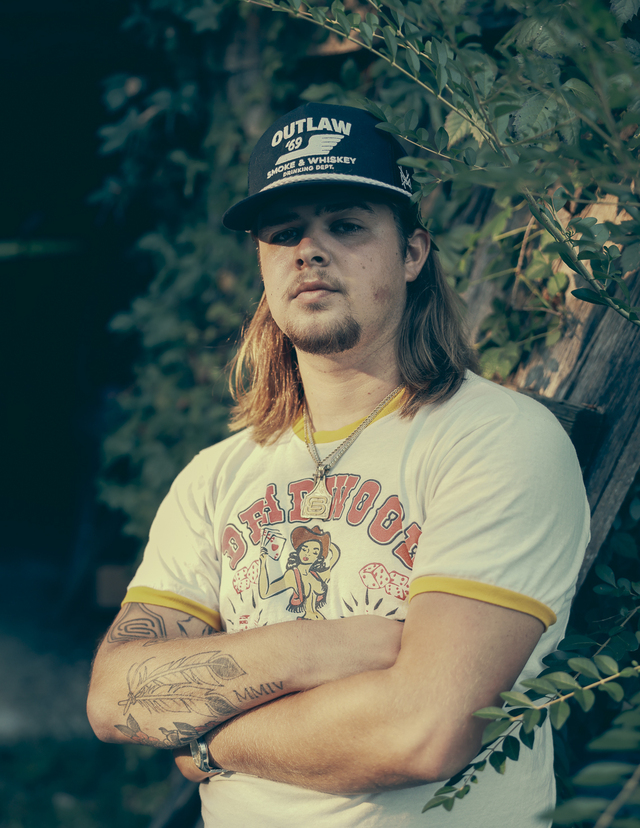
Dylan Carter had already lived more lives than most people twice his age. A singer-songwriter, a realtor, a campground co-owner, a community fundraiser, and a young man who carried his mother’s memory with him everywhere he went, Carter died on Saturday night in Colleton County, South Carolina, the result of a car accident. He was 24 years old. The Lowcountry community he had spent his life entertaining is in mourning, and the silence where his voice used to be is going to take a long time to fill.

Carter grew up in St. George, South Carolina, a small town in the Lowcountry about an hour outside Charleston, and discovered his passion for music at the age of ten. He started writing songs and performing at local farmers markets, churches, weddings, and special events, building a following one room at a time in the way that only artists who truly love what they do actually build one. He auditioned for NBC’s The Voice twice before earning his four-chair turn on Season 24, and when he chose to join Team Reba, he became part of country music legend Reba McEntire’s first-ever team on the show. The song he sang for that blind audition was Whitney Houston’s “I Look to You,” a tribute to his mother, who had passed away the year before. He had tried to sing it at her funeral and couldn’t finish it. On that stage, he did.

After The Voice, Carter came home and kept working. He performed throughout the Lowcountry, booked weddings, fundraisers, restaurants, and backyard parties, and described himself with characteristic warmth as a one-man band who promised every audience laughter, smiles, singing, and perhaps a little boot scootin’ boogie. He worked as a realtor by day to support his music career and was a co-owner of Sunny Days Campground near Lake Marion in the Santee community. He was also co-founder of The Local Voice, a nonprofit based in Santee that provides care to women fighting breast cancer, and threw himself into that work with the same generosity he brought to everything else.

The Local Voice shared the news of his passing with words that said everything about who he was. “Dylan was the heart of what we do,” the organization wrote. “He believed every voice matters and lived that every day. Through his music, his kindness, and his smile, he brought people together and made everyone feel seen.” Moncks Corner Mayor Thomas Hamilton Jr., who had to cancel a Music on Main event that Carter was scheduled to headline on Monday, wrote that Carter was far more than an entertainer to his community. “He was our friend,” Hamilton wrote, “and we are deeply saddened.”

Reba McEntire told Carter to use his voice to touch people’s hearts. By every account from everyone who knew him, that is exactly what he did, every single time he walked onto a stage. He was 24 years old and just getting started.

McDonald’s Stranger Things Happy Meal and a Secret Menu Are Making 2026 Its Most Interesting Year in Decades

0

Nobody expected fast food to be this entertaining in 2026. But McDonald’s, the golden arches institution that has been selling Big Macs since 1968, is doing two things this year that are so perfectly timed and so smartly conceived that the industry is paying close attention. A secret menu that actually becomes official. A Stranger Things Happy Meal designed just as much for the adults who grew up watching the show as for their kids. This is not your grandfather’s McDonald’s, and that is kind of thrilling.

The secret menu is where things get genuinely clever. For years, McDonald’s fans have been creating unofficial ordering hacks, the Surf N’ Turf burger, Big Mac sauce applied to everything, and sharing them relentlessly on TikTok and Reddit. McDonald’s spent years either ignoring this or quietly tolerating it. In 2026, they decided to do the smart thing and own it entirely, formally launching an official secret menu inspired by those viral customer creations and debuting it internationally. It is a masterclass in letting your audience tell you what they want and then giving it to them with a bow on top.

Then there is the Stranger Things tie-in, which launches in the US on May 5 and is already rolling out across Latin America and Europe. Each Happy Meal comes with a custom-designed box featuring artwork inspired by the Upside Down, one of 12 collectible character toys, a Stranger Things activity book, and a QR code that unlocks an interactive digital game where fans can join the Hawkins Investigators Club and battle monsters threatening the town. Two new characters are revealed every week, which means McDonald’s has quietly engineered a reason for people to come back repeatedly throughout the entire campaign. That is not a Happy Meal. That is a loyalty program disguised as a toy collection.

What makes all of this more impressive is the context in which it is happening. McDonald’s is navigating a more challenging operating environment, with rising food costs, slowing customer traffic, and increasingly cautious consumer spending weighing on the fast-food sector. Competitors are closing locations. Consumers are watching every dollar. And McDonald’s response is to lean into pop culture, nostalgia, digital engagement, and the very online communities that have been talking about their food for free for years. Digital platforms now reach nearly 210 million 90-day active users across 70 markets, and loyalty customers generated about $37 billion in systemwide sales in 2025, up 20 percent year over year. These are not vanity metrics. They are the whole strategy.

The bigger picture here is that McDonald’s is quietly repositioning the Happy Meal itself as something more than a kids’ lunch. It is an entry point into a digital ecosystem, a collectible series, a conversation starter, and a piece of pop culture all at once. The Stranger Things generation grew up. They have disposable income, nostalgia for Hawkins, Indiana, and apparently a genuine willingness to go through a drive-thru to pick up a toy of Eleven or Dustin. McDonald’s figured that out before most of their competitors did, and in a year when the fast food industry is under real pressure, that kind of creative thinking might be exactly what the doctor ordered. Or in this case, what the Demogorgon ordered.

How to Copyright Your Music in the US

Here is something that surprises a lot of artists when they first hear it: your music is technically protected by copyright the moment you record it or write it down. The second it exists in a fixed, tangible form, whether that is an audio file, a voice memo, or sheet music, US copyright law under the Copyright Act (17 U.S.C. § 102(a)) says it belongs to you. That is the good news. The less comfortable news is that automatic protection and enforceable protection are two very different things, and the gap between them could cost you everything if someone ever uses your music without permission. In 2024 alone, over 1,200,000 new registrations were made with the US Copyright Office, which tells you that the artists and publishers who know what they are doing are not leaving this to chance. Here is what you need to know.

Your Music and the Law: Two Copyrights, Not One

The first thing to understand is that music copyright in the US is actually two separate things, and most artists don’t realize this until it matters. A musical work is a song’s underlying composition along with any accompanying lyrics, usually created by a songwriter or composer. A sound recording is a series of musical, spoken, or other sounds fixed in a recording medium, such as a CD or digital file. In plain terms: the song itself is one copyright and the recording of that song is another. In most cases, a musical composition and a sound recording must be registered separately with the Copyright Office. If you wrote the song and recorded it yourself, you likely own both, but you need to register them separately to protect both. Miss one and you leave a door open.

How to Actually Register: The Step-by-Step

Registration is done through the US Copyright Office’s Electronic Copyright Office system at copyright.gov/registration. The Copyright Office has implemented a group registration option for musical works that are published on the same album, and a separate group registration option for sound recordings, photos, artwork, and liner notes published on the same album. This is genuinely useful for independent artists releasing full projects, because it means you are not paying a separate fee for every single track. Under the Group Registration for Works on an Album of Music option, known as GRAM, an applicant may register up to twenty musical works or twenty sound recordings contained in an album, if the works are created by the same author or have at least one common author and if the claimant for each work in the group is the same. For unpublished work, you can use the online registration system to register up to ten unpublished songs, song lyrics, or other musical works with one application and fee.

Why Registration Actually Matters: The Legal Reality

Here is where things get serious. If your work is a US work, you need to register your work with the Copyright Office before bringing an infringement lawsuit in federal court. Also, if you take someone to court for using your work without your permission and you want to try to have your attorneys’ fees covered or pursue certain types of compensation called statutory damages, the timing of your registration matters. That last part is critical. Registering after someone has already stolen your work severely limits what you can recover. Registering before, or within three months of first publication, keeps all your legal options fully open. The Copyright Office also notes you can take smaller disputes to the Copyright Claims Board, a voluntary forum within the Copyright Office to resolve copyright disputes involving damages totaling less than $30,000, intended to be a cost-effective and streamlined alternative to federal court.

One More Thing: The MLC and Getting Paid

Registering your copyright is not the only step to making sure your music earns what it should. Starting on January 1, 2021, the Music Modernization Act updated the way musical work rightsholders are paid royalties, including when their work is played online via interactive streaming services. To get paid by digital music providers that use the MMA’s blanket license, you will need to register your information with the Mechanical Licensing Collective via their online claiming portal. The MLC is at themlc.com and registration is free. Think of it this way: your US Copyright Office registration protects your ownership, and your MLC registration makes sure the money actually finds its way to you. You need both working together.

The full registration portal is at copyright.gov/registration and the US Copyright Office’s dedicated page for musicians is at copyright.gov/engage/musicians. If you have questions about the process, both pages are genuinely well-resourced and worth bookmarking.

MAQUINA. Bring Explosive Live Energy to KEXP With a Stunning Trans Musicales Performance

0

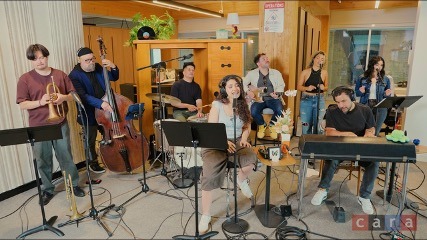
KEXP has shared a full live performance from MAQUINA., captured at ESMA in Rennes, France during Trans Musicales 2025, and it’s a remarkable document of a band operating at full force. The Brazilian trio, built around Halison Peres on drums and vocals, João Cavalheiro on guitars, and José Rego on bass, tear through four tracks with a raw, visceral intensity that makes the live setting feel absolutely essential to understanding what this band is about.

Michael Des Barres Delivers a Jolt of Glam-Fueled Proto-Punk Thunder With New Single “Kiss or Kill Me”

0

Michael Des Barres has never needed permission to make noise, and “Kiss or Kill Me” is proof he never will. The British-born, Los Angeles-based rock and roll provocateur has released a searing new single soaked in glam swagger, garage grit, and proto-punk urgency, and it lands like the jolt of lightning it was designed to be. Doused in the rebellious spirit of Bowie, the street-walking swagger of the Stooges, and the sonic seduction of T.Rex, it’s one of the most alive things Des Barres has put his name to.

The single is backed with “I Was Saved in ’64,” a spoken word b-side that transports listeners to the year a teenage Des Barres discovered rock and roll in England and first felt truly free. Molinare’s atmospheric guitarwork soundtracks the time machine beautifully. “London, sex, drugs, B.B. King. Little Richard, young English kids, Mick Jagger, Plant,” Des Barres reflects. “Three chords are all you need. It’s a teenage mantra, with a little help from illegal substances. And flared jeans.”

Des Barres wrote “Kiss or Kill Me” with longtime collaborator Loren Molinare, the Detroit legend known for his work in Slamdinistas, The Dogs, and Little Caesar. The track was produced by Molinare and Richard Duguay, engineered by Patrick Burkholder, and recorded at Pawnshop Studios in Los Angeles. The band is rounded out by Paul III on bass and Rob Klonel on drums. Molinare explains the approach: “We both wanted ‘Kiss or Kill Me’ to have the urgency of ’70s street rock, rough and dangerous sounding. Just guitars, bass, drums, and vocals. I feel the lyrics really focused my guitar playing to be dirty rock and roll.”

Des Barres frames the song with characteristic directness: “Really the song is an anthem of love, love me or leave me. You either bring love to life, or you’re not living.” His résumé backs every word of it. From fronting Silverhead and Detective, to replacing Robert Palmer in The Power Station at Live Aid before two billion people, to playing arch villain Murdoc across nine episodes of MacGyver, to hosting a daily garage rock and soul program on Little Steven’s Underground Garage on SiriusXM, Des Barres has lived more rock and roll history than most people could invent.

Fuerza Regida Make History With First-Ever U.S. Stadium Tour “This Is Our Dream”

0

Fuerza Regida are thinking bigger than ever, and their first-ever U.S. stadium tour proves it. The GRAMMY-nominated música mexicana powerhouse has announced the nine-stop “This Is Our Dream” tour, kicking off June 18th at Petco Park in San Diego and rolling through some of the most iconic stadiums in the country, including Dodger Stadium in Los Angeles and Citi Field in Queens. This is a genuine milestone for the group and for the genre.

The announcement arrives on the heels of a remarkable stretch for the band. They made history by selling out the Hollywood Bowl and Madison Square Garden in the same weekend, a first for any artist. Their “Esto No Es Un Tour” brought música mexicana to a wider global audience across Latin America. Now they’re bringing that same energy to stadiums where tens of thousands will witness it firsthand.

2026 has already been a strong year for the group. Their cumbia-norteño single “Triston,” infused with corrido influences, launched in January and pushed them back into the Top 8 most-streamed artists globally on Spotify. Their GRAMMY Award ceremony debut made waves in outlets including Vogue. They’ve also earned a nomination for Regional Mexican Artist of the Year at the iHeartRadio Music Awards and eight nominations for Premio Lo Nuestro 2026.

Tickets are on sale now.

2026 “This Is Our Dream” Tour Dates:

June 18 – San Diego, CA – Petco Park

June 20 – San Francisco, CA – Oracle Park

June 25 – Seattle, WA – T-Mobile Park

July 10 – Las Vegas, NV – Allegiant Stadium

July 12 – Phoenix, AZ – Chase Field

July 18 – Los Angeles, CA – Dodger Stadium

July 26 – Houston, TX – Daikin Park

July 31 – Arlington, TX – Globe Life Field

August 7 – Queens, NY – Citi Field

Photo Gallery: Triumph and April Wine at Toronto’s TD Coliseum on April 24, 2026

0

All photos by Mini’s Memories. You can contact her through Instagram or X.

Boo Radleys Architect Martin Carr Turns a Fever Dream Into Stunning New Single “Connie Converse Is Playing at My House”

0

Martin Carr has never done things the expected way, and “Connie Converse Is Playing At My House” is proof that he never intends to. The Cardiff-based songwriter, guitarist, filmmaker, and creative force behind The Boo Radleys and bravecaptain has released his strikingly unconventional new single, accompanied by a self-directed animated video, and it’s as fascinating and singular as anything he’s put his name to.

The song grew from an obsession. Carr discovered the story of Connie Converse, a little-known singer-songwriter who home-recorded her own wildly original music in the late 1950s before disappearing in the 1970s, through a true crime podcast. “Within a week I had listened to her songs a thousand times,” he says. “I really connected to her personal and self-effacing lyrics, there is a yearning in her songs that I recognise in my own.” The obsession peaked with a dream: Converse playing in his kitchen on a huge old Moog synth. That image became the song.

The single heralds ‘What Future,’ a new solo album of distracted beats and messy electronics arriving later this year via Carr’s own Sonny Boy Records. It follows ‘The Canton Hours,’ a collection of odds and sods recorded in the wake of his critically acclaimed 2017 solo album ‘New Shapes of Life,’ which Pitchfork called a suave, sophisticated, rhythmically robust pop record, while CLASH gave it a 9/10 and called it very possibly the best thing he’d ever released. Record Collector declared it his finest work since The Boo Radleys.

The Deadmans Arrive With Cinematic Alt-Pop Debut and Wryly Brilliant Single “If Arizona Didn’t Exist”

0

The Deadmans have arrived, and they’ve brought a whole world with them. The London-based international alt-pop collective released their self-titled debut album on April 24th, and it’s the kind of record that announces a genuinely distinct creative vision. Written and recorded across Paris, London, Brooklyn, Silverlake, and Brunswick Heads, Australia, the album is as transient and restless as the band that made it.

The latest single “If Arizona Didn’t Exist” is out now and it’s a quietly brilliant piece of work. A breakup song with no interest in drama, it trades bitterness for something more complicated and more honest, a bashful thank you wrapped in sarcasm and relief. Lyricist LaurenSage Browning captures it perfectly: “Gently indifferent gratitude isn’t sexy and doesn’t often get airtime in the discussion of fizzled out love stories, but I think it’s a very common final-destination emotion to land on for a mismatched pairing of two decent, but gravely different people.”

The self-produced music video, shot on 16mm film on a desolate stretch off Pear Blossom Highway, matches the song’s campy, knowing tone. Harry Deadman describes the intention: “We wanted this video to feel campy and glib to align with the 21-year-old-petulance that this song reflects on. Using the mid-roadtrip-strandedness as a sort of ‘Waiting for Godot’ container, we let sincerity seem cheap and light when framed through the ‘nothing-better-to-do-ness’ of waiting.” Cinematography is by Maximillian McKay, with color grade by Megan Lee at Electric Theatre Collective.

The Deadmans are Harry Deadman on music and production, LaurenSage Browning on lyrics, and Nikki DeParis on vocals. The album was mixed by Jake Black and mastered by Ruairi O’Flaherty, whose credits include Sabrina Carpenter, Taylor Swift, Billie Eilish, and Lana Del Rey. Their debut single “Nice Kid” already earned enthusiastic responses from Record of The Day, LOUD WOMEN, and At The Barrier. The album is out now.

‘The Deadmans’ Track Listing:

Nice Kid

If Arizona Didn’t Exist

She’s Not Here

Bull

Make Me Prey

Darling

You’re My Edge

Opposite Of Lonely

Cynthia

Tattoo Season