

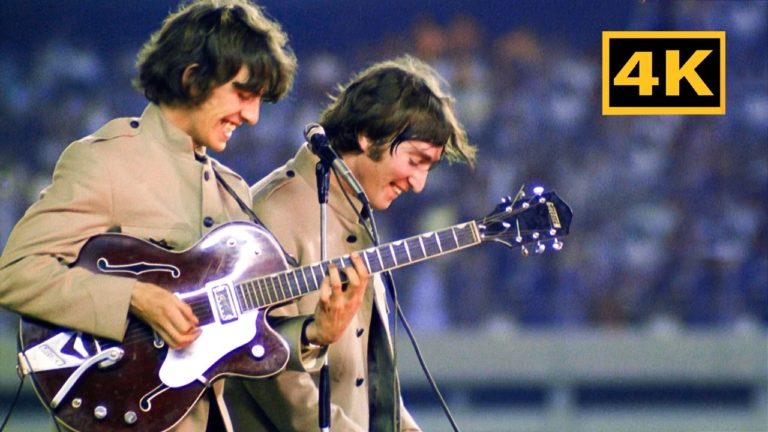
On August 15, 1965, the Beatles played Shea Stadium in New York City for 55,600 fans and changed what a concert could be. It was the first major outdoor stadium rock show, generating a record $304,000 gross, with tickets ranging from $4.50 to $5.75 that sold out in under three weeks. The screaming was so overwhelming the band couldn’t hear themselves play, and none of it mattered because what was happening in that stadium had never happened before. DRMPLX has now given that moment a full 4K remaster, presenting a triple play mix of “Twist & Shout,” “Baby’s In Black,” and “I’m Down” with audio remixed and restored, and the result has already drawn over six million views. Watching it now, the scale of what the Beatles had become by the summer of 1965 is genuinely staggering.
Bobby Cox, Hall of Fame Manager Who Built the Atlanta Braves Dynasty, Dead at 84
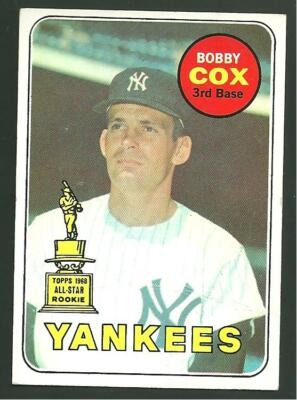
Bobby Cox died on May 9, 2026, in Marietta, Georgia. He was 84. The cause was complications from a stroke he suffered in April 2019 and subsequent heart issues. Baseball lost one of its most consequential managers, and Atlanta lost the man who gave the city its most sustained period of sporting excellence.
Cox managed 4,508 major league games across 29 seasons, finishing with a career record of 2,504 wins and 2,001 losses. Only Connie Mack, John McGraw, and Tony La Russa won more regular season games. He was ejected 158 times, an all-time record, and led his teams to 16 playoff appearances, another record. He won the Manager of the Year Award four times, once with the Toronto Blue Jays in 1985 and three times with the Braves in 1991, 2004, and 2005. He was inducted unanimously into the Baseball Hall of Fame in 2014.
None of those numbers capture what Cox actually meant to the teams he managed or the city he called home for most of his adult life.
He took over the Braves as field manager in June 1990, inheriting a last-place team, and by 1991 had engineered one of baseball’s most stunning reversals, going worst to first and reaching the World Series. That was the beginning of 14 consecutive division titles from 1991 through 2005, excluding the strike-shortened 1994 season. No professional sports franchise in any major North American league had ever accomplished anything like it. Cox won the only World Series of his managerial career in 1995, defeating the Cleveland Indians. The Braves made five World Series appearances under his management.
Before returning to Atlanta as manager, Cox had spent four seasons guiding the Toronto Blue Jays from 1982 to 1985, leading the franchise to its first winning record in 1983 and its first American League East title in 1985. He also served as the Braves’ general manager from 1986 through 1990, during which time he drafted Chipper Jones with the first overall pick in 1990 and assembled the core of the pitching staff, Tom Glavine, John Smoltz, and Steve Avery, that would anchor the dynasty. He handed the GM role to John Schuerholz after the 1990 season and returned to the dugout, where he stayed for two more decades.
Cox’s reputation among his players was singular. Catcher Brian McCann said it plainly: “He is the Atlanta Braves. He’s the best.” His approach to managing was fatherly in its consistency, always in spikes and stirrups, always protecting his players, often getting himself ejected to spare them the penalty. In 158 ejected games, his teams won at a rate of .385, a number that reflects how many of those removals were deliberate sacrifices rather than losses of composure.
His ability to recognize and develop talent extended beyond the obvious. It was Cox who moved power-hitting catcher Dale Murphy to center field in 1980, a repositioning that unlocked one of the great careers of the decade. Murphy went on to win two National League MVP Awards and five Gold Gloves. Cito Gaston came to Toronto as a coach because of Cox, and later became manager of the Blue Jays himself, winning back-to-back World Series titles. The fingerprints of Cox’s baseball judgment are spread across decades of the sport.
The Braves retired his number six jersey in 2011. He attended games when his health allowed, received standing ovations every time he appeared on the field, and remained deeply connected to the organization until the end. His death comes days after that of former Braves owner Ted Turner, May 6, 2026, a loss that Atlanta fans on social media described as the worst week in the franchise’s history.
The Braves’ statement said it cleanly: “His Braves managerial legacy will never be matched.” That is simply a fact.
Video: Norah Jones and Joshua Homme’s Podcast Conversation Is as Unexpected and Wonderful as It Sounds
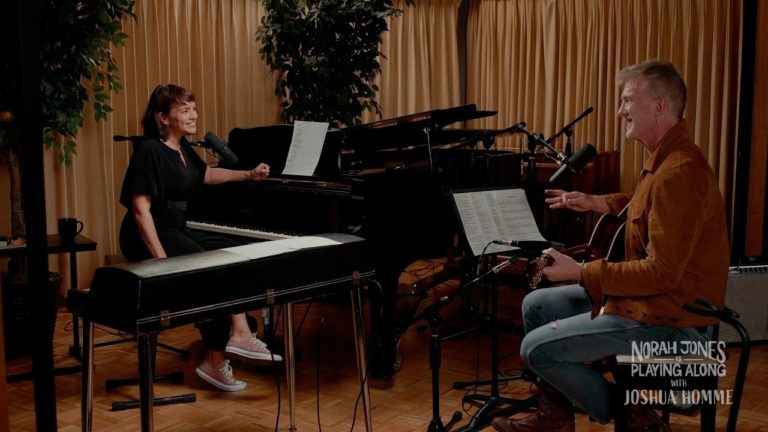
Norah Jones and Queens of the Stone Age frontman Joshua Homme are not an obvious pairing on paper, which is exactly what makes their conversation on Season 2 Episode 18 of “Norah Jones Is Playing Along” so consistently surprising and engaging. The discussion wanders from the inherent creepiness of nursery rhymes to the human nature of music to the story behind Homme’s project Alive in the Catacombs, with a few songs performed along the way that fit the Valentine’s-ready mood Jones sets up around them. Homme is candid and genuinely funny, Jones is the ideal host for this kind of freeform musical conversation, and the chemistry between two artists who exist in completely different corners of the music world but share a deep seriousness about craft makes every tangent worth following.
Video: Tim Booth Reveals Morrissey Doesn’t Talk to James Anymore and Reflects on 45 Years of the Band
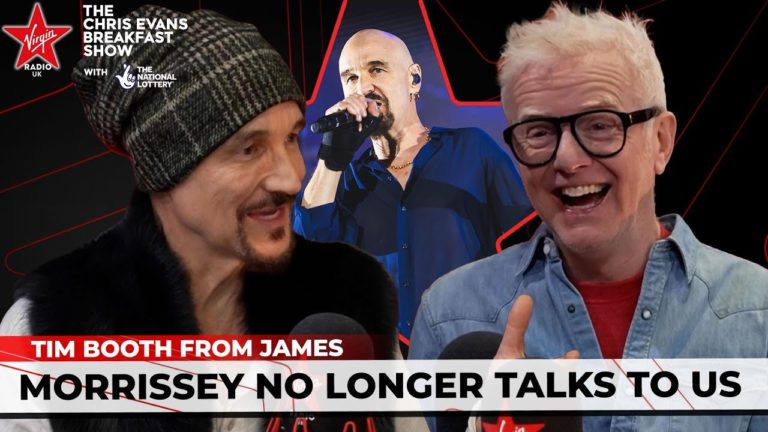
Tim Booth sat down with Virgin Radio UK as James embarked on a UK arena tour, and the conversation covers 45 years of one of British indie rock’s most enduring bands with the kind of candor you don’t always get. Booth touches on their early days touring with The Smiths, the memorable moment playing on the roof of Key 103 in Manchester, their unique approach to improvising new music in the studio, and the extraordinary emotional connection fans still have with “Sit Down” more than 3 decades after its release. The Morrissey revelation, that the former Smiths frontman no longer speaks to the band, lands as one of those offhand disclosures that says more than a full interview might, and Booth delivers it with the kind of ease that suggests it’s simply a fact of life at this point. For anyone who grew up with James or came to them through “Laid” or “Sit Down,” this is a genuinely warm and revealing conversation.
Video: Bill Frisell Talks Music, Guitars, and His Pedalboard and It’s a Conversation Worth Savoring
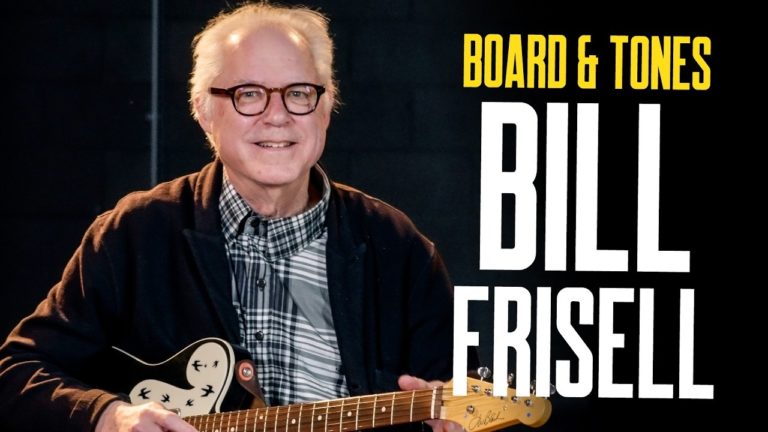
Bill Frisell stopped by That Pedal Show during a UK visit to play the Wiltshire Music Centre in Bradford on Avon, and the conversation that followed is one of the most quietly profound guitar interviews you’ll find anywhere. Frisell, whose catalog spans jazz, Americana, classical, and everything in between across more than 4 decades, talks through his approach to melody, harmony, and ensemble playing, his memories of New York in the 1980s, his relationship with Paul Motian, and yes, the gear: a JW Black custom guitar, a Fender ’65 Deluxe Reverb, and a pedalboard anchored by a Line 6 DL4 MkII, MXR Carbon Copy Mini, Strymon Flint, and Jam Pedals Tube Dreamer. Host Mick notes in the description that some conversations change you forever, and having spent time with Frisell’s music, that reads as completely credible. He also discusses his new record ‘In My Dreams’ toward the end of the interview, making this essential viewing for anyone who cares about the guitar as a vehicle for pure musical expression.
Video: Genesis ‘Three Sides Live’ Full Laserdisc Documents the Band’s Start To Their Commercial Era

By 1981, Genesis had completed one of the most successful reinventions in rock history. The progressive architecture of the Peter Gabriel years, ‘Selling England by the Pound,’ ‘The Lamb Lies Down on Broadway,’ ‘Foxtrot,’ had given way to a leaner, more accessible sound that was connecting with audiences on a scale the band had never previously reached. ‘Three Sides Live,’ recorded during the ‘Abacab’ tour and released in June 1982, documents that commercial peak with a setlist that bridges both worlds.
The full laserdisc runs 12 performances, including “In The Cage” from ‘The Lamb Lies Down on Broadway’ and “Afterglow” from ‘Wind & Wuthering’ sitting alongside newer material like “Abacab” and “Misunderstanding.” Chester Thompson on drums and Daryl Stuermer on guitar round out the live lineup, giving Phil Collins the freedom to front the band full time, a role he had grown into completely by this point. The recording reached number 2 on the UK Albums Chart and remains one of the definitive documents of this era of the band.
Video: Martin Short’s Jiminy Glick Interviews Catherine O’Hara and It’s Absolute Comedy Gold
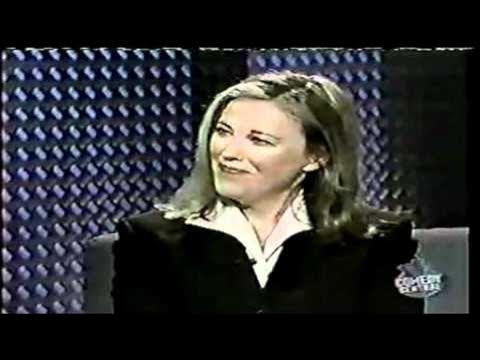
2 SCTV legends, 1 gloriously unhinged interview. Martin Short’s Jiminy Glick, the pompous, clueless, completely fictional entertainment journalist, sits down with Catherine O’Hara in a clip that holds up completely more than a decade after it was recorded. Short’s commitment to the character is total, O’Hara’s ability to play it completely straight while barely holding it together is a masterclass in comic timing, and the chemistry between 2 performers who have known each other since their SCTV days makes every exchange land harder than it should. If you’ve never seen Jiminy Glick in action, this is the perfect introduction. If you have, you already know exactly why this keeps circulating.
Denny Seiwell Shares His Paul McCartney Story and It’s Everything You’d Hope It Would Be
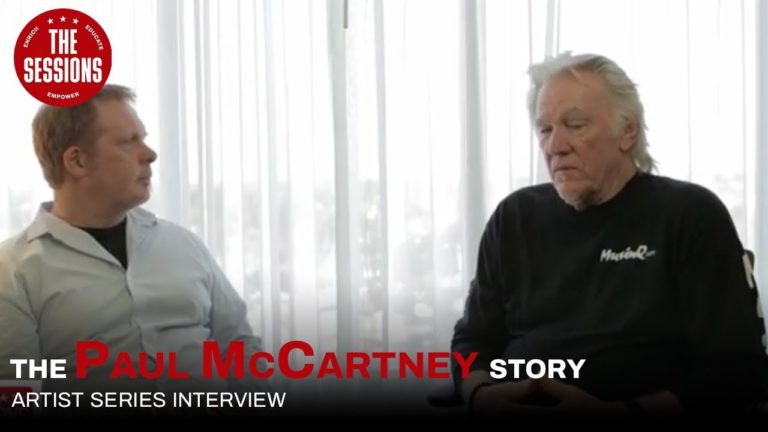
Denny Seiwell was the drummer for Wings during one of the most creatively fertile periods of Paul McCartney’s post-Beatles career, and his conversation with The Sessions Panel delivers exactly the kind of firsthand insight that only someone who was actually in the room can provide. The Sessions, a not-for-profit organization dedicated to educating musicians on the business side of the industry, has built its Artist Series around exactly these kinds of conversations, pairing legendary musicians with interviewers who understand the craft and the context. Seiwell’s McCartney story is candid, warm, and specific in ways that remind you how much of music history happened in ordinary moments between extraordinary people.
Rick Beato Sits Down With 28-Year-Old Polish Bass Phenom Kinga Głyk and the Result Is Unmissable
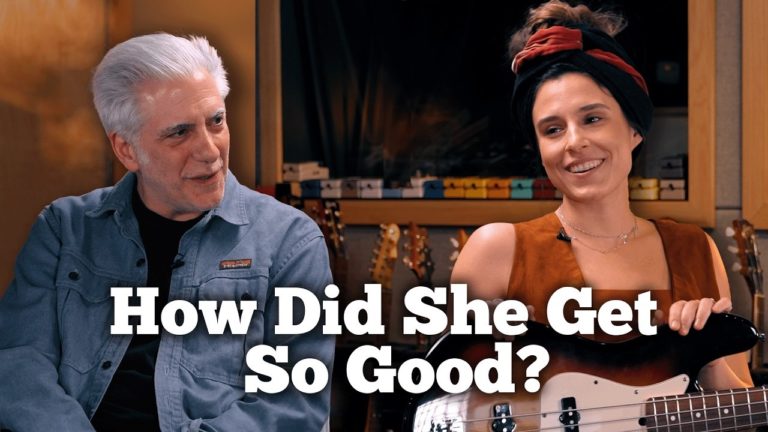
Rick Beato has a gift for finding the musicians that serious players are already whispering about and putting them in front of a wider audience, and his interview with 28-year-old Polish bassist Kinga Głyk is one of his best. The conversation, which has already pulled nearly 667,000 views, covers her technique, what she actually practices, and the specific challenges of being a working musician in the age of social media. Głyk, who has performed with the Frankfurt Radio Big Band and appeared at Jazz in Marciac and Leverkusener Jazztage among many other prestigious stages, brings a fluency and musicality to the bass that genuinely stops people in their tracks, and Beato gives her the space to explain exactly how she got there and what keeps her developing. For anyone who plays bass, loves jazz, or simply appreciates watching someone operate at the highest level of their craft, this one demands your full attention.
Rick Beato Gets The Darkness’ Justin Hawkins to Break Down How “I Believe in a Thing Called Love” Got Made
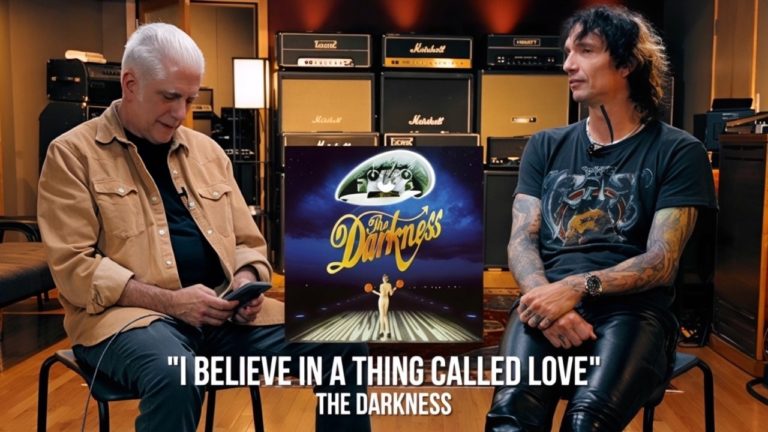
Justin Hawkins is one of the most entertaining talkers in rock music, and his conversation with Rick Beato about the making of “I Believe in a Thing Called Love” is exactly the kind of inside look that reminds you how much craft and luck goes into a song becoming a classic. The clip covers the realities of getting a record deal in the early 2000s alongside the specific creative decisions that made the song land the way it did. Hawkins is candid, funny, and completely unguarded in a way that makes the whole conversation genuinely entertaining regardless of how well you know The Darkness or the song itself.