Home Blog Page 203

Curating a Soundtrack for Maximum Focus and Productivity

0

By Mitch Rice

Finding the right soundtrack can change your workday from scattered and distracted to focused and productive. While some people swear by complete silence, many discover that carefully picked music or ambient sound helps them concentrate better and work more efficiently. The key is in understanding how different sounds affect your brain and applying that knowledge to create an optimal auditory environment tailored to your specific needs and tasks.

  1. Setting the Stage for Peak Performance

Noise pollution, from bustling offices to chatty roommates, routinely derails focus and productivity. Whether you’re trying to complete a complex analysis or write a detailed report, environmental distractions constantly pull your attention away from the task at hand. Music functions as an auditory shield, helping you manage your environment instead of letting it manage you. It’s not just about covering noise; it’s also about creating a predictable sound environment that allows your brain to stop processing auditory distractions, freeing up mental energy for meaningful work. Research indicates that appropriate background music can improve concentration and task completion rates, making it a valuable productivity tool when applied strategically.

  1. Tools to Optimize Your Listening

Quality headphones or earbuds are essential for minimizing external noise and maximizing the benefits of your chosen soundtrack. Over-ear models provide superior noise isolation, while in-ear options offer portability and comfort for extended wear. When working online, securing your digital life is very important. You should consider using a VPN for iPhone or other devices to guarantee that your work stays private and secure, especially if you access public Wi-Fi networks. Maintain moderate volume levels because the goal is to mask distractions without creating a new one or risking hearing damage from prolonged exposure to loud audio.

  1. The Auditory Ingredients of Deep Work

Instrumental music is usually the most effective choice for concentration-intensive tasks. Lyrics force your brain to engage with language processing, diverting cognitive resources from the work you’re trying to complete, particularly reading or writing. Consider exploring lo-fi beats, ambient soundscapes, or Baroque classical music. Baroque pieces often feature steady tempos around 60 beats per minute, which some studies suggest can align with alpha brainwaves, which are a state associated with calm alertness and optimal learning. Electronic ambient music, nature sounds, and minimalist compositions also create consistent sonic backgrounds that support sustained focus without demanding attention.

  1. Personalizing Your Perfect Sound Environment

Experimentation is essential to discovering what works for your brain. Personal preference is also important in how music affects productivity, so invest time in testing different options. Match the music’s energy level to your task’s complexity, such as repetitive, low-concentration work that pairs well with familiar music that elevates mood and energy, while deep, analytical work benefits from unfamiliar, non-lyrical sounds like flowing water or white noise that blend into the background. Different musical genres and tempos trigger distinct emotional responses, so create genre-specific playlists for different task types: upbeat instrumentals for data entry, ambient soundscapes for writing, and complete silence or minimal sound for tasks requiring maximum concentration.

When thoughtfully choosing and customizing your sonic environment, you change music from passive background noise into an active productivity tool that improves focus, blocks distractions, and helps you achieve flow states more consistently.

Data and information are provided for informational purposes only, and are not intended for investment or other purposes.


From Art to Earth: Creative Movements Inspiring a Greener World

0

By Mitch Rice

Creativity has become one of the most powerful tools for transforming our relationship with the planet. From music to painting, and from design to architecture, contemporary artistic movements are reshaping how we understand sustainability. More and more creators are integrating recycled materials, eco-friendly processes, and messages of environmental awareness into their works, driving a change that goes far beyond aesthetics.

This cultural awakening is also reflected in brands that find inspiration in nature. A clear example is Blimburn Seeds, a company that combines genetic innovation with environmental respect, developing cannabis seeds focused on sustainability and on balancing creativity, science, and green living.

Art as a Tool for Ecological Change

For years, art has served as a reflection of human concerns, and today, the environment occupies a central place. Many artists have chosen to transform discarded materials into sculptures, murals, or installations that invite us to reflect on the impact of consumption. These works deliver visually striking messages that question how we live and produce.

The strength of ecological art lies in its ability to connect emotion with awareness. Through the senses, the viewer grasps the urgency of caring for natural resources, and that experience can spark a deeper transformation.

Music and Sustainability: A Green-Sounding Alliance

The world of music has also joined this ecological revolution. Some international festivals are implementing measures to reduce their environmental footprint: solar-powered stages, recycling systems, or collective transportation for attendees. Even renowned artists are composing songs addressing climate change and environmental justice.

By adopting these practices, the music industry promotes a culture of awareness and inspires millions to rethink their lifestyles. Each note becomes a form of activism, transforming the way we understand the relationship between art and nature.

Sustainable Design: A Balance of Aesthetics and Awareness

Contemporary design has found in sustainability a new form of expression. Architects, fashion designers, and industrial creators are exploring recyclable materials, renewable energies, and more responsible production processes. The key is to combine functionality with ethics, giving life to objects and spaces that convey harmony with their surroundings.

Creativity applied to green design doesn’t aim to give up style, but to reinvent it. More and more studios are experimenting with plant-based fibers, natural pigments, and eco-friendly 3D printing. This trend proves that sustainability can be synonymous with innovation and beauty.

Green Culture and Community: The New Urban Revolution

Cities are adopting a new language where art and ecology intertwine. Murals with environmental messages, vertical gardens designed by local artists, and community recycling workshops are redefining urban aesthetics. These initiatives beautify the environment and strengthen collective awareness about respect for the planet.

Through these cultural expressions, public spaces are transformed into living stages for environmental education. In this way, art becomes a bridge between individual creativity and collective action, inspiring communities to take an active role in protecting the environment.

Green Inspiration: When Creativity Shapes the Future

The shift toward a more sustainable world doesn’t rely solely on policies or technological progress; it also emerges from art, music, and ideas that awaken emotion and awareness. When creativity aligns with ecological responsibility, movements arise that can inspire entire generations.

Ultimately, living sustainably isn’t just a practical choice but a cultural expression. Every song, mural, or green initiative is a piece of art reminding us that the future can be as creative as it is conscious. Caring for the planet is also an act of imagination—and in that blend of art and earth, we find the inspiration for a more humane, balanced, and green world.

Data and information are provided for informational purposes only, and are not intended for investment or other purposes.

Eco4 Boiler Scheme Boosts Heating Efficiency at Home

0

By Mitch Rice

Warming up your house during winter is expensive. The eco4 boiler plan benefits the cost of that. This government plan offers grants to install new boilers or heating systems in the homes of the homeowners. The eco4 boiler scheme is expected to reduce carbon and help in heating to be greener. It’s a smart move for cold months.

Want expert installation and great support, Home Energy Guide is the company and service provider you can trust. They take pride in delivering reliable service and top-quality results for every heating upgrade.

What is the Eco4 Boiler Scheme?

Eco4 boiler scheme is an initiative supported by the government to lose old systems of heating. You might be eligible in case your boiler is inefficient or is broken. Approved installations are partially financed by the scheme. This is aimed at cutting down the emissions and minimising the household energy bills.

In order to apply, you need to pass some conditions. Your house has to be inefficient in energy or be poorly insulated. The work shall be done by an authorised installer. The scheme is applicable to houses in England, Scotland and Wales based on local roll out. The level of grants is based on income and type of property. Large savings in fuel bills are realised in many households.

The Heating Problem in the Winter

Winter is associated with high usage of energy. Boilers are old and they do not perform well during cold weather. They are fuel guzzlers and they burn heat. A new good boiler supplies steady warmth. You feel comfortable. Even when it is chilly at home, it is warm. The eco4 boiler scheme makes it cheaper to upgrade for winter. When you need it most, you do not break down.

In addition, the carbon production is lowered by using a superior boiler. That helps climate goals. In the long-term, you will make savings and cause less impact. The eco4 boiler scheme is particularly useful to low and middle income homes during winter.

How to Select the Best Electric Boiler?

When you consider electric heating, you search for the best electric boiler for your home. The most efficient, reliable and low-running cost electric boiler provides us with the best. You desire one that can be adjusted to the size and insulation of your home.

Electric boilers are quiet. They need no fuel storage. They’re simpler to maintain. They cause less pollution in the areas where electricity is cleaner. You need to compare models in terms of output, warranty and control.

Select a brand that is well supported. Ensure that the installer is a certified one. Enquire about smart controls in order to heat the house only when it is necessary. That conserves energy in winter.

Comparing Electric vs Gas or Heat Pumps

Electric pumps are cleaner at the point of use, but electricity may be expensive. Gas boilers are potentially less expensive unit wise but carry carbon costs. Heat pumps are effective and costly to install in ancient houses.

A best electric boiler would suit well in case your home is already well wired. Some of the installations can be under the eco4 boiler scheme, as long as the boiler is used to replace inefficient heating. Switch the electric heating on to that scheme in winter. In that manner, you can save and be warmed.

Steps to Apply and Install

Check eligibility

See if your home qualifies. Check income, insulation, age of system.

Obtain quotes of licensed installers.

Request quotes for both gas and electric pumps.

Choose a unit

In the case of electricity, select the most suitable electric boiler.

Prepare your home

Insulate walls, lofts, windows. That assists in heating performance.

Install and test

The installer does the job. They commission the boiler.

Monitor usage

Use smart controls. Track your bills.

Tips to Maximize Winter Benefits

  • Install timers because you will only turn on the heating when you are home.
  • Reduce the night thermostat; add additional blankets.
  • Turn on radiators, bleed them and turn off again.
  • Get your boiler serviced once every year.

Final Thoughts

The eco4 boiler scheme will provide an alternative way of heating in winter at a lower cost and in a cleaner way. A good system, with or without gas, or heat-pump or electric, is good. Going electric, purchase the best electric boiler that you can afford. Combine it with insulation and smart control. And you will have warm and efficient homes throughout the winter and pay less of it.

Data and information are provided for informational purposes only, and are not intended for investment or other purposes.

Foo Fighters Announce 2026 Stadium Tour with Queens of the Stone Age

0

The Foo Fighters are back, louder and larger than life. Dave Grohl and company just dropped their brand-new single “Asking For A Friend” and announced a massive 2026 North American stadium tour with none other than Queens of the Stone Age. Grohl calls it “a song for those who have waited patiently in the cold,” and it’s the perfect anthem to lead into a summer built on hope, riffs, and rock salvation.

This will be the Foos’ first full tour with drummer Ilan Rubin, joining the band after Josh Freese’s departure earlier this year. That means fans will get two of the most electrifying live acts on Earth sharing one stage every night.

Tickets go on sale October 31 at 10 a.m. local time at foofighters.com, with presales opening October 29. Expect fireworks, sweat, and songs that sound like your life flashing before your eyes—in the best way possible.

Foo Fighters 2026 North American Stadium Tour
Aug 4 – Toronto, ON – Rogers Stadium
Aug 6 – Detroit, MI – Ford Field
Aug 8 – Chicago, IL – Soldier Field
Aug 10 – Cleveland, OH – Huntington Bank Field
Aug 13 – Philadelphia, PA – Lincoln Financial Field
Aug 15 – Nashville, TN – Nissan Stadium
Aug 17 – Washington, DC – Nationals Park
Sep 12 – Fargo, ND – Fargodome*
Sep 15 – Regina, SK – Mosaic Stadium
Sep 17 – Edmonton, AB – Commonwealth Stadium
Sep 20 – Vancouver, BC – BC Place
Sep 26 – Las Vegas, NV – Allegiant Stadium

(*Queens of the Stone Age not appearing in Fargo)

Is Reducing Blue Light Intensity Enough, or Do We Need to Filter Specific Wavelengths Too?

0

By Mitch Rice

In the digital era, we are all concerned about exposure to blue light. The potential negative consequences of excessive screen time, including disrupted sleep patterns and persistent eye strain, are making solutions a necessity. Several devices now offer a “blue light reduction” option. However, a crucial question is whether we simply need to reduce the amount of blue light produced by these devices or if more complex filtering of specific and harmful wavelengths is required. The solution lies in understanding the science and technology that are designed to keep us safe, without compromising visual quality.

The Blue Light Spectrum: Not All Blue is Created Equal

Blue light belongs to the spectrum of visible light (approximately, 380-500 nanometers), which is not necessarily evil. Our number one source of sunshine is rich in blue light and plays a crucial role in regulating our circadian rhythms (sleep-wake cycles), enhancing alertness, and uplifting our mood throughout the day. This issue is encountered with prolonged and intense exposure, especially to artificial lights such as LEDs and digital displays, particularly during the evening.

But not every blue light wavelength will affect us at the same rate. Studies are increasingly indicating that a particular high-energy band in the blue spectrum, approximately 415nm to 455nm, happens to be the most disruptive to the production of melatonin (the sleep hormone) and may be more harmful to retinal cells in the long term. Colors higher than 460 nm (closer to blue-green) are said to be not so disruptive to sleep and even helpful in daytime alertness. This represents a significant difference in the process of assessing protection measures.

Dimming vs. Filtering: A Fundamental Difference

1.  Reducing Intensity (The Blunt Approach)

It is the most straightforward technique, commonly executed through software, such as Night Modes, Blue Light Filters, or Warm Color Temperature settings. It operates by simply reducing the total intensity of the blue light produced across the entire blue range. Although this can decrease glare, alleviate eye stress, and result in a certain amount of sleep loss, it is a crude tool. It selectively absorbs the potentially damaging shorter wavelengths (415-455 nm) as well as the less detrimental, potentially useful longer blue wavelengths (460-495 nm). The result? The screen is distinctively, and often undesirably, yellow or amber colored, significantly impairing the definition of colors. This may be especially troublesome when it comes to jobs that require accuracy with color, such as photo editing or graphic design, or when using an outdoor device, such as a portable monitor.

2.  Filtering Specific Wavelengths (The Precision Approach)

It is a sophisticated technique that employs dedicated hardware technologies, utilizing coating, filters, or specially designed LEDs to selectively block or absorb the most disruptive high-energy violet-blue light (mainly in the 415-455 nm range) and allow the less disruptive blue-green light to pass through comparatively unchanged. The aim is to achieve surgical accuracy: eliminate the harmful wavelengths without significantly altering the total color balance and brightness of the display. This preserves color accuracy, picture sharpness, and image brightness, providing useful protection without a visual tradeoff of mere dimming. This special filtering is often preferable for professionals who depend on the precise reproduction of color or for anyone using a high-performance, sunlight-viewable monitor. 435-455 nmuct Showdown: How Brands Tackle the Challenge

Let’s examine how leading brands implement these strategies:

UPerfect: Leading with Hardware Filtering

UPerfect focuses on integrating hardware-level solutions into its portable displays:

1.  UPerfect X Pro 15.6″ 4K Portable Monitor 

Uses proprietary Eyesafe technology, a hardware filter that filters out more than 50 percent of the most harmful high-energy blue light (at the 435-455nm peak) without losing much of its color accuracy (100 percent sRGB). Ideally suited to those creators who require realistic images in real-time.

2.  UPerfect Game Plus 15.6″ Portable Gaming Monitor 

Features dynamic blue light reduction with a hardware filter, reducing the wavelengths of 415-455 nm during vivid gaming periods. This eliminates eye strain with no input lag or color shift, unlike software solutions.

3.  UPerfect Touch 15.6″ Portable Monitor

This UPerfect touchscreen portable monitor is an LED panel with low-blue-light and a built-in optical filter. It is also effective in reducing 30 percent of the worst wavelengths while retaining the entire 100 percent sRGB color gamut, which is ideal for satisfying the needs of designers and professionals who require touch access and color precision.

Competitor Approaches: A Mixed Bag

1.  ASUS ProArt PA278CV

It is mainly based on software-based settings of the so-called Ultra Low Blue Light, which have four fixed intensity levels. Although a good strain-reducing element, particularly at higher settings, it results in a pronounced and usually undesirable yellow colouration, which reduces the quality of work requiring colour.

2.  BenQ PD2700U

Offers Low Blue Light Plus, an in-built panel hardware filter. It is much less harsh than software filters on the yellow shift, and it blocks at 415-455 nm. Superior in color precision, although the fixed filter lowers the peak brightness slightly, in comparison with the unfiltered modes.

3.  Dell UltraSharp U2723QE

Uses ComfortView Plus, a technology built into the IPS Black panel and implemented as a hardware-based feature. It blocks approximately 35 percent of harmful blue light and features 99 percent sRGB coverage with minimal color shift—a powerful and balanced office and business alternative.

4.  LG 27UK850-W

 Provides software-only Reader Mode, which can massively reduce blue light across the spectrum. Although easy to switch on, it does not offer the same level of hardware-filtering accuracy. It therefore displays a highly intense warm/yellow cast, whih grossly distorts colors and thus cannot be used in any task that is susceptible to color distortion.

The Verdict: Precision Protection Wins

Although the flattening of blue light intensity in general and the elimination of blue light in particular provide some relief, it is essentially a trade-off that compromises visual quality and color accuracy. A more advanced and efficient solution would be to filter out specific damaging wavelengths, especially those falling within the 415-455 nm spectrum. It provides a particular shield against the most disruptive and potentially damaging blue light with no harmful yellow color or clarity reduction that comes with basic dimming.

Companies such as UPerfect, BenQ, and Dell are at the forefront, incorporating hardware-based filtering technologies into their screens. To any person who spends enough time in front of a screen, it is not a luxury to invest in a device which filters colors by their wavelengths accurately, whether that device is a portable workstation, a high end desk panel, or even a sunlight viewable monitor to take the work outside; it is, in fact, a necessity in long-term eye health (and long-term productivity). Make a wise choice; the eyes need to be sharp to the point, or they dim.

Can You Really Watch Instagram Stories Anonymously? Exploring Safe and Smart Ways in 2025

0

By Mitch Rice

In 2025, Instagram remains one of the most engaging social platforms — a place where people share fleeting moments through Stories, Highlights, and Reels. But what if you want to view someone’s Instagram Story without them knowing? Whether you’re doing social media research, checking up on competitors, or simply curious about a public account, the question always arises: Can you actually watch Instagram Stories anonymously?

The short answer is yes — it’s possible. But not all methods are safe or reliable. Let’s break down the real, secure, and smart ways to view Instagram Stories anonymously in 2025.

Why People Want to Watch Stories Anonymously

There are plenty of reasons why someone might want to stay invisible while browsing Instagram:

  • Privacy: You may not want others to know you viewed their story, especially in professional or social circles.
  • Competitor research: Marketers often analyze what other brands are doing without wanting to appear on their viewer lists.
  • Curiosity: Sometimes, you just want to see what someone’s up to — no harm intended, just genuine interest.

However, doing this safely requires understanding how Instagram’s tracking system works — and why traditional “hacky” methods can put your privacy at risk.

How Instagram Tracks Story Viewers

Every time someone views a Story, Instagram records their username in the viewer list. This data is linked to their logged-in account, which means your activity is automatically visible to the Story owner. Even switching accounts or using “fake” ones doesn’t guarantee full anonymity.

That’s why third-party tools have become popular — they allow users to bypass this tracking while still giving full access to the content. But again, not all tools are created equal.

The Problem with Unsafe Viewers and Apps

If you search online for “anonymous Instagram viewer,” you’ll find hundreds of websites and apps that claim to let you watch Stories secretly. But many of them are unsafe.

Here’s why you should avoid random or unverified tools:

  • They ask for your Instagram login. Never share your username and password with third-party websites. It’s a major security risk.
  • They collect your data. Some tools secretly track your browsing activity or sell your information.
  • They install unwanted software. Free apps might contain ads, pop-ups, or even malware.

In short — if you want to stay anonymous, using an unsafe tool defeats the purpose. You need a platform that doesn’t ask you to log in, doesn’t track you, and gives you full privacy.

A Smarter Option: Dolphin Radar

One of the safest and easiest tools to use in 2025 is Dolphin Radar. It’s designed for people who want to explore Instagram content without logging in or downloading anything.

With Dolphin Radar’s Anonymous Instagram Story Viewer, you can:

  • View Stories without logging in: You don’t need an Instagram account at all. Just enter the username you want to check, and you can view their public Stories instantly.
  • Stay completely hidden: Dolphin Radar doesn’t share your activity with Instagram, so no one knows you’ve seen their Story.
  • See more than Stories: You can also view Highlights, posts, and even reels from public accounts.
  • Save content easily: Found something interesting? You can download Stories or Highlights to watch later.
  • Use it on any device: Dolphin Radar works smoothly on phones, tablets, and computers — no app or installation needed.

This makes it a great choice for anyone who values both convenience and privacy.

Why Tools Like Dolphin Radar Stand Out in 2025

The reason tools like Dolphin Radar are becoming popular isn’t just about curiosity — it’s about privacy empowerment. In a digital world where almost every action is tracked, people are becoming more conscious of their online footprints.

Unlike apps that ask for your Instagram password or track your behavior, Dolphin Radar focuses on user safety and zero login access. That means you’re not feeding data into another system — you’re simply using a viewer interface to check publicly available content.

It’s also ideal for marketers, journalists, and researchers who need to observe Instagram trends without alerting competitors or sources.

Can You Stay Anonymous on Instagram Without Tools?

People often ask if they can stay anonymous using Instagram alone. Unfortunately, the answer is no.

Instagram does not offer any built-in feature that hides your identity while viewing Stories. Whether you use your main account or create a fake one, your username still appears on the viewer list. Even “private browsing” or “airplane mode” tricks don’t guarantee invisibility.

So, if you truly want to stay anonymous, your best option is to use a trusted Anonymous Instagram Story Viewer like the one on Dolphin Radar.

Tips for Staying Safe While Viewing Instagram Stories

Even when using safe tools, it’s smart to follow some simple safety tips:

  • Avoid giving out your Instagram password to any third-party app or website.
  • Use verified, trustworthy tools that clearly explain their privacy policies.
  • Never click on suspicious links claiming to let you “spy” on private accounts.
  • Respect privacy boundaries. Anonymous viewing is meant for curiosity or research — not for misuse or harassment.
  • Bookmark trusted tools like Dolphin Radar instead of searching new ones each time.

By following these small steps, you can enjoy browsing safely and privately.

Why Privacy Matters in 2025

Online privacy isn’t just about hiding your identity — it’s about protecting your freedom to explore and learn without judgment. Social media has blurred the line between public and private life, making it harder to control what we share or who sees it.

Tools like Dolphin Radar give users that control back. They let you browse Instagram freely, without worrying about who’s watching you back.

Whether you’re doing competitor research, analyzing trends, or simply checking someone’s updates, it’s comforting to know that you can do so privately, safely, and without leaving a digital footprint.

Final Thoughts

So, can you really watch Instagram Stories anonymously in 2025? The answer is yes — absolutely.

However, the method you choose makes all the difference. Avoid unsafe apps or websites that ask for your login. Instead, go for a reliable, secure option like Dolphin Radar and its Anonymous Instagram Story Viewer.

With Dolphin Radar, you can view Stories, Highlights, and posts anytime — without logging in, without leaving a trace, and without risking your privacy.

It’s the smart, simple, and safe way to stay curious in the digital world.

So next time you’re tempted to peek at someone’s Story — do it the right way: stay anonymous, stay safe, and stay smart.

Data and information are provided for informational purposes only, and are not intended for investment or other purposes.
What Documents Are Needed for a Heat Pump Grant Application

0

By Mitch Rice

Securing your ECO4 heat pump grant application approval boils down to one thing: having your paperwork in order. You will have five simple documents that verify your identity and address, as well as four additional items that verify your heat pump is of the correct standard. To explore similar opportunities, you can also check air source heat pump grants that support energy-efficient home upgrades.

Let’s go through exactly what you will need so your application goes smoothly without hold-ups. But, before we dive into the details of the required documents, let’s walk through what you need to be eligible in the first place. 

Eligibility Requirements for a Free Heat Pump Grant

Heat pump grants are specifically designed for off-gas properties, which use heating systems with high carbon emissions. So, if your property is off-gas, you might qualify by fulfilling these requirements. 

  • Someone from the household is a benefit recipient or meets the lower-income threshold.
  • An EPC Rating of E, F, Or G. 
  • No Gas Connection 
  • Your property must have adequate insulation to qualify, or you must be willing to get a free insulation grant along with a free heat pump. 
  • Your property must have enough outdoor space for heat pump installation. If not, you might qualify for an Electric Storage Heater. 

If you meet the above criteria, you can apply for these grants through heating installers like ECO Energy Services to apply on your behalf and get approval. 

The Basic Documents Every Applicant Needs

Before we get into the heat pump details, let’s deal with the basics. These five documents apply to all ECO4 applications, whether you’re installing a heat pump or any other energy efficiency upgrade. Consider them your entrance fee; without them, you can’t even begin.

Your Benefits Proof

Are you on benefits? That’s what this report demonstrates. Your benefits statement corroborates that you’re eligible for the grant in the first place.

  • Universal Credit Statement
  • Pension Credit Award Letter
  • ESA or JSA Statements 
  • Child Benefit Statement 
  • Income Support Allowance (ISA)
  • Working Tax Credit (WTC) 
  • Housing Benefit

Your document must be absolutely clear. Can a person quickly read your entire name? Is the date clear and not old? All these matter more than you might realise.

Photo ID That Verifies You Are You

The grant administrator must be able to verify that the individual who is claiming benefits is the same individual applying for the grant.

Your UK passport is fine, even if it was due to expire in the past year. A photocard driving licence with your up-to-date address is also acceptable. Married and changed your name? Simply add your marriage certificate or deed poll to your ID. Easy peasy.

Proof You Live at This Property

Why is this important? The grant funds improvements to your individual property. You must demonstrate you are entitled to make such alterations.

An up-to-date council tax bill serves wonderfully in this regard. So does a recent mortgage statement. Even a utility bill to you from the previous quarter does the trick.

Letting out your property? Your tenancy agreement and a letter, signed by your landlord confirming they’re content with the heat pump being installed, will be required. No landlord permission = no grant; so talk to them sooner rather than later.

  1. Your Energy Performance Certificate

Here’s where things get interesting. Your EPC shows how energy-efficient your home is right now. For ECO4, your property needs to rate between E and G.

If you don’t have one, that’s not a problem. Head to gov.uk/epc and pull up your certificate; it’s free and takes two minutes. If you can’t find it there, your installer can arrange a fresh assessment at no cost to you. Getting this sorted early speeds up your approval by one to two weeks. Worth the effort, right?

  1. A Recent Energy Bill

Your electricity bill from the last three months confirms your address and shows what you’re currently spending on heating. Keep it handy; you’ll need it.

The Extra Paperwork Heat Pumps Require

Heat pumps are sophisticated renewable energy systems, which means your application needs additional technical documentation. Let’s break down what else you’ll gather.

These extra requirements exist for good reason. They ensure your installer knows what they’re doing and that your new heat pump actually delivers the efficiency improvements ECO4 promises. So what do you need?

  1. MCS Installer Certification

Have you heard of MCS? It stands for Microgeneration Certification Scheme; basically, the gold standard for renewable energy installers.

Your chosen installer must have MCS certification. No exceptions here. This badge proves they’ve been trained properly and follow industry standards. Some installers work under an MCS umbrella scheme, which also counts. Ask your installer to show you their credentials before you go any further.

  1. A Detailed Installation Quote

You need a proper written quote from your MCS installer that covers everything. What should it include? First, the scope of work, which heat pump model they’ll install, where it’s going, and how the system connects to your home. Second, itemised costs for each part of the job. Third, a clear statement that the work meets ECO4 standards.

Make sure your installer signs this quote. Unsigned documents cause unnecessary delays.

  1. Pre-Installation Heating Checklist

Think of this as your installer’s final verification before they start work. They complete a checklist confirming your home is ready for a renewable heating system.

This form covers pre-installation conditions and verifies the installer’s accreditations, things like PAS 2030 and TrustMark registration. You won’t need to do anything here except make sure your installer completes it and keeps it on file. Grant auditors sometimes request it later.

  1. Planning Permission or Building Regulations Approval

Do you need official approval for your heat pump? Sometimes yes, sometimes no. If your installation changes your property’s external appearance or structure, you might need planning permission. Some local authorities have specific rules about heat pump installations, especially in conservation areas or listed buildings.

Building regulations approval covers the technical safety side. Your installer usually handles this, but you’re responsible for making sure it’s sorted before work begins. Check with your local council early to avoid surprises.

Getting Your Application Ready to Submit

Once you have gathered everything needed for the approval, that’s your sign to actually take the step towards applying for your heat pump grant. Here’s what the process looks like:

  1. Check your eligibility and fill in your contact information so your installer can reach out. 
  2. Your installer will contact you, help you complete all the requirements, and verify your documents. 
  3. ECO Energy Services will survey your property to determine measures needed and eligibility. 
  4. They will apply on your behalf. Once approved, your heat pump will be scheduled for installation. 
  5. MCS-accredited installers will install your approved heating/energy efficiency measure free of cost. 

Well, the application and approval process is that simple for straightforward cases, might see little obstruction in complicated ones. 

Final Thoughts

When you submit complete, organised documentation, you’ll typically hear back within 72 hours. From installation approval often takes under four weeks under the ECO4 Scheme. Compare that to applications with missing paperwork; those can drag on for months.

Ready to start? Double-check you’ve got all nine items (five basic documents plus four heat pump specifics), organise them clearly, and submit everything together. Your new heat pump could be running before you know it.

Data and information are provided for informational purposes only, and are not intended for investment or other purposes.
Rock & Roll Hall of Fame Unveils All-Star 2025 Induction Lineup with Elton John, Doja Cat, and Beck

0

The Rock & Roll Hall of Fame Foundation is thrilled to announce a star-studded lineup of special guests who will take the stage to present, perform and honor this year’s Inductees at the highly anticipated Induction Ceremony on Nov. 8, 2025, at the Peacock Theater in Los Angeles, California. 

Tickets for the 40th Annual Rock & Roll Hall of Fame Induction Ceremony, a celebration of music’s highest honor, are available for purchase on AXS.com.

The Induction Ceremony will once again stream live coast to coast on Disney+ Saturday, Nov. 8 (5:00 p.m. PST/6:00 p.m. MST/7:00 p.m. CST/8:00 p.m. EST), and will be available to stream following the ceremony. ABC will also air a primetime special with performance highlights and standout moments on Thursday, Jan. 1, 2026 (8:00 p.m. EST/7:00 p.m. CST), available next day on Hulu

The initial list of presenters and performers includes the following:

  • Beck
  • Brandi Carlile
  • David Letterman
  • Doja Cat
  • Elton John
  • Flea
  • Iggy Pop
  • J.I.D
  • Killer Mike
  • Maxwell
  • Missy Elliott
  • Olivia Rodrigo
  • Questlove
  • RAYE
  • Sleepy Brown
  • Taylor Momsen
  • Teddy Swims
  • Twenty One Pilots

Additional special guests will be revealed leading up to the show date.

“Each year the Rock & Roll Hall of Fame Induction ceremony brings together the most influential artists in music today to honor their heroes who have inspired their music and careers”, said John Sykes, chairman of the Rock & Roll Hall of Fame Foundation. “These artists come from around the world to create lifetime musical moments that will live on forever.”

Additionally, the 2025 Inductee Exhibit is set to open to the public on Oct 31, 2025, and will feature artifacts such as the handwritten lyrics to “Time After Time” by Cyndi Lauper, the outfits worn by Meg White and Jack White on the cover of The White Stripes’ “Icky Thump,” a 1979 Gibson Les Paul electric guitar played by Chris Cornell of Soundgarden, outfits worn by the members of Outkast, including the outfit Andre 3000 wore in the “Hey Ya” music video, and more. 

The Rock & Roll Hall of Fame Induction Ceremony honors this year’s Inductees: Bad Company, Chubby Checker, Joe Cocker, Cyndi Lauper, Outkast, Soundgarden and The White Stripes in the Performer category, along with Salt-N-Pepa and Warren Zevon for Musical Influence, Thom Bell, Nicky Hopkins and Carol Kaye for Musical Excellence, and Lenny Waronker for the Ahmet Ertegun Award.

For more information on the 40th Annual Rock & Roll Hall of Fame Induction Ceremony, visit rockhall.com.

Grateful Dead Celebrate 50 Years of ‘Blues for Allah’ with Deluxe Edition of Rare Recordings and Remastered Sound

0

When the Grateful Dead took a self-imposed hiatus in 1974 after their farewell run at Winterland, they left the road with no clear sense of when—or if—they’d return. A year later, the band surprised everyone when they reemerged with Blues for Allah, one of the most forward-thinking, sonically adventurous albums of their career.

Blues for Allah (50th Anniversary Deluxe Edition) will available as a 3 CD set and digitally and out now, just weeks after the album’s original 1975 release. It features a newly remastered version of the original album by Grammy Award-winning engineer David Glasser, sourced from the original analog tapes with speed correction and tape restoration by Plangent Processes.

The set also features almost two hours of unreleased recordings. Among the highlights are rehearsals from the band’s August 12, 1975, soundcheck at San Francisco’s Great American Music Hall, including the album tracks “Sage & Spirit,” “Help On The Way,” “Slipknot!,” and “Franklin’s Tower.” The collection continues with performances from the June 21, 1976, show at the Tower Theatre in Pennsylvania, spotlighting five Blues for Allah songs alongside favorites like “Eyes Of The World.” Rounding out the set are selections from Bill Graham’s SNACK (Students Need Athletics, Culture, and Kicks) Benefit at Kezar Stadium on March 23, 1975. Previously only available on the 2004 Beyond Description box set’s bonus disc, the recordings include one of only three known performances of “King Solomon’s Marbles.”

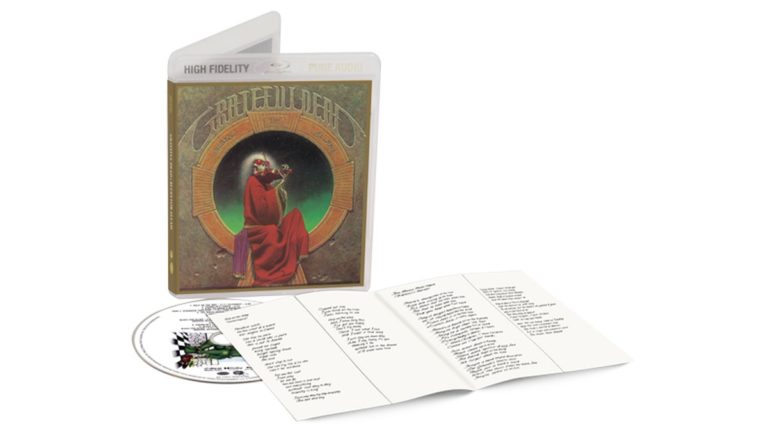
Also arriving September 12th, Blues for Allah (50th Anniversary Remaster) will be released on 180-gram black vinyl, picture disc, as well as a limited-edition “Midnight Fire” custom vinyl, exclusive to Dead.net. The custom vinyl includes a replica lyric sheet with English and Arabic translations, just like the original. A limited-edition Blu-ray, limited to three thousand copies, features four new mixes of the album by acclaimed producer Steven Wilson: Dolby Atmos, 5.1 surround, hi-resolution stereo, and an instrumental mix.

The newly remastered version of “The Music Never Stopped”—the first single from the original album—is available now digitally via Rhino Records. “This fanciful take of life on the road, the journey of Dead Heads, and the magic the Grateful Dead brought from town to town was a fan favorite every time it was played,” says Grateful Dead Legacy Manager and Archivist David Lemieux.

Blues for Allah saw the Grateful Dead attempt something they never had before—and never would again. They would make the record almost entirely without pre-written material. “The whole idea was to get back to that band thing, where the band makes the main contribution to the evolution of the material,” Garcia explained.

Working at Bobby Weir’s home studio—just big enough to hold the band and their gear—the sessions took on an intimate, exploratory feel. Robert Hunter was back in the thick of it, writing lyrics on the spot as the songs took shape. Keith Godchaux’s keys gave the album its spacious texture, while Donna Jean’s harmony vocals elevated songs like “The Music Never Stopped.” “Crazy Fingers” became, in Phil Lesh’s words, “a marvelous essay in smoky ambiguity.” The mostly instrumental title suite pushed even further out, with Bill Kreutzmann saying it “bordered on acid-jazz composition.” Mickey Hart’s role was central, weaving percussion—and slowed-down field recordings of crickets—into a rich, immersive tapestry of sound.

CD 1: 2025 Remaster

  1. Help On The Way/Slipknot!
  2. Franklin’s Tower
  3. King Solomon’s Marbles
    Part I: Stronger Than Dirt
    Part II: Milkin’ The Turkey
  4. The Music Never Stopped
  5. Crazy Fingers
  6. Sage & Spirit
  7. Blues For Allah
  8. Sand Castles & Glass Camels
  9. Unusual Occurrences In The Desert

CD 2:

  1. Help On The Way [Great American Music Hall, San Francisco, CA Soundcheck/Rehearsal (8/12/75)]
  2. Slipknot! [Great American Music Hall, San Francisco, CA Soundcheck/Rehearsal (8/12/75)]
  3. Franklin’s Tower [Great American Music Hall, San Francisco, CA Soundcheck/Rehearsal (8/12/75)]
  4. Help On The Way [Great American Music Hall, San Francisco, CA Soundcheck/Rehearsal (8/12/75)]
  5. Slipknot! [Great American Music Hall, San Francisco, CA Soundcheck/Rehearsal (8/12/75)]
  6. Franklin’s Tower [Great American Music Hall, San Francisco, CA Soundcheck/Rehearsal (8/12/75)]
  7. King Solomon’s Marbles [Great American Music Hall, San Francisco, CA Soundcheck/Rehearsal (8/12/75)]
  8. Crazy Fingers [Great American Music Hall, San Francisco, CA Soundcheck/Rehearsal (8/12/75)]
  9. Blues For Allah [Sage And SpiritKezar Stadium, San Francisco, CA (3/23/75)]
  10. Stronger Than Dirt (Or Milkin’ The Turkey) [Sage And SpiritKezar Stadium, San Francisco, CA (3/23/75)]
  11. Drums [Sage And SpiritKezar Stadium, San Francisco, CA (3/23/75)]
  12. Stronger Than Dirt (Or Milkin’ The Turkey) [Sage And SpiritKezar Stadium, San Francisco, CA (3/23/75)]
  13. Blues For Allah [Sage And SpiritKezar Stadium, San Francisco, CA (3/23/75)]

CD 3: Tower Theater, Upper Darby, PA (6/21/76 and 6/22/76)

  1. The Music Never Stopped
  2. Help On The Way
  3. Slipknot!
  4. Franklin’s Tower
  5. Crazy Fingers
  6. Comes A Time
  7. Eyes Of The World
  8. Dancing In The Street

Concert Travel Is the Future Why Trip.com and Live Nation’s New Asia Deal Changes Everything

0

Remember when scoring concert tickets meant outsmarting fans in your own city? Then came the bots. Now, thanks to Live Nation, you’re up against fans from everywhere—and they’re booking flights to beat you to the front row.

Concert travel is changing the way fans experience music in Asia. Trip.com Group, one of the world’s leading travel platforms, has joined forces with Live Nation Asia in a multi-year partnership that fuses live music and tourism into one seamless experience. Launching across Hong Kong, Macau, Singapore, Thailand, South Korea, and Mainland China, fans can now plan entire trips around concerts—booking flights, hotels, and even local attractions alongside exclusive presale access to shows.

Asia is the perfect stage for this evolution. Cities like Seoul, Singapore, and Bangkok have become international tour hotspots, with stadiums packed full of fans from across the continent. As more artists extend their world tours to Asia, the region’s role in the global live music scene is only getting bigger.

According to Trip.com’s Momentum survey, two-thirds of Asia-Pacific travelers say they’re willing to cross borders for a concert. That passion fuels a booming market for concert-driven travel, where seeing your favorite artist live becomes the main reason for your trip, not just a stop along the way.

The partnership makes it easier than ever for fans to plan. Instead of juggling multiple apps or websites, everything—from tickets and flights to hotels and sightseeing—is integrated into one booking flow. It’s a game-changer for convenience, especially for international fans chasing limited tour stops.

Exclusive presale access adds another layer of excitement. Fans who book through Trip.com can get early access to high-demand shows, making the experience both exclusive and rewarding. That exclusivity also keeps the platform competitive in a world where tickets sell out in seconds.

The impact goes far beyond the fans. Host cities are already seeing major boosts from concert tourism—when Lady Gaga played her only Asia date in Singapore, hotel bookings tripled. Every show brings new spending on dining, attractions, and local experiences that ripple through the economy.

Asia’s strong travel infrastructure makes all this possible. With efficient regional flights, simplified visa rules, and a thriving hospitality industry, concert tourism fits naturally into how people already explore the continent.

For artists and promoters, the partnership offers a new kind of value. Tours can sell out faster, and artists can connect with fans on a deeper level by offering curated experiences tied to each destination. It transforms the live show into a full-scale cultural journey.

Fans, meanwhile, get more than just a night of music. Bundled packages that include park tickets, city tours, and themed experiences turn each concert into a mini vacation. Seeing a show in a new country becomes a once-in-a-lifetime memory rather than a quick weekend getaway.

For Live Nation and Trip.com, this is just the beginning. By linking live entertainment with travel, they’re setting the stage for a global model that could redefine how fans experience music around the world. In Asia, it’s already clear: the future of concerts isn’t just about the show—it’s about the journey to get there.