Home Blog Page 206

Wu-Tang Legend Raekwon Drops Eighth Studio Album ‘The Emperor’s New Clothes’

0

Raekwon, a founding member of the iconic Hip Hop collective Wu-Tang Clan, unveils his eighth studio album, The Emperor’s New Clothes – out now via Mass Appeal.

The prodigiously gifted emcee continues to push boundaries and redefine the mafioso rap scene with his unparalleled style. Spanning 17 tracks, the album features a star-studded lineup of collaborators, including fellow Wu-Tang members Ghostface Killah, Method Man, and Inspectah Deck, as well as Nas, Conway The Machine, Westside Gunn, Benny The Butcher, and vocalists Stacy Barthe and Marsha Ambrosius.

Ahead of The Emperor’s New Clothes, Raekwon took to social media to express gratitude towards his fans for their support. Alongside the new album, he also delivered a horror-movie inspired music video for the gritty anthem “Bear Hill.”

In the video, Raekwon unleashes his full potential and embraces a beast mode mentality, wreaking havoc wherever he goes. Watch it below:

Latin Music Star Carín León Adds Final Date to Historic Sphere Run in Las Vegas

0

Following unprecedented demand, global superstar Carín León announces the seventh and final date of his highly anticipated Sphere run on September 10, 2026, presented by AEG Presents. The Hermosillo, Sonora native opens ticket sales for this new date, giving fans the chance to witness the first Latin artist to perform at the groundbreaking venue.

This new date joins the previously announced shows on September 4, 5, and 6, 2026, during the Labor Day holiday weekend, and September 11, 12, and 13, which coincide with Mexican Independence Day celebrations in Las Vegas.

Presales for the September 10th begin on Wednesday, October 22nd at noon PST, followed by the general sale on Friday, October 24th. Limited tickets remain for the weekend shows on September 4, 5, and 6, 2026.

Attendees will have the opportunity to experience Carín León’s Sphere debut as true VIPs with limited VIP Travel Packages. Packages include a two-night stay at The Venetian Resort Las Vegas, reserved VIP tickets, and exclusive merchandise.

This will be the only chance for fans of the three-time Latin Grammy winner to be part of Latin music history as Carín León debuts at Sphere.

With this seven-date engagement, Carín León sets a new standard for Spanish-language live music in the United States. He makes history as the first Latin artist to take the stage at the revolutionary venue, solidifying his place as a pioneer, opening doors for Spanish-language music on a global scale, and becoming one of the most influential voices in Latin music in the U.S. market.

Tom BetGeorge Turns Halloween into a Rock Concert of Lights and Lasers

0

Tom BetGeorge and his Magical Light Show crew have done it again, turning Halloween into a full-blown rock concert of lights, lasers, and pyrotechnics. This year’s show syncs jaw-dropping visuals to an eclectic playlist featuring Alien Ant Farm, The Cranberries, Thirty Seconds to Mars, KPop Demon Hunters, and Wicked – because why stop at spooky when you can go spectacular?

Armed with pixel lights, projections, and even flamethrowers, BetGeorge has once again made his neighborhood the most electrifying place to be in October. It’s less a light show and more a love letter to music, creativity, and the kind of over-the-top joy that makes you believe in Halloween magic all over again.

LEGO Brings the ‘Back to the Future’ Time Machine to Life with New Speed Champions Set

0

The LEGO Speed Champions Time Machine from Back to the Future brings one of the most iconic movie cars ever to life, piece by piece. Designed for fans ages nine and up, it’s a fun and detailed way to celebrate the beloved film trilogy. With 357 pieces, builders can enjoy creating a miniature version of the DeLorean that’s packed with familiar details and movie magic.

Fans can build the car as it appeared in the first movie, complete with its lightning rod and classic California license plate. Or they can rebuild it into the flying version from Back to the Future Part II, complete with sideways hover wheels, Mr. Fusion, and the orange plate. Both builds include signature touches like rear air vents, a detailed cockpit, and the all-important flux capacitor.

The set also includes two fan-favorite minifigures: Doc Brown and Marty McFly. Together, they can be placed inside the DeLorean to recreate scenes from the movies or dream up entirely new time-traveling adventures. Every little detail invites imagination, nostalgia, and endless play possibilities.

For younger builders or first-time fans, the LEGO Builder app makes the process easy. It offers 3D zoom and rotation, so kids can follow step-by-step instructions and watch their DeLorean come together from every angle. It’s a perfect blend of hands-on creativity and digital guidance.

Whether it’s displayed on a shelf or raced through the living room, the LEGO Speed Champions Time Machine is more than just a model—it’s a piece of pop culture history. A perfect gift for kids, collectors, or anyone who ever dreamed of traveling at 88 miles per hour.

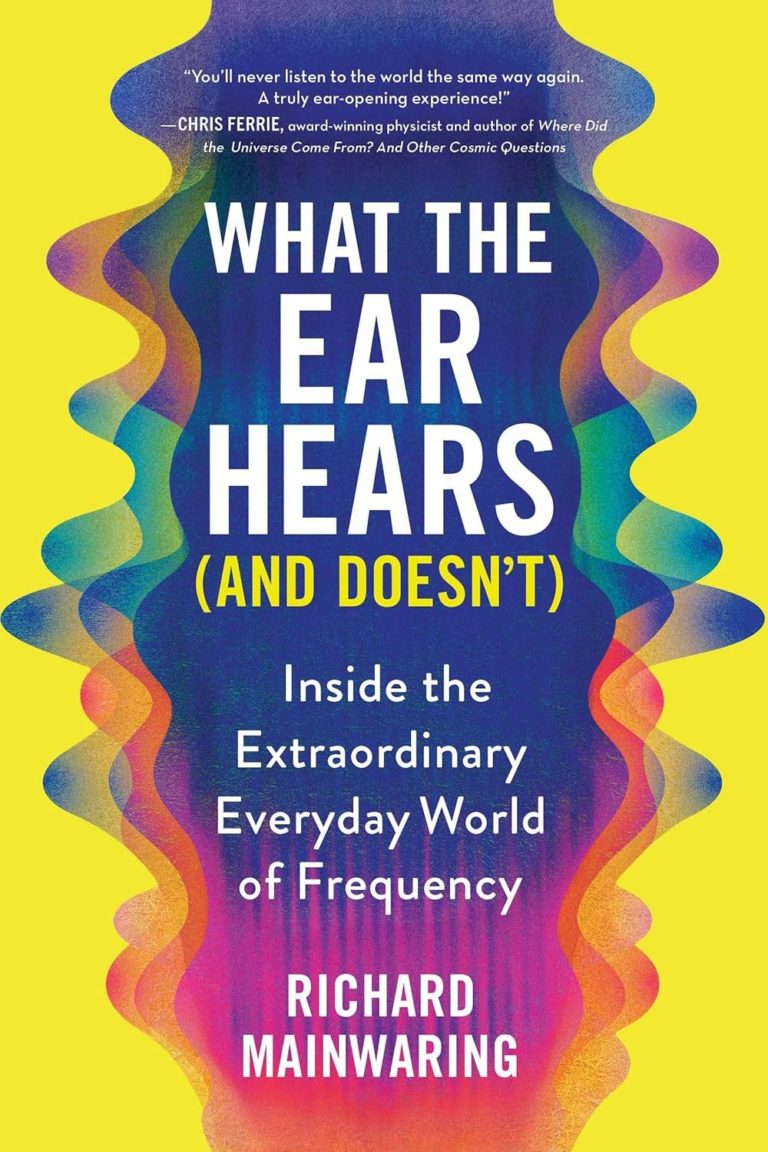
Musician and Composer Richard Mainwaring Explores the Hidden Power of Sound in ‘What the Ear Hears (and Doesn’t)’

0

For readers of Neil deGrasse Tyson and Bill O’Neill, What the Ear Hears (and Doesn’t) is a fascinating science book for adults that explores the physics principle of frequency and the (sometimes weird) role it plays in our everyday lives.

What do the world’s loneliest whale, a black hole, and twenty-three people doing Tae Bo all have in common?

In 2011, a skyscraper in South Korea began to shake uncontrollably without warning and was immediately evacuated. Was it an earthquake? An attack? No one seemed quite sure. The actual cause emerged later and is utterly fascinating: Twenty-three middle-aged folks were having a Tae Bo fitness class in the office gym on the twelfth floor. Their beats had inadvertently matched the building’s natural frequency, and this coincidence—harnessing a basic principle of physics—caused the building to shake at an alarming rate for ten minutes. Frequency is all around us, but little understood.

Musician, composer, TV presenter, and educator Richard Mainwaring uses the concept of the Infinite Piano to reveal the extraordinary world of frequency in a multitude of arenas—from medicine to religion to the environment to the paranormal—through the universality of music and a range of memorable human (and animal) stories laced with dry humor. Whether you’re science curious, musically inclined, or just want to know what a Szechuan pepper has to do with physics, What the Ear Hears (and Doesn’t) is an immensely enjoyable read filled with “did you know?” trivia you’ll love to share with friends.

Richard Mainwaring is a performing musician, composer, TV presenter and educator. He has composed music for Netflix, the BBC, and the International Space Station. He is a classically trained multi-instrumentalist, and has worked with artists as diverse as Hugh Laurie, Larry Adler, Eartha Kitt, Hayley Westenra and Tom Odell. He has also presented over fifty short films for the BBC.


Rising Pop Artist Malcolm Todd Releases Deluxe Album ‘Malcolm Todd (Still)’ via Columbia Records

0

Multi-instrumentalist and alternative rising pop star Malcolm Todd is back to announce his deluxe album Malcolm Todd (Still) is out now via Columbia Records.

The announcement comes alongside a new single “Original,” featuring Malcolm delivering a raw and honest vocal with a sweet chorus refrain. The forthcoming deluxe album will include four new songs and follows his celebrated debut, which Rolling Stone described as a “knockout” and, “an intriguing vision for a new kind of male pop star.”

As a whole, the self-titled album is a front-to-back blast, a listen that is funny, anxious, proud, and unsettled all at once. The album features his hit single “Chest Pain,” which broke the Billboard Hot 100 list and has surpassed over 100 million streams and counting. Malcolm performed the single for his late night TV debut on Jimmy Kimmel upon the album’s release. The new album also includes singles “Concrete,” “Cheer Me On” and “Bleed” feat. Omar Apollo, the latter which came alongside an Aidan Cullen-directed video of Malcolm and Omar at an underground fight club (with a cameo from Jack Harlow for good measure).

Malcolm Todd recently wrapped his huge sold out North American tour, which was a 27 city and 32 show affair and included stops in Atlanta, Texas, Nashville, Chicago, Montreal and Toronto as well as two dates at Terminal 5 in NY and three nights at The Wiltern in Los Angeles and The Regency Ballroom in San Francisco.

UV Reactive Crystals and Fluorescent Minerals

0

By Mitch Rice

If you’ve ever stepped into a crystal shop and noticed certain stones glowing under ultraviolet light, you’ve witnessed one of nature’s most fascinating displays. UV crystals, sometimes called fluorescent minerals, reveal hidden colors and luminous effects that are invisible under normal lighting. This glowing phenomenon has captivated collectors, scientists, and crystal enthusiasts alike, turning ordinary specimens into radiant works of art when exposed to ultraviolet rays. The reason behind this reaction lies in the way certain minerals absorb and re-emit light energy, creating that striking fluorescent glow that seems almost otherworldly.

The Science Behind Fluorescence

Fluorescence in crystals occurs when ultraviolet light, which is invisible to the human eye, interacts with specific elements or impurities inside a mineral. When UV light hits a crystal, the energy from the ultraviolet rays excites electrons within the mineral’s atomic structure. These electrons jump to a higher energy state and, as they return to their original level, release the excess energy as visible light. That’s what creates the glowing effect we see.

The colors emitted during this process depend on which impurities or trace elements are present in the mineral. For example, manganese, uranium, chromium, and rare earth elements like europium or terbium often play a key role in determining what color a crystal will fluoresce. Even a tiny amount of these elements can completely change the way a stone reacts under UV light. Temperature, mineral composition, and the type of UV wavelength also influence the glow—shortwave UV (SWUV) and longwave UV (LWUV) lights can bring out different hues in the same specimen.

Crystals Known for UV Reactions

One of the best-known fluorescent minerals is fluorite. Its name actually comes from the Latin word “fluere,” meaning “to flow,” which inspired the term “fluorescence.” Fluorite can glow in a range of colors, most commonly blue, purple, or green, though the exact hue depends on the locality and trace minerals present. Some specimens even show multiple zones of fluorescence, making them particularly beautiful when examined under UV light.

Mangano calcite is another favorite among collectors. This soft pink variety of calcite glows a bright neon pink or hot magenta under UV light, creating a striking contrast with its gentle pastel tone in daylight. The fluorescence in mangano calcite comes from the presence of manganese, which acts as an activator. The brighter and purer the glow, the higher the manganese concentration tends to be.

Ruby, a variety of corundum colored by chromium, also exhibits a vivid fluorescent reaction. Under UV light, especially longwave, rubies often glow a strong red or orange-red. This quality is actually used in gemology to help identify genuine rubies and distinguish them from synthetic stones. The intensity of the fluorescence can also help determine the origin of the ruby—Burmese rubies, for example, are famous for their deep red glow.

Amber, though technically not a mineral but fossilized tree resin, can show a lovely blue or greenish fluorescence when exposed to UV light. This is most pronounced in certain types of Baltic amber. The glow is caused by the presence of aromatic hydrocarbons and succinic acid, which absorb ultraviolet energy and re-emit visible light. Collectors often use UV lamps to authenticate amber, as imitations made from plastic or glass usually fail to fluoresce in the same way.

Lapis lazuli, known for its rich blue tone, can also display fluorescence, though it’s typically weaker. The reaction comes mainly from the calcite present in the stone, which glows white under UV light. While the lazurite component doesn’t fluoresce, the small calcite veins within a piece of lapis can reveal subtle glowing patches, making for an interesting visual under UV exposure.

Other stones also reveal hidden beauty under ultraviolet light. Willemite glows bright green due to zinc content, while scheelite emits a stunning blue or bluish-white. Hackmanite, a variety of sodalite, is particularly fascinating because it exhibits tenebrescence—a reversible color change triggered by exposure to light. Under UV, hackmanite glows pink to violet, and when the light is removed, the color gradually fades back to its original shade.

The Role of Impurities and Trace Elements

It’s important to understand that the glow of UV reactive crystals doesn’t necessarily come from the main mineral itself, but from impurities within it. These impurities, called activators, are responsible for the emitted color. For instance, manganese tends to produce pink or orange fluorescence, while uranium can create a vivid green or yellow glow. Chromium often causes red fluorescence, as seen in rubies, while lead can bring out blue or white tones in certain minerals.

Sometimes, however, these activators can be counteracted by other impurities known as quenchers, which absorb energy before it can be released as visible light. Iron is a common quencher that can suppress fluorescence in many minerals, which is why specimens with higher iron content often appear dull or non-reactive under UV.

Understanding UV Light Types

There are two main types of ultraviolet light used to test fluorescence—shortwave and longwave UV. Shortwave UV has a higher energy level and often reveals stronger fluorescence, especially in minerals like scheelite or willemite. Longwave UV, which is closer to visible light, tends to bring out softer or more pastel glows in stones like fluorite and calcite. Some collectors use dual UV lamps that can switch between wavelengths to see how a stone reacts under both conditions.

Shortwave UV light is also more likely to reveal unique patterns or zones within a crystal. This can be useful for gemologists studying mineral structures or for artists and designers who enjoy the unexpected color contrasts that appear when the lights go out.

Why Some Crystals Don’t React

Not all crystals fluoresce, even if they belong to a group where some specimens do. Fluorescence depends on the specific chemical makeup and the conditions under which the crystal formed. Two pieces of the same mineral from different locations can show completely different reactions. The temperature, pressure, and trace elements in the environment during formation all play a role. Some stones may appear inert because their activator elements are missing or their structure inhibits energy emission.

Collectors often find that testing multiple pieces of the same mineral yields a variety of results. For example, while many calcites fluoresce in pink, orange, or red, others remain dark. Similarly, some fluorites may show strong blue fluorescence, while others are completely non-reactive.

How Collectors Use Fluorescent Crystals

Fluorescent minerals are prized by collectors not just for their beauty in regular light but for their secret glow that only appears under ultraviolet. They add a unique interactive quality to a collection—turn off the lights, shine a UV lamp, and the stones come alive with color. Museums often have dark rooms or special exhibits dedicated to showcasing these glowing minerals, allowing visitors to experience their magic firsthand.

For home collectors, a small UV flashlight is often enough to start exploring fluorescence. Some even arrange displays where UV lamps are built into the shelves to create an ever-glowing mineral showcase. These stones become living art pieces, constantly transforming under different lighting.

Famous Fluorescent Minerals

There are a few minerals that have become famous specifically for their fluorescence. Willemite and calcite from Franklin, New Jersey, are often considered classic examples. Under shortwave UV, they glow in vivid green and red respectively, creating a dramatic visual contrast known as “Christmas colors” among collectors. This locality remains one of the most well-known sources of fluorescent minerals in the world.

Scheelite is another highly fluorescent mineral, best known for its striking blue glow. This property even helps geologists identify scheelite in the field when searching for tungsten ore. Scapolite, zircon, opal, and even some types of apatite and sphalerite can show interesting fluorescent behaviors, though often less predictable than the classics.

The Wonder of Hidden Light

What makes UV reactive crystals so fascinating is their ability to reveal something unseen—a secret glow that feels like magic but is rooted in science. It’s a reminder that even seemingly ordinary stones can hold surprises when viewed through a different lens. That hidden beauty has turned fluorescent minerals into favorites among crystal lovers, gemologists, and museum curators.

From the radiant pinks of mangano calcite to the deep reds of ruby and the electric greens of willemite, each fluorescent crystal tells a story about the tiny imperfections and trace elements that give it life. It’s these imperfections that make them beautiful, transforming them into glowing reminders of the mysteries still held within the Earth.

So next time you visit a crystal shop or browse your own collection, consider turning off the lights and switching on a UV lamp. The stones might surprise you, glowing in unexpected shades that reveal the secret energy within. In that moment, you’ll see what so many collectors already know—under ultraviolet light, crystals don’t just reflect beauty; they radiate it from within.

Data and information are provided for informational purposes only, and are not intended for investment or other purposes.


Legendary Latin Icons Los Bukis Announce Final Concerts of Historic Reunion Tour

0

Legendary Latin group Los Bukis has announced the final dates of their acclaimed reunion tour, which debuted internationally in 2021. This marks the emotional end of an era that brought them together for nearly 40 sold-out stadium concerts since 2021 and their famous residency in Las Vegas, with millions of fans following them after over two decades on hiatus. This pair of concerts, titled ¡Tuyos por Siempre! El Gran Cierre de un Ciclo will close with two monumental and deeply significant events for the band and their fans.

The final concerts will take place on February 14th at Dalkin Park in Houston and February 20th at SoFi Stadium in Los Angeles.

Presales start on Tuesday, October 21st at 10 am EST, ahead of the general sale on Friday, October 24th. VIP packages include premium tickets, meet and greet and photo op with Los Bukis, exclusive invitation to a behind-the-scenes tour, access to the pre-show VIP lounge & more. VIP package contents vary based on the offer selected.

The concert at SoFi Stadium in Los Angeles is full of symbolism and nostalgia. It was at this impressive venue that, four years ago, the band ignited the flame of their historic return after 25 years apart, becoming the first Latin artists to perform at the stadium, proving that their music and connection with the public remain intact. Now, Los Bukis return to this very stage to close the cycle of this memorable era.

These two concerts are intended to be a celebration, a gesture of gratitude, and the culmination of a dream that they revived alongside the Bukimanía that has made them unforgettable. It’s the perfect moment to close this journey on a high note. Los Bukis, led by Marco Antonio Solís, have invited their fans to join these two historic nights to cherish the memory of this reunion.

Since their inception, Los Bukis have narrated the soundtrack of several generations. Their unique style, featuring romantic ballads and cumbia, and their deeply profound lyrics, have earned them multiple awards, including Premios Lo Nuestro and Grammy Award nominations.

Los Bukis promise to take their fans on an emotional journey through decades of hits, performing classics such as “Quiéreme,” “Yo Te Necesito,” “Mi Najayita,” “Falso Amor,” “Ladron de Buena Suerte,” “Morenita,” and their iconic anthem “Tu Cárcel,” among others. This nostalgic journey, both for the members of the group and their fans, is incredibly significant as it represents a date with the history of the group. Following their milestone achievement last year as the first-ever 100% Spanish-language Latin residency in Las Vegas, the group has cemented its legacy as an icon of Latin American music in both the 20th century and the years that have followed.

With the announcement of these two dates, the group confirms that the Houston and Los Angeles concerts will be the only two and final opportunities to experience Bukimania together. It is an invitation to be a part of history, to sing the anthems that defined an era and to honor the name of their tour; “¡Tuyos por Siempre!”

All fans are encouraged to secure their place at this musical farewell. This announcement was not only for Bukimaniacos of the U.S., but also for fans all over the world, who will have a unique opportunity during these two concerts to join Marco Antonio, Joel, Chivo, Roberto, Javier, Pepe y Pedro in closing this great chapter of their musical career.

No Doubt Add Six New Dates to Their Live at Sphere Residency

0

No Doubt have announced six additional dates for their highly anticipated No Doubt Live at Sphere residency due to incredible fan demand. The newly added shows are set for May 21, 23, 24, 27, 29, and 30, following the previously announced dates on May 6, 8, 9, 13, 15, and 16.

This residency marks No Doubt’s first extended run of performances in nearly 14 years, following their historic Seven Night Stand in Los Angeles in 2012.

The forthcoming Sphere dates come on the heels of the 30th anniversary of No Doubt’s seminal album Tragic Kingdom, which cemented the group as one of the most influential and celebrated bands of their generation. Their songs – which still dominate radio stations globally – remain as important and culturally influential today as they were when they first hit the airwaves in 1995.

Sphere’s next-generation technologies include the world’s highest resolution LED display that wraps up, over, and around the audience creating a fully immersive visual environment. The venue also features the world’s most advanced concert-grade audio system, Sphere Immersive Sound, which delivers audio with unmatched clarity and precision to every guest.

Musicologist Árni Heimir Ingólfsson Explores Iceland’s Sonic Identity in ‘Jón Leifs and the Musical Invention of Iceland’

0

In Jón Leifs and the Musical Invention of Iceland, Árni Heimir Ingólfsson provides a striking account of the dramatic career of Iceland’s iconic composer. Leifs (1899?1968) was the first Icelander to devote himself fully to composition at a time when a local music scene was only beginning to take form. He was a fervent nationalist in his art, fashioning an idiosyncratic and uncompromising ‘Icelandic’ sound from traditions of vernacular music with the aim to legitimize Iceland as an independent, culturally empowered nation.

In addition to exploring Leifs’s career, Ingólfsson provides detailed descriptions of Leifs’s major works and their cultural contexts. Leifs’s music was inspired by the Icelandic landscape and includes auditory depictions of volcanos, geysers, and waterfalls. The raw quality of his orchestral music is frequently enhanced by an expansive percussion section, including anvils, stones, sirens, bells, ships’ chains, shotguns, and cannons.

Largely neglected in his own lifetime, Leifs’s music has been rediscovered in recent years and hailed as a singular and deeply original contribution to twentieth-century music. Jón Leifs and the Musical Invention of Iceland enriches our understanding and appreciation of Leifs and his music by exploring the political, literary and environmental contexts that influenced his work.

Árni Heimir Ingólfsson is an Icelandic musicologist. He holds a PhD in historical musicology from Harvard University, and BM-degrees in music history and piano performance from the Oberlin Conservatory of Music. His primary area of interest is the history of Icelandic music from the Middle Ages to the present, and he is the author of several books on Icelandic music, including “Jón Leifs and the Musical Invention of Iceland” (Indiana University Press, 2019), which was listed as one of that year’s best books on music by Alex Ross of The New Yorker. His most recent book is “Music at World’s End: Three Exiled Musicians from Nazi Germany and Austria and Their Contribution to Music in Iceland” (SUNY Press, 2025). Its Icelandic version was nominated for the Icelandic Book Award in November 2024.