

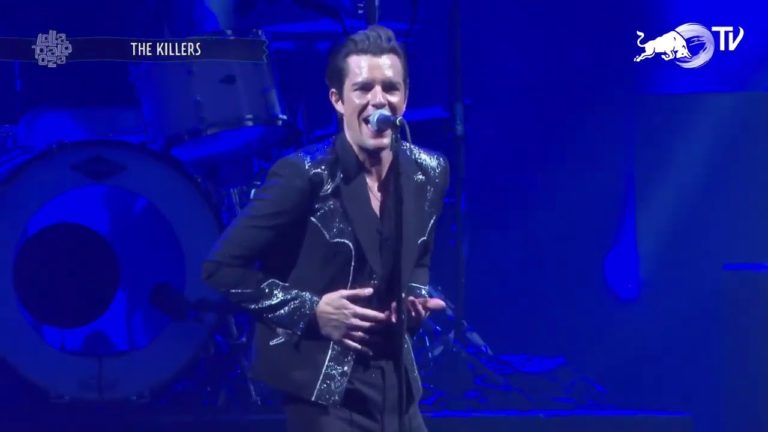
The Killers turned Chicago’s Grant Park into one giant singalong at Lollapalooza on August 4, 2017, delivering a masterclass in stadium rock built on indie grit, new wave synths, and pop anthemics. Frontman Brandon Flowers worked the massive crowd through a setlist stacked with staples, “Mr. Brightside,” “Somebody Told Me,” and “When You Were Young,” then tipped his hat to his influences with covers of Muse’s “Starlight” and The Smashing Pumpkins’ “Disarm.” It stands as proof of why the Las Vegas natives remain one of the most reliable and exhilarating live acts of their generation.
Texas Country Hitmaker Hayden Haddock Strikes A Match On “I’ll Bring The Matches”
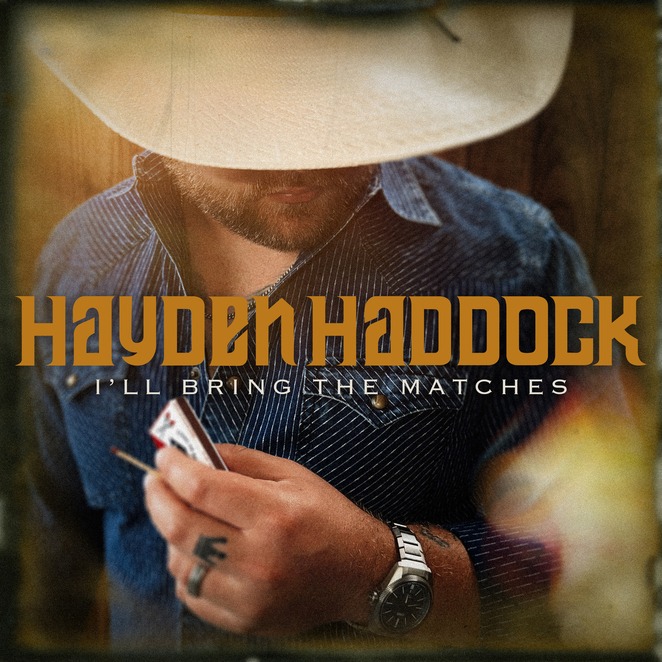
Hayden Haddock has found a way to make a breakup feel like a celebration. The independent Texas country artist has announced his new single “I’ll Bring The Matches,” out Friday, July 10, 2026. Written by Jacob Boyd and Dan Hutson and tracked at the historic Rosewood Studios in Tyler, Texas under producer Drew Hall, the song taps the juke joint and barroom saloon tradition that runs through the Texas scene.
The track has real swagger. It opens on a rockabilly guitar riff, settles into a classic country instrumental bed, and lets a flirtatious fiddle dance through the arrangement. Haddock’s vocals sit right at the center, traditional in spirit and modern in delivery. It’s the kind of honky-tonk cut that earns its place on a Texas dancefloor.
The storyline keeps things cheeky. Haddock plays a narrator with hopeful intentions, coaxing his love interest to walk away from Mr. Wrong so the two of them can light their own fire. He describes it as a feel-good breakup anthem that trades tears for a matchstick, nodding to the mischief of The Chicks’ “Goodbye Earl” and the flirtatious lean of Brooks & Dunn’s “We’ll Burn That Bridge.”
The release rides a strong run of momentum. “I’ll Bring The Matches” follows his March single “Heaven On Horseback,” and Haddock’s catalogue has pulled more than 7 million cumulative streams. His songs have landed on Spotify’s “Texas Music Now” and “Texas Music Rewind,” Apple Music’s “Don’t Mess With Texas,” and Amazon Music’s “Texas Forever.”
His story keeps building fast. The Texas A&M graduate broke through in 2018 off a video shot in his college dorm and has since grown into a genuine road warrior, playing close to 100 dates a year and opening for Randall King, Steve Wariner, Kevin Fowler, Casey Donahew, Roger Creager, and Jon Wolfe. He was named New Male Vocalist of the Year at the 2021 Texas Regional Radio Music Awards, has charted six tracks on Texas radio with three reaching the Top 10, and scored his first number 1 on the Texas Country Music Chart in 2025 with “Front Porch In The Rain.”
Rocky Mountain Hitmaker Ian Munsick Charts The Peaks On ‘The Mountain Goat’
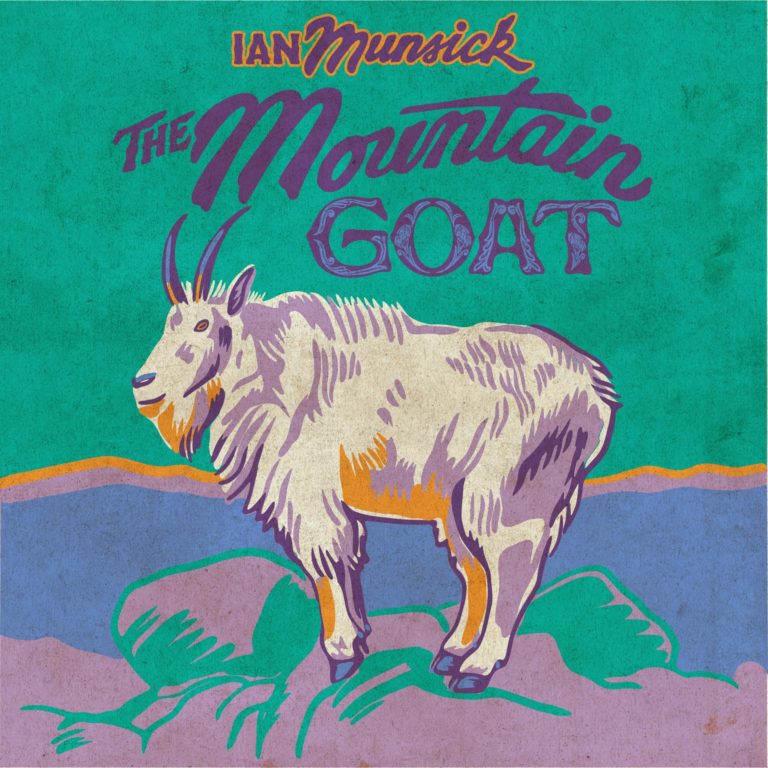
Ian Munsick is heading for the summit. The Wyoming native, one of modern country’s only true Rocky Mountain voices, has announced his fourth studio album ‘The Mountain Goat’, arriving August 21 via West to the Rest Records and Triple Tigers Records. He shared the news with fans at his fan club party during CMA Fest on Saturday, June 6.
Munsick built this one with his hands all over it. He co-produced alongside Jeremy Spillman and Mike Robinson, and played nine different instruments across the record: acoustic guitar, electric guitar, bass, mandolin, banjo, harmonica, piano, bouzouki, and kazoo, plus background vocals and programming. The sound he describes leans on folky textures, steel guitar, and plenty of fiddle.
His vision for the album is rooted in place. Munsick frames the songs as a dedication to the land and the people who live with it, not on it, a horseback ride through pastures and prairies, past the timberline, up to the peak. He wants melodies that haunt you and lyrics that carry you straight into the West that fuels him.
The rollout is already moving. His single “Love Is Blind” keeps climbing country radio, and the next song, “World War III,” drops this Friday, June 12, from the 15-track album. Five direct-to-consumer fan packs are up for pre-order on his store, including an exclusive autographed zoetrope vinyl.
The live celebration spans the Mountain Time zone. The Road to The Mountain Goat runs through Nevada, Colorado (including the legendary Red Rocks Amphitheatre), New Mexico, Texas, South Dakota, and Utah. The official album release show lands August 22 at Deer Valley Snow Park Outdoor Amphitheater in Park City, Utah, part of the Deer Valley Concert Series. Munsick calls Utah a crowd that shows up and sings every word, and he’s bringing 15 new songs for them to learn.
There’s a brick-and-mortar chapter too. Munsick is partnering with The Landmark Hotel & Casino to open the Ian Munsick Cowboy Bar & Western Grill in Deadwood, SD, on September 18. The Landmark, built between 1894 and 1920, is Deadwood’s largest historic structure at roughly 35,000 square feet, and the bar will occupy over 2,600 of them, with old-school country decor and two stages, one indoors and one out.
The Mountain Goat Tracklist:
- Mountain Goat
- Geronimo
- My Montana
- Legends of the Fall Interlude
- Made Me A Man
- Blue Roan
- Love Is Blind
- Medicine Man
- Cutthroat World
- Mountain Goat Reprise
- Palomino Eyes
- Earn Your Spurs
- The Girl I Left Behind
- World War III
- Winter In Wyoming
2026 The Road to The Mountain Goat Tour Dates:
August 21 – Minden, NV @ TJ’s Corral Outdoor
August 22 – Park City, UT @ Deer Valley Snow Park Outdoor Amphitheater
August 25 – Morrison, CO @ Red Rocks Amphitheatre
August 28 – Pueblo, CO @ Colorado State Fair
September 11 – San Angelo, TX @ Black Buck Amphitheater
September 12 – Albuquerque, NM @ New Mexico State Fair
September 18 – Deadwood, SD @ Deadwood Jam
Peter Bjorn And John Take ‘Writer’s Block’ On A 20th Anniversary Run
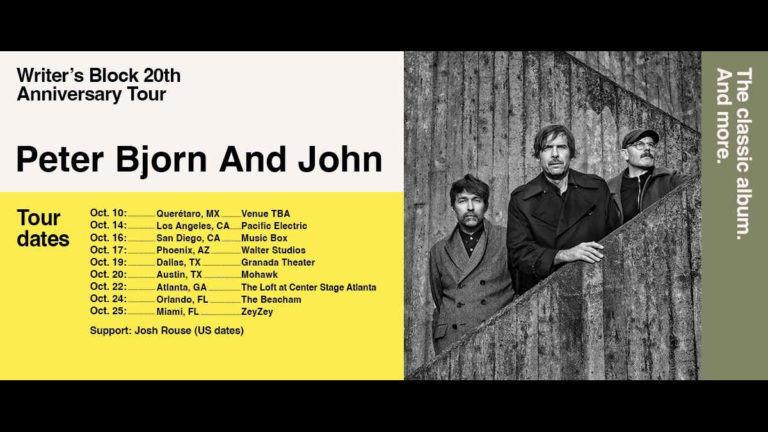
The whistle that defined an indie era is coming back to the stage. Swedish trio Peter Bjorn and John have announced the Writer’s Block 20th Anniversary Tour, a run through Mexico and the U.S. marking two decades of the album that broke them worldwide. The shows kick off this October, pairing songs from the classic record with favorites pulled from across their catalogue.
The run builds on momentum from last year. The band returned to North American stages in 2025, including a Just Like Heaven festival set, their first stateside shows in six years. Fans responded loudly, and this fall’s tour answers with a deeper dive into the record that put them on the map.
‘Writer’s Block’ arrived in August 2006 and still stands as one of the defining indie albums of the 2000s. It earned Pitchfork’s “Best New Music” tag, and The Guardian called it a delight from beginning to end. The album introduced Peter Bjorn and John to a global audience and has held its grip on listeners ever since.
At its center sits “Young Folks,” one of the most recognizable indie songs of its time. That whistled melody traveled everywhere, turning up across film, television, advertising, and pop culture at large. Twenty years on, the song and the album it anchors still land with longtime fans and newcomers alike, a rare staying power for any record.
This tour gives fans a genuine chance to hear the album performed live by the people who made it. Beyond the ‘Writer’s Block’ material, the band will revisit standout moments from their broader career, building a show that honors both the record’s legacy and everything that came after.
The run opens October 10 in Queretaro, Mexico, then heads into the United States with special guest Josh Rouse on every U.S. date. Artist presales run from June 10 at 10 am through June 11 at 11:59 pm local time, with general on-sale Friday, June 12 at 10 am local time.
Tour Dates:
October 10 – Queretaro, MX – TBA
October 14 – Los Angeles, CA – Pacific Electric (w/ Josh Rouse)
October 16 – San Diego, CA – Music Box (w/ Josh Rouse)
October 17 – Phoenix, AZ – Walter Studios (w/ Josh Rouse)
October 19 – Dallas, TX – Granada Theater (w/ Josh Rouse)
October 20 – Austin, TX – Mohawk (w/ Josh Rouse)
October 22 – Atlanta, GA – The Loft at Center Stage (w/ Josh Rouse)
October 24 – Orlando, FL – The Beacham (w/ Josh Rouse)
October 25 – Miami, FL – ZeyZey (w/ Josh Rouse)
Video: Lorde Casts A Spell At Las Vegas Life Is Beautiful Festival In 2022
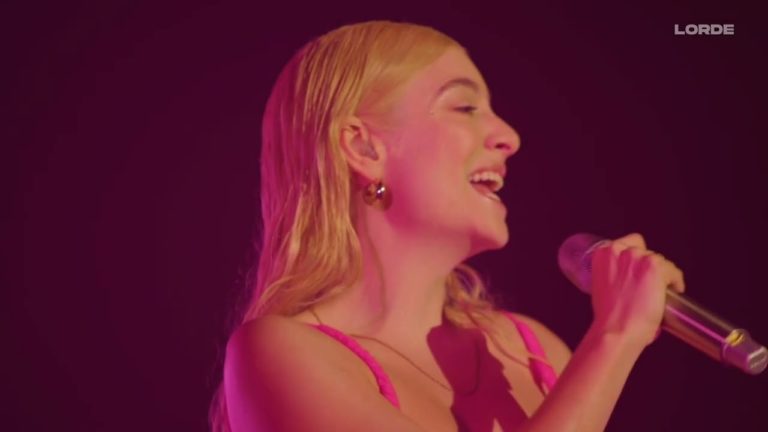
Downtown Las Vegas lit up in September 2022 when Lorde headlined the Life is Beautiful Festival. The New Zealand pop force turned the open-air setting into a showcase for an artist who’d grown from teenage prodigy into a commanding performer, balancing theatrical, emotionally resonant pop with the kind of intimacy that pulls a massive crowd in close.
The setlist moved through every chapter of her catalogue. Songs from ‘Pure Heroine’ landed hard, including the generation-defining “Royals” and the wistful “Ribs,” while ‘Melodrama’ anthems “Green Light” and “Supercut” cracked the night open. She wove in the sun-soaked material from ‘Solar Power’ and slipped in a delightfully retro cover of Bananarama’s “Cruel Summer.”
NYC Hardcore Provocateurs Show Me The Body Map A 23-City North American Run
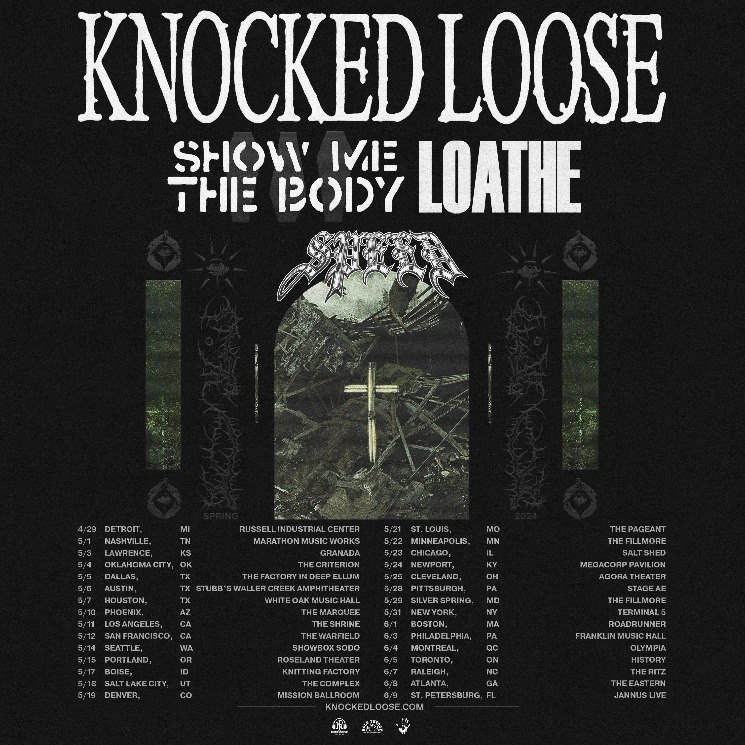
Show Me the Body are turning belief into action, on record and in the street. The New York collective have announced a 23-city North American tour behind their fourth studio album ‘Alone Together’, out July 10 via Loma Vista Recordings, and dropped the record’s third single “Eat For Peace.”
The fall run opens in Boston this September and carries the band’s notorious live show across the continent. The hometown stop at Webster Hall will be their first show without a stage barrier in over a decade, a fitting move for a band that builds its whole world around community. General on-sale starts Friday, June 12 at 10 am local time. A London show at The Cause, presented by Outbreak, lands June 30, with presale underway now.
The community work isn’t a metaphor. The band are reviving their weekly CORPUS Self Defense Training at McCarren Park in Brooklyn, running 2 to 4 pm every Sunday through June, July, and August. The sessions are open to all, built on horizontal skill sharing and mutual protection, and footage from them will appear in the “Eat For Peace” lyric video.
Frontman Julian Cashwan Pratt frames the single as the album’s opening statement and its core credo: radical love that compels him to fight. “Eat For Peace” is the first track on ‘Alone Together’ and the first message the band send.
‘Alone Together’ follows their acclaimed 2022 album ‘Trouble The Water’, trading atmosphere for direct communication, a call to galvanize yourself and the people around you. Working with producers Klas Ahlund (Robyn, Ghost) and Kenneth Blume III (Geese, Fcukers), the band have sharpened their language into something more focused and urgent. The songs hit with a rare mix of menace and joy, the sound of a band fully locked in.
The record’s roots run personal. The bones of the album took shape in their Corpus studio, in the basement of the building that doubles as the collective’s headquarters and the home where Pratt lives with his young family. He wrote much of it in the wake of his daughter’s birth, and that tension between darkness and new life gives ‘Alone Together’ its harrowing, exhilarating charge.
Upcoming Live Dates:
June 19 – Warsaw, PL @ Summer Punch Festival
June 20 – Bratislava, SK @ Pink Whale
June 21 – Piacenza, IT @ Low L Fest
June 23 – Stuttgart, DE @ Im Wizemann Club
June 24 – Lyon, FR @ Le Transbordeur
June 25 – Zurich, CH @ Exil
June 26 – Hautesville, CH @ Abyss Fest
June 27 – Berlin, DE @ Kesselhaus
June 30 – London, UK @ The Cause w/ Outbreak
August 13 – Paredes de Coura, PT @ Vodafone Paredes de Coura
August 15 – Prague, CZ @ Bike Jesus
August 16 – Vienna, AT @ Metastadt Open Air w/ Deftones
August 17 – Budapest, HU @ Turbina
August 19 – Wiesbaden, DE @ Kesselhaus w/ Deafheaven
August 20 – Munster, DE @ Sputnikhalle w/ Deafheaven
August 21 – Nijmegen, NL @ Doornroosje w/ Deafheaven
August 22 – Hasselt, BE @ Pukkelpop Festival
August 23 – London, UK @ All Points East
August 24 – Copenhagen, DK @ Amager Bio w/ Deafheaven
August 25 – Stockholm, SE @ Slaktkyrkan w/ Deafheaven
August 26 – Oslo, NO @ Rockefeller Music Hall w/ Deafheaven
North American Live Dates (w/ support from Whispers, JIVEBOMB, holder; * = Lip Critic):
September 15 – Boston, MA @ Paradise Rock Club
September 16 – Toronto, ON @ East End United Basement
September 17 – Detroit, MI @ Tangent Gallery
September 18 – Cleveland, OH @ Grog Shop
September 20 – Minneapolis, MN @ Fine Line
September 22 – Kansas City, MO @ Idle Free
September 23 – Denver, CO @ Gothic Theatre
September 25 – Las Vegas, NV @ Grey Witch
September 27 – Portland, OR @ Hawthorne Theater
September 28 – Seattle, WA @ El Corazon
September 30 – San Francisco, CA @ August Hall
October 1 – Fresno, CA @ Strummers
October 3 – Los Angeles, CA @ The Fonda
October 4 – Mesa, AZ @ Nile Theater
October 7 – Austin, TX @ Mohawk
October 9 – Birmingham, AL @ Workplay
October 10 – Atlanta, GA @ Terminal West
October 11 – Richmond, VA @ The Broadberry
October 12 – Washington, DC @ Black Cat
October 14 – Philadelphia, PA @ Union Transfer *
October 15 – New York, NY @ Webster Hall *
Video: Indie Rock Stalwarts The Courteeners Conquer Hometown Heaton Park In 2019
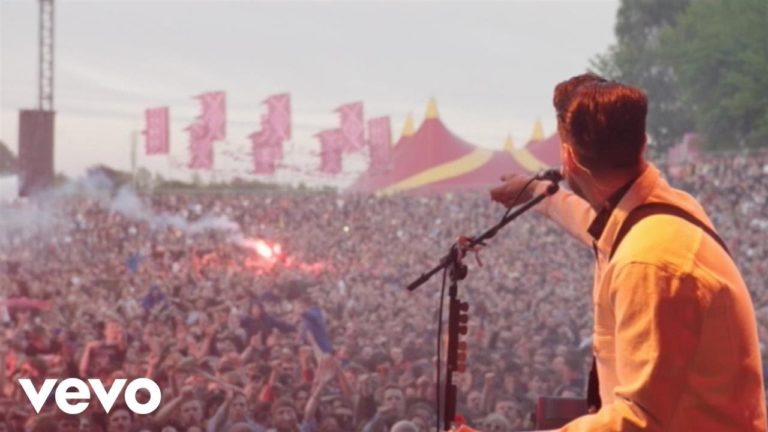
The Courteeners turned their home city into one giant singalong. Manchester’s indie rock favourites delivered a monumental set at Heaton Park in 2019, commanding a massive hometown crowd at a venue that carries real meaning for local bands and fans. The performance ran from the opening chords of “Are You in Love With a Notion?” straight through to the closing euphoria of “What Took You So Long?”, with frontman Liam Fray pulling things back for a stripped-down acoustic stretch on “Hanging Off Your Cloud” and “Smiths Disco” before the full band charged into the encore.
Acoustic Powerhouses Rodrigo y Gabriela Team With Manga Legend Naoki Urasawa On ‘OurHome’
A psychological manga masterpiece and a pair of Mexican guitars have found each other. GRAMMY-winning duo Rodrigo y Gabriela have announced their new album ‘OurHome’, arriving September 18 via ATO Records, and unveiled the first single “Monster” alongside a video drawn by legendary manga artist Naoki Urasawa. Pre-orders and pre-saves are live now, including a limited 500-unit splatter vinyl pressing through the band’s store.
The Urasawa connection runs deep. The creator of Monster, 20th Century Boys, Pluto, and Master Keaton has sold more than 140 million copies worldwide, and the duo wrote “Monster” as a tribute to his thriller without knowing he was already a fan. Gabriela Quintero describes the story as one about a psychopathic killer that somehow leaves you hopeful, and the track ranks among the album’s darkest, most cinematic moments. Urasawa returned the admiration by drawing original artwork for the video himself.
Their stories collided by chance. Urasawa discovered Rodrigo y Gabriela through their live shows years ago, started collecting their records, and reached out through the band’s Japanese promoter once he learned a song had been inspired by his work. He calls the finished track a perfect match for the mood of Monster, crediting the duo’s playing with lifting it to another dimension.
‘OurHome’ was recorded in Japan and self-produced by Rodrigo Sánchez and Gabriela Quintero at NK Sound Tokyo. The country has long pulled at the pair, who cite its art, aesthetics, and attention to beauty as a constant source of renewal. After a stretch of creative frustration back at their Ixtapa studio, the duo found their flow again following the death of their studio cat, Pelusa. Quintero says Sánchez wrote a song for Pelusa the next day, and everything opened up from there.
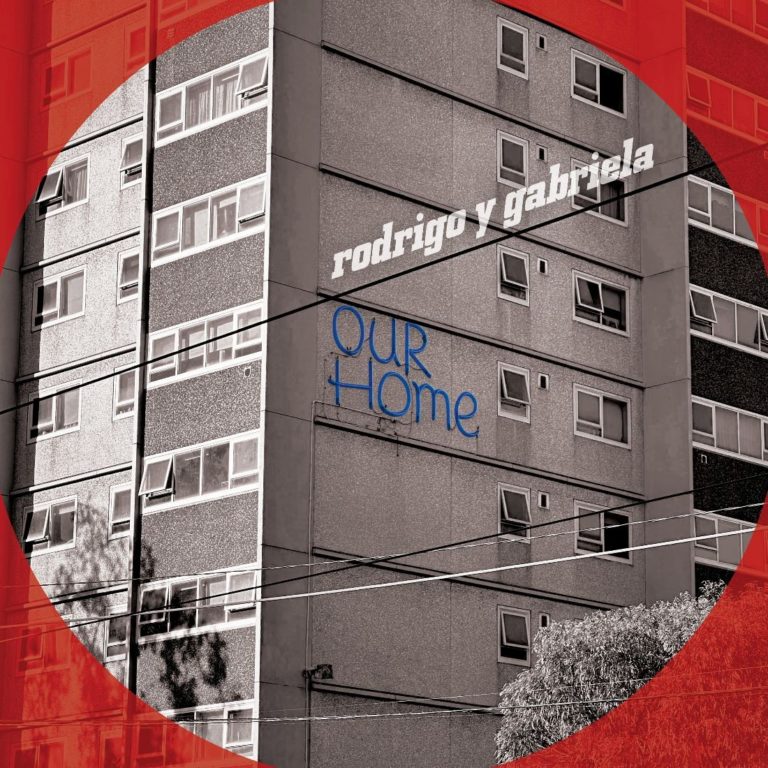
The title came on a walk through Melbourne after a Japan and Australia run. Talking about what home meant, the pair passed a public housing tower marked with a sign reading “OUR HOME.” Sánchez photographed it on the spot, and that image became the album cover. The duo frame the record as a meditation on finding peace within yourself rather than chasing approval from anyone else.
Musically, ‘OurHome’ returns to the acoustic textures the duo are known for, stepping back from the electric sound of 2023’s ‘In Between Thoughts…A New World’. The playing is rich and conversational, the work of two musicians fully back in their element. The guest list is stacked: former Megadeth guitarist Marty Friedman, jazz pianist Hiromi, cellist Hiyori Okuda, and guitarist Yukihiro Atsumi. Five-time GRAMMY winner Dave Sardy handled the mix and Stephen Marcussen mastered.
The road plan is enormous. A North American headline run rolls through fall 2026, hitting Austin City Limits, Washington’s The Anthem, New York’s Bowery Ballroom, San Francisco’s Castro Theatre, and theaters across the U.S., Mexico, and Canada. The duo then carry ‘OurHome’ across Ireland, the U.K., and Europe through spring 2027.
OurHome Tracklist:
- OurHome
- Somos Como Tú
- Akatsuki (feat. Hiromi)
- Flying Underground
- Quicksand
- Monster
- Astrum In Corpore
- Is In Your Pocket
- MADitation
- Hinomaru Twins
- Simurgh (feat. Marty Friedman)
Fall 2026 North American Tour Dates:
Saturday, October 3 – Austin City Limits (ACL) – Austin, TX
Tuesday, October 6 – Poliforum Siqueiros – Ciudad de México, MEX
Wednesday, October 7 – Poliforum Siqueiros – Ciudad de México, MEX
Saturday, October 10 – Austin City Limits (ACL) – Austin, TX
Tuesday, October 13 – The Eastern – Atlanta, GA
Wednesday, October 14 – Bilheimer Capitol Theatre – Clearwater, FL
Friday, October 16 – Greenfield Lake Amphitheater – Wilmington, NC
Saturday, October 17 – The Underground – Charlotte, NC
Sunday, October 18 – The Caverns – Pelham, TN
Tuesday, October 20 – The Anthem – Washington, DC
Wednesday, October 21 – Count Basie Center for the Arts – Red Bank, NJ
Thursday, October 22 – Sherman Theater – Stroudsburg, PA
Saturday, October 24 – Lynn Auditorium – Lynn, MA
Sunday, October 25 – College Street Music Hall – New Haven, CT
Monday, October 26 – Academy of Music Theatre – Northampton, MA
Tuesday, October 27 – Bowery Ballroom – New York, NY
Thursday, October 29 – The Fillmore – Detroit, MI
Friday, October 30 – Rivers Casino – Des Plaines, IL
Sunday, November 1 – The Sylvee – Madison, WI
Tuesday, November 3 – The Fitzgerald Theater – St. Paul, MN
Friday, November 6 – Boulder Theater – Boulder, CO
Saturday, November 7 – The Lensic – Santa Fe, NM
Sunday, November 8 – Rialto Theatre – Tucson, AZ
Tuesday, November 10 – Humphreys Concerts by the Bay – San Diego, CA
Wednesday, November 11 – Pappy & Harriet’s – Pioneertown, CA
Thursday, November 12 – Libbey Bowl – Ojai, CA
Saturday, November 14 – San Jose Civic – San Jose, CA
Sunday, November 15 – The Castro – San Francisco, CA
Tuesday, November 17 – Crystal Ballroom – Portland, OR
Thursday, November 19 – The Moore Theatre – Seattle, WA
Friday, November 20 – Vogue Theatre – Vancouver, BC, Canada
Spring 2027 European/UK Tour Dates:
Monday, March 15 – Vicar Street – Dublin, IE
Tuesday, March 16 – Mandela Hall – Belfast, UK
Wednesday, March 17 – O2 Academy – Glasgow, UK
Friday, March 19 – Albert Hall – Manchester, UK
Saturday, March 20 – Town Hall – Birmingham, UK
Sunday, March 21 – O2 Shepherds Bush Empire – London, UK
Tuesday, March 23 – Salle Pleyel – Paris, FR
Thursday, March 25 – Aéronef – Lille, FR
Friday, March 26 – 106 – Rouen, FR
Saturday, March 27 – Stereolux – Nantes, FR
Monday, March 29 – MEM2 – Rennes, FR
Wednesday, March 31 – Le Bikini – Toulouse, FR
Thursday, April 1 – Silo – Marseille, FR
Saturday, April 3 – Paloma – Nimes, FR
Sunday, April 4 – Belle Electrique – Grenoble, FR
Monday, April 5 – Le Radiant – Lyon, FR
Wednesday, April 7 – La Vapeur – Dijon, FR
Thursday, April 8 – L’Autre Canal – Nancy, FR
Friday, April 9 – La Cartonnerie – Reims, FR
Sunday, April 11 – La Laiterie – Strasbourg, FR
Tuesday, April 13 – Ancienne Belgique – Brussels, BE
Wednesday, April 14 – Paradiso – Amsterdam, NL
Friday, April 16 – Die Kantine – Cologne, DE
Saturday, April 17 – Mojo – Hamburg, DE
Sunday, April 18 – Columbia Theater – Berlin, DE
Tuesday, April 20 – Progresja – Warsaw, PL
Wednesday, April 21 – Zaklęte Rewiry – Wroclaw, PL
Friday, April 23 – Globe – Vienna, AT
Saturday, April 24 – Palac Akropolis – Prague, CZ
Sunday, April 25 – Technikum – Munich, DE
Tuesday, April 27 – Auditorium Parco della Musica – Rome, IT
Wednesday, April 28 – Circolo Magnolia – Milan, IT
Thursday, April 29 – Docks – Lausanne, CH
Saturday, May 1 – Cheltenham Jazz Fest – Cheltenham, UK
Monday, May 3 – Cosmopolite – Oslo, NO
Tuesday, May 4 – Pumpehuset – Copenhagen, DK
Wednesday, May 5 – Nalen – Stockholm, SE
Friday, May 7 – La (2) d’Apolo – Barcelona, ES
Saturday, May 8 – Sala Copérnico – Madrid, ES
Tuesday, May 11 – Cineteatro Capitólio – Lisbon, PT
Wednesday, May 12 – Casa da Música – Porto, PT
Canadian Rock Legends April Wine Bring The Hits To Fallsview Casino In March 2027
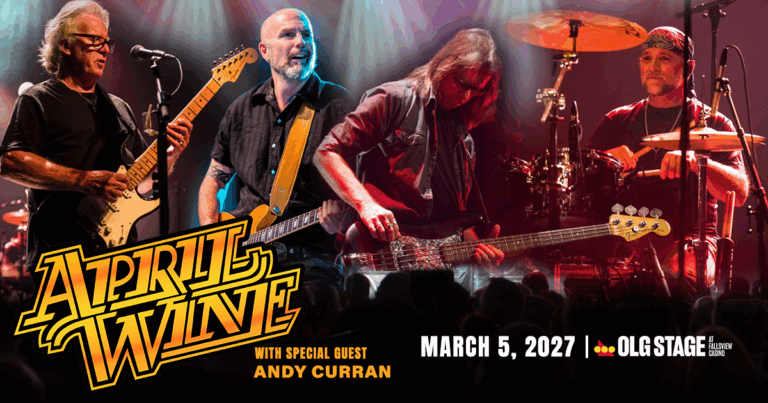
One of Canada’s most enduring rock institutions is rolling into Niagara Falls. Fallsview Casino Resort has announced April Wine, with special guest Andy Curran, at the OLG Stage at Fallsview Casino on Friday, March 5, 2027. Tickets go on sale Friday, June 12 at 10 am through ticketmaster.ca.
April Wine carries one of the deepest catalogues in Canadian music. Formed in 1969 in Halifax, Nova Scotia, the group rode the 1970s and 1980s to international success, releasing more than 20 albums and selling over 20 million records worldwide. “Roller,” “I Like to Rock,” and “Just Between You and Me” became staples, and that last one made them the first Canadian band ever to air on MTV.
The hardware backs up the legend. April Wine have stacked up multiple gold and platinum releases, 11 Juno Award nominations, and inductions into both the Canadian Music Industry Hall of Fame and the Canadian Music Hall of Fame. These songs still land hard on a live stage, and a 5,000-seat room built for big rock nights is the right place to hear them.
Andy Curran makes the bill a genuine double feature. A founding member of Coney Hatch and a 1992 Juno winner, Curran has built a celebrated career across solo work, chart hits, and recent collaboration with Envy of None alongside Alex Lifeson. His set adds a second distinct voice to an evening rooted in homegrown rock.
Cathy Price, Vice President of Marketing and Resort Operations for Niagara Casinos, framed the pairing as two unforgettable voices in Canadian music sharing one high-energy night, noting April Wine’s run as a cornerstone of the country’s rock scene across five-plus decades.
Show Details:
April Wine with special guest Andy Curran
Friday, March 5, 2027
Showtime: 8:00 pm
OLG Stage at Fallsview Casino, Niagara Falls, ON
Tickets on sale Friday, June 12 at 10:00 am via ticketmaster.ca
SiriusXM Locks Down Live Coverage Of The 2026 U.S. Open

Golf fans get a front-row seat for the year’s biggest test, no screen required. SiriusXM has announced its broadcast coverage for the 126th U.S. Open Championship, delivering live shot-by-shot audio across all four rounds, June 18 to 21, from Shinnecock Hills Golf Club in Southampton, NY.
The schedule runs deep. Thursday and Friday coverage stretches from the first tee time (around 7 am ET) through the end of play. Saturday and Sunday, on-course coverage starts at 10 am ET and runs until the final putt drops. Subscribers can tune in nationwide in their cars on channel 92 and on the SiriusXM app.
The broadcast booth carries serious credentials. Brian Katrek handles lead play-by-play, with former tour pro Brendon de Jonge on analysis. Emilia Doran, Fred Albers, John Maginnes, and Carl Paulson work the course as reporters. Three-time U.S. Open champion Hale Irwin joins the team on air for the Saturday and Sunday rounds, bringing a winner’s read to the weekend pressure. After each round, Gary Williams and Jason Sobel host a two-hour wrap-up of the day’s play.
Championship week brings a full slate of talk programming, kicking off at 7 am ET each weekday. Radio Hall of Famer and Long Island native Christopher “Mad Dog” Russo brings “Mad Dog Unleashed” live from The Trophy Club at Shinnecock Hills on Tuesday, June 16, from 3 to 7 pm ET. SiriusXM’s golf hosts (de Jonge, Taylor Zarzour, Carl Paulson, Dennis Paulson, John Maginnes, and Brian Katrek) broadcast Monday through Wednesday from the set near the driving range, running interviews and breaking down the field and the course.
Rocco Mediate keeps things lively too. New episodes of “The Rocco Hour” air Monday, Tuesday, and Wednesday at 7 pm ET. Mediate played 14 U.S. Opens with three top-10 finishes, and his 19-hole playoff against Tiger Woods at the 2008 U.S. Open stands among the most gripping finishes in major championship history.
The U.S. Open, conducted by the USGA, remains the ultimate test for the best players on the planet. Played on America’s greatest courses, it opens the door each year for thousands of golfers from every background to qualify through a demanding two-stage process.
U.S. Open Week on SiriusXM:
Tuesday, June 16 – “Mad Dog Unleashed” live from The Trophy Club, 3-7 pm ET
Monday-Wednesday, June 15-17 – Daily golf host shows from the Shinnecock Hills broadcast set
Monday-Wednesday, June 15-17 – “The Rocco Hour” with Rocco Mediate, 7 pm ET
Thursday, June 18 – Round 1 live coverage from first tee time (approx. 7 am ET) through end of play
Friday, June 19 – Round 2 live coverage from first tee time (approx. 7 am ET) through end of play
Saturday, June 20 – Round 3 live coverage from 10 am ET through end of play
Sunday, June 21 – Round 4 live coverage from 10 am ET through end of play