

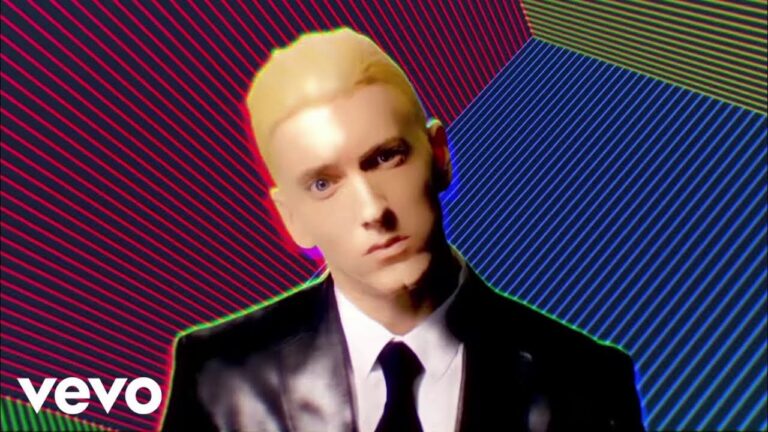
William Maranci has done it again, mashing Eminem’s Rap God with Nirvana’s In Bloom, They Might Me Giants’ Ana Ng, the theme song from Curb Your Enthusiasm and over 50 other songs.
Guy Performs Rush’s “Tom Sawyer” On A Low-Budget Drum Kit And It’s AWESOME
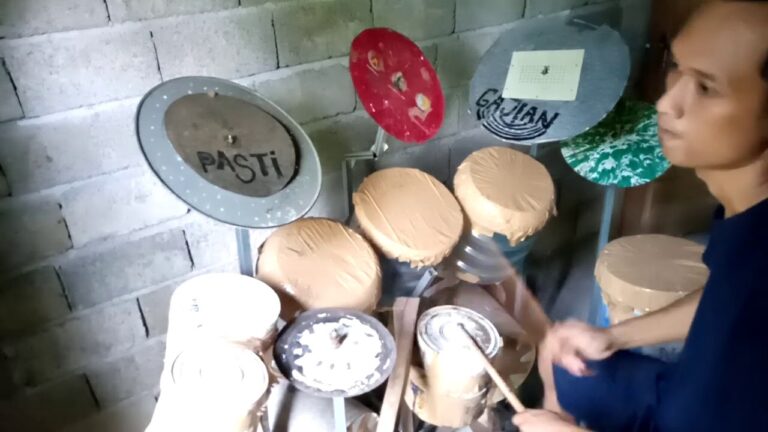
Don’t have a ‘real’ drum kit, but still want to be a tubthumper? Deden Noy did, and made his own drums from plastic buckets, water bottles, scrap metal, and packing tape to rock out on Rush’s classic Tom Sawyer.
My Next Read: “Fallopian Rhapsody: The Story of The Lunachicks” by The Lunachicks with Jeanne Fury

Fallopian Rhapsody: The Story of the Lunachicks is a coming-of-age tale about a band of NYC teenagers who forged a sisterhood, found salvation, and fervently crashed the gates of punk rock during the ’90s, accidentally becoming feminist icons along the way. More than that, this is a story about the enduring friendship among the book’s three central voices: Theo Kogan, Sydney Silver, and Gina Volpe. They formed the Lunachicks at LaGuardia High School (of “Fame” fame) in the late ’80s and had a record deal with Blast First Records as teenagers, whisked into the studio by Kim Gordon and Thurston Moore.
Over the course of thirteen-ish years, the Lunachicks brought their brand of outrageous hard-rockin’ rebelliousness around the world countless times, simultaneously scaring conservative onlookers and rescuing the souls of wayward freaks, queers, and outcasts.Their unforgettable costume-critiques of pop culture were as loud as their “Marsha[ll]” amps, their ferocious tenacity as lasting as their pre-internet mythology. They toured with bands like the Go-Go’s, Marilyn Manson, No Doubt, Rancid, and The Offspring; played the Reading Festival with Nirvana; and rocked the main stage at the Warped tour twice.
Yet beneath all the makeup, wigs, and hilarious outfits were three women struggling to grow into adulthood under the most unorthodox of conditions. Together onstage they were invincible B-movie superheroes who kicked heaps of ass–but apart, not so much. Depression, addiction, and identity crises loomed overhead, not to mention the barrage of sexist nonsense they faced from the music industry.
Filled with never-before-seen photos, illustrations, and ephemera from the band’s private archive, and featuring contributions from Lunachicks drummer Chip English, founding member Sindi B., and former bandmate Becky Wreck, Fallopian Rhapsody is a bawdy, gripping, warts-and-all account of how these city kids relied on their cosmic creative connection to overcome internal strife and external killjoys, all the while empowering legions of fans to shoot for the moon.
For readers of Carrie Brownstein’s Hunger Makes Me a Modern Girl, Kim Gordon’s Girl in a Band, and Chrissie Hynde’s Reckless, Fallopian Rhapsody is the literary equivalent of diving headfirst into a moshpit and slowly but surely venturing up to the front of the stage.
With Guitars Played by Bruce Springsteen, Bob Dylan and Metallica’s Kirk Hammett, This Auction Goes to 11
A rock-and-roll hall of fame’s worth of instruments take center stage at Heritage Auctions this spring. Not to mention a 1956 Bigsby electric guitar made for Louisiana player and poet Luke Charpentier Jr. – and, likely, the last axe ever made by Paul Bigsby, the oft-unheralded genius and solid-body pioneer who quietly did as much as anyone to make music loud. This Bigsby’s inclusion alone would make the April 11 Guitars and Musical Instruments Signature Auction event, which features more than 200 lots, a landmark sale.
“But the breadth of this event is just staggering, even to those of us who put it together,” says Aaron Piscopo, Director of Vintage Guitars & Musical Instruments at Heritage Auctions. “These aren’t just pieces owned or played by famous people. These are the tools used to craft milestone moments, and iconic instruments that resulted in indelible sights and sounds. Frankly, it’s an honor and privilege just to be around them, to hold them, much less share them with fans for whom these are treasured memories as much as collectible keepsakes.”
Perhaps none more so than the 1965 Martin D-35 being offered, which looks like, feels like and plays like any other ’65 Martin D-35, which is to say better than most guitars ever made. The pickguard’s been changed out; the neck, dinged by use; the three-piece Brazilian rosewood back cracked a bit by age. But that just means the guitar, among the first D-35s ever made, has character. Experience.
Except this one isn’t like any other 1965 Martin D-35. This one you’ve heard; this one, you know.
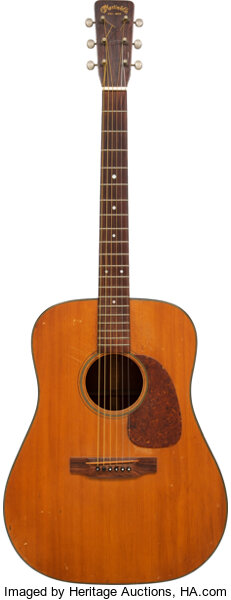
This one, Bruce Springsteen used on May 2, 1972, when he famously auditioned for talent scout John Hammond at Columbia Records’ New York City offices. This one, Springsteen held that same night, when he played a hastily put-together gig at Greenwich Village’s Gaslight to show Hammond he could hold an audience. This 1965 Martin D-35, Springsteen used during the recording of his first two records, Greetings from Asbury Park, N.J. and The Wild, the Innocent & the E Street Shuffle, which bookended 1973 and made a national star out of the local hero from Freehold, New Jersey.
“He plays it on ‘It’s Hard to Be a Saint in the City,’ ‘Growin’ Up,’ ‘Incident on 57th Street,’ ‘New York City Serenade,’ ‘4th of July, Asbury Park (Sandy),’” says Bob Spitz, who would know. There were other songs, too. Some released; many, still unheard.
The guitar belonged to Spitz, who among Springsteen’s first management team in the 1970s. Spitz, who grew up in Redding, PA., says his parents drove to Gibson’s factory in Nazareth to buy the guitar for the then-exorbitant price tag of $450. In time, others would play that Martin, Spitz says, among them Graham Nash and Phoebe Snow. But every time Spitz held that guitar, or just looked at it, he thought of that scrawny, scrappy comer from Jersey.
“It brought back a wave of memories and took me right back to the early 1970s,” Spitz says. “We were in New York, and he was staying in my tiny studio apartment on the nights he didn’t go back to Asbury Park. Bruce was in the hammock I had strung across the room. He would have a notebook on one knee and the guitar on the other while he composed. Those are the memories I have.”
Spitz, too, has brought to this event a 1957 Martin D-18, gifted to him by Suze Rotolo while the writer worked on his acclaimed 1989 tome Dylan: A Biography.
Rotolo told Spitz she, too, had received the guitar as a present – from none other than folksinger and songwriter Tom Paxton, who was at Gerde’s Folk City the first night Dylan ever performed on a Greenwich Village stage.
“Suze and I became close when I was working on the book,” Spitz says. “I lived a couple blocks away, and when she was packing up to go back to Italy permanently, she said, ‘I have this guitar, do you want it? I know you play.’ She said, ‘It belonged to Tom Paxton, who left it here, and that Bob wrote on it when he lived here.’
“I mean. There was Suze right in front of me, the woman standing with Dylan on the cover of The Freewheelin’ Bob Dylan. I said to her, ‘You will know I will take good care of this guitar and play it often.’ And I did. For decades. And now it’s someone else’s turn.”
Just as it’s soon to be someone else’s shot at wielding the ESP 400 Series Natural Solid Body Electric Guitar Kirk Hammett can be seen playing in the forever-haunting video for “One,” the final single off the band’s 1988 album … And Justice For All. The video was a landmark moment in MTV history for countless reasons: It was the band’s first video; it famously alternates between performance footage and devastatingly haunting excerpts from the 1971 antiwar film Johnny Got His Gun; and a decade after its 1989 debut, MTV put “One” at No. 38 on its list of the 100 Greatest Music Videos Ever Made. It’s also one of the greatest metal moments in the history of the volume knob.
So, too, of course, is any guitar Eddie Van Halen ever touched, including the Kramer Striker/Ripley Rosewood Fingerboard Frankenstrat Solid Body Electric Guitar appearing in this event. To be sure, Van Halen had myriad Frankenstrats over the years; most he made, some were rendered by others. This one, believed to have been used as a backup during the tours supporting 1984 and 5150, was specially crafted by one of EVH’s most trusted collaborators: the late Steve Ripley, who most famously made the guitar used on “Top Jimmy.”
Speaking of: Jim Heath, best known as the Rev. Horton Heat, has consigned to this auction two extraordinary items – not merely his 1964 Fender Jazzmaster Sunburst Solid Body Electric Guitar, which helped transform this hero of Dallas into an international myth and matinee idol and would be headline enough, but the blue-plaid suit the Rev wore on the cover of his band’s Sub Pop Records debut 1990 Smoke ‘em If You Got ‘em. Heath has been man things in his storied career, among them: The Last Rockabilly, Slicked-Back Punk in a Late-Night Lounge, Gentleman County Swinger. A little bit of all of that resides in this combo platter in the midst of this rock-and-roll buffet at auction April 11.
And then there is this smash hit from Buddy Rich: the very same 1978-79 Ludwig White Pearloid Drum Set the voluble speed demon brought on The Tonight Show during those epic showdowns with Johnny Carson’s house-band drummer Ed Shaughnessy. So enamored of this kit was the late-night host – and drummer himself, and a pretty good one at that – Carson would up taking home Rich’s drums. The provenance is as spectacular as a Rich solo: The set comes from Don Sweeney, who spent 20 years working on the show and eventually telling its history in a 2006 book. Now, he shares a piece of that Rich history at Heritage Auctions.
National Recording Registry Adds Janet Jackson, Labelle, Nas, Marlo Thomas, Louis Armstrong, Ira Glass and Kermit the Frog
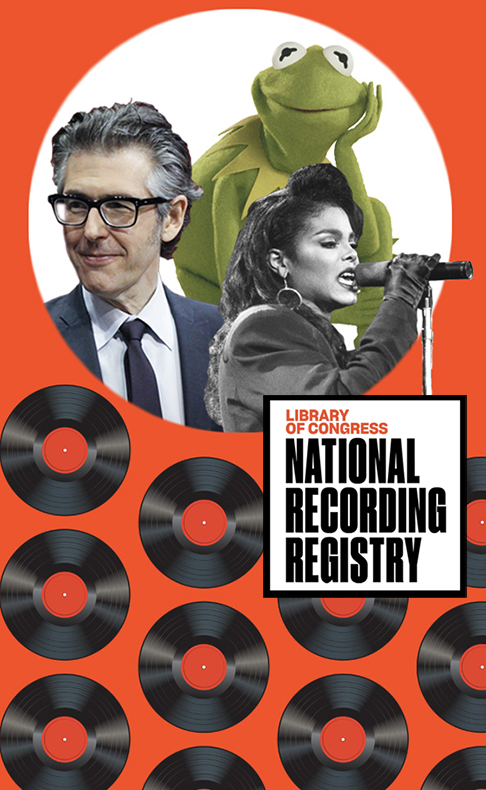
Janet Jackson’s clarion call for action and healing in “Rhythm Nation 1814” now joins other groundbreaking sounds of history and culture among the latest titles inducted into the National Recording Registry of the Library of Congress, including Louis Armstrong’s “When the Saints Go Marching In,” Labelle’s “Lady Marmalade,” Nas’ “Illmatic,” Kool & the Gang’s “Celebration,” and Kermit the Frog’s “The Rainbow Connection.”
Librarian of Congress Carla Hayden today named 25 recordings as audio treasures worthy of preservation for all time based on their cultural, historical or aesthetic importance in the nation’s recorded sound heritage.
“The National Recording Registry will preserve our history through these vibrant recordings of music and voices that have reflected our humanity and shaped our culture from the past 143 years,” Hayden said. “We received about 900 public nominations this year for recordings to add to the registry, and we welcome the public’s input as the Library of Congress and its partners preserve the diverse sounds of history and culture.”
The recordings most recently selected for the National Recording Registry bring the number of titles on the registry to 575, representing a small portion of the national library’s vast recorded sound collection of nearly 4 million items.
One song has appealed to generations of Muppets fans and many musicians who revived “The Rainbow Connection” over the decades since it was performed by Jim Henson as Kermit the Frog in 1979. Songwriter Paul Williams, who wrote the music and lyrics with Kenneth Ascher, said the song is about “the immense power of faith.”
“We don’t know how it works, but we believe that it does,” Williams said. “Sometimes the questions are more beautiful than the answers.”
Kermit was deeply touched to have his banjo-strumming song from 1979’s “The Muppet Movie” preserved, he recently told Hayden.
“Well, gee, it’s an amazing feeling to officially become part of our nation’s history,” Kermit said. “It’s a great honor. And I am thrilled — I am thrilled! — to be the first frog on the list!”
The latest selections named to the registry, spanning from 1878 to 2008, range from pop, hip-hop and country to Latin, Hawaiian, jazz, blues, gospel, classical and children’s music. In addition to the musical selections, the new class showcases one of the earliest recordings of an American voice by Thomas Edison, as well as sports history, voices of world leaders during World War II, a soap opera’s roots in radio, and even the first podcast to join the registry, with “This American Life” following its success in radio.
NPR’s “1A” will host several features in the series, “The Sounds of America,” on the selections for the National Recording Registry, including interviews with Hayden and several featured artists in the weeks ahead. Follow the conversation about the registry on Twitter and Instagram @librarycongress and #NatRecRegistry.
You can listen to many of the recordings on your favorite streaming service. The Digital Media Association, a member of the National Recording Preservation Board, has compiled a list of some streaming services with National Recording Registry playlists at https://dima.org/nrr-2020-inductee-playlists (external link).
Rhythm Nation Resonates Today
Released in 1989, “Janet Jackson’s Rhythm Nation 1814” was written and recorded in the Minneapolis studios of James “Jimmy Jam” Harris III and Terry Lewis, the songwriters who had come of musical age with neighborhood friends Prince and Morris Day. They also had produced Jackson’s breakthrough album “Control” in 1986.
While “Control” was about Jackson finding her voice, the pair said, “Rhythm Nation” was a statement album about the pop icon finding her purpose. It turned out to be a spiritual follow-up to Marvin Gaye’s iconic “What’s Going On” a generation earlier. Working with Jackson, Harris and Lewis crafted songs protesting racism, police brutality and social injustice of the day. The “1814” of the title was a call back to the composition of “The Star-Spangled Banner,” with this being a new anthem for a new nation — one built on a multiracial, multiethnic vision and a thick dance groove.
“We wanted ‘Rhythm Nation’ to really communicate empowerment,” Harris said. “It was making an observation, but it was also a call to action. Janet’s purpose was to lead people and do it through music, which I think is the ultimate uniter of people.”
In songs like the title track, “State of the World” and “The Knowledge,” they expanded on Gaye’s soulful lamentation of a world gone wrong. Then the album moves into love songs and dance music, with the hits “Miss You Much,” “Love Will Never Do” and “Escapade.” The album would produce four No. 1 hit singles and a record-breaking seven top five singles. It’s filled with lyrics just as timely in 2021 — and the album received among the most votes in the public nomination process last year for the recording registry.
“Where we’re at in society today, the lyrics of ‘Rhythm Nation’ and ‘State of the World’ — some of those resonate just as powerfully, if not more so, as a narrative of what’s happening in society,” Harris said. “There’s no expiration date on great music.”
Music that Endures
The enduring cultural impact of music reveals itself in a variety of ways: over the passage of time for some songs, through numerous covers inspired by the original, or perhaps from the perennial use of certain music in movies, television, celebrations and on dance floors. This has made some tunes familiar sounds of America’s shared songbook, including “Lady Marmalade,” recorded by Patti LaBelle, Sarah Dash and Nona Hendryx, “Somewhere Over the Rainbow / What a Wonderful World” recorded by Israel Kamakawiwo’ole in 1993, and “Celebration” recorded by Kool & the Gang in 1980.
New Orleans has produced famous music for more than a century, but few songs ever caught the city’s red-light district in such danceable fashion as “Lady Marmalade” by the group Labelle in 1974.
“We knew it was a hit,” said lead singer Patti LaBelle, the first time a demo tape was played for the trio in Los Angeles. They would record the song in New Orleans with the city’s legendary Allen Toussaint and with Vicki Wickham.
Famed for its “Hey sista, go sista” chant and its racy chorus, the song shot to No. 1 in the United States and many European countries. All three group members said it changed their lives and that they still perform the song today.
Other music gives voice to changes in society and culture. In 1972, Marlo Thomas was dismayed when she could only find old-fashioned books for her young niece, in which little girls dreamed of growing up to marry a prince. So she set out to make a song-filled record for children, in which kids could picture their lives in new ways, regardless of rigid gender roles or boundaries.
“We said, ‘You know what, let’s just change the world one 5-year-old at a time,’” Thomas said.
The result was “Free to Be…You and Me,” which featured songs by Hollywood stars, including the title track by the New Seekers, “William’s Doll” by Alan Alda and Thomas, “When We Grow Up” by Diana Ross and “It’s All Right To Cry” by Rosey Grier, an imposing pro football player. The album went platinum, which led to a No. 1 bestselling book, then an ABC television special and an enduring place in American pop culture.
“We thought we were talking to the children in the ’70s,” Thomas said. “We didn’t realize we were talking to children in 2020.”
Some albums inducted this year into the recording registry demonstrated the power to influence entire genres of music. When Nas released his 1994 hip-hop album “Illmatic,” it was celebrated for its rhythmic originality and complexity, and its technique has been widely copied since.
In the case of reggae singer Jimmy Cliff, who starred in the first Jamaican-produced feature film, “The Harder They Come” in 1972, the movie soundtrack featuring six songs recorded by Cliff has been credited with taking reggae worldwide while also presenting other reggae stars to a global audience.
Setting New Standards in Jazz, Blues, Country and Classical
The selections for the National Recording Registry also include groundbreaking recordings in jazz, the blues and gospel — reaching deeper into music history. Louis Armstrong and his orchestra’s 1938 recording of “When the Saints Go Marching In,” for example, was the first jazz recording of this famous hymn and broke barriers between church and dance hall by mixing a sacred song with jazz.
Musician Branford Marsalis credits Armstrong’s recording for making a previously regional song an international one. He recalled playing “The Saints” with his brother Wynton Marsalis while growing up in New Orleans.
“As kids in the late 1960s, Wynton and I learned it when I was still playing clarinet; Wynton playing the melody, and me playing the bass notes. … It’s the first song we played together,” Branford Marsalis said. “I can’t imagine New Orleans’ culture without this song. It is an indelible part of our history.”
Nearly 40 years after Armstrong’s innovations with jazz, Pat Metheny signaled a new direction for jazz in the mid-1970s with his debut album, “Bright Size Life.”
With “Odetta Sings Ballads and the Blues,” this debut album for Odetta in 1957, an important folk music voice, would go on to influence a young Bob Dylan to trade in his electric guitar for acoustic. A decade later, Albert King, one of the blues’ greatest guitarists, would release what is considered his best album with “Born Under a Bad Sign,” playing his signature Flying V Gibson guitar in his left-handed manner.
A new country selection for the registry adds the voice of Connie Smith, who has been called one of most underrated vocalists in country music — and who is greatly admired by her peers, including Dolly Parton. Smith’s first single, “Once a Day,” would become her biggest hit.
“I never dreamed when I walked into RCA’s Studio B in Nashville on July 16, 1964, to make my first record that a song from that session called ‘Once a Day’ would become a hit,” Smith said. “In the wake of its success, that recording received many honors and the song has endured. But, for ‘Once a Day’ to be recognized by the Library of Congress and to have it listed in the nation’s National Recording Registry is indeed the ultimate honor. This blesses me, and I am extremely grateful.”
Two classical selections are being added to the registry this year. A 1962 recording of “Aida” features Leontyne Price in her signature role and with her voice in her prime. Previous inductee Renée Fleming welcomed the two classical selections.
“Leontyne Price’s exquisite beauty of tone, dramatic power and flawless musicianship made her Aida legendary,” Fleming said. “I am so fortunate to have had the guidance of this musical pioneer, whose breath-taking talent advanced and elevated our art form.”
Another soprano joining the registry is Jessye Norman, whose recording of Richard Strauss’ “Four Last Songs” is described by Fleming as “unsurpassed in terms of the sheer vocal grandeur.” Norman, who died in 2019, deposited her personal collection with the Library of Congress.
Sounds of History and Culture
The latest recordings added to the registry stretch back to some of the earliest days of recorded sound. In 1878, Thomas Edison recorded — on a piece of tinfoil — 78 seconds that may be the oldest playable recording of an American voice and the earliest known recording of a musical performance.
Several other titles joining the registry represent sounds of the first half of the 20th century, from the song of a Swedish immigrant, Hjalmar Peterson, who settled in Minnesota and became a popular entertainer, to a Greek immigrant who settled in New York City and became one of the most popular singers of the Greek-American community.
American roots music also joins the registry with the album “Partners” by Flaco Jiménez, a champion of traditional conjunto music and Tex-Mex culture who also is known for innovation and collaboration with a variety of artists. This bilingual album features collaborations with Linda Ronstadt, Ry Cooder, Emmylou Harris and Los Lobos, among others.
Political history joins the registry with a recording of President Franklin Roosevelt’s lighting of the White House Community Christmas Tree in 1941 with British Prime Minister Winston Churchill — less than three weeks after the attack on Pearl Harbor as America was plunged into World War II. It was a moment broadcast on all the major U.S. radio networks and to audiences around the world.
Power of Radio and Podcasting
Radio’s power in capturing important historical milestones also brings baseball history to the registry this year. When Roger Maris hit his 61st homerun of the season in 1961, eclipsing Babe Ruth’s previous record, Phil Rizzuto’s radio play-by-play would become an iconic moment in sports history with his trademark shout of “Holy Cow!”
“I have long felt that the sports moments, which continue to resonate decades later, are largely shaped by the way they were captured on radio and television,” said broadcaster Bob Costas. “While Phil Rizzuto, a beloved former Yankee shortstop, was not a classic announcer in the fashion of Red Barber, Mel Allen or Vin Scully, his radio call on this day was both descriptive and infused with excitement. For baseball fans and historians, it still echoes down the corridors of time.”
Radio also gave rise to the “soap opera” genre, a long tradition in American entertainment, and “The Guiding Light” would become the longest-running scripted program in broadcast history. Between radio and later television, the show would air from 1937 to 2009. The registry will now include a radio recording of the show from 1945.
Finally, the first podcast (born in radio) is also being inducted into this year’s registry with “This American Life.” Ira Glass, who has led “This American Life” from its 1995 inception on public radio to also becoming one of the nation’s most popular podcasts, has seen his show win dozens of awards over the years, including the first Pulitzer Prize awarded to a radio show in 2020. The registry will include a 2008 episode co-produced with NPR News telling the story of the complex subprime mortgage crisis
“When we put this out as a podcast, turning a radio show into a podcast, we did literally nothing to accommodate it,” Glass said. “And my theory is that podcasting is most powerful for the same reason that radio is the most powerful. That is, when you have a medium where you’re not seeing people, there’s just an intimacy to hearing somebody’s voice.”
About the National Recording Registry
Under the terms of the National Recording Preservation Act of 2000, the Librarian of Congress, with advice from the National Recording Preservation Board, selects 25 titles each year that are “culturally, historically, or aesthetically significant” and are at least 10 years old. More information on the National Recording Registry can be found at loc.gov/programs/national-recording-preservation-board/about-this-program/. The public may nominate recordings for the Registry here.
Some registry titles have already been preserved by the copyright holders, artists or other archives. In cases where a selected title has not already been preserved, the Library of Congress Packard Campus for Audio Visual Conservation works to ensure that the recording will be preserved by some entity and available for future generations. This can be either through the Library’s recorded-sound preservation program or through collaborative ventures with other archives, studios and independent producers.
The Packard Campus is a state-of-the-art facility where the nation’s library acquires, preserves and provides access to the world’s largest and most comprehensive collection of films, television programs, radio broadcasts and sound recordings (loc.gov/avconservation/). It is home to more than 7 million collection items.
The Library of Congress is the world’s largest library, offering access to the creative record of the United States — and extensive materials from around the world — both on-site and online. It is the main research arm of the U.S. Congress and the home of the U.S. Copyright Office. Explore collections, reference services and other programs and plan a visit at loc.gov; access the official site for U.S. federal legislative information at congress.gov; and register creative works of authorship at copyright.gov.
National Recording Registry, 2020 Selections
(chronological order)
Edison’s “St. Louis tinfoil” recording (1878)
Thomas Edison’s recording is quite possibly a record of the oldest playable recording of an American voice. It is a survivor — the earliest extant document that captures a musical performance. The recording is on a piece of tinfoil. It lasts 78 seconds and was made on a phonograph in St. Louis, Missouri, on June 22, 1878, just months after Edison invented his magic recording machine. For years the foil endured and went, not surprisingly, unplayed. Then, in the summer of 2013, the Museum of Science and Innovation in Schenectady, New York, announced that physicists at the Lawrence Berkeley National Laboratory had recovered the sound from this slip of shiny silver. The result was a surprisingly listenable musical and vocal interlude.
“Nikolina” — Hjalmar Peterson (1917) (single)
In “Nikolina,” a young Swedish husband tells of his comical difficulties with his father-in-law. The song was brought to America by Hjalmar Peterson (1886-1960), who settled in Minnesota and became a hugely popular entertainer among Swedish-Americans. He recorded “Nikolina” three times in the ‘teens and 20s, in the process, selling more than 100,000 copies. In 1936, Ted Johnson, a former member of Peterson’s troupe, re-recorded it with traditional instruments, and the song became a hit again, the first of many successful revivals.
“Smyrneikos Balos” — Marika Papagika (1928) (single)
Born on the Greek island of Kos in 1890, singer Marika Papagika immigrated to New York City in 1915 with her musician husband Gus. She began recording in 1918 and quickly became one of the most popular singers in the Greek-American community, eventually recording well over 200 songs, often accompanied by her husband on the cimbalom. “Smyrneikos Balos,” a lament for lost love that is also a couples’ dance, was one of her most popular songs, and she recorded it three times.
“When the Saints Go Marching In” — Louis Armstrong & his Orchestra (1938) (single)
In this first jazz recording of the famous hymn, Louis Armstrong, in the guise of “Rev. Satchelmouth,” introduces this unusually atmospheric recording. From J.C. Higginbotham’s shouting, preaching trombone, to Rev. Satchelmouth’s respectful vocal (accompanied by some members of the “congregation”) to the soaring and majestic trumpet solo, the performance commands attention. Armstrong fondly remembered “The Saints” from his childhood in New Orleans. His democratic attitude towards music saw little difference between the church and the dance hall, and as a result, he received backlash from clergy and fans for daring to mix the sacred with jazz. While that juxtaposition may seem mild today, the music certainly is not; it stands as a timeless testament to Louis Armstrong’s many gifts.
Christmas Eve Broadcast — Franklin D. Roosevelt and Winston Churchill (December 24, 1941)
On Dec. 24, 1941, President Franklin Roosevelt lit the White House Community Christmas Tree, and for the first time as the leader of a nation at war. The attack on Pearl Harbor was less than three weeks ago and though Americans were uneasy, it was a glimmer of hope for the people of Great Britain, who had been fighting the Nazis since 1939 and were staring across the English Channel at a Europe increasingly dominated by Germany. Prime Minister Winston Churchill made the dangerous journey across the Atlantic to visit Roosevelt and address Congress. While staying at the White House, Churchill took part in the lighting of the White House Christmas Tree. He and Roosevelt were heard coast-to-coast on the major radio networks and by short wave to much of the rest of the world. Churchill observed: “Here, in the midst of war, raging and roaring over all the lands and seas, creeping nearer to our hearts and homes, here, amid all the tumult, we have tonight the peace of the spirit in each cottage home and in every generous heart.”
“The Guiding Light” — Nov. 22, 1945
“The Guiding Light” was the longest-running scripted program in broadcast history, running for a total of 72 years, from 1937 until 2009 on radio and television. The program was notable as an archetype of the highly populated radio “soap opera” genre and as a breakthrough success of the innovative and prolific scriptwriter, Irna Phillips, whom many credit with inventing the entire genre. Although the later TV series revolved around the Bauer Family, the original radio version focused on the Rev. John Ruthledge and his congregation in the fictional community of Five Points. Ruthledge’s reading lamp, visible to all who passed his house, was the program’s namesake. Of the show’s hundreds of episodes, the registry adds this installment aired on the first Thanksgiving after the conclusion of World War II. With Ruthledge still serving overseas as a chaplain, his friend the Rev. Dr. Frank Tuttle, gives a moving sermon to a packed church.
“Odetta Sings Ballads and Blues” — Odetta (1957) (album)
This is the debut album from an important voice in the folk revival — featuring a mix of blues, spirituals and ballads. Born in Birmingham, Alabama, Odetta was a major influence to a generation of folk singers, including the young Bob Dylan who has cited this album as what convinced him to trade in his electric guitar for an acoustic when he heard it as a 15-year-old teenager in Minnesota. This 16-song LP showcases Odetta’s extraordinary vocal power, which she always manages to temper with great emotion. Among the selections: “Muleskinner Blues,” “Jack o’ Diamonds,” “Easy Rider,” “Glory, Glory” and her concluding spiritual trilogy: “Oh, Freedom,” “Come and Go With Me” and “I’m on My Way.”
“Lord, Keep Me Day by Day” — Albertina Walker and the Caravans (1959) (single)
Influenced by and spurred on by her mentor, Mahalia Jackson, in 1947, Albertina Walker formed her own — and now legendary — gospel group, Albertina Walker and the Caravans. Soon, Walker would be nicknamed “Star Maker” for the incredible talent she fostered through her group. Shirley Caesar, Bessie Griffin, the Rev. James Cleveland and Inez Andrews, among others, all began their careers as part of the Caravan. Meanwhile, Walker herself would inherit the title “Queen of Gospel Music” after the passing of Jackson in 1972. This 1959 recording was one of Walker’s signature songs and performances — a heartfelt, soulful and sometimes bluesy testament to her faith.
Roger Maris hits his 61st homerun (October 1, 1961)
On Oct. 1, 1961, Roger Maris hit his 61st homerun of the season, eclipsing Babe Ruth’s previous homerun record. Phil Rizzuto’s radio play-by-play of the entire at-bat is one of the most iconic moments in sports history. From the moment when the Yankee hitter stepped to the plate, Rizzuto captures the excitement and anticipation of a crowd ready to watch history being made, booing when the first two pitches miss the strike zone and then exploding when Maris connects with the third, prompting Rizzuto’s trademark shout of “Holy Cow!” amid the deafening cheers.
“Aida” — Leontyne Price, et.al. (1962) (album)
This superb recording includes Leontyne Price in her signature role of Aida, a role that she performed over 40 times. Harold C. Schonberg, critic of The New York Times, wrote “no soprano makes a career of acting. Voice is what counts, and voice is what Miss Price has.” PBS viewers voted her singing (in a MET production) of the Act III aria, “O patria mia,” as the No. 1 “Greatest Moment” in 30 years of “Live from the Met” telecasts. That performance ended with 25 minutes of sustained applause. And that was at her retirement! This 1962 recording captured Price’s voice in her prime. The star-studded cast of this recording also includes Rita Gorr (who is a splendid Amneris), Robert Merrill (Amonasro, rich and firm vocally) and Jon Vickers as Radames (ringing and heroic).
“Once a Day” — Connie Smith (1964) (single)
Connie Smith has been called one of the most underrated vocalists in country music history. And she’s greatly admired by her peers; Dolly Parton once said, “There’s only three real female singers: Barbra Streisand, Linda Ronstadt and Connie Smith. The rest of us are only pretending.” Smith’s rise to that level of admiration began with her very first single, “Once a Day,” written by Bill Anderson who was already successful, both as a singer and a songwriter, when he heard Smith at a talent contest. He helped her get a recording contract and, for her first session, wrote “Once a Day,” an achingly sad song about a jilted woman who misses her lover only “once a day, every day, all day long.” Recorded at RCA’s famous Studio B in Nashville, Smith was backed by session musicians and members of Anderson’s band, The Po’ Boys, including one new player, steel guitarist Weldon Myrick, who would go on to become a Nashville legend himself. Producer Bob Ferguson wanted the steel guitar to be right up front and Myrick delivered, so much so that Smith credits Myrick with “creating the Connie Smith sound.” “Once a Day” was Connie Smith’s biggest hit and became her signature song.
“Born Under a Bad Sign” — Albert King (1967) (album)
Albert King, with his signature Flying V Gibson guitar played in his distinctive left-handed manner, was one of the blues’ greatest guitarists, and this album is considered to be his very best. Its title song became a blues standard, and was soon recorded by Eric Clapton and Cream. Other great songs on this album include “Crosscut Saw” and “The Hunter.” Recorded in Memphis with backing from Booker T. & the M.G.’s, and the Memphis Horns, via this album, King was soon performing at the Fillmore East and West and gaining a large and enduring following.
“Free to Be…You & Me” — Marlo Thomas and Friends (1972) (album)
The 1972 album “Free to Be…You and Me” is remarkable both as a snapshot of social change with regard to gender roles and expectations in the early 1970s and for the wide array of talent it assembled. Marlo Thomas explained in a 2003 interview that the inspiration for the project came from her niece and a desire for children’s educational materials that did not impose rigid and arbitrary gender roles and expectations. Thomas expected modest sales at best, but the album quickly sold hundreds of thousands of copies, ultimately achieving gold, platinum and diamond status. Those sales were likely due in part to Thomas’ own celebrity status but also because the album’s message resonated with a large segment of American society, young and old, male and female. Appearances by talents as varied as Diana Ross, Harry Belafonte, Dick Cavett and pro football player Rosey Grier (in “It’s All Right to Cry”) further ensured appeal to a wide audience. The album and follow-up book led to an ABC television special, and the project was reprised in the 1988 TV special ”Free to Be…A Family.”
“The Harder They Come” — Jimmy Cliff (1972) (album)
In 1972, reggae singer Jimmy Cliff starred in the first Jamaican-produced feature film, “The Harder They Come.” Around the time of the film’s release, the soundtrack to this film made its way to American audiences and has been credited by Rolling Stone magazine as “the album that took reggae worldwide.” Cliff has six songs on the album, including the title track and the seminal “Many Rivers to Cross,” which has since been covered by myriad artists, including Cher, John Lennon, UB40, Annie Lennox and Percy Sledge. While only the title track was recorded specifically for the soundtrack, the album collected numerous reggae stars and presented essential works in the genre to a new global audience. Others reggae pioneers and luminaries appearing on the album include Toots and the Maytals (“Pressure Drop” and “Sweet and Dandy”), Desmond Dekker (“Shanty Town”) and The Melodians (“Rivers of Babylon”). This exemplar of the diverse sounds of reggae in the 1960s and ‘70s has enjoyed enormous critical praise and continued popularity in the U.S. The album has appeared on every version of “Rolling Stone’s” Top 500 albums of all time.
“Lady Marmalade” — Labelle (1974) (single)
The elemental trio of Labelle — Patti LaBelle, Nona Hendryx and Sarah Dash — first formed in 1962 as Patti LaBelle and the Bluebelles. By the early 1970s, they were simply Labelle, and released six albums under that name. Their biggest hit was this French-infused dance track written by Bob Crewe and Kenny Nolan and produced by Allen Toussaint and Vicki Wickham. Inspired by a few choice streets in New Orleans, the song has been covered several times since its release, still unwittingly prompting listeners to sing its famous refrain phonetically: “Voulez-vous coucher avec moi (ce soir)?,” often unaware of its true meaning.
“Late for the Sky” — Jackson Browne (1974) (album)
Although Jackson Browne had some success with his first two albums (in ’72 and ’73), in 1974, he was still primarily known as a songwriter, his works having been recorded by Linda Ronstadt, Tom Rush and the Eagles, among others. “Late for the Sky” changed all that. It was recorded more quickly and for less money than his previous album, and neither of the album’s released singles charted. But none of that mattered. The maturity and depth of Browne’s writing did. Brilliantly supported by his touring band, especially David Lindley on guitar and fiddle, the lyrics deal with apocalypse, uncertainty, death, and especially, love and the loss of it experienced by someone transitioning to manhood. In “Fountain of Sorrow,” Browne wrote, “I’m just one or two years and a couple of changes behind you/In my lessons at love’s pain and heartache school ….” Bruce Springsteen called “Late for The Sky” Browne’s “masterpiece.”
“Bright Size Life” — Pat Metheny (1976) (album)
Pat Metheny’s debut album, “Bright Size Life,” signaled a new direction for jazz in the mid-1970s — not only for leader Pat Metheny, but also bassist Jaco Pastorius, drummer Bob Moses and Gary Burton, who went uncredited as a producer at the time, though he wrote the album’s liner notes. In their only album together, all participants built on the musical traditions that preceded them to create a new expression of jazz distinguished by their own styles and personalities, before blazing their own distinctive trails in the music. The album saw modest initial sales, but the passage of time has made its significance clear.
“The Rainbow Connection” — Kermit the Frog (1979) (single)
Written by Paul Williams and Kenneth Ascher, “The Rainbow Connection” opened the Muppets’ first foray into film in “The Muppet Movie.” The song is performed by Kermit the Frog (voiced by Jim Henson), and was produced by Williams and Jim Henson. Williams and Ascher received an Academy Award nomination for Best Original Song at the 52nd Academy Awards for its composition. Since then, the song has been covered dozens of times, from Judy Collins in 1980 to Kacey Musgraves in 2019, but the Kermit/Henson recording remains the iconic version of the work. It has been used as a theme song by many charitable organizations, and its plaintive message about dreams and their fulfillment remains enduring.
“Celebration” — Kool & the Gang (1980) (single)
Founded in 1964 by brothers Robert “Kool” Bell and Ronald Bell, Kool and the Gang (formerly the Jazziacs or the Soul Town Band early on) had already had hits with their songs “Ladies Night” and “Jungle Boogie,” when they released their 1980 album “Celebrate!” containing the group’s most famous and enduring song, “Celebration.” Led by J.T. Taylor’s spirited lead vocal, it would be their biggest hit and quickly became a feature of national celebrations like the 1980 World Series, the 1981 Super Bowl and the 1981 NBA Finals. While others have released covers to great success, such as Kylie Minogue in 1992, the original remains a staple of every party DJ’s set list — be it at a high school dance or a 50th anniversary party.
“Richard Strauss: Four Last Songs” — Jessye Norman (1983) (album)
This superb recording by African-American opera singer Jessye Norman is beloved by critics and audience alike. In homage to Norman after her death in 2019, fans mentioned this recording most often as Norman’s best, while Alex Ross in The New Yorker wrote of it: “In her prime, she let loose sounds of shimmering magnificence. Her timbre carried with it a sonic chiaroscuro: pure tones gleamed out of depth and shadow. I remember the dazed bliss I felt on first hearing her recording of ‘Im Abendrot’ (‘At Sunset’), from Strauss’s ‘Four Last Songs.’”
“Janet Jackson’s Rhythm Nation 1814” — Janet Jackson (1989) (album)
Despite her record label’s wishes, Janet Jackson resisted the urge to release another album like her previous “Control” in favor of an album with more socially-conscious lyrics. On “Rhythm Nation 1814,” Jackson explores issues of race, homelessness and school violence among other topics. Musically, the album continued the productive relationship Jackson had enjoyed on “Control” with producers James “Jimmy Jam” Harris and Terry Lewis. The duo relied on drum machines and samples of street sounds, breaking glass and trash can lids to create several brief interludes between the songs that lent the album a unified feel. Jackson’s impeccable vocal timing also helped the producers build up dense multi-layered vocal mixes of the funky “Alright” and other songs on the LP. Despite such cutting edge touches, Jackson did deliver dance songs like the lively “Escapade,” but also on display were ballads like “Someday is Tonight” and even the guitar-driven rocker “Black Cat.” Even the tunes with a serious call for racial healing and political unity like “Rhythm Nation” featured catchy beats, proving that dance music and a social message are not mutually exclusive.
“Partners” — Flaco Jiménez (1992) (album)
When asked about the significance of American roots music, Flaco Jiménez once replied that it was in “the sharing and blending of different kinds of musics, like a brotherhood thing. It makes the world rounder when there’s coordination.” Jiménez, the son of conjunto pioneer Santiago Jiménez, has combined tradition and innovation throughout his career, working with artists as varied as the Rolling Stones, Dwight Yoakam, Carlos Santana and Willie Nelson. On this bilingual album, Jiménez shows this philosophy in action in collaborations with Stephen Stills, Linda Ronstadt, John Hiatt, Ry Cooder, Emmylou Harris and Los Lobos, in a variety of traditional and contemporary musical settings.
“Somewhere Over the Rainbow”/”What A Wonderful World” — Israel Kamakawiwo’ole (1993) (single)
Israel Kamakawiwo’ole, or “Bruddah Iz” or “Iz” as he was also known to his fans in Hawaii, created this medley of two classic pop standards. But, in it, he stayed true to his vision of creating contemporary Hawaiian music that fused reggae, jazz and traditional Hawaiian sounds. Driven primarily by Iz’s angelic voice and ukulele playing, the song is melancholic and joyous at once. Taken from Iz’s album “Facing Future” — the first Hawaiian album ever certified platinum — this single was an international hit, and it has had a sustained life through its use in motion pictures, television programs and commercials.
“Illmatic” — Nas (1994) (album)
Nasir bin Olu Dara Jones — “Nas” — released his groundbreaking studio debut in 1994. Critics quickly extoled it for its rhythmic originality and its realistic yet fresh take on life in the Queensbridge projects. Characterized by the masterful use of multi-syllabic and internal rhyme, surprising line breaks and rhythmic complexity, the album’s technique has been widely copied and proven broadly influential. The album featured (along with Nas’ father Olu Dara) the sample-soaked production of a set of deeply talented and experienced producers including Q-Tip, Large Professor, Pete Rock, L.E.S. and DJ Premier. The sound they forged features gritty drums, hazy vinyl samples and snatches of jazz and ‘70s R&B. It has been described as the sound of a kid in Queensbridge ransacking his parents’ record collection. While the album pulls no punches about the danger, struggle and grit of Queensbridge, Nas recalls it as a musically rich environment that produced many significant rappers, and that he “felt proud being from Queensbridge…. [W]e were dressed fly in Ballys and the whole building was like a family.”
“This American Life: The Giant Pool of Money” (May 9, 2008)
While “This American Life” started as a radio series in 1995 and continues in that format on public radio, it has also found perhaps its greatest popularity as a podcast, with millions of listeners downloading it every week. The show describes itself as “journalism that is built around plot,” and it is usually structured in “acts.” “Life” is the first winner of the Pulitzer Prize for audio reporting in 2020. This episode, “The Giant Pool of Money,” is from 2008. Co-produced with NPR News, it tells the story of the complex subprime mortgage crisis in a compelling and accessible form. The episode won a Peabody Award and is an exceptional example of the work that “This American Life” has done and continues to do on a regular basis. This is the first broadcast available as a podcast ever named to the National Recording Registry.
National Recording Registry Selections for 2020
- Edison’s “St. Louis tinfoil” recording (1878)
- “Nikolina” — Hjalmar Peterson (1917) (single)
- “Smyrneikos Balos” — Marika Papagika (1928) (single)
- “When the Saints Go Marching In” — Louis Armstrong & his Orchestra (1938) (single)
- Christmas Eve Broadcast–Franklin D. Roosevelt and Winston Churchill (December 24, 1941)
- “The Guiding Light” — Nov. 22, 1945
- “Odetta Sings Ballads and Blues” — Odetta (1957) (album)
- “Lord, Keep Me Day by Day” — Albertina Walker and the Caravans (1959) (single)
- Roger Maris hits his 61st homerun (October 1, 1961)
- “Aida” — Leontyne Price, et.al. (1962) (album)
- “Once a Day” — Connie Smith (1964) (single)
- “Born Under a Bad Sign” — Albert King (1967) (album)
- “Free to Be…You & Me” — Marlo Thomas and Friends (1972) (album)
- “The Harder They Come” — Jimmy Cliff (1972) (album)
- “Lady Marmalade” — Labelle (1974) (single)
- “Late for the Sky” — Jackson Browne (1974) (album)
- “Bright Size Life” — Pat Metheny (1976) (album)
- “The Rainbow Connection” — Kermit the Frog (1979) (single)
- “Celebration” — Kool & the Gang (1980) (single)
- “Richard Strauss: Four Last Songs” — Jessye Norman (1983) (album)
- “Janet Jackson’s Rhythm Nation 1814” — Janet Jackson (1989) (album)
- “Partners” — Flaco Jiménez (1992) (album)
- “Somewhere Over the Rainbow”/”What A Wonderful World” — Israel Kamakawiwo’ole (1993) (single)
- “Illmatic” — Nas (1994) (album)
- “This American Life: The Giant Pool of Money” (May 9, 2008)
Judy Collins Releases New Album “White Bird” featuring Willie Nelson, Stephen Stills and Joan Baez
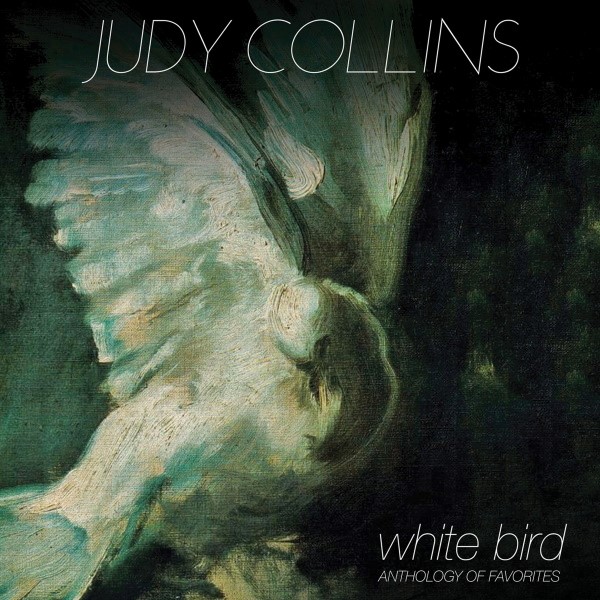
When you’ve been making music for as long as folk music icon Judy Collins, songs become more than just familiar melodies, they’re treasured memories connecting you to people and places of your past. For her newest collection of recent recordings, White Bird – Anthology Of Favorites, Collins has hand-selected a number of songs that remain dear to her heart so much so that she can still remember exactly where she was the first time she heard them. Take for instance, this story Collins shares about one of her best-known, most beloved songs, “It was 1967 when I received a phone call at three in the morning from Al Cooper, the founder of Blood Sweat & Tears. He said he followed this girl home from a bar where she had told him she was a songwriter. She played him some of her songs and after she played him one particular song, he picked up the phone and called me. He put the girl on the phone and Joni Mitchell sang me her great song ‘Both Sides Now.’”
Or this story about another young songwriter, “In 1966 I was getting ready to make my sixth album, In My Life. Someone sent me a song called ‘I Think It’s Going To Rain Today’ by Randy Newman. I never heard of this guy but loved the song. Randy had not started thinking of himself as a singer-songwriter but after I recorded this song, he put out his own version and became the gold standard. He has told me I started his career but I’m sure he would’ve done it without me.”
Judy Collins has inspired countless artists, including Rock Hall of Famer Stephen Stills. Not only was she the muse that led Stills to write the Crosby, Stills & Nash classic “Suite: Judy Blue Eyes” but the pair’s musical romance was so strong that it was rekindled decades later in 2015 for a recording of Tom Paxton’s “The Last Thing On My Mind.” Collins shares, “I would run into Tom on the street in Greenwich village in the early ‘60s and he would say I just wrote this song would you like to sing it. It became a favorite song of mine and also of Stephen Stills. So, 40 years after our love affair, and a couple of years before our extraordinary reunion of concerts, Stephen and I recorded the song together. So thanks to Tom Paxton and thanks to you, Stephen. It’s been a long and rewarding love affair and friendship.”
And Collins is still finding new loves and friendships along the way, including a little-known gem from 1969 San Francisco. Hippie rock group It’s A Beautiful Day first recorded the song that gives Collins’s collection its name, “White Bird,” but just as it is with all of the songs Collins touches, she makes it sound like she wrote it or maybe even inspired it.
White Bird – Anthology Of Favorites will be released on digital, on CD in a deluxe digipak and on limited edition WHITE vinyl starting May 7 from Wildflower Records, exclusively distributed by Cleopatra Records.
Track List:
1. White Bird
2. Chelsea Morning
3. Turn! Turn! Turn! (To Everything There Is A Season)
4. Pack Up Your Sorrows
5. When I Go feat. Willie Nelson
6. I Think It’s Going To Rain Today
7. Last Thing On My Mind feat. Stephen Stills
8. Blackbird
9. Both Sides Now
10. Diamonds & Rust feat. Joan Baez
11. Send In The Clowns
“Amy Winehouse At The BBC” 3LP And 3CD Collections Announced For Release On May 7
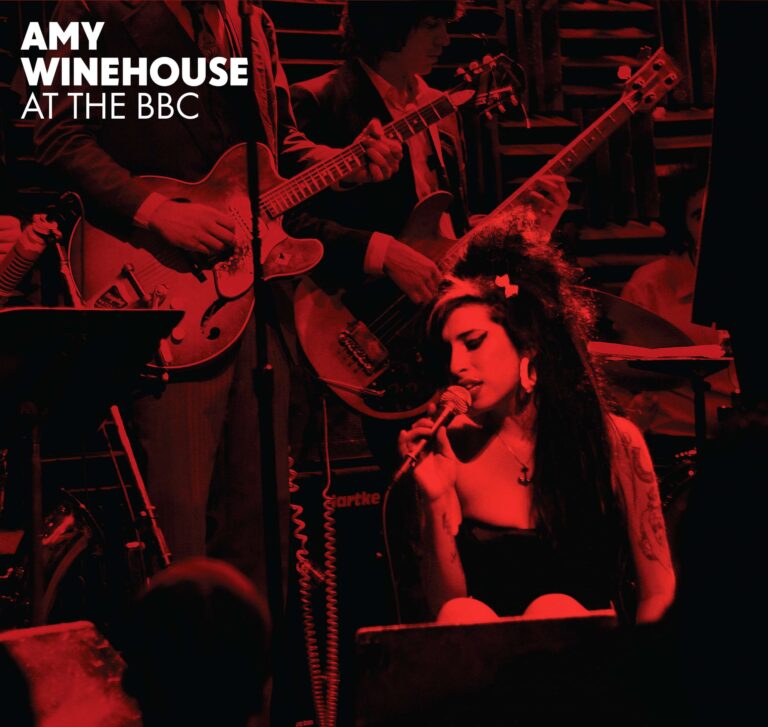
“Amy Winehouse At The BBC”, a 3xLP/ 3xCD collection chronicling the many remarkable performances by arguably the greatest and most genuine talent to emerge in British music in decades, will be released on May 7th 2021 through UMC/Island. For the very first time this updated release offers audio-only versions of the songs featured on ‘A Tribute To Amy Winehouse by Jools Holland’ and the ‘BBC One Sessions Live at Porchester Hall’, and so a high proportion of these tracks will be completely new to DSPs. “Stronger Than Me”, “Tears Dry On Their Own” and “You Know I’m No Good” will be available on streaming services from March 24th while the video for “Stronger Than Me” being available on YouTube. This comprehensive collection captures the strong and enduring relationship that Amy enjoyed with the BBC and is further proof of quite what an extraordinarily talented, completely original, and truly engaging performer Amy was.
“Amy Winehouse At The BBC” includes Amy’s earliest BBC Radio sessions, music from her first ever TV performances, as well as unheard gems, rarities, unique covers and live versions of classic songs from “Frank” and “Back To Black”. The set also includes a beautifully illustrated 20-page booklet featuring rare photographs.
Disc 1 is a selection of recordings chosen by Later presenter, songwriter and much loved musician Jools Holland, Disc 2 is a 14-song audio selection dating from 2004 to 2009, while Disc 3 features the performances from Amy’s memorable Porchester Hall sessions.
Like Amy’s three previous albums, this collection will prove, once more, a fitting tribute to her peerless artistry, phenomenal talent, and extraordinary powers as a songwriter, a singer and an interpreter of classics.
DISC/LP ONE – A Tribute To Amy Winehouse by Jools Holland
STRONGER THAN ME
TAKE THE BOX
TEACH ME TONIGHT feat. Jools Holland
REHAB
TENDERLY feat. Jools Holland
TEARS DRY ON THEIR OWN
MONKEY MAN feat. Jools Holland
I HEARD IT THROUGH THE GRAPEVINE feat. Paul Weller and Jools Holland
DON’T GO TO STRANGERS feat. Paul Weller and Jools Holland
LOVE IS A LOSING GAME
DISC/LP TWO – The BBC Sessions
KNOW YOU NOW (Leicester Summer Sundae 2004)
FUCK ME PUMPS (T In The Park 2004)
IN MY BED (T In The Park 2004)
OCTOBER SONG (T In The Park 2004)
REHAB (Pete Mitchell 2006)
YOU KNOW I’M NO GOOD (Jo Whiley Live Lounge 2007)
JUST FRIENDS (Big Band Special 2009)
LOVE IS A LOSING GAME (Jools Holland 2009)
TEARS DRY ON THEIR OWN (Jo Whiley Live Lounge 2007)
BEST FRIENDS, RIGHT? (Leicester Summer Sundae 2004)
I SHOULD CARE (The Stables 2004)
LULLABY OF BIRDLAND (The Stables 2004)
VALERIE (Jo Whiley Live Lounge 2007)
TO KNOW HIM IS TO LOVE HIM (Pete Mitchell 2006)
DISC/LP THREE – Amy Winehouse – BBC One Sessions Live at Porchester Hall
KNOW YOU NOW
TEARS DRY ON THEIR OWN
YOU KNOW I’M NO GOOD
JUST FRIENDS
HE CAN ONLY HOLD HER
I HEARD LOVE IS BLIND
REHAB
TAKE THE BOX
SOME UNHOLY WAR
BACK TO BLACK
VALERIE
ADDICTED
ME & MR JONES
MONKEY MA
MF DOOM’s Isolated Vocals For “Ballskin”
The flow is towin’, precision as a afro trim
All big letters but it isn’t no acronym
Grateful Dead (Skull & Roses) Gets Expanded For 50th Anniversary
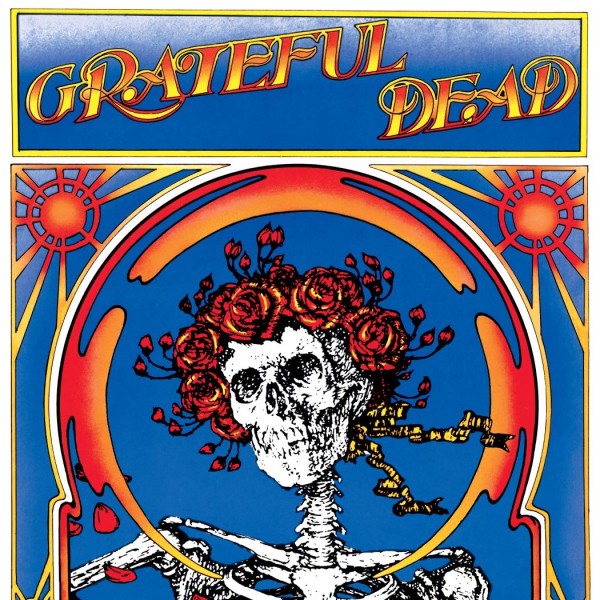
Grateful Dead earned the band’s first-ever gold record in 1971 with its self-titled live album. Known to many fans as “Skull & Roses” (a reference to the cover art by Alton Kelley and Stanley Mouse) the original double-LP included songs recorded in March and April 1971 in New York and, the band’s hometown, San Francisco. Grateful Dead celebrates its 50th anniversary this year with a newly remastered and expanded version of the original.
GRATEFUL DEAD (SKULL & ROSES): EXPANDED EDITION will be available as a two-CD set on June 25. It includes the album’s original’s 11 tracks, which have been remastered from the stereo analog master tapes by Grammy® Award winning engineer David Glasser using Plangent Process Speed Correction. The set also includes a bonus disc with 10 previously unreleased live tracks that were recorded on July 2, 1971 at the Fillmore West, which was the band’s final performance at the historic San Francisco venue. The music will also be available in both standard and high-resolution 192/24 audio at digital download and streaming services.
GRATEFUL DEAD (SKULL & ROSES) will also be released on June 18 as a double-LP set that features the newly remastered version of the original album pressed on 180-gram black vinyl. In addition, Dead.net will offer an exclusive version pressed on 180-gram, black and white propellor vinyl that is limited to 5,000 copies.
“For the Grateful Dead’s second live album, released two years after its predecessor Live/Dead, the band delivered an equally magnificent, but entirely different, Grateful Dead sound. Whereas Live/Dead was a perfect sonic encapsulation of the band at the peak of their Primal Dead era, Skull & Roses captures the quintessential quintet, the original five piece band, playing some of their hardest hitting rock ‘n’ roll (‘Johnny B. Goode,’ ‘Not Fade Away’), showing off their authentic Bakersfield bona fides (‘Me & My Uncle,’ ‘Mama Tried,’ ‘Me & Bobby McGee’), and some originals that would be important parts of the Dead’s live repertoire for the next 24 years (‘Bertha,’ ‘Playing In The Band,’ ‘Wharf Rat’),” says David Lemieux, Grateful Dead archivist, legacy manager, and the set’s producer. “Of course, the Dead were never defined by one specific ‘sound’ and amongst the aforementioned genres and styles the band brought to this album, they also delved deeply into their psychedelic, primal playbook with an entire side dedicated to their 1968 masterpiece ‘The Other One.’ This is one of the most deeply rich and satisfying tracks preserved on an official Grateful Dead album, up there with Live/Dead’s ‘Dark Star’ and Europe ’72’s ‘Morning Dew.’ Skull & Roses sounds as fresh today as the first time I heard it in 1985, and as fresh as it was upon its spectacularly well-received release in 1971.”
After releasing the back-to-back classics Workingman’s Dead and American Beauty in 1970, the Dead were riding a hot streak when the group decided to hit the road in February 1971 to record its first live album since 1969’s Live/Dead. For the shows, Jerry Garcia, Bob Weir, Ron “Pigpen” McKernan, Phil Lesh and Bill Kreutzmann were armed with a batch of new songs, including “Bertha,” “Playing In The Band,” and “Wharf Rat,” which would all appear on Grateful Dead (Skull & Roses). The original also mixed in classic covers (“Not Fade Away” and “Mama Tried”), a traditional (“Goin’ Down The Road Feeling Bad”), and an entire LP side dedicated to the epic jam vehicle, “The Other One.”
GRATEFUL DEAD (SKULL & ROSES): EXPANDED EDITION builds on the original with more than an hour of previously unreleased live recordings taken from the July 2, 1971 performance at the Fillmore West in San Francisco. Standouts from new additions include a 17-minute version of “Good Lovin’” that captures Pigpen fully in control of the packed Fillmore West audience; and the aching beauty of the band’s version of Merle Haggard’s “Sing Me Back Home.” “The Other One” makes another appearance on the bonus disc. Recorded a few months after the one on the original album, this version is every bit its equal.
GRATEFUL DEAD (SKULL & ROSES): EXPANDED EDITION
CD Track Listing
Disc One: Original Album Remastered
1. “Bertha”
2. “Mama Tried”
3. “Big Railroad Blues”
4. “Playing In The Band”
5. “The Other One”
6. “Me & My Uncle”
7. “Big Boss Man”
8. “Me & Bobby McGee”
9. “Johnny B. Goode”
10. “Wharf Rat”
11. “Not Fade Away/Goin’ Down The Road Feeling Bad”
Disc Two: Fillmore West, San Francisco, CA (7/2/71)
1. “Good Lovin’” *
2. “Sing Me Back Home” *
3. “Mama Tried” *
4. “Cryptical Envelopment” *
5. Drums *
6. “The Other One” *
7. “Big Boss Man” *
8. “Not Fade Away” *
9. “Goin’ Down The Road Feeling Bad” *
10. “Not Fade Away” *
* previously unreleased
LP Track Listing
Side One
1. “Bertha”
2. “Mama Tried”
3. “Big Railroad Blues”
4. “Playing In The Band”
Side Two
1. “The Other One”
Side Three
1. “Me & My Uncle”
2. “Big Boss Man”
3. “Me & Bobby McGee”
4. “Johnny B. Goode”
Side Four
1. “Wharf Rat”
2. “Not Fade Away/Goin’ Down The Road Feeling Bad”
Hip Hop / R&B Artist WithLoveXavier Returns With “For What”

Hip hop/R&B artist WithLoveXavier asks “For What” in this, his new single — available now.
The latest to land from his freshly pressed LP, This Is Fine, “For What For What (feat. 9D4 JU)” is one chapter in the eight-track arc that spans the release start to finish. “It’s a rollercoaster,” WithLoveXavier — né Matthew Xavier Hunter — says of the album. “It’s an eight part rollercoaster that tells the story of a man who is trying to give love a second chance, but is in conflict with himself — and the world.”
The LP — which, yes, is named for the iconic meme — is spreading like its own wildfire, resonating wide following its February 2021 release. One such noteworthy nod of the Brooklyn-based artist’s work included legendary singer and songwriter, Ne-Yo. “He reached out,” Xavier shares of the artist’s co-sign. “He even added his voice to the album. It was like a passing of a torch.”
At 4 Million streams across platforms and rising, WithLoveXavier is quickly becoming known for his unique lyricism — his way of relating and sharing through music. He first stepped onto the scene in 2019 with “Feenin’,” and has since added six additional singles — including stream-stackers “Deserve It” and “Good Vibes” — before this year’s debut LP offering with This Is Fine.
“When you’re listening to my music, you’re listening to my heart,” Xavier reveals of his intimate songwriting style. “You hear my love, and my happiness… You hear my heartbreak, and my pain.
“Music is my way of opening up to the world. You get the real me.”