Home Blog Page 24

10 Songs About the Moon That Deserve a Listen Right Now

Yesterday, NASA’s Artemis II mission lifted off from Kennedy Space Center at 6:35 p.m. Eastern, carrying Reid Wiseman, Victor Glover, Christina Koch, and Canada’s own Jeremy Hansen on the first crewed lunar flyby in more than half a century. It is the first crewed mission beyond low Earth orbit since Apollo 17 in December 1972. That is a staggering thing to sit with.

The Moon has been a muse for musicians since long before we had any real hope of getting there. It has stood in for longing, madness, mystery, romance, and the terrifying vastness of everything we don’t understand. As four human beings arc their way around it right now, it seems like exactly the right moment to revisit some of the music they’ve inspired. Here are ten songs about the Moon that hold up brilliantly.

“Fly Me to the Moon” by Frank Sinatra

Written by Bart Howard in 1954 and recorded by dozens of artists, it was Sinatra’s 1964 version with the Count Basie Orchestra that became the definitive one. It was so definitive, in fact, that Buzz Aldrin played it on a portable cassette player aboard Apollo 11, making it the first music heard on the Moon. That detail alone earns it a permanent place in this list.

“Moonage Daydream” by David Bowie

Released on The Rise and Fall of Ziggy Stardust and the Spiders from Mars in 1972, the same year the last Apollo astronauts left the lunar surface, this song crackles with alien electricity and pure Bowie strangeness. It is a song about otherness and longing for the cosmos, delivered by a man who understood both better than almost anyone.

“Moon River” by Henry Mancini and Johnny Mercer, performed by Audrey Hepburn

Written for the 1961 film Breakfast at Tiffany’s, this is one of the most quietly devastating songs ever recorded. Hepburn performed it with just a guitar in a single take, and the Academy tried to cut it from the film before she reportedly threatened anyone who tried. They kept it. They were right.

“Walking on the Moon” by The Polic

Sting wrote this in a Munich hotel room after a long night out, and the woozy, floating bassline he came up with is one of the greatest grooves in the history of rock music. Released in 1979, it sits somewhere between love song and astronaut daydream, which is exactly the right place to sit.

“Pink Moon” by Nick Drake

The entire album took two hours to record in 1972. Drake arrived at the studio unannounced, laid down the vocals and guitar in almost complete silence, and left. The title track is barely two minutes long and contains more emotional weight per second than most artists manage in a full career. It remains one of the most haunting recordings ever made.

“Bark at the Moon” by Ozzy Osbourne

Because this list needed some teeth. Released in 1983, Ozzy went full werewolf on the title track of his third solo album, and the result is a gloriously unhinged piece of heavy metal theatre. It has absolutely nothing to do with space exploration and everything to do with why rock and roll exists.

“Clair de Lune” by Claude Debussy

Technically not a song, but disqualifying it would be absurd. Composed in 1905 as part of Suite bergamasque, Debussy’s depiction of moonlight on water is one of the most perfectly constructed pieces of music in the Western canon. Astronaut Chris Hadfield once named it as one of the pieces he’d want on the International Space Station. Good call.

“Dark Side of the Moon” (entire album) by Pink Floyd

Yes, it counts. Released in 1973 and spending a record-breaking 741 consecutive weeks on the Billboard charts, this is arguably the most ambitious piece of music ever built around lunar imagery. The far side of the Moon that Artemis II’s Orion spacecraft will skim past this week is the same dark side that Roger Waters, David Gilmour, Nick Mason, and Richard Wright turned into the greatest rock album ever recorded. The timing feels appropriate.

“Bad Moon Rising” by Creedence Clearwater Revival

John Fogerty wrote this in about ten minutes after watching the 1941 film The Devil and Daniel Webster, inspired by a storm sequence that gave him the image of a hurricane coming. It became one of the most covered songs in history and one of the most instantly recognizable guitar riffs ever committed to tape. Released in 1969, the same year Apollo 11 landed. The Moon was having quite a year.

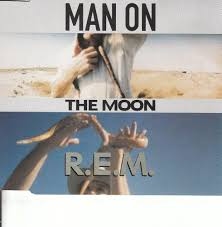
“Man on the Moon” by R.E.M.

Released in 1992 on Automatic for the People, this is one of Michael Stipe’s most opaque and beautiful songs, a tribute to comedian and professional chaos agent Andy Kaufman wrapped inside a meditation on belief, absurdity, and what it means to take a leap into the unknown. With four astronauts literally heading toward the Moon as you read this, the song’s central question lands a little differently today.

Put some music on. Look up. It’s a good week to be alive.


Innovative Solutions for Safer and Smarter Gas Management

0

By Mitch Rice

Gas management plays a critical role across industries, from residential energy use to large-scale industrial operations. As global demand for energy grows and safety regulations become more stringent, the need for smarter, safer, and more efficient gas management systems has never been more urgent. Advances in technology, data analytics, and automation are transforming how gases are stored, monitored, and distributed, significantly reducing risks while improving operational performance.

The Growing Importance of Gas Management

Gas systems are inherently sensitive due to the flammable, pressurized, and sometimes toxic nature of their contents. Whether dealing with natural gas, propane, or industrial gases, even minor failures can lead to severe consequences, including leaks, explosions, and environmental damage. Regulatory bodies worldwide continue to tighten safety standards, requiring organizations to adopt more sophisticated approaches.

At the same time, the global push toward sustainability is reshaping how gas is used and managed. Cleaner fuels, improved efficiency, and reduced emissions are becoming central priorities. This shift has accelerated the development of innovative solutions that not only enhance safety but also contribute to environmental goals.

Smart Monitoring Systems and IoT Integration

Real-Time Data Collection

One of the most impactful innovations in gas management is the integration of Internet of Things (IoT) technologies. Smart sensors installed in storage tanks, pipelines, and distribution systems can continuously monitor pressure, temperature, and gas levels in real time. These sensors provide immediate alerts if irregularities are detected, allowing for rapid intervention before issues escalate.

Unlike traditional inspection methods, which rely on periodic checks, IoT-enabled systems offer continuous oversight. This drastically reduces the likelihood of undetected leaks or system failures, improving both safety and reliability.

Predictive Maintenance

Data collected from smart sensors can be analyzed using advanced algorithms to predict potential failures. Predictive maintenance allows operators to address wear and tear before it leads to breakdowns. This proactive approach not only enhances safety but also minimizes downtime and reduces maintenance costs.

Machine learning models can identify patterns that indicate early signs of corrosion, pressure anomalies, or component fatigue. Over time, these systems become more accurate, enabling increasingly precise predictions.

Automation in Gas Distribution

Intelligent Control Systems

Automation is transforming gas distribution networks by reducing human error and improving efficiency. Intelligent control systems can automatically adjust pressure levels, regulate flow rates, and shut down sections of a system in response to detected risks.

In residential and commercial contexts, automated systems can manage gas usage more efficiently by adapting to consumption patterns. This not only enhances safety but also reduces waste and energy costs.

Remote Operations

Remote monitoring and control capabilities allow operators to manage gas systems from centralized locations. This is particularly valuable for large-scale infrastructure, such as pipelines and storage facilities in remote areas.

In addition to improving efficiency, remote operations reduce the need for personnel to be physically present in potentially hazardous environments. This significantly lowers the risk of accidents and enhances overall workplace safety.

Advanced Leak Detection Technologies

Optical and Acoustic Sensors

Modern leak detection technologies go far beyond traditional methods. Optical gas imaging cameras can visualize gas leaks that are invisible to the naked eye, enabling quick identification and repair. Acoustic sensors, on the other hand, detect the sound frequencies associated with gas escaping from pressurized systems.

These technologies are especially useful in industrial settings where early detection is critical. By identifying leaks at their earliest stages, organizations can prevent minor issues from becoming major hazards.

Drone-Based Inspections

Drones equipped with advanced sensors are increasingly used to inspect pipelines, storage tanks, and other infrastructure. They can access hard-to-reach areas safely and efficiently, reducing the need for manual inspections.

Drone inspections are not only faster but also more comprehensive. They can cover large areas in a short amount of time, providing high-resolution data that can be analyzed for potential risks.

Digital Twins and Simulation

Virtual Modeling for Risk Assessment

Digital twin technology creates virtual replicas of physical gas systems. These models can simulate different scenarios, such as pressure fluctuations or equipment failures, allowing operators to assess risks and test solutions without impacting real-world operations.

By using digital twins, organizations can optimize system design and improve emergency response strategies. This leads to safer operations and better preparedness for unexpected events.

Training and Decision Support

Digital simulations are also valuable for training personnel. Operators can practice responding to various scenarios in a controlled environment, improving their readiness for real-life situations.

Additionally, decision-support systems powered by simulation data can guide operators in making informed choices during critical moments, further enhancing safety.

Safer Storage and Handling Solutions

Improved Tank Design

Advancements in materials science have led to the development of stronger, more durable storage tanks. Modern tanks are designed to withstand extreme conditions, including high pressure and temperature fluctuations.

Double-walled tanks, for example, provide an additional layer of protection against leaks. Integrated monitoring systems can detect any breach in the inner or outer wall, ensuring immediate response.

Smart Cylinder Management

Gas cylinders are widely used across industries and households, making their safe handling a top priority. Smart cylinder management systems use tracking technologies to monitor the location, usage, and condition of each cylinder.

In some regions, automated dispensing solutions such as a propan automat (propane vending machine) are emerging as a convenient and controlled way to distribute gas cylinders. These systems enhance safety by reducing human handling errors and ensuring that only properly inspected cylinders are dispensed.

Environmental and Sustainability Considerations

Emission Reduction Technologies

Reducing gas emissions is a key component of modern gas management strategies. Technologies such as vapor recovery systems capture gases that would otherwise be released into the atmosphere.

Improved sealing techniques and advanced materials also help minimize leaks, contributing to lower greenhouse gas emissions. These innovations align with global efforts to combat climate change and promote sustainable energy use.

Energy Efficiency

Smart gas management systems optimize energy usage by ensuring that gas is delivered and consumed as efficiently as possible. Automated controls can adjust supply based on demand, preventing overuse and reducing waste.

In industrial settings, this can lead to significant cost savings while also reducing the environmental impact of operations.

Regulatory Compliance and Safety Standards

Meeting Evolving Requirements

Governments and regulatory bodies continue to update safety standards for gas management. Compliance requires organizations to adopt advanced technologies and implement robust safety protocols.

Modern gas management systems are designed with compliance in mind, incorporating features that ensure adherence to regulations. Automated reporting and data logging make it easier to demonstrate compliance during inspections.

Enhancing Transparency

Digital systems provide detailed records of gas usage, maintenance activities, and safety incidents. This transparency not only supports regulatory compliance but also helps organizations identify areas for improvement.

By maintaining accurate and accessible data, companies can build trust with regulators, stakeholders, and the public.

The Role of Artificial Intelligence

Data-Driven Insights

Artificial intelligence (AI) is playing an increasingly important role in gas management. By analyzing large volumes of data, AI systems can identify trends and anomalies that might go unnoticed by human operators.

These insights can be used to optimize system performance, improve safety measures, and reduce operational costs.

Automated Decision-Making

In some cases, AI systems can make decisions autonomously, such as shutting down a system when a critical risk is detected. While human oversight remains essential, these automated responses can significantly reduce reaction times and prevent accidents.

Future Trends in Gas Management

Integration with Smart Cities

As urban areas become more connected, gas management systems are being integrated into broader smart city infrastructures. This allows for better coordination between energy systems, transportation networks, and emergency services.

Smart city integration enhances overall efficiency and resilience, making urban environments safer and more sustainable.

Decentralized Energy Systems

The rise of decentralized energy systems, including renewable energy sources, is changing how gas is used and managed. Gas systems must adapt to work alongside other energy sources, requiring greater flexibility and advanced control mechanisms.

This trend is driving further innovation in gas management technologies, ensuring that systems remain efficient and safe in a rapidly evolving energy landscape.

Conclusion

Innovative solutions in gas management are redefining safety and efficiency across industries. From IoT-enabled monitoring and predictive maintenance to advanced leak detection and AI-driven insights, these technologies are addressing long-standing challenges while opening new possibilities.

As regulatory requirements tighten and sustainability becomes a global priority, the adoption of smarter gas management systems will continue to accelerate. Organizations that embrace these innovations will not only enhance safety but also improve operational performance and environmental responsibility.

The future of gas management lies in the seamless integration of technology, data, and human expertise. By leveraging these elements, industries can create safer, smarter, and more sustainable systems that meet the demands of a rapidly changing world.

Data and information are provided for informational purposes only, and are not intended for investment or other purposes.


Protected: How InsMelo Is Expanding the Creative Toolkit for the Next Generation of Artists

0

This content is password protected. To view it please enter your password below:

Apple TV’s The Studio, Belissa Escobedo, and Beth de Araújo Head to the NHMC Impact Awards Gala

0

The National Hispanic Media Coalition has announced the first wave of honorees for its annual Impact Awards Gala, taking place April 24 at The Beverly Hilton in Beverly Hills. The evening celebrates individuals whose work is actively expanding Latino representation in film and television, and this year’s list arrives with serious creative credentials behind every name on it.

Apple TV’s sharp Hollywood satire The Studio takes home the Beyond the Lens Impact Award, with recognition going to co-creator, writer, and co-executive producer Frida Perez, actor Keyla Monterroso Mejia, music editor and composer Lorena Perez Batista, and composer Antonio Sanchez. The show has made a genuine industry impact since its debut, and the NHMC’s recognition reflects exactly the kind of collective, behind-the-scenes contribution that rarely gets its due.

Belissa Escobedo receives the Outstanding Actress Performance in a Series Impact Award for her role as Isabella on NBC’s Happy’s Place opposite Reba McEntire, one of the few Latinas in a lead role on broadcast television right now. Beth de Araújo is honored with the Visionary Impact Award for her feature film JOSEPHINE, which won both the Audience Award and the Grand Jury Prize at the 2026 Sundance Film Festival and went on to compete at the 76th Berlin International Film Festival, where it was nominated for the Golden Bear. Netflix’s KPop Demon Hunters co-writers Danya Jimenez and Hannah McMechan share the Storytelling Impact Award for a collaboration that blends genre storytelling with themes of identity and belonging in ways the industry has rarely attempted.

Comedians Chris Estrada and Frankie Quinones co-host the evening. “This year’s honorees are the latest examples of our voices having an impact and leading their work into award and cultural recognition,” said NHMC President and CEO Brenda Victoria Castillo. Additional honorees and presenters will be announced ahead of the April 24 gala.

Third Man Records Unearths the Lost World of Detroit Folk Genius Ted Lucas With Stunning 3xLP Boxset ‘Images of Life’

0

Ted Lucas spent his life making music that almost no one heard. Third Man Records is methodically correcting that. Following last year’s reissue of Lucas’ 1975 cult classic self-titled album, the label announces ‘Images of Life,’ a career-spanning 3xLP retrospective boxset arriving May 22. Today, disc two, ‘Rainy Days (1970-1974),’ is available to stream in full, offering the most direct entry point yet into the world of one of Detroit’s most gifted and overlooked songwriters. Listen here.

The boxset covers three distinct chapters. Disc one, ‘Strange Mysterious Sounds (1965-1970),’ documents Lucas’ psychedelic early period with his bands The Spike-Drivers, The Misty Wizards, and The Horny Toads. Disc two, ‘Rainy Days (1970-1974),’ captures the solo acoustic warmth that defines his self-titled album, featuring live performances, unreleased studio tracks, and intimate home recordings from the peak of his creative power. Disc three, ‘Impossible Love (1979),’ is his lost second album, produced by the legendary Don Was, a smoother, near-yacht-rock turn that never compromises his core artistry.

The story behind Lucas is one of genuine tragedy and genuine greatness in equal measure. A trained sitarist under Ravi Shankar, a first-call session player at Motown where Norman Whitfield called him his “exotic instrumentalist,” and by all accounts the most talented guitarist and songwriter in the Detroit counterculture scene of his era. He was never able to translate any of it into lasting recognition during his lifetime. What he did leave behind was hundreds of hours of recordings: reel-to-reel tapes, brittle acetates, homemade cassettes, and obsolete video formats. Third Man is making good on all of it.

Pitchfork called his transmissions “glowing” and enduring. AllMusic placed his sole album at the border of timelessness. ‘Images of Life’ gives listeners the full picture, and it is a substantial one.

‘Images of Life’ Tracklist:

Strange Mysterious Sounds: Group Recordings (1965-1970)

The Spike-Drivers, “Strange Mysterious Sounds”

The Misty Wizards, “It’s Love”

The Horny Toads, “High on Love”

The Spike-Drivers, “High Time”

The Misty Wizards, “Often I Wonder”

The Misty Wizards, “Harold Lloyd”

The Spike-Drivers, “I’m So Glad”

The Spike-Drivers, “Can’t Stand the Pain”

The Misty Wizards, “Love Took a Trip”

The Spike-Drivers, “Blue Law Sunday”

The Horny Toads, “Head in California”

Rainy Days: Solo Recordings (1970-1974)

You’ve Got the Power

Rainy Days

It’s Love

Nobody Loves Me Like My Baby Does

Stay High

It’s Not Easy

Anastasia

Take What You Need

Driftin’ Free

Images of Life

I Wish I Knew

Impossible Love: The Unfinished Second Album (1976-1979)

Slow Motion Ocean (of Love)

Impossible Love

What Can I Believe in Without Love

Searching for Love

You Win Again

Sgt. Pinhead

If I Can’t Be Your Lover (I Won’t Be Your Friend)

How Does It Feel

I Can See It in Your Eyes

Impossible Love (Acoustic)

Grand Ole Opry Stalwart T. Graham Brown Brings Lonestar’s Richie McDonald to SiriusXM’s LIVE WIRE

0

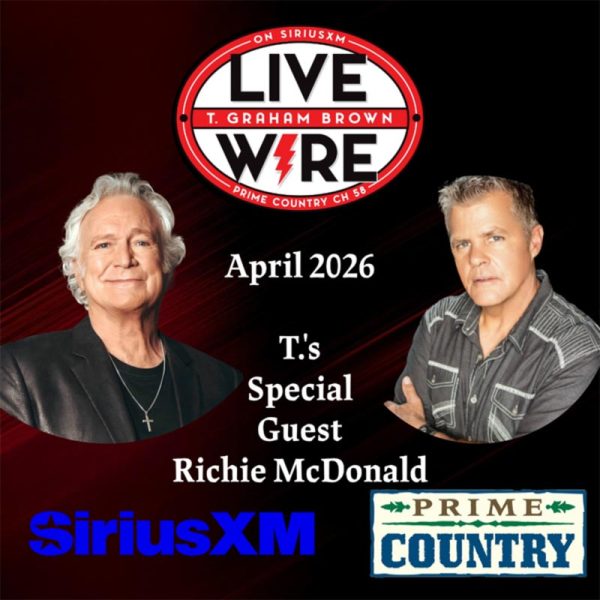
T. Graham Brown’s monthly SiriusXM show has built a reputation for bringing country music’s real voices together, and this episode delivers. The GRAMMY-nominated, Grand Ole Opry member welcomes Richie McDonald of The Frontmen to LIVE WIRE on Prime Country Channel 58, airing April 1 at 10 p.m. ET with multiple replays throughout the month. McDonald, best known as the lead voice behind Lonestar’s run of number-one hits including “Amazed,” “No News,” and “I’m Already There,” now performs alongside Tim Rushlow of Little Texas and Larry Stewart of Restless Heart in The Frontmen.

The episode is built around a full sit-down interview with McDonald, but the music runs deep throughout. Live performances from Asleep At The Wheel, Martina McBride, Alabama, The Frontmen, Waylon Jennings, and Ringo Starr fill out the broadcast, making this one of the stronger lineups LIVE WIRE has assembled. Brown has a gift for choosing recordings that remind listeners exactly why live country music hits differently, and this episode is no exception.

The episode lands during a busy stretch for Brown personally. He is marking the 40th anniversary of “I Wish That I Could Hurt That Way Again,” the second single from his debut album ‘I Tell It Like It Used To Be’ on Capitol Records, written by Curly Putman, Rafe Van Hoy, and Don Cook. He also recently appeared at The Gatlin Brothers’ 70th anniversary celebration at the Ryman Auditorium and Ronnie Milsap’s 50th anniversary as a Grand Ole Opry member, two milestone events Brown clearly took to heart. “Ronnie is my hero,” Brown said, “and he’s been a huge influence on what I do.”

LIVE WIRE is available on demand through the SiriusXM app and Pandora NOW for standard subscribers. With 15 studio albums, more than 20 Billboard charted singles, and a touring schedule that shows no signs of slowing, Brown remains one of country music’s most committed lifers.

T. Graham Brown Upcoming Tour Dates:

Apr 3: Grand Ole Opry, Nashville, TN

Apr 17: The Sewanee Inn, Sewanee, TN

Apr 30: Little Roy and Lizzy Music Fest, Lincolnton, GA

May 9: The Amish Country Theater, Berlin, OH

May 16: Riverside Casino and Golf Resort, Riverside, IA (with Lorrie Morgan)

Oct 9: Clay Cooper Theatre, Branson, MO (with The Malpass Brothers)

Oct 17: Auburn VS Georgia Party, Dadeville, AL

Guitar Center Is Hosting Its First-Ever Industry Expo and Nashville Is the Perfect Place for It

0

Guitar Center has spent more than 60 years as the country’s leading musical instrument retailer. On April 9, the company takes a significant step into new territory. Resonate, Guitar Center Business Solutions’ inaugural industry expo, opens at Nashville’s Music City Center, a free one-day event built around the accelerating convergence of pro audio, commercial AV, control systems, and enterprise technology.

The event runs 10 a.m. to 6 p.m. CDT and targets a wide cross-section of the industry, including AV and IT leaders, integrators, consultants, studio owners, educators, venue operators, and decision-makers across corporate, healthcare, worship, hospitality, and live entertainment sectors. Hands-on demos and expert-led sessions cover networked audio, collaboration platforms, video and LED display, control and automation, and integrated distribution workflows. Platinum sponsors Shure, QSC, Logitech, DVS LED Systems, and Electro-Voice anchor the expo floor.

The programming goes beyond gear. Keynote speaker Micheal Burt, founder of The Greatness Factory and an international speaker and best-selling author, opens the day with a focus on leadership and performance, framing the human side of technology implementation. A Custom House Songwriter’s Round features Nashville hitmakers including Josh Phillips, the writer behind Cody Johnson’s 2025 ACM Song of the Year “Dirt Cheap,” and Brock Berryhill, a co-writer behind Jelly Roll’s 2025 ACM Album of the Year nomination.

“We created Resonate as systems are converging faster than organizations can adapt, and the industry needs clearer leadership around how everything connects,” said Curtis Heath, president of Guitar Center Business Solutions. Resonate is the public face of that leadership, and its Nashville location is no accident. The city represents exactly the kind of creative-meets-commercial intersection Guitar Center Business Solutions was built to serve. Registration is free and space is limited.

Country Legend Ty Herndon Holds Nothing Back in Powerful New Memoir ‘What Mattered Most’

0

Ty Herndon has carried a lot of weight over a long career, and ‘What Mattered Most’ puts all of it on the table. The legendary country singer, known for his hits “Living in a Moment” and “It Must Be Love,” has released his memoir in full, written alongside celebrated biographer David Ritz, whose credits include Marvin Gaye, Janet Jackson, and Willie Nelson. In a new interview with GLAAD’s Anthony Allen Ramos, Herndon opens up about why telling this story on his own terms was the only way it could be told.

The memoir covers territory Herndon kept private for decades. Living as a gay man in secret through the height of his career. A traumatic 1995 encounter with an unidentified police officer that lasted seven hours. Sexual assault he was told never to speak of, and carried alone until the age of 57. “To get into that space, and the breath that I took, the exhale that I took when I finally got to speak of it,” Herndon said in the interview. The book does not shy away from any of it.

Herndon speaks with particular clarity about why he chose to come forward as a male survivor of sexual assault. “We’ve seen so many brave women who’ve come forward and changed the world with their stories, but there’s still a massive silence around men, and I wanted to break that glass,” he said. The memoir is not about naming names or seeking forgiveness. It is about reclaiming integrity, and Herndon makes that distinction with real force.

The personal passages carry equal weight. Herndon reflects on a past relationship he calls one of the great loves of his life, on reconnecting with his late father, and on his mother Mama Peggy, who read the book and met him for coffee afterward with a single question: “Son, I love you. How does redemption feel?” He also speaks about his husband, Alex Schwartz, with warmth and relief. ‘What Mattered Most’ is the account of a man who found his way back to himself. It is essential reading.

French Rock Duo Chevreuil Unveil “Ordrus” Video as Comeback Double Album ‘Stadium’ Arrives April 24

0

Chevreuil have been building sonic architecture since 1998, and their return is anything but quiet. The French rock duo of Julien F. and Tony C., who met at art school in 1995 and have treated the concept of a band as a performative installation ever since, unveil “Ordrus” today, the third single from their forthcoming comeback double album ‘Stadium,’ arriving April 24 through Computer Students.

“Ordrus” opens with martial, deep drumming before fracturing into layered guitar textures that feel simultaneously disorienting and inevitable. It functions as both standalone interlude and connective tissue, a compressed, haiku-like moment that captures the larger motion of ‘Stadium’ in miniature. The track is a precise entry point into what the full record promises: a listening experience that operates more like an environment than a sequence of songs.

Chevreuil’s approach has always been structural. Tony’s guitar runs through four amplifiers arranged in a quadraphonic field around Julien’s unamplified 1976 Ludwig kit, the same year both musicians were born. No bassist, no fixed venue requirements, just one outlet and the physics of sound moving through space. ‘Stadium’ preserves those core conditions while expanding the conceptual frame, drawing on the music of the spheres, magnetism, radioactivity, barometric oscillations, astrometry, and magic as lenses for vibration and transformation.

The double LP is organized into two four-piece sequences per side, structured to function as parallel albums or a single continuum. Every variation across the sixteen tracks arises purely from performance, with identical recording settings maintained from tracking through mastering. The physical release arrives as a 180-gram, 33rpm double 12″ in a reverse-board gatefold. A deluxe edition adds a 12-page codex documenting the band’s full recording configuration, housed in Computer Students’ sealed aluminum sleeve. A limited colored-vinyl edition is available exclusively through the Computer Students website. CD, cassette, and digital formats are also available.

‘Stadium’ Tracklist:

Alliage

Tartarus

Aria

Ordrus

Plexus

Theorus Macrocosmus

Mortalis

Hypnosis

Magnus

Corpus

Quantum

Sanctus

Profundis

Cerberus

Opus

Atoll II

Masked Canadian Math Rock Duo Angine de Poitrine Bring ‘Vol. II’ and a Full EU and UK Tour This Fall

0

Angine de Poitrine have earned their moment, and they are moving fast to meet it. The masked Canadian math rock duo, known to the world as Khn de Poitrine on microtonal guitars and vocals and Klek de Poitrine on percussion and vocals, have announced a full EU and UK tour this October, following a sold-out UK run next month and festival appearances through the summer. The demand is real and the momentum is undeniable.

The October run opens October 13 in Bristol and moves through Glasgow, Dublin, Leeds, and London before crossing into France, Belgium, Germany, and the Netherlands. The stretch closes November 1 in Groningen at VERA, with a festival appearance at Amsterdam’s London Calling Festival on October 31. Twelve dates across two continents worth of venues that, based on recent history, may not stay available for long.

Driving all of it is ‘Vol. II,’ the duo’s second studio album, released April 2 through Spectacles Bonzaï. It follows their 2024 debut, ‘Angine De Poitrine Vol. 1,’ and arrives with serious context behind it. Their Live At KEXP session on YouTube has surpassed 6.2 million views, an extraordinary number for an instrumental math rock act and a testament to how viscerally their music translates on screen.

Angine de Poitrine play with a precision and physicality that rewards both the close listener and the first-time viewer. ‘Vol. II’ gives a new entry point to an act that has already converted millions from casual clicks into genuine devotion. The tour is the live argument for everything the record makes on record.

Angine de Poitrine EU and UK Tour Dates:

Oct 13: Bristol, UK, Prospect Building

Oct 14: Glasgow, UK, SWG3 Galvanizers

Oct 16: Dublin, UK, Opium

Oct 18: Leeds, UK, Project House

Oct 19: London, UK, Troxy

Oct 21: Paris, FRA, Elysee Montmarte

Oct 24: Lyon, FRA, L’Épicerie Moderne

Oct 25: Antwerp, BEL, Trix

Oct 27: Berlin, GER, Festsaal Kreuzberg

Oct 28: Hamburg, GER, Molotow

Oct 29: Heidelberg, GER, Metropolink

Oct 31: Amsterdam, NED, London Calling Festival

Nov 1: Groningen, NED, VERA