Home Blog Page 2559

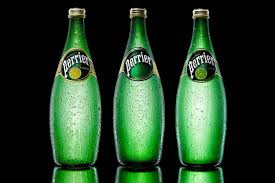
How Perrier’s Ad Campaign Convinced Americans To Pay For Water

0

Perrier’s advertising was selling a specific message, and it targeted a specific population: well-to-do baby boomers, born between 1945 and 1965, as they entered adulthood. It sought to assure them that those who partook of Perrier’s sparkling waters were sophisticated, classy, and conscientious. It conferred, in a word, status.

“It was a sophisticated way to go to a cocktail party and not drink alcohol,” says Gary Hemphill, the director of research at the Beverage Marketing Corporation. Unlike soda, Perrier wasn’t sweetened. It was the non-alcoholic, fizzy drink for adults.

The price of the water reflected that clout. Nevins lowered the price of a 23-ounce bottle from $1.09 ($4.30 today) to 69 cents ($2.72 in 2016 dollars) — within the reach of a certain strata of society, but significant enough that buying it still constituted a statement. It rested in that sweet spot of being simultaneously aspirational and accessible.

Via

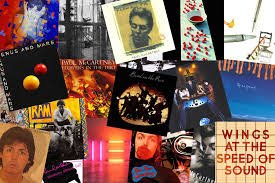
Paul McCartney on never feeling confident as a songwriter: “You never get it down”

0

Paul McCartney on never feeling confident as a songwriter:

“There is no sort of point you just think, ‘Okay, now I can do it, I’ll just sit down and do it.’ It’s a little more fluid than that. You talk to people who make records or albums and you always go into the studio thinking, ‘Oh, well I know this! I’ve got a lot of stuff down, you know, I write.’ And then you realize that you’re doing it all over again you’re starting from square one again. You’ve never got it down. It’s this fluid thing, music. I kind of like that. I wouldn’t like to be blasé or think, ‘Oh you know I know how to do this.’ In fact I teach a class at a the Liverpool Institute High School for Boys — I do a little songwriting class with the students — and nearly always the first thing I go in and say [is], ‘I don’t know how to do this. You would think I do, but it’s not one of these things you ever know how to do. You know I can say to you: Select the key. We will now select a rhythm. Now make a melody. Now think of some great words,’ That’s not really the answer.”

Via

Garbage’s Shirley Manson on How The Band Escaped The Nostalgia Game

0

Why is it, do you think, you have been allowed to tour and grow musically without being pigeonholed into being a nostalgia act?

Manson: I think a lot of bands get really attached to their early success, and they don’t want to let go of that achievement. For me and the boys in Garbage, we have let go of everything in the past. We’ve accepted where our career has gone and we’re not trying to remind people that we once were hugely successful. We have just moved through our career and not really looked back. And some of that is fearlessness and some of that is about freedom. You can get really imprisoned by your early success and a lot of artists make the mistake of holding on to what they once were instead of just being willing to jump into whatever new phase awaits them.

What freed you up enough to say we don’t care if we ever have another “Stupid Girl”?

Manson: For me, it was very strange because it actually had nothing to do with music. It was an incredible teacher I studied acting with who really taught me about what it means to be a creative person in the world. I’d done that TV show [Terminator: Sarah Connor Chronicles], and I was on hiatus with the band. And I went and studied with this teacher [Sarah Chatten], and I just went to school with her and became a student of her. She basically taught me what it meant to be creative, curious and brave from a creative standpoint. That changed my entire view of my career and what it means to be a musician. I also had this moment, I went to Tate Gallery in London, and I saw a Louise Bourgeois retrospective and at the time I think Louise Bourgeois was something like 92 years old, and I saw this body of work this formidable lady had created throughout her life and I was like, “Oh, I don’t actually have to be an entertainer, I don’t actually have to be on Top Of The Pops, I don’t have to be the most popular artist out there. I just have to concentrate on being an artist and trying to concentrate on doing good work and the rest is in the hands of the gods and it’s out of my control.” And once I realized that I broke all the chains that had been clamped on me.

Via

Sneaking in some beer into a Turkish football game

0

This Turkish football fan was desperate to get some beers into a footy game. So much so that he decided to smuggle 24 of them in. Not 2 in his pocket, or a 4-pack. No, 24 full beers.

https://youtu.be/k3-DSz5f21Q

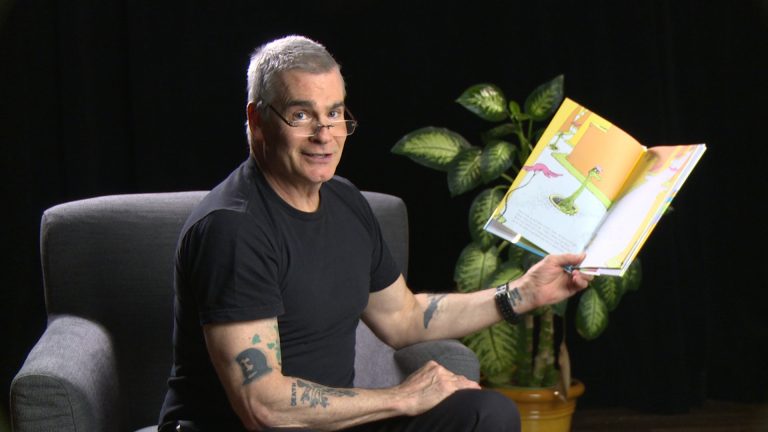
Henry Rollins Reads Dr. Seuss

0

Henry Rollins reads and deconstructs the children’s book “Oh, the Places You’ll Go!” by the acclaimed children’s author Dr. Seuss and points out that maybe one of the places Dr. Seuss needs to go is the 21st century.

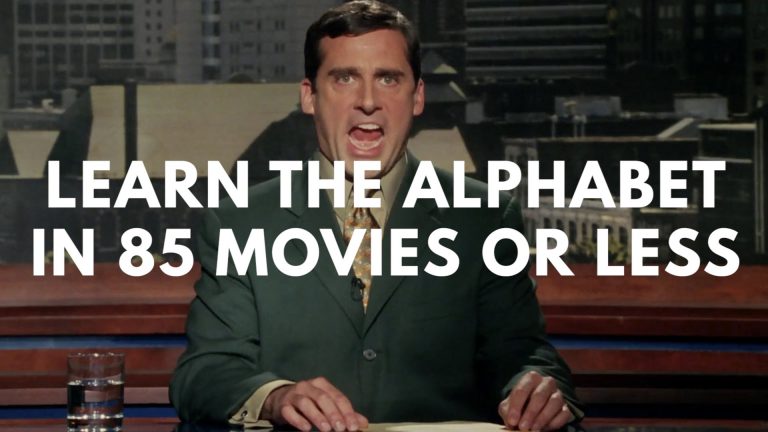
Learn The Alphabet In 85 Movies Or Less

0

It’s as easy as A-B-C.

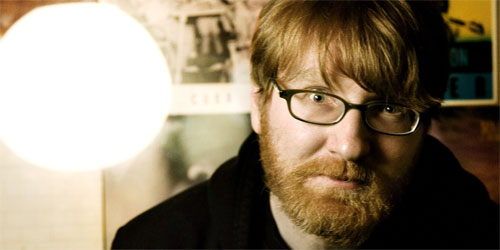
‘But What If We’re Wrong:’ Chuck Klosterman Looks At How We Will Remember The Now, Later

0

NPR’s Kelly McEvers talks with author and cultural critic, Chuck Klosterman. His new book But What If We’re Wrong investigates which things we take as certainties might one day be proven wrong.

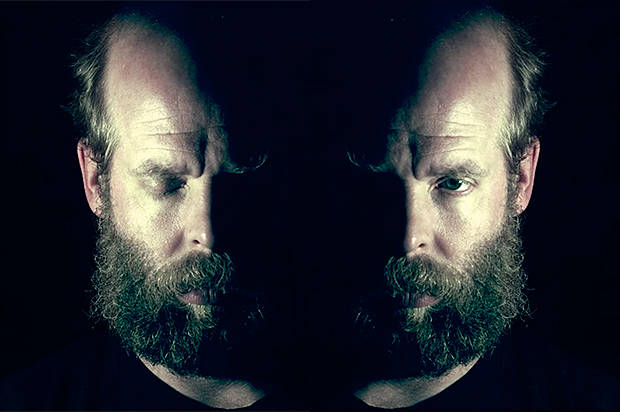
Will Oldham on how authenticity is being marketed and sold

0

It seems to me that a key concern in all your work is authenticity, but I’ll say with a lowercase “a,” since we live in a time when authenticity is something that is marketed and sold, almost as a product. Do you feel this tension – and also the tension between accessing a larger audience and fighting against fame in the way that you have?

Yeah, this authenticity thing is very important to me, in certain ways. You know, to some extent, it’s impossible to do it completely, and it can be impossible to do it thoroughly. But at least, on some level, I like to feel like I care about the perception of what it is that I’ve done with the audience, that it’s not totally separate, that the audience doesn’t think one thing about a part I’ve played, or a song that I’ve been a part of, and I think something completely different about it.

At the same time, I do love show business and I love the fact that people work so hard to create an illusion or an alternate reality or a parallel reality. I love that. But I think that the golden age of Hollywood – you know, the new golden age, being the mid ’60s to the mid to late ’70s – was possibly the only time that there was a dominant acting style that was allowed to be authentic.

I know that as I discover particular pieces of work – whether it’s books or movies or music from all different parts of the world, from all different times – how powerfully they can resonate with me. And, in terms of reaching an audience, I work under the assumption that I am in a movie right now, and this year only some people will get to see it. That doesn’t really worry me because next year more people will see it. And the year after that, still more people will see it. I think that these things have a life of their own. I don’t put a lot of stock in a large audience but I do put a lot of stock in a wide audience.

And I trust that there are people every day, finding their way to the pieces of work that are going to be important in their lives, either accidentally, or through some sort of dogged discipline. You know, “What is it that I need? I need something. My community isn’t speaking to me. I’m not even communicating with myself – I don’t know what’s going on.” And you find a new gateway for understanding through some piece of work that somebody has made.

And that’s something that, thankfully, continues to happen and will continue to happen. And it’s not even trackable, you know, it’s not a trackable thing – where you can look at numbers or you can look at box office returns, or you can look at theatres, look at how many copies of something has sold – because, to work like this, it happens on such a non-traceable human level.

And it’s completely vital that as many people as possible seek and experience these things, these movies and music. But the boundaries are impossible, are defined by who relates to what. You and I can look at the same piece of work and find different aspects of authenticity, and they would both be completely valid. I can never invalidate it when somebody says a thing is great that I can’t understand at all, or that I disdain. That’s how I learn what is authentic to somebody else – when they describe their own response to a piece of music or art.

Via

David Bazan On The Changing Requirements Of Being A Musician

0

I know that the subscription service [Bazan Monthly offers subscribers two new songs on the first of each month for a limited period] has had good artistic results, including the songs that make up this album. But it seems that a lot of being a musician now means you have to be an entrepreneur.

You do. You do!

Maybe it was always that way, and we just came of age during a period when it was possible to kid yourself that wasn’t what you were. How do you feel about the changing nature of what’s required of you?

Um, it’s a lot. I can find myself feeling resentful every now and again about certain aspects of it. The work itself is not a problem, and the extra stuff. But then having to defend yourself constantly for saying that you feel like people should buy your music if they like it. When your heart is really hurting because you miss your family and it’s causing real problems in your relationship, and you’re trying your best, but you wish you had another three weeks at home before you have to leave, because you’re getting somewhere with the relationship woes and trying to come back from them. That’s happened so many times, where it’s like literally two days before I leave on tour, we come to this détente, or some peace and agreement and understanding. And it would have been so great to bask in that for five days, to live in the same house. We wouldn’t have been on vacation, just like doing the dishes and stuff without all of that tension. But then it’s like okay, I gotta go for six weeks or whatever. Basically I realized: Okay, you’ve proven that you’re willing to work hard and you’re committed to this thing, so just zoom out and figure out a way to be a little smarter about it. And the first form that took was figuring out a way to basically monetize work that you can do at home. I thought, you gotta get home and write songs. And you’ve got to make recordings as furiously as you drive a car. And you need to monetize that in a way that is a little shorter-term, potentially, than the album cycle. That’s where the Monthly thing came out of. Now what I think I was right about was that I needed to get the frequency up—of my output. But in hindsight, I feel like the album cycle is fine, but I need the albums to be a lot closer together.

Via

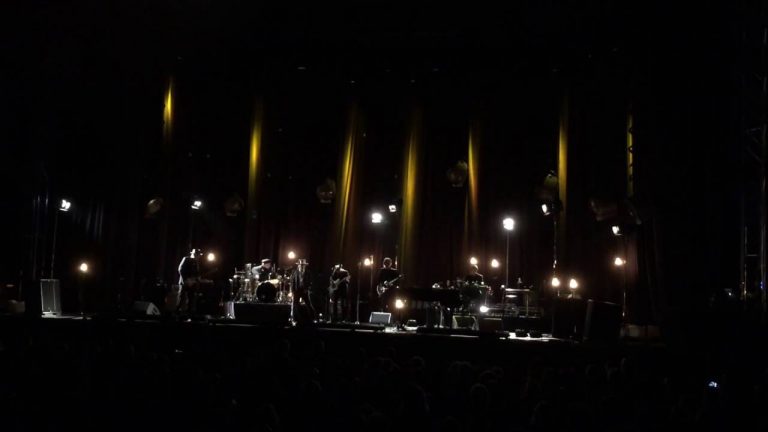
That Time Bob Dylan Performed A Cover of Lynyrd Skynyrd’s ‘Free Bird’

0

“Free Bird!” someone from the back of the Greek Theater in Berkeley, California yelled on a warm Thursday night in June, 2016. Bob Dylan and his band responded accordingly.