Home Blog Page 266

Beyond Apparel: The Creator’s Guide to UV DTF Transfers for Mugs, Tumblers, and Hard Goods

0

By Mitch Rice

In the world of custom merchandise, apparel printing has long been the focus of many creators and businesses. T-shirts, hoodies, and hats have dominated the scene, but there’s a growing demand for custom designs on other items, such as mugs, tumblers, and various hard goods. If you’re looking to expand your creative offerings beyond apparel, UV DTF (Direct-to-Film) transfers offer an incredible opportunity to elevate your products and reach new customers. In this guide, we’ll explore how creators can use UV DTF transfers to customize a variety of hard goods.

What Are UV DTF Transfers?

DTF printing, also known as Direct-to-Film printing, is a process that involves printing a design directly onto a special transfer film, which is then transferred to the final product using heat and pressure. Typically used for apparel, DTF printing has evolved to include UV DTF, which uses ultraviolet (UV) light to cure the ink and create prints on hard surfaces, including ceramics, plastics, glass, and metals. This method produces vibrant, durable, and high-quality prints that resist fading and scratching.

UV DTF transfers are ideal for customizing hard goods because of their versatility and ability to work with a wide variety of materials, including the most common items you might want to personalize, such as:

  • Mugs
  • Tumblers
  • Phone cases
  • Water bottles
  • Glassware
  • And much more

Why UV DTF Transfers for Mugs, Tumblers, and Hard Goods?

1. Unmatched Durability and Vibrancy

UV DTF transfers are known for their incredible durability. Unlike other printing methods that may fade or peel over time, UV DTF prints are designed to withstand the wear and tear of daily use. This is especially important when printing on mugs, tumblers, and other drinkware that are regularly exposed to water, heat, and handling. UV DTF printing produces designs that are resistant to fading, cracking, and scratching, ensuring your custom creations maintain their appearance for years to come.

2. Versatility on Multiple Materials

One of the most significant advantages of UV DTF printing is its ability to work on a wide range of materials. UV DTF transfers adhere beautifully to various surfaces, including mugs and drinkware. This versatility opens up a whole new world of possibilities for creators who want to offer more than just apparel.

3. No Need for Specialized Equipment

For many print methods, such as traditional screen printing or sublimation, specialized equipment is required to work with certain materials. With UV DTF transfers, this is no longer a concern. You don’t need a separate printer for each type of material, nor do you need to invest in expensive machines to apply the designs. The process is simple, cost-effective, and compatible with the same equipment used for apparel DTF printing. This makes it an ideal choice for creators who are looking to expand their offerings without breaking the bank.

4. Sustainability Benefits

In today’s market, consumers are increasingly conscious of sustainability, and creators are seeking ways to minimize their environmental impact. UV DTF printing is an eco-friendly option compared to other printing methods. It uses water-based inks, and the UV curing process significantly reduces energy consumption compared to traditional heat presses. Additionally, it eliminates the need for chemicals that are often used in other printing processes, making it a safer and more environmentally friendly choice.

5. Quick Turnaround Times

Time is money, and in the fast-paced world of custom products, speed is essential. UV DTF transfers offer a quick and efficient turnaround time, allowing creators to meet the demands of their customers without long waiting periods. This makes UV DTF an excellent choice for small businesses or individuals who need to create custom mugs and tumblers quickly, whether for a one-off project or a large order.

Why Choose DTF Transfers Now for UV DTF Transfers?

When it comes to finding a reliable supplier for UV DTF transfers, DTF Transfers Now is a great option. DTF Transfers Now makes the UV DTF process simple and efficient for creators of all levels with their high-quality transfer films, easy-to-use tools, and expert customer support.

You gain access to top-notch materials that ensure your designs are vibrant, durable, and easy to apply to a variety of hard goods by choosing DTF Transfers Now. Their user-friendly platform allows you to quickly upload your designs and get started on your custom creations. If you want to explore DTF and UV DTF products and start printing your custom designs today, visit dtftransfersnow.com.

How to Use UV DTF Transfers for Mugs, Tumblers, and Hard Goods

Now that you understand the benefits of UV DTF transfers, let’s walk through the steps for applying them to your custom mugs, tumblers, and hard goods.

Step 1: Design Creation

The first step in the process is creating your design. Use design software such as Adobe Illustrator or Photoshop, or free tools like Canva, to create a high-resolution image that fits the size and shape of the item you’re customizing. Ensure that your designs complement the shape of your mugs, tumblers, or other products. This means considering both the front and back of the item, especially when dealing with curved surfaces.

Step 2: Printing the Design onto the Transfer Film

Once your design is ready, the next step is to print it onto a special transfer film using a UV DTF printer. These printers use UV ink that’s cured by ultraviolet light. The printer will create a mirror image of your design on the film, which will then be transferred to your hard goods. It’s crucial to ensure that the colors are vibrant and that the print is sharp.

Step 3: Transfer the Design to the Product

The final step is applying the transfer to the mug, tumbler, or hard good. This process involves placing the transfer film onto the item and using a heat press to transfer the design onto it. The heat and pressure help the ink adhere to the surface, creating a long-lasting, durable print. This step is quick and simple, making it easy for creators to produce high-quality customized items in no time.

Step 4: Curing the Design

For UV DTF transfers, the curing process is important to ensuring the durability and vibrancy of the print. Unlike traditional heat transfer methods, UV DTF uses ultraviolet light to cure the ink, which means the design sets faster and more thoroughly. This ensures that your prints will resist fading, cracking, and peeling, even after multiple washes or heavy use.

Conclusion

UV DTF transfers offer an exciting opportunity for creators to expand their product offerings beyond apparel. With their unmatched durability, versatility, and eco-friendly benefits, UV DTF transfers are perfect for customizing mugs, tumblers, and other hard goods. You can create stunning custom products that stand out from the competition by following the steps outlined in this guide. With the right supplier like DTF Transfers Now, you’ll have everything you need to bring your creative visions to life on a wide range of materials. So, why limit your creativity to just apparel when you can elevate your custom product line with UV DTF transfers?

Data and information are provided for informational purposes only, and are not intended for investment or other purposes.
Cam Unveils “Everblue” and New Album ‘All Things Light’ — A Soul-Baring Journey Through Heartbreak and Healing

0

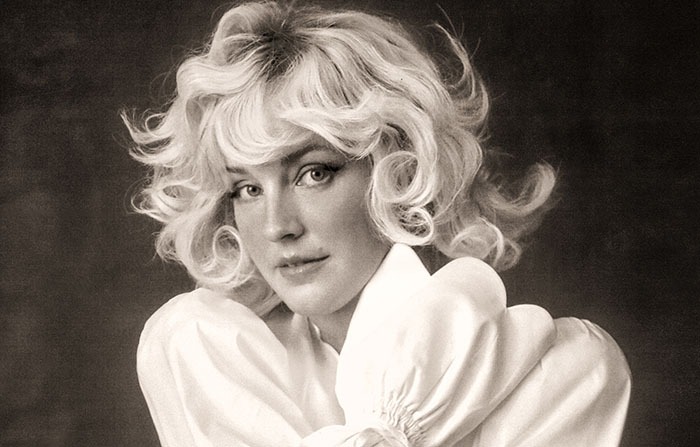
Cam has shared her new single “Everblue,” a heavy-hearted stunner that Cam sums up as “peak sad girl.” Co-written by Cam, Aldae (Miley Cyrus, Justin Bieber) and Tyler Johnson (Harry Styles, Beyonce, SZA), the song arrives alongside a James Mackel (Doechii, Tyler Childers, FKA Twigs) directed video. Her highly-anticipated album and third full-length release, All Things Light, is out now via RCA Records.

On the new song Cam reflects, “In a way I think we’re all eternally heartbroken by the world, and when I sing this song it’s a way of holding space for that heartbreak instead of going numb or giving up on dreaming. There’s a 2010s tumblr flavor in there too as I tell you one of my most necessary affirmations for this season of my life: ‘I’m all done chasing what wasn’t meant for me.'”

All Things Light was announced in June alongside “Turns Out That I Am God,” a spellbinding opener paired with a stunning James Mackel-directed video. The first offering from the album, “Alchemy,” was hailed by People as “magical” and “genre-bending.”

All Things Light arrives as a truly revelatory offering and her most visionary work to date. At a time when she desperately needed a guiding light in the dark, Cam lit her own way with a wild journey inward. While dealing with the intense isolation of becoming a mother in the early days of the pandemic, the Nashville-based artist started writing songs as a means of finding solace, and soon unlocked an entirely new level of depth in her lyrics. As her daughter Lucy grew older and began asking questions about life and death, Cam felt called to dig even deeper and create a body of work embedded with insights for Lucy to carry with her through the years.

All Things Light finds Cam working with her longtime producer Tyler Johnson (Harry Styles, Miley Cyrus, Beyonce) as well as an elite lineup of co-producers and contributors, including Michael Uzowuru (Frank Ocean, SZA), Ethan Gruska (boygenius, Phoebe Bridgers), Jeff Bhasker (Rihanna, Bruno Mars), Aldae (Miley Cyrus), Starrah (The Weeknd), Ilsey Juber (Bon Iver), Nick Lobel (Steven Sanchez), Tofer Brown (Carter Faith), Ian Fitchuk (Kacey Musgraves), Anders Mouridsen (Meghan Trainor, 070 Shake), and Simon Maartensson (Beyonce). With its gorgeous convergence of country, folk, left-field pop, and more, the album emerged from the same creative wellspring that gave rise to Cam’s contributions to Beyonce’s COWBOY CARTER, a 2024 effort that earned Cam an ‘Album of the Year’ Grammy for her songwriting work.

With its graceful entangling of catharsis, contemplation, and occasional epiphany, All Things Light ultimately delivers the kind of soul-baring songs we return to again and again, endlessly providing clarity and sustenance and ecstatic peace of mind.

Ben Folds Releases ‘Live with the National Symphony Orchestra,’ a Triumphant Farewell to His Kennedy Center Era

0

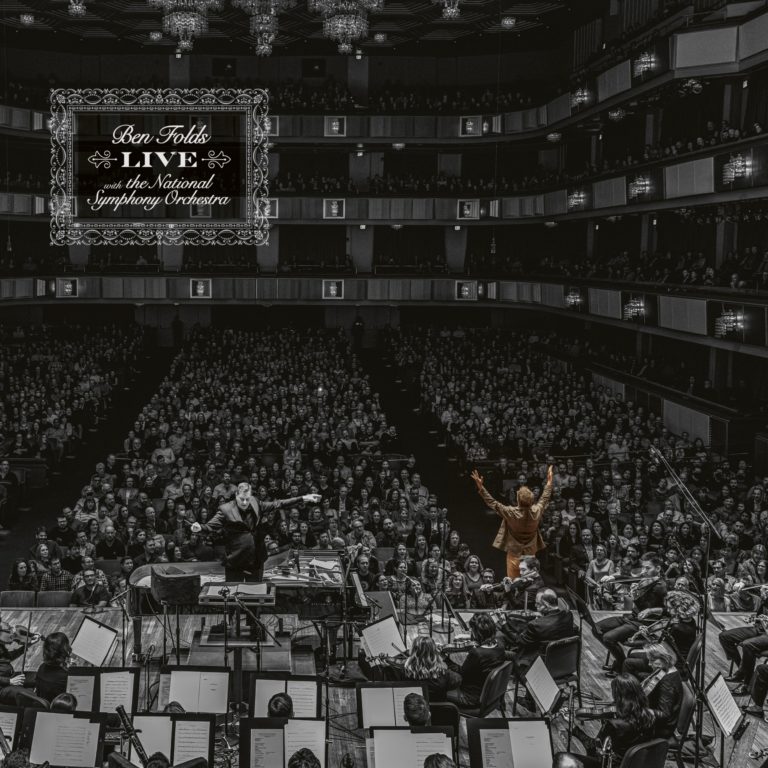
Ben Folds is celebrating Independence Day with today’s release of Ben Folds Live with the National Symphony Orchestra, a brand-new album recorded in concert at the sold-out Concert Hall of the John F. Kennedy Center for the Performing Arts in Washington, DC on October 25 and 26, 2024.

The album is available now at all DSPs and streaming services; multiple physical products are available, including CDs, signed CDs, standard black vinyl, signed standard black vinyl, opaque white vinyl, signed opaque white vinyl, signed metallic gold vinyl, and limited-edition Coke Bottle green vinyl.

Folds will officially announce Ben Folds Live with the National Symphony Orchestra this morning with a special in-store launch event at Washington, DC’s Byrdland Records (1264 5th Street NE, Washington, DC, 20002) set for 11:00 am-1:00 pm (ET), marking his first appearance in the nation’s capital since publicly announcing his resignation earlier this year. In addition to meeting fans and signing copies of the new album, the event will see Folds conduct a livestream Q&A session – LIVE STREAMhere. Folds will also sit down with TalkShopLive for a conversation about the new album on July 10 at 8:30 p.m. ET. Fans can purchase the album as an exclusive signed CD from TalkShopLive. Watch here.

Folds – who yesterday headlined a special Pops On Independence concert in Philadelphia, PA at Independence National Historical Park alongside The Philly Pops – will mark the arrival of Ben Folds Live with the National Symphony Orchestra with a wide-ranging US tour schedule that will see him performing solo dates and symphony concerts alongside some of the country’s leading orchestras.

Ben Folds Live with the National Symphony Orchestra sees Folds performing classic hits and new music from his genre-bending body of work thus far, joined by the National Symphony Orchestra conducted by Principal Pops Conductor of the NSO Steven Reineke along with very special guest artists Regina Spektor and Tall Heights; the makeshift choir includes Doug Peck, Nicholas Kassoy and Marc Silvey. Live recording producers include David Boucher, Joe Costa, Justin Ellis, and Ben Folds. Orchestrators include Jherek Bischoff, Alex Turley, Eric Allen, and Rob Moose. The recordings were mixed by Boucher and mastered by Kim Rosen.

Having spent eight years carefully nurturing orchestral innovation and programming with actual purpose as the National Symphony Orchestra’s first-ever Artistic Advisor, Ben Folds officially offered his resignation at 1:59 pm Eastern on February 12, 2025 – exactly one minute after President Trump’s administrative regime change of the Kennedy Center officially took hold.

“I had my statement up by 2:01,” Folds says in an exclusive interview with Kyle Meredith, nationally syndicated radio host at WFPK FM, Louisville. “The takeover was at 2:00. I wanted no part of what was coming.”

Folds knew Trump’s taking over the traditionally bipartisan Kennedy Center wasn’t simply a reshuffling of jobs or a new marketing campaign. It was a betrayal of mission, a hostile remodeling of one of America’s most vital cultural institutions and artistic sanctuaries. More than simply a concert hall, the Kennedy Center has always been an essential engine for civic and artistic connection. As NSO Artistic Advisor, Folds gave young orchestrators a platform while helping to pilot programs like Declassified, which introduced modern songwriters to orchestral arrangements.

“We weren’t using the orchestra as props,” Folds says. “We were challenging them to bring new music to life, while giving the orchestra a one-size-fits-all role. Our experimentation was a beacon for other orchestras throughout the private sector.”

Now, with Ben Folds Live with the National Symphony Orchestra, Folds leaves behind a document of his experience at the Kennedy Center – part protest, part celebration, entirely earnest in its ambition. The album features a lush reimagining of old favorites like “Still Fighting It,” which, with its newly restored orchestral intro, manages to sound both bigger and more intimate than ever – an anthem turned lullaby, then turned back again.

“It works because it’s not pretending to be something else,” Folds says. “It’s using the orchestra as it should be used. To elevate, not decorate.”

Taken together, the album plays like a requiem for a moment and a love letter to everything that moment made possible. There’s humor, heartbreak, and conviction in every arrangement, from “Kristine from the Seventh Grade,” a tender gut-punch about misinformation and fractured friendships, to “Fragile,” which borrows its arrangement from Mozart but still sounds utterly modern. Having previously presented Regina Spektor’s premiere orchestral performance, Folds invited his old friend to return to the Kennedy Center stage to perform their popular duet, “You Don’t Know Me.” Among the many highlights, the soaring, ambitious “Capable of Anything” stands out for its Jherek Bischoff-orchestrated bridge and a message Folds describes as a warning shot.

“We’re all capable of terrible things,” Folds says. “But we’re also capable of doing better. That’s the choice.”

Part protest, part celebration, entirely earnest in its ambition, Ben Folds Live with the National Symphony Orchestra lands with the clarity of a final bow before the curtain drops. Except it’s not the end – it’s a rally cry.

“This album suddenly now feels much bigger,” Ben Folds says. “I knew we were making something special with the NSO. I didn’t know it’d be a time capsule of the last moment before it all got torn down.

“I still believe there’s more good than not,” he adds. “But you must work for it. You have to say something. Especially now.”

Stream or purchase the new live album here.

David Guetta Drops Explosive Club Anthem “Together” with HYPATON and Bonnie Tyler

0

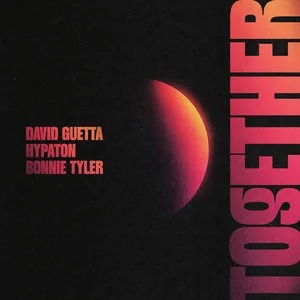
14x Grammy-nominated global icon David Guetta ignites an energetic club-ready new single entitled “Together” with HYPATON and Bonnie Tyler out now.

Over the last year, Guetta has quietly incorporated “TOGETHER” into his DJ sets around the world, introducing it to packed crowds in clubs and stadiums alike. As such, it has emerged as a sought-after fan favorite, surging online with over 1 million views from teasers posted by David Guetta ahead of the official release.

Meeting audience demand, the track sees Guetta and HYPATON recharge and reup the timeless hook from Bonnie Tyler’s “Total Eclipse of the Heart (Turn Around)” as a party-starting call-to-the-dancefloor. “TOGETHER” revolves around a propulsive dancefloor-driven rhythm and melodic neon synths, while the recognizable refrain resonates, “And I need you now tonight. (And I need you). And I need you more than ever.”

Guetta is simply nonstop in 2025. Continuing another historic creative partnership, he also reteamed with 9x Grammy-nominated superstar Sia on the powerful new anthem, Beautiful People” which captured #1 on Billboard’s Dance/Mix Show Airplay chart, giving Guetta his record-breaking 18th chart-topper at Dance Radio. He has the most #1s since the chart first began in 2003.

Meanwhile, his 2024 smash “Forever Young” with Ava Max and 80’s hitmakers Alphaville vaulted into the Top 10 at Top 40 radio and also hit #1 on Billboard’s Dance/Mix Show Airplay chart, “Forever Young” was preceded by Guetta’s collaboration with OneRepublic, “I Don’t Wanna Wait,” and his Grammy-nominated smash hits “I’m Good (Blue)” with Bebe Rexha and “Baby Don’t Hurt Me” with Anne-Marie and Coi Leray.

Guetta just began his 2025 summer residencies in Ibiza with his legendary F*** Me I’m Famous! at Ushuaïa on Mondays and his new Galactic Circus at UNVRS on Fridays and will play at festivals around Europe.

Sam Varga Turns Apocalypse into Anthem on Defiant New Single “Minute Man”

0

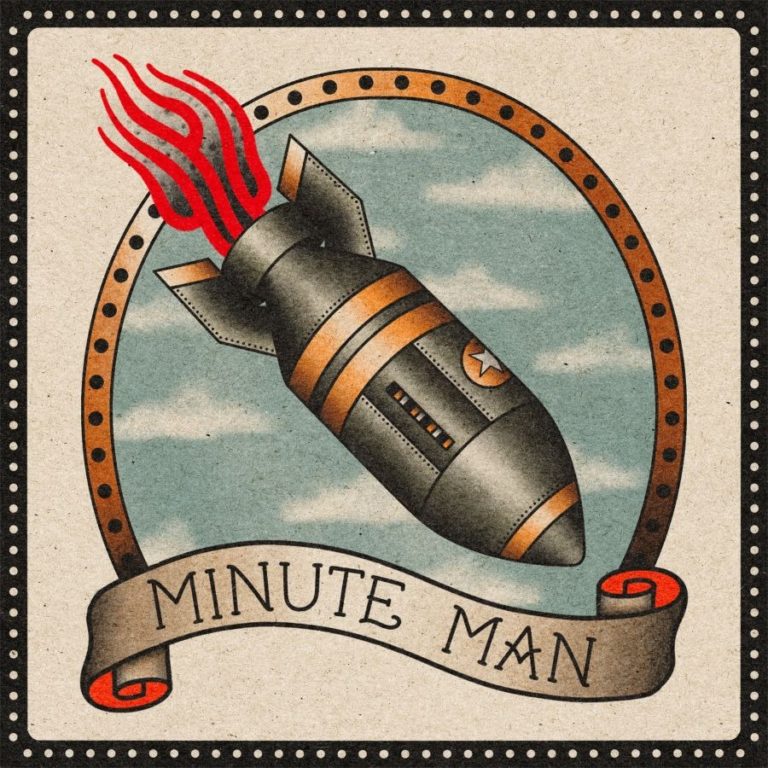
Sam Varga breaks all the rules with his new single, “Minute Man,” out on all streaming platforms today. Fusing alternative pop, Americana, and alt-country, Sam Varga transforms modern anxiety into an anthemic love song for the end of the world.

“I told myself I’d never release a political song,” Varga admits. But in a world where the political is personal-and survival feels like spectacle-he leans into the chaos, offering a defiant, cinematic track that captures the strange romance of collapse. “Minute Man” doesn’t take sides; instead, it offers a scorched-earth snapshot of young love in a broken world: biting, beautiful, and wide open to interpretation.

“We’re all made to feel like it’s the end of the world every day-whether it is or isn’t is above our clearance level,” Varga writes. “So I wrote it like a sonic inkblot test. The song doesn’t point fingers. What you love-or hate-about it probably says more about you than it does about me.” Threaded with lyrical Easter eggs and cultural landmines, “Minute Man” invites listeners to project their own beliefs, fears, and hopes onto its apocalyptic backdrop.

Sam Varga is a Nashville-based artist blending his emo roots with Southern grit and singer-songwriter soul. Originally from Louisville, Kentucky, he came up in the city’s DIY emo scene, cutting his teeth on loud guitars, basement shows, and late-night chaos. At home, his parents filled the house with ’80s rock, Southern staples, and classic lyricists, giving him a rich musical foundation. That mix of raw punk energy and emotional storytelling now fuels a sound that sits somewhere between alt-country and rock. It’s gritty yet melodic, with acoustic textures and dynamic, genre-blurring instrumentation.

Addictive, sharp, and self-aware, Varga’s music is emotionally unfiltered, self-deprecating, and unflinchingly human. Whether he’s unpacking existential dread or offering hard-won hope, his songs are made for long drives, post-party spirals, and those fleeting moments when you just need everything to make sense for a few minutes.

V&A East Opens the David Bowie Centre with Guest Displays Curated by Nile Rodgers and The Last Dinner Party

0

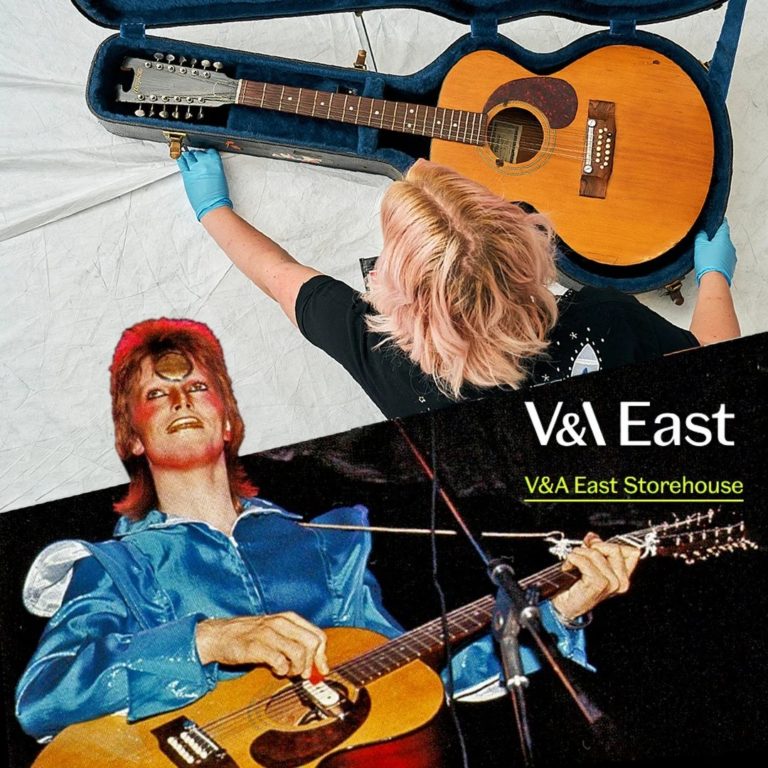
The V&A announces its David Bowie Centre is offically open at V&A East Storehouse in London, will feature an exclusive guest-curated display by Multiple award-winning musician, producer, songwriter and David Bowie-collaborator, Nile Rodgers, and Brit Award-winning indie rock band, The Last Dinner Party.

These intimate selections from Bowie’s archive offer new perspectives on one of the most iconic creatives of all time and sit alongside a series of other mini curated displays and installations exploring Bowie’s creative legacy and lasting influence.

Visitors to the David Bowie Centre, the new free-to-access working store and permanent home for David Bowie’s archive, can also book one-on-one time with their own selections from the 90,000+ items in his archive. The David Bowie archive was acquired by the V&A through the generosity of the David Bowie Estate, the Blavatnik Family Foundation and Warner Music Group. It joins over 1,000 archives from creative luminaries including Vivien Leigh, the House of Worth, and The Glastonbury Festival Archive.

@NileRodgersOfficial, who produced Bowie’s hugely successful single and 1983 album, Let’s Dance, as well as 1993’s Black Tie White Noise, has written, produced, and performed on records that have sold more than 750 million albums and 100 million singles worldwide. He has curated items reflecting what he calls his and Bowie’s shared ‘love of the music that had both made and saved our lives.’ His selections include:

* A bespoke Peter Hall suit worn by Bowie during the Serious Moonlight tour for the Let’s Dance album
* Chuck Pulin photographs of Bowie, Rodgers and guitarist Stevie Ray Vaughan recording Let’s Dance in New York
* Personal correspondence between Bowie and Rodgers about the 1993 Black Tie White Noise album
* Peter Gabriel images of the recording sessions with backing vocalists Fonzi Thorton, Tawatha Agee, Curtis King Jr, Denis Collins, Brenda White-King, Maryl Epps, Frank Simms, George Simms, David Spinner, Lamya Al-Mughiery and Connie Petruk recording Black Tie White Noise.

Nile Rodgers, said: “My creative life with David Bowie provided the greatest success of his incredible career, but our friendship was just as rewarding. Our bond was built on a love of the music that had both made and saved our lives.”

The Last Dinner Party is a Brit award-winning band, whose electrifying performance style draws inspiration from their shared love for Bowie. They have selected objects mostly from the 1970s that illustrate how Bowie continues to inspire generations of artists to ‘stand up for themselves and their music’ and ‘steal and reinterpret’ to create something unique. Their selection includes:

* Mick Rock photos showing Bowie in intimate recording studio moments
* Bowie’s elaborate handwritten lyrics for ‘Win’ from the 1974 album Young Americans
* Writings and set lists for the Station to Station tour, aka Isolar – 1976 Tour
* Bowie’s Electronic Music Studios (EMS) synthesiser user manual. The ‘suitcase synth’ was used on the albums Low, Heroes and Lodger, the so-called ‘Berlin’ trilogy.

Georgia Davies, Lizzie Mayland, Abigail Morris, Aurora Nishevci and Emily Roberts of The Last Dinner Party, said:

“David Bowie continues to inspire generations of artists like us to stand up for ourselves. Bowie is a constant source of inspiration to us. When we first started developing ideas for TLDP, we took a similar approach to Bowie developing his Station to Station album – we had a notebook and would write words we wanted to associate with the band. It was such a thrill to explore Bowie’s archive, and see first-hand the process that went into his world-building and how he created a sense of community and belonging for those that felt like outcasts or alienated – something that’s really important to us in our work too.”

Curated displays

The V&A East curatorial team consulted with 18-25-year-olds from the four Olympic Boroughs of Hackney, Newham, Tower Hamlets and Waltham Forest through London Legacy Development Corporation and Queen Elizabeth Olympic Park’s Elevate Youth Voice. The resulting displays delve into various elements of Bowie’s archive and creative legacy, encompassing everything from private photographs to handwritten lyrics, self-portraits, his own artist’s palette, sketches, costumes, and designs.

Nine rotating displays reveal aspects of Bowie’s extraordinary creative capacity, including ideas for projects that were never realised. Highlights include an idea to adapt George Orwell’s 1984 and unrealised Young Americans and Diamond Dogs films.

Other displays explore Bowie’s creation of his iconic personas including Ziggy Stardust and Aladdin Sane and look at his embrace of technology, futurism and science fiction, plus his legendary 1987 Glass Spider tour and concert at the Berlin Wall. Others spotlight Bowie’s creative collaborators including Gail Ann Dorsey, and the creation of the 1975 Young Americans album, alongside his wide-spread creative influence and legacy.

Madeleine Haddon, Curator, V&A East said: “Bowie embodied a truly multidisciplinary practice-musician, actor, writer, performer, and cultural icon-reflecting the way many young creatives today move fluidly across disciplines and reject singular definitions of identity or artistry. His fearless engagement with self-expression and performance has defined contemporary culture and resonates strongly with the values of authenticity, experimentation and freedom that we celebrate across the collections at V&A East Storehouse. This archive offers an extraordinary lens through which to examine broader questions of creativity, cultural change, and the social and historical moments during which Bowie lived and worked. In the Centre, we want you to get closer to Bowie, and his creative process than ever before. For Bowie fans and those coming to him for the first time, we hope the Centre can inspire the next generation of creatives.”

What to expect in the David Bowie Centre

As well as a new visitor experience, first and foremost, the David Bowie Centre is a working archive and store for Bowie’s paper-based archive with reading and study rooms. The Centre is brought to life with a series of small, curated areas including a new film showcasing a selection of performances from across Bowie’s career, and an interactive installation tracing the wide-spread impact of Bowie on popular culture from the sit-com Friends to Issey Miyake fashion and musicians from Lady Gaga, Charli XCX, Janelle Monae, and Kendrick Lamar. A series of rotating mini displays exploring different themes and elements of the archive shows approximately 200 items at one time.

A central space for facilitated object handling and exploring facsimile topic boxes also includes overhead rails of hanging Tyvek bags storing some of Bowie’s most iconic fashion and costume. These range from Freddie Burretti’s Ziggy Stardust looks to Agnes b’s Heathen ensembles, and Bowie’s 1992 Thierry Mugler wedding suit. These costumes can be ordered for closer looking as part of one-on-one appointments by using the V&A’s Order an Object service.

The David Bowie Centre is part of V&A East Storehouse at East Bank in Queen Elizabeth Olympic Park. Access to the David Bowie Centre is free and ticketed, with tickets released closer to opening.

About the David Bowie archive

The David Bowie archive encompasses 90,000+ items tracing Bowie’s creative processes as an innovator, cultural icon, and advocate for self-expression and reinvention. Items range from 414 costumes and accessories to a series of set models, nearly 150 musical instruments, amps, and other sound equipment, 187 awards, as well as life masks, framed art, merchandise including tour t-shirts, posters, Bowie’s own desk, props and scenery for concerts, film and theatre. Paper-based material includes notebooks, diaries, lyrics, scripts, correspondence, project files, writings, unrealised projects, cover artwork, designs, concept drawings, fan mail and art. Most of the paper-based material is made up of photographic prints, negatives and transparencies, numbering over 70,000 items.

Highlights include stage costumes such as Bowie’s Ziggy Stardust and Aladdin Sane ensembles designed by Freddie Burretti and Kansai Yamamoto (1970s), lyrics for songs including Fame (1975), Heroes (1977) and Ashes to Ashes (1980), as well as examples of the ‘cut up’ method of writing introduced to Bowie by the writer William Burroughs.

Cataloguing the David Bowie archive is ongoing and one of the largest V&A cataloguing projects to-date. The V&A aims to complete the cataloguing process by the end of 2026.

One-to-one bookings

Bookings to see 3D items from the David Bowie archive, including costumes, musical instruments, models, props and scenery, can be made through the V&A’s new sevenday-a-week Order an Object service. Visitors can book up to five items per visit at a time that suits them. Bookings require at least two weeks’ notice and Bowie items will begin to go live for advance booking from September.

Once the Centre opens, paper-based items including sketches, designs, writings, lyrics, press cuttings, and photographic prints, negatives and transparencies can be consulted through scheduling advance appointments with the Archives team.

Design approach

The David Bowie Centre is designed by London and Paris-based design company, IDK, and celebrates the unique environment of V&A East Storehouse and the extraordinary character of David Bowie himself. Balancing storage with stagecraft, the Centre is a dynamic space to explore Bowie’s life, work and legacy offering a deeply personal insight into Bowie’s world.

Built using V&A East Storehouse’s existing utilitarian ‘kit of parts’ system, the Centre features a mix of permanent and rotating displays, a dedicated study room, and an object handling space. Open and inclusive, IDK’s design approach is inspired by Bowie’s own creative method of cutting up and rearranging ideas – bringing together different elements to form something new, surprising, and alive.


For more information on the David Bowie Centre and to sign-up for updates, please visit: vam.ac.uk/exhibitions/david-bowie-centre

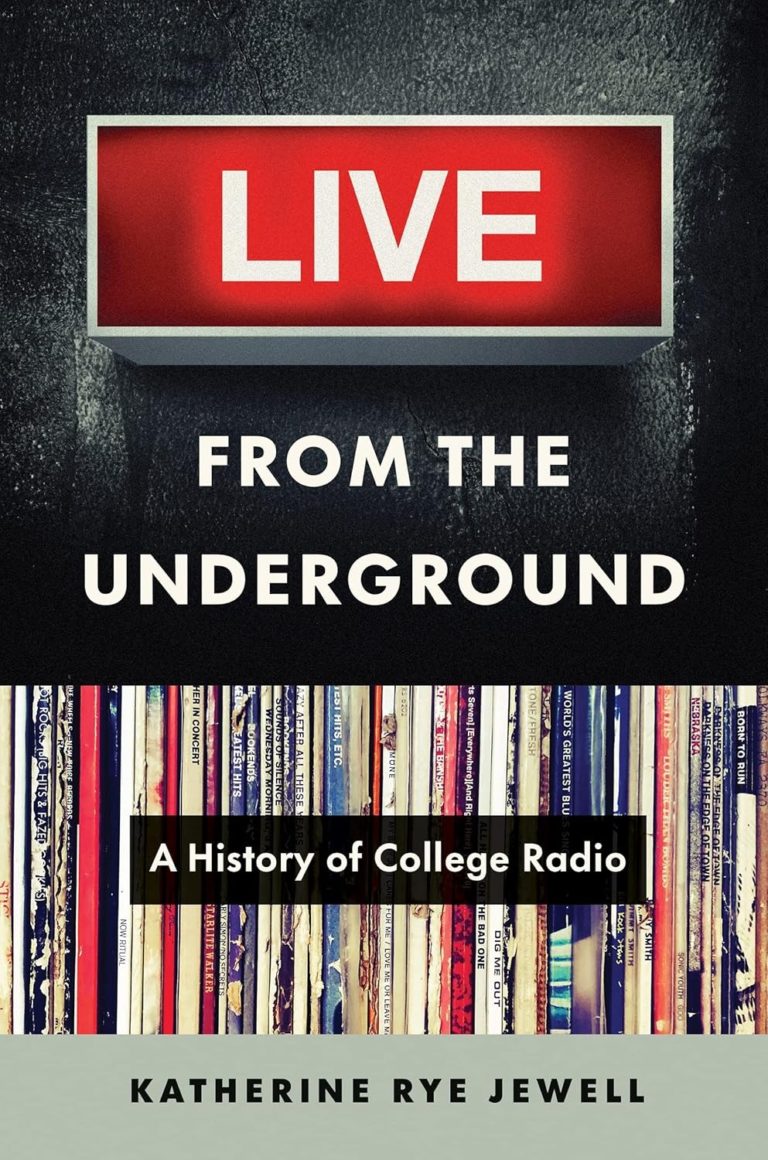
Katherine Rye Jewell Tunes into America’s Culture Wars in ‘Live from the Underground: A History of College Radio’

0

Bands like R.E.M., U2, Public Enemy, and Nirvana found success as darlings of college radio, but the extraordinary influence of these stations and their DJs on musical culture since the 1970s was anything but inevitable. As media deregulation and political conflict over obscenity and censorship transformed the business and politics of culture, students and community DJs turned to college radio to defy the mainstream—and they ended up disrupting popular music and commercial radio in the process. In this first history of US college radio, Katherine Rye Jewell reveals that these eclectic stations in major cities and college towns across the United States owed their collective cultural power to the politics of higher education as much as they did to upstart bohemian music scenes coast to coast.

Jewell uncovers how battles to control college radio were about more than music—they were an influential, if unexpected, front in the nation’s culture wars. These battles created unintended consequences and overlooked contributions to popular culture that students, DJs, and listeners never anticipated. More than an ode to beloved stations, this book will resonate with both music fans and observers of the politics of culture.

Katherine Jewell is professor of History at Fitchburg State University in Massachusetts, where she teaches modern American history. A historian of the business and culture of politics, her work explores how ordinary Americans experience, interpret, challenge, and shape policy and culture. She is the author of two books, and her work has appeared in several outlets including the OAH’s American Historian magazine and the Washington Post. She earned her Ph.D. and M.A. in History from Boston University and her B.A. in History and Anthropology from Vanderbilt University.

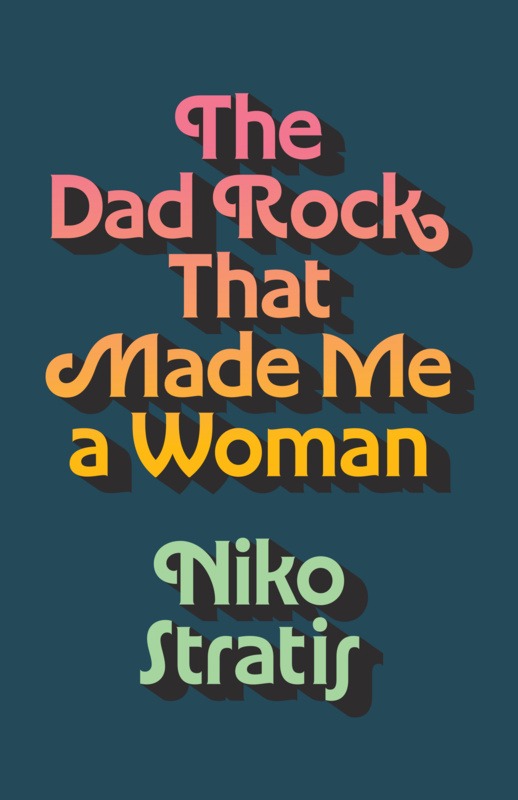
Niko Stratis Redefines ‘Dad Rock’ in Powerful Memoir ‘The Dad Rock That Made Me a Woman’

0

When Wilco’s 2007 album Sky Blue Sky was infamously criticized as “dad rock,” Niko Stratis was a twenty-five-year-old closeted trans woman working in her dad’s glass shop in the Yukon Territory. As she sought escape from her hypermasculine environment, Stratis found an unlikely lifeline amid dad rock’s emotionally open and honest music. Listening to dad rock, Stratis could access worlds beyond her own and imagine a path forward.

In taut, searing essays rendered in propulsive and unguarded prose, Stratis delves into the emotional core of bands like Wilco and The National, telling her story through the dad rock that accompanied her along the way. She found footing in Michael Stipe’s allusions to queer longing, Radiohead’s embrace of unknowability, and Bruce Springsteen’s very trans desire to “change my clothes my hair my face”—and she found in artists like Neko Case and Sharon Van Etten that the label transcends gender. A love letter to the music that saves us and a tribute to dads like Stratis’s own who embody the tenderness at the genre’s heart, The Dad Rock That Made Me a Woman rejoices in music unafraid to bare its soul.

Niko Stratis is an award-winning writer from Toronto by way of the Yukon, where she spent years working as a journeyman glazier before coming out as trans in her thirties and being forced to abandon her previous line of work. Her writing has appeared in publications like CatapultSpinPaste and more.

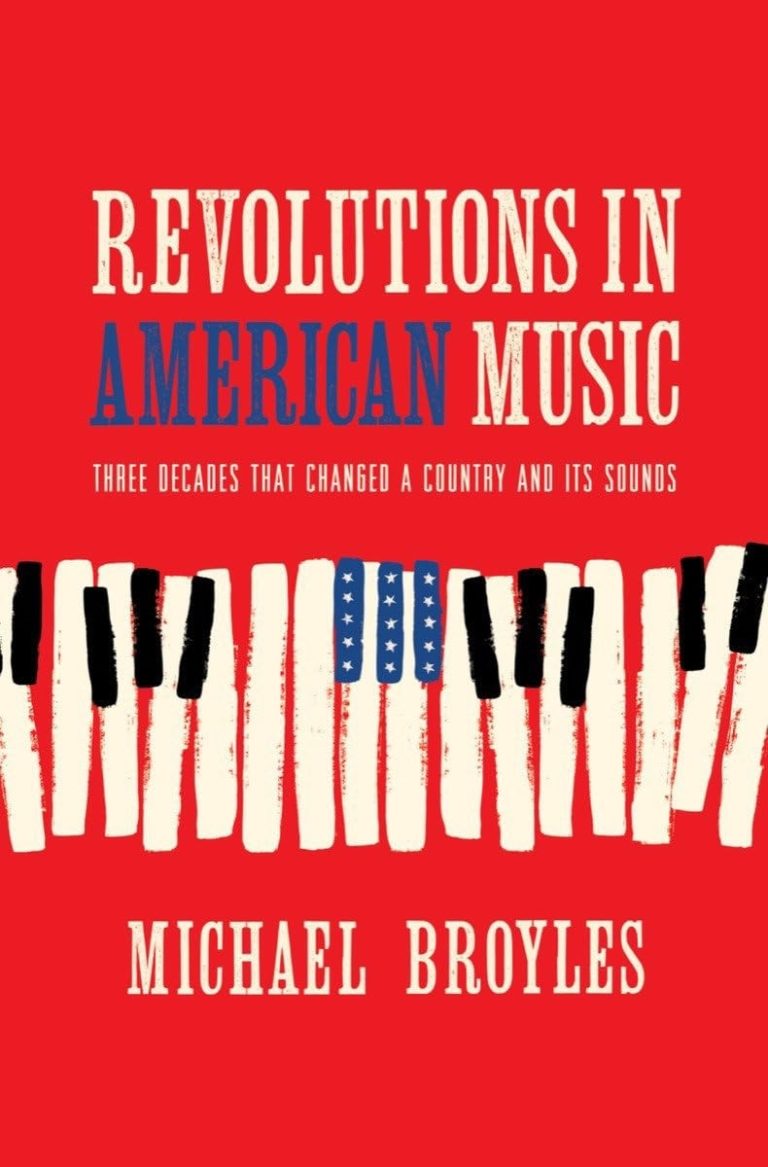
Michael Broyles’ ‘Revolutions in American Music’ Traces How Sound, Race, and Technology Shaped a Nation

0

The story of how unexpected connections between music, technology, and race across three tumultuous decades changed American culture.

How did a European social dance craze become part of an American presidential election? Why did the recording industry become racially divided? Where did rock ’n’ roll really come from? And how do all these things continue to reverberate in today’s world?

In Revolutions in American Music, award-winning author Michael Broyles shows the surprising ways in which three key decades—the 1840s, the 1920s, and the 1950s—shaped America’s musical future. Drawing connections between new styles of music like the minstrel show, jazz, and rock ’n’ roll, and emerging technologies like the locomotive, the first music recordings, and the transistor radio, Broyles argues that these decades fundamentally remade our cultural landscape in enduring ways. At the same time, these connections revealed racial fault lines running through the business of music, in an echo of American society as a whole.

Through the music of each decade, we come to see anew the social, cultural, and political fabric of the time. Broyles combines broad historical perspective with an eye for the telling detail and presents a variety of characters to serve as focal points, including the original Jim Crow, a colorful Hungarian dancing master named Gabriel de Korponay, “Empress of the Blues” Bessie Smith, and the singer Johnnie Ray, whom Tony Bennett called “the father of rock ’n’ roll.” Their stories, and many others, animate Broyles’s masterly account of how American music became what it is today.

Michael Broyles holds a PhD from the University of Texas at Austin and is professor of musicology at Florida State University. He was formerly the music critic for the Baltimore Sun and is a past president of the Society for American Music.

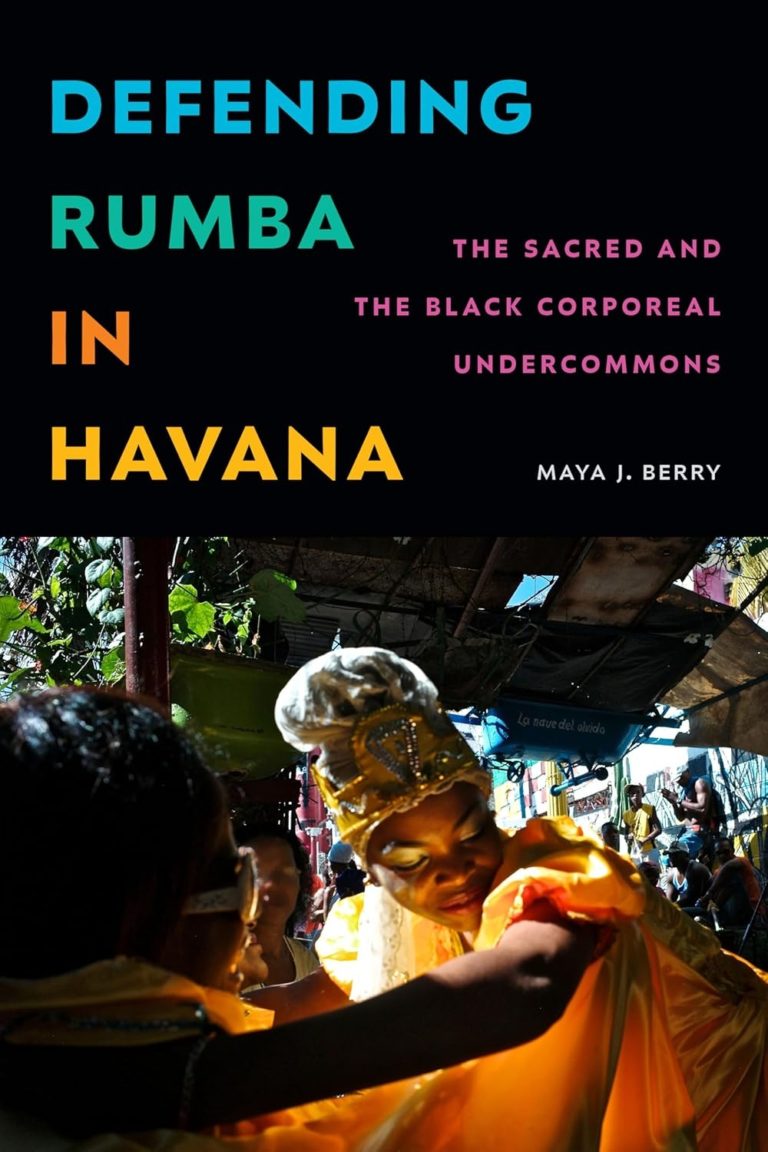
Maya J. Berry’s ‘Defending Rumba in Havana’ Moves Through the Sacred, the Political, and the Black Undercommons

0

In Defending Rumba in Havana, anthropologist and dancer Maya J. Berry examines rumba as a way of knowing the embodied and spiritual dimensions of Black political imagination in post-Fidel Cuba. Historically a Black working-class popular dance, rumba, Berry contends, is a method of Black Cuban struggle that provides the community, accountability, sustenance, and dignity that neither the state nor the expanding private market can. Berry’s feminist theorization builds on the notion of the undercommons to show how rumba creates a space in which its practitioners enact deeply felt and dedicatedly defended choreographies of reciprocity, refusal, sovereignty, devotion, and pleasure, both on stage and in their daily lives. Berry demonstrates that this Black corporeal undercommons emphasizes mutual aid and refuses neoliberal development logics, favoring instead a collective self-determination rooted in African diasporic spiritual practices through which material compensation and gendered power dynamics are negotiated. By centering rumba to analyze how poor Black Cubans navigate gendered and racialized life, Berry helps readers better understand the constraints and yearnings that move diasporic Black struggles to seek refuge beyond the bounds of the nation-state.

Maya J. Berry is Assistant Professor of African, African American, and Diaspora Studies at the University of North Carolina at Chapel Hill.