

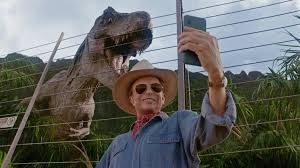
Xfinity’s extended Super Bowl commercial reunites Laura Dern, Sam Neill, and Jeff Goldblum, imagining what would have happened if Jurassic Park had worked as planned. Directed by Taika Waititi, the spot envisions a successful theme park filled with genetically-engineered dinosaurs, bringing the actors back together with the help of hair, makeup, and VFX.
Here’s How To Get Tickets For ‘Paul McCartney: Man on the Run’ – The New Documentary Chronicling Paul McCartney and Wings’ 1970s Ascension
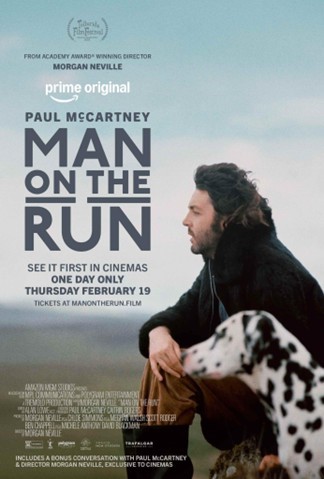
What happens when you wake up the morning after leaving the most important rock band of all time? Paul McCartney: Man on the Run, the intimate new feature documentary by Oscar, Emmy, and Grammy Award-winning director Morgan Neville, explores Paul McCartney’s creative rebirth after The Beatles’ breakup. The film is released in cinemas for one night only by Trafalgar Releasing on Thursday, February 19th, 2026. Tickets are on sale today at manontherun.film.
In April 1970, Paul released his first solo album, McCartney. When asked what he’d do next, he said his only plan was to grow up. Paul McCartney: Man on the Run captures Paul’s transformative decade in the wake of The Beatles’ break-up and the rise of his new band Wings. Through stunning archival footage, Linda McCartney’s exceptional photographs, interviews with Paul, Linda, Mary, and Stella McCartney, a number of Wings band members, Sean Ono Lennon, Mick Jagger, Chrissie Hynde, and more, the film examines this time through a uniquely vulnerable lens.
Paul McCartney: Man on the Run is released theatrically in select territories worldwide. In addition to the film, each theatrical screening includes a bonus conversation between Paul McCartney and director Morgan Neville, exclusive to cinemas. All participating cinemas and ticket listings can be found at manontherun.film. Fans are encouraged to sign up to the email newsletter for event alerts.
Paul McCartney: Man on the Run is produced by Tremolo, in association with MPL Communications and Polygram Entertainment. Following the theatrical release, the film will be available on Prime Video from 27th February in more than 240 countries and territories worldwide. Producers include Morgan Neville, Chloe Simmons, and Meghan Walsh for Tremolo; Scott Rodger and Ben Chappell for MPL; and Michele Anthony and David Blackman for Polygram Entertainment. Executive producers include Paul McCartney and Caitrin Rogers. The new film provides the essential latest installment in the Wings renaissance – a series of exciting new releases connecting with fans across the world. 2025 saw the publication of Wings: The Story of a Band on the Run by Liveright / W.W. Norton / Penguin. A landmark oral history of Paul’s musical reinvention in the 1970s, described by The Sunday Times as “the story of a man who climbed every mountain, then set out to do it all over again”. In tandem, the WINGS self-titled collection was released in multiple formats, from a 32-track 3LP box set to new Dolby Atmos mixes – a definitive self-titled anthology of hits, personally curated by Paul, charting the story of the band as it became one of the biggest-selling acts of all time. The start of 2025 celebrated one of Wings’ most revered albums, Venus and Mars, 50 years since the original release. Now available as a special edition half-speed master LP, and mixed in Dolby Atmos for the first time. All this in addition to another epic leg of Paul’s Got Back tour, which included shows in 18 different cities across the United States and Canada through 2025.
ROREY Explores Self Abandonment And Intimacy On Powerful Single “Temporary Tragedy”

New York singer-songwriter and musician ROREY releases “Temporary Tragedy”, the new single from her sophomore EP ‘Dysphoria’. Co-written and produced in 2021 with longtime collaborator Scott Effman, the EP merges haunting melodies and ethereal vocals with hypnotic, swirling instrumentals. ROREY describes “Temporary Tragedy” as a song about “the cost of self abandonment when you grip intimacy and what it means to choose yourself.” The track arrives with a cinematic music video that chronicles the rumination and spiraling that can follow the end of a relationship.
‘Dysphoria’ captures the contradictions of mental illness through raw confession and fearless songwriting. The project emerged from ROREY’s experience during a manic episode, transforming chaos and disorientation into music that unsettles as much as it heals. “Temporary Tragedy” confronts the moment when love can’t bridge the gap between hope and reality.
The music video draws from ROREY’s first queer relationship while speaking to a universal experience. “The video is rooted in my first queer relationship, its message is universal: sometimes love isn’t enough to bridge the gap between hope and reality, when the other person can’t meet you there,” ROREY explains. The single showcases ROREY’s ability to name difficult truths through powerful, poignant songwriting.
Sunking Delivers Five-Song Performance Live In The KEXP Studio
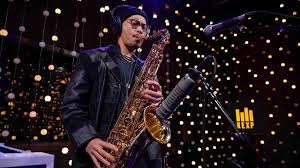
Sunking performed live in the KEXP studio on November 24, 2025, delivering five tracks hosted by Noel Brass Jr. The session features “BAM BAM”, “CIRCUIT CITY”, “TAP WATER”, “Glitch/Spy”, and “KAZA DUM”. Bobby Granfelt handles drums, Antoine Martel plays keyboard and synthesizer, and Victory Nguyen performs on synthesizer, flute, and saxophone.
Omar Lye-Fook Brings ‘Brighter The Days’ To Grassroots Venues Across The UK

Music Venue Trust (MVT), the UK charity representing and supporting Grassroots Music Venues (GMVs), announces a UK tour by British soul legend Omar Lye-fook MBE, supported by MVT’s Liveline Fund.
Running across May and June 2026, the Brighter The Days tour will see Omar perform in intimate grassroots venues nationwide, reconnecting with the spaces that continue to sustain live music communities and artist development across the UK.
Celebrating 40 years as a recording artist, Omar’s Brighter The Days tour supports the release of his ninth studio album of the same name – a critically acclaimed project he describes as his “magnum opus”. A defining voice in British soul, Omar’s career spans four decades, with collaborations including Stevie Wonder, Erykah Badu, Angie Stone, Leon Ware, Robert Glasper, Paul Weller and India.Arie.
The tour is supported by Liveline, a vital funding initiative developed by Music Venue Trust in partnership with live music advocates Save Our Scene (SOS). Liveline delivers direct financial backing to grassroots venues, touring artists and promoters, funded through contributions from arena and stadium ticket sales. Major artists including Sam Fender, Katy Perry and Enter Shikari have adopted the Grassroots Levy to support the scheme, alongside Coldplay, who pledged 10% of profits from their recent UK stadium tour to Liveline.
Touring exclusively through grassroots venues, the Brighter The Days run brings Omar back to the heart of local communities. A performer of effortless class and deep musicality, Omar’s live shows are a masterclass in groove, soul, and sincerity. Don’t miss this rare opportunity to experience a genuine British icon performing new material and timeless classics live.
Brighter The Days 2026 Tour Dates:
Friday 15 May – Band On The Wall, Manchester *
Thursday 21 May – Old Town Hall, Trowbridge *
Friday 22 May – Acapela Studio, Cardiff
Saturday 23 May – Old Bakery, Truro
Sunday 24 May, Blakehay Theatre, Weston Super Mare
Friday 29 May, Drygate, Glasgow *
Saturday 30 May – The Old Woollen, Leeds *
Sunday 31 May – Yellow Arch Studios, Sheffield *
Friday 5 June – Metronome, Nottingham *
Saturday 6 June – Mash, Cambridge *
Friday 19 June – Hertford Corn Exchange, Hertfordshire
Saturday 20 June, Hub, Hampton
Thursday 25 June – The Cavern, Liverpool *
Friday 26 June – 229, London *
- *Support from soulful house vocalist Steve Edwards
- The Liveline Fund exists to ensure that exceptional live music continues to reach audiences across the country. Through partnerships with artists, promoters and venues, Liveline is developing sustainable touring models that protect the grassroots sector while enabling artists at all stages of their careers to perform live.
- Omar Lye-fook MBE is one of the most influential and enduring figures in British soul music. First rising to prominence with his landmark single There’s Nothing Like This, Omar has spent four decades carving out a sound that blends soul, jazz, funk, R&B and Caribbean influences into a genre entirely his own.
- Across nine studio albums, Omar has collaborated with an extraordinary range of artists, including Stevie Wonder, Erykah Badu, Angie Stone, Paul Weller, Robert Glasper, India.Arie, Giggs and Ledisi. In 2012, he was awarded an MBE for services to music.
- His latest album, Brighter The Days, released via Impressive Collective & BBE Music, has been widely praised as his most assured and expansive work to date – reaffirming Omar’s place as a singular voice in British music, whose influence continues to resonate across generations.
Music Venue Trust is a UK registered charity which acts to protect, secure, and improve the UK’s Grassroots Music Venues.
Created in January 2014, Music Venue Trust aims to secure the long-term future of GMVs in England, Scotland, Wales, and Northern Ireland, whether they are iconic venues such as Hull Adelphi, Exeter Cavern, The 100 Club, Band on the Wall, King Tut’s, and Clwb Ifor Bach, or lesser-known venues that are equally important to their geographical or musical community. These venues play a crucial role in the development of British music, nurturing local talent, providing a platform for artists to build their careers and develop their music and their performance skills.
MVT works to gain recognition of the essential role these venues fulfil, not only for artist development but also for the cultural and music industries, the economy, and local communities. The geographical spread of GMVs provides access to live music, for both performers and audience members, in many locations that do not have alternative cultural venues. The charity provides advice to the government, the cultural sector, and the music industry on issues impacting GMVs and is the nominated representative that speaks on behalf of the Music Venues Alliance, an association of venues from across the UK.
Matthew Curry Delivers Southern Rock Fire And Heartfelt Stories On ‘One For The Ride’
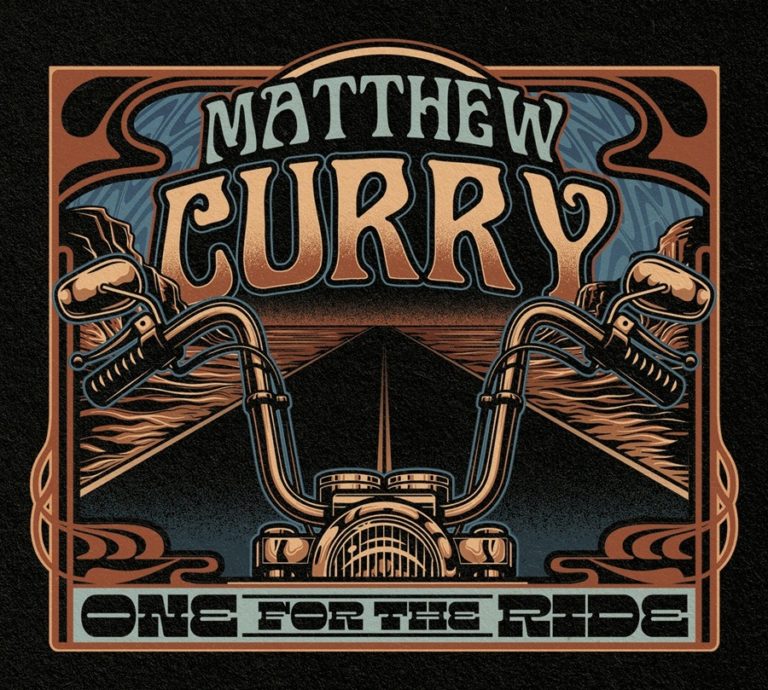
Matthew Curry opens a new chapter with ‘One For The Ride’, an album that moves between scorching guitar work and tender storytelling with remarkable ease. The collection captures the spirit of life on the road while revealing the emotional depth that has earned Curry praise from legends like Steve Miller and Peter Frampton. Released February 27, 2026 through Ruf Records, the album features ten tracks that blend blues, southern rock, and Americana into something both familiar and fresh.
The album announces itself with high-octane energy. “Rum Stumblin'” kicks things off with bluesy party grooves, while “Born Behind The Wheel” leans into the gritty southern rock tradition that shaped Curry’s musical identity. These tracks showcase the fiery guitar playing that drew comparisons to Stevie Ray Vaughan from Steve Miller himself. Curry channels the raw spirit of ZZ Top and classic road songs, creating moments that hit with immediate impact.
‘One For The Ride’ also finds Curry in quieter, more intimate spaces. “Dancing In The Kitchen” grew from a spontaneous anniversary moment at home, bringing acoustic warmth to the record. “Rather Float A River” blends blues, funk, country, and Americana, reflecting Curry’s connection to the outdoors and life on the water. The album closes with Curry’s take on “Whiskey Rock a Roller”, the only cover on the record and a direct tribute to Lynyrd Skynyrd. Curry picked up the guitar at age four, performed live by eight, and has since shared stages with Journey, the Doobie Brothers, and Don Felder across a career built on authentic musicianship.
Investing in Precious Metals: A Comprehensive Guide to US Gold and Coin
By Mitch Rice
Investing in precious metals is a proven method for diversification and long-term financial security. In that space of trust and experience is A US Gold and Coin, which is dedicated to the mission of helping people protect and see growth in their wealth through gold, silver, and rare coins. Whether you are a first-time investor in this arena or a seasoned player, at the core of what the company does is to present the basics, the benefits, and the best strategies for putting money into precious metals.
Why Precious Metals Matter in Your Investment Portfolio
Precious metals such as gold and silver do not act like other financial instruments, which are stocks and bonds. At times of economic uncertainty, inflation, or geopolitical turmoil, their value tends to rise. This contrarian action of metals is what makes them a good hedge against market volatility.
Gold, in fact, has proven to be the best store of value over time. What is seen with gold is that it does very well against the forces of inflation and monetary policy, which play a large role in paper currency. As for silver, although it is more volatile than gold, it also brings in that of industrial demand, which does support it as a value over time.
Who Is US Gold and Coin?
US Gold and Coin is a trusted name in precious metals that has been dealing in them for many years. The company focuses on gold, silver, platinum, palladium, and also collectible coins. As a veteran in the bullion business, the company serves from the first-time investor to the pro collector. The company presents transparent prices, is a source of expert advice, and has a large product selection, which makes precious metals a very approachable and reliable investment.
At usgoldandcoin.com, you will find in-depth educational materials, product information, and what is in it for investors. The company has put together a great resource for customers to make sure they are well informed, which in turn takes the guesswork and rumors out of their investments.
Types of Precious Metals Investments
Valuable metals may be had in many forms, which also have their own benefits:
1. Physical Bullion
This category covers gold and silver bars and rounds. Investors tend to choose bullion for purity and easy storage. The company has a range of bar and round weights to suit small to large investments.
2. Coins
Rare and valuable coins go beyond what their base metal is worth. Many investors see the dual benefit of a coin’s history and its long-term storage of value. At US Gold and Coin, a large choice of coins from different times and mints is presented, which in turn appeals to the wide range of collectors and investors.
3. Precious Metals IRAs
A Precious Metals IRA includes physical gold and silver in your retirement portfolio. They differ from the typical stocks or mutual funds, which are intangible; with this option, the assets are kept in an IRS-approved depository. Also, it is ensured that investors get tax benefits along with the stability that precious metals bring.
The Benefits of Investing in Gold and Silver
1. Inflation Hedge
Gold for years has been a good hedge. As inflation goes up, the price of gold tends to go up, which in turn protects investors’ wealth.
2. Portfolio Diversification
Adding precious metals, which include gold and silver, to a portfolio may reduce risk. As these metals tend to perform separately from stocks and bonds, they help to balance out overall performance.
3. Liquidity
Gold and silver are a global standard which means they can be bought or sold in any part of the world. This also makes them very liquid as compared to more specific assets.
How to Get Started with Precious Metals Investing
If you are interested in the precious metals market here is a step by step guide to get started:
1. Educate Yourself
Before you invest do your research on price drivers, storage options, and what different types of products are out there. Also check out resources which US Gold and Coin has to offer which will help build that foundation.
2. Define Your Goals
Are you putting your money toward retirement, long term security, or collection? Your goals will determine
3. Choose a Reputable Dealer
Work with established dealers that have open pricing and secure transactions. There are trusted names like US Gold and Coin, which will guide investors through the product selection and purchase.
4. Decide on Storage
Physical metals must be stored in secure locations. Choices are home safes, bank safety deposit boxes, and professional depositories. Each has their pros and cons in terms of security, accessibility, and cost.
5. Review and Adjust
Market change, the investment strategy should also transform. Do a regular review of the portfolio and rebalance as required.
Common Myths About Precious Metals Investing
Though large in following, precious metals investing is a field that is very much a mystery to many. A few of these myths are clarified below:
Myth: Gold goes up in price during crises.
Fact: Gold, which does see action in uncertain times, also appreciates in stable markets out of long-term economic trends.
Myth: Silver is a risky investment for serious investors.
Fact: Silver has, at times, very volatile prices, but it also has large industrial demand and a lower entry price, which makes it an accessible and profitable play.
Myth: Only those with great means should buy gold.
Fact: Precious metals come in small denominations, and companies such as US Gold and Coin make it easy to get into the market with little investment.
The Future of Precious Metals in Your Portfolio
As the world economy changes so do the roles of precious metals which include gold and silver. It is seen that in times of inflation, market downturns, or currency fluctuations gold and silver are the elements of a stable investment that other assets may not be. It is also by working with professional teams and through trusted platforms like US Gold and Coin that investors may put together a balanced and resilient portfolio.
Entering the precious metals market is not for the sole purpose of profit; it is for the protection of wealth and peace of mind. With the right strategy and a long term perspective gold and silver act as strong pillars in the financial journey.
Data and information are provided for informational purposes only, and are not intended for investment or other purposes.
The Future of Reflection – An In-Depth Look at Glassless Mirrors
By Mitch Rice
The world of interior design, performance arts, and architecture is undergoing a quiet, yet profound, revolution. For centuries, the reflective surface has been synonymous with heavy, fragile sheets of glass. Today, a new contender is redefining the very concept of a mirror: the glassless mirror. This innovative technology, which swaps heavy glass for a sophisticated, high-performance film, is not just a passing trend—it’s a superior, safer, and more versatile alternative that is gaining traction in homes, businesses, and specialized industries worldwide.
From professional dance studios to massive theatrical sets and even the farthest reaches of space, the benefits of glassless mirrors are compelling. This comprehensive article delves into the construction, advantages, and applications of this modern marvel, positioning it as the ultimate reflective solution in the contemporary market.
What is a Glassless Mirror? Deconstructing the Technology
The term “glassless mirror” may sound like an oxymoron, but the core innovation lies in its clever, multi-layered construction. Unlike traditional mirrors, which rely on a metallic coating applied to the back of a thick piece of plate glass, the glassless version is engineered using advanced materials that prioritize safety, lightness, and optical quality.
The Core Components:
- Highly Reflective Film (Mylar® or PET): The key to the glassless mirror is a thin, durable, and highly reflective metalized polyester film, often Mylar® or PET (Polyethylene Terephthalate). This film is precisely stretched and heat-shrunk across a rigid frame. This front-surface reflection is a critical feature, as it eliminates the light absorption and faint “ghosting” or double-image effect common in plate glass, resulting in a sharper and brighter reflection. In fact, while a standard glass mirror may be around 70% reflective, the Mylar® surface often achieves an impressive 90-92% reflectivity.
- Lightweight Aluminum Frame: The film is mounted onto a structurally sound, yet extremely lightweight, aluminum frame. The edges of this frame are raised, creating a critical air space.
- Rigid Foam Core: Inside the aluminum frame, a durable, rigid foam core is housed. This core provides substantial stability and additional sturdiness. The air space between the mylar film and the foam core allows the reflective surface to subtly flex under minor impact without damage, contributing significantly to its durability and shatterproof nature.
This combination of a highly reflective film, a lightweight frame, and a stabilizing core results in a product that is, on average, 80-85% lighter than a comparable traditional glass mirror.
Unmatched Safety and Versatility: The Glassless Mirror Advantage
For any setting that prioritizes safety, the glassless mirror offers a solution that plate glass simply cannot match. Its shatterproof design is the single most compelling reason for its widespread adoption in high-activity and public spaces.
Key Benefits of Glassless Mirrors:
- Shatterproof Safety: This is the flagship advantage. The film surface will not shatter into dangerous shards, making it the ideal choice for dance studios, gyms, schools, hospitals, playrooms, and high-traffic commercial areas. Eliminating the risk of broken glass not only provides peace of mind but can also potentially reduce liability exposure.
- Extreme Lightness: The significantly reduced weight makes installation remarkably easy. A large, wall-length panel that would require heavy-duty anchors and a specialized crew for glass can often be handled and mounted by just one or two people using basic tools. This portability also makes them perfect for theatrical sets, fashion shows, trade show booths, and temporary event spaces.
- Superior Optical Clarity (No Distortion): By offering a true front-surface reflection, glassless mirrors eliminate the slight distortion and double-image effect that occurs when light passes through the thickness of glass. The resulting image is high-definition, clear, and true-to-color.
- Acoustic and Thermal Properties: Due to the internal foam core and the air space, glassless mirrors offer an often-overlooked advantage: they can act as a sound dampener or acoustic absorber, reducing echo and noise levels in large, loud spaces like casinos or fitness centers. Additionally, the foam core provides a degree of thermal insulation.
- Low Maintenance: The Mylar surface is naturally anti-static, which repels dust and grime, significantly reducing the frequency of cleaning compared to traditional glass. They are also non-fogging, making them suitable for environments with high humidity, such as bathrooms or indoor pools.
Applications Across Industries – Where Glassless Excels
The unique properties of the glassless mirror allow it to be used in applications that would be impractical, or even dangerous, for traditional glass.
Common and Innovative Applications:
- Fitness and Performance: This is arguably the most common use. Dance studios, martial arts dojos, yoga centers, and home gyms require large, full-length mirrors for form correction. The safety and superior clarity make glassless the go-to choice.
- Retail and Merchandising: Lightweight, distortion-free panels are essential for dressing rooms and product displays, where customers need an accurate view and where moving large reflective surfaces is a necessity.
- Architecture and Design: Their lightweight nature allows for installations in spaces where heavy glass is not structurally feasible, such as ceilings or temporary partitions. Custom shapes and large, seamless mirror walls become easier to achieve.
- Theatrical and Film Production: For stage sets and mobile productions, the ease of transport, installation, and breakdown is invaluable. They are a staple for creating dramatic, reflective effects on the fly.
- Specialized Environments: Their fire-retardant and safe, non-shattering qualities make them vital for institutional settings like hospitals, prisons, and therapeutic environments. They are even used in advanced scientific equipment, showcasing their exceptional optical quality.
Installation and Maintenance – Simple Care for a Complex Product
The installation of a wall-mounted glassless mirror is significantly less complex than its glass counterpart. Panels often come pre-drilled with brackets, allowing for easy mounting directly to finished surfaces like plaster or drywall, eliminating the need for complex, heavy-duty wall supports. Many models also offer rolling stands for ultimate portability and flexible use.
When it comes to maintenance, gentle care ensures the longevity of the Mylar film:
- Cleaning: The mirror should be cleaned with a non-abrasive, non-alcohol-based liquid cleaner and a soft, lint-free cotton or microfiber cloth. Crucially, never use paper towels, which can scratch the delicate film surface. Use a can of compressed air or a soft duster to remove loose particles before wiping.
- Repairing Damage: While the film is strong, sharp objects can puncture it. Minor dents can often be removed by gently applying heat with a hair dryer, causing the film to tighten and restore its flatness. In the event of a tear, specialized Mylar repair tape is available to prevent the damage from spreading.
The Clear Reflection of Innovation
The rise of the glassless mirror represents a pivotal evolution in reflective technology. By leveraging modern polymer science and intelligent design, it offers a compelling combination of safety, lightweight versatility, and superior optical performance that traditional plate glass cannot match.
For customers in the glass and mirror niche, the glassless mirror is more than just an alternative; it is a high-definition, shatterproof, and cost-effective solution that opens up new possibilities for large, safe, and truly brilliant reflections in virtually any setting. As design and safety standards continue to advance, the glassless mirror is poised to become the industry standard for the future.
Data and information are provided for informational purposes only, and are not intended for investment or other purposes.
Library Names ‘Glory,’ ‘The Karate Kid,’ ‘Philadelphia,’ ‘Frida,’ ‘Inception,’ ‘The Wrecking Crew,’ ‘The Incredibles’ And ‘Clueless’ And More To The National Film Registry for Preservation

The Library of Congress has selected 25 films for the National Film Registry due to their cultural, historic or aesthetic importance to preserve the nation’s film heritage, the Library announced today.
The selections for 2025 date back to the silent film era with six silent films dating from 1896 to 1926 – a significant number of films in this class. The newest film added to the registry is from 2014 with filmmaker Wes Anderson’s “The Grand Budapest Hotel,” which included meticulous historical research at the Library of Congress to create visually striking scenery.
Iconic Hollywood films from the last 50 years selected for the registry this year include “The Karate Kid,” “Glory,” “Philadelphia,” “Inception,” and the teen comedy “Clueless.” Classic Hollywood selections include the 1954 musical “White Christmas” that enshrined the chart-topping song of the same name in American popular culture, and perhaps the last great musical of the Golden Age of Hollywood, “High Society” from 1956 featuring Bing Crosby, Frank Sinatra, Louis Armstrong and Grace Kelly in her last movie.
Four documentaries were selected for the registry this year, including Ken Burns’ “Brooklyn Bridge,” Nancy Buirski’s “The Loving Story,” George Nierenberg’s “Say Amen, Somebody” and Danny Tedesco’s “The Wrecking Crew.”
“When we preserve films, we preserve American culture for generations to come. These selections for the National Film Registry show us that films are instrumental in capturing important parts of our nation’s story,” said Acting Librarian of Congress Robert R. Newlen. “We are proud to continue this important work, adding a broad range of 25 films to the National Film Registry as a collective effort in the film community to protect our cinematic heritage.”
The selections for 2025 bring the number of titles in the registry to 925. Some of the film titles are among the 2 million moving image collection items held in the Library of Congress. Others are preserved in coordination with copyright holders or other film archives.
Looking back on “The Karate Kid,” actor Ralph Macchio said the characters were key to cementing the film in pop culture history.
“The magic of Pat Morita as Mr. Miyagi and me as the Daniel LaRusso character, that sort of give and take, that instant soulful magic was happening from our first meeting, Macchio told the Library of Congress. “Those scenes in Miyagi’s yard, the chores, the waxing on of the car, the painting the fences, the sanding the floor, all of that is now a part of cinematic pop culture. For me, the heart and soul of the film is in those two characters.”
Writer and director Amy Heckerling recalled how she made the 1995 teen comedy and satire “Clueless,” which has been called a modern retelling of Jane Austen’s classic novel “Emma.”
“I’m often asked, how did I decide to make ‘Emma’ into an updated film, which is kind of backwards because what I wanted was to write the kind of characters that really amused me, people that were very comfortable, ardent and optimistic. I would get up, read the news and then just want to cry and be depressed. So, I thought, what if you really were always positive? How would that be? And what if you were doing things and you just knew that you were right?” Heckerling told the Library of Congress. “I remembered reading ‘Emma’ when I was in college, so I re-read it. It was like Jane Austen was pulling up from the grave and saying I already got it!”
Turner Classic Movies (TCM) will host a television special Thursday, March 19, starting at 8 p.m. ET to screen a selection of films named to the registry this year. TCM host and film historian Jacqueline Stewart, who is chair of the National Film Preservation Board, will introduce the films.
Stewart leads the board in studying and recommending films across a wide variety of genres and eras for the Librarian of Congress to consider for the registry.
“It is very meaningful that the National Film Registry is adding six silent film titles, showing the range of topics and styles in the earliest years of American filmmaking,” Stewart said. “And it is especially exciting to see that the top title nominated by the public for this year, ‘The Thing,’ has been added to the National Film Registry, along with ‘The Truman Show’ and ‘The Incredibles’ which also had very strong public support.”
Films Selected for the 2025 National Film Registry
(chronological order)
- The Tramp and the Dog (1896)
- The Oath of the Sword (1914)
- The Maid of McMillan (1916)
- The Lady (1925)
- Sparrows (1926)
- Ten Nights in a Barroom (1926)
- White Christmas (1954)
- High Society (1956)
- Brooklyn Bridge (1981)
- Say Amen, Somebody (1982)
- The Thing (1982)
- The Big Chill (1983)
- The Karate Kid (1984)
- Glory (1989)
- Philadelphia (1993)
- Before Sunrise (1995)
- Clueless (1995)
- The Truman Show (1998)
- Frida (2002)
- The Hours (2002)
- The Incredibles (2004)
- The Wrecking Crew (2008)
- Inception (2010)
- The Loving Story (2011)
- The Grand Budapest Hotel (2014)
Public Nominations for the National Film Registry
The public submitted 7,559 titles for consideration this year. The public can submit nominations throughout the year on the Library’s web site. Nominations for next year will be accepted until Aug. 15, 2026. Cast your vote at loc.gov/film.
Ken Burns’ First Major Film Joins National Film Registry
“Brooklyn Bridge” is the first documentary by Ken Burns to join the National Film Registry. Burns recently discussed his inspiration for the film and his process with the Library of Congress.
“My best friend was a book distributor and he gave me a copy of David McCullough’s, ‘The Great Bridge,’ the epic story of the building of the Brooklyn Bridge. I devoured it in one sitting. And I said, oh, we should make a story about what this book is about, not just about the construction, which that book was, but this century as a symbol of strength, ingenuity, vitality and promise. I had no idea that that it would take so many years of my time to do it,” Burns said. “I was just drawn to the story and the idea that you could wake the past up with old photographs and first-person voices, as well as a traditional third-person narrator.
“The ‘Brooklyn Bridge’ film was my first film that had sort of widespread distribution. And I can’t think of a day where I didn’t learn something new. I felt in some ways like every first film is reinventing the wheel. You can be influenced by other people, but you really, in the end, have to do it. Everything was how you wake the story up, how you take a photograph. And in those days it was all analog. We were hand shooting all of the archives. That was a very long process, traveling to them in person. There was no digitization. There was no getting it over the internet. It was all firsthand. We filmed for the ‘Brooklyn Bridge’ at 163 different sources.”
Coincidentally, the Library of Congress has been an important resource for nearly all of Burns’ films for archival footage and historical accuracy.
“With the exception of ‘The American Revolution,’ which is a subject that predates photography, we’ve used the Library of Congress in every single film we’ve worked on. I spent between eight and nine weeks, Monday through Friday, 8:30 to 4:30 in the paper print collection, filming on an easel with gloves and magnets,” Burns said.
“When I think about the National Film Registry and all the films that are contained in it, I think of it as a giant mirror of the United States, reflecting back all of the complexity, all of the intimacy, all of the variety of the people and ideas and forces and movements that have taken place over our history. And you realize what an extraordinary repository it is.”
Wes Anderson Draws on Library for ‘The Grand Budapest Hotel’
Similarly, Anderson uses significant historical research to create visually striking stories and scenery, as displayed by “The Grand Budapest Hotel.” He too used the Library’s collections to create his film.
“There’s a specific set of postcards in the Library of Congress Photochrome Prints collection. They’re photographs from the turn of the century and hand-tinted. When we were first starting to figure out how to tell this story, the views and images that we were looking for, the architecture and the landscapes that we wanted, they don’t exist anymore,” Anderson said. “We went through the entire Photochrome collection, which is a lot of images. We made our own versions of things, but much of what is in our film comes directly from that collection from the Library of Congress.”
The 2025 National Film Registry
(descriptions in chronological order)
“The Tramp and the Dog” (1896)
“The Tramp and the Dog,” a silent film from Chicago’s Selig Polyscope Company, is considered director William Selig’s most popular early work. Filmed in Rogers Park, it is recognized as the first commercial film made in Chicago. Previously a lost film, it was rediscovered in 2021 at the National Library of Norway. The film depicts a tramp who attempts to steal a pie from a backyard windowsill, only to be met by a broom-wielding housewife and her dog, who foils the crime. The film is one of the first known as “pants humor,” where a character loses (or almost loses) his pants during an altercation. This scene inspired future comedy gags showing drifters and tramps losing their pants to dogs chasing them.
“The Oath of the Sword” (1914)
A three-reel silent drama, “The Oath of the Sword” depicts the tragic story of two young lovers separated by an ocean. Masao follows his ambitions, studying abroad at the University of California, Berkeley, while Hisa remains in Japan, caring for her ill father. This earliest known Asian American film production featured Japanese actors playing Japanese characters and was produced by the Los Angeles-based Japanese American Film Company. Made at a time when Hollywood studios were not yet the dominant storytellers of the American film industry, “The Oath of the Sword” highlights the significance of early independent film productions created by and for Asian American communities. James Card, the founding curator at the George Eastman Museum, acquired “The Oath of the Sword” in 1963. The museum made a black and white photochemical preservation in 1980. In 2023, a new preservation reproducing the original tinting was done in collaboration with the Japanese American National Museum, and the film has since become widely admired.
“The Maid of McMillan” (1916)
Known to be the first student film on record, this whimsical, silent romance film was shot on campus in 1916 by students in the Thyrsus Dramatic Club at Washington University in St. Louis, Missouri. Club members Donald Stewart (Class of 1917) and George D. Bartlett (Class of 1920) wrote the screenplay. The original nitrate print of “The Maid of McMillan” was rediscovered in 1982, and two 16mm prints were made; the original nitrate was likely destroyed at this time. In 2021, with funding from the National Film Preservation Foundation, one of those 16mm prints was scanned at 4k and reprinted onto 35mm helping to secure the film’s survival and legacy.
“The Lady” (1925)
When “The Lady” debuted in theaters in 1925, the silent film era had hit its stride, and this movie represents a powerhouse of artists at their peak. Director Frank Borzage was a well-established expert in drawing out intense expressions of deep emotion and longing in his actors. He did just that with the film’s lead actress, Norma Talmadge, also at the height of her career, both in front of and behind the camera. Talmadge produced “The Lady” through her production company and commissioned one of the most prolific screenwriters, Frances Marion, to deliver a heartfelt story of a woman seeking to find the son she had to give up, to protect him from his evil grandfather. “The Lady” was restored by the Library of Congress in 2022.
“Sparrows” (1926)
As a silent actress, producer and key founder in the creation of the American film industry, Mary Pickford’s performance in “Sparrows” represents her ability to master the genre she helped nourish: sentimental melodramas full of adventure and thrills, with dashes of comedy and heartfelt endings. Pickford plays Molly, the eldest orphan held within the swampy squalor of the Deep South, who moves heaven and earth to save the other orphan children from a Dickensian world of forced labor. The film takes some departures from the visual styles found in Pickford’s other films, invoking an unusual tone of despair while deploying camera angles and lighting akin to German Expressionist cinema. “Sparrows” was preserved by the Library of Congress in collaboration with the Mary Pickford Company in 2020.
“Ten Nights in a Barroom” (1926)
Featuring an all-Black cast, “Ten Nights in a Barroom” was produced in 1926 by the Colored Players Film Corporation of Philadelphia and is the earliest of only two surviving films made by the company. This silent film is based on the stage melodrama adapted from the 1854 novel “Ten Nights in a Bar-Room and What I Saw There” by Timothy Shay Arthur. Released in 2015 by Kino Lorber as part of the five-disc set “Pioneers of African-American Cinema,” the compilation was produced by the Library of Congress, in association with the British Film Institute, George Eastman Museum, Museum of Modern Art, National Archives, Smithsonian’s National Museum of African American History and Culture, Southern Methodist University and the UCLA Film & Television Archive. Preserved by George Eastman Museum.
“White Christmas” (1954)
While the chart-topping song “White Christmas” was first performed by Bing Crosby for the 1942 film “Holiday Inn,” its composer, Irving Berlin, was later inspired to center the song in the 1954 musical “White Christmas.” Crosby, along with Danny Kaye, Rosemary Clooney, Vera-Ellen Rohe and director Michael Curtiz, embedded “White Christmas” in American popular culture as a best-selling single and the top-grossing film of 1954, as well as regular holiday viewing throughout the decades. The story of two World War II veterans-turned-entertainers and a singing sister act preparing a show for a retired general, the film and its grand musical numbers were captured in VistaVision, a widescreen process developed by Paramount Pictures and first used for “White Christmas.”
“High Society” (1956)
Often referred to as the last great musical of the Golden Age of Hollywood, “High Society” features an all-star cast including Bing Crosby, Grace Kelly, Frank Sinatra and Louis Armstrong (and his band), along with a memorable score of Cole Porter classics. Set in Newport, Rhode Island, the film showcases the Newport Jazz Festival (established in 1954) and features a remarkable version of Cole Porter’s “Now You Has Jazz.” It includes the first big-screen duet by Frank Sinatra and Bing Crosby, singing “Well, Did You Evah?” This was Grace Kelly’s last movie before she retired from acting and married the Prince of Monaco; she wore her Cartier engagement ring while filming.
“Brooklyn Bridge” (1981)
With “Brooklyn Bridge,” Ken Burns introduced himself to the American public, telling the story of the New York landmark’s construction. As with later subjects like the Civil War, jazz and baseball, Burns connects the building of the Brooklyn Bridge to American identity, values and aspirations. Released theatrically and nominated for an Academy Award for Best Documentary Feature, “Brooklyn Bridge” marked the beginning of Burns’ influential career in public media. More than just a filmmaker, Burns has become a trusted public historian. His storytelling presents facts, but maybe more importantly, invites reflection on what America is, where it’s been, and where it’s going. His influence is felt not only in classrooms and through public broadcasting, but across generations who see history as something alive and relevant.
“Say Amen, Somebody” (1982)
George Nierenberg’s documentary is a celebration of the historical significance and spiritual power of gospel music. With inspirational music, joyful songs and brilliant singers, the movie focuses on the men and women who pioneered gospel music and strengthened its connections to African American community and religious life. Prior to production, Nierenberg, who is white, spent over a year in African American churches and communities, gaining the trust of the performers. Restored by the Smithsonian’s National Museum of African American History and Culture in 2020, the film features archival footage, photographs, stirring performances and reflections from the father of gospel Thomas A. Dorsey and its matron Mother Willie Mae Ford Smith. Nierenberg shows the struggles and sacrifices it takes to make a living in gospel, including criticism endured by women who sought to pursue careers as professional gospel singers while raising their families.
“The Thing” (1982)
Moody, stark, often funny and always chilling, this science fiction horror classic follows Antarctic scientists who uncover a long-dormant, malevolent extraterrestrial presence. “The Thing” revolutionized horror special effects and offers a brutally honest portrait of the results of paranoia and exhaustion when the unknown becomes inescapable. “The Thing” deftly adapts John W. Campbell’s 1938 novella “Who Goes There?” and influenced “Stranger Things” and “Reservoir Dogs.” It remains a tense, thrilling and profoundly unsettling work of cinema.
“The Big Chill” (1983)
Lawrence Kasdan’s best picture-nominated “The Big Chill” offers an intimate portrait of friends reunited after the suicide of one of their own and features actors who defined cinema in the 1980s – Glenn Close, William Hurt, Jo Beth Williams, Kevin Kline, Jeff Goldblum and Meg Tilly. This powerful ensemble portrays American stereotypes of the time – the yuppie, the drug dealer, the TV star – and deftly humanizes them. Through humor, tenderness, honesty and an amazing soundtrack, it shows formerly idealistic Americans making and dealing with the constant compromises of adulthood, while buoying one another with uncompromising love and friendship.
“The Karate Kid” (1984)
An intimate story about family and friendship, “The Karate Kid” also succeeds as a hero’s journey, a sports movie and a teen movie – a feel-good movie, but not without grit. The film offers clearly defined villains, romance and seemingly unachievable goals, but also an elegant character-driven drama that is relatable and touching. A father who has lost his son meets the displaced son of a single mother and teaches him about finding balance and avoiding the pitfalls of violence and revenge. Race and class issues are presented honestly and are dealt with reasonably. Our hero practices a lot, gets frustrated, gets hurt, but still succeeds. It’s as American as they come, and it’s a classic.
“Glory” (1989)
“Glory,” described by Leonard Maltin as “one of the finest historical dramas ever made,” portrays a historical account of the 54th Regiment, a unit of African American soldiers who fought for the North in the Civil War. Authorized by the Emancipation Proclamation of 1863, the regiment consisted of an all-Black troop commanded by white officers. Matthew Broderick plays the young colonel who trains the troop, and Denzel Washington (in an Academy Award-winning performance) is among an impressive cast that includes Morgan Freeman, Cary Elwes and Andre Braugher. American Civil War historian James M. McPherson said the film “accomplishes a remarkable feat in sensitizing a lot of today’s Black students to the role that their ancestors played in the Civil War in winning their own freedom.”
“Philadelphia” (1993)
“Philadelphia” stars Tom Hanks in one of the first mainstream studio movies to confront the HIV/AIDS crisis. In the film, law partner Andrew Beckett (Hanks) is fired from his firm when they discover that he is gay and has AIDS. He hires personal attorney Joe Miller (Denzel Washington) to help him with litigation against his former employer. Director Jonathan Demme is quoted as saying, “The film is not necessarily just about AIDS, but rather everyone in this country is entitled to justice.” The film won two Oscars: one for Hanks and the other for Bruce Springsteen’s original song, “The Streets of Philadelphia.” Through the song’s mainstream radio and MTV airplay, it brought the film and its conversation around the HIV/AIDS pandemic to a wider audience.
“Before Sunrise” (1995)
Richard Linklater has explored a wide range of narrative storytelling styles while consistently capturing ordinary, everyday American life. However, his innovative use of time as a defining and recurring cinematic tool has become one of his most significant accomplishments. As the first film in his “Before” trilogy – three films, each shot nine years apart – “Before Sunrise” unfolds as one of cinema’s most sustained explorations of love and the passage of time, highlighting the human experience through chance encounters and conversation. With his critically acclaimed 12-year production of the film “Boyhood” (2014) and a new 20-year planned production underway, his unique use of the medium of film to demonstrate time passing demonstrates an unprecedented investment in actors and narrative storytelling.
“Clueless” (1995)
A satire, comedy and loose Jane Austen literary adaptation dressed in teen movie designer clothing, “Clueless,” directed by Amy Heckerling, rewards both the casual and hyper-analytical viewer. It’s impossible to miss its peak-1990s colorful, high-energy, soundtrack-focused on-screen dynamism, and repeated viewings reveal its unpretentiously presented and extraordinarily layered and biting social commentary about class, privilege and power structures. Heckerling and the incredible cast never talk down to the audience, creating main characters that viewers root for, despite the obvious digs at the ultrarich. The film centers on Cher (Alicia Silverstone) as a well-intentioned, fashion-obsessed high school student who is convinced she has life figured out. In the age of MTV, the film’s popularity launched Paul Rudd’s career and Silverstone’s iconic-1990s status. The soundtrack, curated by Karyn Rachtman, helped solidify the film as a time capsule of clothing, music, dialogue and teenage life.
“The Truman Show” (1998)
Before social media and reality television, there was “The Truman Show.” Jim Carrey breaks from his usual comedic roles to star in this dramatic film about a man who, unbeknownst to him, is living his life on a soundstage filmed for a popular reality show. Adopted at birth by the television studio, Truman Burbank (Carrey) grew up in the (fictitious) town of Seahaven Island with his family and friends playing roles (paid actors). Cameras are all over the soundstage and follow his activities 24/7. Almost 30 years since its release, the film continues to be a study in sociology, philosophy and psychology, and has inspired university classes on media influence, the human condition and reality television.
“Frida” (2002)
Salma Hayek produced and starred in this biopic of Frida Kahlo, adapted from the book “Frida: A Biography of Frida Kahlo” by Hayden Herrera. The film explores Kahlo’s rise as an artist in Mexico City and the impact disability and chronic pain from an accident as a young adult had on her life and work. The film centers around her tumultuous and passionate relationships, most significantly with her husband, painter Diego Rivera (Alfred Molina). Directed by Julie Taymor, the film was nominated for six Academy Awards, including Best Actress. It won awards for Best Makeup and Best Original Score for Elliot Goldenthal, who also won a Golden Globe in the same category.
“The Hours” (2002)
Director Stephen Daldry’s “The Hours” weaves the novel “Mrs. Dalloway” into three women’s stories of loneliness, depression and suicide. Virginia Woolf, played by Nicole Kidman (who won an Oscar and a Golden Globe for her performance), is working on the novel while struggling with what is now known as bipolar disorder. Laura, played by Julianne Moore (nominated for Best Actress in a Supporting Role), is unfulfilled in her life as a 1950s housewife and mother. Clarissa (played by Meryl Streep) is – like Mrs. Dalloway – planning a party, but for her close friend who is dying of AIDS. The film is based on Michael Cunningham’s Pulitzer Prize-winning novel. It earned nine Academy Award nominations, including Best Picture, and won a Golden Globe for Best Picture.
“The Incredibles” (2004)
With an all-star cast and memorable soundtrack, this Academy Award-winning Pixar hit uses thrilling action sequences to tell the story of a family trying to live normal lives while hiding their superpowers. For the first time, Pixar hired an outside director, Brad Bird, who drew inspiration from spy films and comic books from the 1960s. The animation team developed a new design element to capture realistic human anatomy, hair, skin and clothing, which Pixar struggled with in early films like “Toy Story.” The film spawned merchandise, video games, Lego sets and more. The sequel, “Incredibles 2,” was also a huge hit, and together, both films generated almost $2 billion at the box office.
“The Wrecking Crew” (2008)
“The Wrecking Crew” is a documentary that showcases a group of Los Angeles studio musicians who played on many hit songs and albums of the 1960s and early 1970s, including “California Dreamin’,” “The Beat Goes On,” “You’ve Lost That Lovin’ Feeling” and “These Boots Are Made for Walkin’.” Through interviews, music, footage and his own narration, director Denny Tedesco reveals how the Wrecking Crew members – including his father, guitarist Tommy Tedesco – were the unsung heroes of some of America’s most famous songs. Production for the film began in 1996, and the film was completed in 2008. Due to the high cost of song licenses, the official release was delayed until 2015, when a successful Kickstarter campaign raised over $300,000 to pay for the music rights.
“Inception” (2010)
Writer and director Christopher Nolan once again challenges audiences with multiple interconnected narrative layers while delivering thrilling action sequences and stunning visual effects. “Inception” asks the question, “Can you alter a person’s thoughts by manipulating their dreams?” Taking almost 10 years to write, the film was praised for its aesthetic significance and Nolan’s ability to create scenes using cameras rather than computer-generated imagery. A metaphysical heist film with an emotional core driven by grief and guilt, “Inception” offers a meditation on how dreams influence identity, and it resonates deeply in an age of digital simulation, blurred realities and uncertainty. The film earned $830 million at the box office and won four Academy Awards.
“The Loving Story” (2011)
Nancy Buirski’s acclaimed documentary gives an in-depth and deeply personal look at the true story of Richard Loving (a white man) and Mildred Loving (a Black and Native American woman), who were forbidden by law to marry in the state of Virginia in the 1960s. Their Supreme Court case, Loving vs. Virginia, was one of the most significant in history, and paved the way for future multiracial couples to marry. The movie captures the immense challenges the Lovings faced to keep their family and marriage together, through a combination of 16mm footage, personal photographs, accounts from their lawyers and family members, and audio from the Supreme Court oral arguments.
“The Grand Budapest Hotel” (2014)
“The Grand Budapest Hotel” stands as one of Wes Anderson’s most successful films and demonstrates his own brand of unique craftsmanship, resulting in a visually striking and emotionally resonant story. As one of the most stylistically distinctive American filmmakers of the last half-century, Anderson uses historically accurate color and architecture to paint scenes to elicit nostalgia and longing from audiences, while at the same time weaving in political and social upheaval into the film. The film is an example of Anderson as a unique artist who uses whimsy, melancholy, innovative storytelling and a great deal of historical research, which is on display in this visually rich gem of a movie.
About the National Film Registry
Congress established the National Film Preservation Board in 1988 to advise the Librarian of Congress on national preservation policies and annual selections for the National Film Registry, and the Library was given a mandate to preserve the mint record of America’s cinematic heritage.
Under the terms of the National Film Preservation Act, each year the Librarian of Congress names 25 motion pictures to the National Film Registry that are “culturally, historically or aesthetically” significant. The films must be at least 10 years old. More information about the National Film Registry can be found at loc.gov/film.
The Librarian makes the annual registry selections after conferring with the distinguished members of the National Film Preservation Board and a cadre of Library specialists. Also considered were 7,559 titles nominated by the public. Nominations for next year will be accepted through Aug. 15, 2026, at loc.gov/film.
Many titles named to the registry have already been preserved by the copyright holders, filmmakers or other archives. In cases where a selected title has not already been preserved, the Library of Congress National Audio-Visual Conservation Center works to ensure the film will be preserved by some entity and available for future generations, either through the Library’s motion picture preservation program or through collaborative ventures with other archives, motion picture studios and independent filmmakers.
The National Audio-Visual Conservation Center is located at the Library’s Packard Campus in Culpeper, Virginia, a state-of-the-art facility where the nation’s library acquires, preserves and provides access to the world’s largest and most comprehensive collection of films, television programs, radio broadcasts and sound recordings (loc.gov/avconservation). It is home to more than 10.8 million collection items.
The Library of Congress is the world’s largest library, offering access to the creative record of the United States — and extensive materials from around the world — both on-site and online. It is the main research arm of the U.S. Congress and the home of the U.S. Copyright Office. Explore collections, reference services and other programs and plan a visit at loc.gov; access the official site for U.S. federal legislative information at congress.gov; and register creative works of authorship at copyright.gov.
Ian Munsick Jumps All In On Love With New Single “Geronimo”
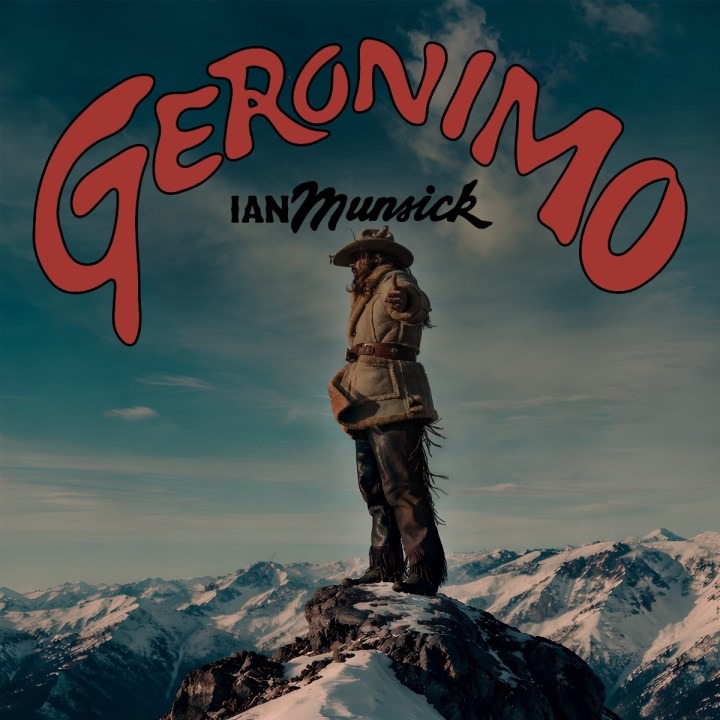
Wyoming native Ian Munsick is weaving together the themes of western reverence and love in his latest song, “Geronimo,” available everywhere now (via WEST TO THE REST/Triple Tigers Records).
Written by Munsick, Devin Dawson and Mike Robinson, and produced by Munsick and Robinson, “Geronimo” follows the narrator’s journey overcoming a fear of love and diving headfirst into it.
I looked up and I’ll be damned
Them turquoise eyes had other plans
I’ll give you one good guess
Where I’m heading now
I just crossed that timberline
My heart in hand and way too high
Standing at the edge and looking down
Geronimo
Here I go
Geronimo
Look out below
I ain’t afraid to fall no more
“Something tells me this is gonna be a big one…,” Munsick shared upon the news of the song’s release earlier this week. “No word personifies the feeling of partnering with a new label, in a new year, and welcoming in the next chapter better than ‘Geronimo.’ In this song you’ll find themes of my old music like land and love but this time, blanketed in a sonic texture that perfectly captures who I am as an artist. Here’s to the new age… geronimo!!!”
“Geronimo” is Munsick’s first release under WEST TO THE REST RECORDS/Triple Tigers Records. It’s also Munsick’s first music release off his next project since he arrived in April 2025 with his third studio album, Eagle Feather, which Holler praised for its “expansive tracks, atmospheric anthems,” and Rolling Stone noted “is shaped by the landscape of the West, the stories of Native Americans, and the romantic idea of the cowboy.”
Munsick, who has built his loyal fanbase from the ground up to selling out venues across the country, is readying his Eagle Flies Free Tour, which will kick off on February 13 in Charlotte, N.C. With additional stops in Atlanta, Ga.; Bozeman, Mont.; Portland, Ore. and more, Munsick will be joined by a rotating lineup of special guests including Lanie Gardner, Ben Haggard, Tyler Nance and Jake Worthington.
The Eagle Flies Free Tour Dates:
Friday, February 13 || Charlotte, NC || Coyote Joe’s *
Saturday, February 14 || Atlanta, GA || Tabernacle *
Thursday, February 19 || Casper, WY || Ford Wyoming Center $
Friday, February 20 || Bozeman, MT || Brick Breeden Fieldhouse #
Saturday, February 21 || Idaho Falls, ID || Mountain America Center #
Tuesday, February 24 || Portland, OR || Roseland Theatre $
Thursday, February 26 || Kennewick, WA || Toyota Center #
Friday, February 27 || Missoula, MT || Adams Center #
Saturday, February 28 || Spokane, WA || FIC for the Art #
Tuesday, March 3 || Grand Island, NE || Heartland Event Center $
Thursday, March 5 || Fargo, ND || Scheels Arena #
Friday, March 6 || Brookings, SD || Dacotah Bank #
Saturday, March 7 || Mankato, MN || Grand Hall #
Friday, March 13 || Shipshewana, IN || Blue Gate Theatre (w/ local support)
Saturday, March 14 || Clear Lake, IA || Surf Ballroom (w/ local support)
Friday, March 27 || Helotes, TX || Floores Country Store (w/ local support)
Saturday, March 28 || Durant, OK || Choctaw Grand Theater ^
* w/ Lanie Gardner
# w/ Jake Worthington and Tyler Nance
$ w/ Tyler Nance
^ w/ Ben Haggard
A native son of Wyoming, Ian Munsick has accumulated over one billion global streams across three albums – Coyote Cry, White Buffalo and Eagle Feather – and a host of accolades, including 19 awards and 14 festival selections for his documentary, White Buffalo: Voices of the West. Having painted a stampeding, spirited portrait of the American West with his sophomore album White Buffalo in 2023, Munsick expanded on the concepts of the land, people, culture and stories that inspire him, with the project’s follow-up 20-track album, Eagle Feather, released on April 18, 2025 via Warner Music Nashville. In addition to selling over 100,000 headlining tickets in 2024 and 2025, Munsick also opened on select dates of Lainey Wilson’s Country’s Cool Again Tour and supported Morgan Wallen on select dates of his record-setting One Night At A Time Tour. He has been named an “Artist to Watch” by Spotify, CMT, Fender, MusicRow, is a Martin Showcase Artist, headlined Cheyenne Frontier Days and founded WEST TO THE REST RECORDS. Standout RIAA-Platinum duet “Long Live Cowgirls” (with Cody Johnson) off of White Buffalo hit No. 1 on SiriusXM’s The Highway Hot 30 Countdown, was named one of Amazon Music’s Best Country Songs of 2022 with “Long Haul” and “Horses Are Faster” receiving RIAA Gold-certification alongside “God Bless the West” named as one of Spotify Hot Country Presents’ Best Songs of 2025. As he partners with Triple Tigers for new music in 2026 and beyond, fans of Ian Munsick will always find an open heart, natural awe and plainspoken honesty as he rides on… bringing the West to the rest.