You know that game you used to play as kids, going for some world record of catches, or not-missed shots in ping pong? Check out this dog who gleefully tries for the balloon not to hit the ground. How can 16 people give this a thumbs down? Do they want a sad dog?
2 Pranksters Pretend Not To See Each Other While Talking On The Phone

Whenever I see two people together talking on their cell phones, I always tell my wife, ‘They’re talking to each other.’ TYouTube comedian Greg Benson and his friend Miles Grose take a step further by pretending to look for other over the phone while standing on opposite sides of strangers on the streets of Los Angeles.
Video: First ever Kraftwerk gig from 1970
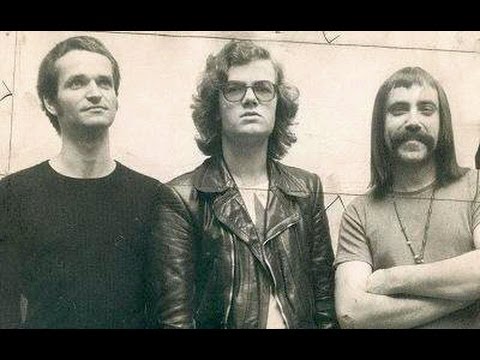
Without Kraftwerk, there’s no Gary Numan, Ultravox, John Foxx, Orchestral Manoeuvres in the Dark, Human League, Depeche Mode, Visage, and Soft Cell. No U2, no Kanye West, no LCD Soundsystem. One of the first groups to popularize electronic music, they just might be one of the most influential groups in the world, besides The Beatles, and they’ve sold less than half a percent of the fab four. Here’s where it all started.
https://youtu.be/Uv09NXOyOoU
Video: Nike’s ‘Snow Day’ Features Today’s Best Athletes
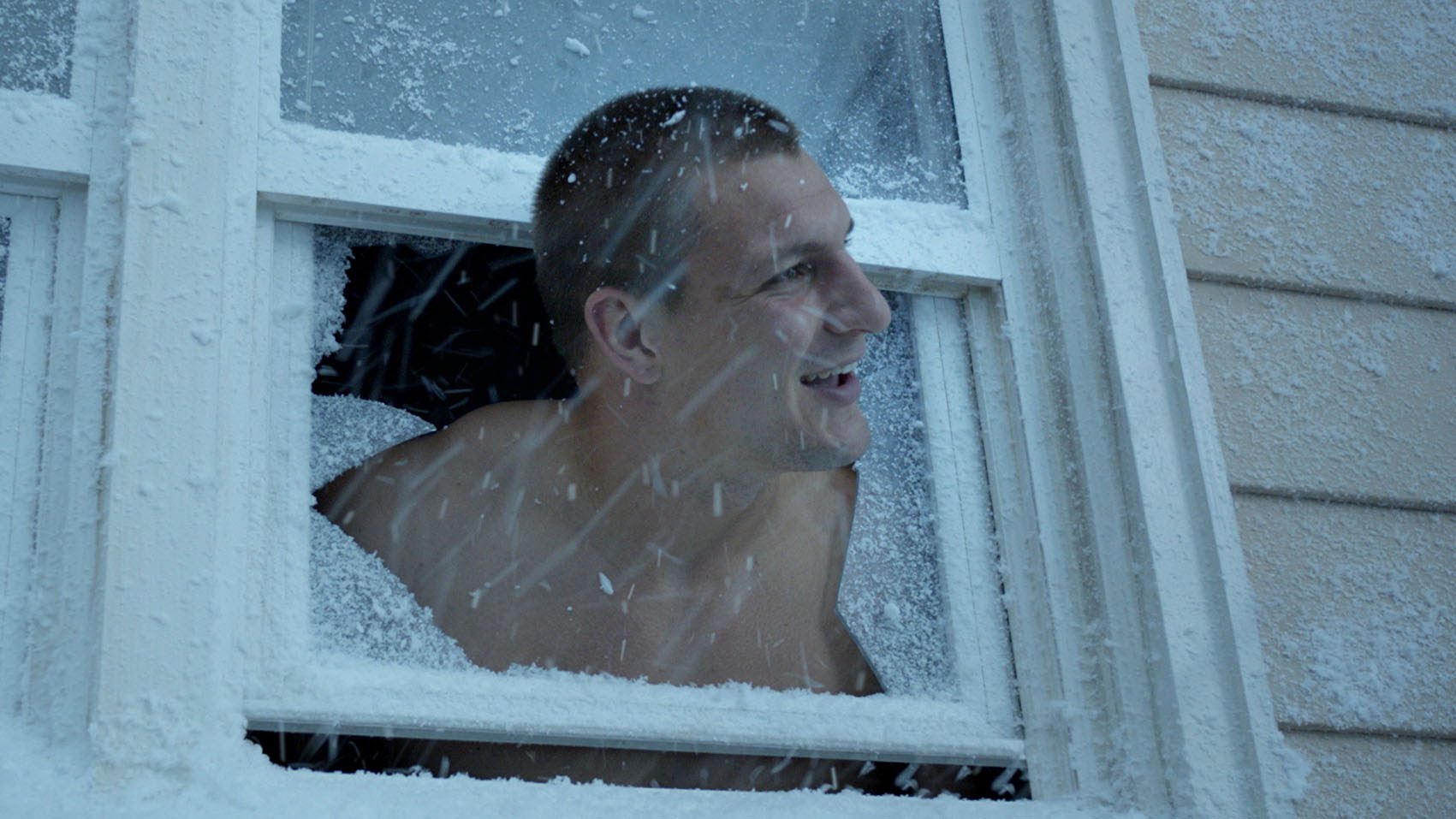
Roads are closed. School is canceled. The game is on. Get out here.
https://youtu.be/o2P5E7cFt9s
Beautiful Art Print Celebrates 200 Artists of Electronic Music
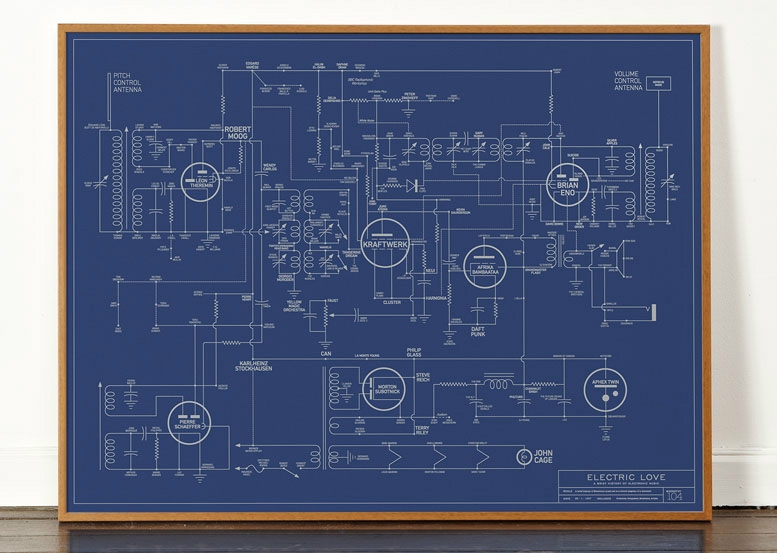
The UK-based Dorothy Collective‘s Electric Love Blueprint celebrates over 200 inventors, innovators, artists, composers and musicians who (in our opinion) have been pivotal to the evolution of electronic music from the invention of the earliest known sound recording device in 1857 to the present day. Key pioneers featured include Léon Theremin, Bob Moog, Karlheinz Stockhausen, John Cage, Brian Eno, Kraftwerk and Aphex Twin.
The print loosely groups genres, from the obscure Musique Concrète (Pierre Schaeffer) to the better known Krautrock (Kraftwerk, Can, Tangerine Dream, Neu!, Faust, Cluster, Harmonia and Amon Düül II) Synthpop (Gary Numan, Human League, Depeche Mode, Yazoo and Pet Shop Boys) and Electronica (New Order, The Prodigy, Massive Attack, LCD Sound System and Daft Punk). There are also references to the experimental BBC Radiophonic Workshop and our favourite innovating record labels Mute and Warp.
MuchMusic Compilation ‘Big Shiny Tunes’ Is Getting A Book
Eternal Cavalier Press is proud to announce our fifth title: A Big Shiny Legacy by celebrated Toronto-based writer Mark Teo, due Spring 2016.
A Big Shiny Legacy is a celebration of Big Shiny Tunes 1, MuchMusic’s iconic 1996 compilation. And while the album is firmly rooted in the ‘90s the book isn’t entirely about nostalgic revelry. Instead, it’s an exploration of how Big Shiny Tunes became one of Canada’s unlikeliest success stories: It launched the nation’s best-selling album series, moving a mind-busting 5 million copies. It placed our alt-rock heroes—Sloan, Limblifter, Pluto—alongside renowned household names like Bush, Beck, and Foo Fighters, canonizing “The Good in Everyone,” “Tinfoil,” and“Paste” in the process.
And true to the book’s title, Big Shiny Tunes left a massive cultural imprint, one that can be found in cover bands, tribute nights, YouTube playlists and used record bins from coast to coast, too.
Through interviews and criticism, A Big Shiny Legacy dives into the album’s origins, its status as the ultimate gateway record, the era of the compilation, and its still-unfolding influence on Canadian music—one track at a time.
Mark Teo is an arts and culture writer. He is currently a content editor for Star Touch, the Toronto Star‘s forthcoming tablet publication. He’s been the associate editor of AUX.TV and AUX magazine and the music and film editor of Fast Forward, Calgary’s now-defunct alt-weekly. His music writing has appeared in publications and websites such as Toronto Life, Broken Pencil, This, Weird Canada, the Coast, Exclaim!, Sharp, and many more. A Big Shiny Legacy is his first book.
“We’ve always admired and enjoyed Mark’s writing,” says ECP Creative Director Joshua Kloke. “As soon as we met with him we knew this would be an excellent fit. And we’ve been spinning Big Shiny Tunes a lot more since then, so we should probably be thanking Mark first and foremost.”
James On How They Write Songs
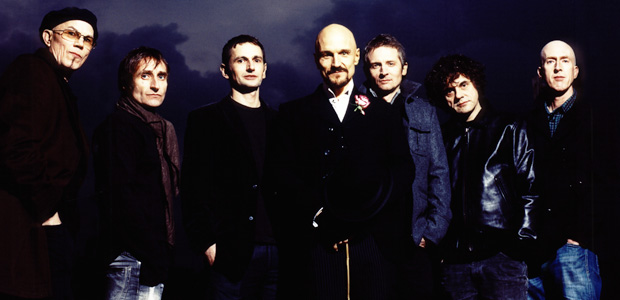
How does the writing process manifest itself?
Jim Glennie: There’s five of us that write, so we just get in a room and improvise. We set up the studio to record, and we also tend to get a drum machine going. Then the process starts. Everybody joins in and there’s a lot of shifts and changes. Tim usually sings phonetics. Most of the time we think he’s singing words but they’re not. They’re just a range of sound levels. Occasionally he’ll fire a phrase or a line out. Sometimes it can be nonsense, other times it could be the beginning of the lyric. More often than not though it tends to be phonetics where he’s using his voice as an instrument. He’s looking for melodies. We’re all very supportive so we all tend to listen to one another. Then we try to pick out the main bits we want to mould together into a song. So instead of being free flowing there’s a lot more of a process involved. Which means more work so everyone starts arguing about it, yet once we start playing everything is fine. It’s probably very unconventional but that’s how we’ve always worked. It’s worked for fourteen albums so why change now? And it is amazing fun to go in with nothing and then something emerges over time. Songs lift off in front of you. It’s not something we take for granted and same as Saul said earlier, there’s always nerves and an element of fear because technically there is no thought process. It’s always at the back of our minds that one day we’ll go in and nothing will appear. It’s odd because I don’t think we’ve ever bumped into anyone else who writes like this.
Saul Davies: I’m surprised more people don’t to be honest. I might be wrong but I suspect a band like Sigur Ros might take a similar approach? I would imagine they record everything then mix and remix it really well before deciding on whether it’s right or not.
Jim Glennie: I sometimes wish we could do things as straightforward as that. There’s something to be said for being able to lock yourselves into your own little world and not really reference anybody. You end up being your own little unit. There must be some influences in there from somewhere, but at the same time making a conscious effort not to get too embroiled what’s currently knocking around. It’s difficult to get your head around, but then also probably explains why a band like Sigur Ros has existed on their own terms for so long.
Via Drowned In Sound
Want. Check Out This Portable Record Player
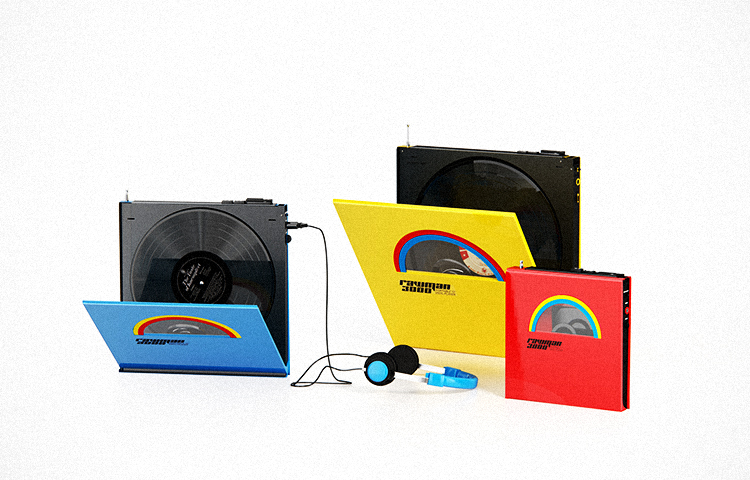
Rocket & Wink has long been famous for maximize size and increasing performance. This time they have outdone ourselves with the Rawman 3000. The first portable vinyl player from the 80s. The Rawman 3000 produces such a big, rich sound, that it only can be compared to a very elaborate and expensive component stereo record player system. Yet, it´s so small that you can take it anywhere you go . There is really no way to convey the remarkable sound quality of this little machine. You´ve got to hear it.
The Rawman comes with featherweight (1.4. oz.), stereo headphones, USB Port, Smartcard, antenna for Bluetooth connection and practical carrying strap. Furthermore an exclusive Hot-Line button which lets you carry-on a conversation or sing along over the music.
The Rawman 3000 is available in 7“,10“ and 12“ from june 1983 (in an other dimension).


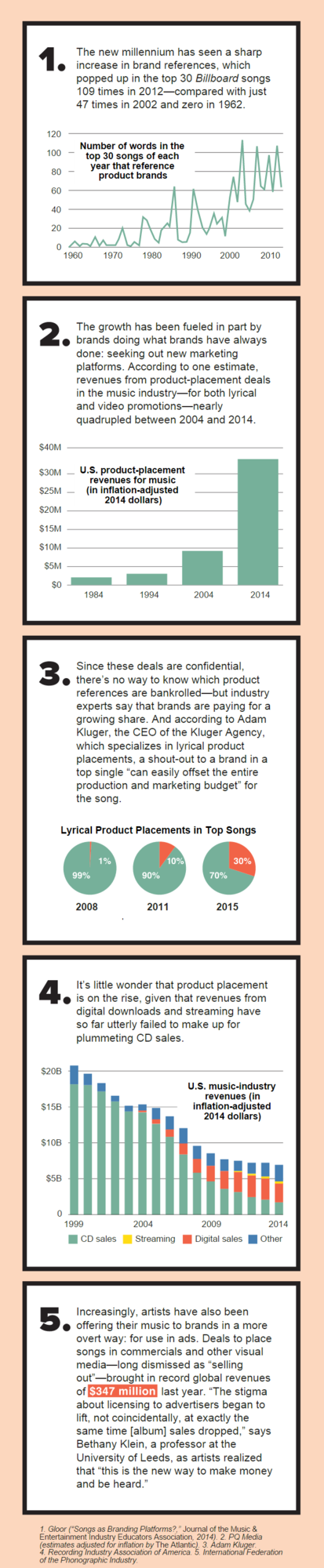
Infographic: How to Make Money in Music Using Lyrical Placement
In 2003, There were 82 different brands mentioned in the Billboard Top 20 and Mercedes mentions won by a massive margin, with more than twice its nearest competitor. Lil’ Kim, Eminem, 50 Cent, Jay-Z all got in the act. Things haven’t really changed that much, except now all genres are getting into the action.
Via The Atlantic
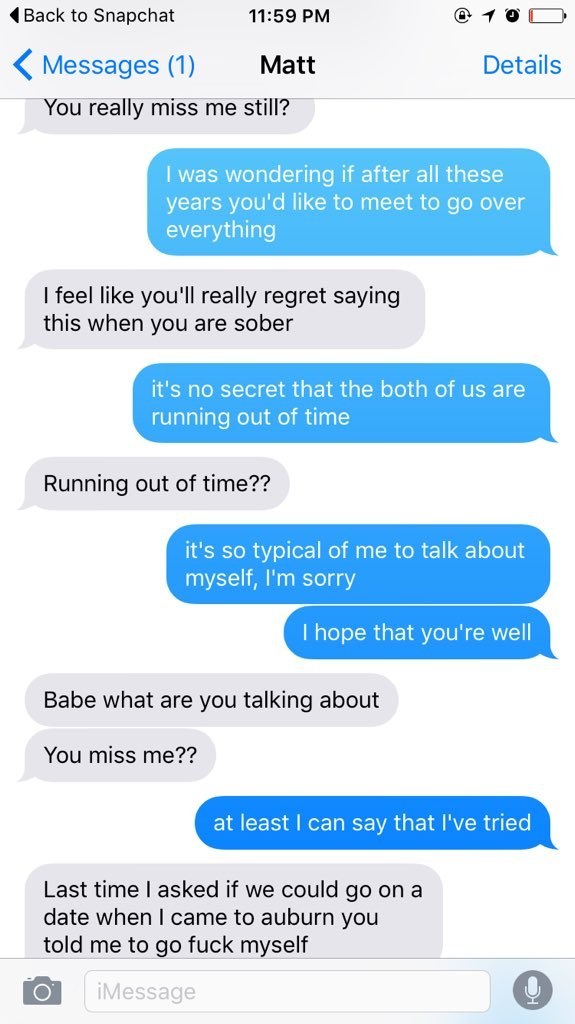
Women Texts Her Ex Using Nothing But Adele’s “Hello” Lyrics
Last week, PR student Mary Caldarella, texted her ex Matt only using lyrics from Adele’s new single, “Hello”. She put them up on Twitter, and had over 10,000 RTs.